- by MollyJewelryUS
- August 21, 2024
- Gemstone Education
Last Updated on November 19, 2026
Few colors evoke the same sense of mystery, royalty, and elegance as purple. While several minerals can display purple hues, naturally occurring stones with a pure, vivid purple color are relatively uncommon.
If you’ve ever wondered what gem is purple in color, this guide introduces 20 purple gemstones, their defining features, and their traditional meanings. You’ll also learn which varieties are especially popular and which are durable enough for everyday gemstone jewelry.
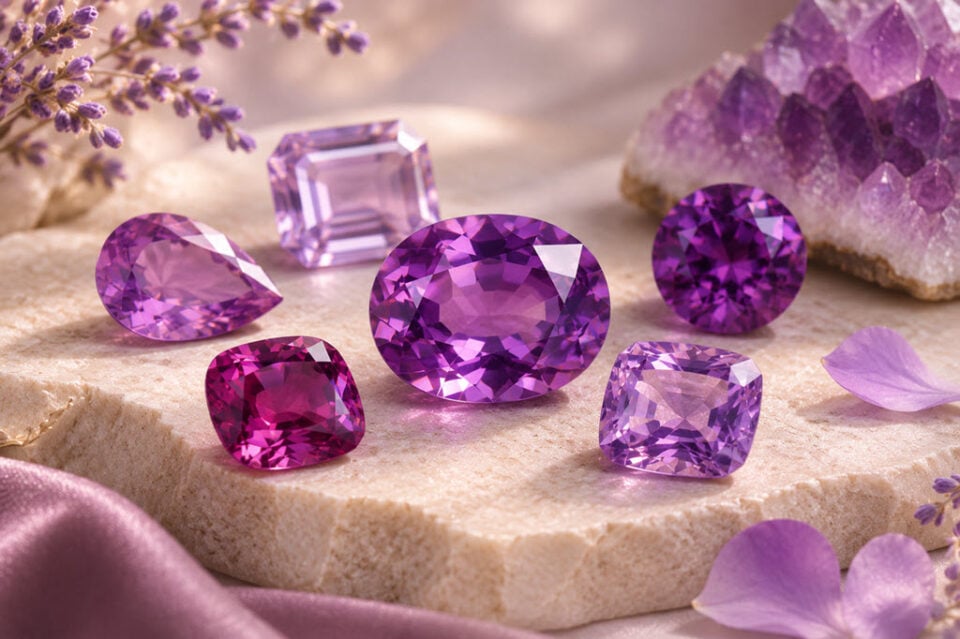
Table of Contents
Quick Overview: Most Popular Purple Gemstones at a Glance
Quick Overview: Most Popular Purple Gemstones at a Glance
| Gemstone | Defining Feature | Mohs Hardness | Symbolism & Meaning |
|---|---|---|---|
| Amethyst | Rich, transparent purple | 7 | Peace, clarity |
| Purple Sapphire | Vivid violet, brilliant luster | 9 | Wisdom, loyalty |
| Purple Spinel | Bright lavender to deep purple | 8 | Renewal, strength |
| Purple Garnet | Raspberry to reddish-purple | 6.5–7.5 | Passion, devotion |
| Lavender Jadeite | Soft, translucent lavender | 6.5–7 | Harmony, luck |
| Tanzanite | Blue-violet pleochroism | 6–7 | Transformation |
| Alexandrite | Remarkable color change | 8.5 | Renewal, balance |
| Purple Diamond | Exceptional rarity | 10 | Luxury, individuality |
*Note: Hardness measures scratch resistance, not resistance to chipping or breaking.
What Are the Classic Purple and Violet Gemstones?
What Are the Classic Purple and Violet Gemstones?
When people think of purple gemstones, rich, saturated violet hues often come to mind. These six offer that classic look, although their rarity and suitability for everyday jewelry vary.
1. Amethyst
1. Amethyst
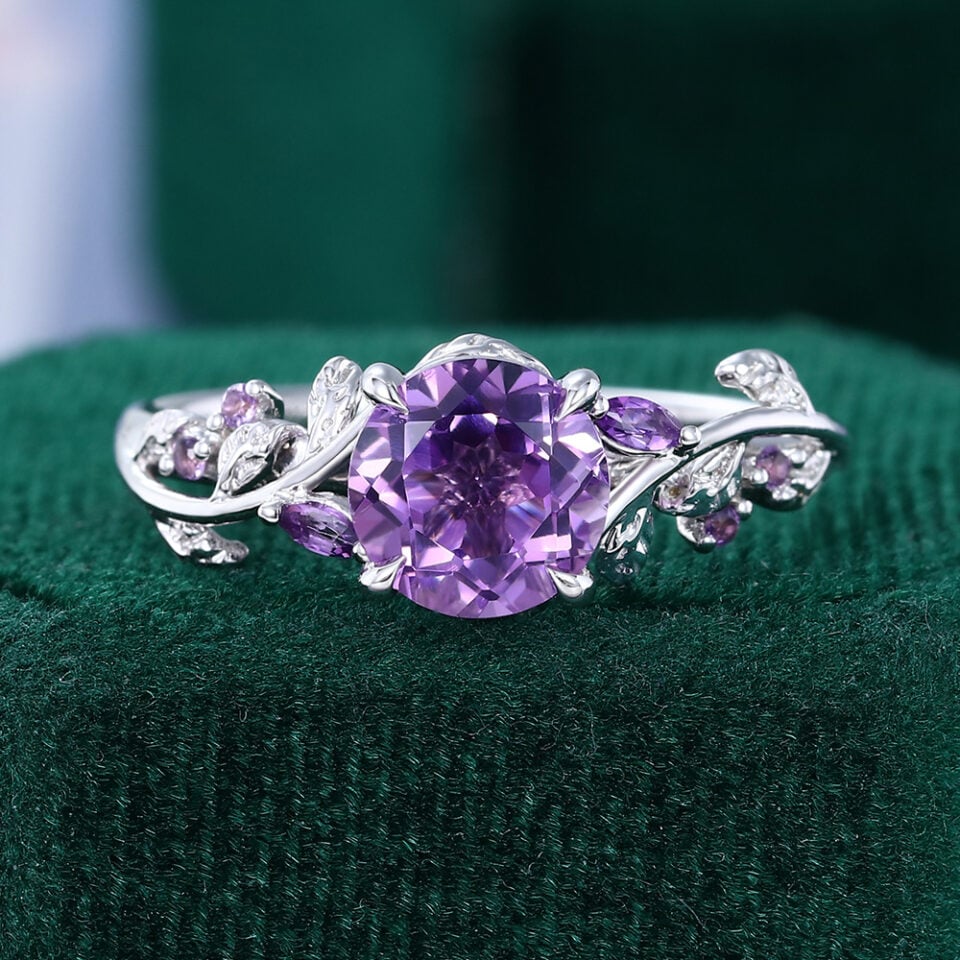
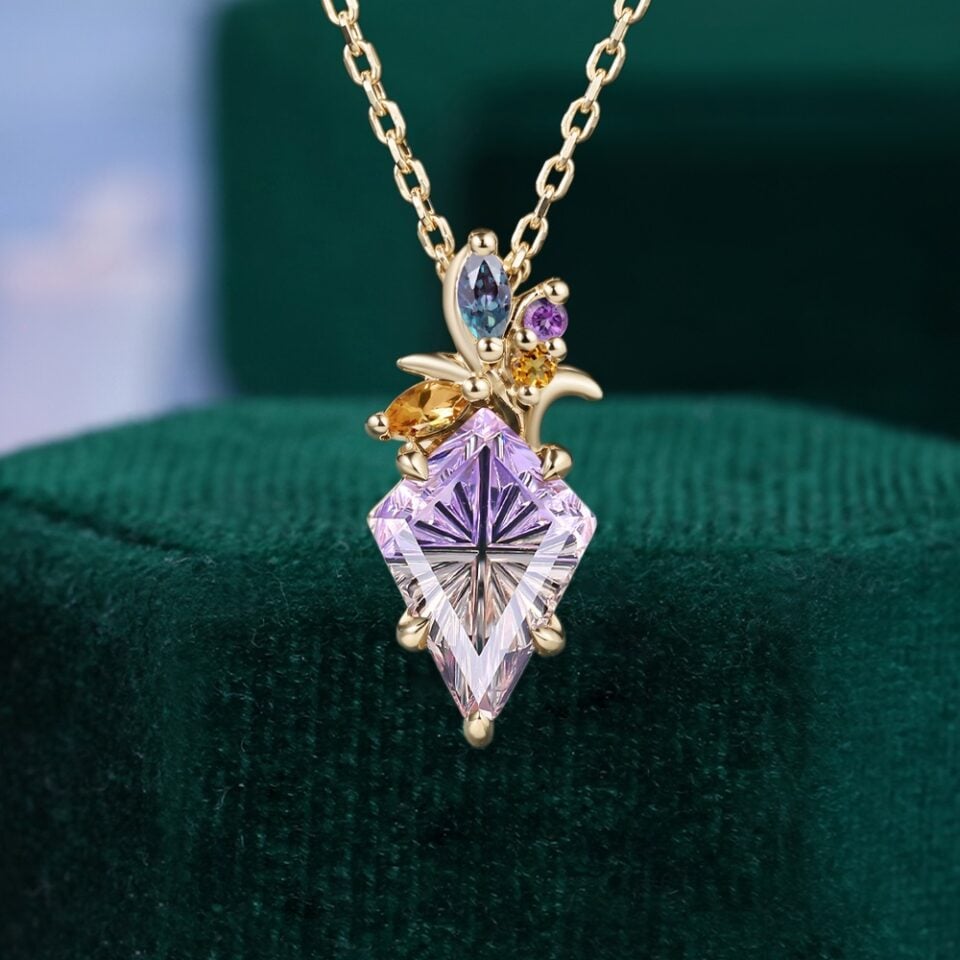
Amethyst is a variety of quartz and one of the most beloved purple semi precious stones. Its color ranges from delicate rose-de-France lilac to deep Siberian violet with red flashes. What’s more, it is also the February birthstone.
- Everyday Durability: At 7 on the Mohs scale, it handles regular wear well, though sharp knocks can chip exposed edges.
- Rarity & Value: Widely available and generally affordable, even in attractive saturated colors.
2. Purple Sapphire
2. Purple Sapphire
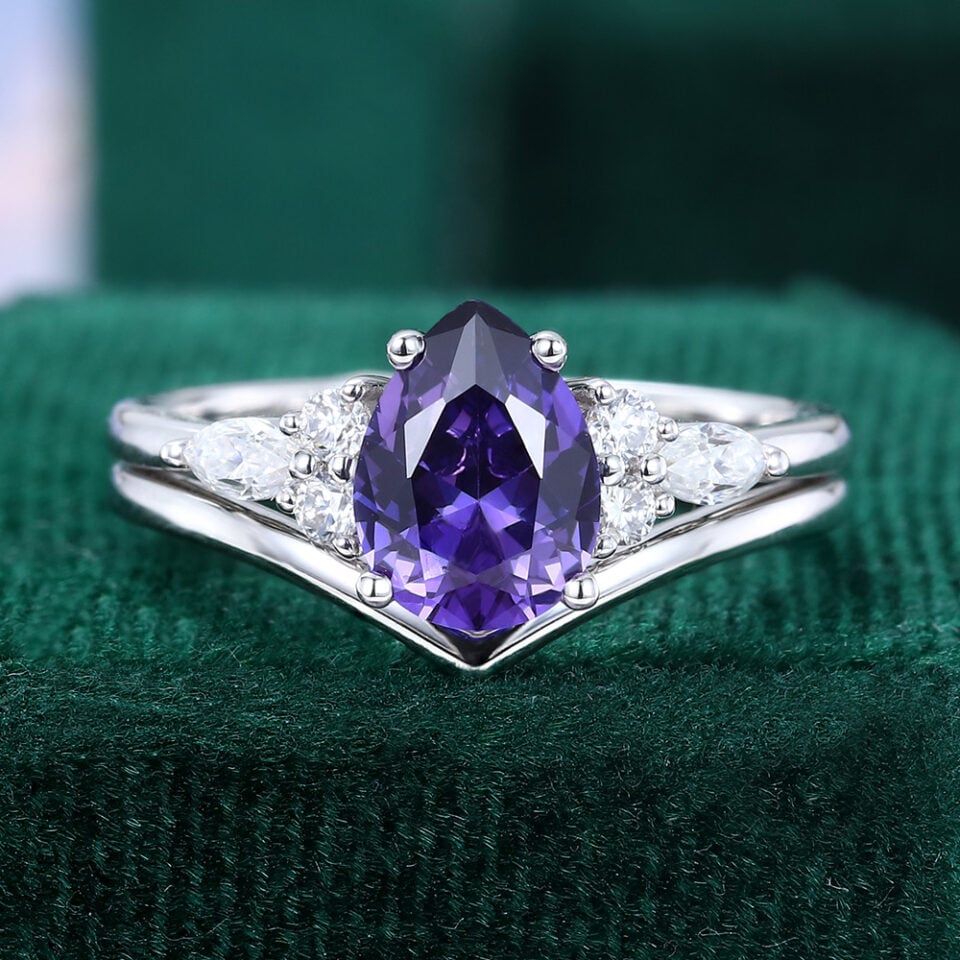
Purple sapphires are less common than sapphires in other colors. Some are heat-treated to achieve pink hues, which tend to be more popular and valuable in the jewelry market. The color of this purple precious stone is caused by trace elements within the corundum crystal, ranging from light purple to deep purple, sometimes with blue or pink secondary hues.
- Everyday Durability: Mohs 9; excellent for frequently worn rings.
- Rarity & Value: Fine natural stones with vivid, even color can command premium prices.
👉🏻 Learn more in our purple sapphire guide.

3. Purple Spinel
3. Purple Spinel
Often overlooked beside sapphire, purple spinel offers lively brilliance and shades from silvery lavender to rich purple. Beyond its association with the August birthstone, this purple gemstone also attracts collectors with its excellent transparency and clean, saturated hues.
- Everyday Durability: Scoring 8 on the Mohs scale with no cleavage, it resists chipping during daily wear.
- Rarity & Value: Fine, vivid natural examples can be valuable, particularly in larger sizes.
4. Purple Garnet
4. Purple Garnet
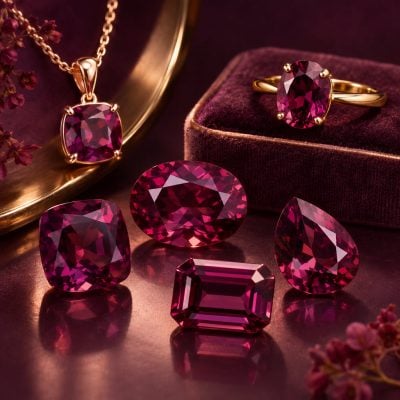
Garnet comes in almost every color found in nature, with purple being one of the rarest. Purple garnet’s color ranges from raspberry and plum to reddish-violet, primarily caused by the chromium element in its chemical composition. In addition, their warm undertones pair especially well with yellow and rose gold.
- Everyday Durability: With a hardness of 7 to 7.5, it works reliably in rings, pendants, and bracelets.
- Rarity & Value: Common rhodolite is accessible, while exceptional purple specimens may be considerably rarer.
5. Purple Tourmaline
5. Purple Tourmaline
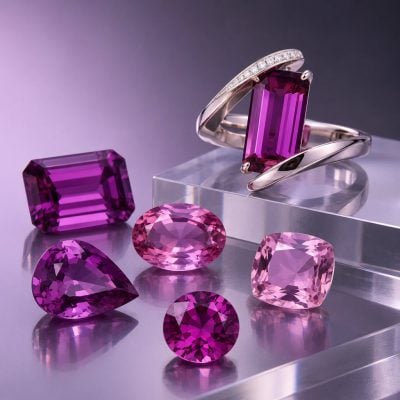
Purple tourmaline stands out for its rich color range, from dark violet to soft pinkish purple. Often displaying impressive transparency and a polished luster, this less common purple-colored gemstone adds personality to contemporary jewelry. It is particularly striking in tourmaline rings with distinctive settings and expressive designs.
- Everyday Durability: Mohs 7–7.5; reasonably durable but should be protected from impacts.
- Rarity & Value: Fine, eye-clean purple varieties are uncommon and sit in the mid-to-upper price bracket.
6. Purple Topaz
6. Purple Topaz
Purple topaz brings a polished touch to gemstone jewelry with shades ranging from pale lavender to rosy purple. Most commercially available stones receive heat or irradiation treatments to achieve these colors. Beyond its connection to November, this purple semi precious stone attracts attention with its glass-like brilliance and sharply defined facets.
- Everyday Durability: Hard at 8 on the Mohs scale, though its basal cleavage requires protection from hard impacts.
- Rarity & Value: Natural purple material is rare, while treated stones vary widely in price.
Types of Soft Lavender and Translucent Purple Color Stones
Types of Soft Lavender and Translucent Purple Color Stones
Moving past bold, saturated shades, this list of purple gemstone varieties showcases gentle hues and subtle brilliance that give modern jewelry a dreamy, elegant appeal.
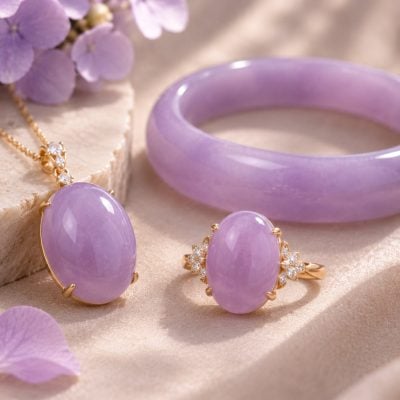
1. Lavender Jadeite
1. Lavender Jadeite
With its tranquil lavender color and softly hazy appearance, lavender jadeite brings understated elegance to jewelry. This purple semi precious stone often features subtle pink hues and is traditionally fashioned into polished round or oval pieces for pendants and bangles.
- Everyday Durability: At 6.5 to 7 on the Mohs scale, it is notably tough, though scratches remain possible.
- Rarity & Value: Fine-textured, translucent lavender jadeite is exceptionally rare and highly valuable.
2. Kunzite
2. Kunzite
Few names of purple gems evoke the same delicate charm as kunzite. Its feminine appeal comes from a delicate crystalline luster and soft pink-to-lavender hues, making it especially captivating in statement cocktail rings.
- Everyday Durability: Mohs 6.5–7; relatively brittle and sensitive to heat, which may cause its color to fade.
- Rarity & Value: Often moderately priced, with fine saturated stones commanding more.
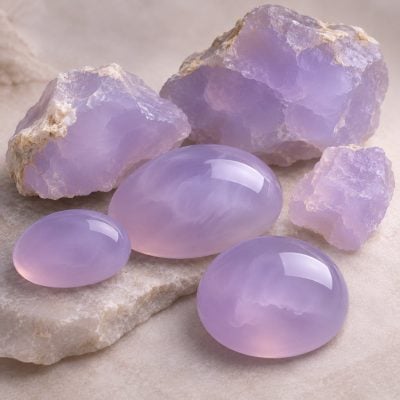
3. Purple Chalcedony
3. Purple Chalcedony
A translucent, microcrystalline variety of quartz, purple chalcedony is known for its soft lavender color and distinctive waxy, cloud-like appearance. Its understated beauty makes it a popular choice among designers for sculptural jewelry and minimalist pieces.
- Everyday Durability: Durable at 6.5 to 7 on the Mohs scale, it’s suitable for regular wear with care.
- Rarity & Value: Accessible and widely used in contemporary designer cabochons.
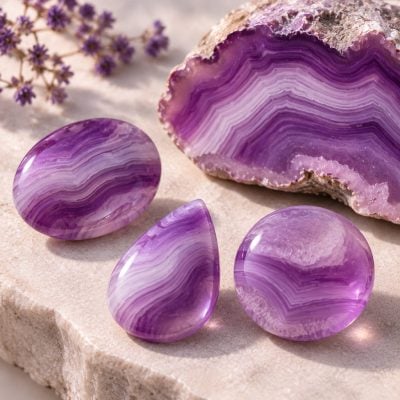
4. Purple Agate
4. Purple Agate
Purple agate is a widely available semi precious stone known for its decorative bands and layered patterns. Once polished, each piece reveals a distinctive visual character, making this natural purple gemstone visually unique and appealing in jewelry design.
- Everyday Durability: Scoring 6.5 to 7, it resists daily abrasion well in rings and cuffs.
- Rarity & Value: Affordable and abundant, valued for distinct natural patterns rather than carat rarity.
5. Purple Pearl
5. Purple Pearl
Pearl is one of the June birthstones and comes in a variety of colors, including soft lavender, purplish pink, and plum. Often found in freshwater cultured varieties, these naturally colored purple color stones bring a fresh, modern feel to traditional white strands.
- Everyday Durability: Soft at mohs 2.5; easily scratched and sensitive to chemicals.
- Rarity & Value: Prices vary considerably with natural color, luster, surface quality, and size.
A Closer Look at Color-Changing & Blue Purple Stones
A Closer Look at Color-Changing & Blue Purple Stones
Certain violet gemstones display colors that fall somewhere between purple and blue, with hues that can shift under different lighting conditions or viewing angles. The following four varieties are particularly noteworthy for their distinctive colors and visual character.
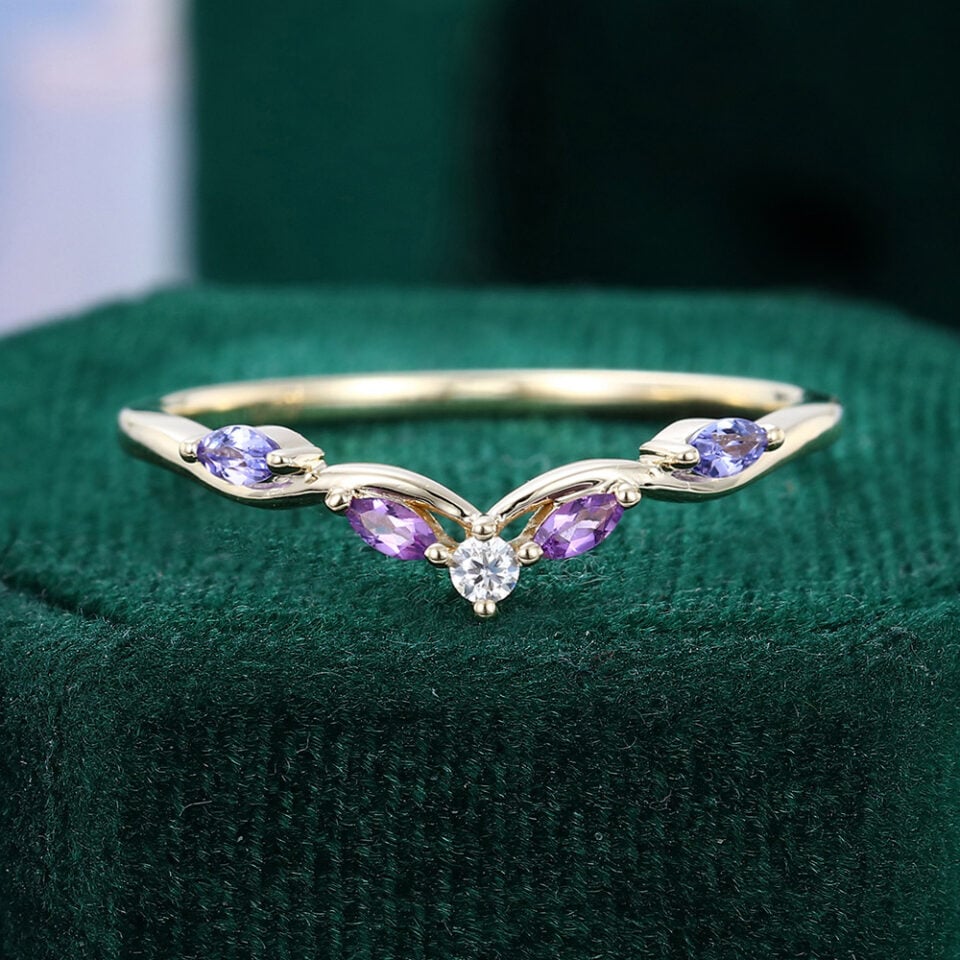
1. Tanzanite
1. Tanzanite
As a beloved December birthstone, tanzanite stands out among purple gemstones for its rich blue-violet color and fascinating optical effects. Found commercially in a small region of Tanzania, this purple gemstone can reveal different shades depending on the viewing angle. It’s easy to see why tanzanite rings are such eye-catching choices.
- Everyday Durability: Mohs 6–7; cleavage makes protective settings advisable.
- Rarity & Value: Limited geographic supply gives high-grade, saturated stones strong long-term value.

2. Iolite
2. Iolite
Iolite is a purple semi-precious gemstone whose name comes from the Greek word for violet. Its pronounced pleochroism allows it to display violet-blue, grayish, and sometimes nearly colorless hues depending on the viewing angle. These cool tones pair particularly well with white gold jewelry.
- Everyday Durability: Rating 7 to 7.5 on the Mohs scale, it is sturdy enough for regular wear in secure settings.
- Rarity & Value: Generally affordable compared with fine sapphire or tanzanite.
3. Alexandrite
3. Alexandrite
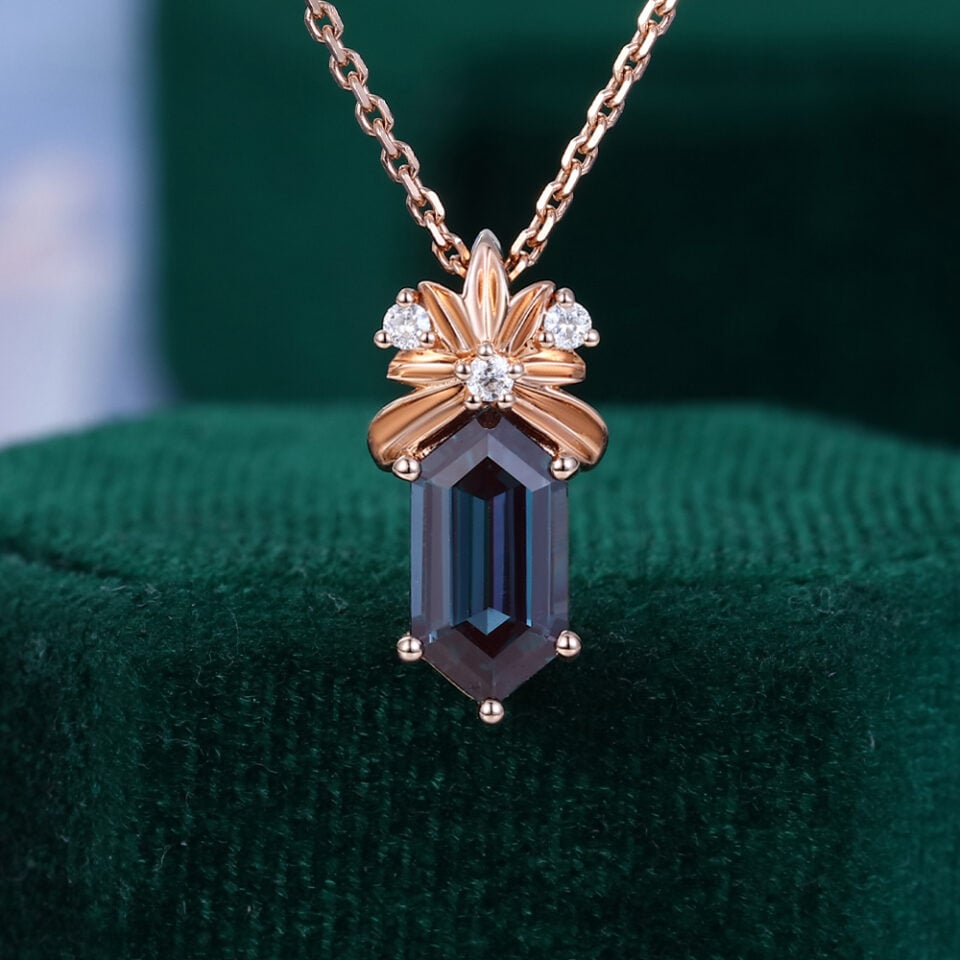
Few purple gemstones are as captivating as alexandrite. Often described as “emerald by day, ruby by night,” it shifts from blue-green in natural daylight to purplish-red under warm indoor lighting. This distinctive effect gives the purple-colored gemstone a uniquely personal appeal.
- Everyday Durability: Tough at 8.5 on the Mohs scale, built to withstand decades of daily wear.
- Rarity & Value: Natural stones rank among the world’s scarcest gems, making lab-grown options a popular luxury alternative.

4. Color-Change Sapphire
4. Color-Change Sapphire
Unlike ordinary purple sapphires, color-change sapphires display different hues under different lighting conditions due to their selective absorption and transmission of light wavelengths.
They may look blue or bluish-purple in daylight and reveal stronger purple tones under incandescent lighting. This effect comes from the way trace elements, including chromium, iron, titanium, and vanadium, influence light absorption. Stones with higher vanadium content can sometimes show a more noticeable purple color shift.
- Everyday Durability: Mohs 9; it delivers top-tier longevity for daily jewelry.
- Rarity & Value: Highly coveted by gem connoisseurs, commanding significant prices per carat.
📖 Related Reading: You Should Know About Sapphire: History, Colors and Types
Uncovering Rare & Distinctive Purple Colored Gemstones
Uncovering Rare & Distinctive Purple Colored Gemstones
For collectors seeking purple gemstones with names and pictures that stand apart from mainstream jewelry cases, the following five minerals offer unmistakable character.
1. Purple Diamond
1. Purple Diamond
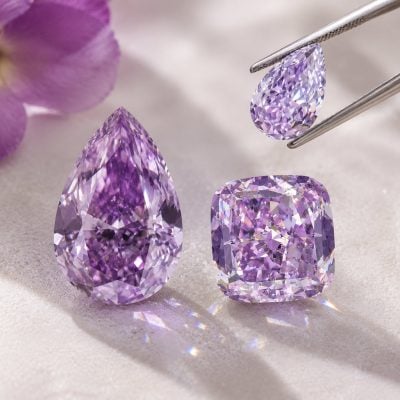
These natural purple precious stones are so rare that many jewelry lovers may never encounter one in person. Among fancy-colored diamonds, only red varieties are often considered rarer. Their colors range from delicate lavender to rich violet, often with subtle pink or blue undertones.
The exact cause of their purple coloration is complex, with hydrogen-related defects believed to contribute in some stones. A reputable gemological report is especially important when considering one, as natural purple diamonds can be highly sought-after collector’s gems.
- Everyday Durability: A perfect 10 on the Mohs scale makes it the hardest natural substance on Earth.
- Rarity & Value: Arguably the most expensive purple gemstone per carat, regularly fetching six- to seven-figure sums at auction.
2. Purple/Violet Opal
2. Purple/Violet Opal
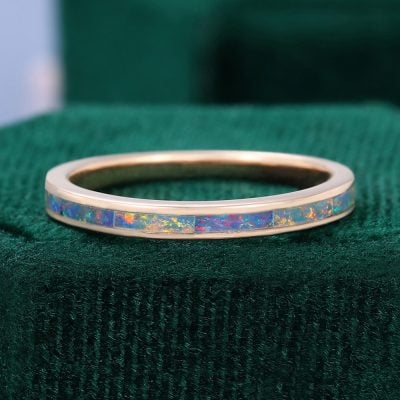
Some purple opals have a soft, understated appearance, while exceptional specimens reveal flashes of violet and other hues as they catch the light. These changing colors give the gemstone an almost artistic, dreamlike quality. As an October birthstone, this stone is a popular choice for jewelry, especially opal rings and pendants.
- Everyday Durability: Mohs approximately 5–6.5; requires gentle handling.
- Rarity & Value: Exceptional play-of-color and attractive patterns can increase its value.
📖 Related Reading: What Are The Different Types Of Opal?
3. Charoite
3. Charoite
Found only in the Chara River region of Siberia, Russia, charoite is a translucent purple gemstone immediately recognizable by its swirling violet, lavender, and white patterns. Usually shaped into polished cabochons rather than faceted stones, it creates a bold, artistic look in pendants and statement jewelry.
- Everyday Durability: Rating 5 to 6 on the Mohs scale, it is better suited to protected pieces.
- Rarity & Value: Geographically limited, yet many specimens remain relatively accessible.
4. Sugilite
4. Sugilite
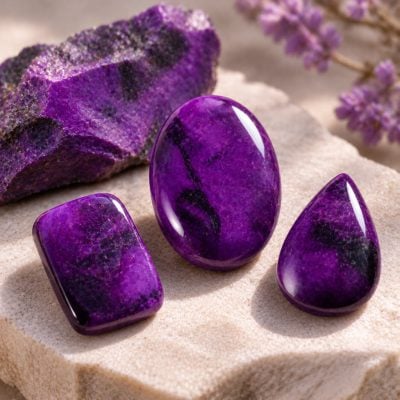
Known by the nickname “Royal Azel,” sugilite is a unique purple mineral that can sometimes be confused with charoite. Its deep, often uniform purple color may feature subtle black or gray inclusions, creating a smooth and striking appearance. Paired with polished yellow gold, its rich hue stands out perfectly.
- Everyday Durability: Moderately durable at 5.5 to 6.5; best worn in protective bezel frames.
- Rarity & Value: High-quality, richly colored material can be collectible and expensive.
5. Purple Fluorite
5. Purple Fluorite
From soft lavender to deep violet, purple fluorite displays a beautiful range of shades, sometimes with striking bands of color within a single crystal. Its natural formations and translucent appearance make this purple semi precious stone a favorite among mineral enthusiasts.
- Everyday Durability: Mohs 4; may be too delicate for frequently worn rings.
- Rarity & Value: Usually affordable, although outstanding specimens may attract collector premiums.
Purple Gem Meanings and Their Spiritual Connections
Purple Gem Meanings and Their Spiritual Connections
Throughout history, purple gemstone meanings have been closely associated with nobility, intuition, and emotional balance.
Whether you’re drawn to these stones for personal reasons or their heritage symbolism, these traditional associations help define their enduring appeal:
| Symbolism Pillar | Core Meaning & Intention | Representative Gems |
|---|---|---|
| Royalty & Prestige | Represents authority, refinement, and timeless luxury. | Purple Diamond, Purple Sapphire, Sugilite |
| Intuition & Insight | Enhances mental clarity, focus, and inner wisdom. | Amethyst, Iolite, Purple Fluorite |
| Emotional Calm | Promotes stress relief, serenity, and restful balance. | Lavender Jadeite, Purple Chalcedony, Purple Pearl |
| Heart & Romance | Encourages emotional openness, tenderness, and devotion. | Kunzite, Purple Garnet, Purple Tourmaline |
| Transformation & Growth | Supports adaptability, personal evolution, and new chapters. | Tanzanite, Alexandrite, Color-Change Sapphire |
| Grounding & Protection | Shields against negativity while stabilizing creative energy. | Purple Spinel, Charoite, Purple Agate |
*Important: These interpretations reflect cultural traditions and spiritual beliefs, not scientifically established healing effects.
💡 Want to explore the crystal energy and mindfulness practices of certain natural purple stones?Our article on amethyst spiritual meaning is a good place to start.
How to Choose the Right Purple Color Stone for Your Jewelry
How to Choose the Right Purple Color Stone for Your Jewelry
After getting to know different purple gemstones and what makes each one special, you might already have a favorite.
Before making a choice, think about how it will fit into your everyday life:
- Find your favorite shade. Choose kunzite or lavender jadeite for softness, amethyst for classic purple, or tanzanite for sophisticated blue-violet.
- Consider your jewelry habits. For frequently worn rings, sapphire, spinel, and alexandrite offer excellent durability. Softer stones often shine in earrings or pendants.
- Match your personal style. Clean, brilliant gems suit minimalist settings, while patterned charoite and agate lend themselves to bolder designs.
- Let meaning play a part. A purple gemstone associated with love, renewal, or a birth month can add significance beyond appearance.
- Balance rarity with budget. Amethyst offers accessible beauty; fine natural alexandrite and purple diamonds may attract enthusiasts. Just remember to ask whether a stone is natural, laboratory-grown, or treated before comparing prices.
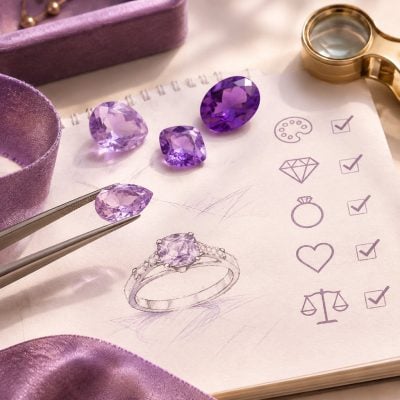
Final Thoughts: A Shade of Purple That Feels Like Yours
Final Thoughts: A Shade of Purple That Feels Like Yours
From the familiar warmth of amethyst to the remarkable color change of alexandrite, purple gemstones offer endless ways to express individuality. Some are chosen for their brilliance, others for their rarity or meaning.
At MollyJewelryUS, many of these gemstones are brought to life through carefully selected materials, thoughtful jewelry designs, and skilled craftsmanship. Find the one that catches your eye and makes your story a little more personal.
FAQs for Purple Gemstones
FAQs for Purple Gemstones
What is the most common purple stone?
Amethyst is among the most common and recognizable natural purple gemstones, loved for its color and affordability.
Which birthstones come in purple?
What are the differences between purple precious and semi-precious stones?
These are traditional commercial terms, not reliable measures of quality or value. Individual rarity, color, and condition matter more.
What is the most expensive purple gemstone?
Natural fancy purple diamonds are among the most expensive. Exceptional natural alexandrite and purple sapphires can also command remarkable prices.
Which purple gem is best for everyday wear?
Purple sapphire is an excellent choice for its hardness and brilliance. Spinel and alexandrite are also attractive, durable alternatives.
Are all purple gemstones naturally purple?
No. Some are naturally colored, while others are dyed, coated, or otherwise treated. Always verify color origin and disclosed treatments.
Which wedding anniversary gemstones are purple?
📖 Exploring More Colored Gemstones: