- by MollyJewelryUS
- November 17, 2026
- Gemstone Education
⭐ Key Takeaways: How Hard is Alexandrite?
Simply put, alexandrite has a hardness of 8.5 on the Mohs scale, making it one of the harder gemstones used in fine jewelry. It offers excellent resistance to everyday scratches, although it is not as hard as sapphire (9), ruby (9), or diamond (10).
One of the joys of owning an alexandrite ring or necklace is watching its color shift from green or bluish green in daylight to reddish or purplish hues under warm incandescent lighting.
Yet before investing in a stone meant to last decades, one practical question always comes up: can this gem handle real life? Knowing alexandrite hardness and overall durability can help you choose a piece that fits your lifestyle.
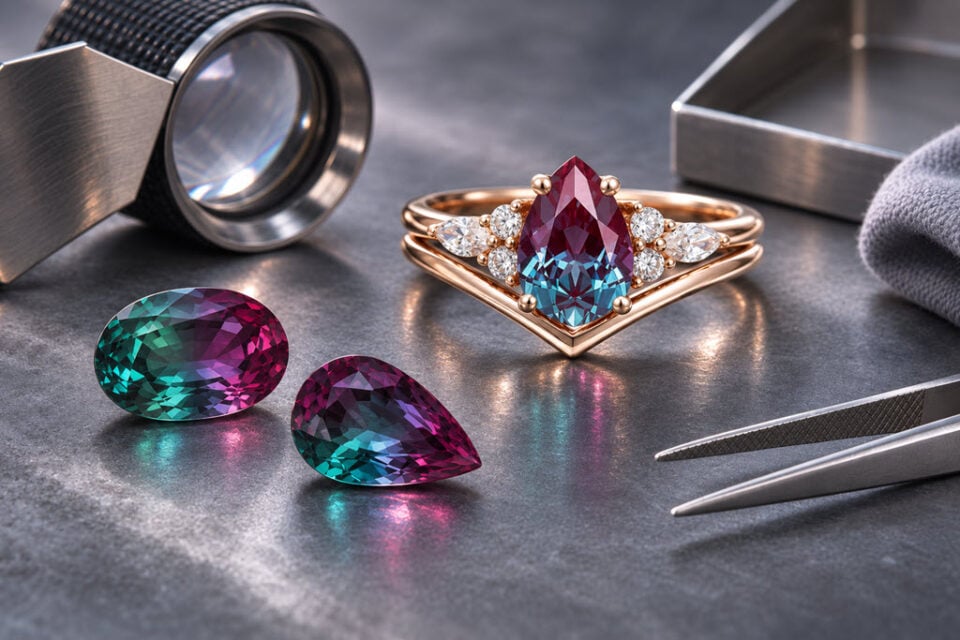
Table of Contents
What Is the Hardness of Alexandrite on the Mohs Scale?
What Is the Hardness of Alexandrite on the Mohs Scale?
Belonging to the chrysoberyl mineral family, alexandrite owes its impressive strength to a tightly bonded beryllium aluminum oxide crystal structure. On the alexandrite hardness scale, it holds a high ranking, making it one of the most resilient colored gemstones used in fine jewelry.
To better understand alexandrite durability and hardness, the table below breaks down its scratch resistance, toughness, and potential for chipping.
| Gemological Property | Alexandrite Rating |
|---|---|
| Mohs Hardness | 8.5 / 10 |
| Toughness | Good to excellent |
| Cleavage | Poor / Indistinct (low splitting risk) |
| Stability | High |
| Everyday Jewelry Suitability | Very good with appropriate care |
Mohs Hardness Scale Explained
Mohs Hardness Scale Explained
The Mohs scale tells us how well a mineral resists scratches, using a ranking from 1 to 10. In general, harder minerals can scratch softer ones. But these numbers aren’t proportional. A diamond with a Mohs rating of 10 isn’t just 1.18 times harder than alexandrite at 8.5.
In addition, as GIA points out, hardness is only one part of a gemstone’s durability. Its ability to withstand impacts and environmental conditions matters, too.
How Alexandrite Hardness Affects Scratch and Wear Resistance
How Alexandrite Hardness Affects Scratch and Wear Resistance
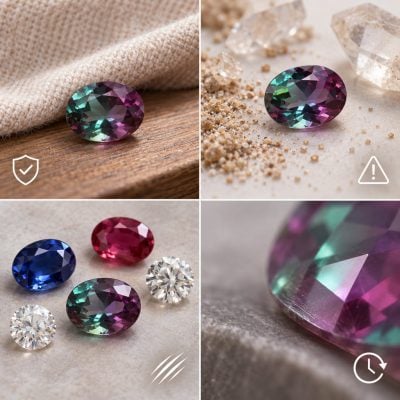
Does alexandrite scratch easily? It’s a fair question when you’re choosing a gemstone you hope to wear regularly. Under normal conditions, alexandrite offers excellent resistance to scratches and abrasion, but that doesn’t mean it’s completely scratch-proof.
Here’s what alexandrite Mohs hardness means in different situations:
- Everyday Contact: Materials such as fabric, wood, and most household surfaces are unlikely to scratch alexandrite.
- Dust and Grit: Quartz, commonly found in dust and sand, is softer than alexandrite. Still, harder particles mixed into dirt or grit may cause scratches.
- Harder Gemstones: Sapphire, ruby, moissanite, and diamond are all harder than alexandrite and may scratch it if stored together.
- Repeated Friction: Constant rubbing against hard surfaces may gradually affect the polish, particularly around exposed facet edges.
👉🏻 Planning to wear alexandrite on your finger every day? Our alexandrite engagement ring guide covers more of what to consider.
Beyond Hardness: Understanding the Overall Durability of Alexandrite
Beyond Hardness: Understanding the Overall Durability of Alexandrite
An 8.5 hardness rating sounds impressive, but alexandrite durability depends on more than its hardness. Gemologists also consider toughness and stability when assessing how well a stone withstands everyday use.
Is Alexandrite Brittle? (Toughness & Cleavage)
Is Alexandrite Brittle? (Toughness & Cleavage)
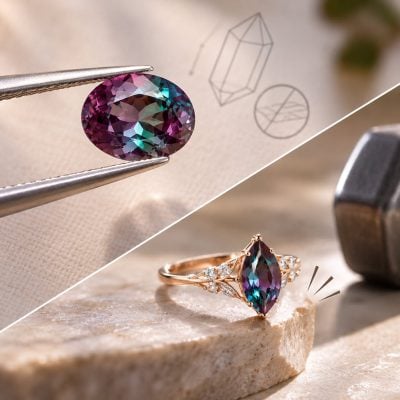
Alexandrite is not considered a particularly brittle gemstone. According to GIA, it has superior toughness and very poor cleavage, making it well suited to jewelry worn regularly, including engagement rings.
Still, toughness doesn’t make a gemstone indestructible. Certain cuts leave pointed tips or sharp corners more exposed to accidental impacts.
Stability Against Heat, Light, and Chemicals
Stability Against Heat, Light, and Chemicals
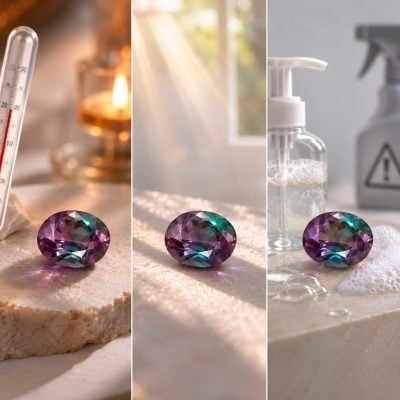
Beyond its impressive hardness, alexandrite also exhibits good stability under normal wearing conditions.
- Heat: Alexandrite can tolerate moderate heat, but sudden temperature changes or excessive temperatures may cause damage.
- Light: Normal sunlight exposure is not generally a concern for alexandrite.
- Chemicals: Mild soap and water are usually safe, but strong household cleaners and harsh chemicals should be kept away from the stone.
Does Lab Alexandrite Have the Same Hardness as Natural Stones?
Does Lab Alexandrite Have the Same Hardness as Natural Stones?
Yes. True lab alexandrite hardness is identical to that of natural stones at 8.5 on the Mohs scale. That’s because both gemstones have the same basic chemical makeup and crystal structure. Being grown in a laboratory doesn’t make genuine alexandrite any softer.
One thing to watch for, though, is misleading labeling. Some stones sold as “synthetic alexandrite” may be imitations or color-changing synthetic sapphires, which have different properties.
👉🏻 Learn how to identify real alexandrite before buying.
Comparing Alexandrite with Other Popular Gems in Hardness
Comparing Alexandrite with Other Popular Gems in Hardness
| Gemstone | Mohs Hardness | Toughness | Overall durability |
|---|---|---|---|
| Alexandrite | 8.5 | Good to excellent | Very good to excellent |
| Diamond | 10 | Good (cleavage risk) | Excellent |
| Sapphire | 9 | Excellent | Excellent |
| Spinel | 8 | Good | Very good |
| Quartz | 7 | Good | Good with extra care |
*Note: Overall durability is a qualitative assessment, not a standardized numerical ranking. Individual stones may vary due to inclusions, treatments, and setting design.
Alexandrite Hardness vs. Sapphire
Alexandrite Hardness vs. Sapphire
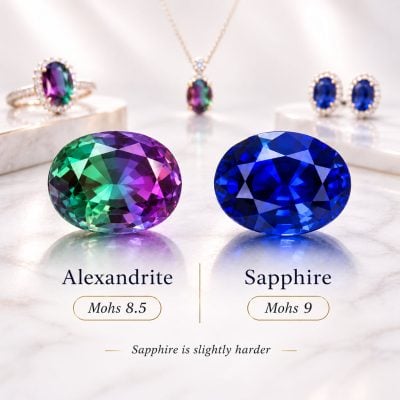
There’s only a 0.5-point gap in Mohs hardness when comparing alexandrite and sapphire. The latter is slightly more scratch-resistant, but for most everyday jewelry wearers, the difference may be hard to notice.
Both gemstones work beautifully in engagement rings, necklaces, and earrings.
Alexandrite Hardness vs. Diamond
Alexandrite Hardness vs. Diamond
With a Mohs hardness of 10, diamond offers the highest scratch resistance among natural gemstones, well above alexandrite’s 8.5.
Interestingly, diamonds and alexandrite behave differently under impact. Diamonds have distinct cleavage planes along which they can split under a forceful blow. This is a reminder that exceptional hardness does not guarantee immunity to damage.
Is Alexandrite Hard Enough for Daily Wear?
Is Alexandrite Hard Enough for Daily Wear?
Can you wear alexandrite every day? From a hardness and durability standpoint, the answer is yes. That said, the most suitable jewelry style may vary depending on your lifestyle and daily activities.
Best Everyday Jewelry Styles for Alexandrite
Best Everyday Jewelry Styles for Alexandrite
Rings, necklaces, and earrings may experience varying levels of friction and impact during everyday wear. Fortunately, alexandrite is durable enough to work perfectly for many types of fine jewelry.
- Engagement and Statement Rings: A well-designed setting helps protect the gemstone during daily wear, while its color-changing effect stays in full view.
- Pendants and Necklaces: Worn against the chest away from hard surfaces, alexandrite pendants face a lower risk of accidental knocks.
- Earrings: Alexandrite studs and drop earrings sit safely out of harm’s way while catching shifting ambient light throughout the day.



Does Alexandrite Need Special Protection in Jewelry?
Does Alexandrite Need Special Protection in Jewelry?
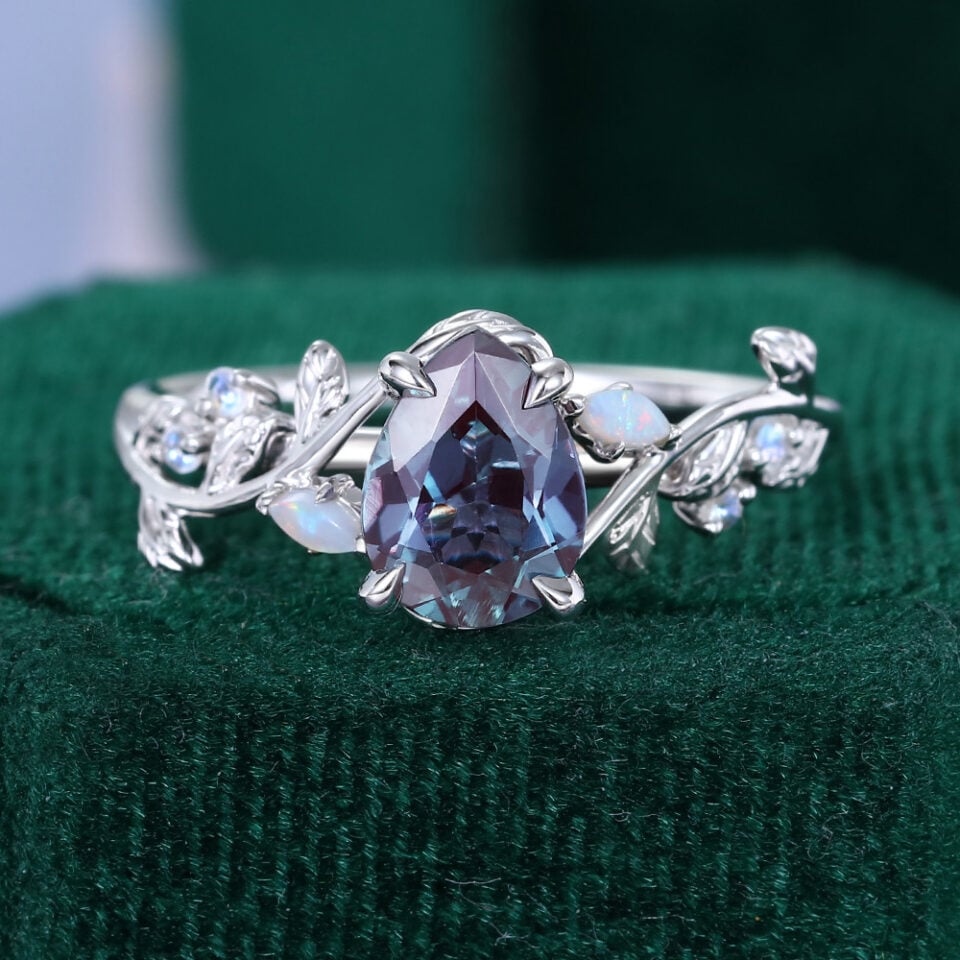
Alexandrite does not require unusually elaborate protection, but the following thoughtful designs can significantly reduce the risk of accidental damage.
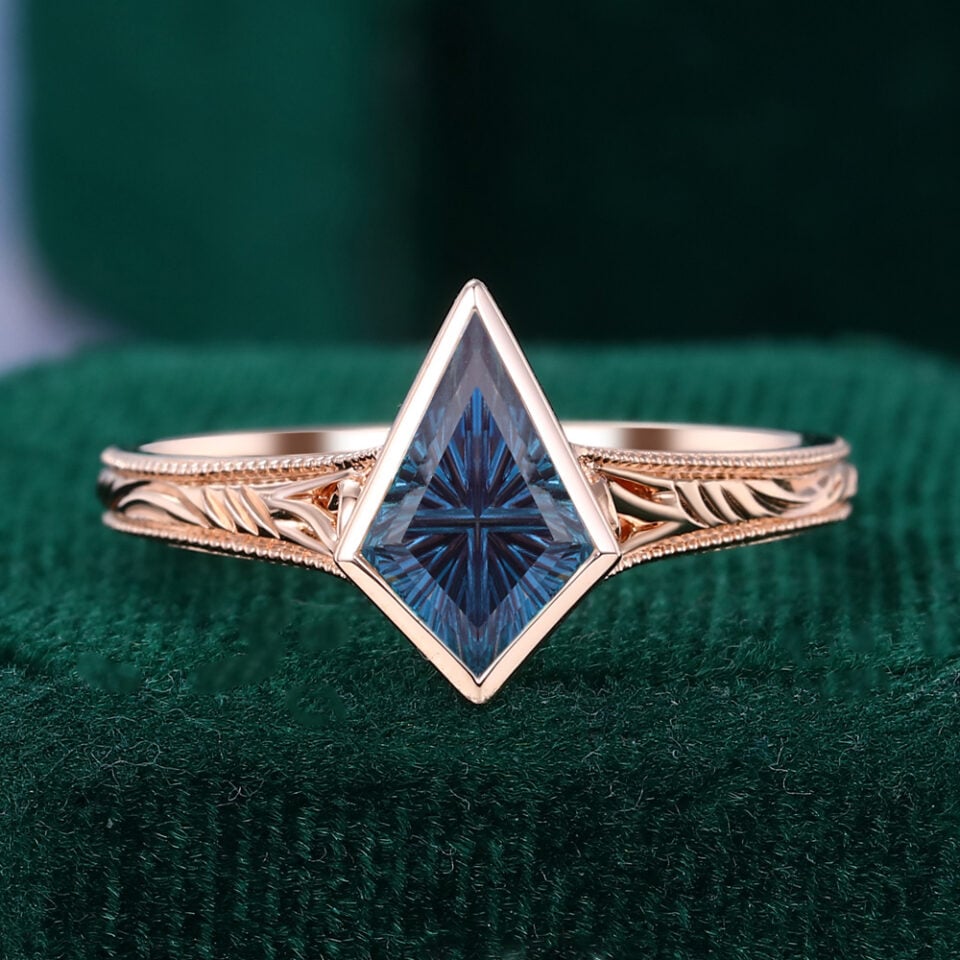
- Bezel Settings: A metal rim surrounds the gemstone, offering additional protection around its perimeter.
- Protective Prongs: Carefully placed prongs provide extra security for pointed shapes like pear, marquise, and kite cuts.
- Low-Profile Designs: Keeping the stone closer to the finger reduces the likelihood of catching it on clothing or nearby objects.
- Rounded Stone Shapes: Round and oval alexandrite cuts have fewer vulnerable points, making them practical choices for regular wear.
How to Keep Alexandrite Jewelry in Good Condition
How to Keep Alexandrite Jewelry in Good Condition
Alexandrite hardness and durability make this gemstone relatively easy to wear and maintain, but a little care still goes a long way. These simple habits can help keep your jewelry looking its best.
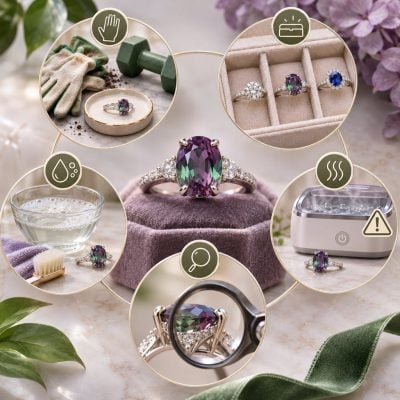
- Take It Off for Hands-On Activities: Remove your jewelry before lifting weights, gardening, or doing heavy work.
- Store Pieces Separately: Keep alexandrite away from harder gems like diamonds and sapphires to prevent contact scratches.
- Clean Gently and Regularly: Follow proper alexandrite cleaning methods using warm water, mild soap, and a soft brush to remove accumulated dirt and residue.
- Be Careful with Ultrasonic and Steam Cleaners: These methods may be safe for untreated, undamaged stones, but avoid them if fractures or treatments are present or uncertain.
- Inspect the Setting Periodically: Check for loose prongs or movement in the stone, especially on frequently worn rings.
FAQs: Alexandrite Hardness & Durability
FAQs: Alexandrite Hardness & Durability
Is alexandrite as hard as diamonds?
No. Alexandrite ranks 8.5 on the Mohs scale, while diamond ranks 10. Diamond offers considerably greater scratch resistance.
Can alexandrite be scratched by glass?
Ordinary glass is generally around 5–6 on the Mohs scale, so it should not scratch genuine alexandrite under normal conditions.
Is alexandrite more durable than emerald?
Typically, yes. Alexandrite is harder than emerald, which ranks approximately 7.5–8, and typically offers better resistance to everyday wear.
Can a scratched alexandrite be repaired?
Does alexandrite chip easily in real life?
Not easily. Its lack of distinct cleavage gives it solid resistance against everyday knocks. Still, like any faceted mineral, hitting a sharp point directly against tile or steel can cause a small edge chip.
Final Thoughts: A Gemstone Built for Decades of Beauty
Final Thoughts: A Gemstone Built for Decades of Beauty
With a Mohs rating of 8.5 and generally good toughness, alexandrite hardness and durability make it a reliable option for long-term wear. Paired with thoughtful settings and proper care, this remarkable color-changing gemstone can remain a cherished companion for decades.
At MollyJewelryUS, you’ll find alexandrite jewelry featuring quality gems and thoughtful craftsmanship. Check out our designs and choose one you’ll love wearing for years.