- by MollyJewelryUS
- October 7, 2026
- Buying Guides
Few gemstone shapes make as immediate an impression as the heart cut. Yet beyond its unmistakable outline, proportion plays a major role in how the shape appears. A broader stone and a longer, narrower one can create noticeably different silhouettes.
Whether you’re browsing diamonds, moissanite, or other gemstones, understanding and comparing the heart cut engagement ring ratio can help you find a proportion that complements your hand and creates the look you envision.
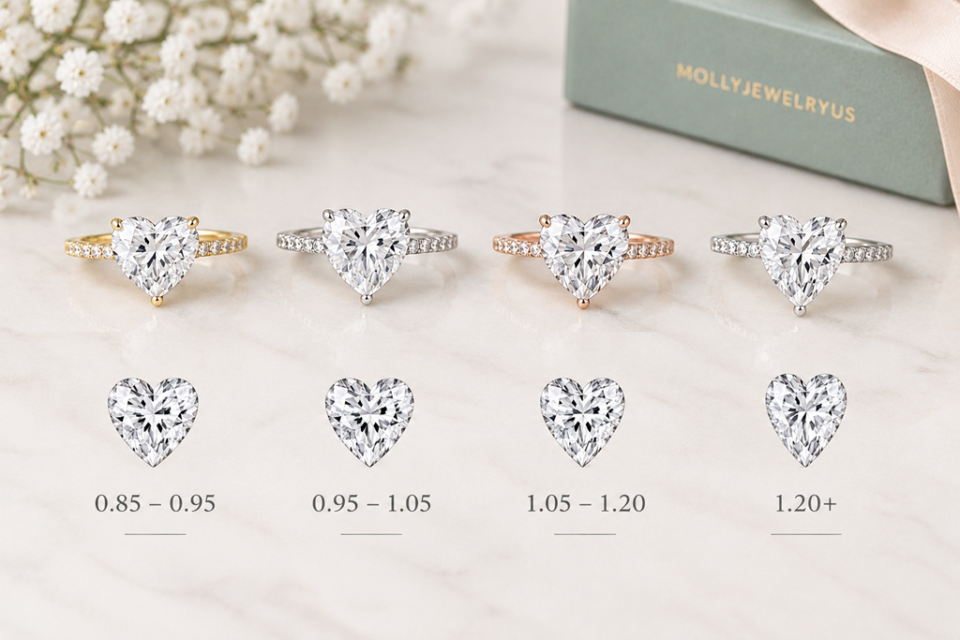
Table of Contents
Why Does Ratio Matter for Heart-Shaped Diamonds and Gems?
Why Does Ratio Matter for Heart-Shaped Diamonds and Gems?
Like other fancy engagement ring cuts, a heart-shaped ratio describes the relationship between the stone’s length and width. The heart cut is particularly sensitive to proportion because its shape depends on the balance of two rounded lobes, a central cleft, and a pointed bottom.
Whether you’re choosing a diamond, moissanite, or another gemstone, the ratio can noticeably change the way the heart shape looks and the overall feel of the ring. Knowing what these proportions mean makes it easier to compare options and choose a shape that suits your preferences.
How to Calculate a Heart Cut Ring Ratio?
How to Calculate a Heart Cut Ring Ratio?
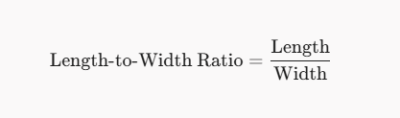
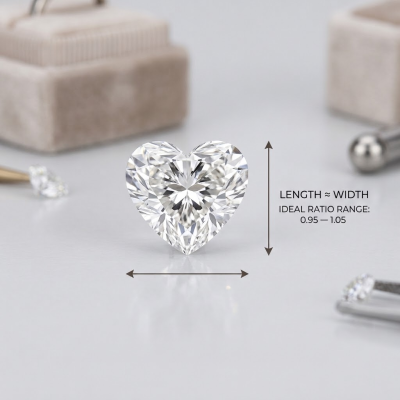
The heart cut engagement ring ratio is calculated by dividing the gem’s length by its width:
To ensure accurate measurements when reviewing gemstone certificates or inventory sheets, you should confirm how length and width are defined:
- Length: The straight vertical distance from the deepest point of the central top notch (the cleft) down to the tip of the bottom point.
- Width: The horizontal distance measured across the widest span of the two upper rounded curves (the lobes).
Comparing Different Heart Cut Engagement Ring Ratios
Comparing Different Heart Cut Engagement Ring Ratios
For a simpler comparison, we’ve divided common heart cut ratios into three ranges and created the chart below to show the differences at a glance.
| Ratio Range | Visual Emphasis | Appearance |
|---|---|---|
| 0.85 – 0.95 | Broad horizontal presence | Soft, rounded lobes |
| 0.95 – 1.05 | Even proportions | Clear cleft and point |
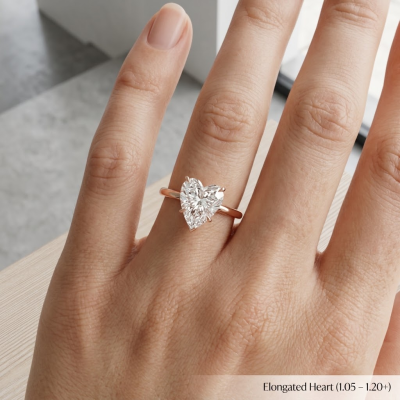
| 1.05 – 1.20+ | Greater vertical length | More elongated |
* These ranges are visual guidelines rather than strict grading categories. The actual look can vary depending on how the stone’s lobes, cleft, shoulders, and point are shaped.
Do Diamonds and Other Gemstones Share the Same Ratio Standards?
Do Diamonds and Other Gemstones Share the Same Ratio Standards?
Yes. The basic length-to-width ratio calculation works for heart diamonds, moissanites, and other gemstone rings.
Keep in mind, though, that ratio alone does not determine a heart cut stone size. Other factors can affect how the proportions come through visually, even when two gems share the same ratio, which we’ll cover in more detail in this guide later.
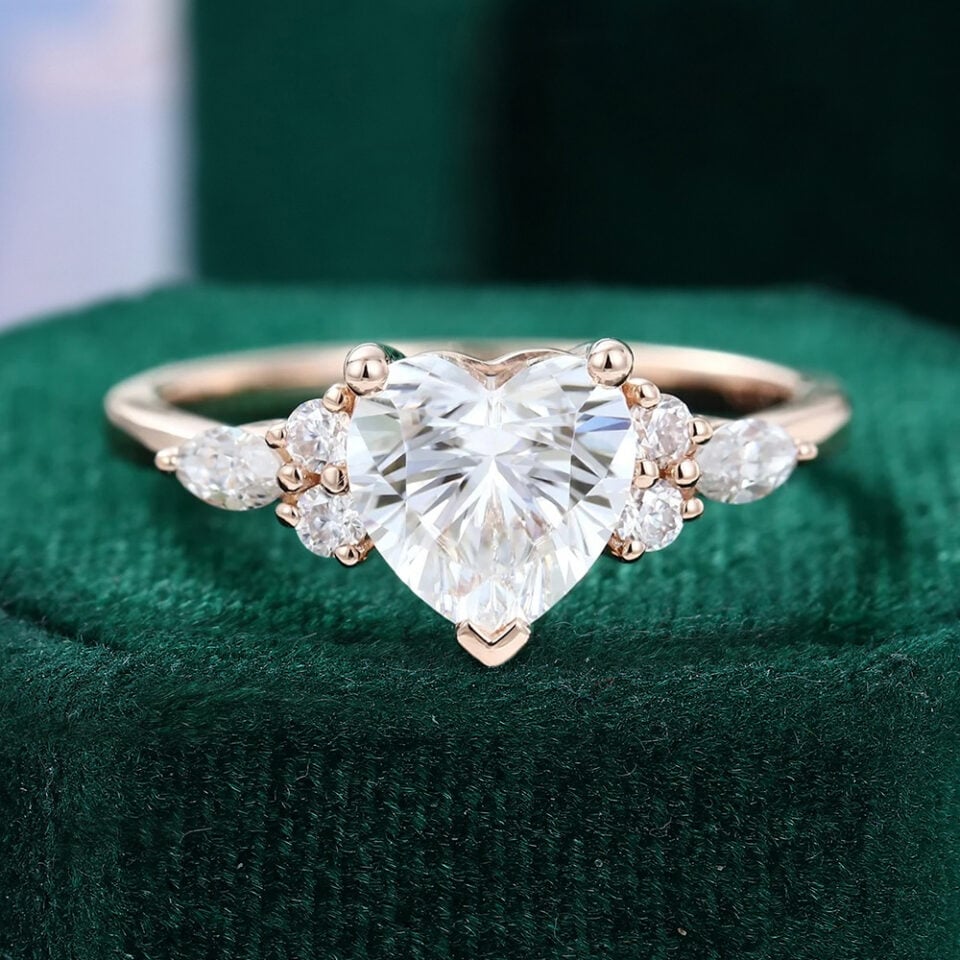
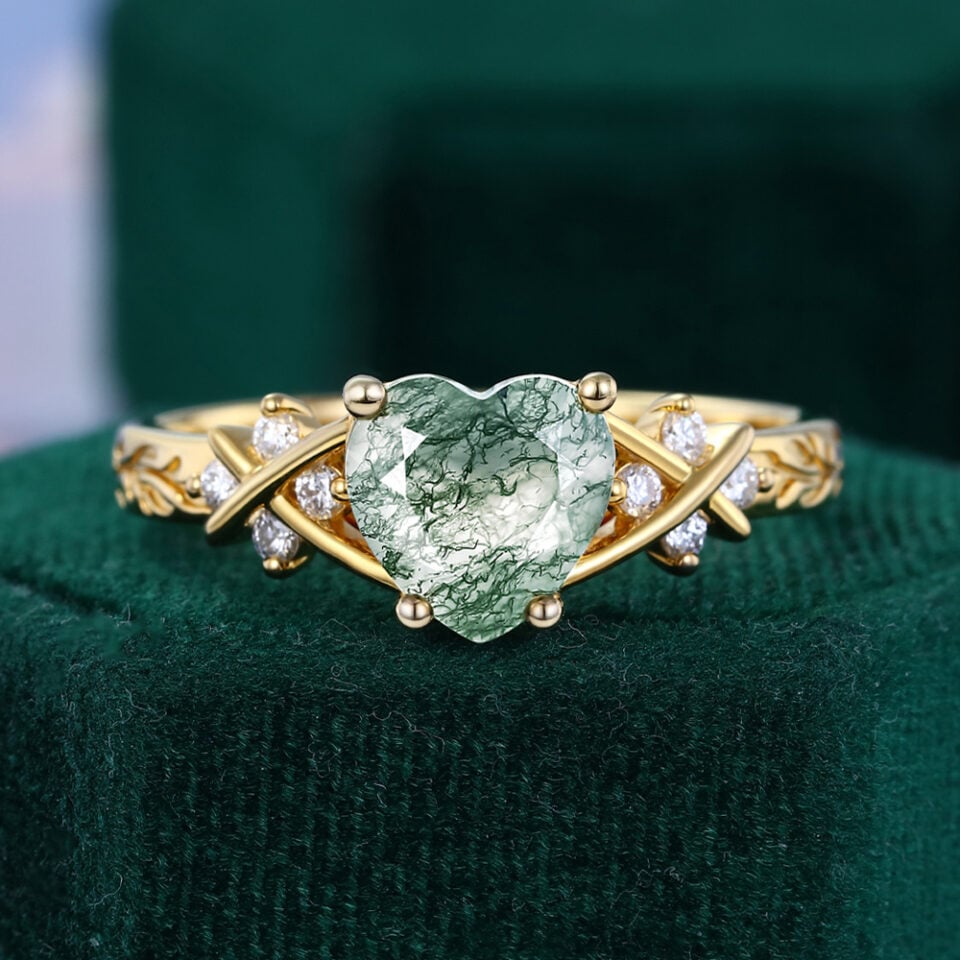
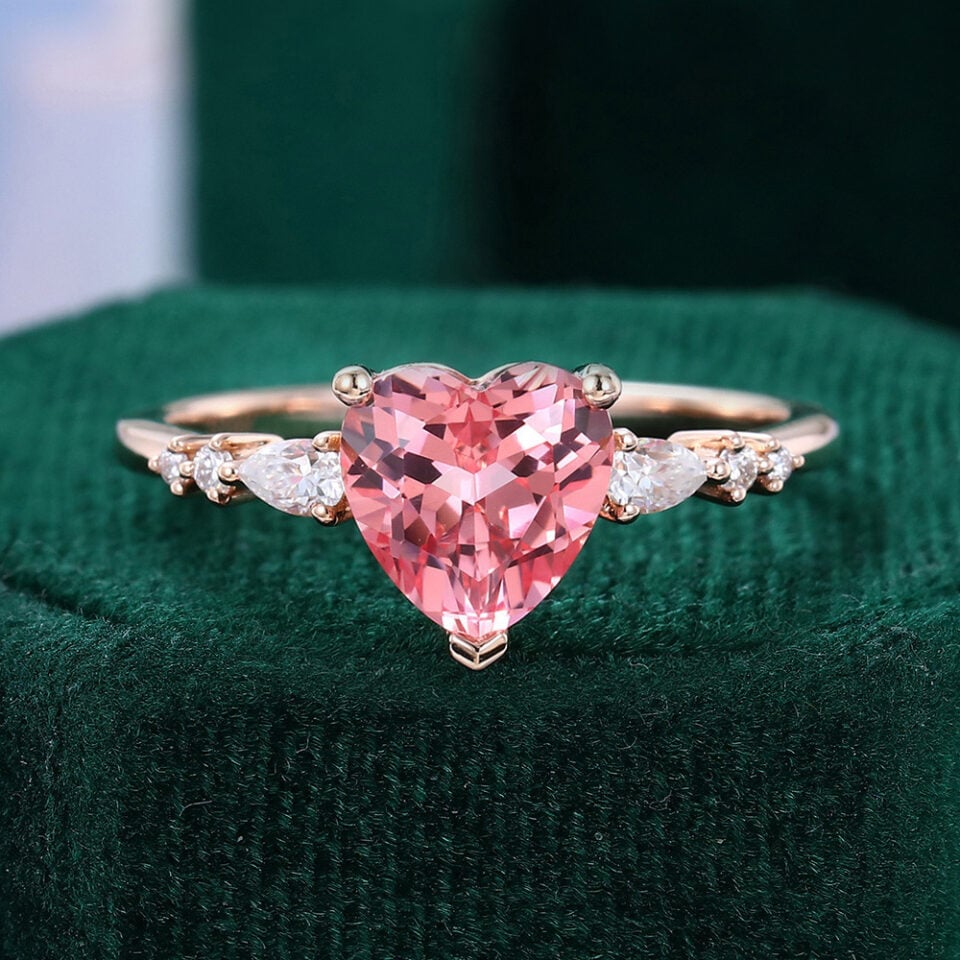
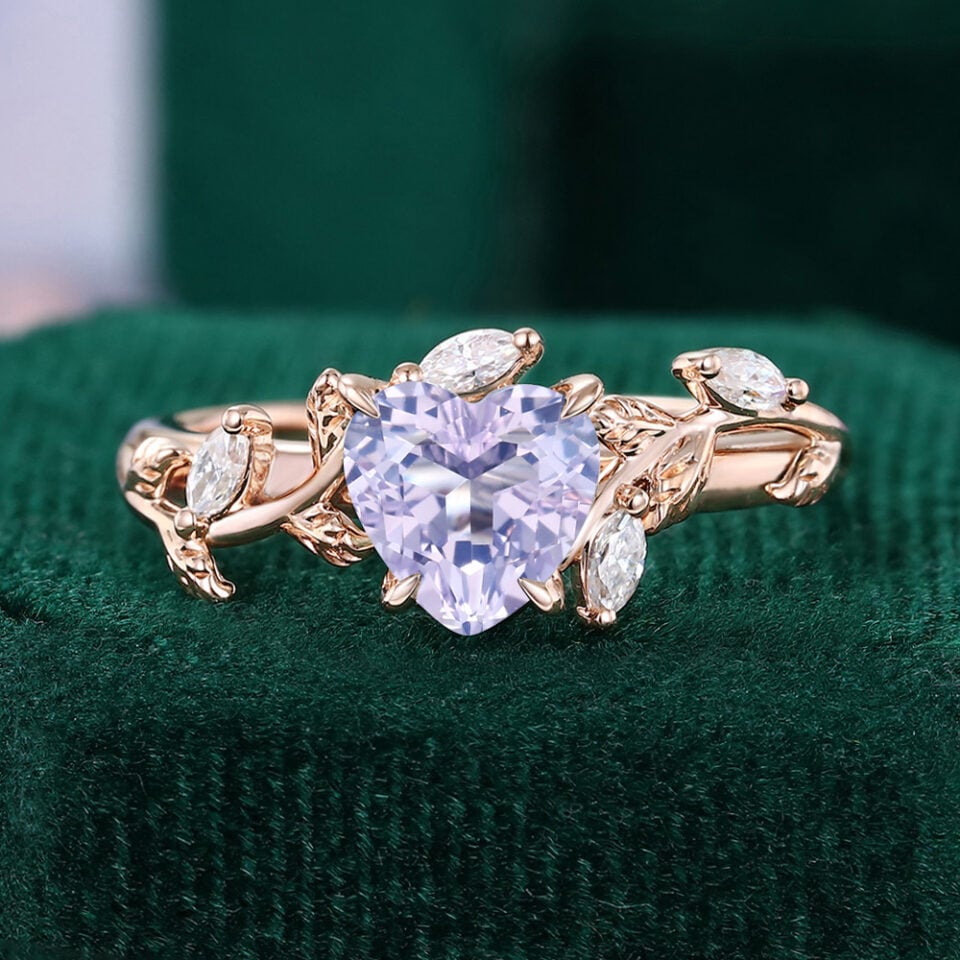
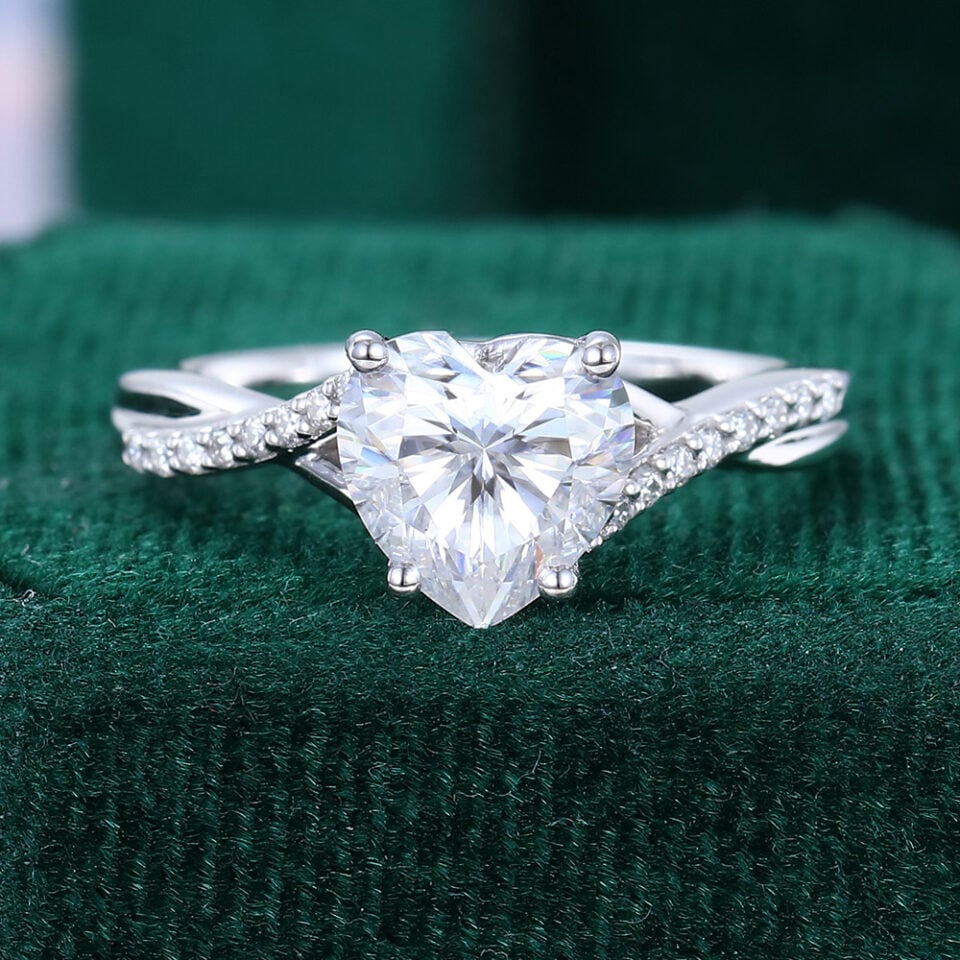
Compact and Broad Hearts: 0.85 – 0.95
Compact and Broad Hearts: 0.85 – 0.95
A ratio between 0.85 and 0.95 brings out a noticeably wider heart. The lobes tend to have more visual presence, giving the stone a softer and more compact appearance. This wider shape can also give a smaller-carat engagement ring a larger face-up appearance.
Try This Range If You:
- Prefer soft, antique, or plush gemstone outlines.
- Have slender fingers and want broader horizontal finger coverage.
- Plan to set your stone in a protective bezel or vintage-inspired mounting.
Classic Balanced Hearts: 0.95 – 1.05
Classic Balanced Hearts: 0.95 – 1.05
With a ratio of 0.95 to 1.05, the stone maintains the traditional heart-shaped outline many people envision. Its nearly equal length and width create full lobes, defined shoulders, and a distinct pointed tip. This silhouette works well with a variety of ring setting styles.
Try This Range If You:
- Want the classic, universally recognized heart shape.
- Seek a versatile shape that fits easily into timeless engagement ring designs.
- Plan to add accent stones or a halo surrounding the center gem.
More Elongated Hearts: 1.05 – 1.20+
More Elongated Hearts: 1.05 – 1.20+
As the heart cut engagement ring ratio moves beyond 1.05, the stone takes on more vertical length. The point becomes more visually prominent, while the lobes contribute relatively less to the overall width. Once the ratio exceeds 1.20, the outline appears noticeably slimmer and more elongated, especially when the shoulders taper smoothly toward the point.
Try This Range If You:
- Like a modern, elegant shape that visually slims and lengthens your fingers.
- Prefer diamond or gemstone that cover more vertical space on the finger.
- Pair your stone with a delicate solitaire band or low-profile setting.
🔮 Note: Unlike the popular pear cut, an elongated heart shape keeps its signature two-lobed silhouette while offering a sleek, modern aesthetic.
What is the Ideal Ratio for a Heart Cut Ring?
What is the Ideal Ratio for a Heart Cut Ring?
There is no single ideal heart-shaped stone ratio for every wearer, as hand shape and personal style preferences can vary.
That said, a ratio between 0.95 and 1.05 is a useful starting point for those seeking a classic heart shape. Centered around a 1.00:1 length-to-width measurement, this range tends to create a clean and well-proportioned silhouette.
How to Choose the Right Proportion
How to Choose the Right Proportion
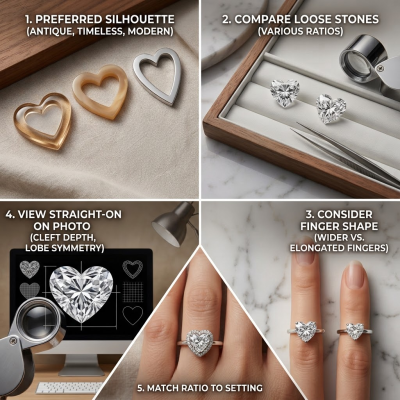
Not sure which heart cut engagement ring ratio suits you best? Use the steps below to narrow down your options and make the decision easier.
- Identify your preferred silhouette: Decide whether you favor a broad antique profile, a timeless balanced outline, or a modern elongated look.
- Compare stones within your preferred ratio range: This makes visual differences easier to spot.
- Consider finger shape: Wider ratios flatter longer, slender fingers, while elongated ratios add vertical length to shorter fingers.
- Review straight-on photos: Never rely solely on ratio numbers; view a face-up photo of the actual stone to confirm the cleft depth and lobe symmetry appeal to you.
- Match the ratio to your setting: Ensure your desired setting frames the cleft and protects the point without distorting the gemstone’s visible shape.
👉🏻 For more buying tips, check out our heart-shaped engagement ring guide here.
More Details: Why the Same Heart Cut Ratio Can Look Different?
More Details: Why the Same Heart Cut Ratio Can Look Different?
As mentioned earlier, the ratio for a heart cut only describes the stone’s length-to-width relationship. Stones with the same ratio can still look quite different because of:
- Carat Size: This affects the stone’s face-up coverage and actual dimensions. The heart shaped stone minimum carat may also be relevant when looking for a clearly defined heart.
- Symmetry: Uneven lobes or an off-center point can make the heart look unbalanced.
- Cleft Depth: A shallow notch can make a 1.00 ratio heart resemble a shield or rounded trillion from a distance, whereas a deep notch creates a crisp V-shape.
- Point and Shoulders: A sharp point and smoothly tapering shoulders can make the heart appear more elongated.
- Heart Ring Setting: Prongs positioned around the cleft or shoulders can partially conceal the outline, affecting the gem’s perceived size and shape.
FAQs About Heart Cut Engagement Ring Ratio
FAQs About Heart Cut Engagement Ring Ratio
What is the most popular ratio for a heart cut ring?
It is between 0.95 and 1.05, providing a classic, well-balanced heart shape with balanced length and width.
Is a 0.90 heart engagement ring ratio too wide?
Not necessarily. A 0.90 ratio creates a broad, compact heart and can work well when the lobes and cleft remain clearly defined.
Does a higher ratio make a heart cut stone look larger?
Not by itself. Ratio changes the distribution of length and width, while the actual millimeter dimensions determine face-up size.
How does heart cut ratio affect cleft visibility?
Wider or compact ratios (below 0.95) can sometimes make the top cleft look shallower, while elongated stones naturally emphasize the central V-notch.
Is ratio more important than symmetry for heart cut?
Neither should be considered alone. Ratio describes overall proportion, while symmetry determines how evenly the heart shape is formed.
Are heart cut ratios measured the same way by all jewelers?
Pick the Silhouette That Matches Your Story
Pick the Silhouette That Matches Your Story
Overall, selecting the ideal heart cut engagement ring ratio comes down to balancing the proportions with your personal taste. Lower ratios create a wider heart, ratios around 1.00 give a more classic appearance, and higher ratios produce a longer, more slender outline with a more prominent point.
Before making your final choice, compare the ring from different angles to get a clearer sense of its shape and proportions. If you have questions or need help comparing options, our professional team at MollyJewelryUS is always here to assist.