- by MollyJewelryUS
- August 18, 2026
- Buying Guides
Heart and pear-shaped gemstones are both known for their romantic appeal, making them popular choices for engagement rings. Yet their silhouettes have very different personalities. The heart shape feels playful and sentimental, while the pear shape brings a graceful teardrop outline with a more elongated appearance.
Wondering which is right for you? This heart vs pear engagement ring comparison will showcase the differences that actually matter when choosing a center stone, so you can find the shape that feels most like your style.
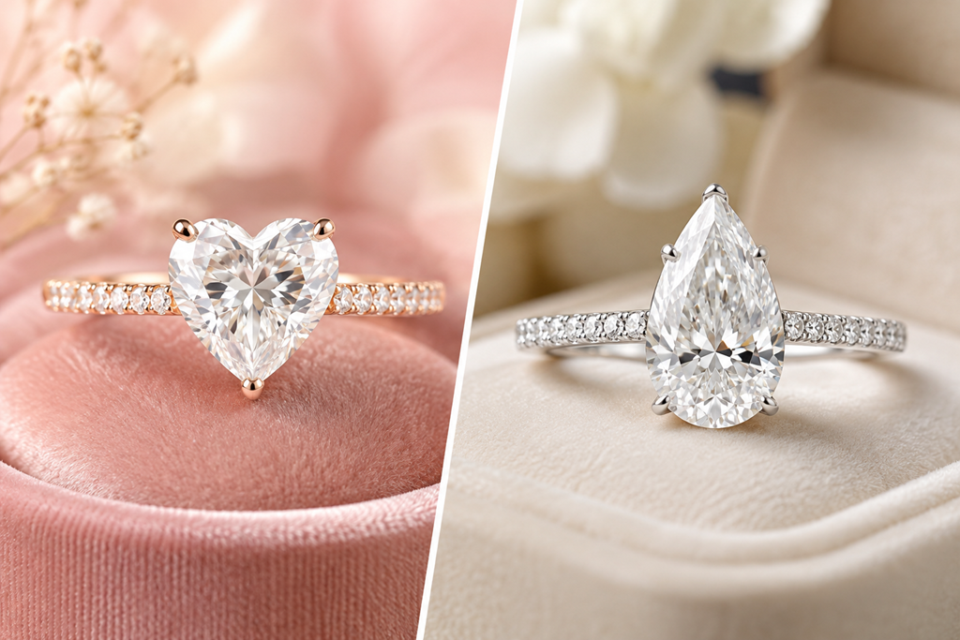
Table of Contents
Understanding the Pear and Heart Engagement Ring
Understanding the Pear and Heart Engagement Ring
Before getting into the comparison, it’s worth defining these two popular engagement ring cuts. Pear and heart are both fancy shapes, their different geometries are what give each shape its unique personality.
What Is a Pear-Shaped Engagement Ring?
What Is a Pear-Shaped Engagement Ring?
The pear gemstone has an instantly recognizable teardrop outline, with one end rounded and the other narrowing into a delicate point. Unlike a round stone, its orientation and proportions have a noticeable effect on how it looks when worn.
Depending on the pear-shaped engagement ring ratio, it can appear soft and full, evenly proportioned, or distinctly long and slender.
What Is a Heart-Shaped Engagement Ring?
What Is a Heart-Shaped Engagement Ring?
A heart-shaped gemstone shares some of the pears graceful curves but transforms them into two symmetrical lobes with a clearly defined cleft between them.
This shape demands precise cutting to keep the length, width, and curvature of both lobes in balance. Even small changes in proportion can affect how recognizable the heart silhouette appears, with the discrepancy becoming particularly noticeable in smaller stones.
Visual Differences: Heart vs Pear Engagement Ring
Visual Differences: Heart vs Pear Engagement Ring
When comparing a heart vs pear engagement ring, one of the first differences you’ll notice is how each center stone looks face-up and how its silhouette translates to the hand.
Face-Up Size and Appearance
Face-Up Size and Appearance
Carat weight measures a gemstone’s mass, while its visible size depends largely on how that weight is distributed throughout the cut. This is why a pear and a heart of the same carat weight may not look equally large when viewed from above.
- Pear-Shaped Rings:
Its rounded end and pointed tip create a flowing, elongated appearance that can give the gem a greater sense of length and surface presence relative to its weight. (>> See how pear stone carat weight translates into millimeters here.)
- Heart-Cut Rings:
The cut must preserve enough body and depth to create two recognizable lobes and a defined cleft. This can result in a more concentrated face-up outline than a pear of equivalent weight.
The Look of Each Shape on the Hand
The Look of Each Shape on the Hand
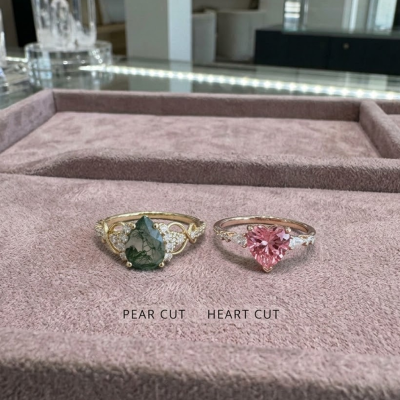
Even when pear and heart stones have similar dimensions, their silhouettes can make an engagement ring look completely different on the finger.
- Pear-Shaped Effect:
Its elongated, tapered shape can visually lengthen the finger. The pear stone’s directional design also gives you styling flexibility. Point-up and point-down orientations emphasize a graceful vertical profile, while east-west styling creates a bolder horizontal statement.
- Heart-Cut Effect:
The distinctive two-lobed silhouette naturally becomes the focal point, delivering a softer, more playful sense of romance, especially when the point faces toward the fingertip for a recognizable heart silhouette.


Brilliance and Sparkle: Comparison Between Heart and Pear Ring
Brilliance and Sparkle: Comparison Between Heart and Pear Ring
In the sparkle department, the heart vs pear engagement ring comparison does not have a definitive winner. When used for diamonds, both shapes can feature brilliant-style faceting that enhances light return and fire, but the quality of the cut still plays a major role.
- Pear-Cut Sparkle:
One detail to watch for is the bow-tie effect, which can create a darker band across the center. A well-executed cut can balance the facet arrangement and reduce overly strong contrast.
- Heart-Shaped Sparkle:
Symmetry is especially important for heart-shaped diamonds. Balanced lobes, a defined cleft, and a centered point help the stone maintain a clean, recognizable outline and consistent visual performance.
Heart vs Teardrop Ring: Distinctions in Style and Wear
Heart vs Teardrop Ring: Distinctions in Style and Wear
To fully compare heart and teardrop shaped stones as timeless engagement ring designs, it is also important to consider their aesthetic character, styling versatility, and durability for everyday wear.
Vibe and Styling Flexibility
Vibe and Styling Flexibility
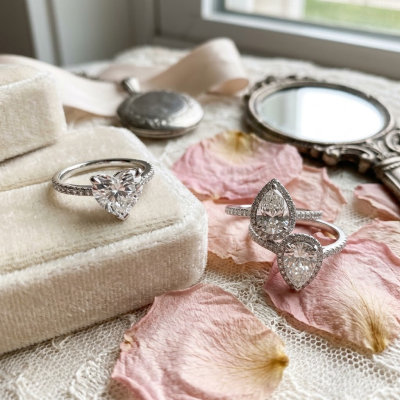
The heart cut has an unmistakably romantic appeal. Its two rounded lobes and center cleft create an expressive symbol of love that feels feminine and sentimental.
Meanwhile, the pear engagement rings symbolism is also open to interpretation. Its teardrop shape is often associated with tears of joy and independence, while its multiple wearing directions make it especially versatile for styling in different ways.
Durability and Maintenance
Durability and Maintenance
The tip areas of both pear and heart cuts deserve extra attention. Some gemstones are very hard, but their pointed edges can still be vulnerable when the stone takes a hard impact. As GIA recommends, protective settings are especially important for fancy shapes with pointed corners.
- Pear Cuts: Require a V-prong to specifically protect the pointed tip, or a full bezel to provide broader protection. These are among the ideal pear engagement ring setting for security.
- Heart Cuts: Depend on a V-prong at the bottom point and well-placed prongs securing the upper lobes to keep the cleft aligned.
Stacking with Wedding Bands
Stacking with Wedding Bands
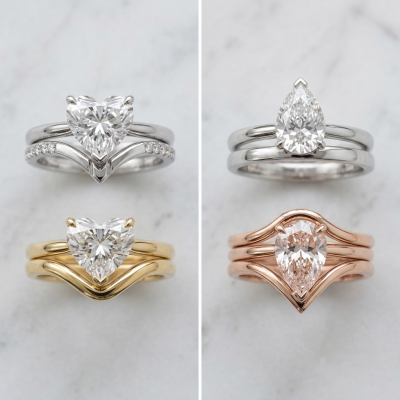
Pear rings give you more room to experiment, since switching the stone’s orientation can change the overall appearance. Curved or contoured bands can follow the center stone, while a straight wedding band can create a simple, contemporary contrast if the setting allows enough space.
For a heart vs pear engagement ring, the heart shape may need a little more planning for a flush band stack. A deeper curve, notch, or custom-shaped band can help the wedding band follow the lower edge without leaving an awkward gap.
Which Engagement Ring Shape Should You Choose?
Which Engagement Ring Shape Should You Choose?
Both heart cut and pear shape engagement ring styles have their own strengths. Still deciding? The comparison table below may help you make a more confident choice.
| Feature | Heart Cut | Pear Shape |
|---|---|---|
| Silhouette | Recognizable heart | Teardrop |
| Visual Effect | Bold, concentrated center point | Strong visual elongation |
| Overall Vibe | Unapologetic romanticism | Editorial, fluid, vintage-modern |
| Orientation | Usually point-down | Multiple options |
| Styling Potential | More shape-specific | More versatile |
| Wedding Band Fit | May need curved or contoured band | Flexible depending on setting |
| Main concern | Point and symmetry | Point protection |
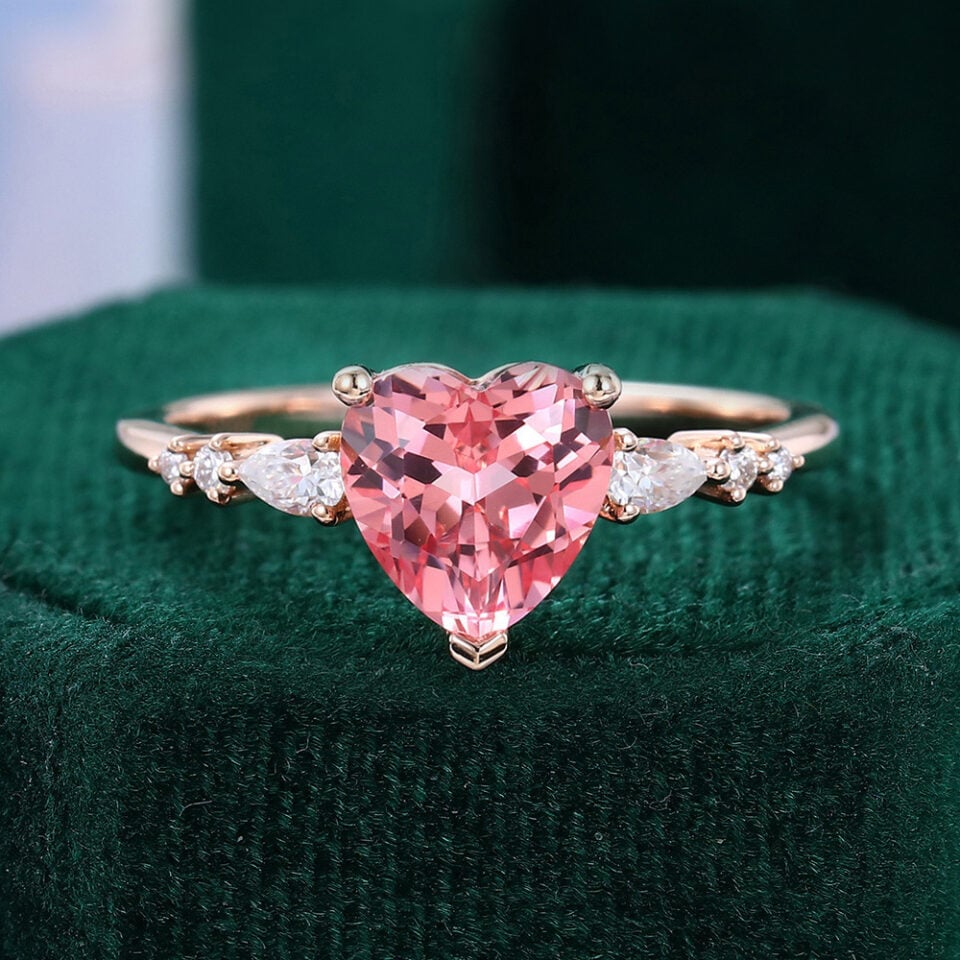
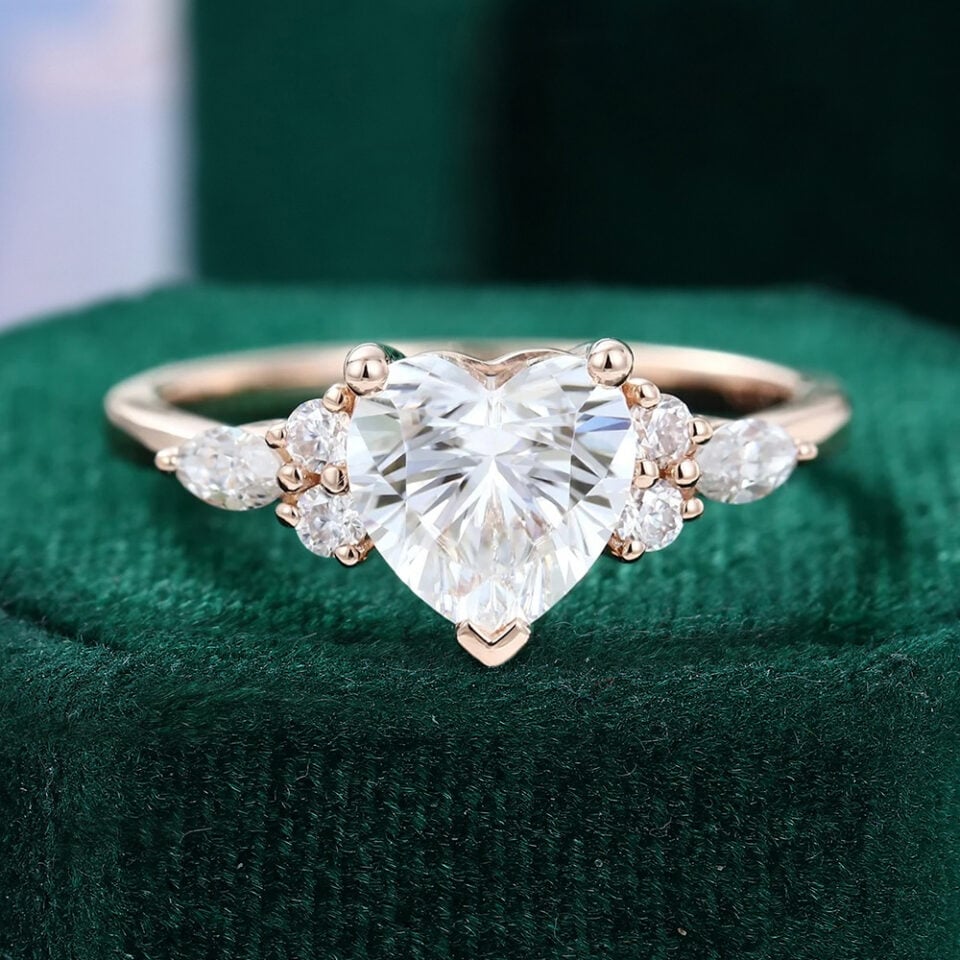
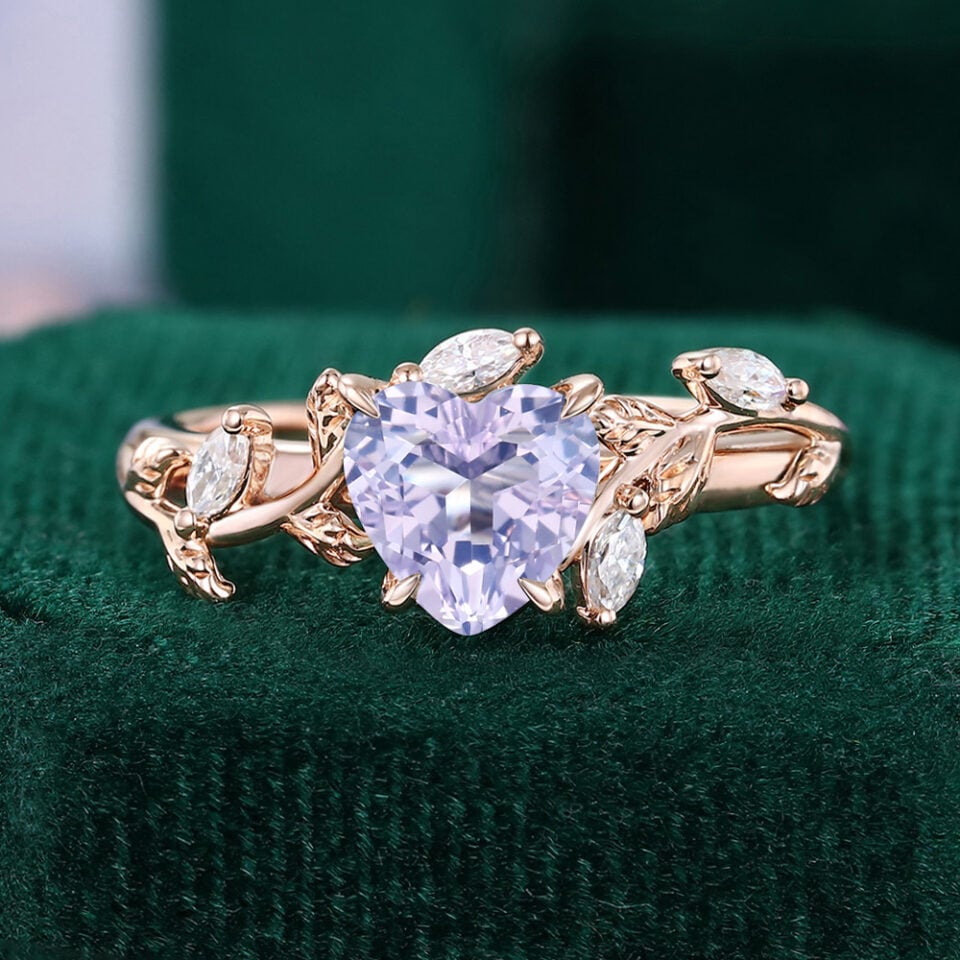
In simple terms, a heart engagement ring can be a better fit for brides who:
- Want a ring to make an unmistakably romantic and sentimental statement.
- Love expressive jewelry where the center stone immediately becomes the focal point.
- Prefer a broader silhouette that adds visual presence and balance to the hand.
- Enjoy feminine, playful, or soft styling that naturally complements the heart shape.
👉🏻 Read our heart engagement ring guide for more details and buying tricks.

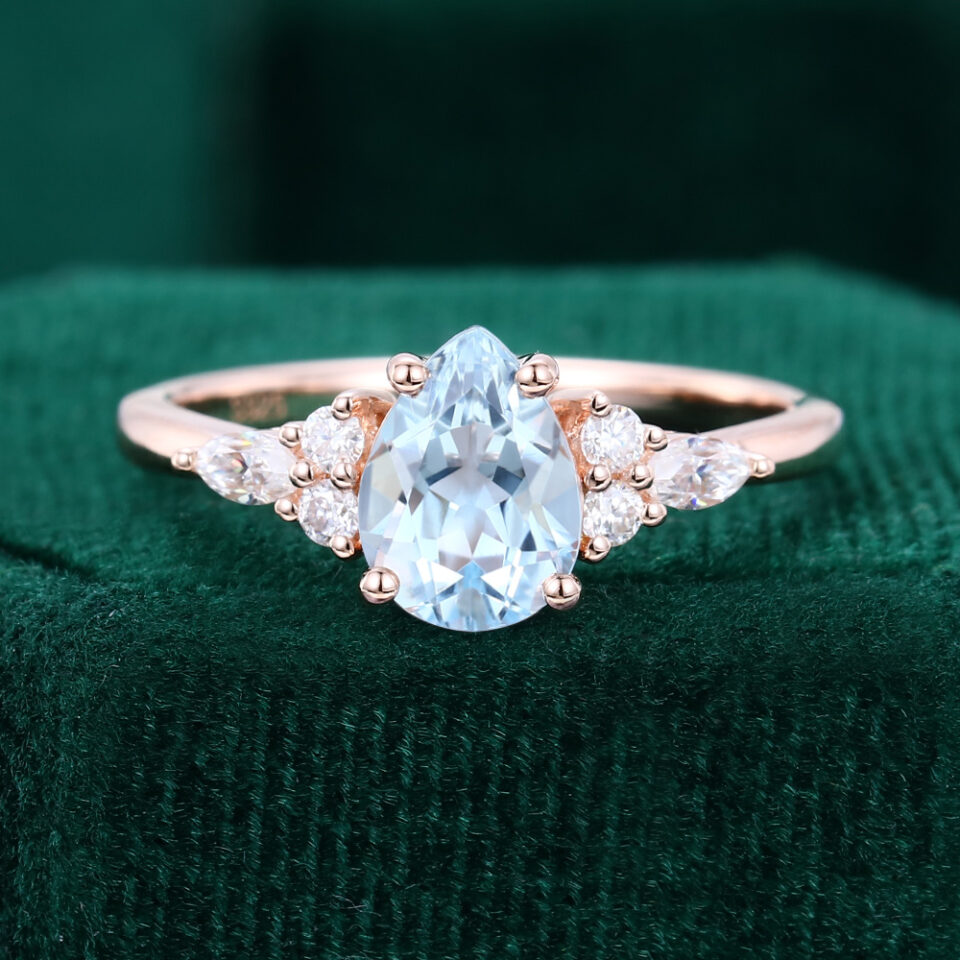
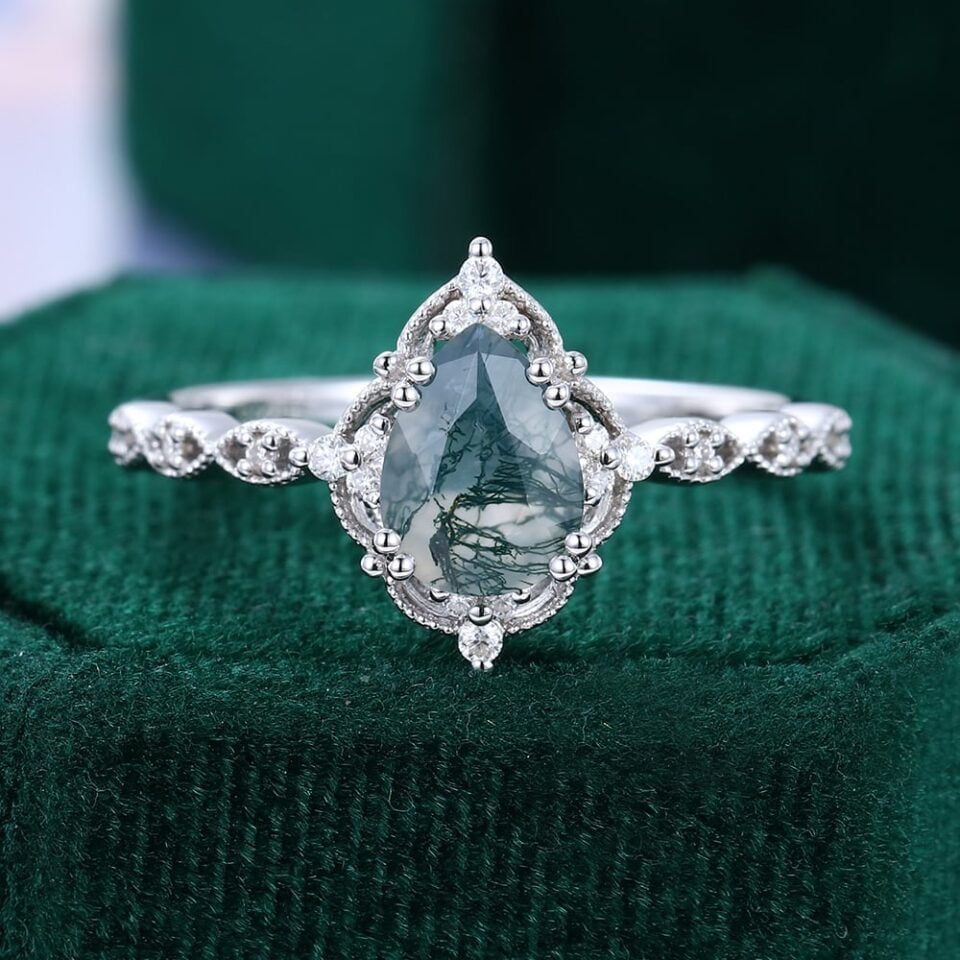
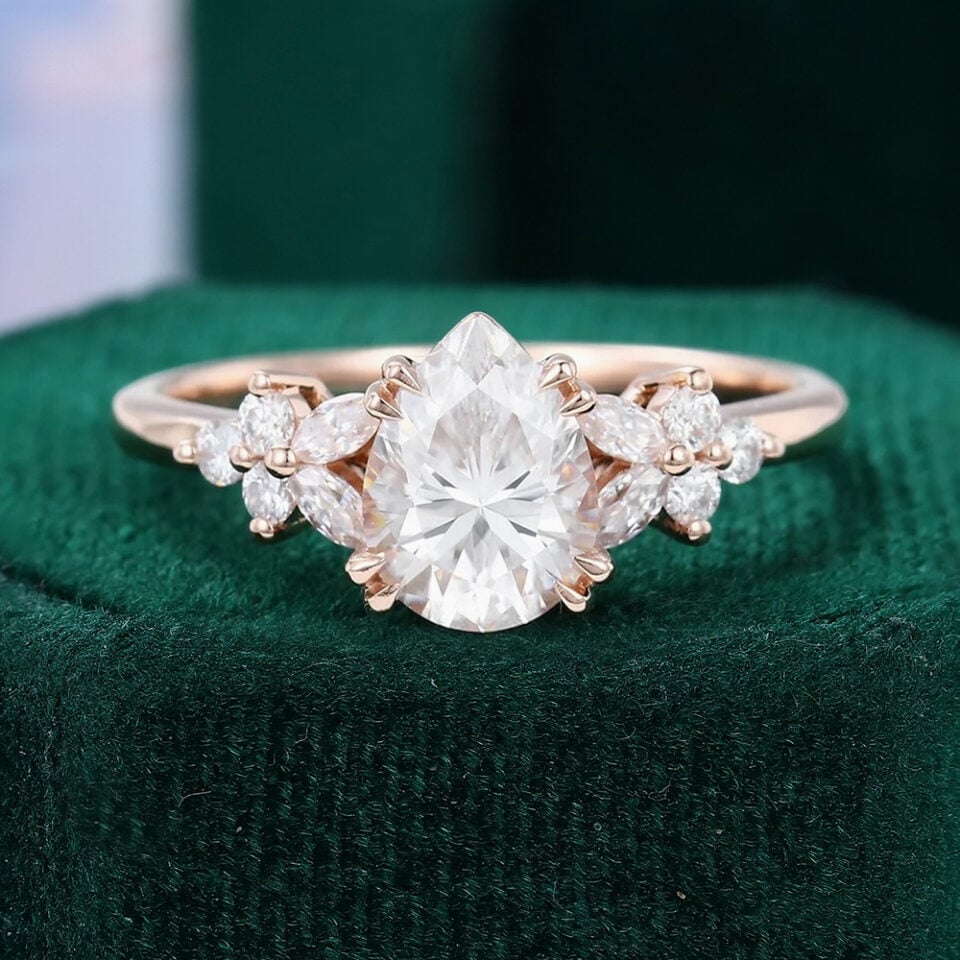
By comparison, our jewelry experts would like to recommend a pear engagement ring if you:
- Appreciate an elongated teardrop silhouette that can visually enhance the length of the finger.
- Seek a shape that transitions easily between vintage, minimalist, and contemporary settings.
- Like jewelry that feels distinctive and elegant without demanding too much attention.
- Want greater freedom when pairing your ring with curved, chevron, or open-gap wedding bands.
👉🏻 See our pear cut engagement ring guide for more styling ideas and selection tips.

FAQs about Heart Shape and Pear Shape rings
FAQs about Heart Shape and Pear Shape rings
Which shape looks bigger on the hand, a pear or a heart stone?
A pear cut generally looks larger per carat because its elongated outline spreads the stone’s weight across a longer surface area compared to a heart cut.
Is a heart or pear engagement ring more romantic?
Heart is the more direct romantic choice because its silhouette immediately represents love. Pear has a softer, more understated romantic appeal.
Are heart and pear cut rings durable enough for everyday wear?
Yes, provided the vulnerable pointed tips are properly shielded using protective V-prong or bezel ring settings.
Are heart diamonds more expensive than pear diamonds?
Not necessarily. Pricing depends on factors such as carat weight, color, clarity, cut quality, symmetry, and overall demand. Neither shape consistently commands a higher price than the other.
Which cut of these two is easier to pair with a wedding band?
Both can be paired successfully. Curved or contoured bands can make it easier to work around either shape, while the setting height determines whether a straight band can sit flush.
Let the Silhouette Shape Your Style
Let the Silhouette Shape Your Style
The choice between a heart vs pear engagement ring always comes down to your personal taste and lifestyle. Pear-shaped stones offer an elegant, elongated silhouette with plenty of flexibility for styling and stacking, while heart-shaped stones create a more expressive look with an unmistakably romantic shape.
No matter which outline you choose, look for balanced proportions, quality cutting, and a well-designed setting. The right combination can make your engagement ring both beautiful and enduring.