- by MollyJewelryUS
- August 12, 2026
- Buying Guides
Pear-shaped gemstones feature a graceful teardrop silhouette that can visually lengthen the finger while adding a romantic, elegant touch to an engagement ring. Yet even stones with the same carat weight can look surprisingly different, often because of their proportions.
Want to know how the pear engagement ring ratio affects the style and overall appearance of your ring? This guide will break down all the details, helping you find a proportion that works for your hand and aesthetic preference.
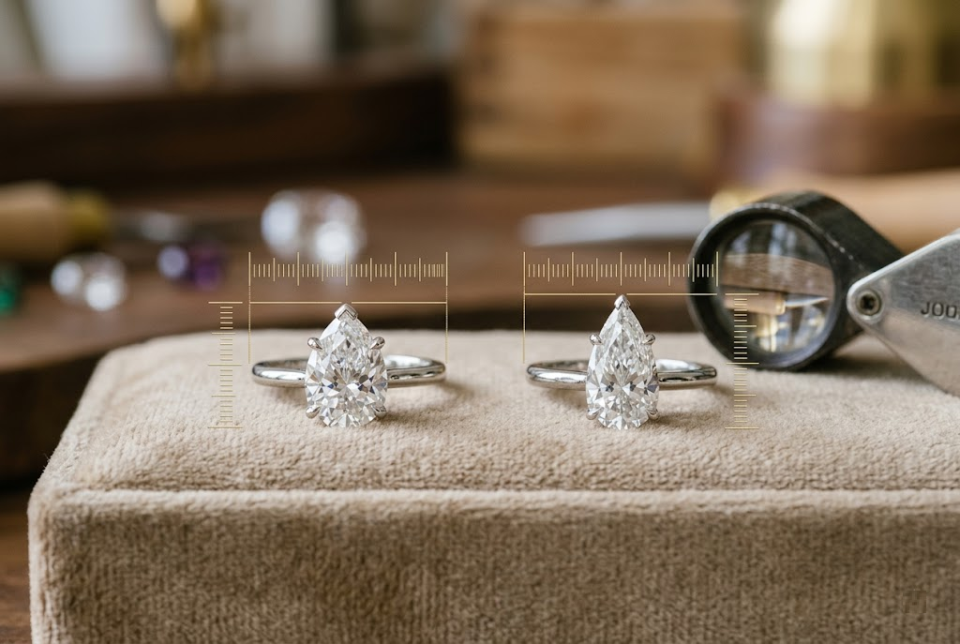
Table of Contents
The Definition of Pear Engagement Ring Ratio
The Definition of Pear Engagement Ring Ratio
Compared with oval and marquise cuts, pear stones have a more distinctive shape, but their appearance is still strongly influenced by length-to-width ratio. This proportion affects how full or slender the overall silhouette appears, while the shape of the shoulders further changes the stone’s visual character when worn.
How Is a Pear Shape Ratio Calculated?
How Is a Pear Shape Ratio Calculated?
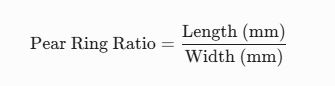
For instance, a 9.0 × 6.0 mm diamond has a pear diamond ratio of 1.5. You can also use a digital calculator to find the ratio without measuring manually.
Understanding Pear Ratios and Their Shoulder Profile
Understanding Pear Ratios and Their Shoulder Profile
As a popular engagement ring cut, the pear shape can be broadly grouped into four practical ratio ranges, each creating a different visual silhouette.
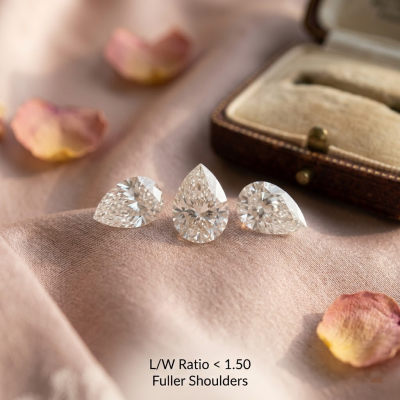
Under 1.50: Fuller Shoulders
Under 1.50: Fuller Shoulders
With a pear engagement ring ratio below 1.5, the stone typically has a voluptuous body with wide, soft shoulders. This lower scale places less emphasis on vertical length, giving the stone a more vintage-inspired character.
- Style Impact: Romantic and glamorous, with more horizontal coverage.
1.50 – 1.65: Classic Silhouettes
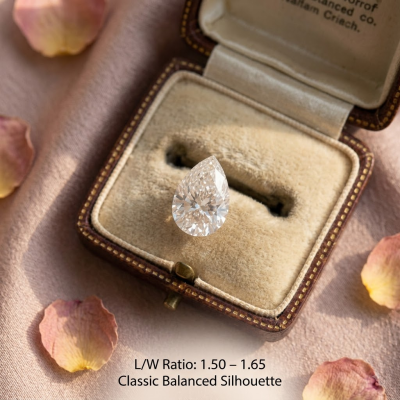
1.50 – 1.65: Classic Silhouettes
Often regarded as a sweet spot for timeless engagement ring styles, this ratio range creates a pear shape with defined shoulders and a harmonious transition between the rounded base and pointed tip. It avoids an overly wide or elongated appearance.
- Style Impact: Perfectly balanced teardrop proportions with versatile styling potential.
1.66 – 1.75: Modern Slender Profiles
1.66 – 1.75: Modern Slender Profiles
As the pear gemstone ratio increases, the stone becomes noticeably longer relative to its width, creating a sleek, refined silhouette with a stronger sense of vertical length.
- Style Impact: Modern and sophisticated, with a stronger vertical presence.
Above 1.75: High-Elongation Silhouettes
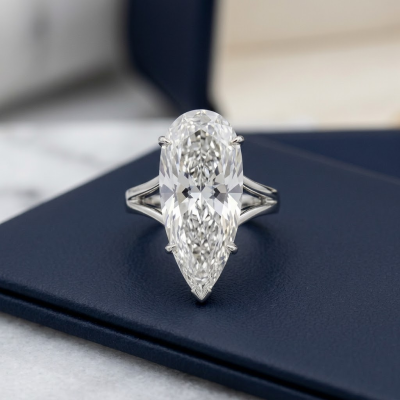
Above 1.75: High-Elongation Silhouettes
A pear shape size with a ratio above 1.75 can create a sharper, more elongated silhouette with a bold, avant-garde character. However, high-elongation requires careful attention to the shoulders, pointed tip, and overall symmetry to maintain a recognizable pear shape.
- Style Impact: Fashion-forward and dramatic, with pronounced vertical length.
How Do Different Ratios of Pear Rings Look on the Hand?
How Do Different Ratios of Pear Rings Look on the Hand?
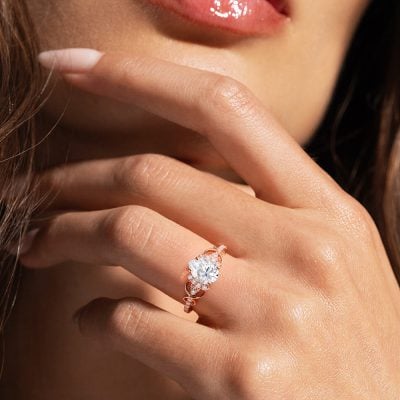
Different pear engagement ring ratios can change how much the stone covers your finger and how its shape is perceived. Use the chart below to compare how each range appears when worn.
| Ratio Category | Finger Coverage | Visual Effect |
|---|---|---|
| Wider Pear Stones | More lateral span | Emphasizes horizontal width |
| Mid-range Pear Cuts | Even overall spread | Moderate and naturally beautiful |
| Elongated Pear Pieces | More vertical coverage | Creates a vertically lengthening effect |
⭐ Note: Since mid-range proportions suit most hand shapes, we’ll focus below on the look of wider and more elongated pear ratios.
The Visual Effect of Wider Pear Shapes
The Visual Effect of Wider Pear Shapes
Pear-shaped gemstones with an approximately 1.35 to 1.48 length-to-width ratio are generally considered wider proportions. They tend to feature broader shoulders and a fuller body, giving the stone greater horizontal presence.
For longer fingers, this wider proportion can provide additional visual width, helping soften the elongated appearance of the hand and creating a more cohesive look.
The Elegance of Elongated Pear Cuts
The Elegance of Elongated Pear Cuts
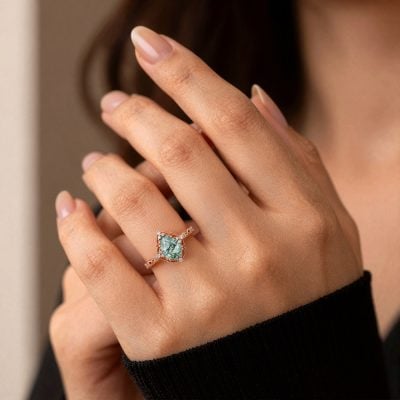
High-ratio pear cuts, particularly those around 1.66 and above, can create a striking elongated effect that makes the engagement ring appear larger while giving the hand a more slender look.
If you have shorter fingers and want to emphasize vertical length, this proportion can be an excellent choice, drawing the eye along the finger while allowing the pear-shaped diamond or colored gemstone to take center stage.
How Does Pear Ratio Impacts Engagement Ring Setting Choice?
How Does Pear Ratio Impacts Engagement Ring Setting Choice?
The ratio of a pear-shaped gemstone can affect how different frame designs complement its silhouette, making proportions an important consideration when choosing a pear engagement ring setting. Here are a few recommendations to keep in mind:
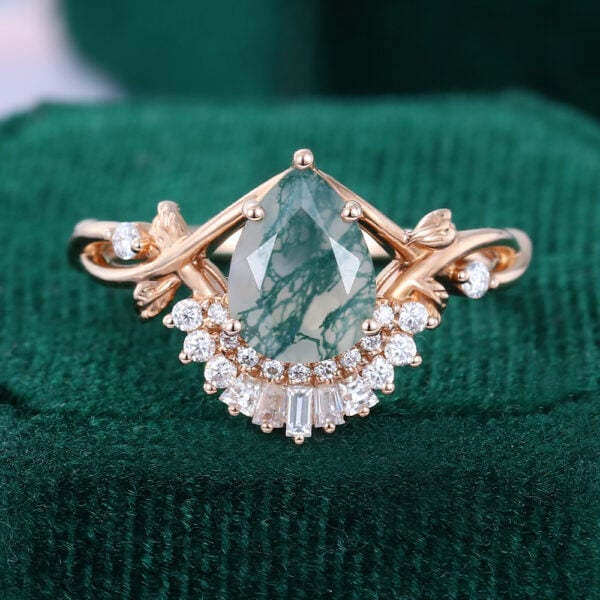
- Lower Ratios (Under 1.5): Pair naturally with fuller-looking designs, including classic solitaire and certain halo settings.
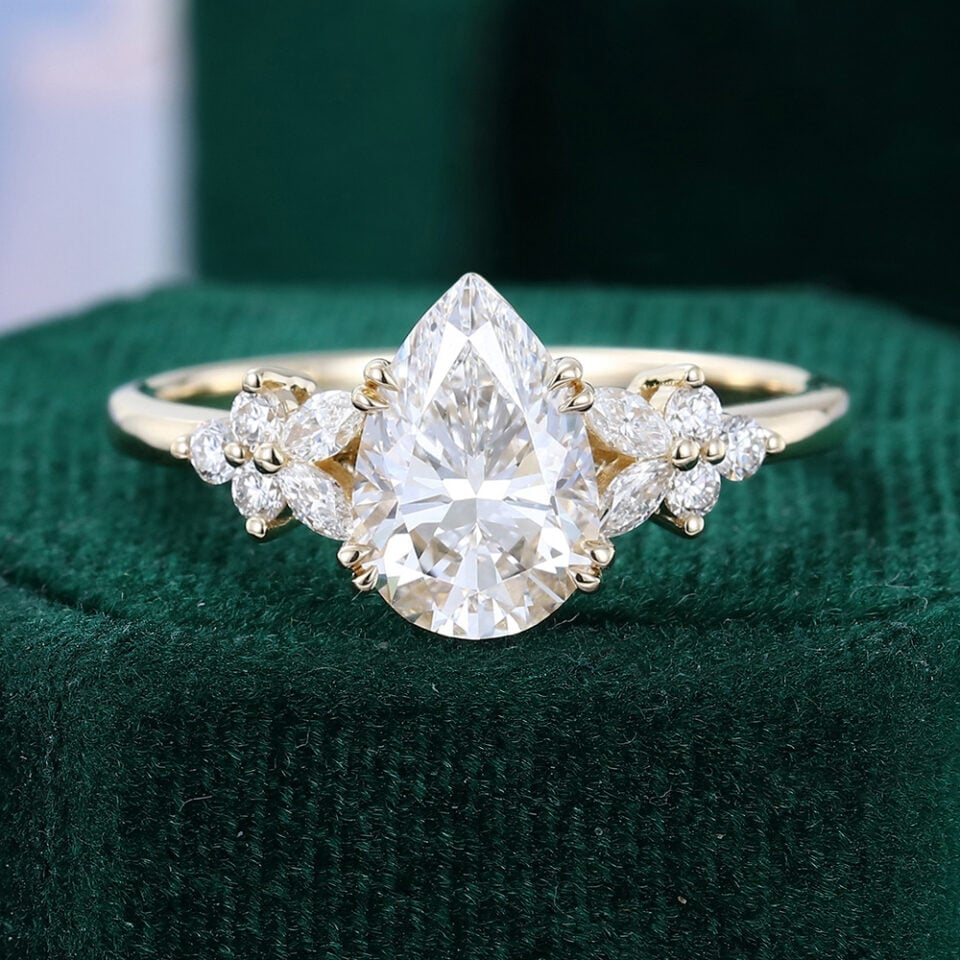
- Medium Ratios (1.5 – 1.65): Provide plenty of flexibility and work well with solitaire, halo, and three-stone settings.
- Higher Ratios (1.66 – 1.75): Can make a strong statement in minimalist prong settings, which allow the elongated profile to remain fully visible.
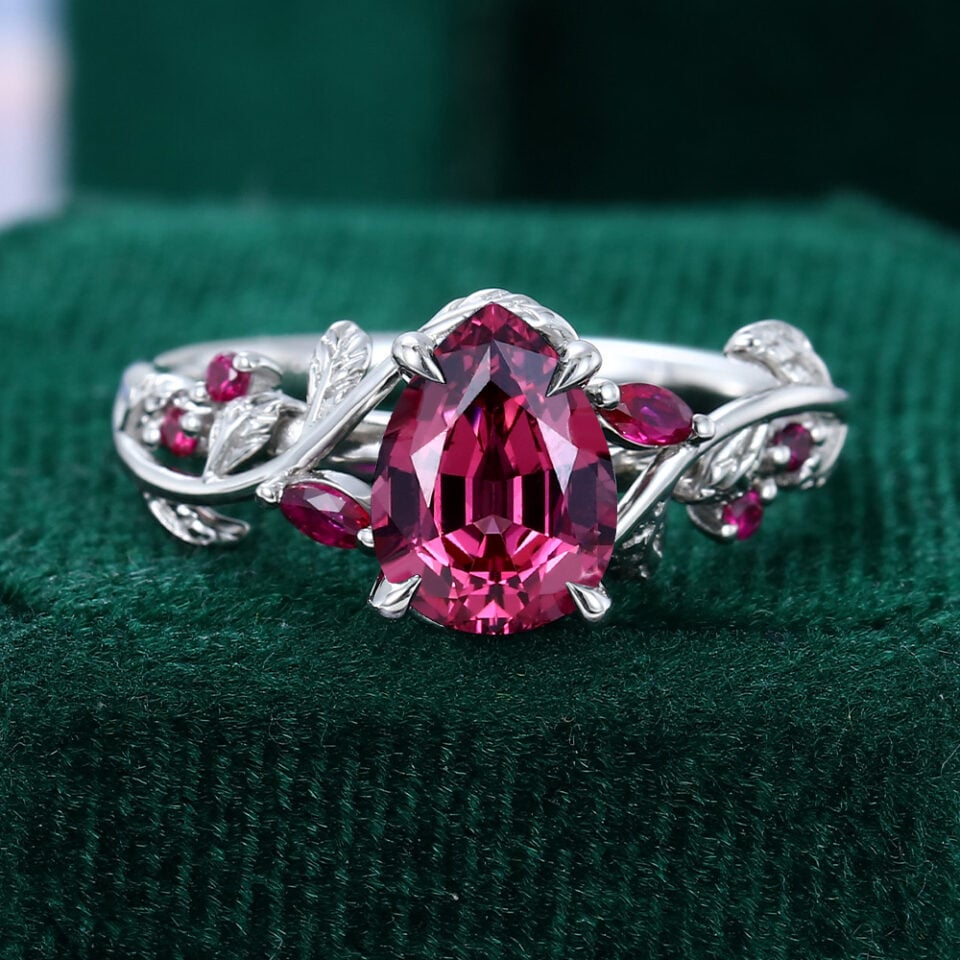
- Very elongated pears (1.75+): Benefit from carefully proportioned bands and side stones to maintain visual continuity around the center stone.
One final consideration is tip protection. As the pear becomes more elongated, make sure it is securely supported by a suitable prong. If you prefer a setting with more coverage around the stone, a bezel design can offer a practical option for everyday wear.
What is the Ideal Ratio for a Pear Diamond or Gemstone Ring?
What is the Ideal Ratio for a Pear Diamond or Gemstone Ring?
The principles of measuring pear engagement ring ratio apply equally to natural and lab-grown diamonds, moissanite, and other colored gemstones. Rather than following one universally “best” proportion, you should select a proportion based on the character you want your piece to express.
Our Jewelry Expert's Advice
Our Jewelry Expert's Advice
Before settling on a pear stone ratio, think about your hand shape, lifestyle, and personal aesthetic together:
| Your Preference or Need | Ratio Direction | Why It Works |
|---|---|---|
| Fuller, softer appearance | Lower | Broader shoulders and a fuller outline |
| Long fingers seeking more visual width | Lower to mid-range | Adds more side-to-side width to the ring |
| Romantic or vintage-inspired styles | Complements a softer, fuller silhouette | |
| Classic and versatile style | Mid-range | Offers a familiar pear silhouette without strong elongation |
| Petite hands want more length | Mid-range to higher | Creates more vertical coverage along the finger |
| Longer, slender appearance | Higher | Emphasizes length and finger coverage |
| High-fashion or dramatic designs | Creates a distinctive elongated profile |
👉🏻 Read our detailed guide to pear cut engagement rings for more professional tips and buying advice.
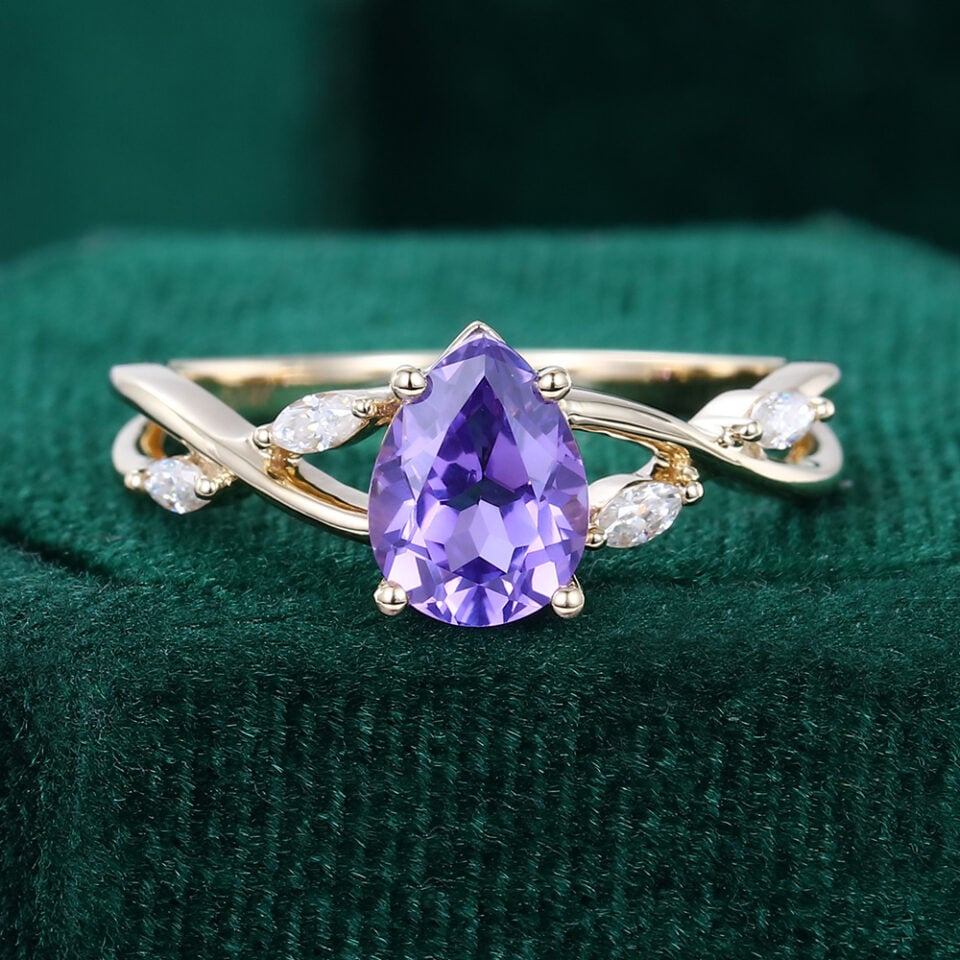
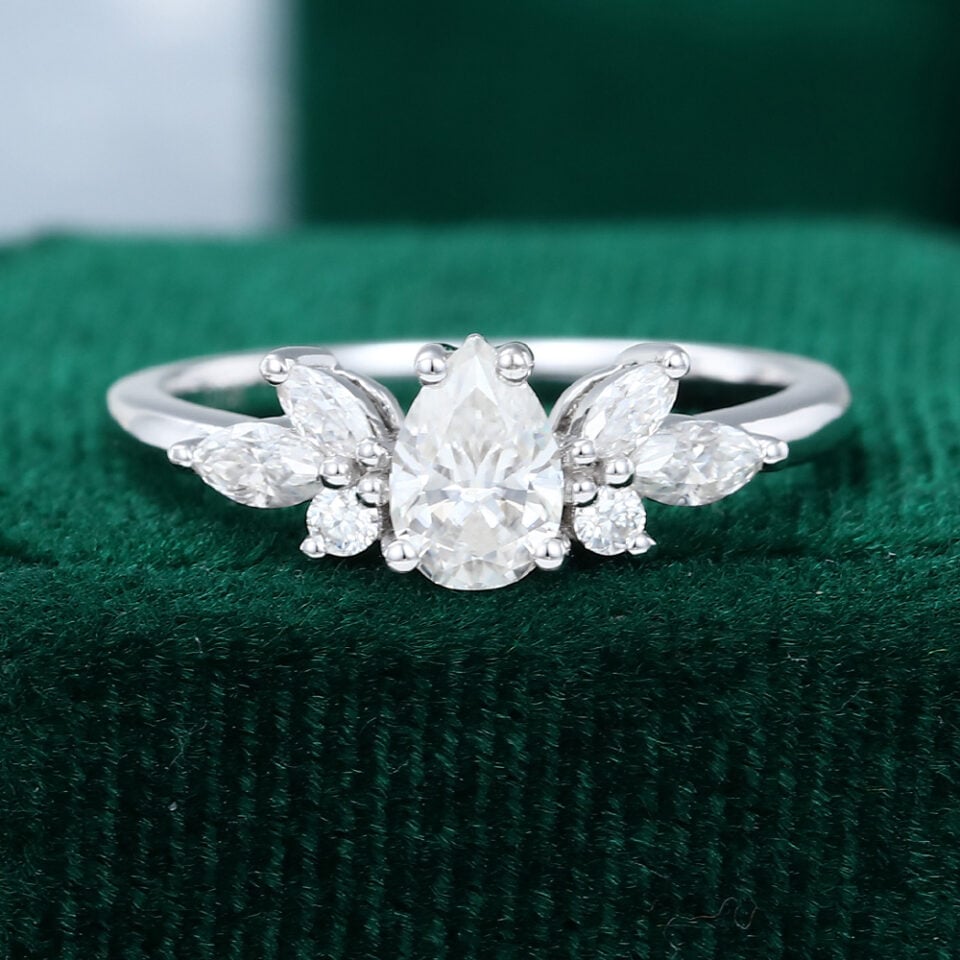
Common Mistakes to Avoid When Picking a Pear Ring Ratio
Common Mistakes to Avoid When Picking a Pear Ring Ratio
A suitable pear ratio can bring out the best in your engagement ring, but relying on the wrong criteria can easily lead to a less-than-ideal result. Be sure to avoid these common engagement ring buying mistakes:
- Focusing Only on Numbers: Making a decision based on the number without first considering the resulting silhouette.
- Ignoring Bow-Tie Shadows: Some Pear-cut stones can show a dark bow-tie pattern, so always inspect their light performance before buying.
- Neglecting Tip Protection: The pointed end of a pear gemstone is more vulnerable to impact, so make sure the setting provides adequate security.
- Overlooking Shoulder Symmetry: Both shoulders should have even curves that align naturally with the centerline and tip.
- Forgetting the Ring Design: The setting, band style, and surrounding details can all influence the gem’s perceived proportions.
Embracing Your Signature Proportion
Embracing Your Signature Proportion
Choosing the ideal pear engagement ring ratio is an opportunity to express your personal style while enhancing the beauty of the entire piece. Begin with the aesthetic you envision, then factor in your hand shape and everyday fashion to narrow down the proportion that feels right for you.
Need a little extra guidance? You can also connect with our jewelry specialist online for personalized advice and find a pear ring designed to remain captivating for years to come.
FAQs for Pear Engagement Ring Ratio
FAQs for Pear Engagement Ring Ratio
What is the most popular ratio for a pear engagement ring?
There is no single standard, but ratios around 1.5 to 1.6 are often chosen for a timeless, moderately elongated pear silhouette.
Do pear gemstones use the same ratio guidelines as diamonds?
Yes. The basic ratio principle is the same, although color, transparency, faceting, and the individual outline can affect how a diamond or gemstone appears.
Does a higher pear ratio make the ring look bigger?
A higher ratio can make the stone appear longer and increase vertical finger coverage, but it does not necessarily make the stone look larger overall.
Which pear ring ratio is best for short fingers?
What ratio causes the bow-tie effect in pear cuts?
Bow-tie shadows can occur at any pear ratio if faceting is improper, but they may become more noticeable in some elongated stones.