- by MollyJewelryUS
- August 18, 2026
- Buying Guides
There’s something distinctive about a pear-cut engagement ring. Its rounded base and pointed tip create a teardrop silhouette that feels both romantic and individual, but they also mean the stone needs thoughtful setting choices.
Finding the best setting for pear engagement rings often comes down to balancing design appeal with structural protection. If you’re having trouble deciding, just take a look at this guide for some inspiration.
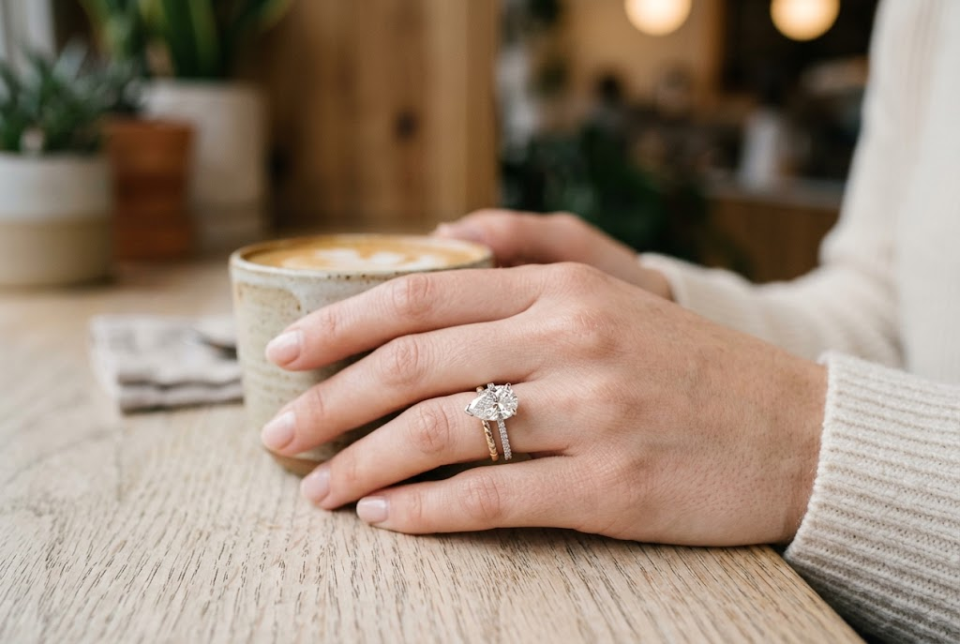
Table of Contents
Critical Factors to Consider Before Selecting a Pear Ring Setting
Critical Factors to Consider Before Selecting a Pear Ring Setting
Before narrowing down your favorite pear-shaped ring settings, it’s worth thinking about a few practical details that go beyond the design itself:
- Protecting the Tip: A pear gem’s pointed end is more exposed to impact, making tip protection an important part of the setting.
- Matching the Ratio: The setting should suit the pear-shaped stone’s proportions, helping preserve and enhance its intended silhouette.
- Metal Coverage: A metal-heavy setting offers greater coverage and protection, while an open design puts more emphasis on the gemstone.
- The Setting Height: Low and high settings offer different experiences in terms of comfort and everyday wear, particularly for active lifestyles.
- Stacking Compatibility: Consider the wedding band you have in mind and whether its shape can sit naturally beside the engagement ring.
6 Standout Pear Engagement Ring Settings Worth Trying
6 Standout Pear Engagement Ring Settings Worth Trying
Known for its graceful curves and pointed tip, the pear shape is a timeless engagement ring cut that works beautifully with a wide range of settings. Here are six popular options to know.
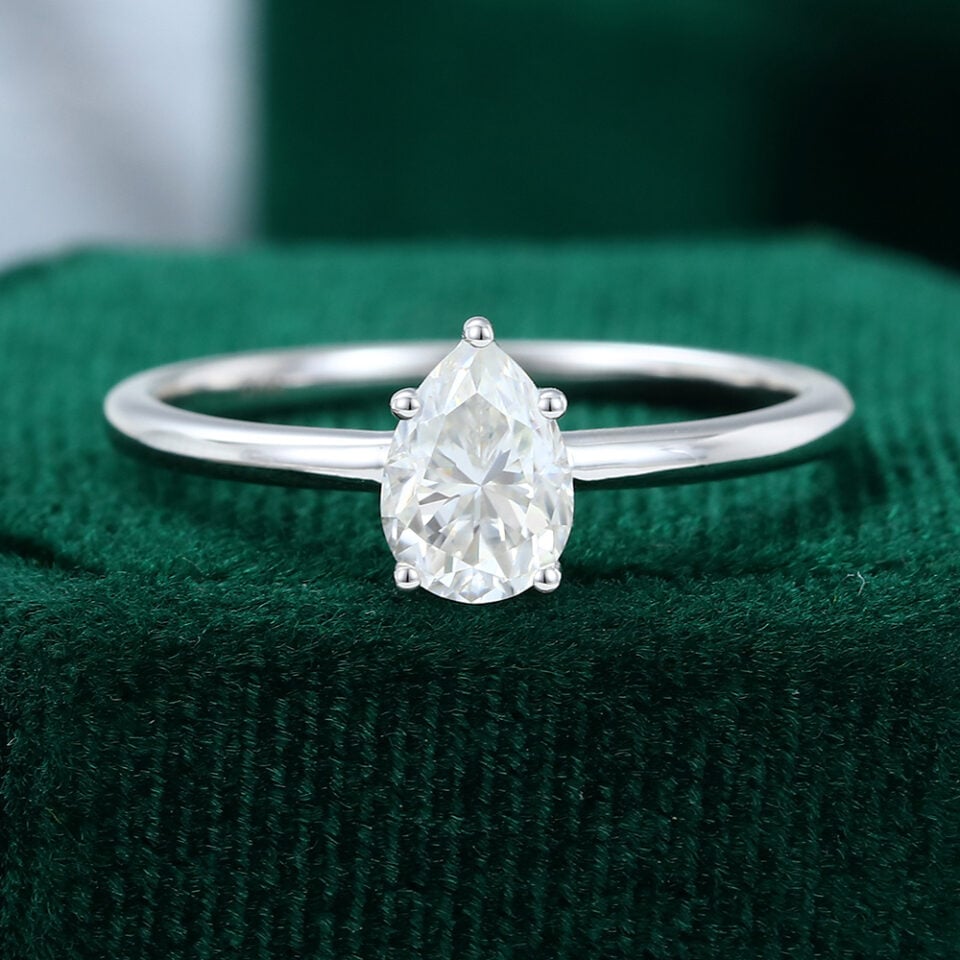
Style 1: V-Prong Solitaire
Style 1: V-Prong Solitaire
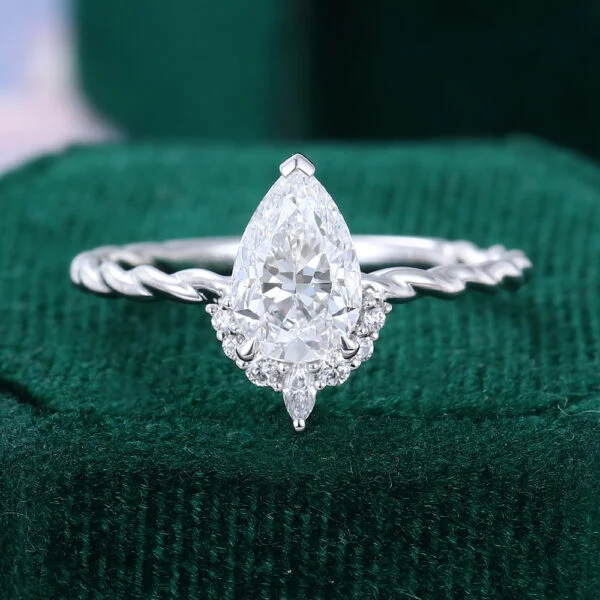
- Key Feature: Minimal metalwork paired with a V-prong that wraps around the pointed tip.
The open structure keeps the setting light and understated, drawing attention to the pear gemstone rather than the metal. At the same time, the V-prong helps protect the pointed tip from potential impact and chipping, making it a strong contender for the best setting for pear engagement rings.
💡 Note: The prong layout should be adjusted to suit the individual stone, as the number and placement of prongs can affect how securely it is held.
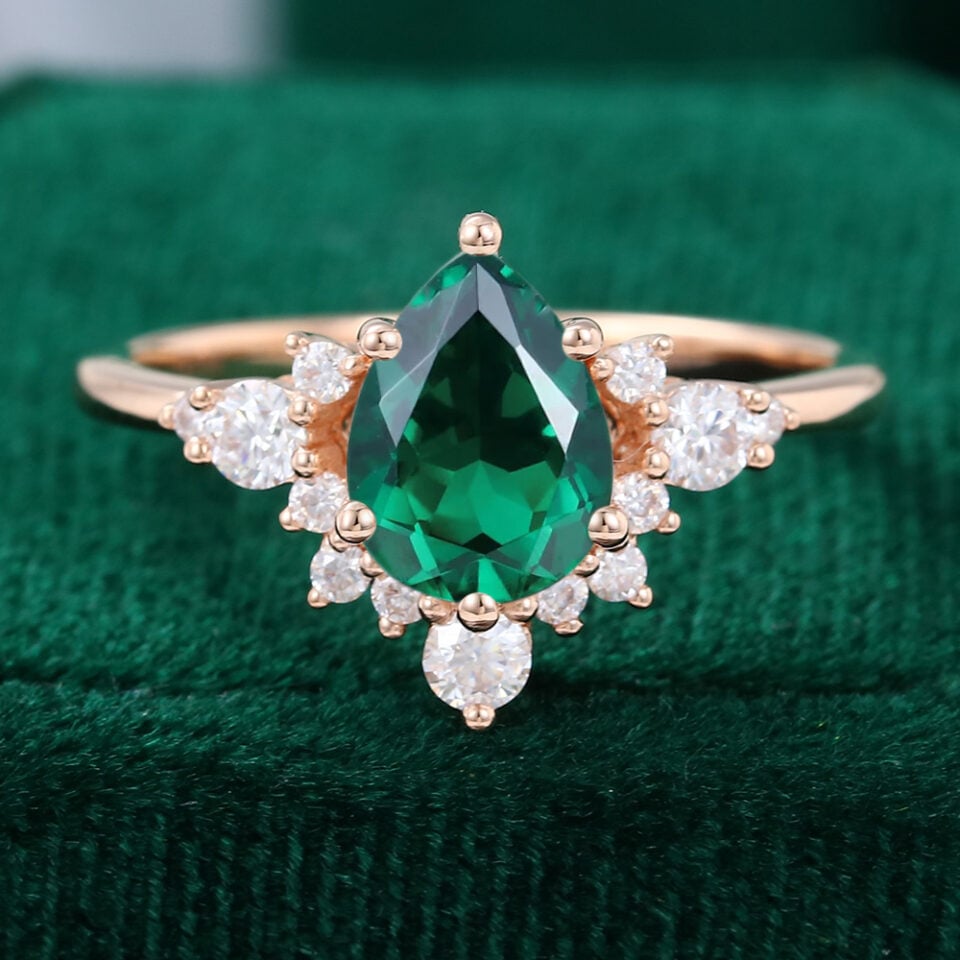
Style 2: Statement Halo Setting
Style 2: Statement Halo Setting
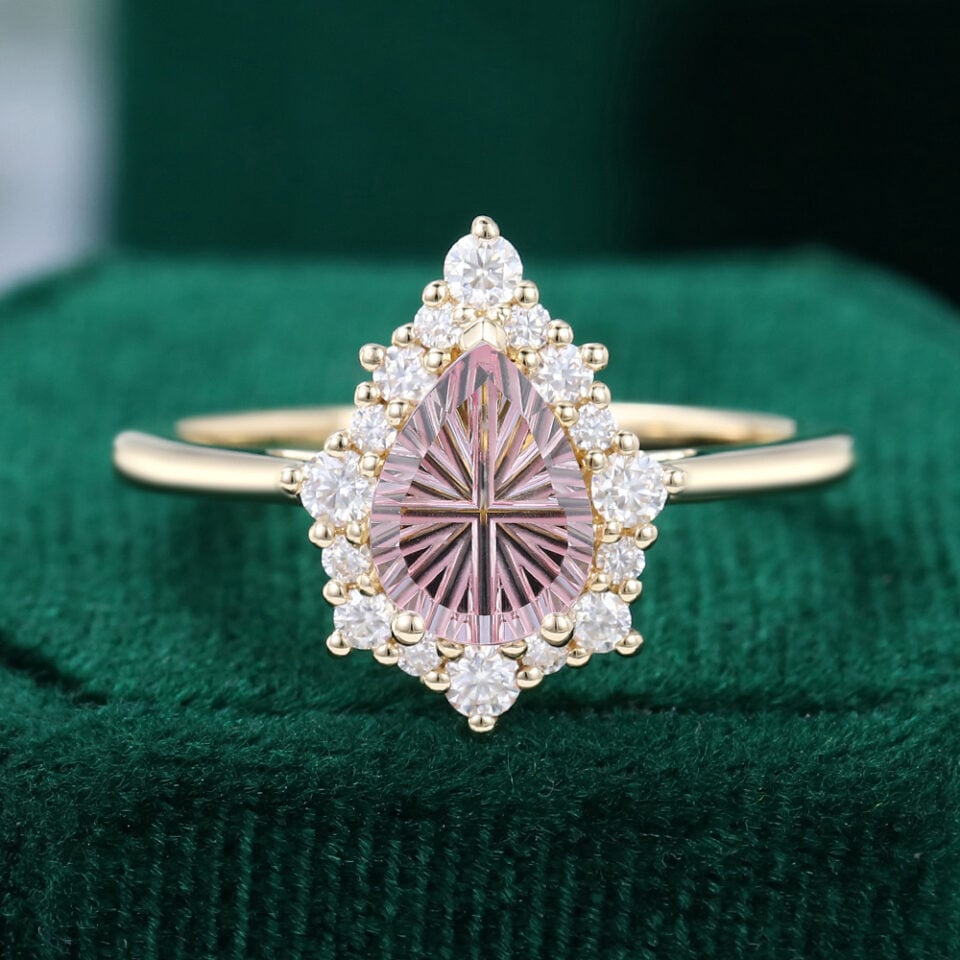
- Key Feature: Smaller gemstones or diamonds form a close-fitting frame around the center stone.
A halo engagement ring setting can give a pear stone a noticeably brighter and more substantial appearance. The surrounding stones create a visual border that emphasizes the center while softening the contrast between its curved base and sharp point.
For those who prefer a more understated design, a hidden halo adds sparkle from the side without significantly changing the pear’s top-down silhouette.
Style 3: Full Bezel Design
Style 3: Full Bezel Design
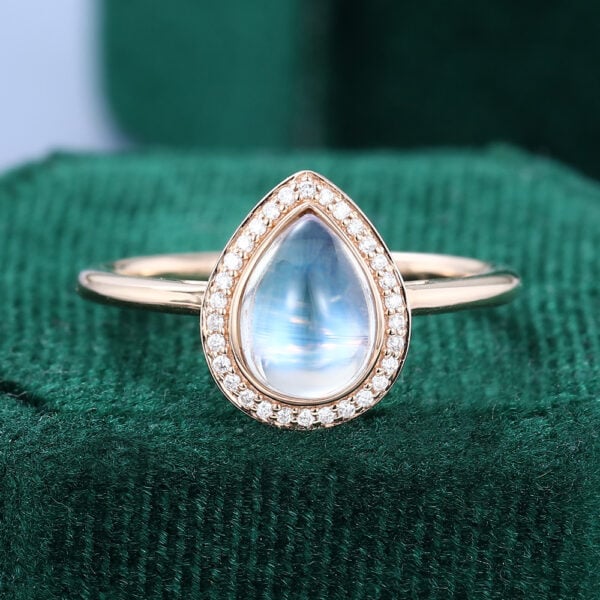
- Key Feature: The center stone is surrounded by a continuous metal rim for extensive edge protection.
If durability is your top priority, a full bezel design is one of the most secure pear stone settings to consider. Its clean metal border also follows the pear’s distinctive outline, giving the ring a sleek and bold character.
The GIA also notes that bezel settings can offer additional protection around gemstone edges, which is especially useful for engagement rings for high-activity lifestyles.
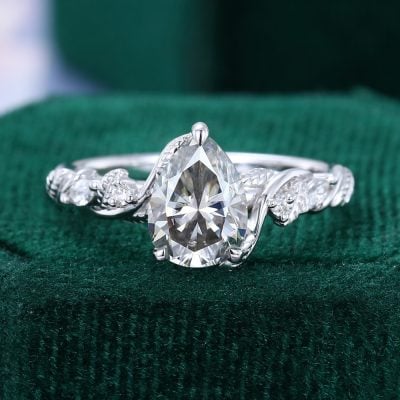
Style 4: Bypass Asymmetrical Shank
Style 4: Bypass Asymmetrical Shank
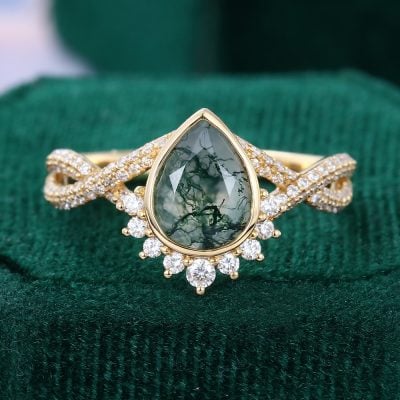
- Key Feature: Curved metal lines sweep inward from different directions, gently framing the pear-shaped center stone.
This setting echoes the pear engagement ring direction through its flowing contours, creating a sense of movement around the stone. The band does more than hold the center stone in place. It becomes a sculptural element of the ring, imparting an artistic and contemporary edge.
Style 5: Horizontal Setting
Style 5: Horizontal Setting
- Key Feature: The pear-shaped center stone is positioned horizontally for a distinctive east-west look.
Instead of following the traditional vertical orientation seen in many gemstone or pear-shaped diamond ring settings, this design turns the gem sideways to reduce its vertical height and emphasize its width.
Paired with a slim band or a streamlined bezel, the design can take on a sleek, architectural quality that feels both unexpected and fashion-forward.
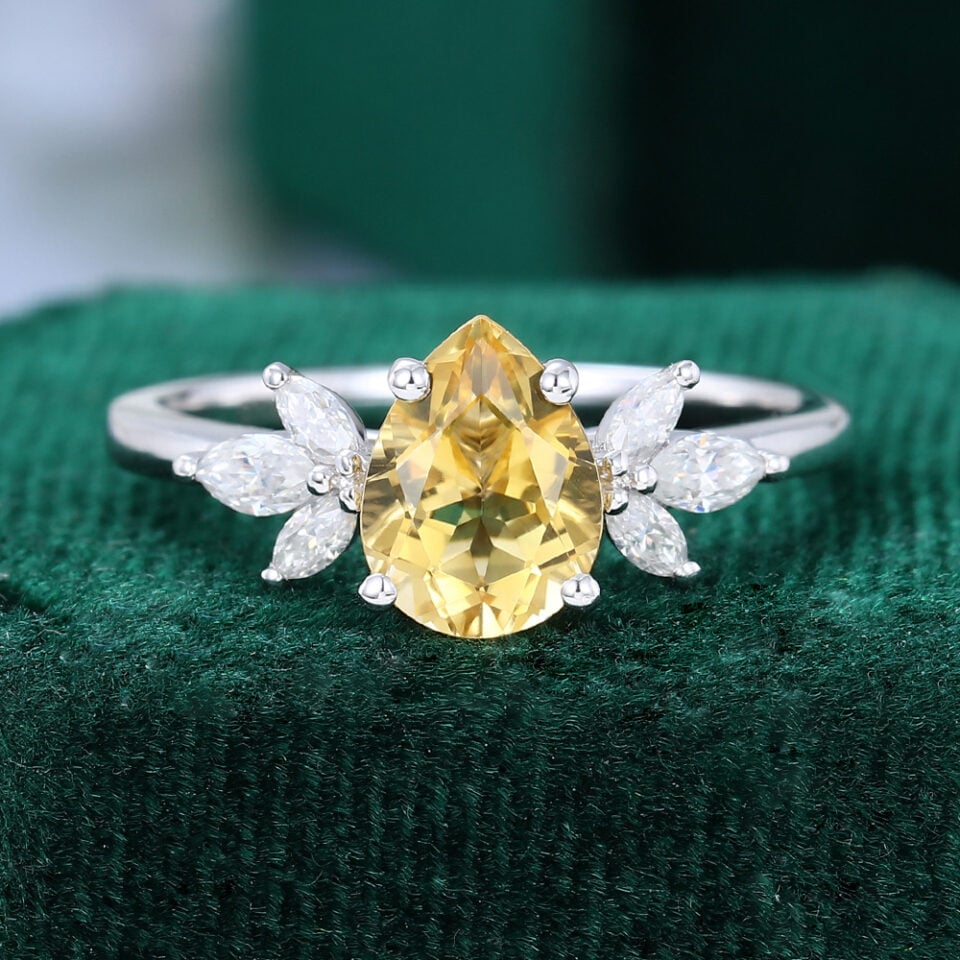
Style 6: Cluster Accents Design
Style 6: Cluster Accents Design
- Key Feature: Small stones cluster around the pear-shaped center, extending outward from both sides like petals.
Want a more decorative look without committing to a classic halo? A cluster setting is a good choice. The grouped accent stones can follow the pear’s curved outline and create a layered silhouette with a floral or starry feel.
The additional gems also create multiple surfaces for light to reflect from, adding sparkle and fullness to the engagement ring without requiring a large center stone.
Decoding Prong Placements for Pear-Shaped Ring Settings
Decoding Prong Placements for Pear-Shaped Ring Settings
There is no single design that can claim to be the best setting for pear engagement rings. For a prong setting, however, the number, shape, and placement of the prongs all deserve careful attention.
As noted by the GIA, the pointed tip of a pear-shaped stone is vulnerable and should be properly protected. A V-prong is well suited to this cut since it surrounds the tip, providing a protective barrier while helping keep the gemstone securely mounted.
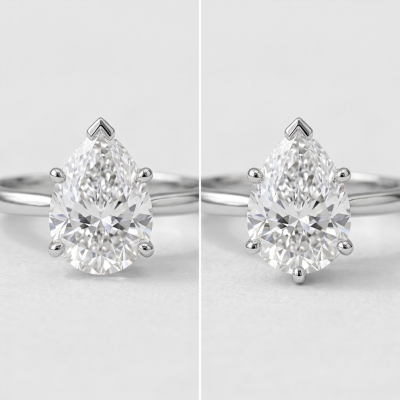
5-Prong vs. 6-Prong Configurations for Protection
5-Prong vs. 6-Prong Configurations for Protection
The number of engagement ring prongs can change both how securely a pear-shaped stone is held and how much of its silhouette remains visible. Finding the right balance is important:
- 5-Prong Setting (1 V-Prong + 4 Standard Prongs): A versatile choice for maintaining a relatively clean look while providing support around the pear’s base and sides and protection at the tip.
- 6-Prong Setting (1 V-Prong + 5 Standard Prongs): Adds another support point around the stone, offering greater coverage for larger stones or active everyday wear. That said, it also means slightly more metal is visible.
🔮 Note: More prongs are not always better. The craftsmanship, placement, and fit of the prongs all matter, so the right configuration should be determined by the individual pear stone’s size and shape.
A Full Comparison for Different Pear Stone Settings
A Full Comparison for Different Pear Stone Settings
Each of the pear ring settings covered above has its own strengths. You can use the chart below to see which design aligns best with your lifestyle and aesthetic preferences.
| Setting Style | Main Advantage | Security Level | Ideal For |
|---|---|---|---|
| V-Prong Solitaire | Balanced visibility and security | High | Classic elegance and purists |
| Halo Design | Added sparkle and visual presence | Depends on center setting | Maximum radiance and extra scale |
| Full Bezel | Maximum edge coverage | Very High | Active wearers and modern aesthetics |
| Bypass Shank | Artistic asymmetry | Depends on construction | Artistic, non-traditional styling |
| Horizontal (East-West) | Unconventional silhouette | Depends on construction | Low-profile wear and distinct looks |
| Cluster Accents | Rich detail and romance | Depends on construction | Whimsical and vintage-inspired designs |
*The protection ratings also depend on the quality and design of the setting. Poorly fitted or improperly made settings may still compromise the stone’s security.
👉🏻 Looking at other gemstone shapes as well? See our heart vs pear engagement ring comparison for another perspective.
How to Choose the Right Setting for Your Pear Engagement Ring
How to Choose the Right Setting for Your Pear Engagement Ring
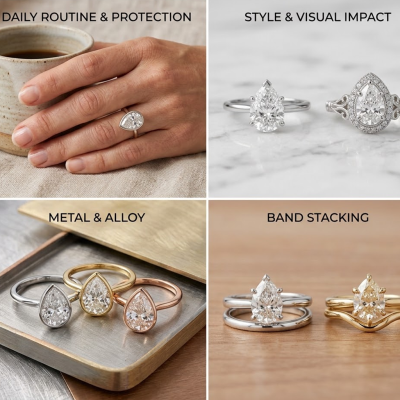
Finding the perfect pear engagement ring settings is less about choosing the most popular style and more about finding one that fits the way you live and wear your jewelry. Start with these five points:
- Assess Your Daily Routine: For frequent handwork or an active lifestyle, a protective bezel or a properly fitted V-prong may be a great option.
- Choose Your Style Direction: Think about the overall look you want. Classic, decorative, and modern settings can give the same pear gem very different personalities.
- Consider Visual Presence: Halo and cluster settings add visual volume, while solitaire designs keep the focus on the center stone.
- Select Your Metal Alloy: Consider the color, durability, maintenance, and overall look you want from platinum or gold.
- Plan for Band Stacking: Verify whether you prefer a high-set mounting that allows a straight wedding band to slide underneath, or a low-profile setting that pairs best with a contoured band.
Essential Tips for Buying a Pear Ring Setting Only
Essential Tips for Buying a Pear Ring Setting Only
Already have a well-cut or heirloom gemstone and searching for a pear ring setting only? Let the stone determine the setting rather than the other way around:
- Measure First: Get the exact length, width, and depth of the gemstone before purchasing.
- Pay Attention to the Tip: Make sure the design includes a V-prong, bezel, or another structure that gives the pointed tip adequate protection.
- Mention the Girdle: If the girdle is unusually thin or thick, tell your jeweler so the setting can be positioned with the stone in mind.
- Do Not Assume Standard Fits: Pear stones can vary significantly in proportion. If yours falls outside common dimensions, ask whether a custom service is available.
- Check the Profile: The setting should sit comfortably on the finger while leaving enough room for the wedding band you want to pair with it.
👉🏻 For more ideas on picking the right ring design, see our guide to pear cut engagement rings.
Frequently Asked Questions and Answers
Frequently Asked Questions and Answers
Is a bezel setting better than prongs for a pear stone?
The better choice depends on your priorities. A bezel offers maximum protection against everyday bumps, whereas prongs maximize light entry for intense sparkle.
Does a pear-shaped ring need a V-prong?
Not necessarily, but the pointed tip should be adequately protected. A V-prong is a popular choice because it is specifically shaped to shield the point.
Can a pear engagement ring be crafted in a low-profile setting?
Yes, low-profile basket or bezel mountings keep the gem flush against the hand for comfort, though a high-profile setting allows a straight wedding band to sit completely flush.
Which setting style makes a pear gemstone look larger?
A halo setting can make a pear gemstone appear larger by surrounding it with smaller accent stones that extend its visual footprint.
Does a horizontal pear setting protect the pointed tip?
It can, but orientation alone does not determine protection. The setting construction around the point remains important, particularly because the horizontal position changes how the stone interacts visually and physically with the ring.
Navigating the Perfect Frame for Your Teardrop Gem
Navigating the Perfect Frame for Your Teardrop Gem
The best setting for pear engagement rings is not necessarily the most intricate one. What matters is finding a design that complements the pear’s graceful silhouette while protecting its vulnerable pointed tip.
At MollyJewelryUS, we carefully consider both the beauty and structure of each design, creating settings that balance stone security with eye-catching brilliance. From timeless classics to more individual styles, you can find a design that feels right for you.