

Featured

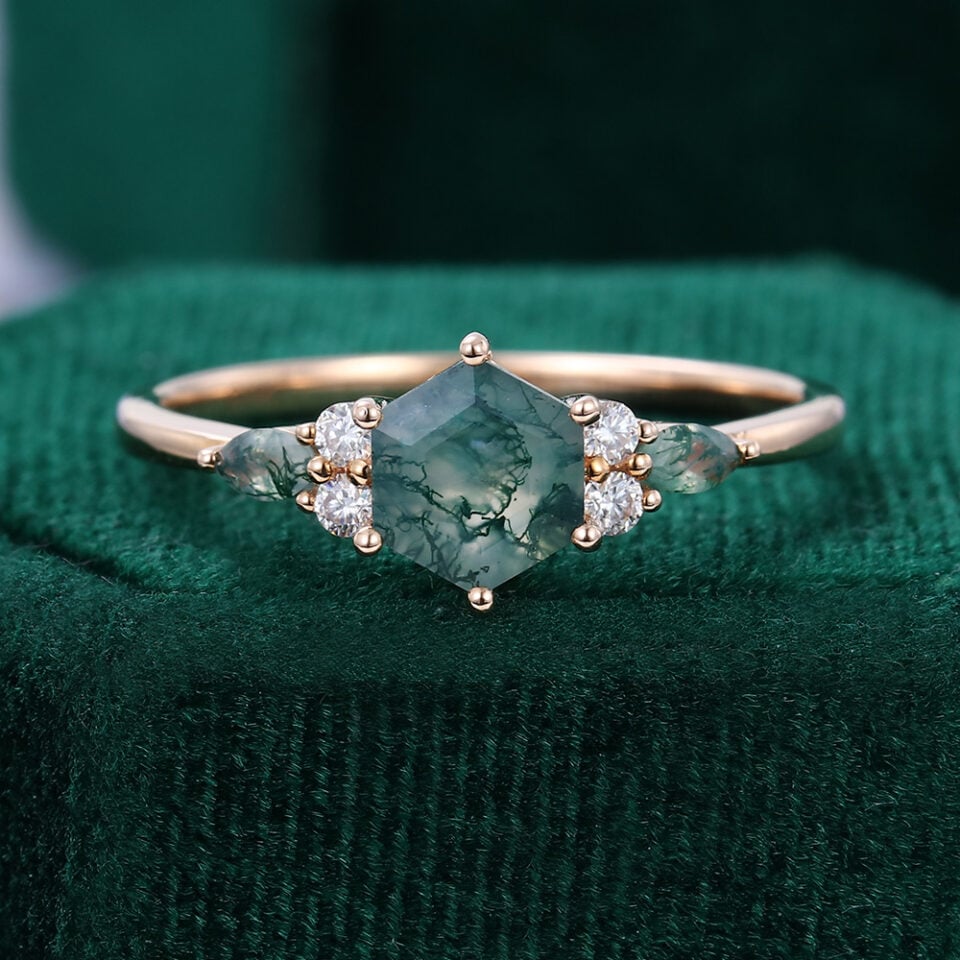
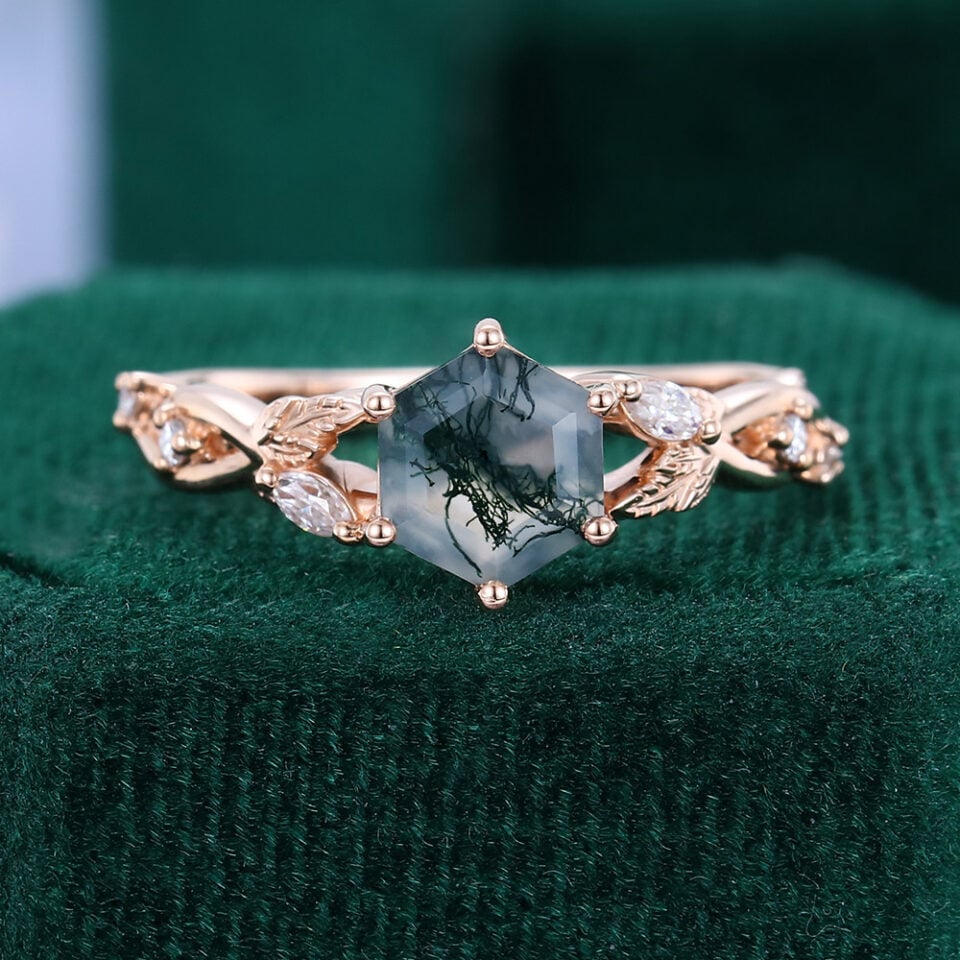
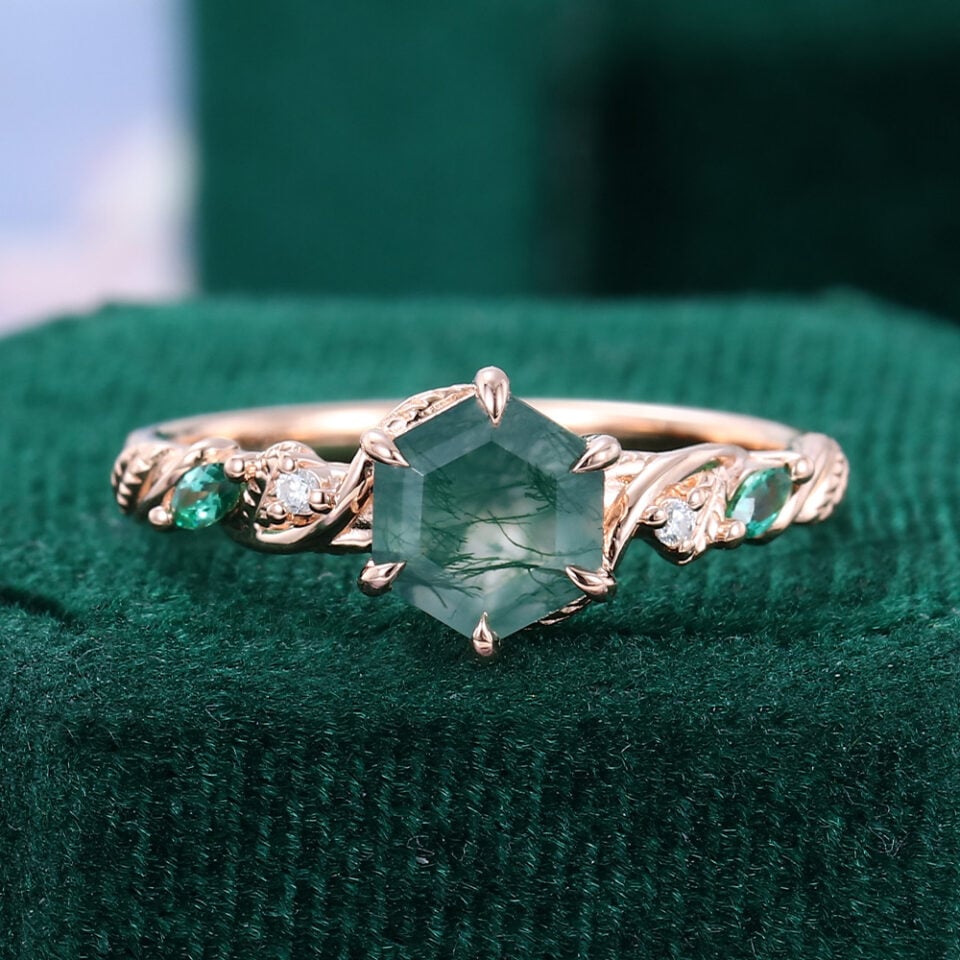
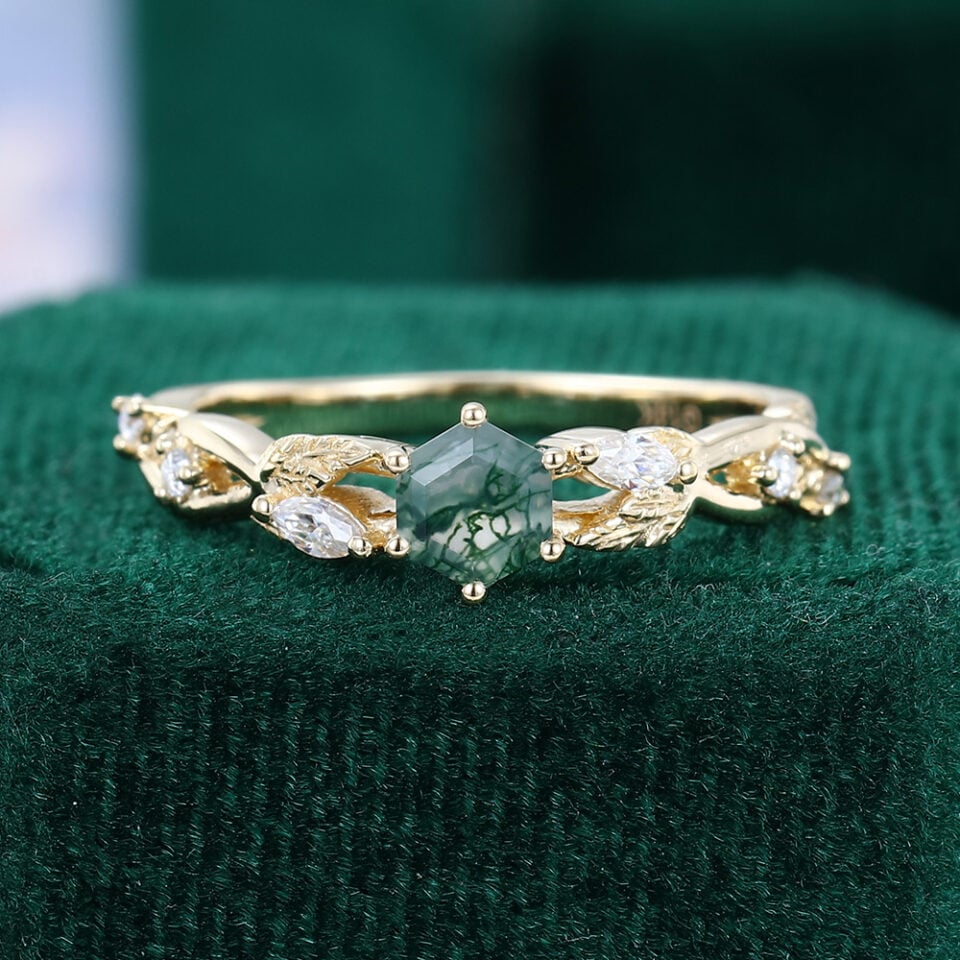


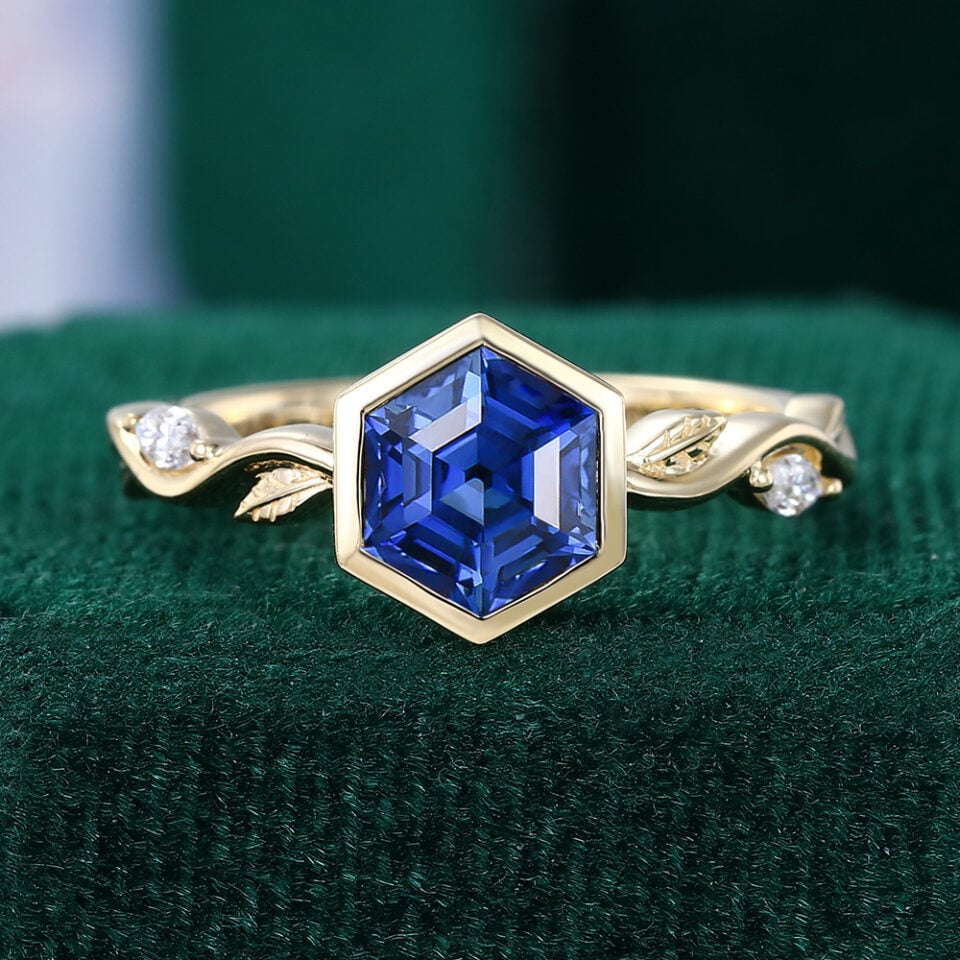


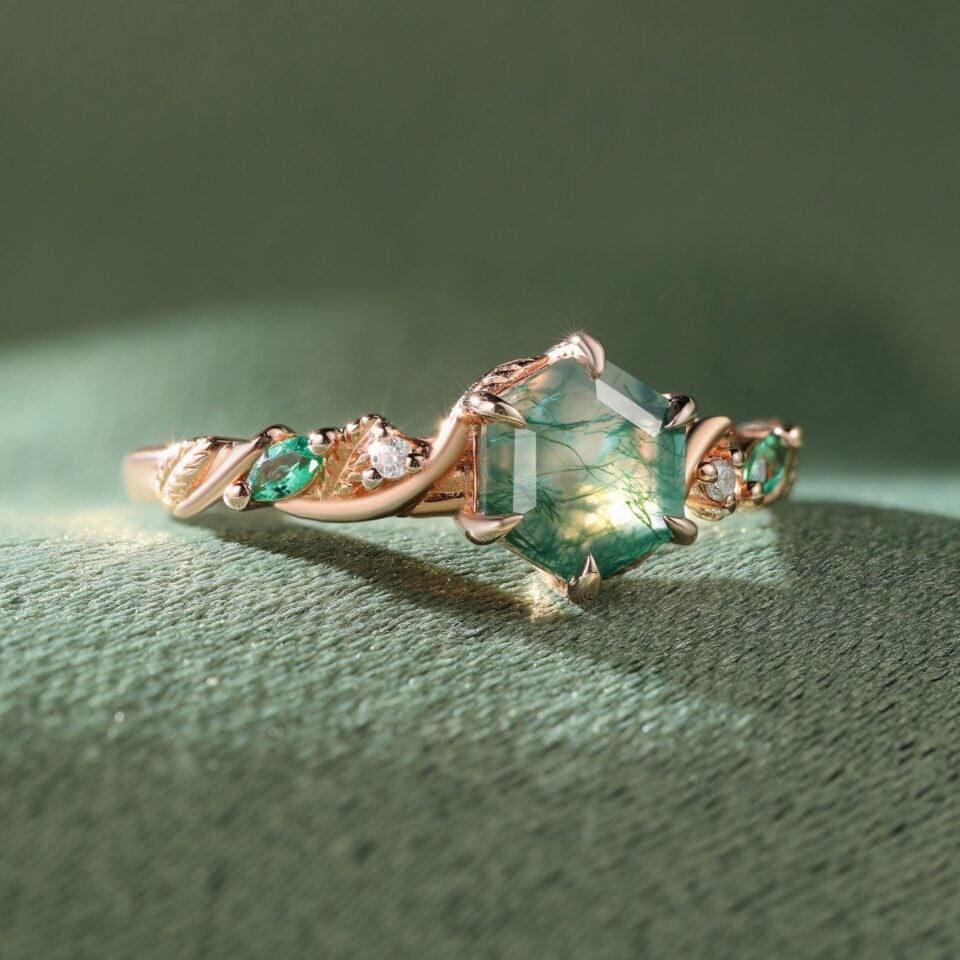
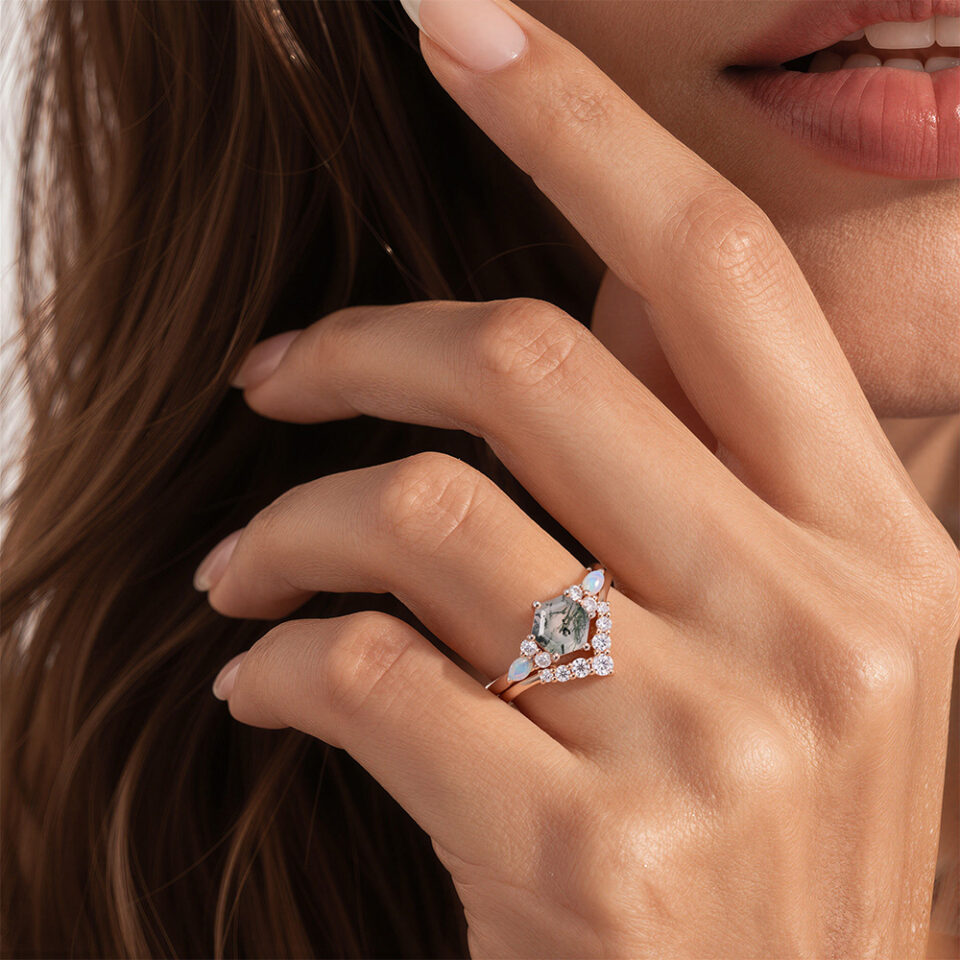
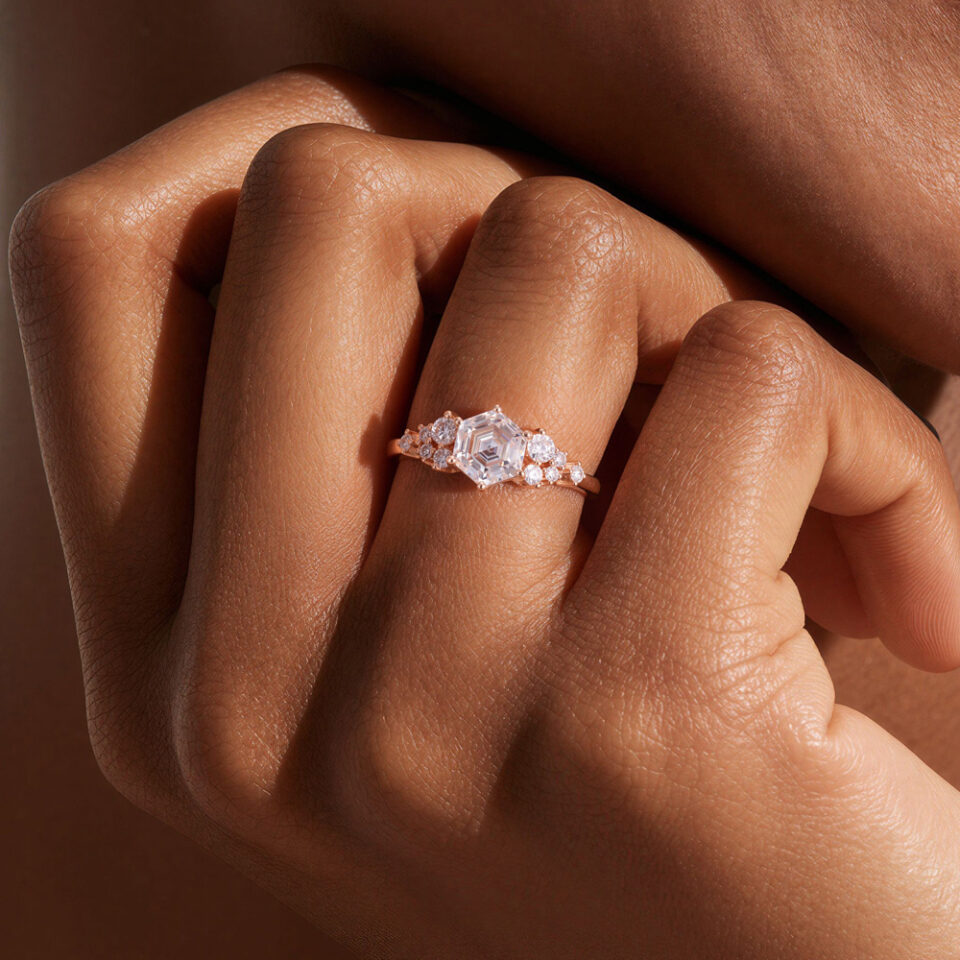
Carat weight is useful for comparing gemstones, but it does not tell you exactly how large a hexagon engagement ring will look on the hand. The stone’s actual millimeter dimensions, proportions, setting, and the wearer’s finger size all affect its visual presence. Using diamond as a common reference, this guide compares 1, 2, and 3 carat hexagon rings to show how their sizes translate into an on-hand appearance.
Hexagon Engagement Ring Size Chart: 1, 2, and 3 Carat Compared
The table below provides a visual reference for how different carat weights can translate into face-up dimensions. Exact measurements vary with the stone’s depth, proportions, and cut, so these figures should be treated as general references rather than fixed conversions.
| Carat Weight | Approx. Face-Up Size | General On-Hand Effect |
|---|---|---|
| 1 ct | Around 6–7 mm across | Refined and relatively subtle |
| 2 ct | Around 8–9 mm across | Noticeable and well-balanced |
| 3 ct | Around 9–10+ mm across | Bold and visually prominent |
For a more useful comparison, pair these measurements with images showing each size on the same hand. The side-by-side view makes the difference easier to understand than carat weight alone. A 1 ct stone may look understated on a wider finger, while a 3 ct stone can create a much stronger focal point even before additional design details are considered.
1 Carat Hexagon Engagement Ring: A Subtle and Elegant Look
A 1 carat hexagon engagement ring generally creates a refined look with enough presence to show off the geometric outline without dominating the hand. Its smaller footprint can work particularly well with slim bands, simple solitaire settings, or minimalist designs where the center stone remains the main feature.
On a narrower finger, the same 1 ct stone may appear more prominent, while a wider finger can make it look more delicate and proportionate. This makes 1 ct a practical choice for someone who prefers an engagement ring that feels distinctive but remains relatively understated for everyday wear.
2 Carat Hexagon Engagement Ring: A More Noticeable Statement
At 2 carats, the hexagon shape becomes considerably more noticeable, giving the ring a stronger visual presence while retaining a versatile proportion. The larger face-up area allows the geometric outline to read more clearly from a distance, making the center stone more obviously the focal point of the design.
This size can suit both everyday engagement rings and more expressive designs. A slim band can emphasize the stone’s size, while a wider band or additional side stones can create a more substantial overall look. On a smaller hand, 2 ct may appear particularly prominent; on a wider finger, it can provide a more balanced proportion.
3 Carat Hexagon Engagement Ring: A Bold and Dramatic Look
A 3 carat hexagon engagement ring creates a distinctly bold appearance. The larger face-up footprint takes up more visual space across the finger, making the geometric shape and center stone difficult to overlook. This can give a solitaire a dramatic presence or make a more elaborate setting feel intentionally luxurious.
Because the center stone already commands significant attention at this size, the proportions of the rest of the ring become especially important. A delicate band can make the stone appear even larger, while a substantial setting can create a more balanced statement. Finger width also plays a major role: the same 3 ct stone can look strikingly oversized on a slender finger but more proportionate on a wider one.
What Affects How Big a Hexagon Diamond Looks on Your Hand?
Several factors can affect how large a hexagon diamond appears, including carat weight, actual dimensions, finger size, stone proportions, band width, and setting style. Among these, the stone’s actual face-up dimensions and the proportions of the wearer’s finger tend to have a particularly noticeable effect on how much visual space the center stone occupies.
The stone’s actual dimensions determine how much of the finger it covers from the top view, so two stones with the same carat weight can create different impressions if their length and width differ. Finger size also changes the visual proportion: the same stone may appear more prominent on a slender finger and more balanced on a wider one. Meanwhile, the band and setting can either emphasize the center stone or make the overall ring feel more substantial, changing the way its size is perceived.
Ultimately, specifications alone won’t tell you how a ring truly looks on your hand. To find your ideal proportion worry-free, you might try on a sample ring in a similar size, consult a trusted jeweler, or request CAD drawings and digital renderings for a realistic preview before making your final decision.
How to Choose the Right Hexagon Engagement Ring Size
The right size ultimately depends on the visual effect you want rather than a specific carat number. Start by comparing the stone’s actual millimeter dimensions, then consider how that footprint will relate to your finger width and the proportions of the setting.
For a more understated look, 1 ct can provide a refined geometric presence. A 2 ct stone offers a more noticeable balance between size and versatility, while 3 ct creates a much stronger statement. Looking at these sizes side by side on a hand is often the easiest way to decide which level of presence feels right.
Frequently Asked Questions
Yes. A 1 carat hexagon can have a clear geometric presence while maintaining a relatively subtle overall look. Its apparent size will depend on the stone’s dimensions, finger width, and setting.
A 2 carat hexagon generally has a noticeable presence on the hand. It can look especially prominent on a narrow finger, while a wider finger may create a more balanced appearance.
Yes, although the difference is not determined by carat weight alone. Face-up dimensions, proportions, and the setting all affect how much larger the 3 carat stone appears.
Yes. A stone can appear larger and more prominent on a narrower finger, while the same stone may look more proportionate on a wider finger.
It can. A slim band or design that keeps attention on the center stone can emphasize its size, while a wider band or more surrounding detail can make the center stone appear less dominant.
Millimeter dimensions are generally more useful for judging how large the stone will look from above. Carat weight measures weight, while face-up dimensions show how much visual space the stone actually occupies.
Compare 1, 2, and 3 carat stones by their actual dimensions and view them on the same hand whenever possible. This provides a much clearer sense of their relative visual size than comparing carat weights alone.
Planning for an important moment? Use the tool below to check the estimated delivery window for your handcrafted jewelry.
If you order today, your jewelry is estimated to arrive within these windows.
General (All Materials)
Calculating...
Expedited (Solid Gold & Platinum)
Calculating...
Expedited (Silver & Gold Plated)
Calculating...
Handcrafted to Order, Delivered Worldwide
Every piece is handmade after your order is placed. The estimated windows above include both our crafting time and shipping time, so you can plan with more confidence. We ship within the United States and to many international destinations. Please note that delivery times may vary slightly depending on the destination, carrier, and customs processing.
Metal Material Guide
Choosing the right metal is key to your jewelry’s look and longevity. Here is a quick breakdown to help you find your perfect match!
Quick Picks
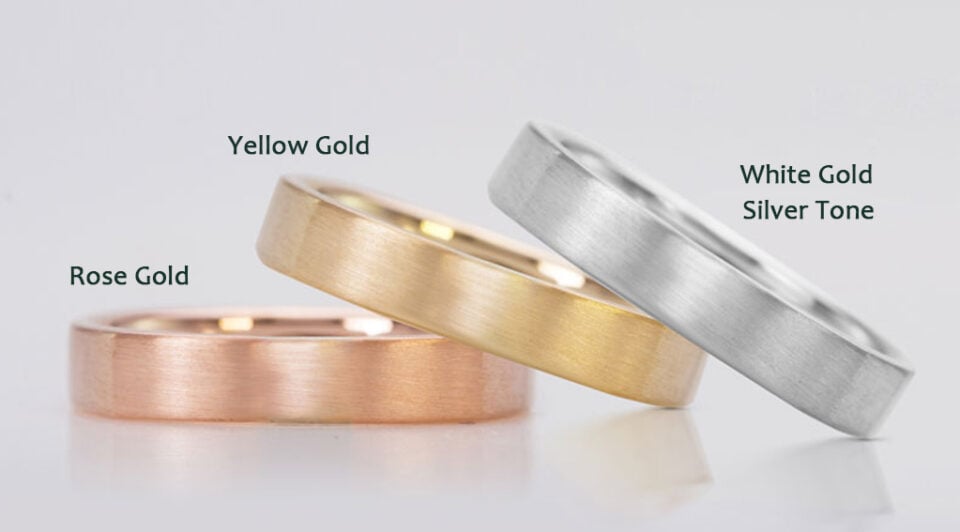
Not sure where to start? This chart highlights the most durable and preferred metal options categorized by color.
| Metal Color | Best Choice |
|---|---|
| Yellow Gold | 14K Yellow Gold ✅ |
| Rose Gold | 14K Rose Gold ✅ |
| Silver-Tone | Platinum ✅ |
Metal Options Explained
· Solid Gold(10K, 14K & 18K)
Solid gold is gold throughout, not just a surface finish. It is made by blending pure gold with other metals to create different balances of color, strength, and value.
* 10K Gold – Practical Choice
Gold Purity: 41.7%. A durable solid gold option with a more subtle gold tone. It is a practical choice if you want real gold at a more accessible price.
* 14K Gold – Most Popular 🔥
Gold Purity: 58.5%. Our most recommended choice for yellow gold and rose gold jewelry. It offers the best balance of color, durability, and everyday wear.
* 18K Gold – Premium Choice
Gold Purity: 75%. A richer, warmer gold option with a higher gold content. It has a more luxurious color and lower sensitization potential.
· Platinum 🔥
Made from 95% pure platinum. Our top choice for silver-tone jewelry. Naturally bright, strong, allergy-friendly, and low-maintenance, platinum is ideal for engagement/wedding rings and long-term daily wear.
· Sterling Silver
Made from 92.5% pure silver. A beautiful and budget-friendly choice with a bright silver look. Best for lighter or occasional wear, as silver may require more care over time.
· Gold Plated Silver
A lower-budget option with the look of gold over a sterling silver base. It is a lovely choice for occasional wear, but the plating may fade with frequent daily use.
Introduction
From an environmental sustainability perspective, all of our items are made to order. This production approach allows us to minimize raw material waste, avoid overproduction, and ensure that each piece is crafted specifically for the customer in optimal condition.
Please note that production typically takes approximately 2–3 weeks. As each item is individually made with care and attention to detail, we believe the additional time ensures a higher level of quality and craftsmanship.
Production Time
Please allow an additional 4 business days for Silver and Platinum pieces. Weekends and public holidays are not counted as business days.
Shipping time
Shipping Fee
About Customs Duties
Need Help?
Finding a wedding band that truly fits your engagement ring can be challenging. With our Custom Fit Service, any curved wedding band, enhancer wedding band, or open wedding band can be tailored to match your ring’s exact shape — even if your engagement ring was not purchased from us. In this guide, we’ll walk you through our services and processes in detail. Let’s get started!
Why do you need a custom wedding band?
More and more couples are choosing unique, personalized engagement rings, making flexible customization options especially important when finding the right wedding band. Ready-made bands are designed with general curves and do not account for the specific height, stone shape, prong placement, or profile of your engagement ring.
When the band does not match the engagement ring, you may experience:
* Visible gaps between the two rings
* Rubbing or collisions that can loosen stones over time
* Instability, causing the rings to twist or catch on clothing
* A mismatched appearance that does not look intentional
To solve these problems, our custom-fit wedding bands eliminate them by tailoring to the exact structure of your engagement ring, ensuring a seamless fit, comfortable wear, and a cohesive look from every angle.

Case Study 1: Customizing the Curvature of a Curved Wedding Band
In this example, the engagement ring features an organic, asymmetrical cluster design, a structure that most ready-made curved bands cannot naturally follow.
The first image clearly shows this issue: the unmatched curvature leaves a gap in the left side and causes the two rings to sit separately rather than as a cohesive set.
After applying our Custom Fit Service, the wedding band’s curve was redesigned to mirror the exact outline of the engagement ring. The result is a customized curvature that fits snugly, creating a unified, intentional look from every angle.

Case Study 2: Customizing the Gap of a Open Wedding Band

Case Study 3: Customizing the Inner Spacing & Curvature of a Ring Enhancer
In this example, the customer chose a ring enhancer to frame an engagement ring with unique center setting and shank. However, the original enhancer was designed with general proportions: the inner spacing was too narrow, and the curvature did not match the engagement ring’s profile. As a result, the engagement ring could not slide in naturally, and the curvature is not the perfect one.
To create a perfect pairing, we adjusted two key elements:
1) Inner Spacing Adjustment: the gap between the two bands of the enhancer was widened so that the customer’s engagement ring could fit comfortably inside without friction or pressure on the prongs. This ensures the rings stack smoothly and remain stable during daily wear.
2) Curvature Refinement: we reshaped the curves to echo the exact outline of the engagement ring’s halo and basket. This prevents unwanted gaps and allows the enhancer to hug the ring in a balanced, symmetrical way.

How Our Custom Fit Service Works?
We make the custom-fit process easy and stress-free. Simply share photos and measurements, and we will customize a wedding band that matches your engagement ring beautifully — yes, without sending it in! Here’s how:
1) Share Photos and Measurements: To begin, we ask for clear photos of your engagement ring along with three specific views (front, side, and top).
We also need a few basic measurements such as: *Length & Width of the Center Stone, *Setting Height, *Band Width & Thickness
2) We Create a CAD Model of Your Engagement Ring: Using your photos and measurements, our designers build a precise digital model of your engagement ring. This allows us to see its curvature, profile, height, and overall structure accurately.
3) We Tailor the Wedding Band for a Perfect Fit: Based on the style you choose, whether it is a curved wedding band, open wedding band, or ring enhancer, we adjust every detail to match your engagement ring. This may include: 1️⃣ Refining the curvature to match your ring’s outline. 2️⃣ Adjusting the opening distance for open bands. 3️⃣ Modifying the inner spacing of enhancers to fit around the setting. 4️⃣ Matching band width or thickness when requested (extra cost might be required).
4) Modification Confirmation: We will share the customized design with you for confirmation. Once approved, we begin crafting your one-of-a-kind wedding band.
Our goal is to ensure your wedding band does more than sit beside your engagement ring — it should complement it flawlessly, as if it were made for your story from the beginning.


Frequently Asked Questions
No, you do not need to ship your ring to us. We can create a perfectly fitted wedding band using photos, three specific views, and a few simple measurements.
Yes. Our Custom Fit Service allows us to tailor any wedding band to match your engagement ring’s unique shape, height, and setting—whether it’s a solitaire, halo, cluster, three-stone, unique design, or a custom ring that is not purchased from us. We tweak all the details to ensure you get a perfect wedding set.
The initial modeling stage takes 1–3 days, during which we create a digital representation of your engagement ring and customize the band design. Once you approve the design, production typically takes 2–3 weeks, the same as you selected on the product page.
Yes. Our Custom Fit Service works for any engagement ring, regardless of where it was purchased.
Depending on the design you choose, we may adjust:
The curvature of the band
The opening distance of an open band
The inner spacing of a ring enhancer
The band width or thickness (extra cost might be required if needed)
Absolutely. We will send you a detailed digital mock-up showing how your curved band aligns with your engagement ring. Production only begins after you approve the design.
The service is $100, available as an add-on option on our wedding band product pages.
This is extremely rare due to the precision of our modeling process, but if an issue arises, please be confident that we stand behind our work. Rest assured that we will review the details and offer a solution based on the specific situation.
Yes. In many cases, a straight band can be reshaped with a custom curvature to match your engagement ring. Feel free to contact us if you have any customization ideas.
Yes, we can. In addition to our Custom Fit Service, which tailors a wedding band specifically to your engagement ring, we can create custom wedding band designs that are not listed on our site. Feel free to contact us if you are interested in working with us for something special!
Yes. We can customize men’s wedding rings to complement women’s engagement rings or wedding bands. Whether you want both rings to share matching silhouettes, profiles, design elements, or finishes, we can tailor the men’s band to create a coordinated and cohesive set that feels connected while still reflecting each person’s style.
1. Getting Started:
Online shopping offers a wide variety of choices, but when it comes to purchasing rings, it can be tricky—you can’t be certain of the fit without trying it on!
At MollyJewelryUS, we completely understand your concerns, which is why we’ve created this guide to make your decision easier.
Please take the time to carefully review this guide, as all of our rings are made to order, and a 35% restocking fee applies to exchanges and refunds.
Now, let’s walk you through the measurement process!
2. Key Points to Know About Ring Sizes:
1) Different Bandwidth Affects The Wearing Experience
2) Resizing Considerations
3. How To Determine Ring Size?
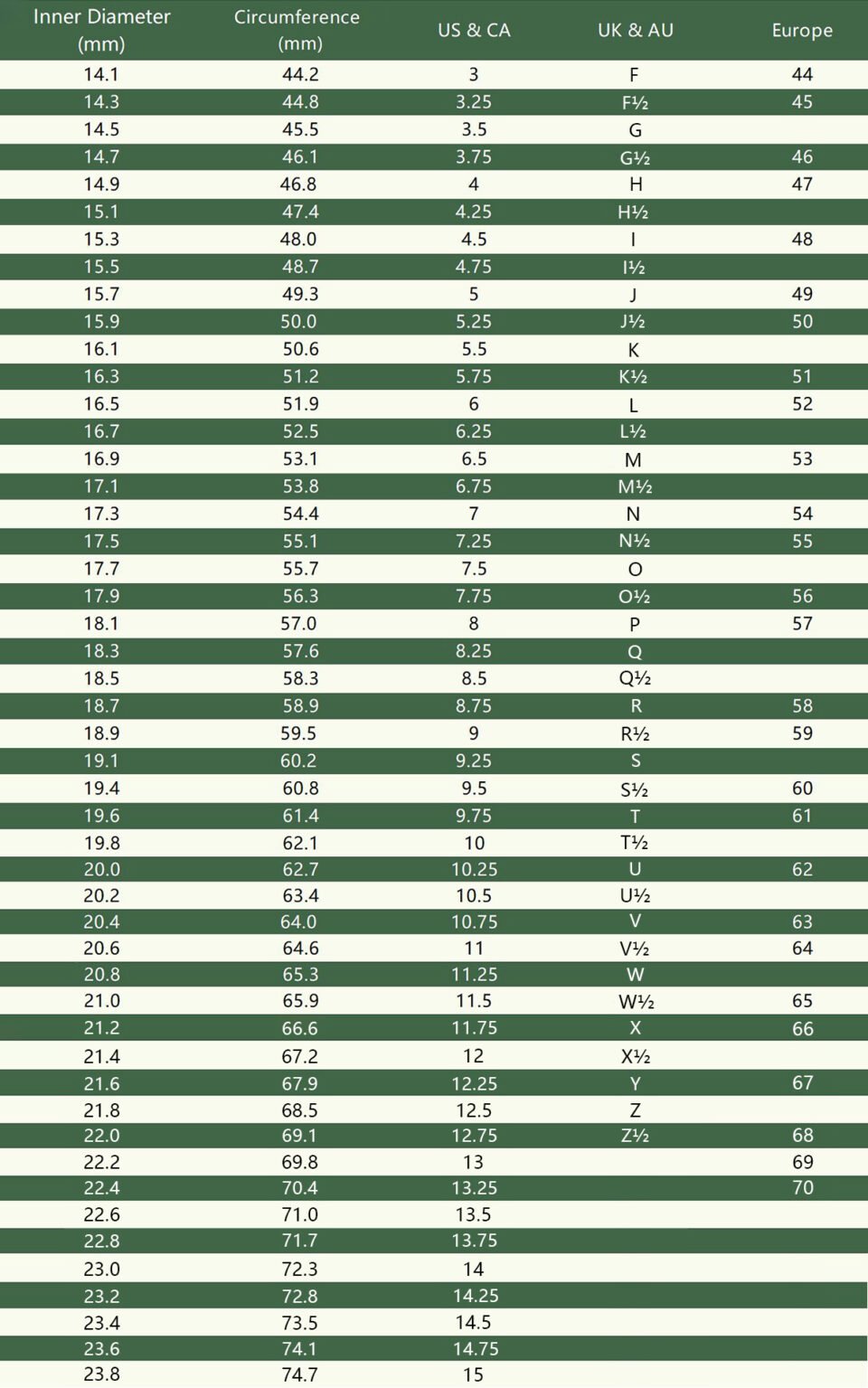
1) Measure A existing rings
* If you know there is a ring that fits perfectly, but you are not sure about its size: Measure the inside diameter and the band width by placing a ruler either on top of the ring or underneath it.
* Please send us some photos according to the following pictures, and we will assist you in choosing the correct size!


2) Use a ring size gauge to find out the perfect size
* If you don’t know the size at all, this would be the best way to take your measurements! Since it’s metallic, it more closely resembles the feeling of wearing a ring, and you can easily tell the size by checking the labels. If you want to be foolproof, you can also take a photo according to Method 1, and send it to us.

3) Use a ring sizer for the measurement

* Please don’t snap it too tightly or loosely, make sure it can turn around on your finger, but there are no gaps. Sending us a picture of wearing it on your finger would be helpful for the judgment.
4) Get sizing at your local jeweler
It’s a good idea to get sized at a nearby jeweler! However, please ask them about the bandwidth they usually use. Just like mentioned at the beginning, band widths affect how rings fit.
5) Measure the circumference of The finger
Unlike metal or plastic, paper strips and thread are thicker and more flexible. As a result, they can create a slight bulge or slack when wrapped around the finger, leading to a measurement slightly larger than the actual size.
Though this method is simple and convenient, it can only serve as a secondary reference, as it may not offer the same accuracy as professional ring-sizing tools.
Please measure multiple times to ensure errors are minimized. Additionally, please let us know the height and weight of the wearer so we can make better assessments.
*Use a strip of paper, a piece of string, or a measuring tape around your finger and mark the overlap. Then, take it off, make it straight, and measure from the beginning to the overlap.
Please send us a photo of the measuring strip or string.

*Use a strip of paper or a piece of string around your finger and mark the overlap. Then, take it off, make sure it is straight, and measure from the beginning to the overlap.
Please send us a photo of the measuring strip or string.
In conclusion: If you are measuring at home, sending us pictures of your measuring process is a very important step.
If you need any assistance, please get in touch with us at service@mollyjewelryus.com
4. Sizing & Design Tips
For ring sizes smaller than 4US
Rings with smaller circumferences have tighter curvature, which can put extra stress on the side settings and make side stones more prone to loosening over time.
We recommend choosing designs with fewer or smaller side stones to ensure long-lasting durability and comfort.
For ring sizes bigger than 9US
Larger rings naturally experience greater structural stress when worn, as the metal band spans a wider circle and endures more bending force during daily wear.
To maintain proper strength and balance, we suggest choosing styles with a band thickness of at least 1.6 mm. If you notice that the thickness listed on our product page does not meet this specification, feel free to contact us for customization.