- by MollyJewelryUS
- September 1, 2026
- Buying Guides
💡 Quick Answer: How Many Carats Make a Heart Shape Look Defined?
For most buyers, 0.50 carat is a good starting point, but there is no strict minimum. What matters more is whether the heart shape looks clear and balanced, with good proportions and symmetry.
The romantic silhouette of a heart cut engagement ring makes it a memorable choice for bridal jewelry. But if you’re balancing your budget with your preferred look, you may also be wondering about the heart shaped diamond minimum carat that still gives the stone a recognizable heart shape.
Going bigger isn’t necessarily the answer. A well-proportioned stone can maintain a defined outline without looking too dramatic on the hand. Keep reading to discover the carat ranges and selection tips that can help you find the right fit.
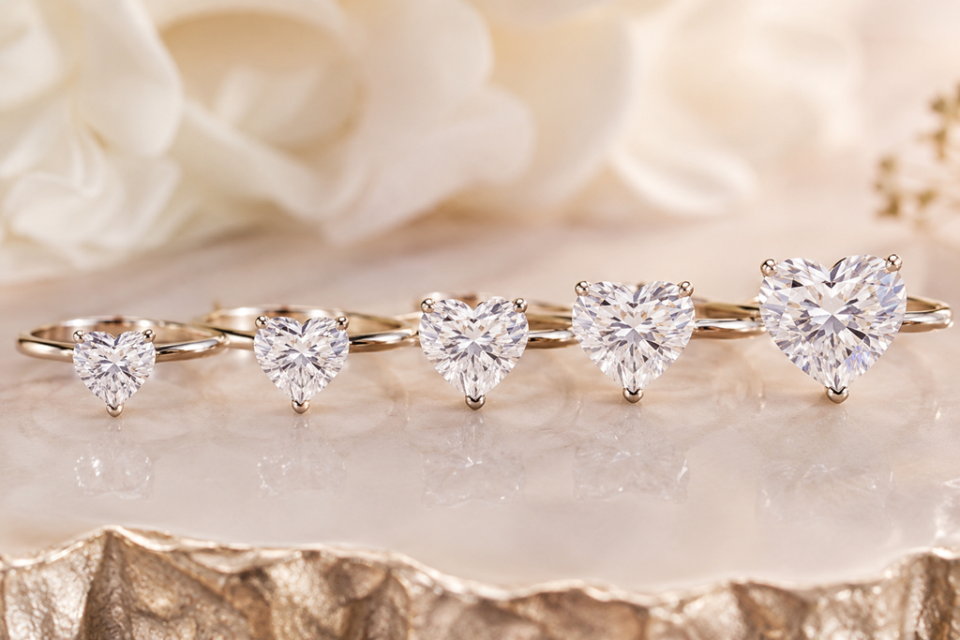
Table of Contents
Why Does a Heart Cut Diamond Need Enough Size?
Why Does a Heart Cut Diamond Need Enough Size?
Among most fancy shapes, the heart depends especially heavily on its outline. A small round diamond remains obviously round, while a very small heart may start losing some of its identity because the cleft becomes shallow, the lobes visually merge, or the lower point becomes less distinct.
This is where hert cut carat size plays an important role. The gemstone needs enough face-up area for all three parts of it to remain readable at normal viewing distance.
What's the Heart-Shaped Diamond Minimum Carat?
What's the Heart-Shaped Diamond Minimum Carat?
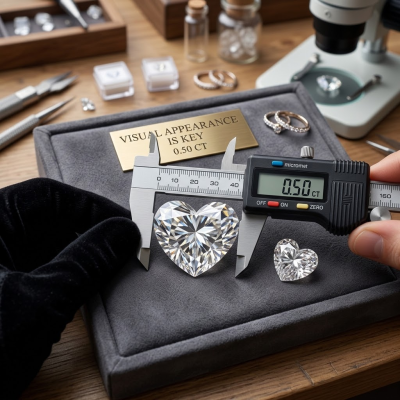
If you’re trying to determine the smallest practical carat size for a heart-shaped diamond, 0.50 ct is a commonly useful benchmark. Although there is no official industry minimum at this weight, it can still make the stone’s shape easier to evaluate:
- A Distinct Cleft: A little more face-up area helps separate the two upper lobes.
- Defined Upper Lobes: Larger surface area makes the left and right sides easier to recognize.
- A Noticeable Bottom Point: The pointed tip has less chance of getting visually lost, especially after setting.
- Better Proportion Assessment: At around 0.50 ct and above, you can more readily assess symmetry and proportions before choosing the setting for hert-shaped stone.
0.50 Carat Is a Starting Point, Not a Guarantee
0.50 Carat Is a Starting Point, Not a Guarantee
Still, 0.50 carat should not be treated as a hard cutoff. Smaller heart-shaped diamonds can have plenty of charm when used in delicate rings, accent designs, or pieces where the center stone plays a supporting role.
This is also why face-up appearance deserves attention when evaluating fancy-shaped stones. Carat weight describes the diamond’s mass, not how clearly its shape will read from above. A well-balanced combination of cut quality, symmetry, proportions, and depth is what helps preserve a crisp and recognizable heart outline.
How Do 0.50, 0.75, and 1 Carat Hearts Compare?
How Do 0.50, 0.75, and 1 Carat Hearts Compare?
Your preferred heart-shaped diamond carat number will depend on how bold or understated you want the center stone to look. 0.50, 0.75, and 1.00 carat are three commonly compared smaller sizes.
Check the chart below to see how their visual presence changes as weight increases.
| Heart Diamond Size | Typical Appearance | Best For |
|---|---|---|
| Under 0.50 ct | Cleft and lobes may appear subtle | Accent stones, a pendant, or another small jewelry piece |
| 0.50–0.69 ct | Petite but capable of a clear heart outline | Budget buyers and delicate styles |
| 0.70–0.89 ct | Easier to recognize at a glance | Buyers balancing price and definition |
| 0.90–1.00 ct | Stronger center-stone presence | More noticeable engagement rings |
| 1.00 ct+ | Bolder look with greater finger coverage | Statement center stones |
For this unique engagement ring cut, a 0.50ct or 0.75 ct heart-shaped stone can both offer enough face-up presence to reveal its characteristic silhouette.
However, those seeking a more noticeable center stone may prefer above 0.75 carat, as the larger face-up area can make the heart shape easier to admire.
Best Heart Diamond Carat Options for a Limited Budget
Best Heart Diamond Carat Options for a Limited Budget
For budget-conscious buyers, the goal shouldn’t be to choose the lowest carat weight possible. What matters is finding the right balance between carat weight, visual presence, and a clearly defined heart shape.
In many cases, 0.50–0.75 ct offers a useful range to explore.
Smart Strategies for Choosing Your Piece
Smart Strategies for Choosing Your Piece
Within this carat range, you can follow the methods below to narrow down a heart diamond engagement ring that offers the right mix of beauty, budget, and practicality.
- Check the shape before the carat.
Look for a distinct cleft, balanced lobes, and a centered point. A well-defined 0.60 ct heart can look more appealing than a larger stone with an uneven outline.
- Compare proportions and face-up size.
Evaluate the length-to-width ratio, millimeter dimensions, and face-up images to see how much of the stone you will actually see.
- Prioritize visible quality over premium grades.
Color and clarity still matter, but extremely high grades may not be worth the extra cost if they force you into a smaller or less attractive heart.
- Consider alternative gemstones.
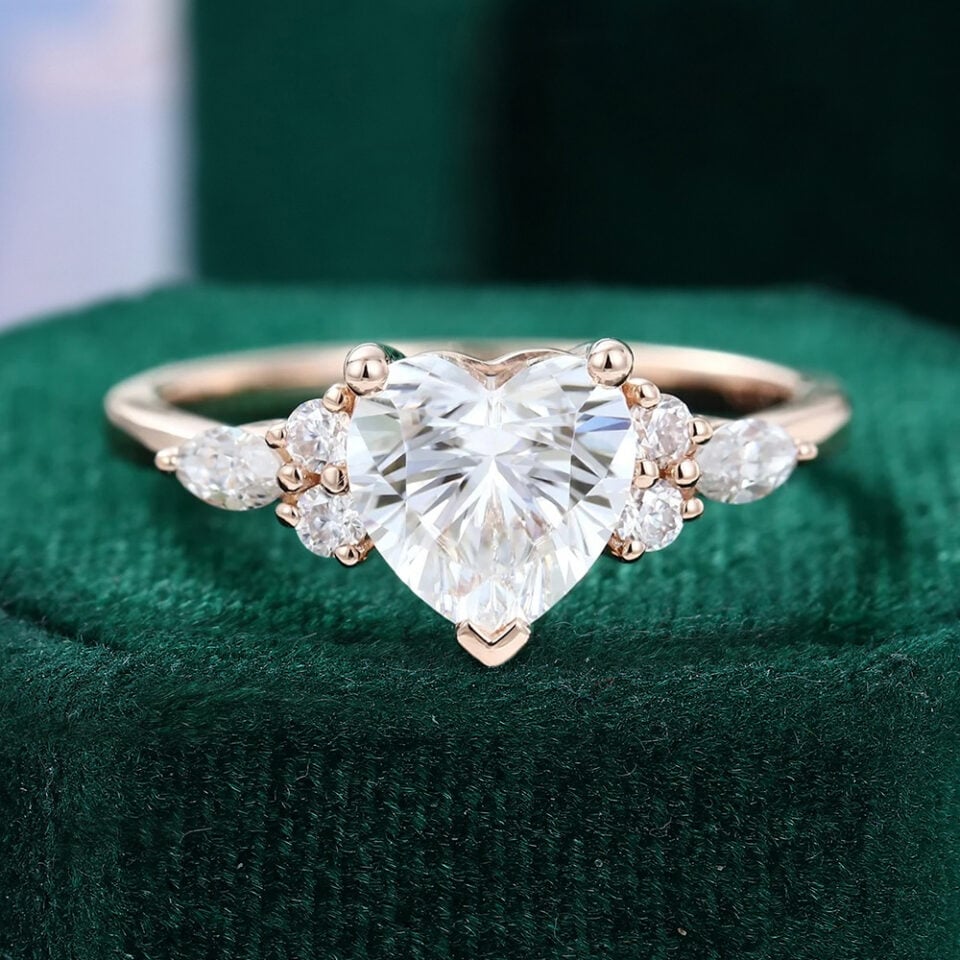
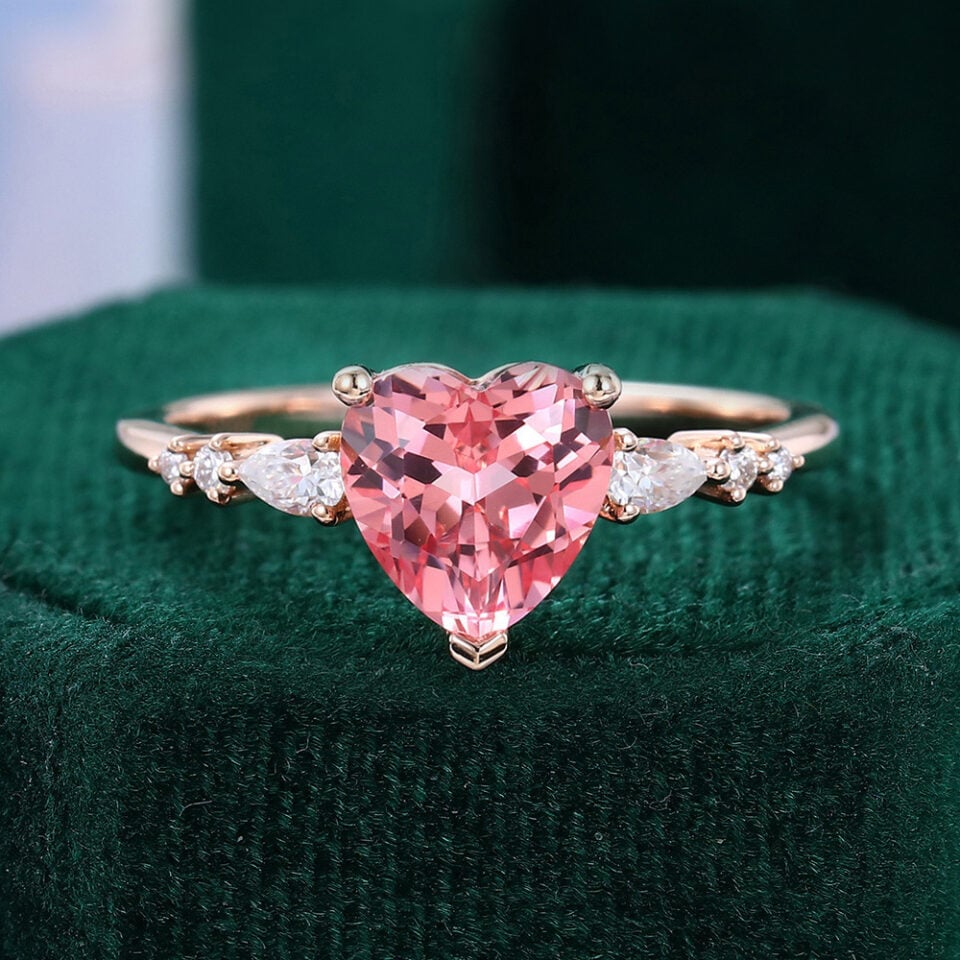
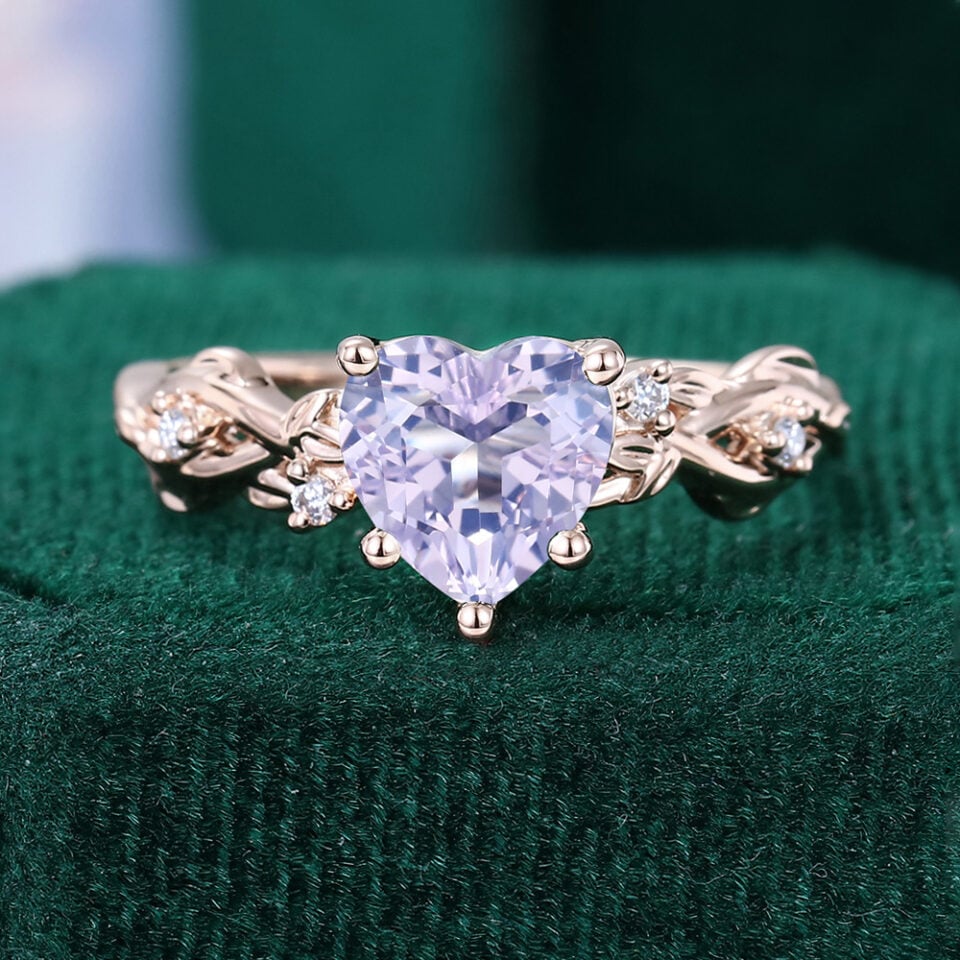
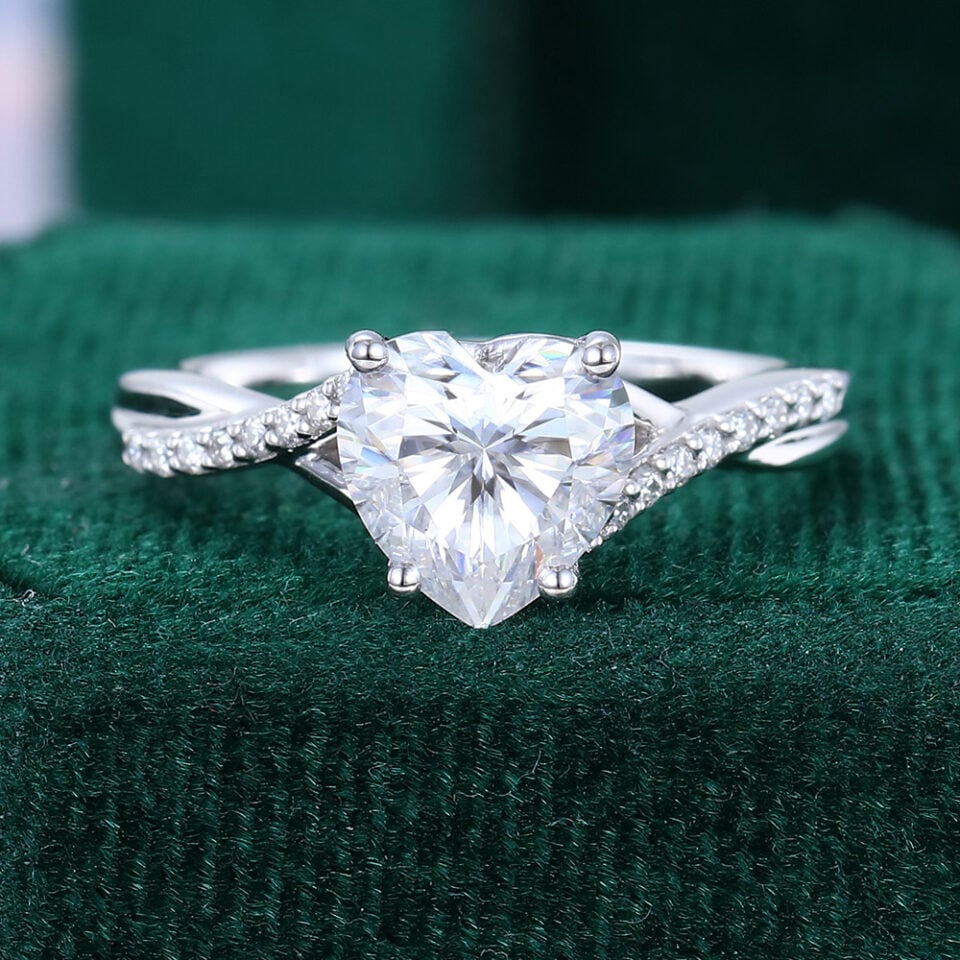
If a 0.75–1 ct natural diamond is still beyond your budget, lab-grown diamonds, moissanites or other alternative gemstones can provide a larger center stone without shrinking the heart.

Ideal Heart-Shaped Carat for Delicate Ring Lovers
Ideal Heart-Shaped Carat for Delicate Ring Lovers
Prefer subtle sparkle and the understated character of minimalist jewelry? A delicate ring doesn’t necessarily need a larger center stone to feel complete. For a heart-shaped diamond, 0.50–0.70 ct may be enough to create a balanced and harmonious look.
Practical Buying Tips to Keep in Mind
Practical Buying Tips to Keep in Mind
Unlike budget-focused shopping, the priority here is finding a center stone that complements the overall look of a petite ring. Beyond carat weight, many heart engagement ring guides also recommend considering the following buying tricks:
- Choose clarity of shape over carat weight.
Search for a distinct cleft, balanced lobes, and a defined point. A well-shaped 0.60 ct heart can work better than a larger diamond with a weak outline.
- Use proportions to control appearance.
A heart stone ratio close to 1:1 tends to create a fuller, more balanced piece. More elongated proportions can make a petite stone look sharper and less traditionally heart-shaped.
- Keep the setting visually light.
A simple three-prong solitaire can secure the heart without overwhelming its smaller size. Halos add sparkle and presence, while bezels offer more protection but may look heavier on a delicate design.
- Pair it with a slim band.
A slender shank keeps the focus on the center stone and helps a 0.50–0.70 ct heart maintain a refined, delicate appearance.
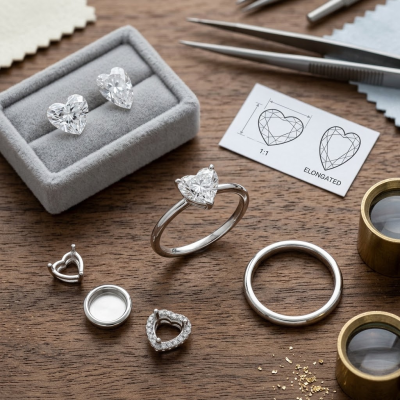
Budget Shoper vs. Petite Buyer: What Is the Real Difference?
Budget Shoper vs. Petite Buyer: What Is the Real Difference?
The same 0.50–0.75 ct heart-shaped stone may work for both buyers, but for very different reasons. Their priorities can ultimately lead to completely distinct engagement ring designs.
| Budget-Conscious Shoper | Petite / Delicate Buyer | |
|---|---|---|
| Why choose smaller | Spend less without losing heart definition | Preserve a light, refined design |
| Priority | Symmetry → outline → ratio → face-up size | Outline → ratio → setting → band balance |
| Suggested range | About 0.50–0.75 ct | Around 0.50–0.70 ct |
| When to go larger | When the heart becomes difficult to recognize | Only when the stone feels too visually subtle |
| If the price is still high | Consider lab-created diamonds or moissanite | Usually no need to increase carat |
| Role of setting | Preserve as much visible heart outline as possible | Control the visual weight of the entire ring |
In simple terms, the budget buyer asks, “What is the smallest size I need?” The delicate buyer asks, “How small can I stay while keeping the ring beautiful?”
Final Takeaway
Final Takeaway
Overall, there is no one-size-fits-all answer to the heart shaped diamond minimum carat. While 0.50 ct can serve as a useful benchmark, the right choice depends on why you are selecting that carat range in the first place.
For a limited budget, the priority is getting the lowest carat weight that still preserves a recognizable heart shape. For delicate ring buyers, the focus shifts toward balancing the center stone with the setting and band so the design remains refined and proportionate.
👉🏻 If you want more control over these elements, custom service from a jeweler such as MollyJewelryUS can make it easier to create a cohesive design.
FAQ About Heart Shaped Diamond Minimum Carat
FAQ About Heart Shaped Diamond Minimum Carat
Are heart-shaped diamonds suitable for small engagement rings?
Yes. Heart cut diamonds can work well in smaller engagement rings when the cleft, two lobes, point, and overall proportions remain visible. Around 0.50 ct is a practical starting point for a center stone.
Is 0.50 ct too small for a heart-shaped engagement ring?
Not necessarily. A well-cut 0.50 ct heart can suit both budget-conscious buyers and people who intentionally prefer petite rings. The closer you shop to this minimum, the more important cut quality, symmetry, and outline become.
Can a heart diamond under 0.50 carat still look like a heart?
It can, but the cleft and point may appear subtle; stones under 0.50 ct often work better as accent stones, halo centers, or delicate pendant pieces.
How can I make a small heart diamond look larger on a budget?
Pair the stone with a slender, thin band or a subtle halo frame, or opt for lab-created diamonds, moissanite, or another gemstone to maximize face-up size at lower costs.
Why do small heart-shaped stones lose their definition after setting?
Bulky prongs or improper bezel settings can easily cover the cleft or tip, merging the lobes visually and making the diamond resemble a round or pear cut.