- by MollyJewelryUS
- August 22, 2026
- Buying Guides
🌟 Quick Guide:
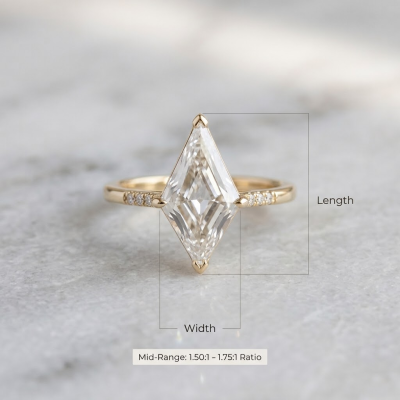
- A length-to-width ratio around 1.50:1 to 1.75:1 can be a useful visual starting point for a balanced, elongated kite shape.
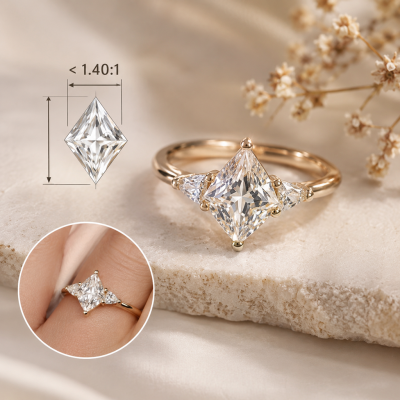
- Proportions below roughly 1.40:1 provides a shorter, broader silhouette
- Ratios above about 1.80:1 create a much thinner and more dramatic shape.
A kite cut stone catches the eye with its crisp geometric outline, featuring four defined sides and pointed corners. Unlike softer gemstone shapes, its proportions play a major role in how the overall silhouette is perceived.
That’s why understanding the kite cut engagement ring ratio is so useful when selecting a center stone. It can give you a better sense of whether the stone will appear broad and compact or elongated and slender once set on the finger.

Table of Contents
Understand the Kite Cut Engagement Ring Ratio
Understand the Kite Cut Engagement Ring Ratio
For a kite-shaped gemstone, the ratio describes how the center stone’s length compares with its width. Like other fancy engagement ring cuts, it can be expressed using a simple formula:
Length ÷ Width = Length-to-Width Ratio
However, don’t confuse this with Kite cut stone size. Size refers to the gem’s actual dimensions, while the proportion describes how those dimensions are distributed to create its overall silhouette. A higher ratio generally produces a longer, narrower appearance.
💡 Editor’s Note: Ratio does not measure symmetry, so both factors should be evaluated when selecting a kite cut center stone.
How Does Ratio Change the Appearance of a Kite Stone Ring?
How Does Ratio Change the Appearance of a Kite Stone Ring?
It’s often easier to understand the differences when you look at the shape rather than the numbers alone. Take a look at the chart below to see how kite cut engagement ring ratios translate into different gemstone silhouettes.
| Ratio | General Look | Overall Aesthetic |
|---|---|---|
| Below 1.40:1 | Broad and compact | Strengthens stone width over vertical length. |
| 1.40–1.49:1 | Moderately wide | Full-bodied shape providing subtle elongation. |
| 1.50–1.75:1 | Balanced to elongated | Offers an effortless finger-flattering appearance. |
| 1.76–1.80:1 | Slim and elongated | Enhances a strong finger-lengthening effect. |
| Above 1.80:1 | Very narrow and dramatic | High-impact bold cut featuring an exaggerated. |
Lower Ratios Create a Wider Kite
Lower Ratios Create a Wider Kite
With a length-to-width ratio below 1.40:1, a kite cut tends to take on a broader, more substantial profile. Its four-sided geometry appears fuller and less elongated, making it well suited to those who prefer a stronger architectural silhouette over a delicate, slender look.
Mid-Range Ratios Offer a Balanced Silhouette
Mid-Range Ratios Offer a Balanced Silhouette
Around 1.50:1 to 1.75:1, the kite engagement ring begins to look noticeably elongated while retaining enough width to keep the shape visually substantial.
This range is a practical starting point for someone who wants the characteristic kite outline without going too far toward either extreme.
Higher Ratios Bring Out a Slender Kite
Higher Ratios Bring Out a Slender Kite
Once the kite cut engagement ring ratio moves toward 1.80:1 and beyond, the stone becomes increasingly narrow. Its pointed ends become more prominent, providing a stronger visual lengthening effect on the finger.
Paired with a minimalist solitaire, this elongated kite ring can make a particularly bold statement. Alternatively, a large halo or cluster can introduce more visual width for a softer, less dramatic overall appearance.
What Is the Best Ratio for a Kite Engagement Ring?
What Is the Best Ratio for a Kite Engagement Ring?
Rather than searching for one “perfect” kite cut ratio, think about the kind of silhouette you want on your finger.
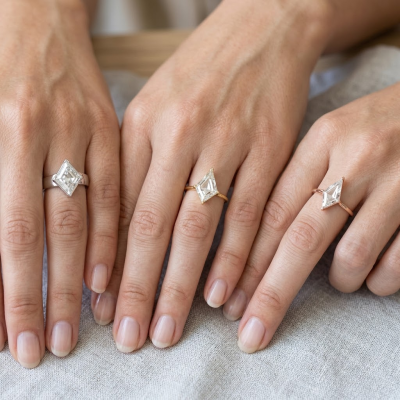
For many buyers, a 1.50:1 to 1.75:1 ratio offers a balanced middle ground. It creates a clearly recognizable kite shape while retaining enough width for a refined, timeless engagement ring style without appearing overly narrow.
That said, it doesn’t mean ratios below 1.40:1 or above 1.80:1 are less desirable. These profiles may still perfectly suit those who have specific aesthetic preferences.
Does a Higher Ratio Make a Kite Look Larger?
Does a Higher Ratio Make a Kite Look Larger?
As discussed above, a higher ratio can make a stone look longer, but proportion alone does not determine how large a kite-shaped gemstone appears. You need to consider its actual length and width. Take these two examples:
- 8.25 × 5.00 mm
- 9.90 × 6.00 mm
Both have approximately the same 1.65:1 length-to-width ratio, yet the second stone is noticeably larger overall. Its greater dimensions create a larger face-up area, giving it more visual presence despite the similar proportions.
In addition, the setting can also further change perceived size, depending on how much of the center stone remains visible and how much metal or accent stones surround it.
How to Choose a Kite-Shaped Ring Ratio Based on Priority?
How to Choose a Kite-Shaped Ring Ratio Based on Priority?
Selecting the kite cut engagement ring ratio is less about finding a universal “ideal” and more about finding the proportion that feels right for you.
Your aesthetic preferences and desired silhouette can all influence which kite-shaped proportion looks most balanced. Here are suggestions from our jewelry experts:
| Your Priority | Recommended Ratio and Reason |
|---|---|
| Prefer something visually substantial | A broader kite (Below 1.40:1) can emphasize width for a bold, substantial visual footprint. |
| Shorter fingers but love elongated stones | A moderately proportion (1.50:1 to 1.75:1) may deliver the elongated effect without overwhelming the hand. |
| Long fingers or simply love dramatic jewelry | A narrower, higher-ratio (Above 1.80:1) can boost vertical length to visually slenderize the finger. |


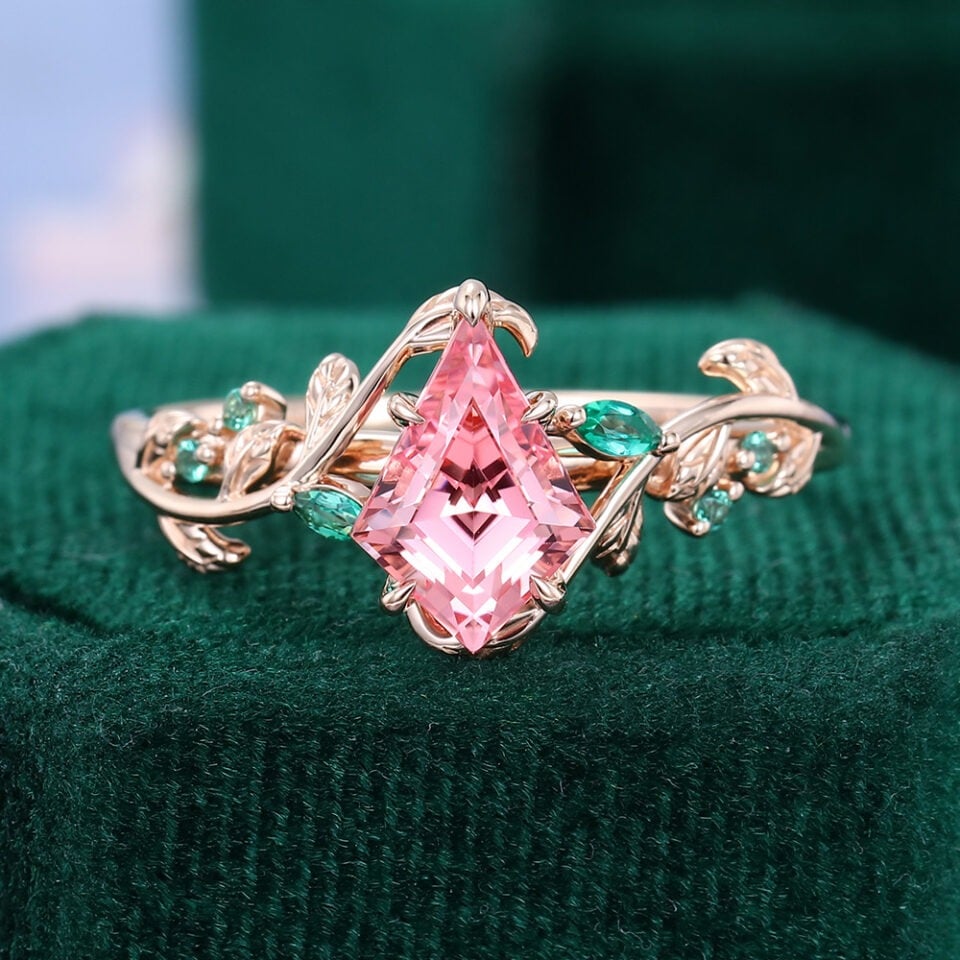
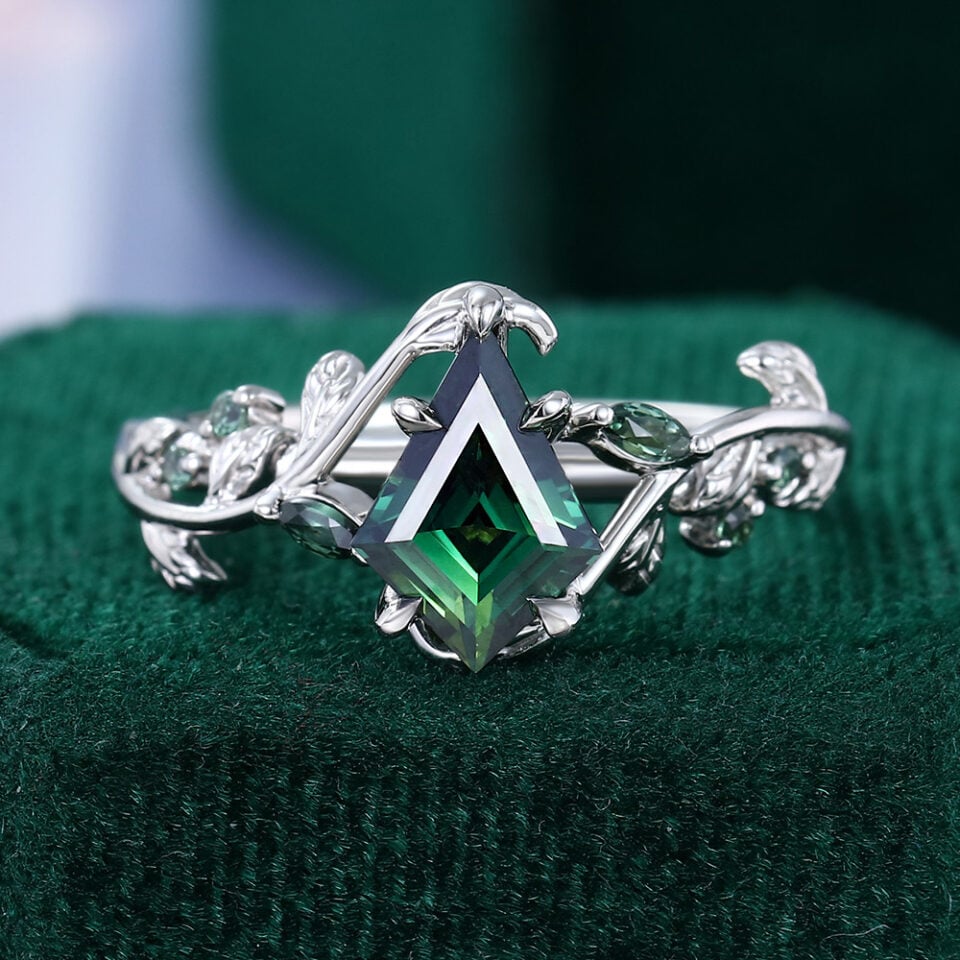
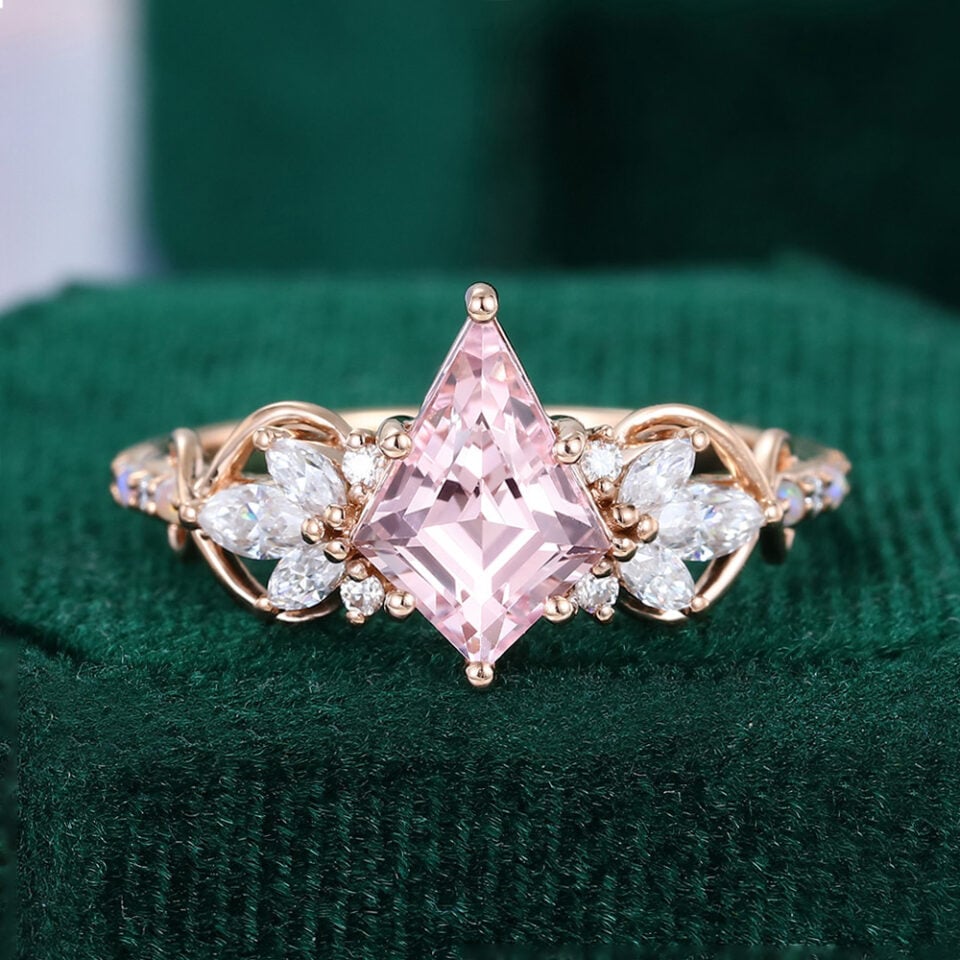
Explore in Depth: Can You Customize a Kite Cut Stone Ratio?
Explore in Depth: Can You Customize a Kite Cut Stone Ratio?
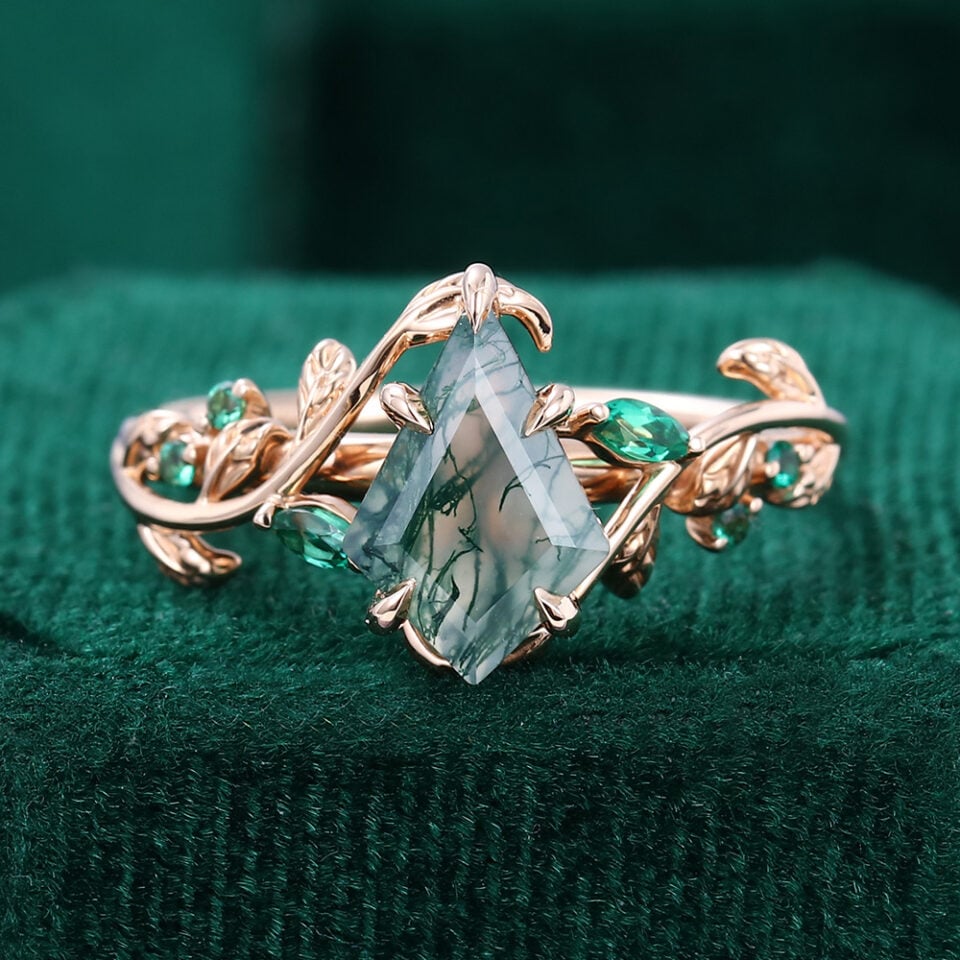
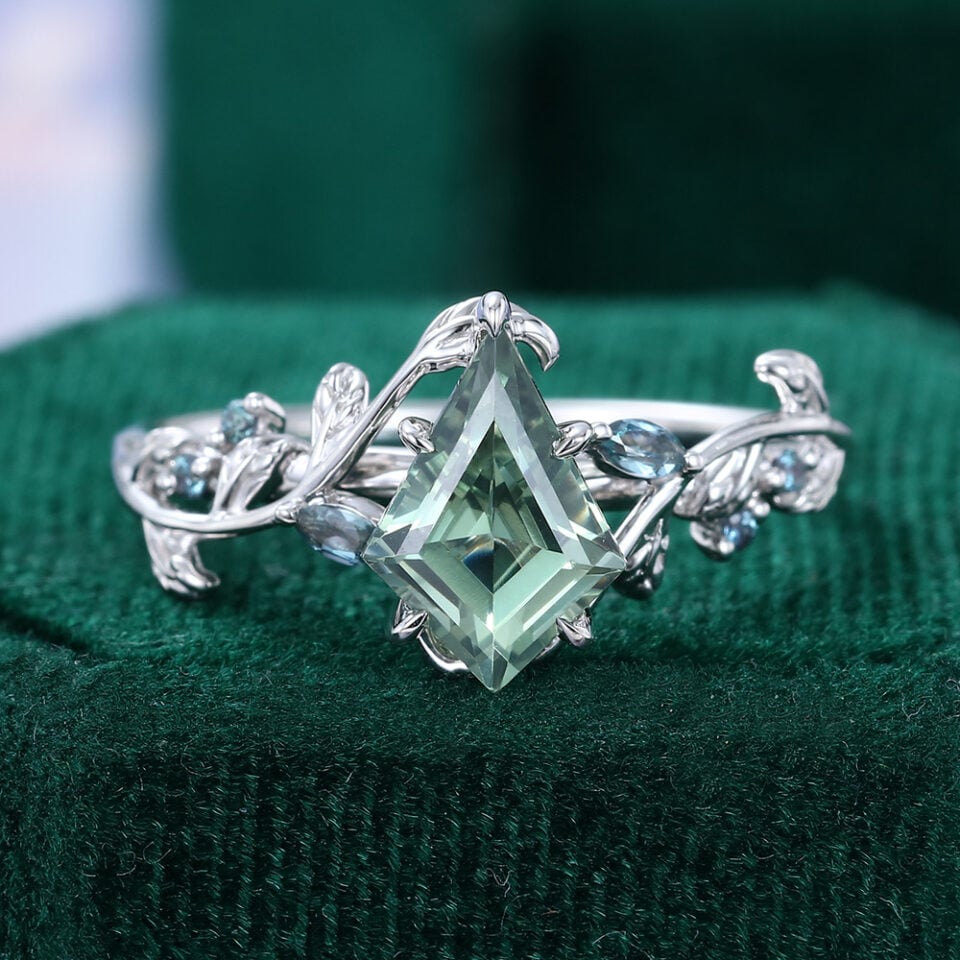
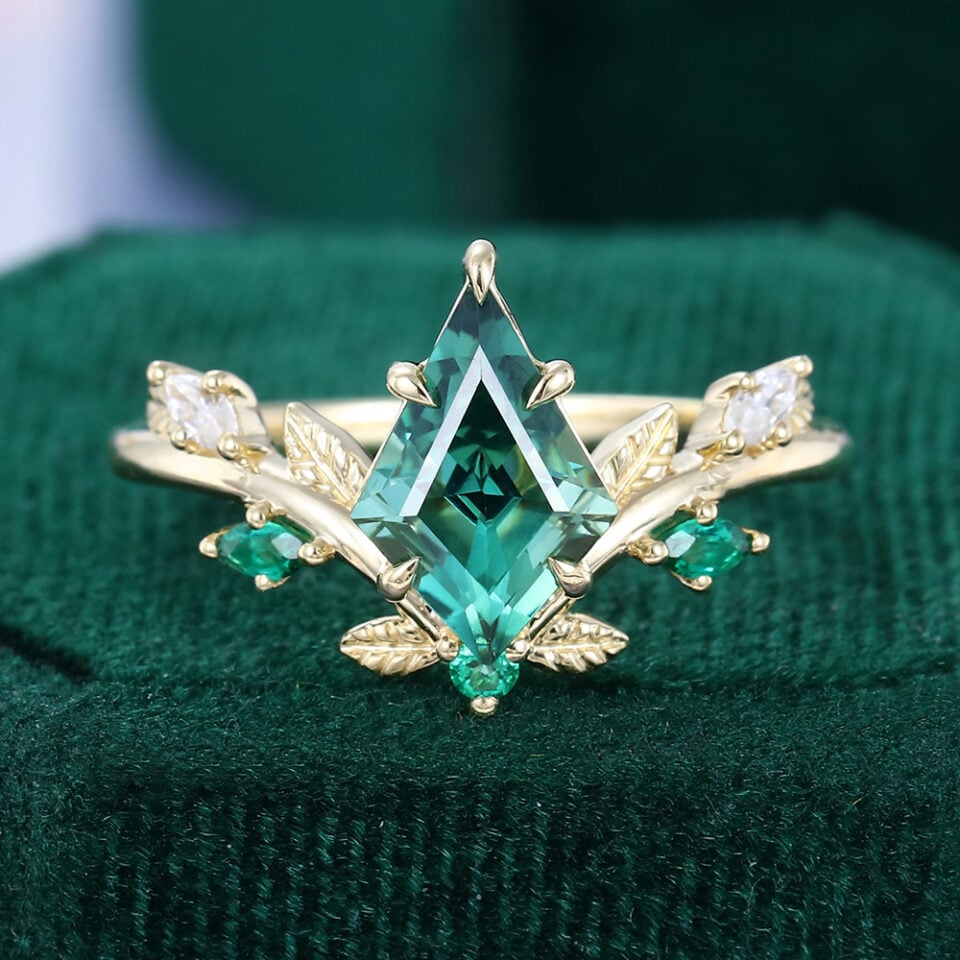
If you have a very specific proportion in mind, a customization service can be worth considering.
A custom design can bring together the center stone’s dimensions, orientation, setting, band width, metal, accent stones, and wedding band fit. This is particularly useful if you want a kite that falls outside the most common proportions.
🔮 Plus Tips: For those who are weighing a custom and existing design, Our custom vs. ready-made engagement ring guide can help you compare both options.
Kite Ratio vs. Symmetry: Which Matters More?
Kite Ratio vs. Symmetry: Which Matters More?
Neither factor should be considered on its own. A well-chosen ratio can still look unbalanced if the stone lacks symmetry, while a beautifully symmetrical gem may not suit you if its proportions create a silhouette you don’t love.
👉🏻 Why You Must Check the Kite Shape Ratio:
- Establishes the Silhouette: Defines whether the stone appears broad and substantial or long and slender.
- Controls Visual Length: Determines how much vertical space the kite covers along the finger.
- Guides Setting Choice: Dictates how well the center stone pairs with specific ring styles, such as solitaires, halos, or side-stone designs.
👉🏻 Why Kite Cut Symmetry Is So Important:
- Highlights Geometric Flaws: Since a kite stone relies on distinct points and straight edges, even minor visual imbalances are immediately noticeable.
- Prevents a Lopsided Appearance: Uneven side angles or misaligned points can make a center stone look tilted, regardless of how ideal its ratio is.
- Ensures Visual Balance: Symmetrical side lengths and centered points keep the overall ring looking intentional and harmonious from a straight-on view.
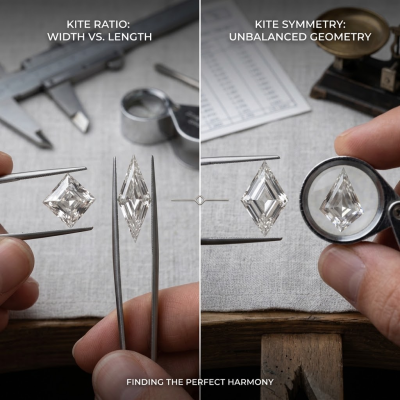
For a more efficient selection process, use the ratio to narrow your options based on the silhouette you want, then inspect the symmetry to make sure the four sides and opposing points are visually balanced.
💡 Related:
- Check this article for more tips on choosing the right kite engagement ring.
- Explore elegant ways to pair a kite-shaped engagement ring with a wedding band.
FAQs for Kite Cut Engagement Ring Ratios
FAQs for Kite Cut Engagement Ring Ratios
Is 1.80:1 too elongated for a kite cut?
What is the best ratio for a kite solitaire?
A moderately elongated ratio around 1.50:1 to 1.75:1 can work well for a solitaire because the center stone remains the main visual focus.
Can two kite cut stones have the same ratio but look different?
Yes. The same ratio can still produce different appearances because of variations in symmetry, corner angles, side proportions, and faceting.
Does an east-west kite need a different ratio?
Not necessarily. The ratio stays the same, but rotating the stone horizontally changes how its proportions are perceived on the finger.
Does carat weight determine the ratio of a kite cut stone?
No. Carat only measures gemstone weight, while ratio describes its proportions. Two stones with the same carat weight can have different ratios.
Final Takeaway
Final Takeaway
The best kite cut engagement ring ratio is ultimately a matter of personal taste rather than a fixed number.
Around 1.50:1 to 1.75:1, the kite-shaped stone tends to maintain a harmonious balance between length and width while retaining its distinctive geometric character. Lower ratios emphasize width and fullness, while higher proportions create a more elongated, refined silhouette.
💛 Still deciding? the MollyJewelryUS team is available online to help you find a proportion that fits your style.