- by MollyJewelryUS
- August 19, 2026
- Buying Guides
Defined by crisp angles and a distinctive geometric silhouette, a kite shape engagement ring can make a striking statement when paired with the right gem. While diamonds are a classic choice, they are far from the only option worth considering.
So, what are the best gemstones for kite cut engagement ring designs? From sparkle and color to durability and everyday wearability, we’ll break down the top gemstone choices to help you find a ring that feels uniquely yours.
💛 Quick Answer: Different Kite Gemstone Comparison At a Glance
| Gemstone | Kite-Cut Personality | Daily-Wear Take | Best For |
|---|---|---|---|
| Moissanite | Crisp, brilliant, modern | Excellent choice (Hardness: 9.25) | Maximum sparkle |
| Sapphire | Bold, sophisticated | Excellent choice (Hardness: 9) | Rich color + durability |
| Alexandrite | Unexpected, personal | Very good (Hardness: 8.5) | Color-changing character |
| Moss Agate | Organic, one of a kind | Good with mindful wear (Hardness: 6.5–7) | Nature-inspired individuality |
| Emerald | Dramatic, vintage inspired | Requires extra care (Hardness: 7.5–8) | Saturated green |
| Lapis Lazuli | Artistic, unconventional | Better for gentler wear (Hardness: 5–6) | Deep opaque blue |
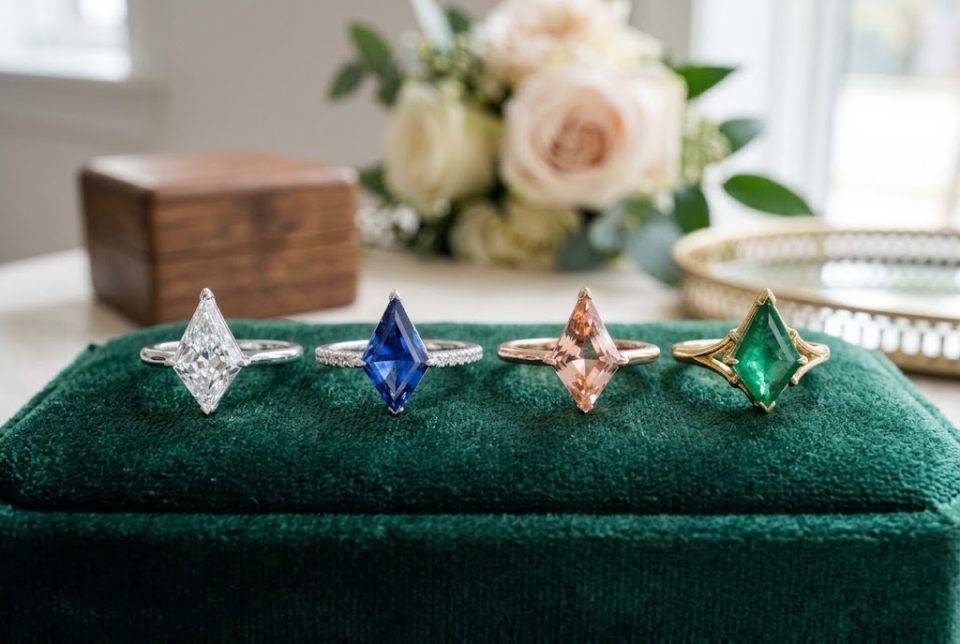
Table of Contents
Why Does the Kite Shape Work So Well With Alternative Gemstones?
Why Does the Kite Shape Work So Well With Alternative Gemstones?
While traditional cuts tend to focus on symmetry and brilliance, the kite cut takes a different approach by making the stone’s silhouette part of the design itself. That distinctive quality makes it particularly compelling for gemstone engagement ring designs featuring alternative or colored gems.
- Outline as Art: The crisp geometric outline becomes a defining visual element rather than simply framing the internal facets.
- Showcasing Unique Stone Features: Its broad table can provide a clear view of natural inclusions and internal characteristics, such as the branch-like patterns found in moss agate.
- Dynamic Light and Color: The elongated geometry can create subtle shifts in light across the stone, bringing additional movement to its hue and surface appearance.
- Individuality: The kite’s upward-reaching form can suggest freedom, independence, and breaking away from convention, making it a natural match for buyers seeking a distinctive colored gemstone ring.
What Gemstones Pair Best With Kite-Cut Engagement Rings?
What Gemstones Pair Best With Kite-Cut Engagement Rings?
Choosing the best gemstones for kite cut engagement rings comes down to what matters most to you. Here are six gems we think are especially worth considering.
1. Moissanite: Ideal for Sparkle and Everyday Wear
1. Moissanite: Ideal for Sparkle and Everyday Wear
- Best Suited To: Anyone looking for a non-traditional silhouette that offers excellent scratch resistance while maintaining a classic bridal glow.
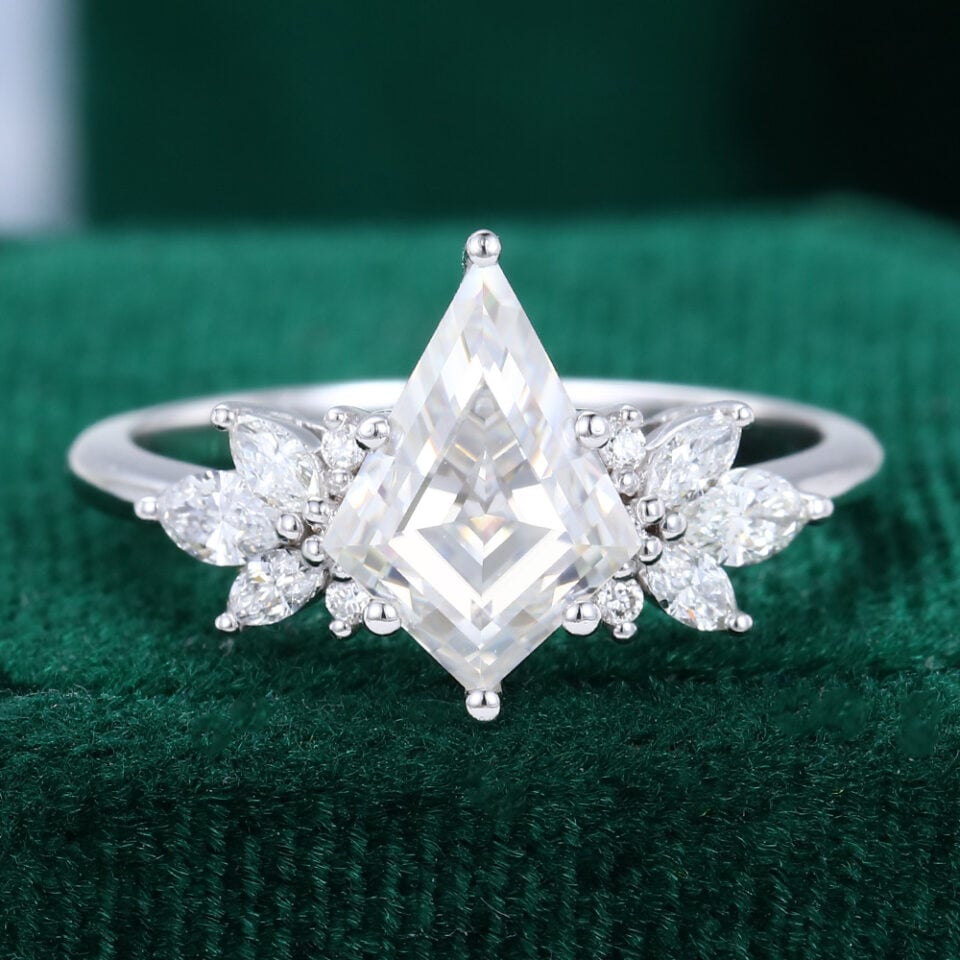
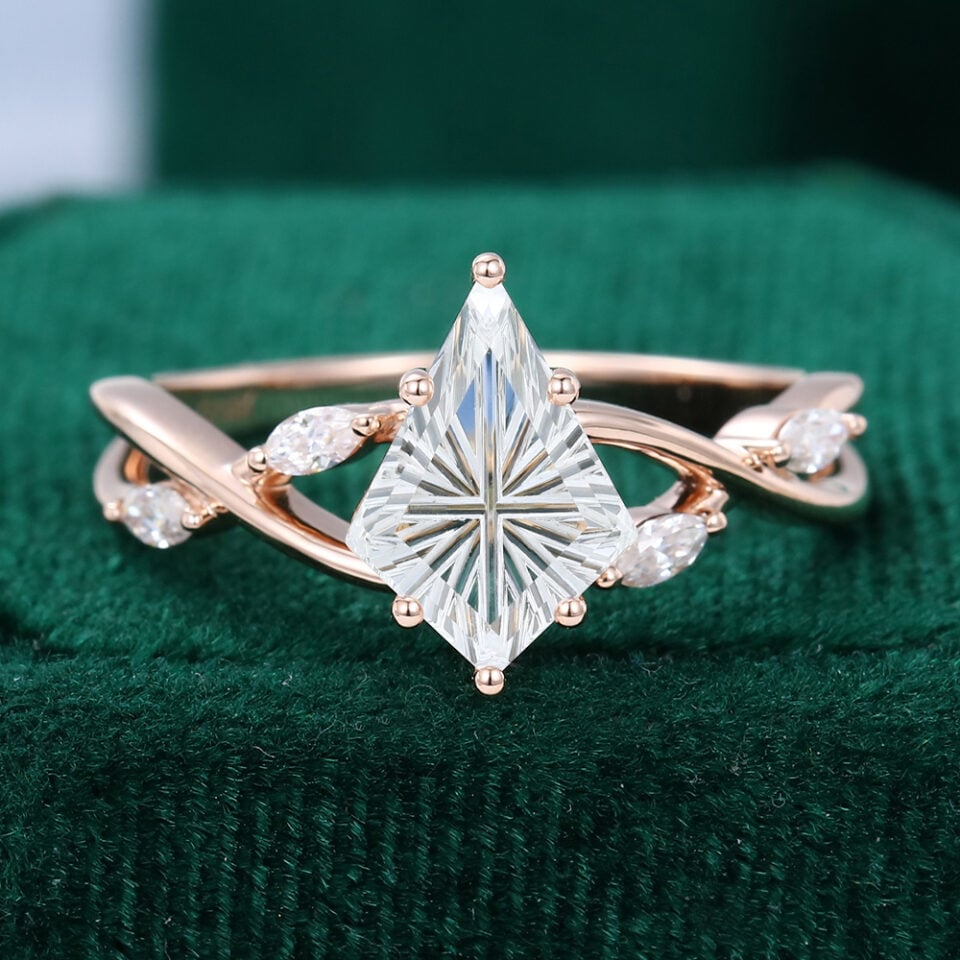
If your favorite part of a kite shaped diamond is the light performance rather than the fact that it is diamond, a moissanite engagement ring is the most natural alternative to consider.
As GIA reports, moissanite has a Mohs hardness of 9.25, along with intense fire and slightly more brilliance than diamond. In a kite-shaped design, its lively optical performance can work beautifully with the stone’s elongated silhouette, while the crisp facets reinforce its modern geometric character.
💡 The Trade-Off: moissanite’s fire can be very noticeable, especially in larger stones. Brides who wants quiet, restrained light return may prefer sapphire or moss agate instead.

2. Sapphire: Great Combination of Color and Durability
2. Sapphire: Great Combination of Color and Durability
- Best Suited To: Someone who prefers a genuine pop of color without making durability the biggest compromise.
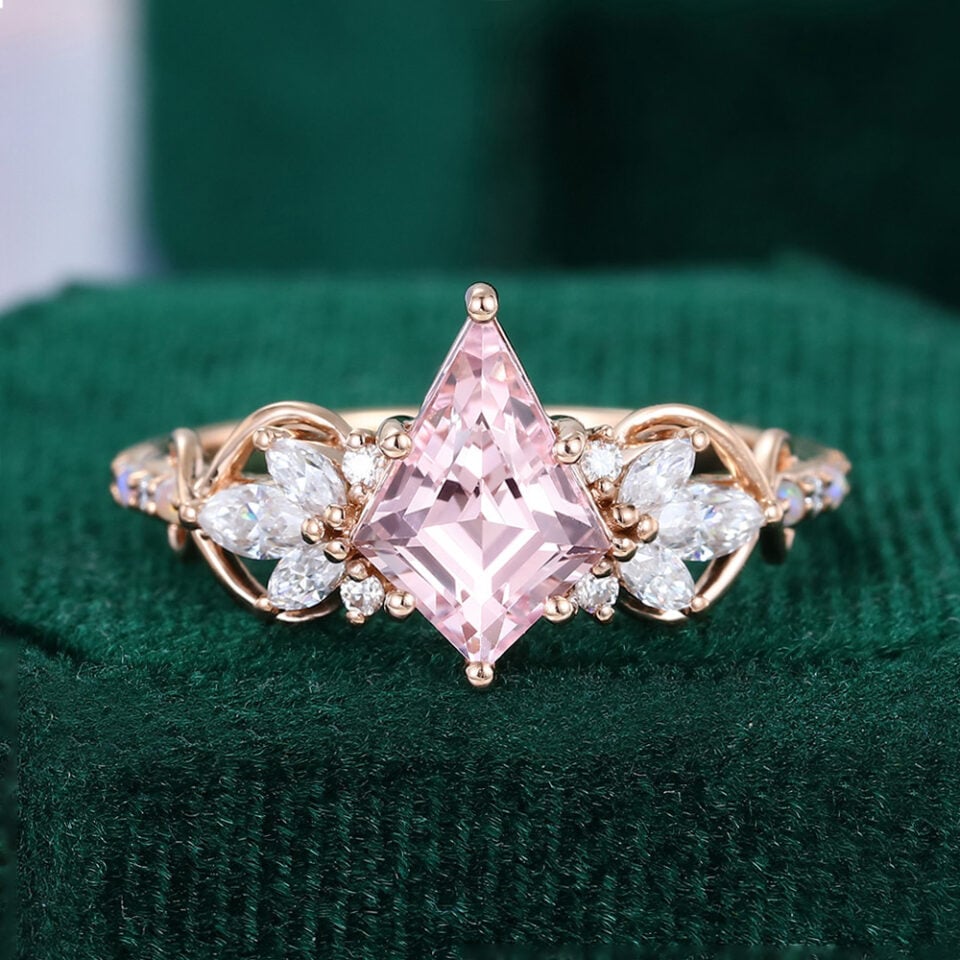
A sapphire brings both color and character to the geometric beauty of a kite cut engagement ring. Green sapphire creates a bold, nature-inspired look, pink sapphire adds a softer contrast to the crisp angles, while deep blue sapphire gives the silhouette a striking, almost architectural presence.
With its broad table, the kite shape provides an expansive window for sapphire’s saturated color to shine. And with a Mohs hardness of 9, sapphire offers the durability needed for frequent everyday wear.
3. Moss Agate: Perfect for a Nature-Inspired Look
3. Moss Agate: Perfect for a Nature-Inspired Look
- Best Suited To: Brides whose priority is an organic, nature-inspired center stone rather than maximum sparkle.
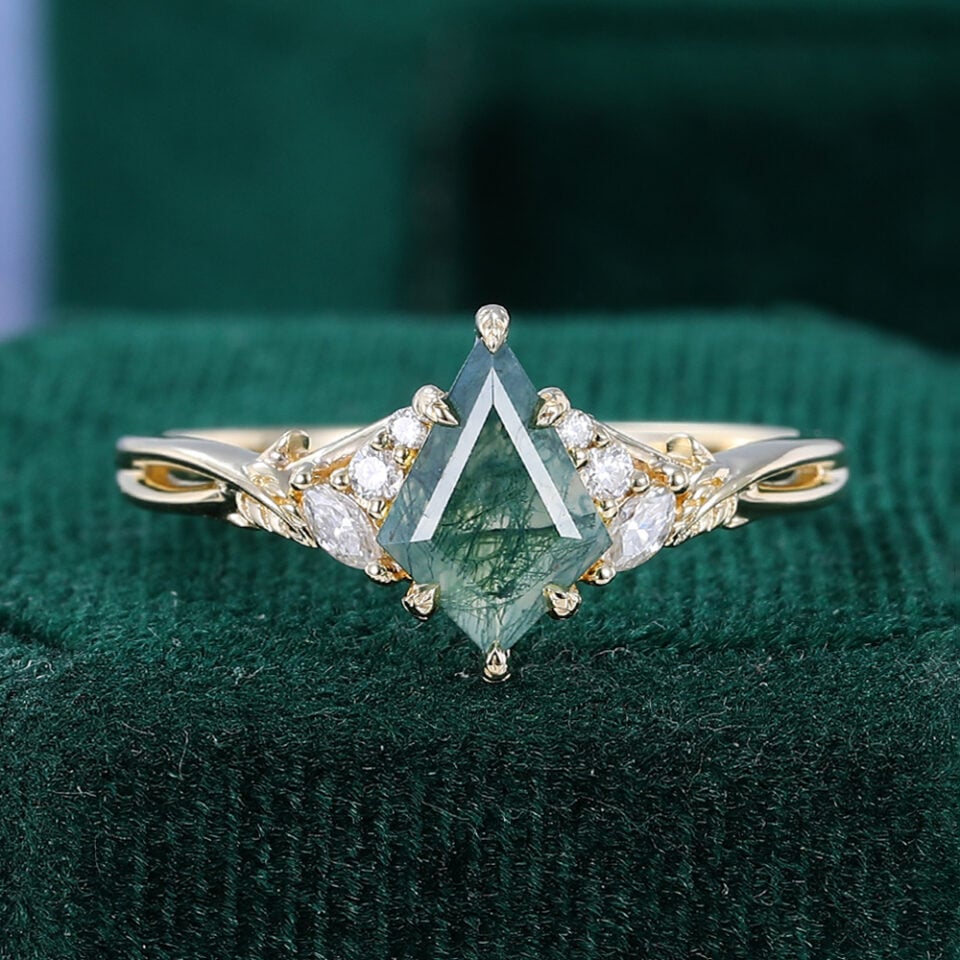
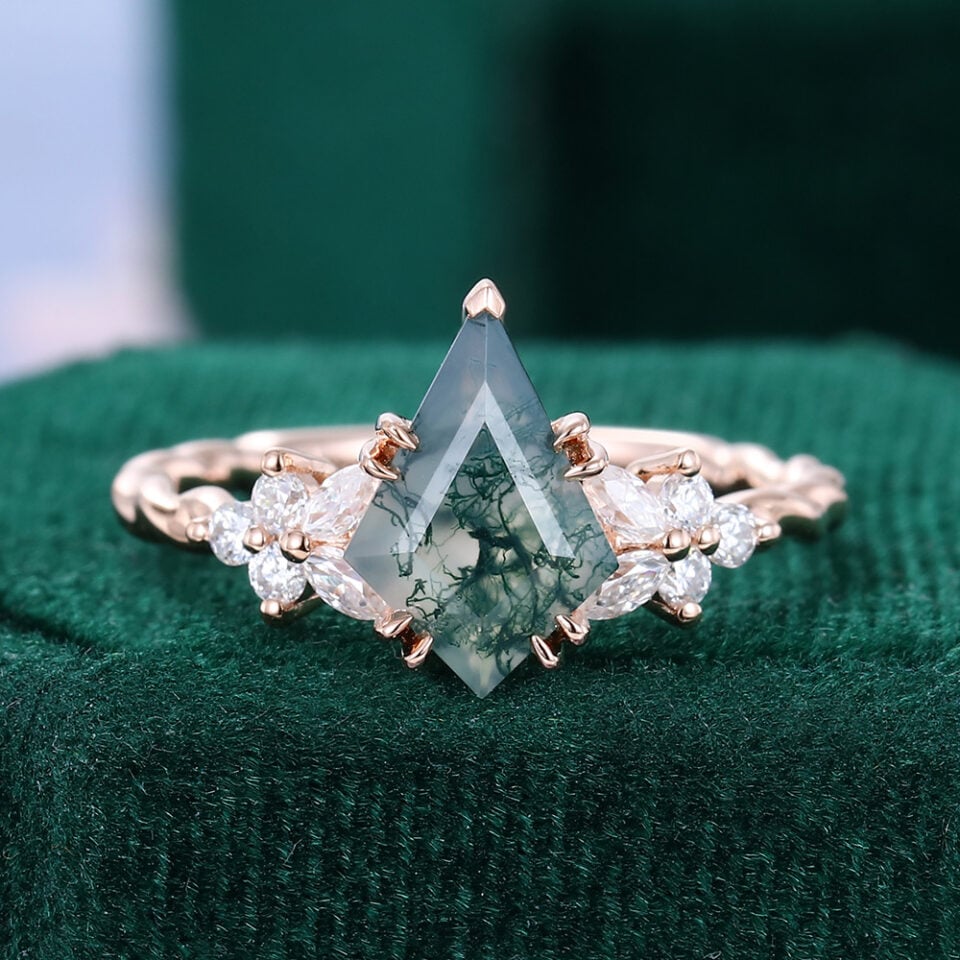
Paired with a kite cut, a moss agate engagement ring can make the gemstone’s natural character part of the story. Its one-of-a-kind branch-like patterns can transform the elongated silhouette into a miniature forest, garden, or abstract landscape.
However, moss agate has a lower hardness than sapphire or diamond, it needs extra care during daily wear. The pointed corners of a kite-shaped piece are also more exposed to impact, so a protective V-prong setting can provide helpful support.
4. Alexandrite: Good for a Ring That Changes With the Light
4. Alexandrite: Good for a Ring That Changes With the Light
- Best Suited To: buyers who want personal meaning and visual surprise without stepping down dramatically in scratch resistance.
Want an engagement ring that looks different from morning to evening? Alexandrite is a standout option among the best gemstones for kite cut engagement ring designs.
Its signature color-changing effect responds to different lighting conditions, giving the stone a dynamic appearance throughout the day. The elongated kite outline adds a modern geometric edge, turning that natural color shifts into an even more distinctive design feature.
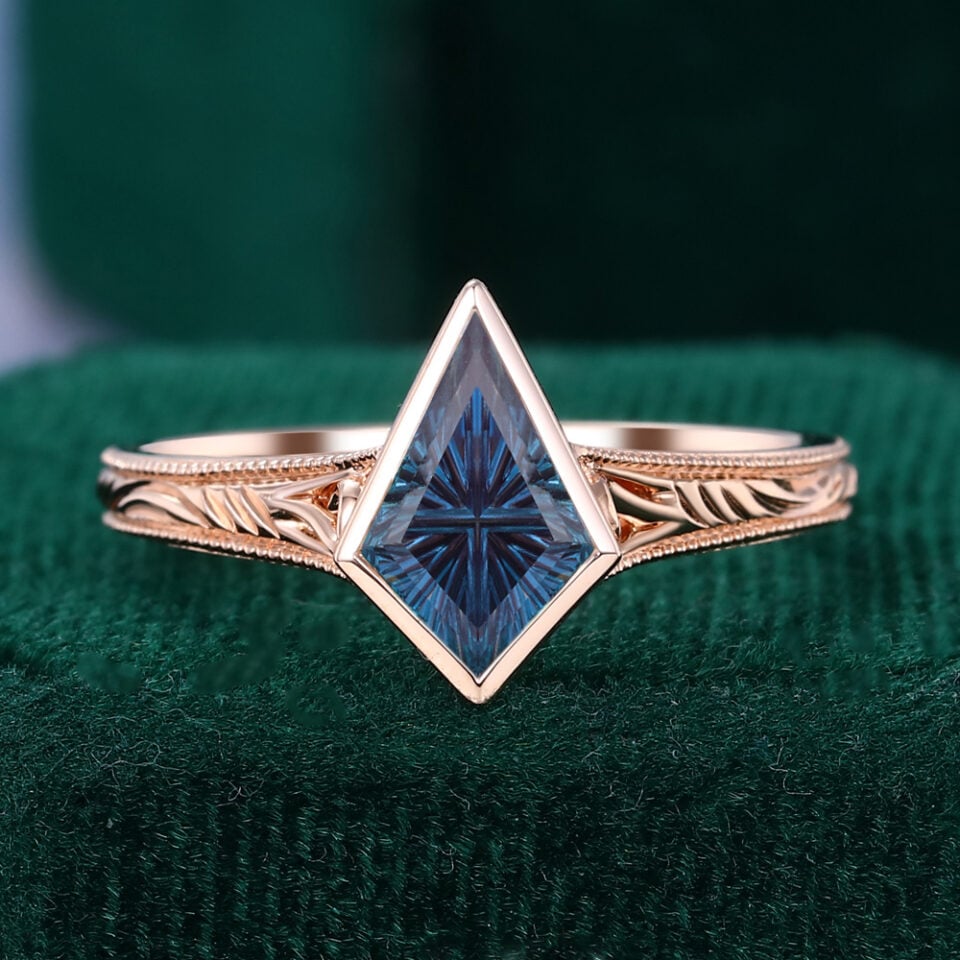

5. Emerald: Gorgeous in a Kite Cut, but Choose the Setting Carefully
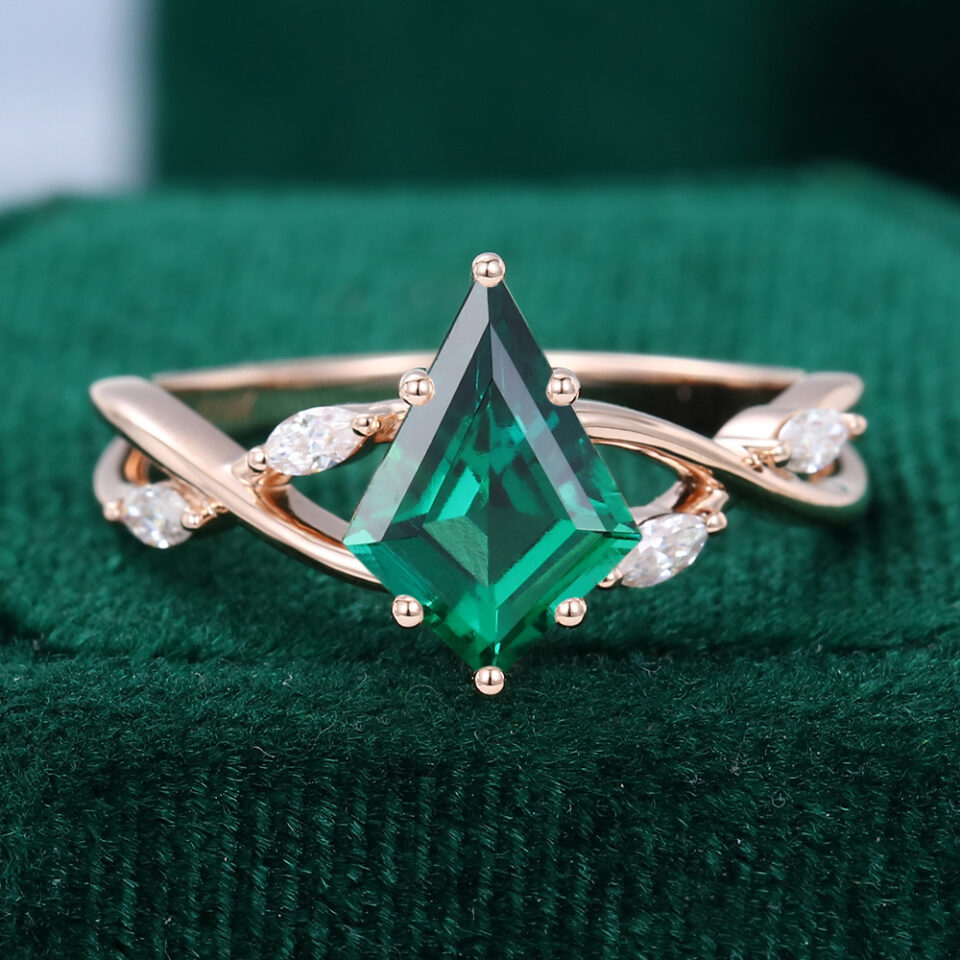
5. Emerald: Gorgeous in a Kite Cut, but Choose the Setting Carefully
- Best Suited To: Collectors seeking a dramatic, Art Deco-inspired green engagement ring who don’t mind giving their ring extra mindful care.
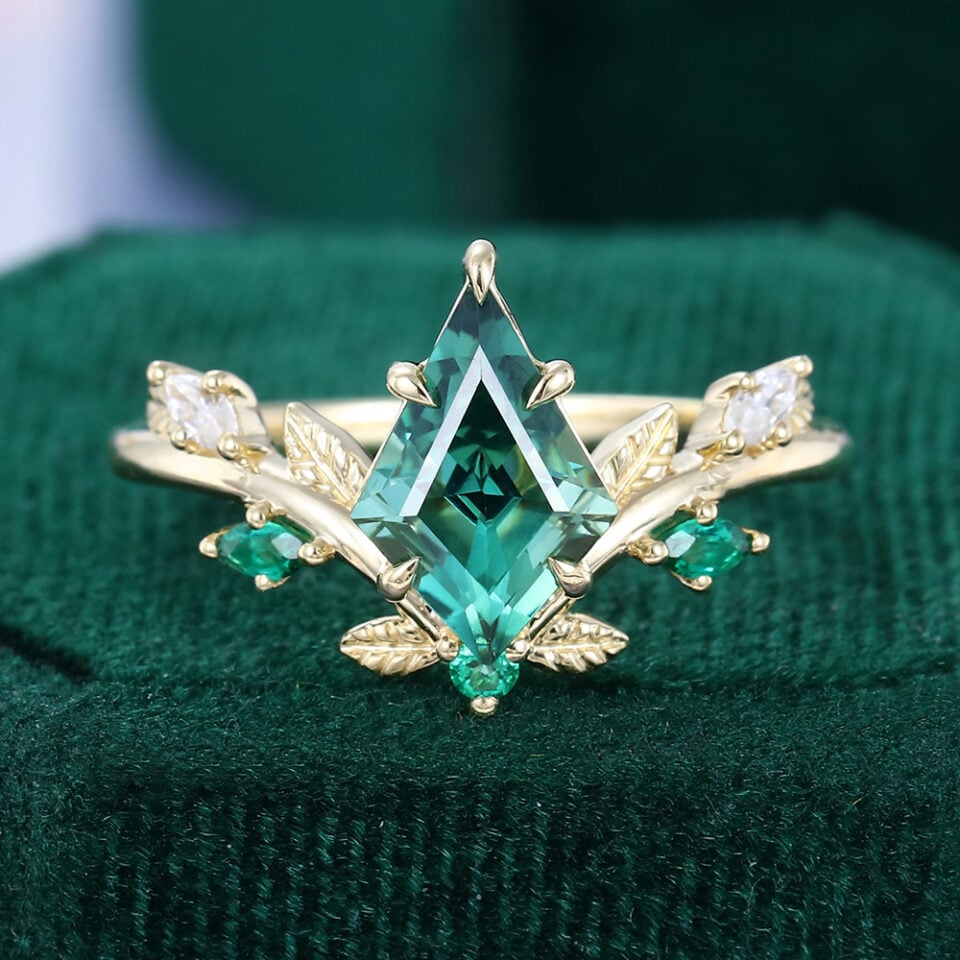
A kite cut turns a rich emerald into an immediate focal point, as its wide table highlights saturated color without relying on complex faceting. The crisp geometric silhouette delivering a modern edge, pairing beautifully with warm yellow gold or high-contrast white gold.
That said, this gamstone is softer and more fragile than moissanite, with a Mohs hardness of 7.5–8 and natural internal fractures that require careful handling.
6. Lapis Lazuli: Works Well for an Unconventional Statement
6. Lapis Lazuli: Works Well for an Unconventional Statement
- Best Suited To: Individuals wanting a bold, artistic piece who prioritizes rich, opaque color over traditional gemstone sparkle.
With its deep royal blue and golden pyrite flecks, lapis lazuli turns the clean kite-shaped ring into a piece of wearable modern art. The broad, flat table frames the stone’s natural texture, making it a standout choice for bohemian or non-traditional designs.
However, with a softer Mohs rating of 5–6, lapis is prone to scratching and wear. It is best enjoyed as an occasional-wear statement piece rather than a heavy daily ringe.
How to Pick the Right Kite-Cut Stone for Your Ring?
How to Pick the Right Kite-Cut Stone for Your Ring?
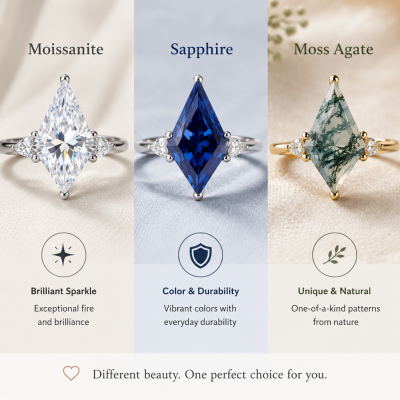
Moissanite, sapphire, and moss agate each bring something different to a kite cut engagement ring. Rather than choosing based on which gemstone is “best,” start by identifying your top priority:
- Love brilliant sparkle? Moissanite delivers exceptional fire and brilliance.
- Want a colorful stone that can handle regular wear? Sapphire offers a strong combination of beauty and durability.
- Prefer something truly different? Moss agate stands out for its natural, one-of-a-kind patterns.
All three are compelling choices for a kite shape gemstone, so there’s no need to search for one universal winner. Instead, pick the gemstone that matches your lifestyle, aesthetic preferences, desired light performance, and personal connection.
What Else to Consider When Choosing a Kite-Shaped Gemstone?
What Else to Consider When Choosing a Kite-Shaped Gemstone?
The Setting Matters More With Pointed Corners
The Setting Matters More With Pointed Corners
No matter which of these kite cut gemstones you choose, protecting the points should be part of the design conversation since this cut features sharp, delicate tips. Try the setting below:
- Bezel Setting: Encloses the gem’s perimeter in metal, providing maximum protection for pointed tips alongside a clean, modern silhouette.
- V-Prong: Secures vulnerable sharp corners with targeted metal coverage while letting maximum light pass through the facets.
- Halo Setting: Frames the geometric outline with smaller accent stones, adding extra brilliance while creating a protective outer buffer.
- East-West Design: Orients the kite horizontally across the band, offering a unique, avant-garde look with balanced structural stability.
Don't Forget the Metal Choice
Don't Forget the Metal Choice
The center gemstone tends to get all the attention, but the metal changes both the appearance and ownership experience of the ring.
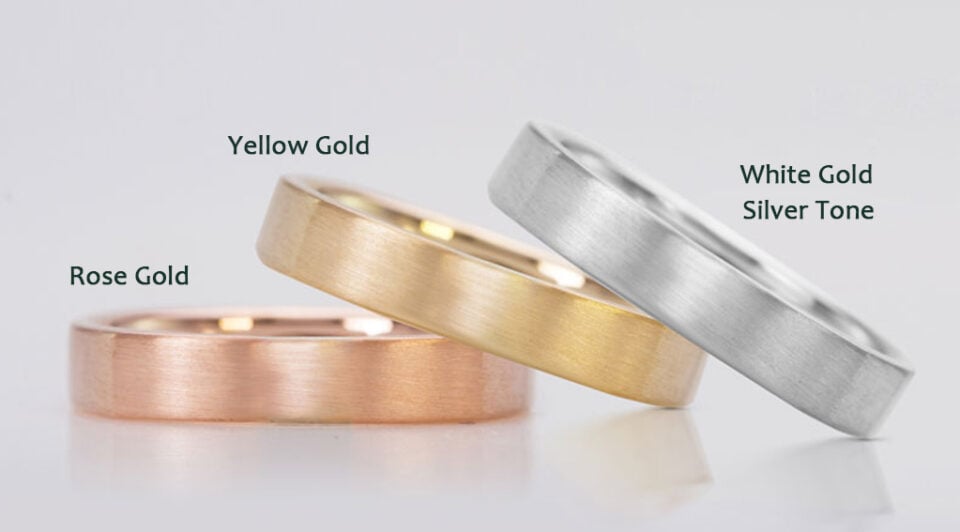
Current MollyJewelryUS kite-cut designs can be configured in options including sterling silver, gold-plated silver, white gold, yellow gold, rose gold, and platinum, depending on the design.
If you’re comparing sterling silver or gold plated options with solid gold for an engagement ring intended for daily wear, look beyond the initial appearance. Ask about maintenance, plating wear, resizing, production details, and how the chosen metal works with the setting.
Tips for Caring for a Kite Gemstone Engagement Ring
Tips for Caring for a Kite Gemstone Engagement Ring
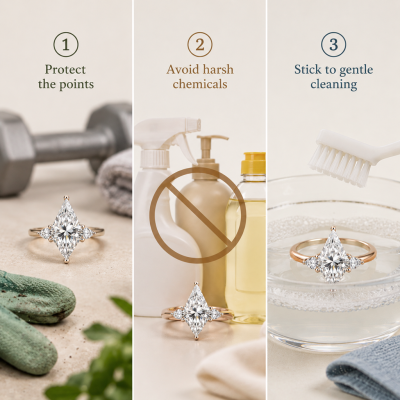
Even the hardest gemstones can chip if struck on their sharp, exposed corners. Keep your ring secure with a few simple habits:
- Protect the points: Take off your ring before gym sessions, gardening, or hands-on activities that expose corners to sharp impacts.
- Avoid harsh chemicals: Keep your setting clear of household cleaners, lotion, and chlorine, which can dull the stone or weaken metal prongs.
- Stick to gentle cleaning: Warm soapy water and a soft-bristled brush are safe for almost any gemstone. Avoid ultrasonic or steam cleaners for stones like emeralds, moss agate, and lapis lazuli.
Final Thoughts
Final Thoughts
Overall, the best gemstones for kite cut engagement ring designs are the ones that best fit your lifestyle, personal style, and priorities. Moissanite stands out for its exceptional fire, while sapphire offers rich, saturated color with excellent durability.
If you’re willing to give your ring a little more care, moss agate, alexandrite, and emerald can also bring distinctive color and character to a kite-shaped design.
Good news? At MollyJewelryUS, you can find kite-shaped gemstone rings featuring these beautiful options in a variety of styles. Take a look and find the one that feels right for you.
Frequently Asked Questions
Frequently Asked Questions
What is the strongest gemstone for a kite-cut engagement ring?
Moissanite and sapphire are the strongest all-around choices for most daily-wear kite-cut engagement rings. Moissanite offers exceptional brilliance and 9.25 Mohs hardness, while sapphire offers 9 Mohs hardness and a much wider choice of saturated colors.
Is moss agate good for a kite-cut engagement ring?
Yes, particularly for someone who values a nature-inspired, one-of-a-kind appearance over maximum brilliance. Because moss agate is less scratch-resistant than sapphire or moissanite, protective setting choices and mindful everyday wear become more important.
Is sapphire better than emerald for everyday wear?
For most people, sapphire is the easier everyday-wear choice. Sapphire ranks 9 on the Mohs scale and has excellent toughness, while emerald ranks 7.5–8 and commonly contains fractures that can make it more vulnerable to damage.
Are kite-cut gemstones more fragile?
The shape itself introduces pointed corners that can be vulnerable to impact. The actual risk depends on the gemstone’s hardness, toughness, inclusions, cut quality, and how well the setting protects those pointed ends. A bezel or thoughtfully positioned protective prongs can help reduce exposure.
Does a kite cut have to be worn vertically?
No. A traditional orientation emphasizes its elongated silhouette, while an east-west kite setting places the stone horizontally across the finger for a more contemporary look.
Can a kite-cut ring have side stones?
Absolutely. Solitaire settings put the geometric center stone in focus, while three-stone, halo, cluster, and accent-stone designs can add extra sparkle or color.