- by MollyJewelryUS
- September 4, 2026
- Buying Guides
An engagement ring is more than a piece of jewelry. It is a personal expression of taste, and the shape of the center stone plays a major role in its character. Round brilliant and cushion cuts are two enduring favorites in fine jewelry, each offering its own distinctive appeal.
In this round vs cushion engagement ring comparison, we’ll look at their facet patterns, visual character, and interaction with light to help you determine which cut best suits your preferences.
Table of Contents
Why Do People Struggle to Choose Between Round and Cushion?
Why Do People Struggle to Choose Between Round and Cushion?
Many couples struggle to choose between round and cushion when selecting an engagement ring cut. Both have relatively soft outlines, with a rounded outline offering a continuous curve and cushion cuts combining geometric edges with softened corners.
Conversations on Reddit and other engagement ring forums highlight the same dilemma. Buyers often find it difficult to decide between the clean, precise lines of a round cut and the unique character of a cushion cut.
Cut and Shape: Round vs Cushion Engagement Rings
Cut and Shape: Round vs Cushion Engagement Rings
The difference between a cushion vs round cut diamond or gemstone starts with their outline, but it doesn’t end there. Their distinct shapes can bring out noticeably different visual effects once set in an engagement ring.
Face-Up Size and Table Surface Area
Face-Up Size and Table Surface Area
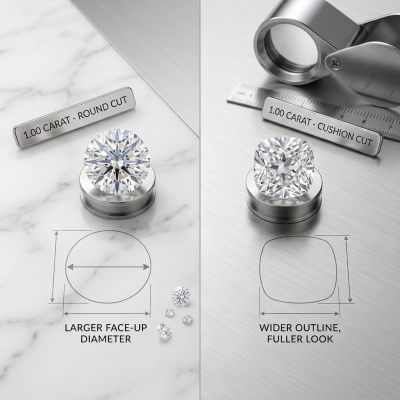
Two gems with the same carat weight can look different in size when one is a round cut and the other is a cushion cut. This is largely due to distinctions in their proportions, including how much of the stone’s weight sits below the table.
- Round Cut Size: Its balanced proportions can provide a strong face-up spread, but the actual visible size depends on its diameter and depth.
- Cushion-Shaped Size: It may show less face-up area, but a wider outline can give the center stone a fuller presence.
Symmetry vs Rounded Corners
Symmetry vs Rounded Corners
The geometry of each cut also affects how the center stone interacts with the rest of the engagement ring. When viewed side by side, you’ll notice:
- Round Silhouette: A continuous, highly symmetrical outline with no corners interrupting its circular shape.
- Cushion Outline: Combines a square or rectangular shape with softly rounded corners, while the cushion ratio can vary from classic and compact to more elongated.
💡 Note: This matters most in halo and multi-stone settings, where the center stone’s outline helps determine how the surrounding gems and metal frame it.
Round or Cushion Cut Diamond: Which One Handles Light Better?
Round or Cushion Cut Diamond: Which One Handles Light Better?
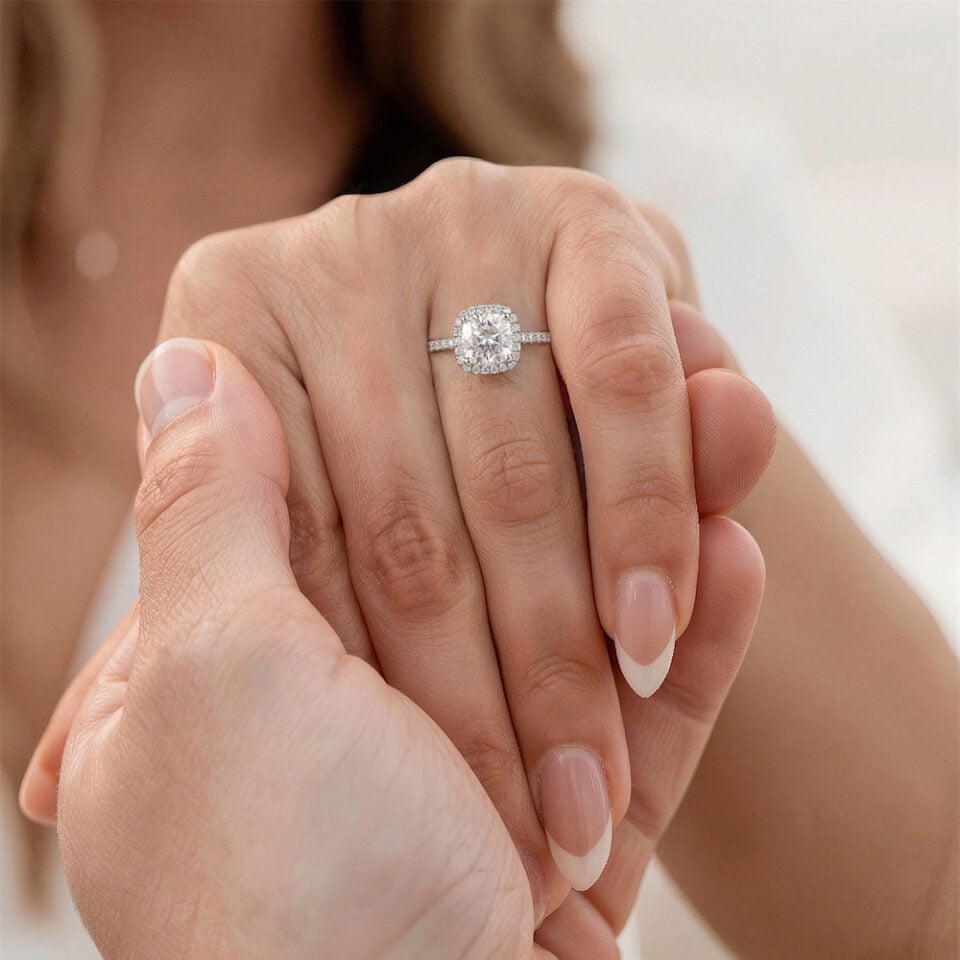
In both natural and lab-grown diamond engagement rings, the round brilliant cut is valued for its precise and standardized facet arrangement, which helps create strong brightness and balanced scintillation. Cushion cuts can have broader facets and more varied facet patterns, resulting in visual effects that range from crushed-ice scintillation to noticeable fire.
However, shape alone does not determine performance. When comparing a cushion cut vs round cut diamond, factors such as cut quality, proportions, facet arrangement, and clarity should all be considered.

How Colored Gemstones React to Each Cut
How Colored Gemstones React to Each Cut
Evaluating a colored gemstone ring involves a different set of considerations.
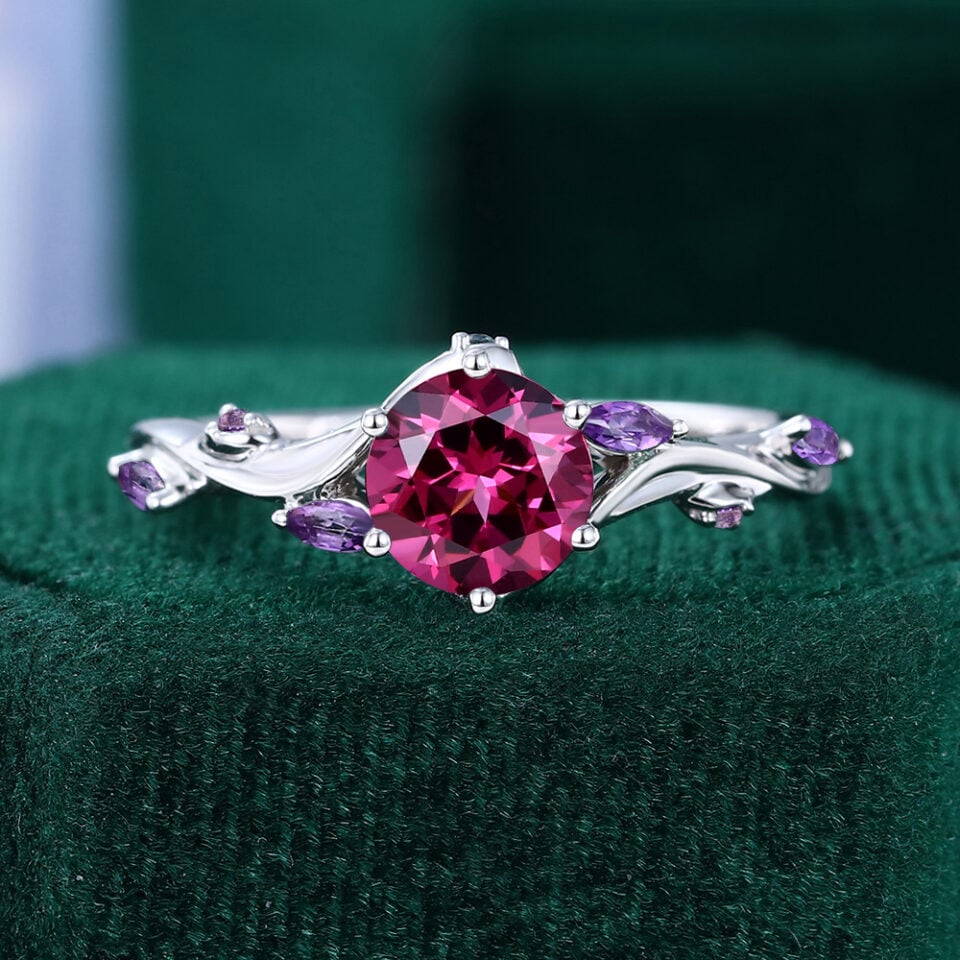
While diamond appearance is strongly influenced by brilliance and light return, colored gemstones are assessed through hue, saturation, tone, clarity, and color distribution, all of which can be affected by the cut.
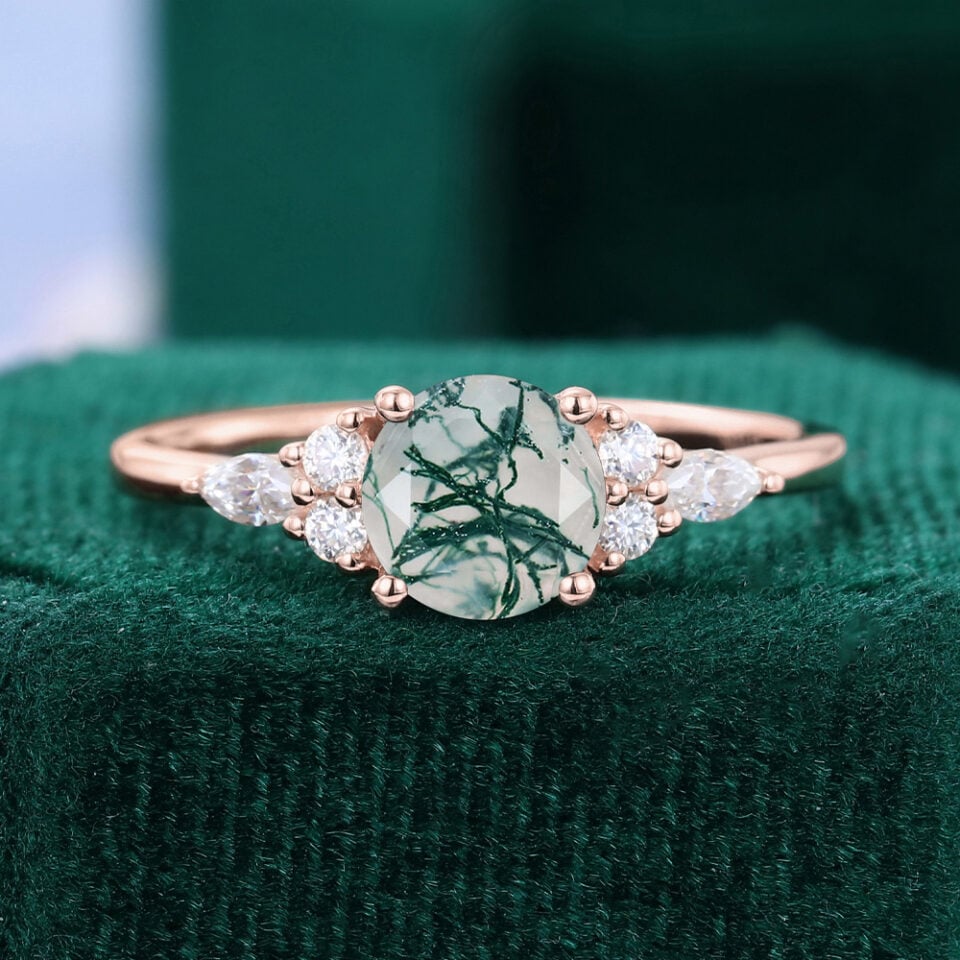
For gems like moss agate, sapphire, and emerald, the cushion shape can create a broader canvas for displaying color, pattern, or natural character than a round cut.
Aesthetic Vibe: What is the Style of Each Shape?
Aesthetic Vibe: What is the Style of Each Shape?
When comparing round vs cushion engagement rings, style is just as important as sparkle. Knowing which shape appeals to you most can help simplify the decision.
Round for Elegance and Minimalism
Round for Elegance and Minimalism
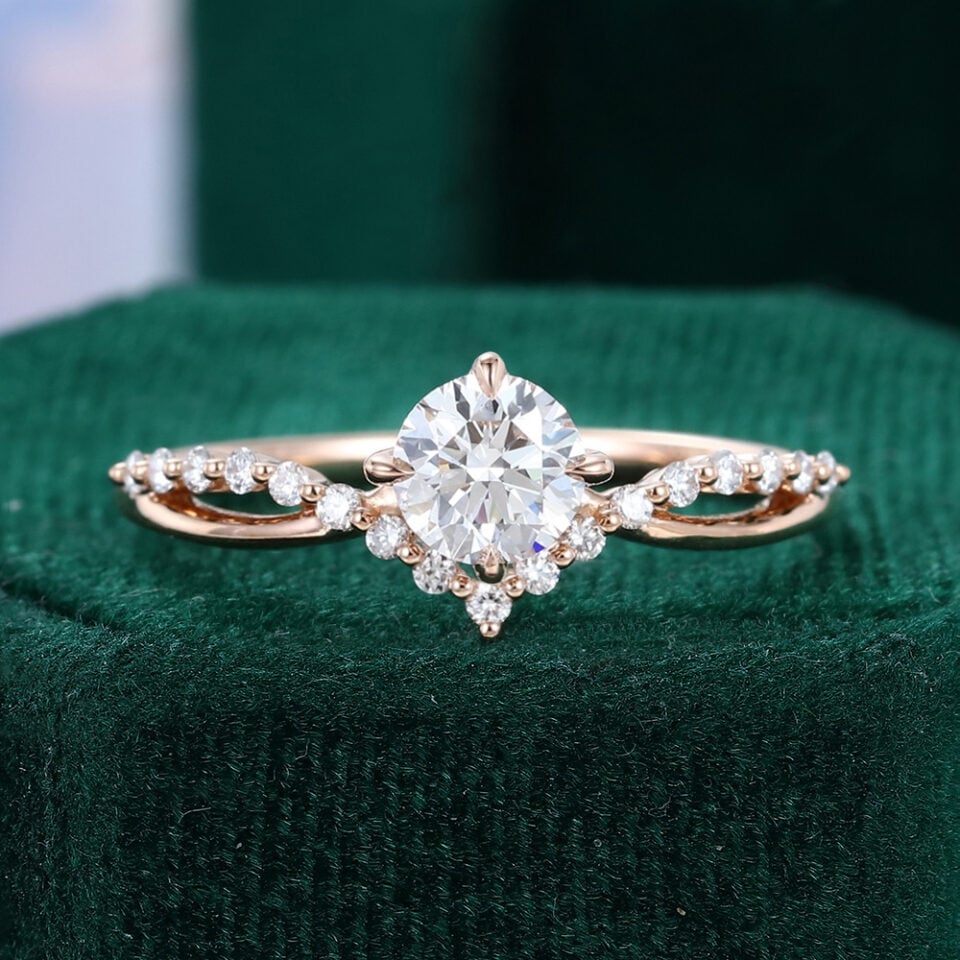
A round engagement ring offers a clean, refined look that works well with many different settings. From classic solitaires and delicate pavé designs to modern bezels, its smooth curves complement a variety of styles.
Since the round shape is fairly versatile, the setting can have a strong influence on the ring’s final appearance and how it pairs with wedding bands.

Cushion for Soft Antique Glamour
Cushion for Soft Antique Glamour
Unlike round cuts, cushion shaped rings exude an Old World charm reminiscent of 19th-century heirlooms. Their softened edges and rich depth offer a subtle, luxurious aesthetic that feels both romantic and modern.
What’s more, the proportions of a cushion cut can further shape its appearance. You can explore more buying tips in our cushion cut engagement ring guide.
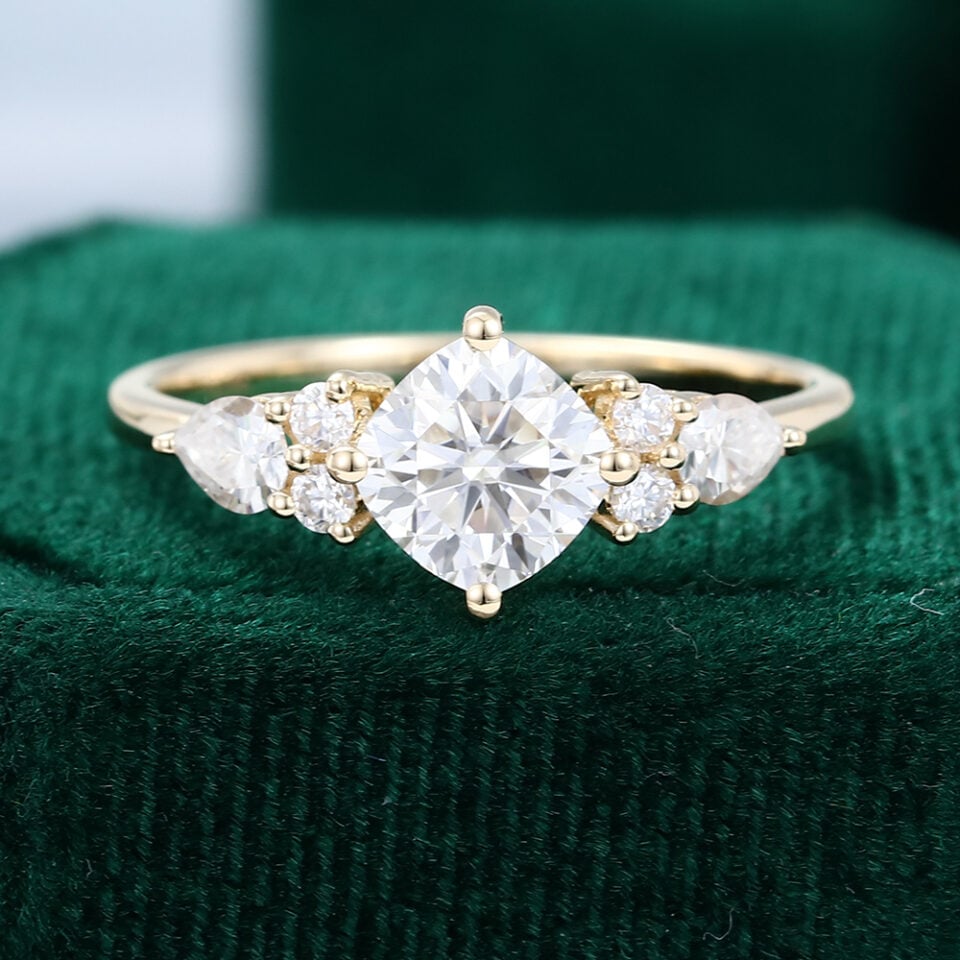
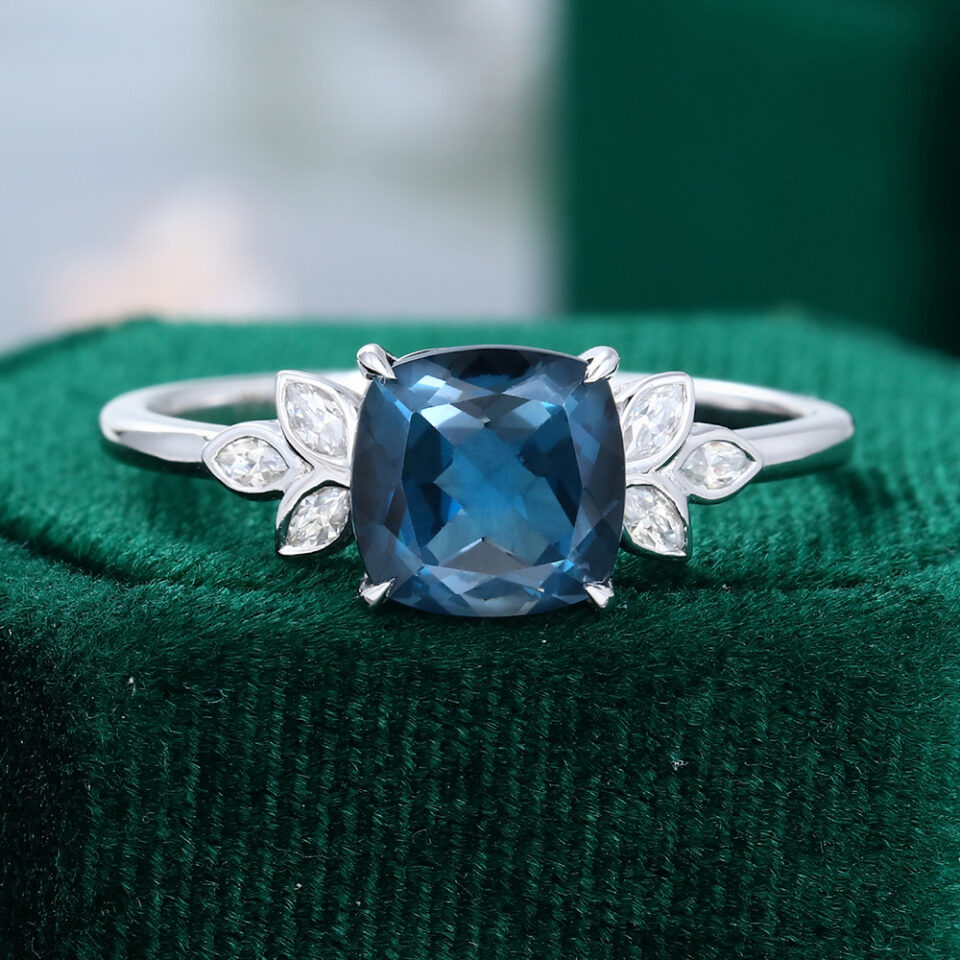
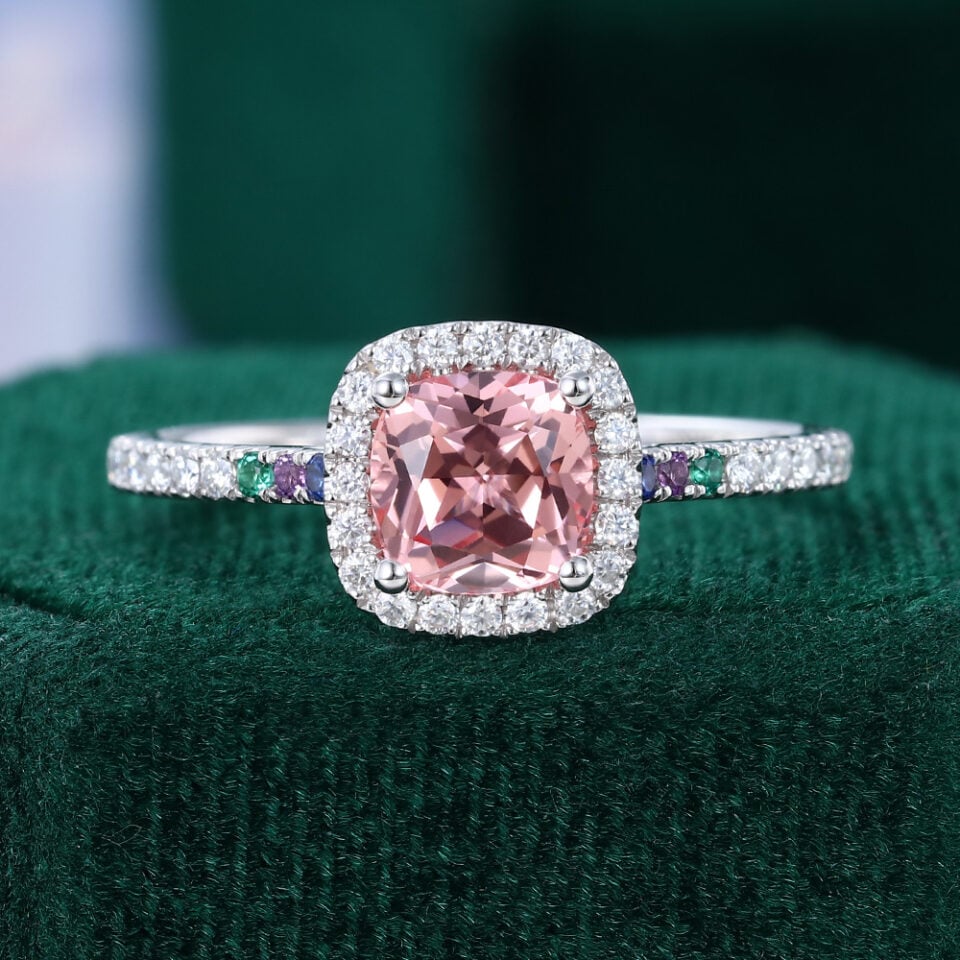

Cushion Cut vs Round Cut Engagement Ring Cost Comparison
Cushion Cut vs Round Cut Engagement Ring Cost Comparison
Budget is another essential factor many buyers may consider when choosing between these two cuts.
💡 Note: The shape alone does not determine the final ring price. Stone type, quality, carat weight, setting, and metal can all influence the overall cost.
Round Diamonds Often Cost More
Round Diamonds Often Cost More
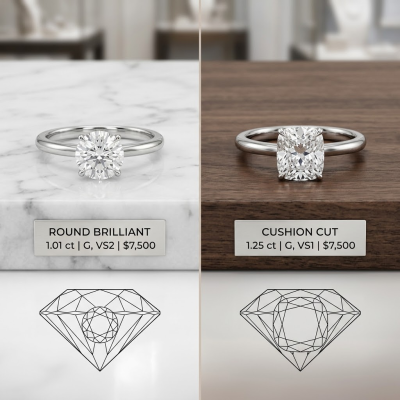
When it comes to diamonds, round cuts often command a premium because of strong market demand and the greater amount of rough material typically lost during cutting. This can make a round center cost more than some other cuts with the same carat weight and quality.
Cushion Can Offer More Value
Cushion Can Offer More Value
Compared with round shapes, cushion diamonds often have a higher cutting yield, allowing more of the original rough material to be retained. This may allow buyers to get a larger carat weight or higher clarity within the same budget.
For moissanite and other gemstones, though, the price gap between different shapes may be much smaller. When shopping, compare the total price of the ring instead of assuming that one shape is automatically more affordable.
Daily Wearability and Durability Differences
Daily Wearability and Durability Differences
For everyday wear, durability depends more on the gemstone than on whether the center stone is round or cushion cut. The shape mainly influences how the stone’s edges and corners are exposed and protected by the setting:
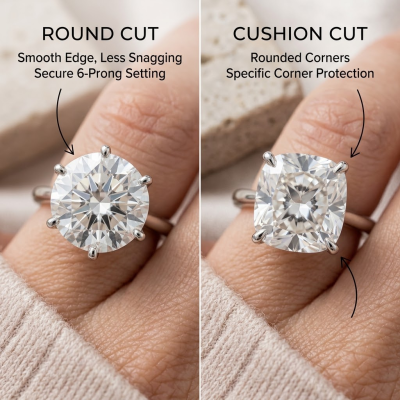
- Fewer Pronounced Points: Round stones have no corners, while most cushions feature softened corners that are less exposed than the sharp tips found on shapes such as marquise or pear.
- Reduced Snagging: The smooth edge of a round cut is less likely to catch on clothing, while the rounded corners of most cushion cuts also create a relatively smooth profile.
- Prong Security: Round cuts pair easily with four- or six-prong settings, while cushion cuts can benefit from prongs positioned around their corners for added protection.
👉🏻 The verdict: Both cuts are suitable for everyday engagement rings when paired with an appropriate gem and secure setting. You should prioritize stone hardness, toughness, and overall design security rather than choosing based on shape alone.
Is a Cushion or Round Stone Better for Your Ring Design?
Is a Cushion or Round Stone Better for Your Ring Design?
Neither cut is universally better. Weighing between a round vs cushion engagement ring comes down to the characteristics of the center stone and your personal preferences.
Consider the Center Stone Choice
Consider the Center Stone Choice
As mentioned above, the same shape can provide very different visual effects depending on the gemstone. The jewelry experts at MollyJewelryUS recommend:
- Choose Round Cuts If: You prefer the bright sparkle of diamonds or want a round moissanite with a balanced, symmetrical appearance.
- Opt for Cushion Cuts If: You love gemstones like alexandrite and emerald and want their rich color and natural character to take center stage.
Think about Your Personal Priorities
Think about Your Personal Priorities
Next, you can align your final choice with the design goal you want to achieve:
| Priority Goal | Better Starting Point | Core Advantage |
|---|---|---|
| Maximum Sparkle | Round Cut | Strong brilliance and crisp scintillation |
| Visual Size Impression | Round Cut | Broader millimeter diameter face-up |
| Setting Versatility | Round Cut | Round stone pairs easily with a variety of settings |
| Soft geometric character | Cushion Cut | Pillow-like profile with romantic fire |
| Best Value per Carat | Cushion Cut | Higher yield from rough crystal lowers cost per carat |
Round vs Cushion Engagement Ring FAQs
Round vs Cushion Engagement Ring FAQs
Which cut of these two hides inclusions and color tint better?
Is a cushion-shaped stone bigger than a round one?
Not necessarily. Face-up size depends on the stone’s actual millimeter dimensions, proportions, and depth rather than carat weight alone.
Can cushion and round work with the same ring setting?
Often yes, but the proportions and layout may need adjustment. A setting designed around one outline may look noticeably different with the other.
Is a cushion cut gemstone cheaper than a round cut?
For diamonds, Cushion is often less expensive than Round at comparable specifications, although pricing varies by quality and other factors.
How do I pair a wedding band with these engagement rings?
Round rings can often sit flush with traditional straight bands, while cushion rings work well with both straight and contoured bands depending on the setting design.
👉🏻 See our round engagement ring wedding band pairing guide for details.
Should I consider an oval cut if I am torn between round and cushion?
Yes, if you desire the high sparkle of a round cut with the elongated feel of a cushion, come and review the full oval vs round engagement ring comparison.
Final Takeway
Final Takeway
The right choice in a round vs cushion engagement ring should be the one that fits your personal taste and design vision. A round center stone brings clean symmetry and brilliant sparkle, while a cushion cut offers softer edges and a more romantic geometric character.
As you make your decision, don’t forget to think about the gemstone type, size, light performance, and overall character of the finished ring.