- by MollyJewelryUS
- July 14, 2026
- Gemstone Education
Yes. Amethyst can safely get wet during normal daily activities such as washing your hands or walking in the rain.
However, water itself is rarely the problem. Repeated exposure to soap, chlorine, salt water, harsh cleaning products, and prolonged soaking can gradually affect your ring’s appearance—especially the metal setting and areas beneath the gemstone.
If you’re unsure when it’s safe to keep wearing your ring and when it’s better to remove it, this guide explains the difference.
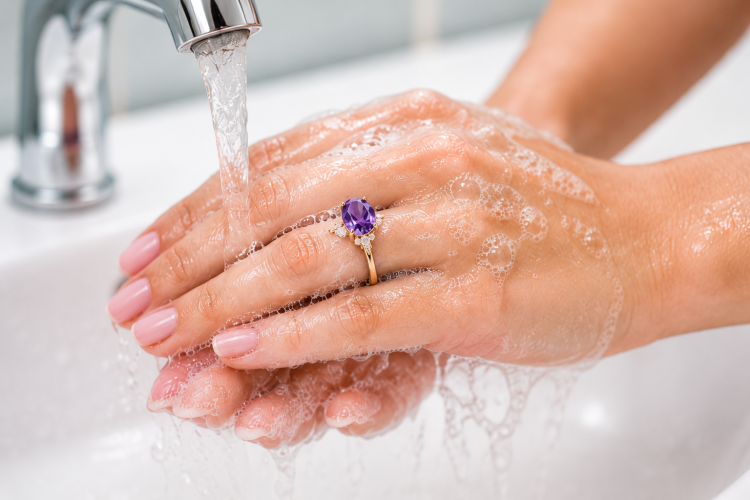
Table of Contents
When Is It Safe to Wear an Amethyst Ring Around Water?
When Is It Safe to Wear an Amethyst Ring Around Water?
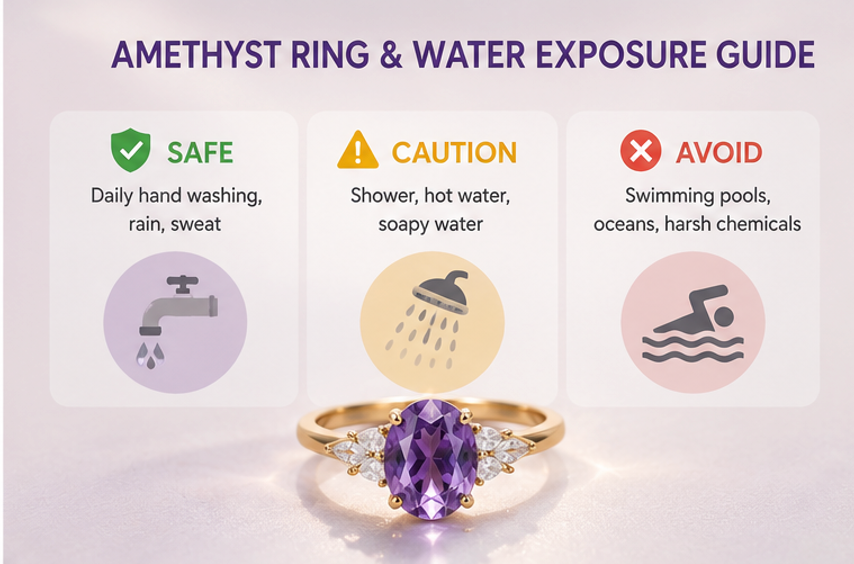
Although amethyst is safe to wear around water in many everyday situations, not all types of water have the same effect on your ring.
Clean water is generally harmless, while chlorine, salt water, and prolonged soaking can gradually affect the metal setting and leave residue that reduces the ring’s shine.
Use the quick guide below to see when it’s safe to keep your ring on and when it’s better to remove it.
Quick Reference:
| Situation | Safe? |
|---|---|
| Washing hands | ✅ Yes |
| Rain | ✅ Yes |
| Shower | ⚠️ Occasionally |
| Swimming pool | ❌ Not recommended |
| Ocean | ❌ Not recommended |
| Hot tub | ❌ Avoid |
Quick Tip: If your ring gets wet accidentally, simply dry it with a soft, lint-free cloth. There’s usually no reason to worry.
Is Water Really the Problem?
Is Water Really the Problem?
Many people assume that water damages amethyst.
In reality, plain water is rarely the biggest concern.
Amethyst is a durable variety of quartz with a Mohs hardness of 7, making it well suited for everyday jewelry. If you’re curious about how this compares to other gemstones, our guide on How Durable Is Amethyst? explains what this hardness means for daily wear.
What deserves more attention is what the water contains and how often your ring is exposed to it.
| Exposure | Why It Matters |
|---|---|
| Soap | Can leave a film that reduces sparkle |
| Chlorine | May gradually affect precious metals with repeated exposure |
| Salt water | Can leave residue around the setting |
| Hard water | May cause mineral deposits over time |
| Household cleaners | Can affect metal finishes and certain settings |
The gemstone itself usually isn’t the weakest part of the ring. More often, it’s the metal, prongs, and areas beneath the stone that benefit from a little extra care.
Why Some Types of Water Are Safer Than Others
Why Some Types of Water Are Safer Than Others
Not all water exposure is the same.
A quick rinse under clean tap water is very different from spending an hour in a chlorinated swimming pool or soaking in a hot tub.
Instead of thinking about water as simply “safe” or “unsafe,” it’s more helpful to look at what surrounds the water.
Clean water usually isn’t the issue. Chemicals, salt, heat, and repeated residue buildup are.
Once you understand that difference, it becomes much easier to decide when to keep your ring on—and when removing it is the better choice.
Why Does an Amethyst Ring Sometimes Look Dull After Getting Wet?
Why Does an Amethyst Ring Sometimes Look Dull After Getting Wet?
Many people assume water has damaged the gemstone when their ring looks less brilliant after a shower or a day at the beach.
In reality, the gemstone usually hasn’t changed at all.
What’s more likely is that soap, shampoo, sunscreen, lotion, hard-water minerals, or salt residue have formed a thin layer on the surface of the stone or around the setting, making the ring appear cloudy or less reflective.
Fortunately, this type of dullness is usually temporary and can often be removed with proper cleaning.
If your ring has simply lost some sparkle after everyday wear, our Amethyst Ring Care Guide explains the safest ways to clean it without damaging the setting.

Everyday Water Exposure Explained
Everyday Water Exposure Explained
Rather than memorizing a long list of rules, think of everyday situations in three simple categories.
Some are completely safe. Some are fine occasionally.
Others are better avoided because they expose the ring to chemicals, salt, or prolonged moisture.
✅ Usually Safe
✅ Usually Safe
These situations rarely pose a risk to an amethyst ring.
The gemstone isn’t harmed by brief contact with clean water, and normal daily exposure is unlikely to affect a well-made ring.
| Situation | Recommendation |
|---|---|
| Washing your hands | ✅ Safe |
| Rain | ✅ Safe |
| Drinking water splashes | ✅ Safe |
Afterward, simply dry your ring with a soft cloth if it remains wet.
⚠️ Better to Remove Your Ring
⚠️ Better to Remove Your Ring
These activities won’t immediately damage an amethyst ring, but repeated exposure isn’t ideal.
Soap residue can gradually reduce sparkle, while hot water may make it easier for lotions and oils to collect beneath the setting.
| Situation | Recommendation |
|---|---|
| Showering | ⚠️ Better to remove |
| Washing dishes | ⚠️ Better to remove |
| Hair washing | ⚠️ Better to remove |
Taking your ring off only takes a few seconds and helps reduce unnecessary buildup over time.
❌ Best Avoided
❌ Best Avoided
These environments expose the ring to more than just water.
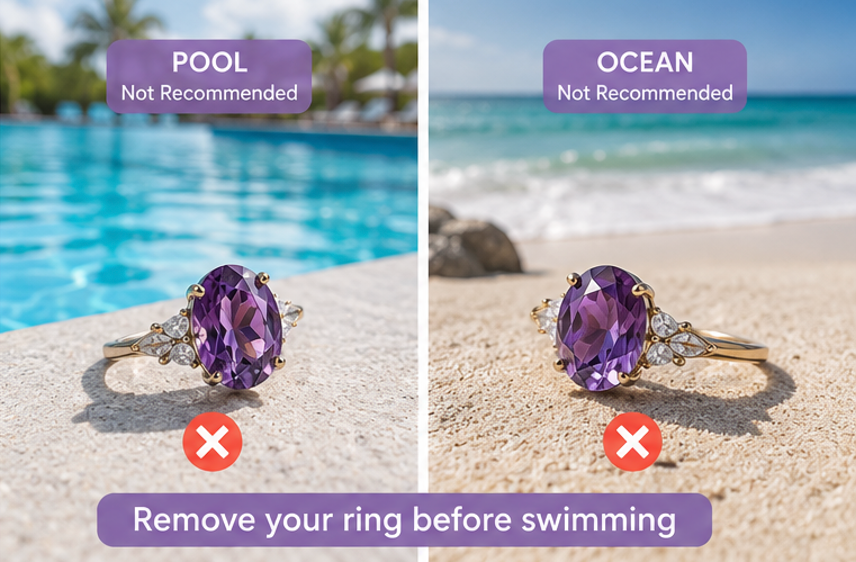
Chlorine, salt, and harsh chemicals can gradually affect precious metals and make routine maintenance more important.
| Situation | Recommendation |
|---|---|
| Swimming pool | ❌ Avoid |
| Ocean | ❌ Avoid |
| Hot tub | ❌ Avoid |
| Household cleaning | ❌ Remove your ring |
Although the amethyst itself is generally stable, protecting the entire ring—including the setting and metal—is the smarter long-term approach.
What If Your Ring Gets Wet Accidentally?
What If Your Ring Gets Wet Accidentally?
There’s usually no reason to panic.
If your amethyst ring gets wet unexpectedly:
- Rinse away soap or chemical residue with clean water if necessary.
- Gently dry the ring using a soft, lint-free cloth.
- Allow moisture around the setting to dry completely before storing the ring.
For occasional exposure, that’s typically all that’s needed.
The 10-Second Rule for Everyday Wear
The 10-Second Rule for Everyday Wear
If you don’t want to remember a long list of dos and don’ts, this simple rule works in almost every situation:
Clean water is usually fine. Chemicals, salt, and prolonged soaking are not.
That means you generally don’t need to worry if your ring gets wet while washing your hands or walking in the rain.
However, it’s worth removing your ring before activities involving chlorinated pools, ocean water, hot tubs, or household cleaners—not because the amethyst can’t handle water, but because these environments can gradually affect the ring as a whole.
When in doubt, taking your ring off for a few minutes is the easiest way to avoid unnecessary wear.
Final Thoughts
Final Thoughts
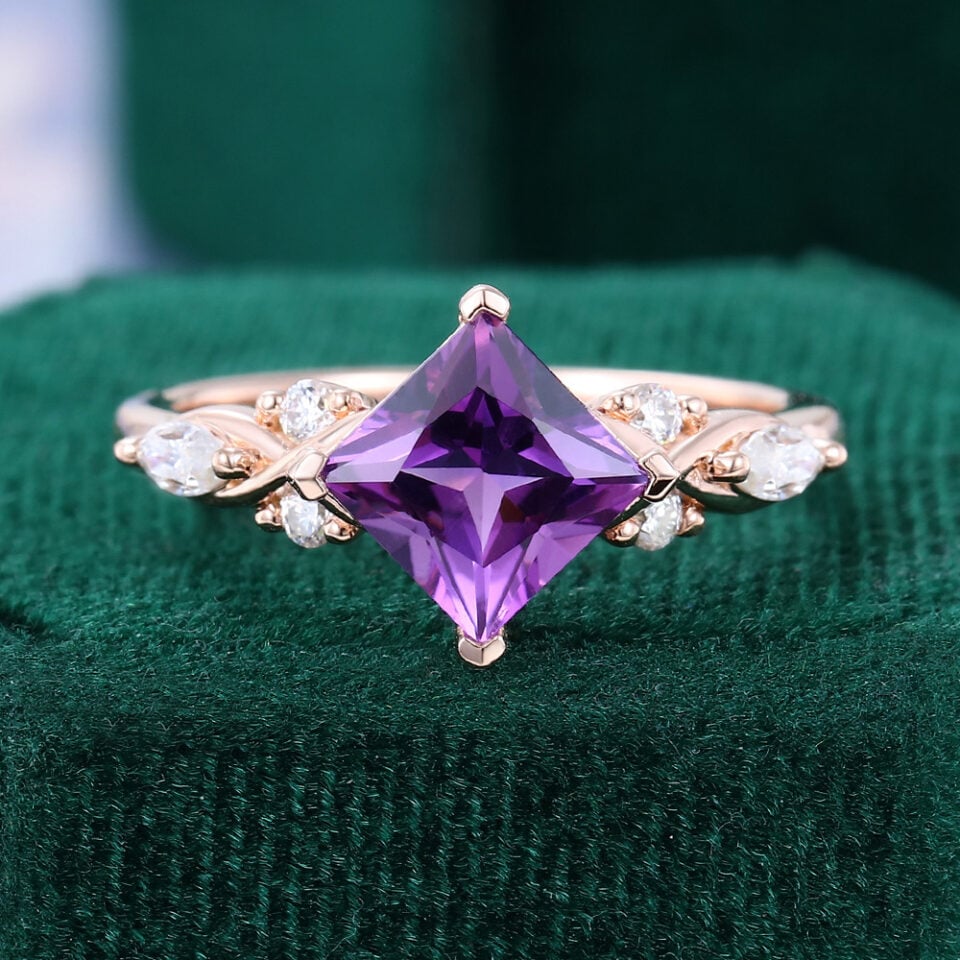
An amethyst ring is designed to be worn—not kept in a jewelry box out of fear that a little water will ruin it.
For everyday situations like washing your hands or getting caught in the rain, occasional contact with clean water is generally nothing to worry about.
Where extra care makes a difference is in environments that combine water with chlorine, salt, harsh chemicals, or prolonged soaking. Protecting your ring in those moments helps preserve not only the amethyst but also the metal, setting, and overall appearance for years to come.
Rather than asking whether an amethyst ring can get wet, the better question is whether the environment is kind to fine jewelry as a whole. Once you understand that distinction, taking care of your ring becomes simple—and wearing it every day becomes much more enjoyable.
FAQs
FAQs
Can I wash my hands with an amethyst ring on?
Yes.
Brief contact with clean tap water is generally safe for an amethyst ring. If soap residue builds up over time, simply clean the ring according to a regular jewelry care routine.
Can I shower with an amethyst ring?
Occasionally, yes—but it isn’t recommended as a daily habit.
Shampoo, conditioner, and body wash can leave residue beneath the setting, making the ring appear less brilliant over time.
Can I wear an amethyst ring while swimming?
It’s best not to.
Swimming pools contain chlorine, while seawater leaves salt deposits that can affect the metal and setting with repeated exposure.
Will water damage lab-created amethyst?
No.
Lab-created amethyst has the same physical properties and water resistance as natural amethyst, so occasional contact with clean water isn’t a concern.
Related Reading: Curious about the difference? See our Lab Created Amethyst vs Natural Amethyst guide.
What should I do if my amethyst ring gets wet?
Dry it with a soft, lint-free cloth and allow any trapped moisture around the setting to air dry before storing it.
If the ring has been exposed to chlorine, salt water, or cleaning chemicals, rinse it with clean water first, then dry it thoroughly.
Is rain safe for an amethyst ring?
Yes.
Rainwater itself won’t damage the gemstone. Simply dry the ring afterward if it stays wet for an extended period.
Can water make an amethyst fade?
No.
Normal water exposure doesn’t cause amethyst to lose its color. Color fading is more commonly associated with prolonged exposure to strong sunlight or excessive heat, not getting the gemstone wet.
Related Reading: Learn more in Does Amethyst Fade Over Time?
Does getting an amethyst ring wet loosen the stone?
Not by itself.
However, repeated exposure to soap residue, mineral deposits, or chemicals may make routine maintenance more important over time. Having the setting inspected periodically is a good habit for any ring that’s worn daily.