- by MollyJewelryUS
- July 15, 2026
- Buying Guides
There is no definitively “better” opal; it entirely depends on your lifestyle. When shopping for opal jewelry, you will mainly choose between Australian and Ethiopian mines.
If you want a durable gemstone for everyday wear, Australian opal is usually the safer choice. However, if you are drawn to vibrant color flashes and prefer a more affordable option, Ethiopian opal is a fantastic alternative—provided you give it extra care. Choosing the right one means balancing durability, budget, and daily maintenance needs.
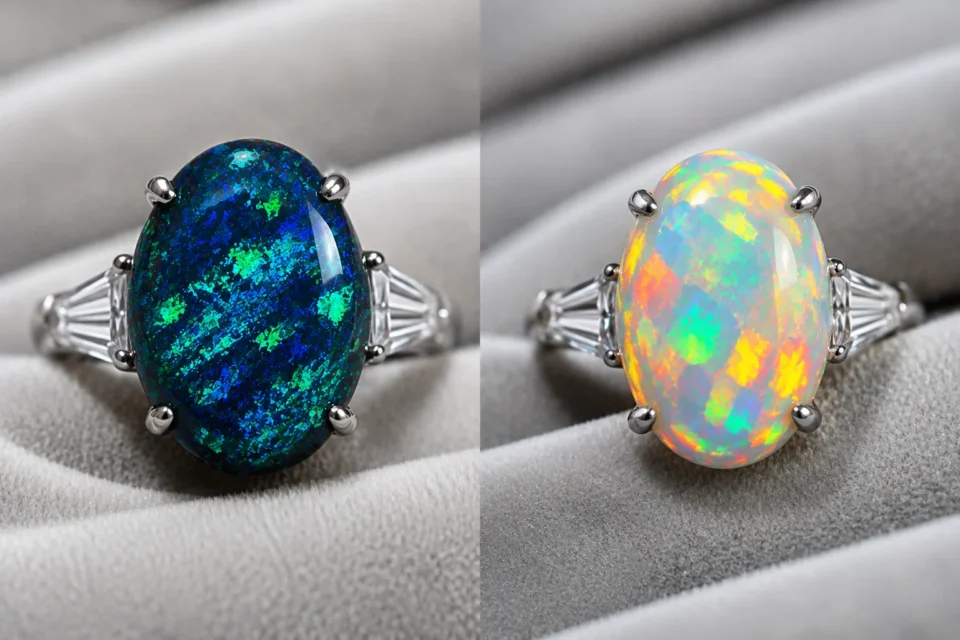
Table of Contents
Australian Opal vs Ethiopian Opal at a Glance
Australian Opal vs Ethiopian Opal at a Glance
For a quick comparison of Australian opal vs Ethiopian opal, use the table below:
| Feature | Australian | Ethiopian |
|---|---|---|
| Durability | ⭐⭐⭐⭐⭐ | ⭐⭐⭐ |
| Water Resistance | Excellent | Can absorb water (Hydrophane) |
| Price | Higher | More affordable |
| Color Play | Rich and varied | Often extremely vibrant and neon |
| Maintenance | Low | Higher |
| Best For | Everyday wear, engagement rings | Occasional wear, statement pieces |
What Makes Australian Opal Unique?
What Makes Australian Opal Unique?
Australian opals are considered the gemstone gold standard, hailing from legendary mining towns like Lightning Ridge and Coober Pedy. When exploring what are the different types of opal, you’ll quickly find Australia’s prized variety is uniquely non-hydrophane. This means it does not absorb moisture, making the gemstone inherently dense, highly stable, and extraordinarily resistant to standard daily wear.
Formed over millions of years in dry sedimentary environments, their extreme geological rarity naturally commands a premium price tag on the market. This structural longevity and scarcity are exactly why an australian opal ring is traditionally favored as the ultimate choice for milestone bridal or legacy jewelry.

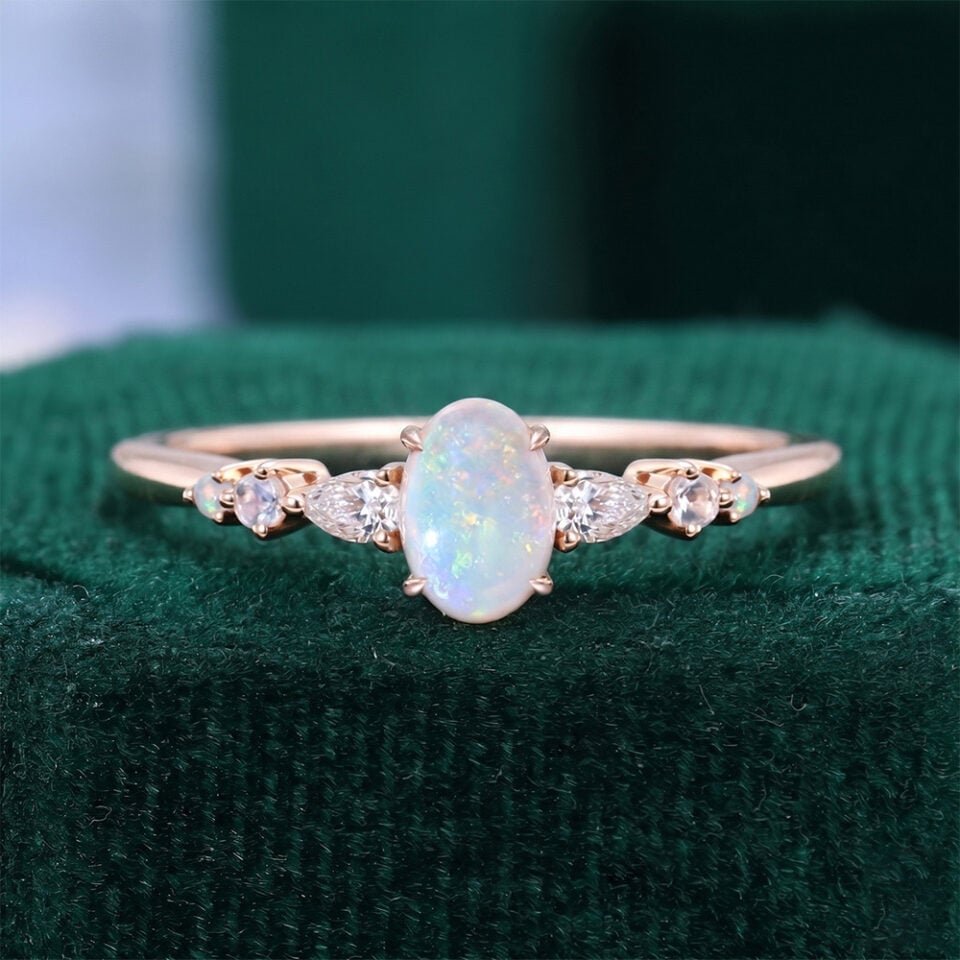
From MollyjewelryUS: Dainty Australia Opal Three Stone Promise Ring
What Makes Ethiopian Opal Different?
What Makes Ethiopian Opal Different?
Ethiopian opal hit the commercial market much more recently, most notably from the volcanic Welo region. Before learning everything you want to know about opal rings, it helps to understand this exact geological distinction. Forming inside volcanic ash gives Ethiopian opal a porous, hydrophane structure that temporarily absorbs surrounding water.
This moisture-absorbing trait is precisely what gives the gem its remarkable transparency and the incredibly vivid, 3D rainbow play-of-color it is internationally celebrated for. Its abundance makes it much more affordable for jewelry lovers, though owners must be willing to commit to mindful, extra daily care to maintain its brilliance.
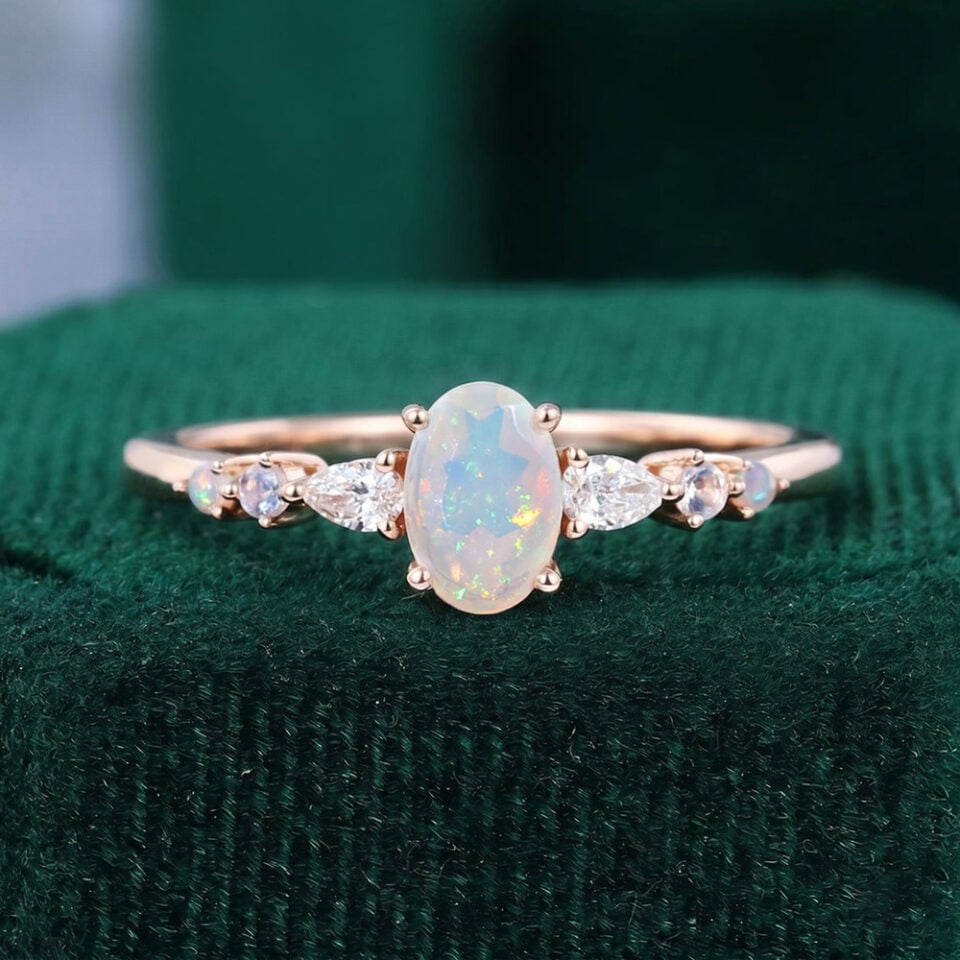
From MollyjewelryUS: Oval Cut Ethiopian Natural Opal Dainty Engagement Ring
Australian Opal vs Ethiopian Opal: Key Differences
Australian Opal vs Ethiopian Opal: Key Differences
When comparing ethiopian opal vs australian opal, it’s crucial to understand how their distinct structures will impact your daily life.
Durability
Durability
Durability is heavily dictated by the environment in which the opals formed. Because Australian opal is dense, sedimentary, and non-porous, it holds up much better to daily bumps and atmospheric changes. The hydrophane structure of Ethiopian opal makes it slightly more vulnerable to absorbing natural skin oils or lotions. For those wondering if you can wear opal rings every day, this porous nature means Ethiopian stones require much more mindful and careful wearing habits.
Appearance
Appearance
Australian opals come in a spectacular array of deep, rich body tones, famously showcased in striking Black Opals, as well as the unique earthy matrix patterns found in Boulder Opals.
Ethiopian opals, on the other hand, are highly prized for their unparalleled brightness. They tend to have translucent, slightly yellowish, or completely clear body tones, illuminated by explosive, flashy, and sometimes neon “rainbow” play-of-color.
Water Sensitivity
Water Sensitivity
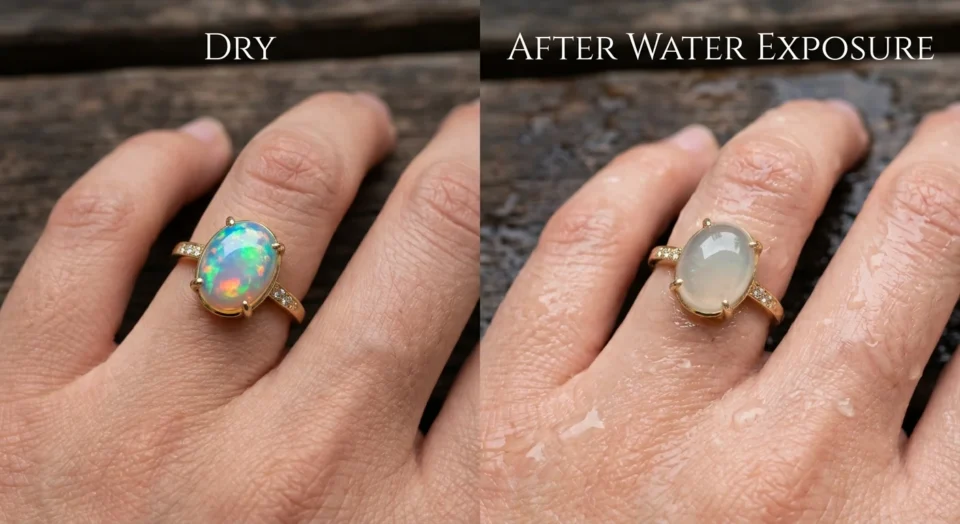
This is arguably the most vital distinction between the two. Because Ethiopian opal is hydrophane, it literally drinks water. If you wear an Ethiopian opal ring while washing your hands or taking a shower, the stone will temporarily absorb water, lose its vibrant color, and become glassy and transparent. Do not panic. Once left out to air dry in a safe place, the color and opacity will naturally return.
Australian opals do not have this trait; water simply beads off them, and they will remain exactly the same visually whether wet or completely dry.
Maintenance
Maintenance
Australian Opal Care: Very low maintenance. Gentle cleaning with mild soap, warm water, and a soft cloth is all that is strictly required.
Ethiopian Opal Care: Requires much more strict maintenance. You must avoid harsh chemicals, avoid soaking it in water, and ensure you take it off before applying hand sanitizers, lotions, or perfumes. Learning proper opal jewelry cleaning and care dos and don’ts is essential to protect Ethiopian stones from permanent discoloration.
Price
Price
The difference in cost ultimately comes down to basic supply and demand. Australian mines are much older, yielding fewer high-quality stones every year, which heavily drives up their premium market value. When analyzing how much an opal ring costs and its price factors, this historical rarity plays the biggest role. Conversely, Ethiopian deposits are newer and the supply is significantly larger, giving buyers a chance to own large, striking gems at a fraction of the cost.
Best Choice for Engagement Rings
Best Choice for Engagement Rings
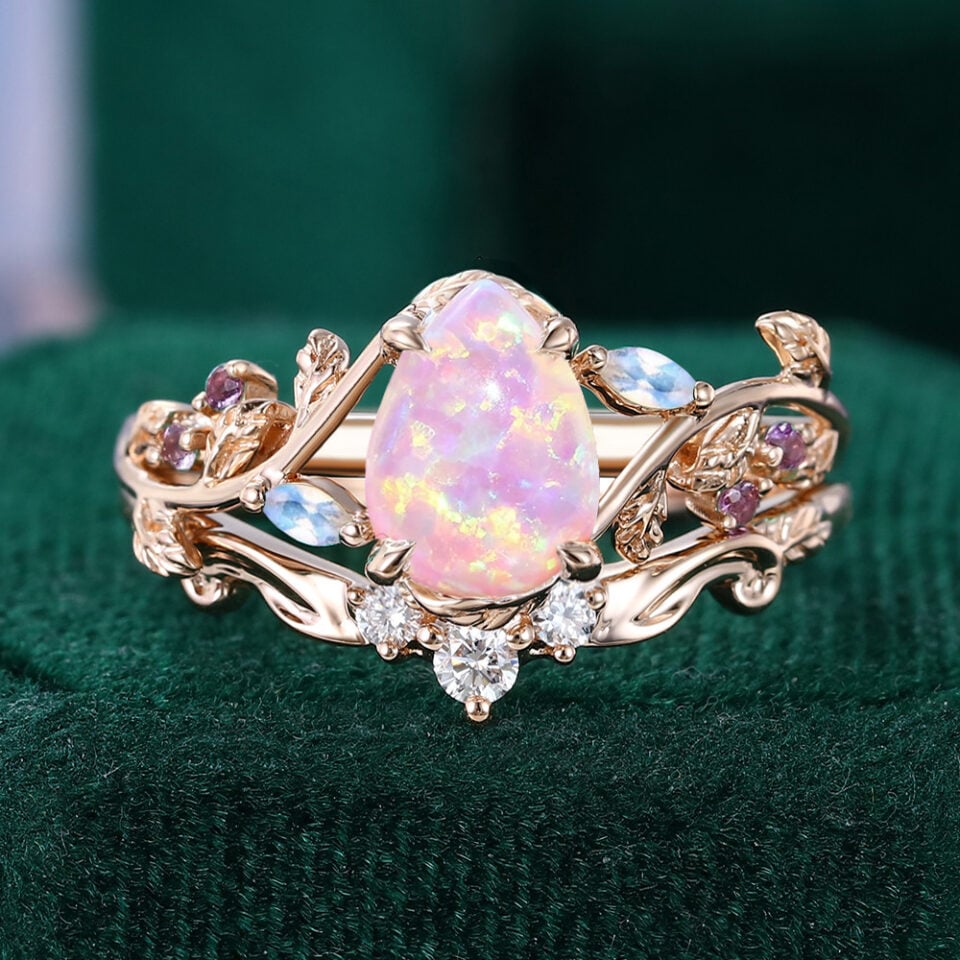
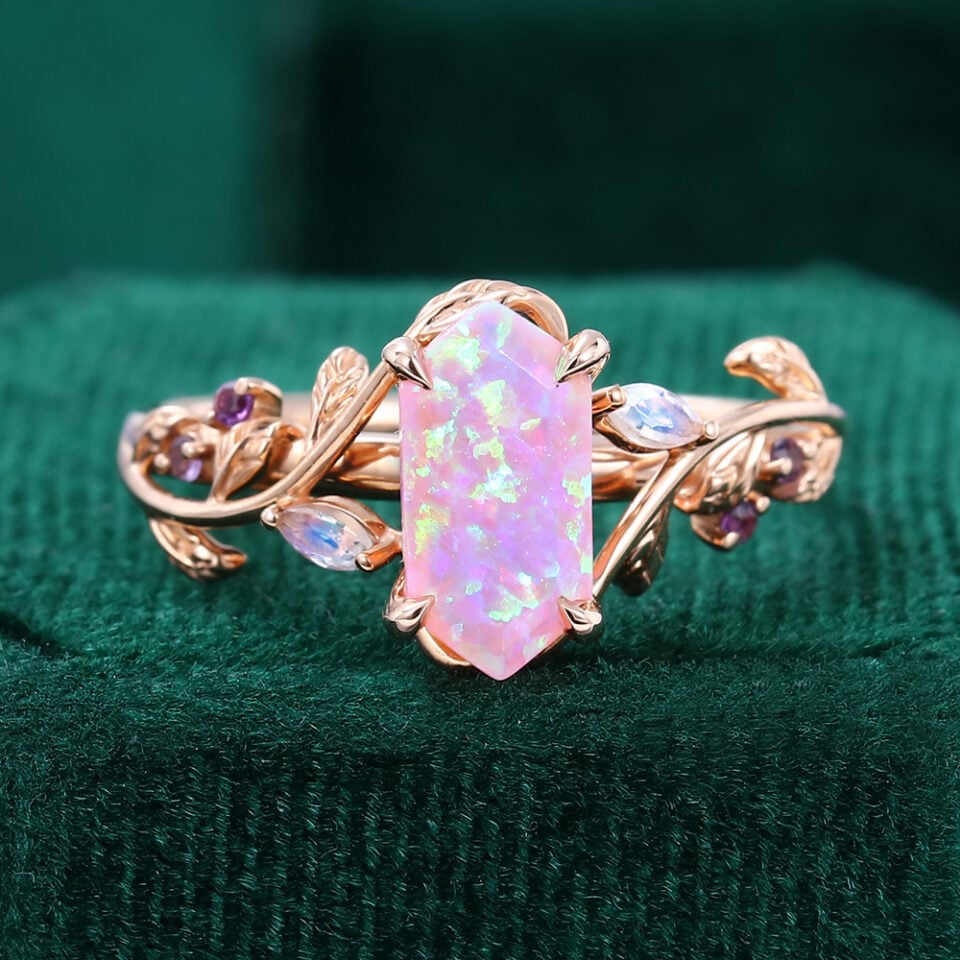
If you are buying a ring with the intent to wear it constantly—especially as a daily bridal piece—australian opal rings are unequivocally the better long-term choice. Their robust stability stands up incredibly well to daily life. However, if you consult a reputable opal engagement rings buying guide, you will find that Ethiopian opals can still make breathtaking fashion, cocktail, or pendant pieces reserved for those special occasions.




Common Myths About Australian and Ethiopian Opals
Common Myths About Australian and Ethiopian Opals
Before making a decision, let’s clear up some widespread confusion floating around the jewelry market:
Myth 1: Ethiopian opals are "fake" because they absorb water.
- Fact: They are 100% natural, mined directly from the earth. The ability to absorb water is just a natural, geological characteristic of hydrophane opals.
Myth 2: Australian opals are always black.
- Fact: While Australia produces world-famous black opal, it is also the primary global source of gorgeous white opals, crystal opals, and boulder opals.
Myth 3: Ethiopian opals permanently lose their color after getting wet.
- Fact: In almost all standard instances, this change is only temporary. Once the water naturally evaporates from the stone over a few days, the vibrant flashes of color will fully return.
How to Choose the Right Opal for You?
How to Choose the Right Opal for You?
As you decide between an Australian opal vs Ethiopian opal, base your choice on your jewelry habits:
Choose Australian Opal if you…
- ✔ Wear your jewelry every single day
- ✔ Want minimal maintenance and worry
- ✔ Prefer a dense stone with long-term durability
- ✔ Are investing in a forever engagement ring
Choose Ethiopian Opal if you…
- ✔ Love intensely vivid, neon rainbow flashes
- ✔ Want better value for a much larger gemstone
- ✔ Don’t mind dedicating a little extra daily care to your piece
- ✔ Prefer dramatic statement jewelry over heavy daily wear
Also, if you are just enjoying collecting unique gems, the answer is: either, depending on the look you love most!
The Final Verdict: Which Opal Fits Your Lifestyle?
The Final Verdict: Which Opal Fits Your Lifestyle?
Neither Australian nor Ethiopian opal is universally “better.” The right choice depends on how you plan to wear your jewelry, your maintenance preferences, and the visual look you fall in love with. Understanding these core differences will help you choose an opal that fits flawlessly into both your lifestyle and your personal style.

Australian and Ethiopian Opal FAQs
Australian and Ethiopian Opal FAQs
Is Australian opal more expensive?
Yes. Due to limited supply, older mines, and their exceptional stability and rarity, Australian opals generally command much higher prices than opals sourced from other regions.
Does Ethiopian opal really absorb water?
Yes. Most Ethiopian opals are hydrophane, meaning their cellular structure inherently allows them to absorb ambient moisture from their environment, including water, sweat, and humidity.
Can Ethiopian opal dry out?
Yes. Once removed from a moisture source, Ethiopian opal will dry naturally. You should let it air dry slowly; never use hair dryers, radiators, or sunlight to artificially speed up the process. If you are concerned about whether do opal rings crack or fade, proper natural room-temperature drying is your best defense against structural damage.
Which opal lasts longer?
Due to its non-porous structure, Australian opal holds up to environmental wear, chemicals, and daily tear significantly better, giving it a longer, more stable lifespan for everyday wear.
Can I wear an opal ring every day?
You certainly can, but it is highly recommended to choose an australian opal ring for daily use. Because of their stable, solid nature, they are vastly less likely to incur chemical or moisture damage than an Ethiopian piece.
Does Australian opal change color?
Unlike Ethiopian opal, Australian opal does not change color, clarity, or opacity when exposed to running water or normal indoor humidity changes.
Which opal has the strongest play-of-color?
Both can boast world-class color, but Ethiopian opals are celebrated specifically for intensely vivid, 3D neon flashes that often visually rival high-end Australian opals at a vastly lower price point.