- by MollyJewelryUS
- September 20, 2026
- Buying Guides
With its distinctive silhouette and rich history, the marquise cut continues to capture attention. Whether paired with a diamond, moissanite, or a colorful gemstone, its elegant shape complements a wide range of ring designs.
For bridal jewelry, the marquise engagement ring ratio is one of the key factors shaping the center stone’s outline. By understanding how length and width interact, you can make a more informed choice and find a proportion that complements the design you have in mind.
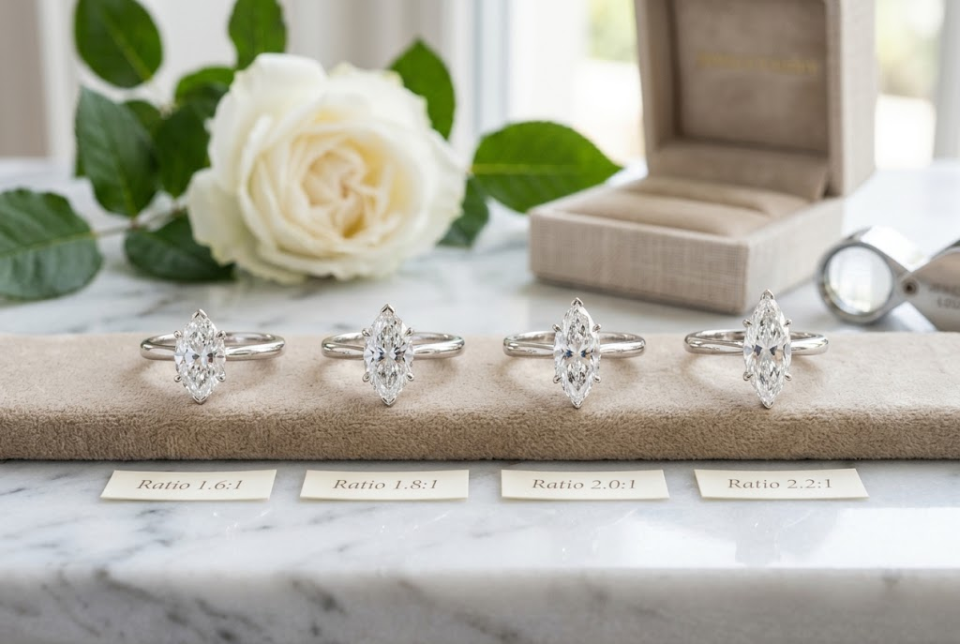
Table of Contents
How to Calculate a Marquise Stone Length-to-Width Ratio
How to Calculate a Marquise Stone Length-to-Width Ratio
The length-to-width ratio of a marquise ring describes the proportions of its center stone as viewed from above, particularly how long and slender the gem appears. The calculation is straightforward: divide its total length by its maximum width.
For example, a marquise gemstone measuring 10.0 mm long and 5.0 mm wide has a ratio of 2.00. You can arrive at the same result using the standard formula or a digital marquise ratio calculator.

The Impact of Marquise Ratio on Your Ring's Appearance
The Impact of Marquise Ratio on Your Ring's Appearance
The marquise stone ratio does more than determine its geometric shape. It also affects the ring’s appearance on the hand and several practical aspects of the design:
- Finger Elongation: Slimmer outlines draw the eye upward, creating a slenderizing effect along the finger.
- Perceived Carat Scale: High ratios disperse gemstone surface area across a greater length, making the engagement ring look larger than round cuts of equivalent weight.
- Setting Security: Narrower proportions feature delicate, tapered tips that require specialized prongs for long-term wear.
- Light Performance: Ratio provides a useful clue about the stone’s outline, but it does not determine brilliance on its own.
💡 Note: For the bow-tie effect, ratio alone cannot predict how strong it will appear. You should examine the stone face-up and look for a lively pattern with minimal distracting darkness.
Marquise Engagement Ring Ratio Chart and Visual Comparison
Marquise Engagement Ring Ratio Chart and Visual Comparison
When comparing the ratio of this distinctive engagement ring cut, small numerical differences can translate into noticeable changes in silhouette. The following chart offers a visual framework for exploring different marquise proportions.
| The Ratio Range | Overall Aesthetic | Recommended Style |
|---|---|---|
| 1.50 – 1.70 | Soft, wide belly; subtle elongation | Vintage halos and solitary bezel settings |
| 1.75 – 1.85 | Classic curve with moderate length | Romantic three-stone designs |
| 1.85 – 2.00 | Timeless grace and balanced silhouette | Solitaire, pavé band, and modern split-shank |
| 2.05 – 2.25 | Dramatic finger elongation | Minimalist east-west or slender prong settings |
*This marquise ratio chart applies to both diamonds and other gemstones. The ranges shown are illustrative categories, not universal industry classifications.
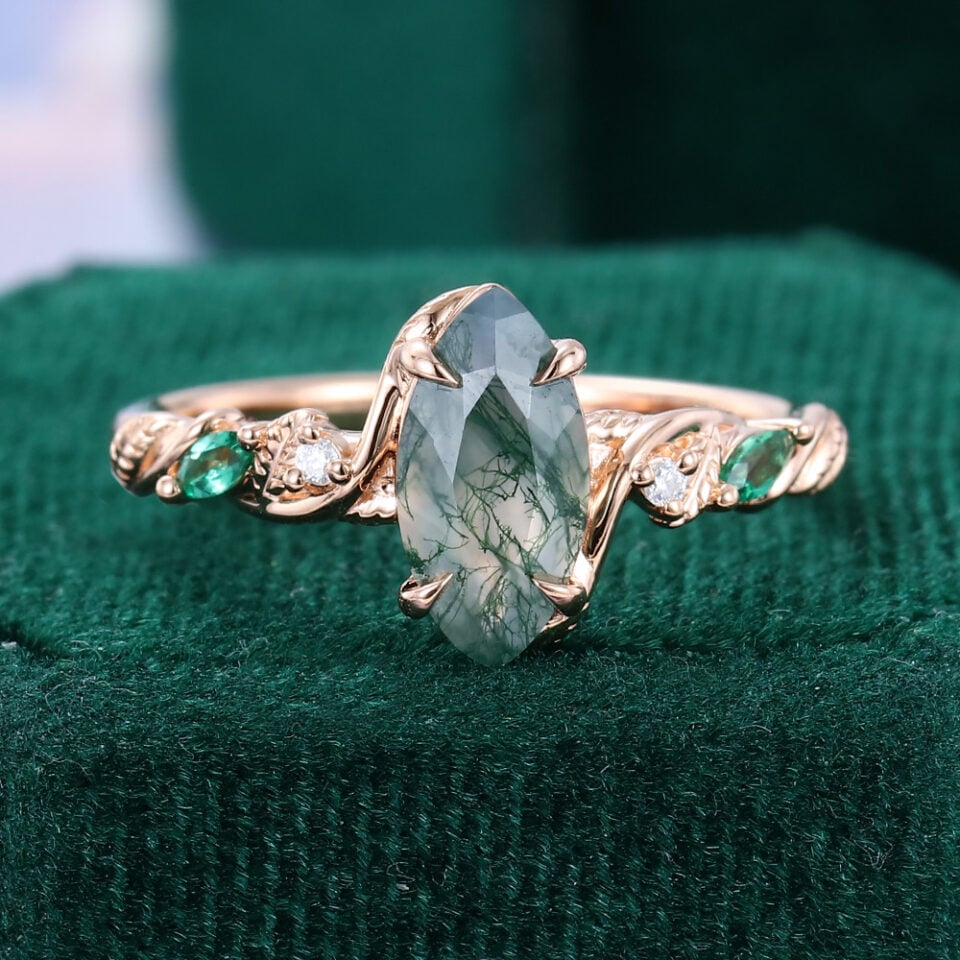
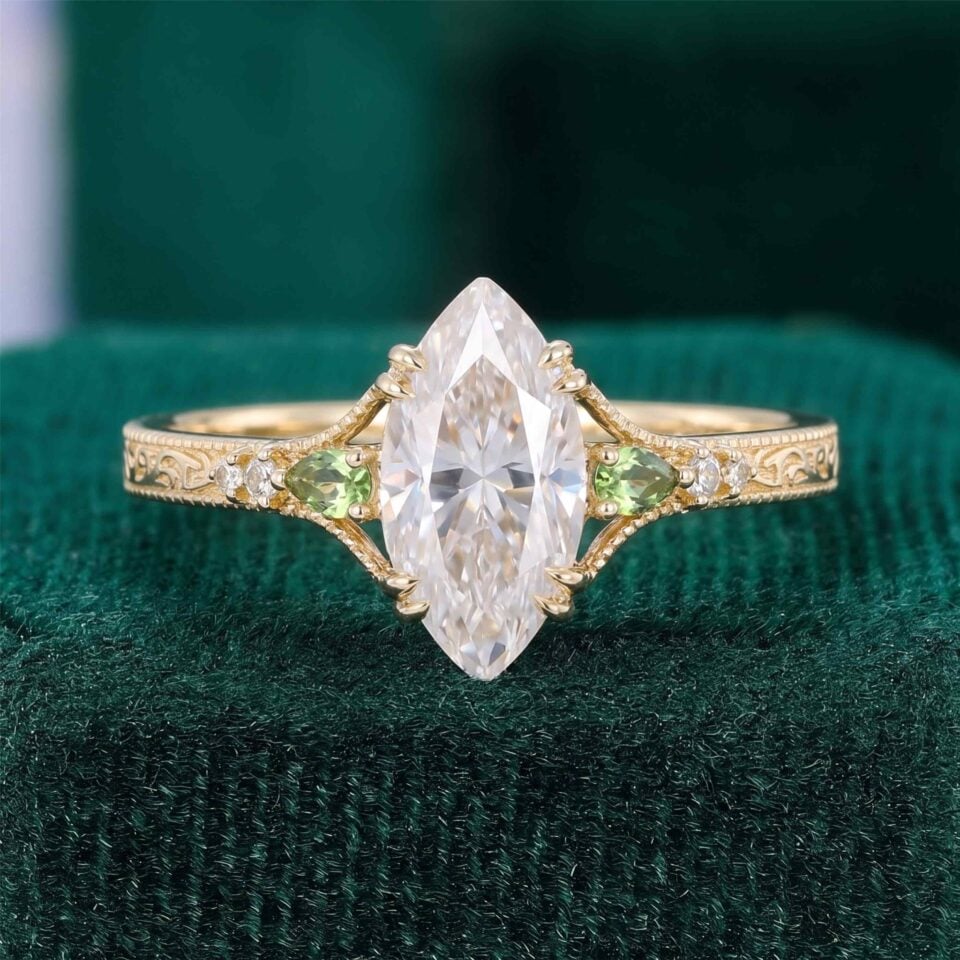
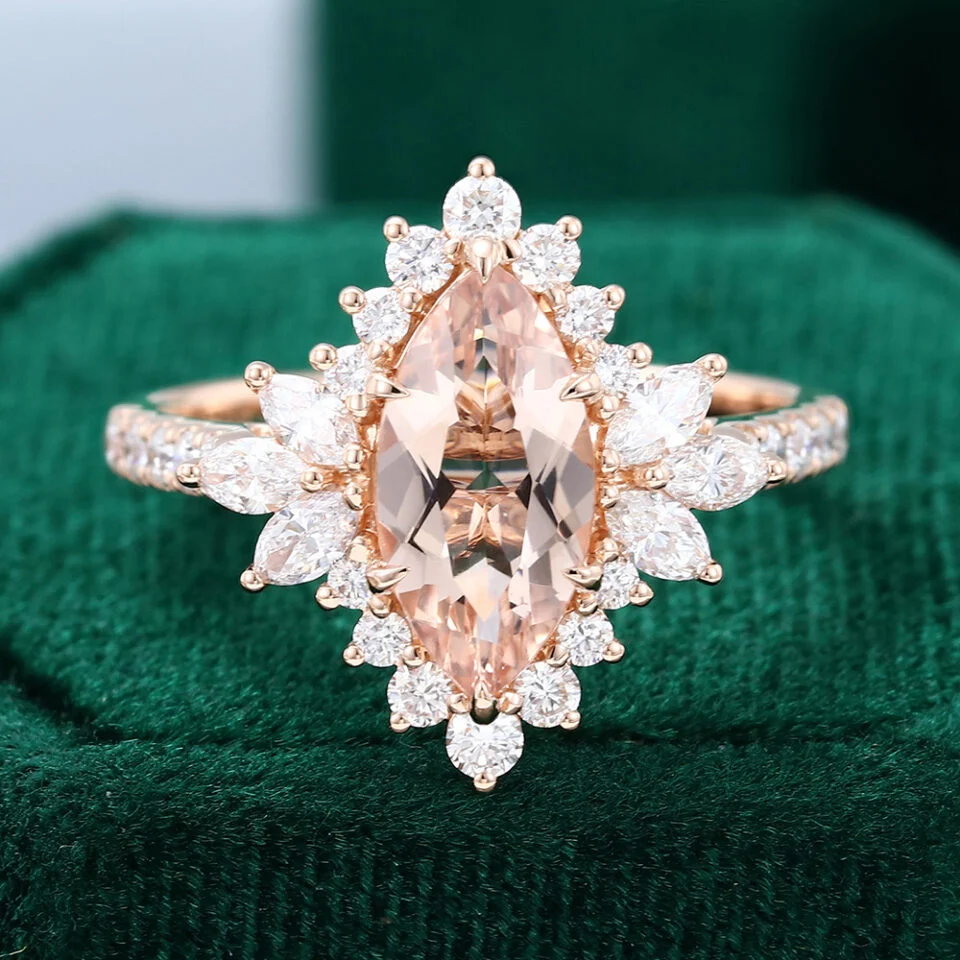
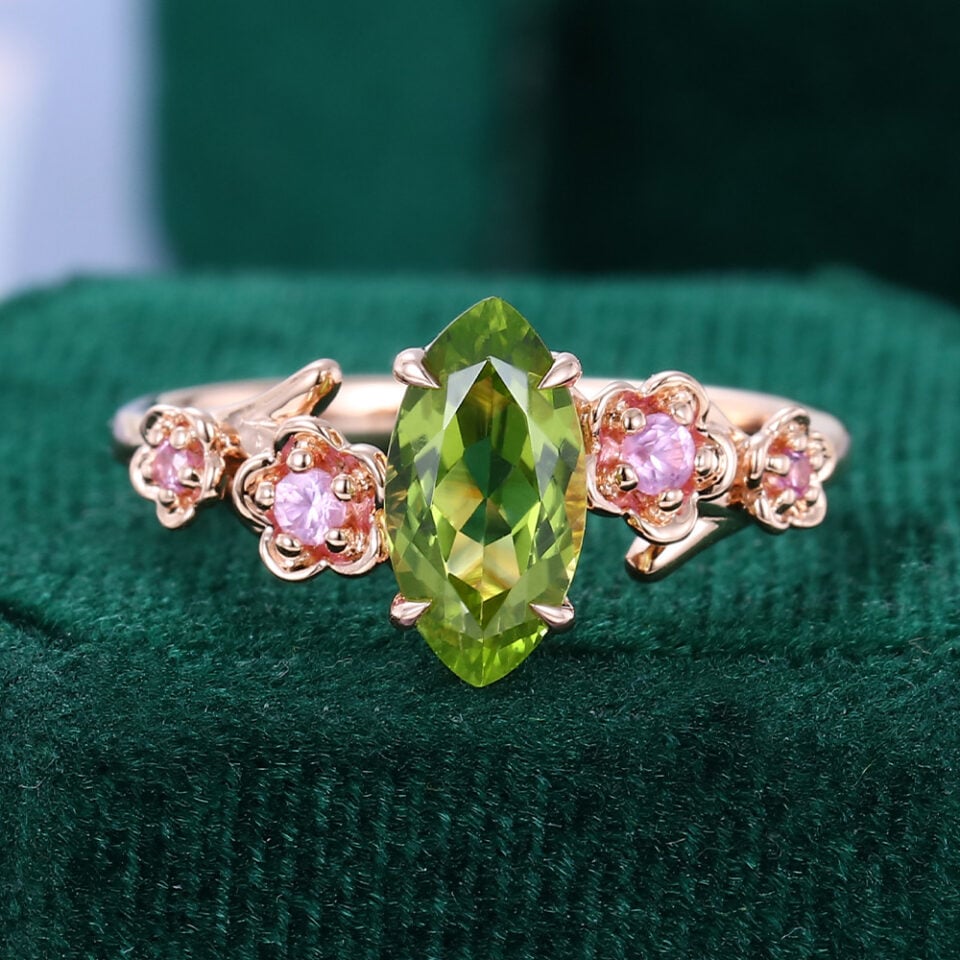
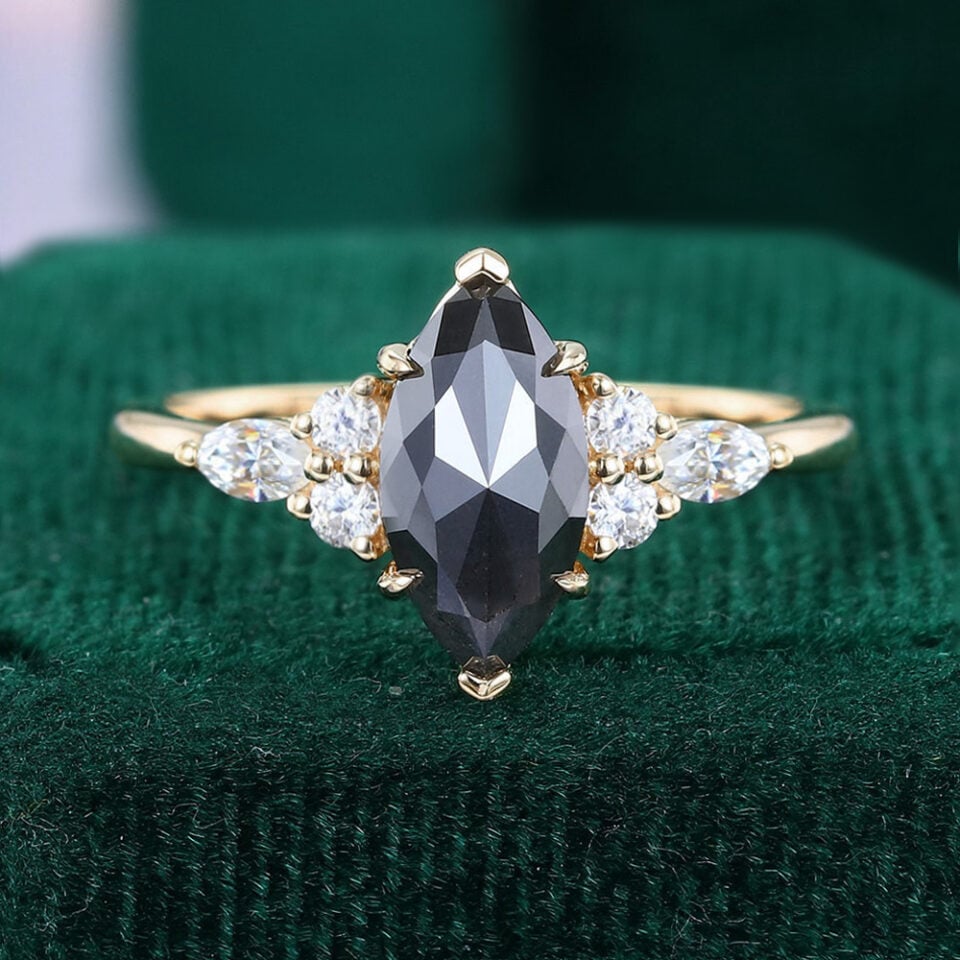
1.50 - 1.70 for a Curvier Outline
1.50 - 1.70 for a Curvier Outline
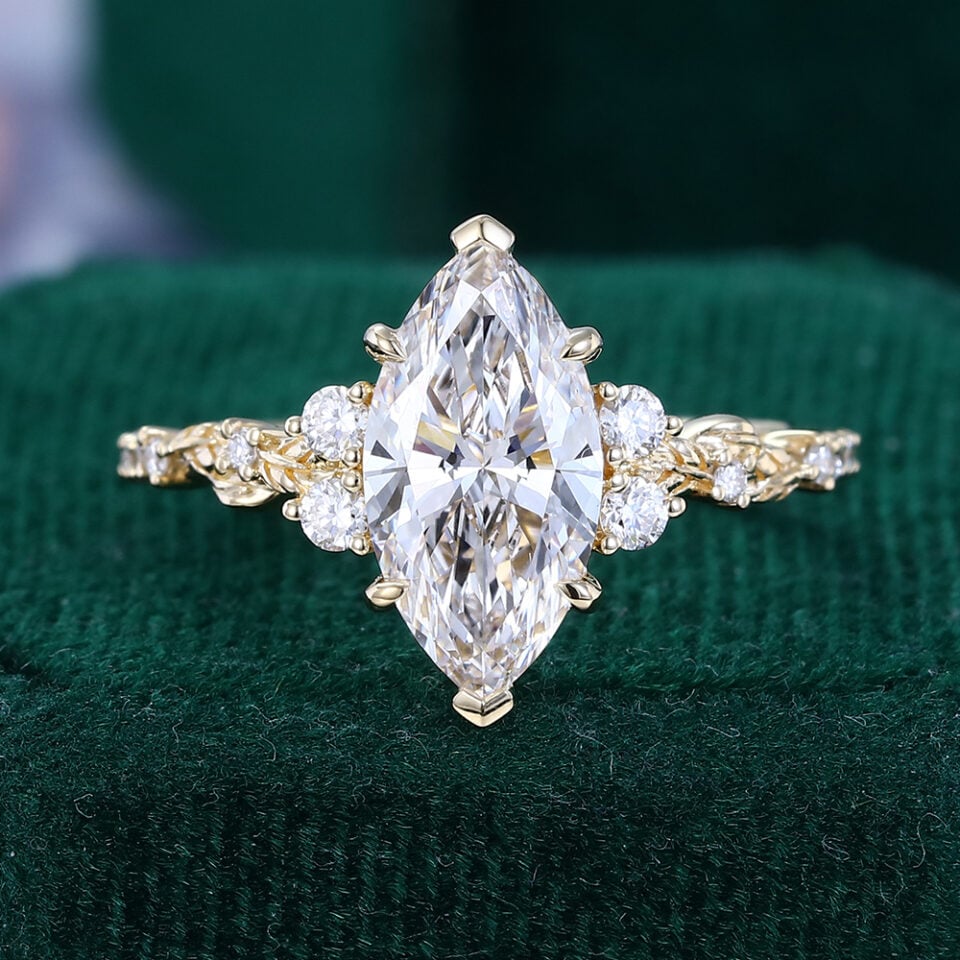
Marquise rings in this proportion range offer a fuller take on the elongated shape. With more width across the center, the stone appears less slender and takes on a softer, more substantial presence when worn.
- What makes it special: The iconic pointed ends bring unmistakable marquise character, while the fuller silhouette lends the design a romantic, old-world feel.
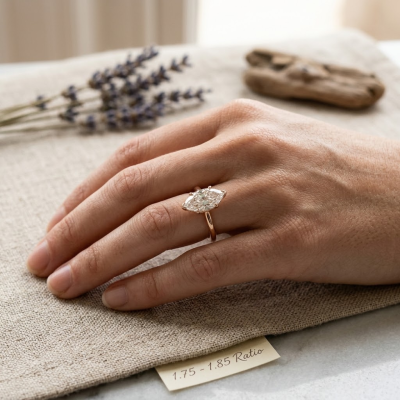
1.75 - 1.85 for a Slightly Fuller Profile
1.75 - 1.85 for a Slightly Fuller Profile
This range of marquise engagement ring ratios offers a middle ground between a narrower and fuller silhouette. The length remains visually noticeable, while the added width gives the center stone more body and a stronger face-up presence.
- What makes it special: Its curved outline and pointed tips create a distinctive contrast, making it a fitting option for brides who want length without an overly narrow appearance.
1.85 - 2.00 for a Balanced Look
1.85 - 2.00 for a Balanced Look
Ratios in this range, especially around 1.90, create a balanced relationship between length and width. The relationship between length and width brings out a refined silhouette, while the marquise stone’s proportions work together to support an attractive face-up appearance.
- What makes it special: It provides a versatile middle ground between a fuller shape and a more elongated, slender profile.
2.05 - 2.25 for an Elongated Silhouette
2.05 - 2.25 for an Elongated Silhouette
At the higher end of the spectrum, the 2.1 marquise ratio gives the stone a distinctly elongated profile with fluid, streamlined lines. This shape can look more extended from end to end, giving the finger a greater sense of vertical presence. It may appeal to those looking for an engagement ring for small hands with a more elongated appearance.
- What makes it special: The elongated outline brings a dramatic elegance to the design and allows the center diamond or gemstone to take center stage.

Is There a Perfect Ratio for a Marquise Ring? (Explore in Depth)
Is There a Perfect Ratio for a Marquise Ring? (Explore in Depth)
The Popular Starting Point for Marquise Proportions
The Popular Starting Point for Marquise Proportions
Currently, the 1.85 to 2.00 range is often featured in marquise engagement ring guides as a classic choice. Its proportions create a graceful elongated silhouette while supporting an attractive face-up appearance and lively light return.
Still, These ranges should guide visual comparison, not be interpreted as a verified ranking of market popularity or a universal standard for beauty.
Your Choice Doesn't Have to Follow a Fixed Rule
Your Choice Doesn't Have to Follow a Fixed Rule
Beauty is subjective, so you do not need to follow a particular marquise engagement ring ratio range simply because it is frequently recommended.
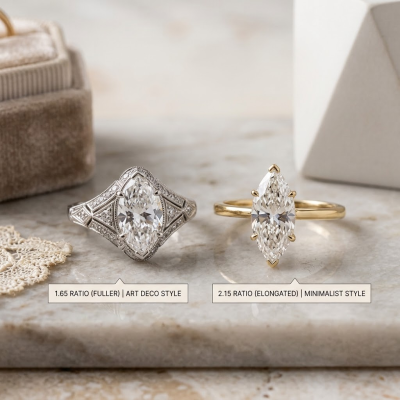
Numbers are useful for narrowing your search, but they cannot tell you everything about how a gemstone will look in person. A fuller 1.65 ratio, for instance, may complement antique or Art Deco-inspired designs, while the sharper, more elongated outline of a 2.15 ratio may appeal to those who prefer architectural minimalism.
Why Can Two Same-Ratio Marquise Diamonds Look Different?
Why Can Two Same-Ratio Marquise Diamonds Look Different?
A marquise cut ratio indicates the relationship between a gem’s length and width, but it doesn’t fully describe the details of its silhouette.
Even two stones of the same type and proportion can vary in overall appearance.
Look Beyond their Actual Dimensions
Look Beyond their Actual Dimensions
Millimeter measurements provide an important reference when assessing the size of a marquise stone. For diamonds, factors such as carat weight, pavilion depth, table size, and crown angle can also influence face-up appearance.
For a more complete evaluation, you should consider the diamond or gem’s proportions, structure, and visual appearance as a whole instead of judging it by its length-to-width ratio alone.
Symmetry is Also Crucial
Symmetry is Also Crucial
Similar to oval and pear-shaped gems, marquise cuts depend greatly on well-balanced symmetry. Uneven sides or pointed ends that fail to align along the same axis can change what the stone looks like, making it different from another piece featuring the same length-to-width ratio.
💡 Note: Poor symmetry may also disrupt light reflection and distort the diamond’s balance. Increasing the ratio does not necessarily make up for this issue.

Expert Tips for Selecting the Marquise Cut Diamond or Gem Ratio
Expert Tips for Selecting the Marquise Cut Diamond or Gem Ratio
Choosing a marquise engagement ring ratio is less complicated than it may seem. The key is to balance the visual effect you love with everyday comfort. Before making your decision, keep these concise guidelines in mind:
- Match Proportions to Hand Anatomy: Fuller ratios often balance longer fingers, while elongated ratios can visually lengthen shorter hands.
- Balance Sparkle: Sticking to the classic 1.85–2.00 window maximizes overall brilliance while minimizing dark central bow-tie shadows.
- Pair with the Right Setting: Higher proportions feature delicate tips that may need protective V-prongs or bezel setting.
- Check Physical Dimensions: High ratios spread weight lengthwise for a larger face-up look—always review millimeter dimensions alongside the ratio number.
- Band Stacking: Wider bellies can block straight rings from sitting flush (check our marquise engagement and wedding ring pairing guide for contoured options.)
Final Thoughts
Final Thoughts
A closer look at ratios of marquise rings reveals how much a diamond or colored gem’s proportions can influence its character. Lower, medium, and higher ratios can each create a different look.
Instead of focusing on one so-called perfect ratio, consider how the stone complements your hand and fits your personal style. If you need help making the final decision, MollyJewelryUS’s jewelry experts can provide professional guidance as you search for a marquise engagement ring that feels uniquely yours.
Frequently Asked Questions and Answers
Frequently Asked Questions and Answers
What is the ideal ratio for a marquise diamond?
There is no universally ideal ratio. The best choice depends on your preferred silhouette, whether fuller or more elongated, and the stone’s overall outline and symmetry.
Is a 1.9 or 2.1 ratio better for a marquise ring?
Does a higher marquise stone ratio make a ring look bigger?
A higher ratio can deliver a stronger sense of length, but it does not necessarily mean a larger face-up area. Actual dimensions and carat weight also matter.
Which marquise ratio is best for small hands?
A moderately elongated ratio, such as around 1.80–1.95, can lengthen the finger without overpowering delicate proportions.
Does the marquise engagement ring ratio affect the bow-tie effect?
Ratio can influence the stone’s outline, but it does not determine the bow-tie by itself. Faceting, symmetry, and the gem’s overall cut quality also affect how noticeable the bow-tie appears.