- by MollyJewelryUS
- September 2, 2026
- Buying Guides
A kite-cut gemstone combines crisp lines, pointed corners, and a distinctive geometric profile that easily stands out in fine jewelry. At the same time, those same features make the setting an important part of both the ring’s appearance and protection.
Selecting the best setting for a kite cut engagement ring means balancing aesthetics, security, and profile height. This guide compares the most practical mounting styles so you can find an option that complements the stone while fitting your everyday needs.
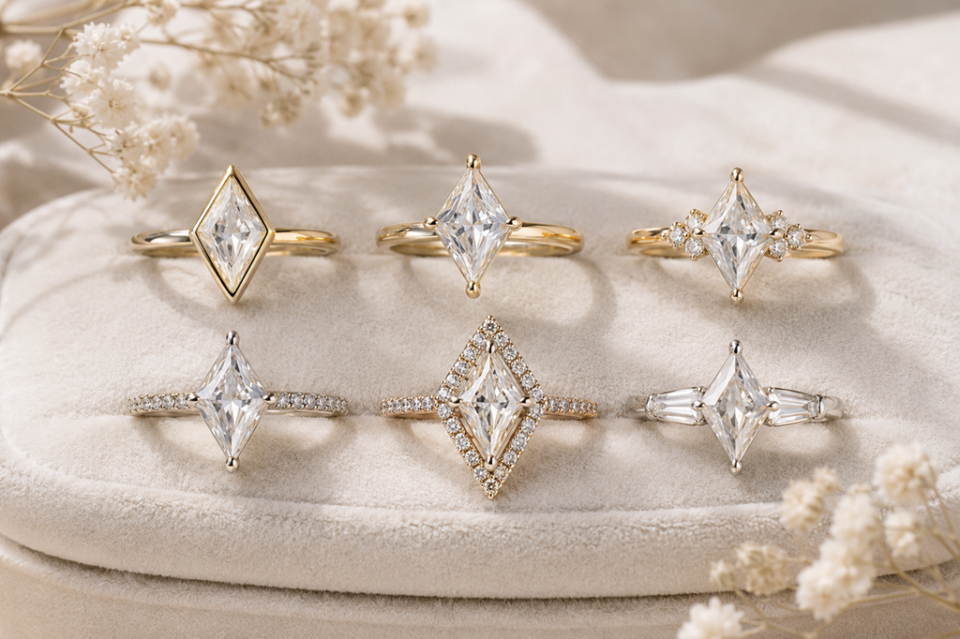
Table of Contents
Why Setting Choice Matters for Kite Cut Engagement Rings?
Why Setting Choice Matters for Kite Cut Engagement Rings?
As one of the more unique engagement ring cuts, a kite-shaped gem does not work equally well with every setting. A well-matched setting should not only secure the stone but also enhance its proportions and presentation. Keep these factors in mind:
- Protects the stone properly: The setting should provide adequate support around the pointed ends and other vulnerable areas.
- Controls the ring’s profile: Setting height affects how prominently the kite stone sits above the finger and how easily it may catch on clothing.
- Defines the overall look: A setting can determine how much of the gemstone is exposed, affecting both its appearance and how it interacts with light.
- Works with different stone proportions: Wide, elongated or horizontally set kite cuts may require different prong placement and setting dimensions.
- Influences wedding band pairing: The shape and height of the setting can determine whether a straight band sits flush or requires a curved design.
Security: Which Setting Best Protects a Kite-Cut Stone?
Security: Which Setting Best Protects a Kite-Cut Stone?
If your main concern is protecting the stone’s four exposed corners, these best settings for kite cut engagement rings are worth considering.
Full Bezel — Maximum Metal Coverage
Full Bezel — Maximum Metal Coverage
A full bezel is one of the most practical engagement ring settings for everyday wear. Whether you choose a kite diamond, moissanite, or colored gemstone such as moss agate, the continuous metal rim surrounds the stone and provides extra protection around its four pointed corners.
At the same time, its clean, structured design complements the geometric character of a kite-shaped center stone.
- Trade-off: Greater metal coverage means less of the gem is exposed, so the center stone may look less light and airy.

V-Prongs — Protection Without Closing Off the Stone
V-Prongs — Protection Without Closing Off the Stone
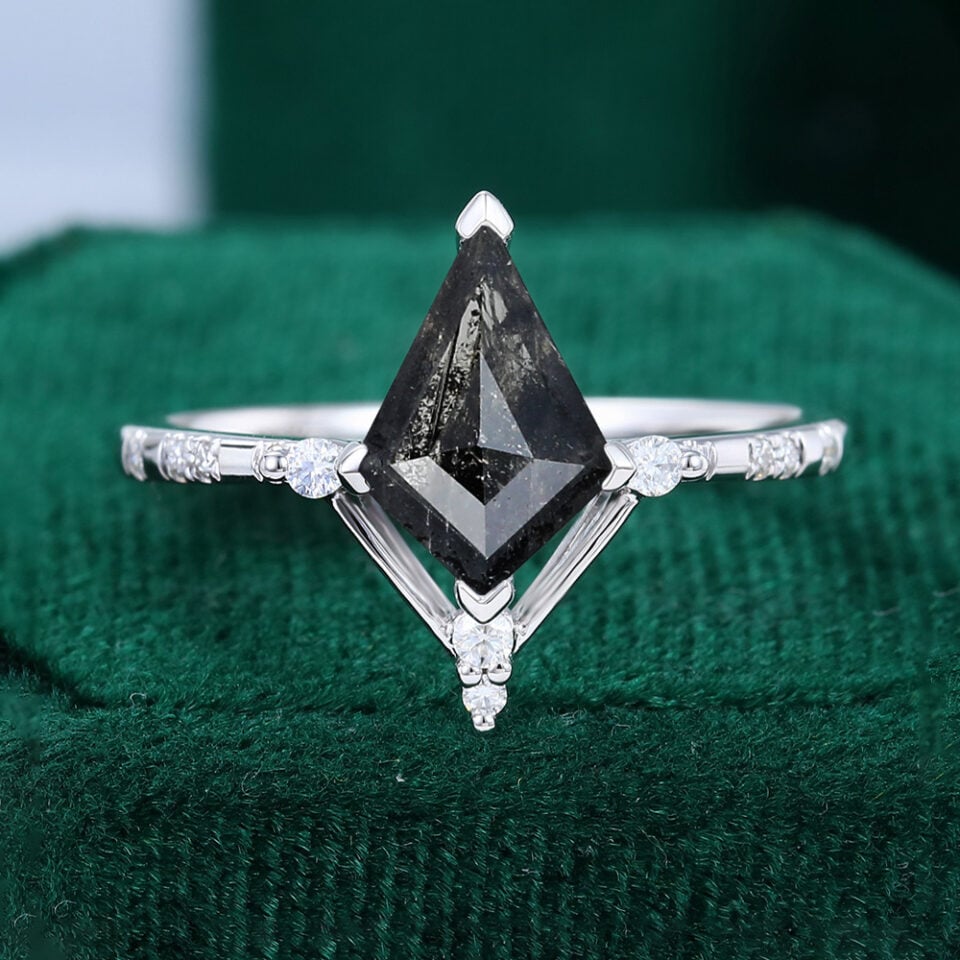
V-shaped prongs offer a smart balance of protection and visibility for kite-shaped gemstones. Positioned over the pointed corners, they help shield vulnerable areas without covering too much of the center stone.
This is especially beneficial for transparent stones, whose appeal often comes from their sparkle and interaction with light. By keeping more of the edges exposed, the setting can also preserve a lighter appearance while complementing a wider range of engagement ring designs.

Claw Prongs — Light and Delicate, but Placement Matters
Claw Prongs — Light and Delicate, but Placement Matters
Fine claw prongs are a versatile option for kite-cut gemstones of various sizes. Their slim profile leaves more of the stone exposed, creating a refined, lightweight appearance without an overly prominent metal presence.
When properly sized and positioned, they can also provide reliable support across the stone while reinforcing its vulnerable pointed corners.
- Pro Tip: A single well-placed prong may provide better protection than multiple prongs in less effective positions.

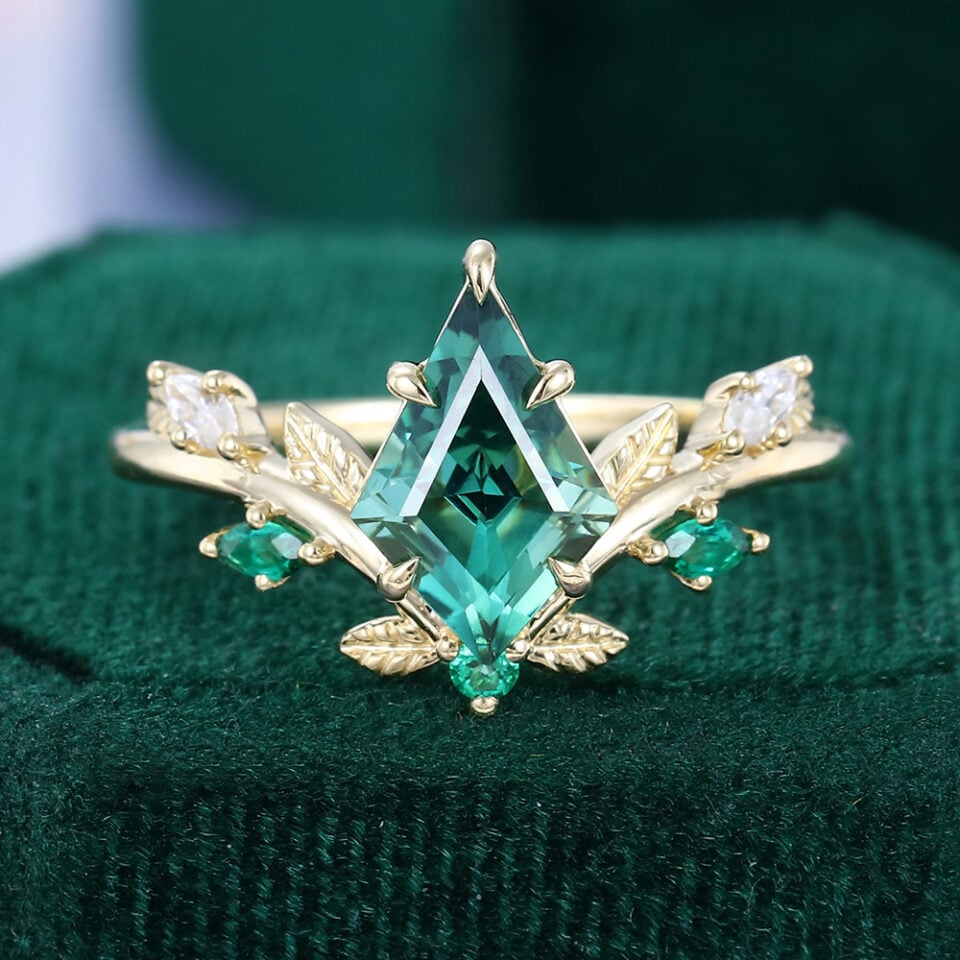
Height: How High Should a Kite Engagement Ring Setting Be?
Height: How High Should a Kite Engagement Ring Setting Be?
As mentioned earlier, the setting height of a kite-shaped stone can influence both the ring’s appearance and how comfortable it feels to wear. Your lifestyle and everyday needs should also play a role in your decision.
Low Settings for Everyday Wear
Low Settings for Everyday Wear
Whether for a kite cut stone or another gemstone shape, a low-profile setting keeps the engagement ring closer to the finger, delivering a lighter and less obtrusive feel. This makes it well suited to active lifestyles, frequent glove wear, and those who prefer understated jewelry.
Medium Settings for a Practical Middle Ground
Medium Settings for a Practical Middle Ground
A medium-height setting for kite cut engagement ring is often the easiest compromise. The center stone still has enough lift to stand out, but the jewelry does not project as much as a very high setting.
For many couples who do not have a strong preference yet, this is a sensible place to begin comparing designs.

High Settings for More Drama and Exposure
High Settings for More Drama and Exposure
Compared with a low-profile setting, a high setting creates more space between the gemstone and the finger. Visually, this can give the ring a more dramatic or even slightly avant-garde look, especially when paired with an elongated kite-shaped stone.
However, greater height also means the pointed corners may be more vulnerable to bumps or snagging. A secure prong design can help minimize this risk.

- Note: Don’t rely on the front image alone when shopping online. Check the side profile as well to see how high the center stone sits and how much it rises above the finger.
Style: Settings that Change the Personality of a Kite Cut
Style: Settings that Change the Personality of a Kite Cut
Whether you prefer a classic, modern, or unconventional bridal look, the setting can significantly change how a kite-shaped diamond or gemstone ring is presented. Here are three standout options to consider.
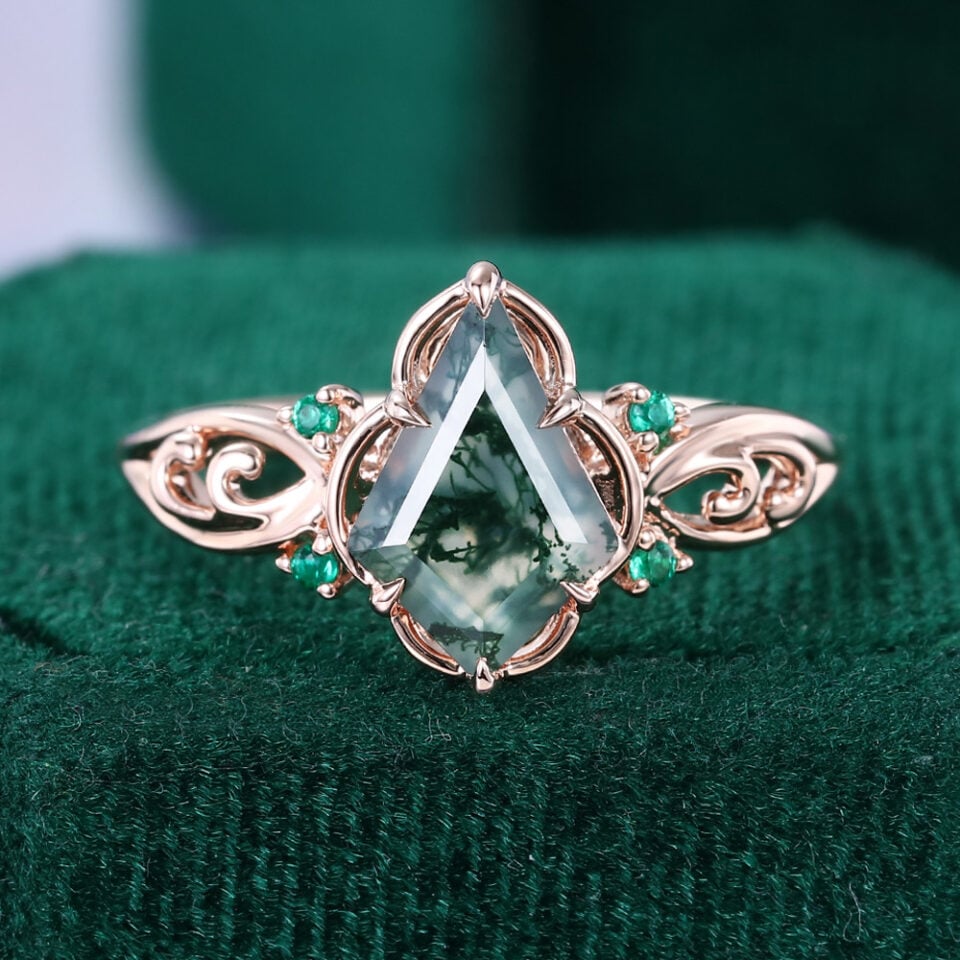
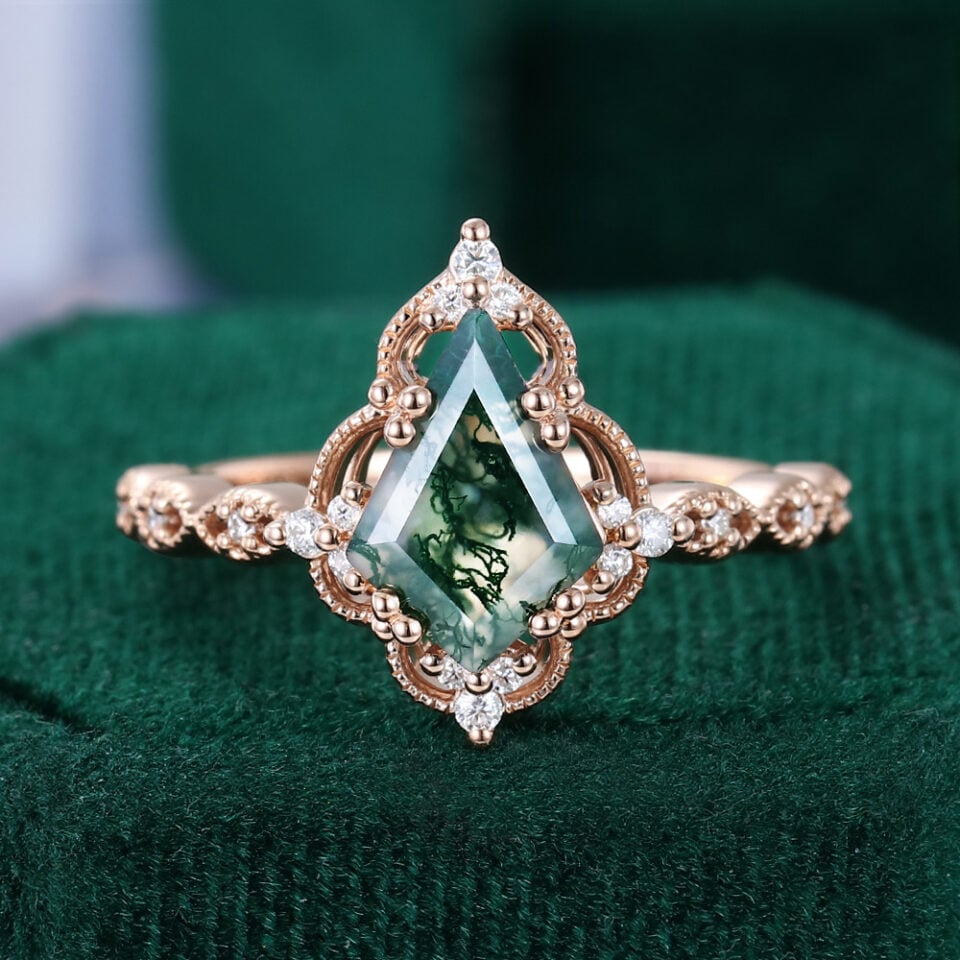
Halo Settings — More Visual Impact
Halo Settings — More Visual Impact
Among the best settings for kite cut engagement rings, a halo can make the center stone look fuller while adding more visual weight to the overall design. Decorative edges also help soften the sharp angles of the kite-shaped stone.
- Styling Tip: A close-fitting halo emphasizes the kite cut’s geometric character, while a rounded halo creates stronger contrast around the angular center stone.
Three-Stone Styles — a Bolder Design
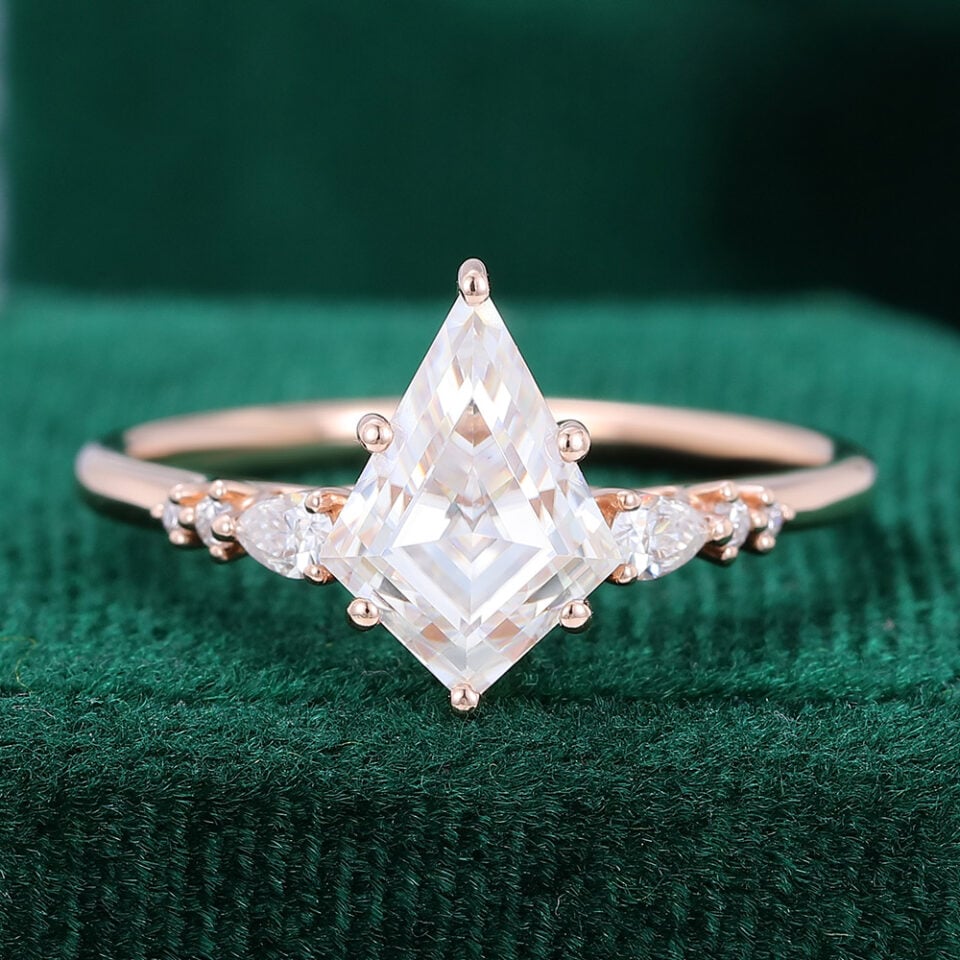
Three-Stone Styles — a Bolder Design
By framing the center stone with two side stones, a three-stone setting brings out a balanced and more prominent look. Angular side stones can complement the kite cut’s geometric lines, while round accents create a softer contrast.
This makes the style especially attractive if you want a statement-making design without using a full halo.

East-West Settings — a Contemporary Silhouette
East-West Settings — a Contemporary Silhouette
Thanks to its distinctive shape, a kite-cut stone can be turned sideways and set in an east-to-west orientation. This creates a wider and more non-traditional silhouette, giving the ring a contemporary character that works especially well with alternative gemstones like salt and pepper diamonds.
- Note: Rotating the stone changes its aesthetic, not its safety needs. Regardless of the orientation, the pointed corners should still be properly protected.
Guide to Choose the Best Setting for a Kite-Cut Engagement Ring
Guide to Choose the Best Setting for a Kite-Cut Engagement Ring
There is no universally “ideal” setting for every kite-cut engagement ring. The styles above are popular and practical options, but the choice still depends on your lifestyle, everyday needs, and design preferences.
| Your Priority | Setting to Consider | Why |
|---|---|---|
| Maximum point protection | Full bezel | Covers more of the perimeter |
| Protection with an open look | V-prongs + side prongs | Secures tips while showing more of the stone |
| Delicate appearance | Fine claw prongs | Reduces visible metal |
| Modern geometric style | Full or partial bezel | Reinforces the kite outline |
| More sparkle | Halo | Adds surrounding brilliance |
| Stronger design presence | Three-stone | Side stones can echo the kite angles |
| Unconventional style | East-west | Gives the shape a wider, modern look |
| Everyday practicality | Low–medium setting | Keeps the stone closer to the hand |
Jewelry Expert Tips for Customizing Your Dream Piece
Jewelry Expert Tips for Customizing Your Dream Piece
Kite-shaped gemstones can vary widely in ratio, so wide, elongated, or east-to-west stones may call for different prong placements or setting dimensions.
This is why custom design can be useful. If the stone has unusual proportions or you want a specific orientation, height or prong arrangement, a custom setting gives the jeweler more freedom to build around the actual gem.
👉🏻 If you’re weighing customization agains an existing design, compare custom vs. ready-made engagement rings can help you see which option better suits your needs.

FAQs for Kite Cut Engagement Ring Setting
FAQs for Kite Cut Engagement Ring Setting
Are V-shaped prongs good for a kite diamond?
Yes. V-prongs can wrap around the pointed ends and provide targeted support while keeping more of the stone visible than a full bezel.
Is a bezel better than prongs for a kite-shaped diamond?
A bezel offers more perimeter coverage, while prongs create a more open appearance. Choose based on whether protection or maximum stone visibility matters more to you.
Can a kite-cut stone be set horizontally?
Yes. An east-west setting places the kite across the finger for a wider, more contemporary look. Its pointed corners still need appropriate protection.
Can halo or side stones protect a kite center stone?
Not by themselves. A halo and side stones change the style and add sparkle, but the center stone still needs a secure bezel, V-prongs or another appropriately designed setting.
Is a low or high setting better for a kite engagement ring?
Low to medium settings are generally easier to manage for everyday wear. A high setting creates more visual lift but also leaves the center stone more exposed.
Embrace a Design That Protects Your Gem Without Hiding It
Embrace a Design That Protects Your Gem Without Hiding It
In the end, the right kite cut setting should protect the stone while keeping its distinctive shape visible. Select a bezel for maximum coverage, V-prongs for targeted protection with a more open look, or fine claws for a delicate appearance.
Then you can continue to consider the setting height and overall design to find a style in MollyJewelryUS that suits your everyday wear.