- by MollyJewelryUS
- August 26, 2026
- Buying Guides
The round brilliant cut is an undeniable icon in bridal jewelry. But once you’ve chosen a round center stone, another question often comes up: Should you choose 4 or 6 prongs?
There’s no absolute winner in the 4 vs 6 prong round engagement ring debate. The choice goes beyond technical considerations, as the number of prongs can noticeably affect how the center stone looks and how the ring feels on your hand. If you’re also weighing the two options, keep reading for expert tips to help you decide!
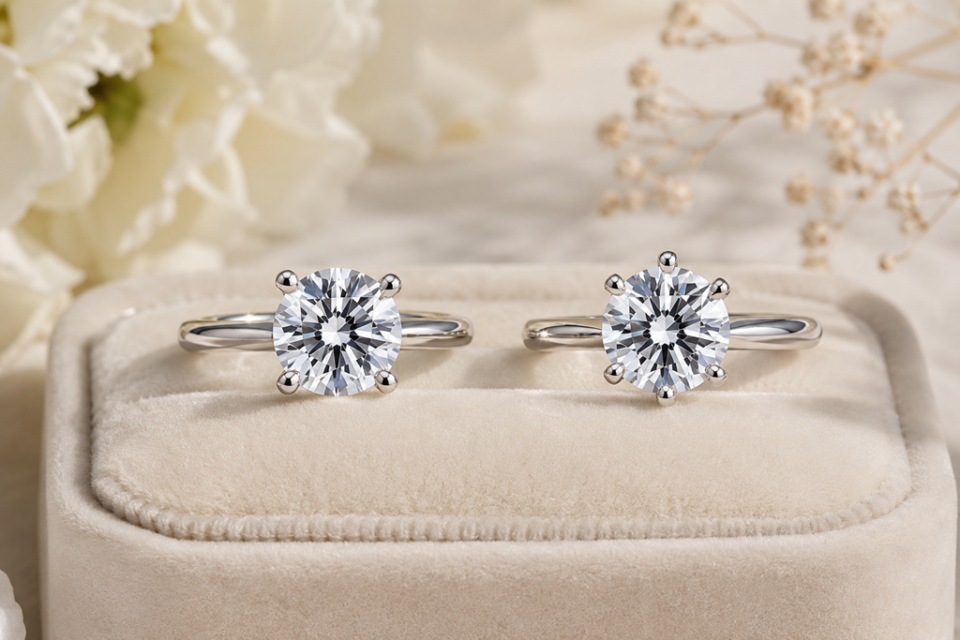
Table of Contents
Understanding the Basics: 4-Prong and 6-Prong Settings
Understanding the Basics: 4-Prong and 6-Prong Settings
At their core, both engagement ring settings use metal prongs to secure the round center stone. What changes is how those prongs surround the stone.
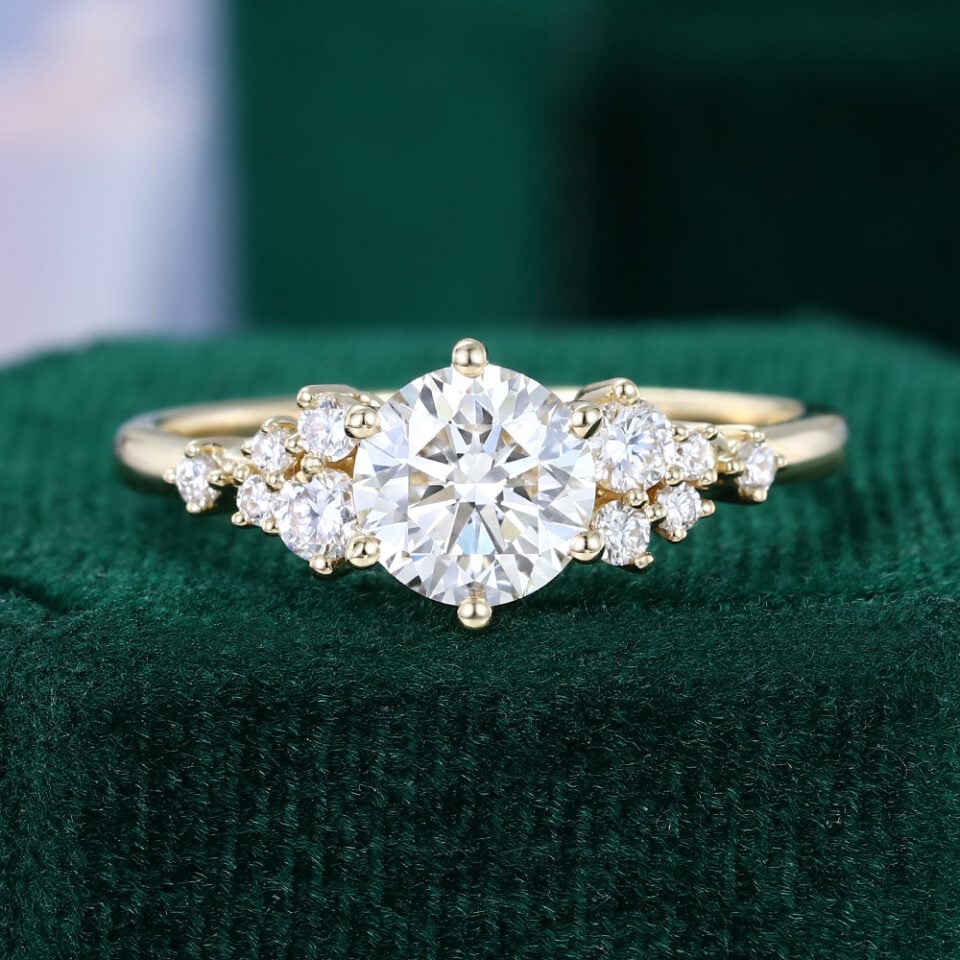
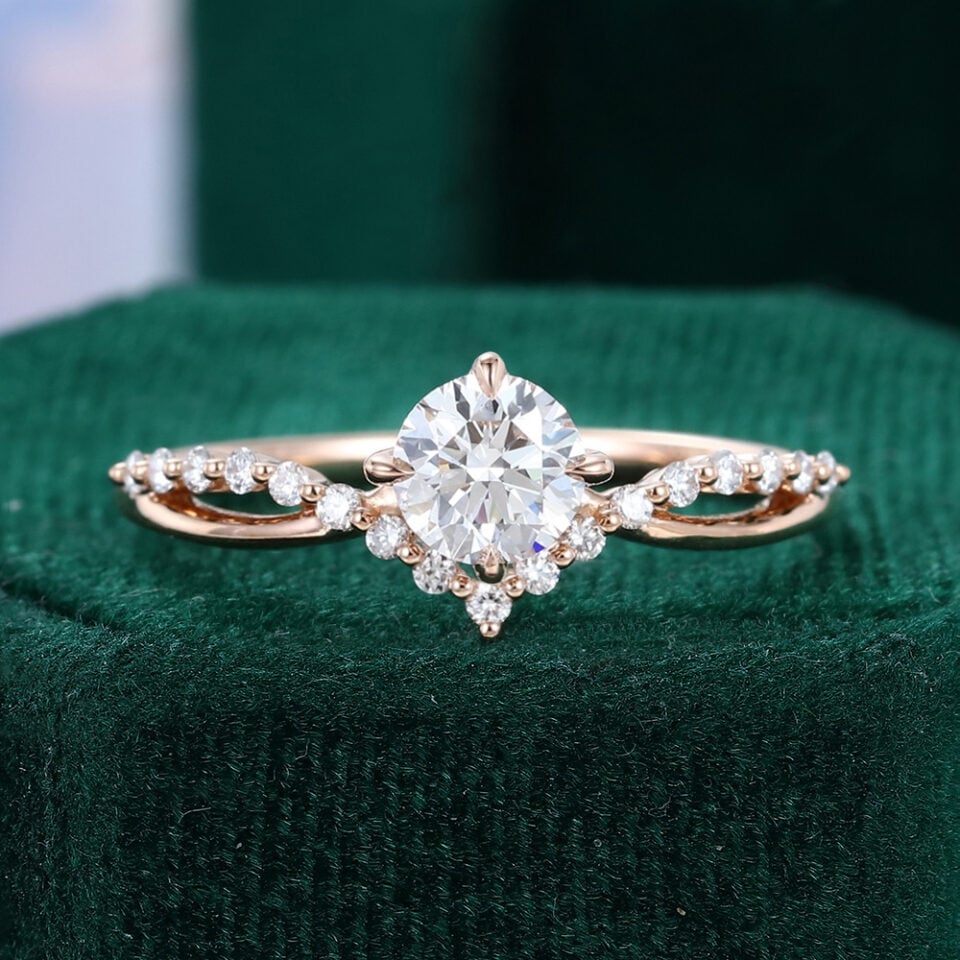
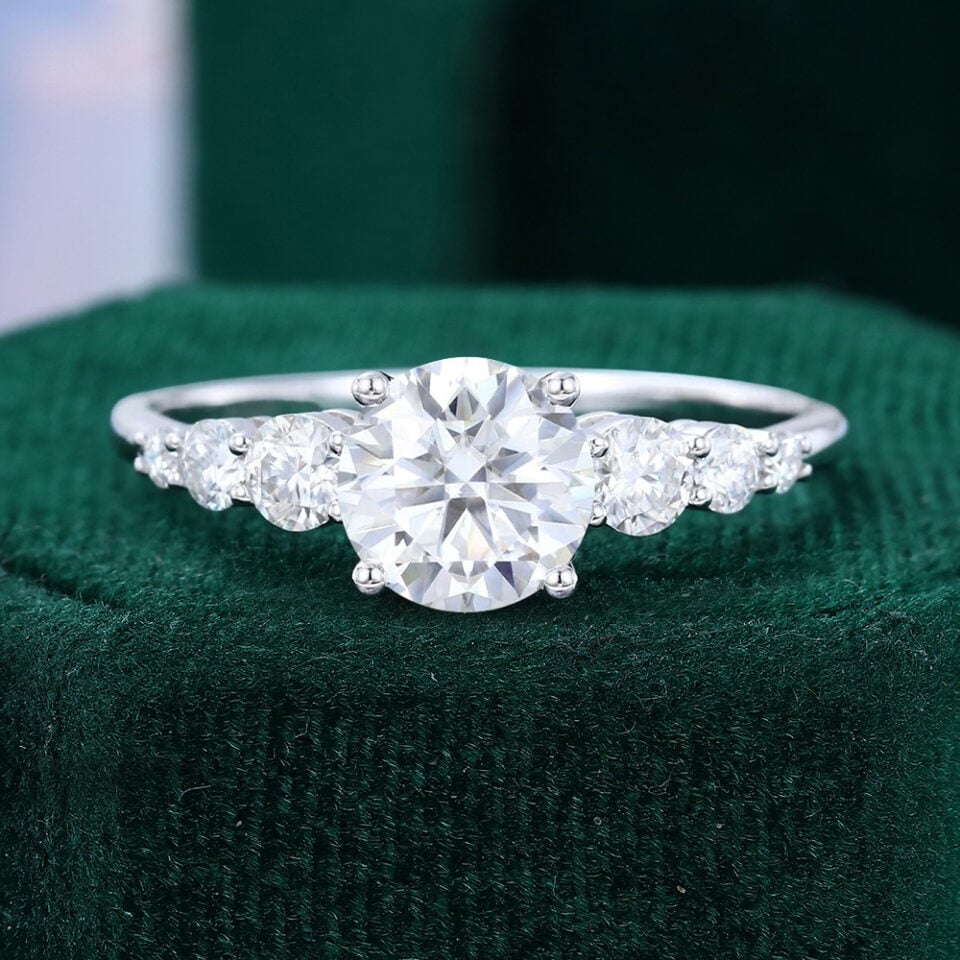
- 4-Prong Setting: Four prongs are positioned approximately 90 degrees apart, minimizing metal coverage and allowing more of the gem’s outline to remain visible.
- 6-Prong Setting: Six prongs are arranged around the round stone at roughly 60-degree intervals, creating more points of support and a balanced, classic appearance.
Key Differences: 4 vs 6 Prong Round Engagement Ring
Key Differences: 4 vs 6 Prong Round Engagement Ring
These two configurations are commonly found in timeless engagement ring designs, but each creates a very different look for the round center stone. To help you compare them more easily, here’s a quick 4-prong vs 6-prong comparison table:
| Feature | 4 Prongs | 6 Prongs |
|---|---|---|
| Silhouette | Can subtly square off round gems | Preserves a more circular geometry |
| Light Appearance | Maximum side and girdle exposure | Moderate metal coverage along crown |
| Visual size | May look more exposed | Stronger circular definition |
| Structural Protection | Secure when properly designed | Additional support points |
| Style | Minimalist and modern | Classic and timeless |
Shape and Silhouette
Shape and Silhouette
The number and placement of prongs can subtly reshape the way a round gemstone is perceived. With 4 prongs, the open spaces between them create a crisp, airy outline that can make the stone appear slightly more square and visually pronounced.
Six evenly spaced prongs bring out a different effect. By tracing the circular outline more continuously, they emphasize the smooth rhythm and rounded character of the center stone.

👉🏻 If you are comparing silhouettes across cuts, comparing oval vs round engagement ring may also offer further clarity on outline geometry.
Light Performance and Brilliance
Light Performance and Brilliance
The brilliance of a round diamond or gemstone ring comes from the way it interacts with light. Since a 4-prong setting uses less metal, more of the stone remains exposed, allowing light to enter from different angles and creating a bright, open appearance.
But does 6 vs 4 prong mean you have to sacrifice sparkle? Not necessarily.
While six prongs do introduce slightly more metal around the stone, they do not automatically reduce flash. The stone’s proportions, symmetry, polish, and overall round cut quality play a much greater role in determining its light performance.

Visual Size and Effect
Visual Size and Effect
Does 4 prong or 6 prong make a round stone appear larger? If your priority is maximum stone visibility, a 4-prong offers less metal surrounding the center stone, more of its outline remains visible, which may make it appear a little larger from the top.
A 6-prong setting covers slightly more of the stone but gives the round shape a more balanced frame. The distinction, however, is subtle and can vary with prong thickness, setting height, stone proportions, and overall ring design.
Security and Durability
Security and Durability
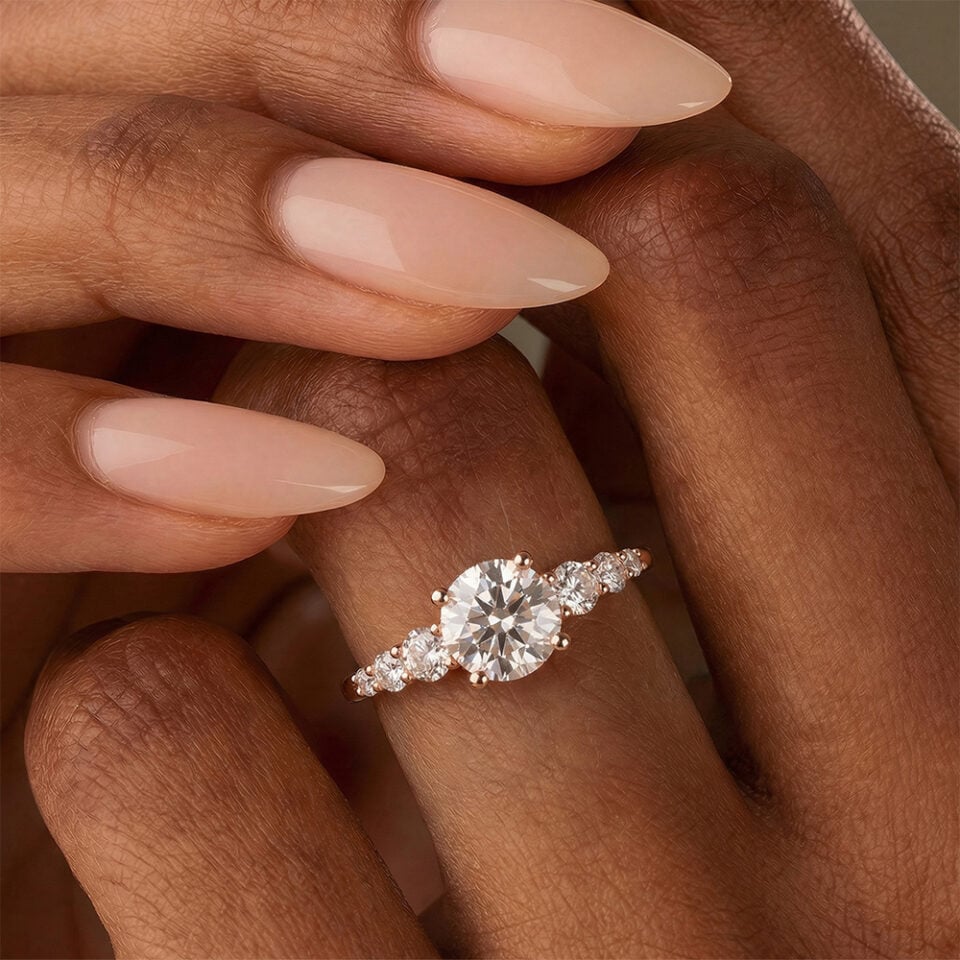
If you plan to wear your ring every day, six prongs can provide extra peace of mind. Because the stone is supported at six points, the remaining prongs can still help secure it if one becomes bent or damaged.
That said, it doesn’t mean the 4 vs 6 prong round engagement ring comparison has a clear loser. A well-designed and properly fitted 4-prong round stone setting can be just as reliable for everyday wear.
What matters just as much is the quality of the construction, including prong thickness, placement, stone fit, metal quality, and additional support such as a gallery rail.
How 4 and 6 Prongs Perform on Round Diamond and Other Gems
How 4 and 6 Prongs Perform on Round Diamond and Other Gems
The way a prong configuration performs can vary depending on the type of stone, no matter whether the ring features a round or another shaped gemstone.
Setting Round Diamonds and Moissanite
Setting Round Diamonds and Moissanite
Natural diamonds, lab-grown diamonds, and moissanite are all durable choices with plenty of brilliance.
A 4-prong setting leaves more of the center stone uncovered, giving it a lighter and more open look, especially when set in a minimalist solitaire. By contrast, 6 prongs can provide a more defined frame around the round stone.
- Reason: All three gemstones are well suited to everyday wear, so the choice can come down largely to the visual style you want from the setting.

Securing Softer Colored Gemstones
Securing Softer Colored Gemstones
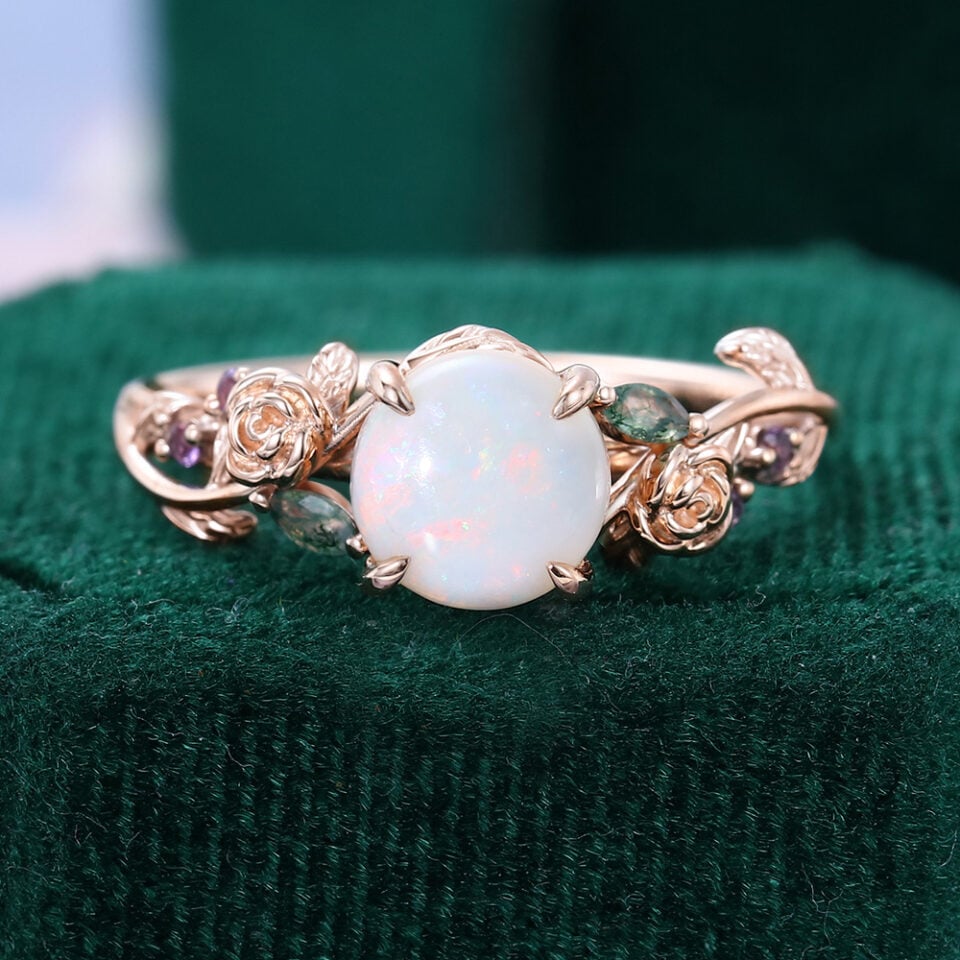
Some gemstones, including moss agate and opal, have lower hardness or more vulnerable girdles. Emeralds are relatively hard but may contain inclusions that make them more susceptible to impact.
For these stones, 6 prongs can provide more points of support than 4 prongs. However, prong count alone cannot guarantee better protection. The ring’s design and craftsmanship are equally important.
- Reason: More prongs can distribute support around the stone, but a gemstone-specific setting is often a better approach.



What Real Buyers Say About Six Prong vs Four Prong Rings
What Real Buyers Say About Six Prong vs Four Prong Rings
Real-world opinions on 4-prong and 6-prong round engagement rings are mixed, especially across Reddit and other online jewelry communities. Common preferences include:
- 4 prongs look cleaner, less metal can help a smaller center stone (even under 1 carat) stand out.
- Buyers choosing larger center stones often prefer the extra support provided by six prongs.
- Poorly fitted or overly prominent prongs can snag on clothing regardless of whether there are four or six.
- 4 prongs often lend a modern, minimalist vibe perfect for delicate rings, while 6 prongs impart a regal, vintage elegance.
*These are general opinions shared by online buyers, not universal rules, so consider what matters most to you before selecting.
How to Choose Between These Two for a Round Engagement Ring
How to Choose Between These Two for a Round Engagement Ring
Finding the ideal prong configuration for round engagement rings comes down to evaluating your lifestyle, center gem specifications, and personal aesthetic.
Still unsure? Take a closer look at the pros and cons of 4-prong vs 6-prong settings before making your final decision.
Quick Pros and Cons Comparison
Quick Pros and Cons Comparison
| Pros | Cons | |
|---|---|---|
| 4 Prongs |
|
|
| 6 Prongs |
|
|
Which Is Right for You?
Which Is Right for You?
Overall, if you love a clean and minimalist look, 4 prongs may be the better choice. With less metal around the center stone, they let the round gemstone stand out and create a more open appearance. They work especially well for smaller stones and modern designs paired with delicate pavé bands.
By comparison, 6 prongs offer more points of support and a more substantial frame around the center stone. Their classic, vintage-inspired look also makes them a beautiful starting point for pairing a round engagement ring with different wedding bands.

FAQs About 4 vs 6 Prong Round Rings
FAQs About 4 vs 6 Prong Round Rings
Is 4 or 6 prongs better for round rings?
Neither is universally better. Four prongs offer a more open appearance, while six provide additional support and a more defined round silhouette.
Are 6 prongs safer than 4?
Six prongs provide additional contact points, but security also depends on prong quality, stone fit, setting construction, and maintenance.
Is 4 prongs enough for a round engagement ring?
Yes. A well-designed and properly maintained 4-prong setting can still securely hold a round diamond or other center gemstone.
Does 4 prong or 6 prong make diamonds look bigger?
Four prongs can make more of the stone visible, creating a slightly more open appearance, but neither setting changes the diamond’s actual size.
Does a 6-prong setting reduce light entering a round diamond?
A well-crafted 6-prong setting allows ample light entrance, though it covers slightly more girdle surface than a 4-prong head.
How do prong choices affect round wedding band pairing?
Four-prong heads often sit higher, allowing straight bands to slide flush underneath, while six-prong heads may require contoured or curved bands depending on head height, unless it is built as a high-set cathedral setting.
Secure Your Dream Ring with MollyJewelryUS
Secure Your Dream Ring with MollyJewelryUS
So, which one is right for you? After exploring this 4 vs 6 prong round engagement ring comparison guide, you should have a better sense of what each setting brings to the table.
MollyJewelryUS offers round engagement rings in both 4-prong and 6-prong styles, so you can choose based on how you live, the look you love, and the gemstone you prefer.
And if you have a design that’s uniquely your own, our custom design service also gives you the opportunity to bring it to life. With guidance from our jewelry experts, you can shape your ring from the first idea to the final setting and create a piece to treasure for years to come.