- by MollyJewelryUS
- August 7, 2026
- Buying Guides, Metals Guides
Choosing between white gold and platinum is one of the most common decisions when selecting an engagement ring. If you’re considering a white gold engagement ring, it can look very similar to a platinum ring at first glance, with both offering a bright, elegant appearance that pairs beautifully with diamonds and gemstones.
However, the difference becomes clearer over time. White gold and platinum vary in price, weight, durability, and maintenance needs. The better choice depends not only on your budget, but also on how you want your ring to look and feel after years of everyday wear.
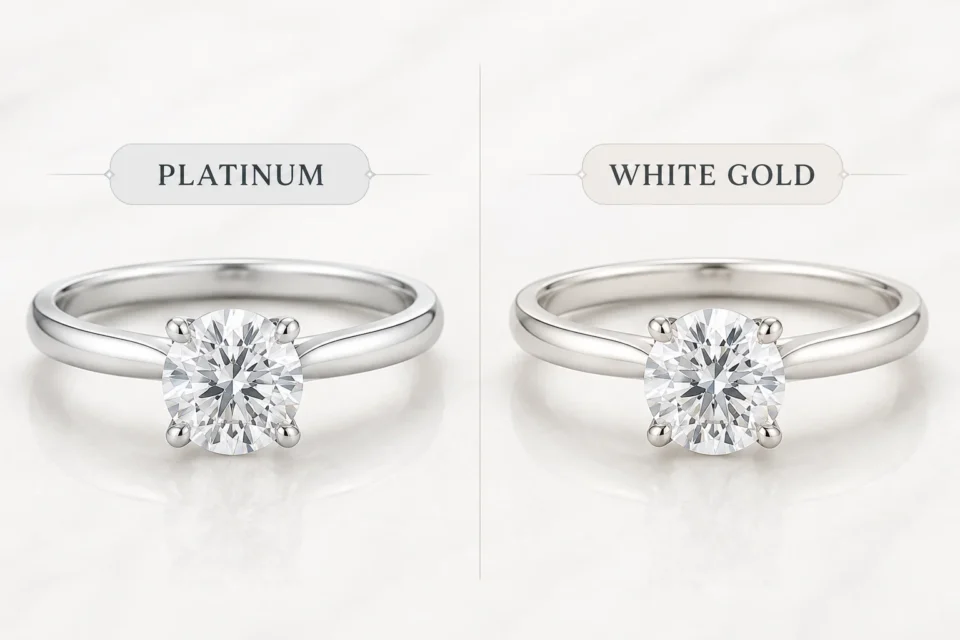
Table of Contents
White Gold vs Platinum: Quick Comparison
White Gold vs Platinum: Quick Comparison
| Feature | White Gold | Platinum |
|---|---|---|
| Color | Bright white with rhodium plating | Naturally white |
| Weight | Lighter | Heavier |
| Durability | Harder surface but may wear over time | Dense and durable with a natural patina |
| Maintenance | Requires occasional rhodium replating | Usually requires only optional polishing |
| Price | More affordable upfront | Higher initial cost |
| Sensitive Skin | Depends on alloy composition | Naturally hypoallergenic |
Color & Appearance: Which Metal Keeps Its White Finish?
Color & Appearance: Which Metal Keeps Its White Finish?
White gold and platinum can look very similar when new, but they maintain their appearance in different ways. The main difference comes from how each metal achieves its white color and how that appearance changes over time.
White Gold: Bright White With Rhodium Plating
White Gold: Bright White With Rhodium Plating
White gold is typically coated with rhodium to create a bright, polished white finish. This plating gives white gold engagement rings their highly reflective appearance, but it can gradually wear away with regular use.
Key considerations:
- Requires occasional rhodium replating to maintain its brightest white appearance
- May reveal a warmer tone as the plating wears down
- The original finish can be restored through professional replating
Platinum: Naturally White With a Unique Patina
Platinum: Naturally White With a Unique Patina
Unlike white gold, platinum is naturally white and does not rely on a surface coating. Instead of changing color as a plating layer wears away, platinum develops a soft patina over time.
Key considerations:
- Maintains its natural white color without rhodium plating
- Does not require color restoration due to worn coatings
- Develops a distinctive aged appearance that some people appreciate
Which one should you choose?
Choose white gold if you prefer a bright, polished appearance and do not mind occasional maintenance. Choose platinum if you prefer a naturally white metal with a more subtle aging process.
Durability & Comfort for Everyday Wear
Durability & Comfort for Everyday Wear
Since engagement rings are usually worn every day, the way a metal feels and ages over time can be just as important as its initial appearance. White gold and platinum differ in both physical feel and how they respond to daily wear.
Weight and Comfort
Weight and Comfort
One of the most noticeable differences between white gold and platinum is their weight.
White Gold
- Lighter and easier to wear for those who prefer a less noticeable ring
- Offers a comfortable option for larger ring designs
Platinum
- Significantly denser and heavier than white gold
- Provides a substantial, premium feel on the finger

Scratch Resistance and Long-Term Wear
Scratch Resistance and Long-Term Wear
Although platinum is often considered a premium and durable metal, its durability comes from different properties than white gold.
White Gold
- Generally has a harder surface that resists scratches
- May gradually lose small amounts of metal through long-term wear
Platinum
- Softer surface that can develop scratches more easily
- Moves metal rather than losing significant material when scratched
- Develops a natural patina over time
Which one should you choose?
White gold may be better for those who prefer a lighter ring with a polished surface, while platinum suits those who appreciate a heavier feel and the natural character that develops with age.



Maintenance & Long-Term Cost
Maintenance & Long-Term Cost
The difference between white gold and platinum is not only about how much you pay at the beginning. It is also about the type of care each metal requires throughout years of ownership.
White Gold: Lower Cost With Regular Upkeep
White Gold: Lower Cost With Regular Upkeep
White gold usually has a lower initial price, making it an attractive option for many engagement ring buyers. However, keeping its original bright white appearance requires occasional maintenance.
Key considerations:
- Lower upfront cost
- Requires rhodium replating to restore the white finish
- Maintenance frequency depends on wear habits and personal preference
Platinum: Higher Investment With Simpler Maintenance
Platinum: Higher Investment With Simpler Maintenance
Platinum costs more initially because of its density and composition, but it generally requires less routine attention.
Key considerations:
- Higher upfront price
- No rhodium replating required
- Polishing is optional and mainly for restoring a smoother finish
Which one should you choose?
White gold offers a more budget-friendly starting point but requires more scheduled care. Platinum requires a larger initial investment but provides a simpler long-term ownership experience.
If You Have Sensitive Skin: White Gold vs Platinum Engagement Ring
If You Have Sensitive Skin: White Gold vs Platinum Engagement Ring
For people with sensitive skin, platinum is often considered the safer choice because high-quality platinum jewelry is typically made with a very high percentage of platinum and does not usually contain common alloy metals that may cause reactions.
White gold can also be suitable for sensitive skin, especially when made with allergy-friendly alloys. However, its composition varies depending on the manufacturer, so it is worth checking what metals are included.
If skin sensitivity is your main concern, platinum provides a more straightforward choice.
White Gold vs Platinum: Which One Should You Choose?
White Gold vs Platinum: Which One Should You Choose?
Both white gold and platinum are excellent options for engagement rings. The right choice depends on your priorities.
Choose white gold if you:
- Want a more affordable engagement ring
- Prefer a bright, polished white appearance
- Like a lighter-weight ring
- Are comfortable with occasional maintenance
Choose platinum if you:
- Prefer a naturally white metal
- Want a heavier, premium feel
- Value lower routine maintenance
- Have sensitive skin concerns
Ultimately, the difference between white gold and platinum is not simply about which metal is “better.” It is about choosing the type of ownership experience you want. White gold offers flexibility and value with some ongoing care, while platinum provides long-term simplicity with a higher initial investment.
FAQs About White Gold vs Platinum Engagement Rings
FAQs About White Gold vs Platinum Engagement Rings
Is platinum better than white gold for an engagement ring?
Neither metal is universally better. Platinum offers natural whiteness and lower routine maintenance, while white gold provides a more affordable option with a similar appearance.
Which is better for everyday wear, white gold or platinum?
Both are excellent for daily wear, but they age differently. White gold resists scratches better but requires rhodium replating to stay white. Platinum is more durable overall but develops scratches and a natural patina over time.
Does white gold turn yellow over time?
White gold does not turn yellow completely, but its rhodium plating can wear away and reveal the warmer tone of the underlying gold alloy.
Does platinum scratch more easily than white gold?
Yes, platinum is generally softer on the surface than white gold, making it more prone to visible scratches. However, when platinum scratches, the metal simply shifts rather than wearing away, ensuring long term durability and weight retention.
Can white gold and platinum look the same?
Yes, when brand new, they look nearly identical because white gold is coated in rhodium, mirroring platinum’s bright white finish. However, as the plating wears off, white gold reveals a warmer tone, while platinum remains naturally white.
Which metal is better for sensitive skin?
Platinum is the better choice for sensitive skin because it is naturally hypoallergenic. It contains a very high purity level, usually ninety-five percent, which means it lacks the common alloy metals that frequently trigger uncomfortable allergic reactions.
Is platinum worth the extra cost?
For buyers who value low maintenance, heavier feel, and natural white color, platinum can be worth the higher upfront price.