- by MollyJewelryUS
- August 28, 2026
- Buying Guides
Choosing between a two-stone and three-stone engagement ring comes down to more than the number of gemstones. Two-stone rings give both stones a stronger role in the design, while three-stone rings usually create a more symmetrical look around a defined center stone.
The better choice depends on what matters most: meaning, overall style, finger coverage, budget, everyday comfort, and how the ring will pair with a wedding band.
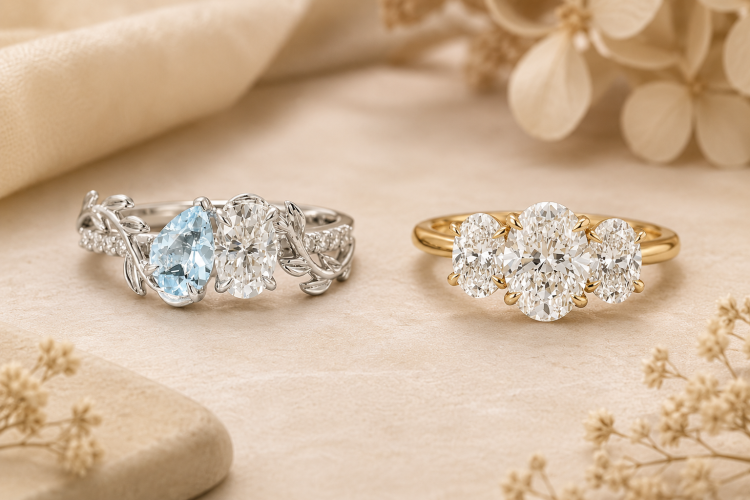
Table of Contents
Two-Stone vs Three-Stone Engagement Rings at a Glance
Two-Stone vs Three-Stone Engagement Rings at a Glance
| Factor | Two-Stone Engagement Ring | Three-Stone Engagement Ring |
|---|---|---|
| Main look | Two focal stones share attention | One center stone is supported by two side stones |
| Common meaning | Two people or two lives coming together | Past, present, and future |
| Style | Often more expressive, modern, or asymmetrical | Usually balanced, classic, and symmetrical |
| Finger coverage | Can create dramatic side-to-side or diagonal width | Often creates continuous horizontal coverage |
| Budget | Two substantial stones can increase the total cost | Smaller side stones can leave more budget for the center |
| Everyday wear | Balance depends on stone placement and setting | Wider settings can feel more substantial |
| Wedding band | Some designs may need a curved or open band | Wide side stones can also affect a flush fit |
| Best for | Couples who want a distinctive, personal design | Couples who want a strong center stone and classic symbolism |
Stone count alone does not determine size, price, or comfort. The proportions, stone dimensions, setting, and overall design matter just as much.
What Does a Two-Stone vs Three-Stone Engagement Ring Mean?
What Does a Two-Stone vs Three-Stone Engagement Ring Mean?
Meaning is one of the clearest differences between the two styles, although neither has to follow one fixed interpretation.
Two-Stone Engagement Ring Meaning
Two-Stone Engagement Ring Meaning
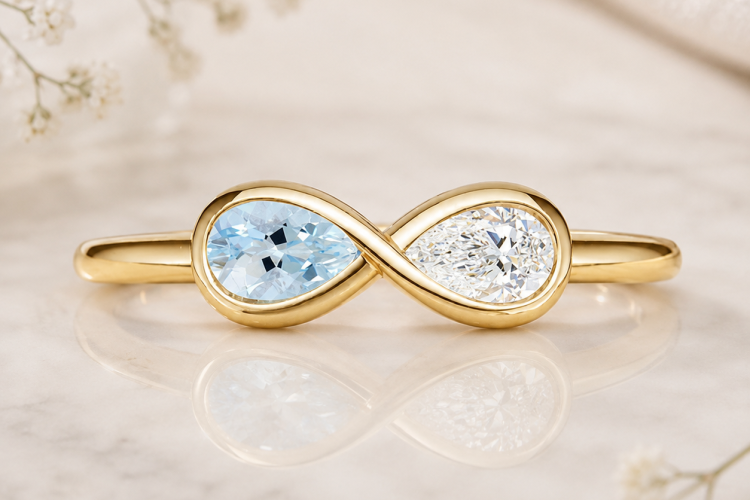
A two-stone engagement ring is often associated with “you and me”—two people coming together and sharing one future. This is especially common with the Toi et Moi style, where the two stones sit together as equal focal points.
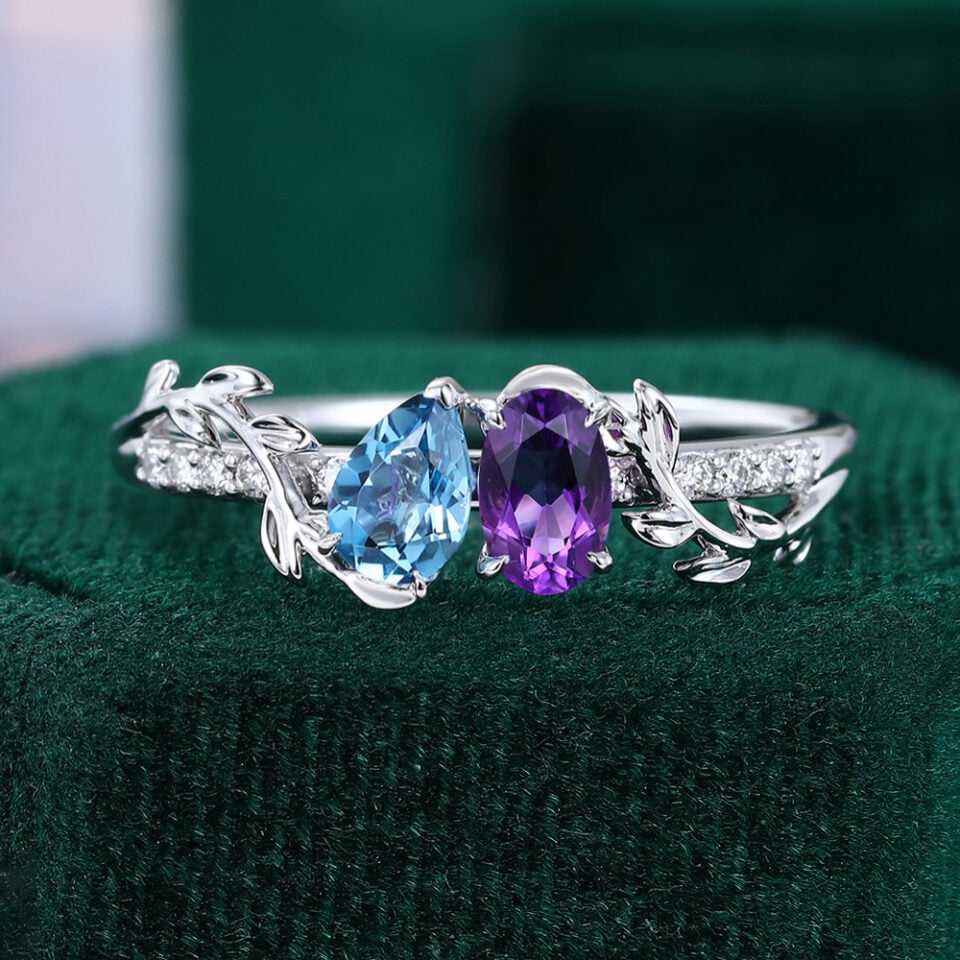
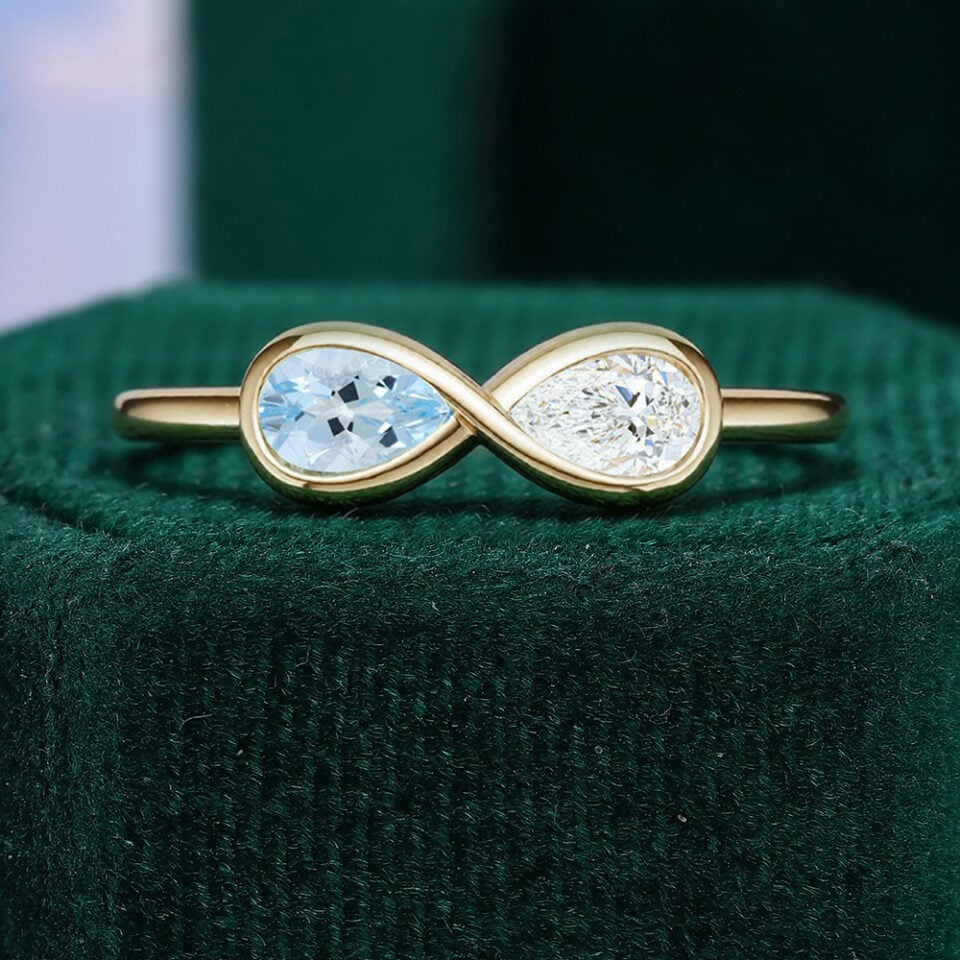
The symbolism can also be personalized. Two stones might represent two personalities, two important moments in a relationship, or two birthstones. Different gemstones, colors, or diamond shapes can make the design feel even more personal.
For a closer look at the style and its symbolism, see our Toi et Moi Rings Ultimate Guide.
Three-Stone Engagement Ring Meaning
Three-Stone Engagement Ring Meaning
The traditional three stone engagement ring meaning is past, present, and future. The two side stones can represent the experiences that brought a couple together and the life they will continue to build, while the center stone remains the visual focus.
That meaning does not have to be literal. Three stones can also represent important milestones, shared values, or other parts of a couple’s story.
For more ideas on styles, stone combinations, and settings, explore our Three Stone Engagement Ring Guide.
How Do Two-Stone and Three-Stone Rings Look Different?
How Do Two-Stone and Three-Stone Rings Look Different?
The biggest visual difference is not simply the number of stones. It is how the stones are arranged and where the eye goes first.
Two-Stone Rings: More Movement and Contrast
Two-Stone Rings: More Movement and Contrast
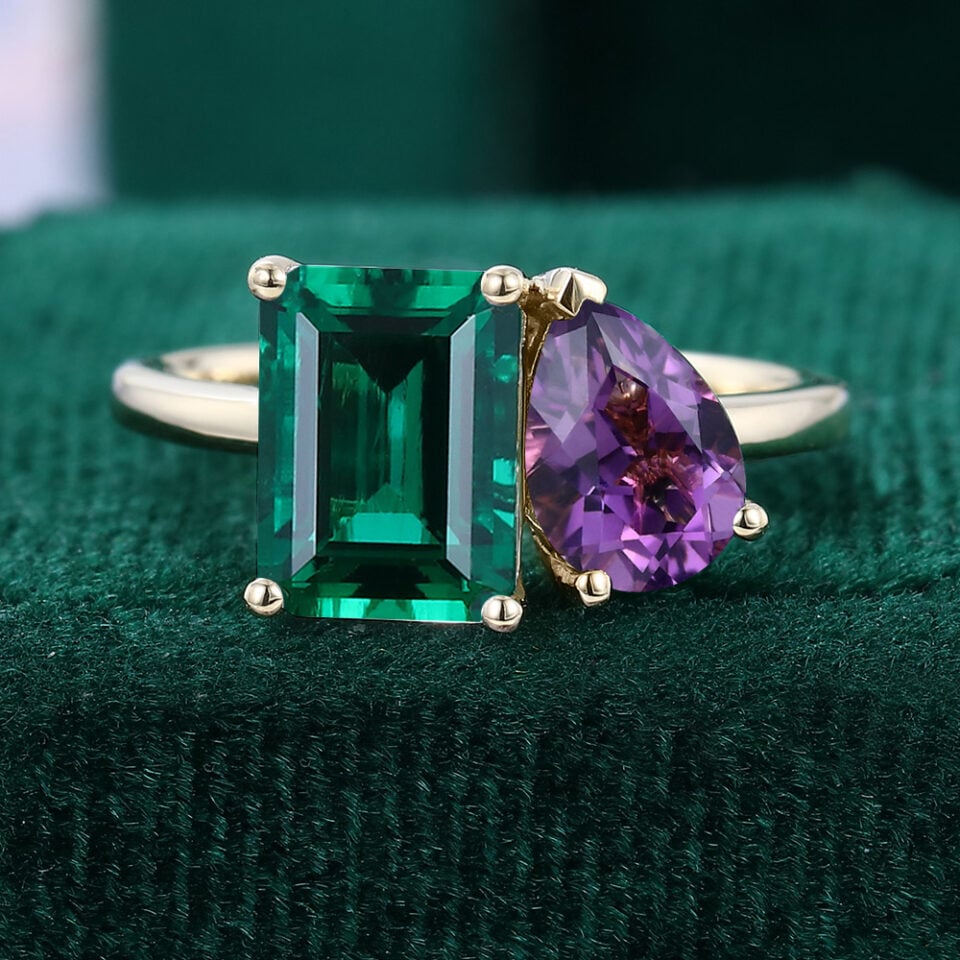
Two-stone rings often use different shapes, sizes, colors, or orientations. A pear beside an emerald cut, for example, creates a very different look from two matching round stones.
This makes two-stone designs a natural choice for someone who likes asymmetry, contrast, or a less predictable silhouette.
The stones can also create significant finger coverage when placed side by side or diagonally. Instead of relying on one oversized center stone, the combined width of two stones can make the ring feel substantial.
The main consideration is proportion. If one stone is significantly larger or heavier than the other, the contrast should feel intentional rather than visually unbalanced.



Three-Stone Rings: More Symmetry and Center Focus
Three-Stone Rings: More Symmetry and Center Focus
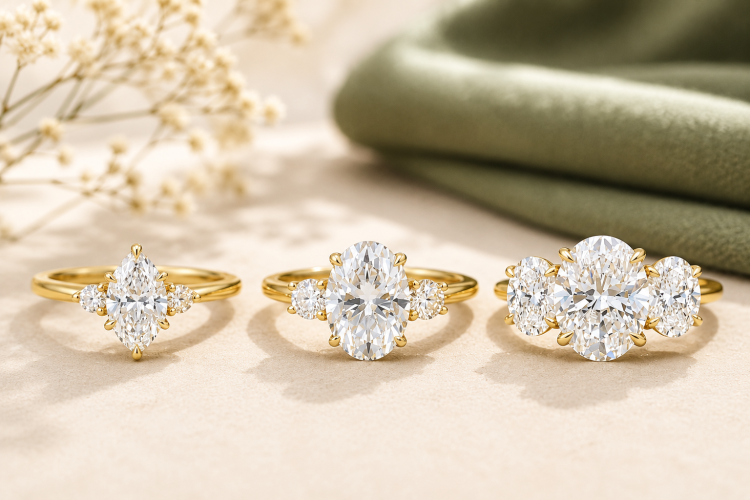
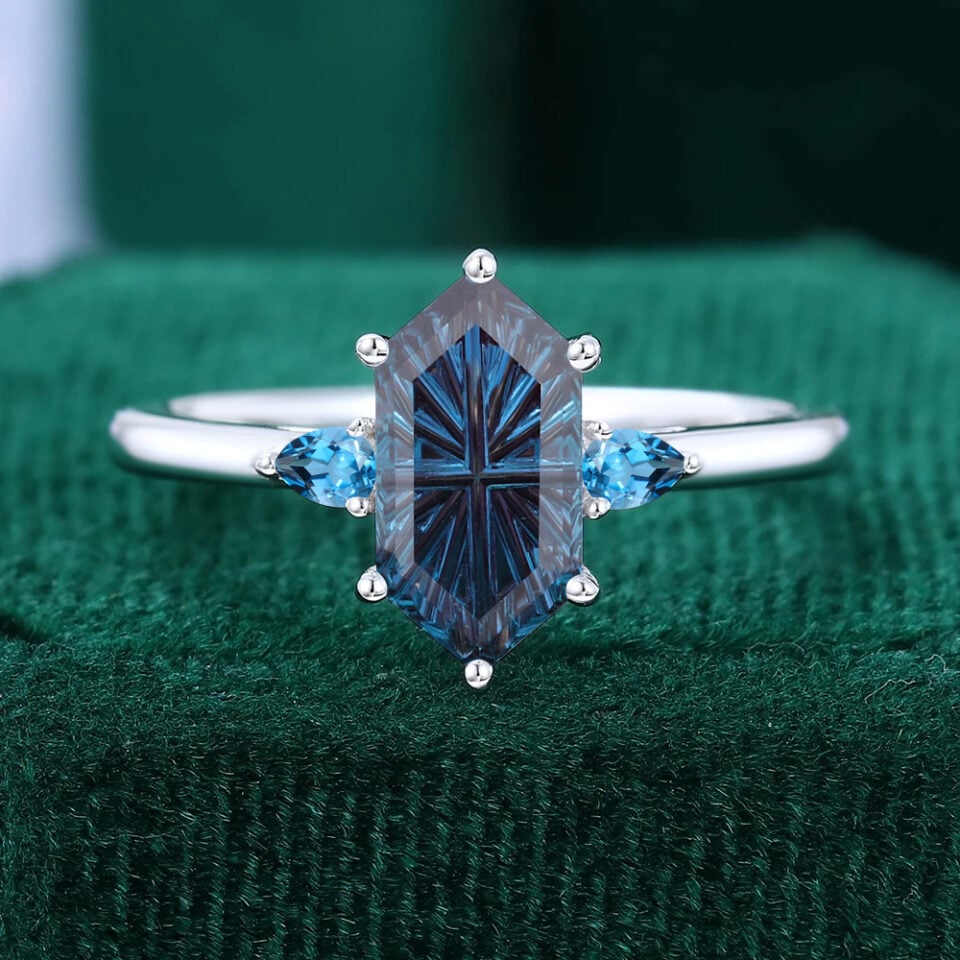
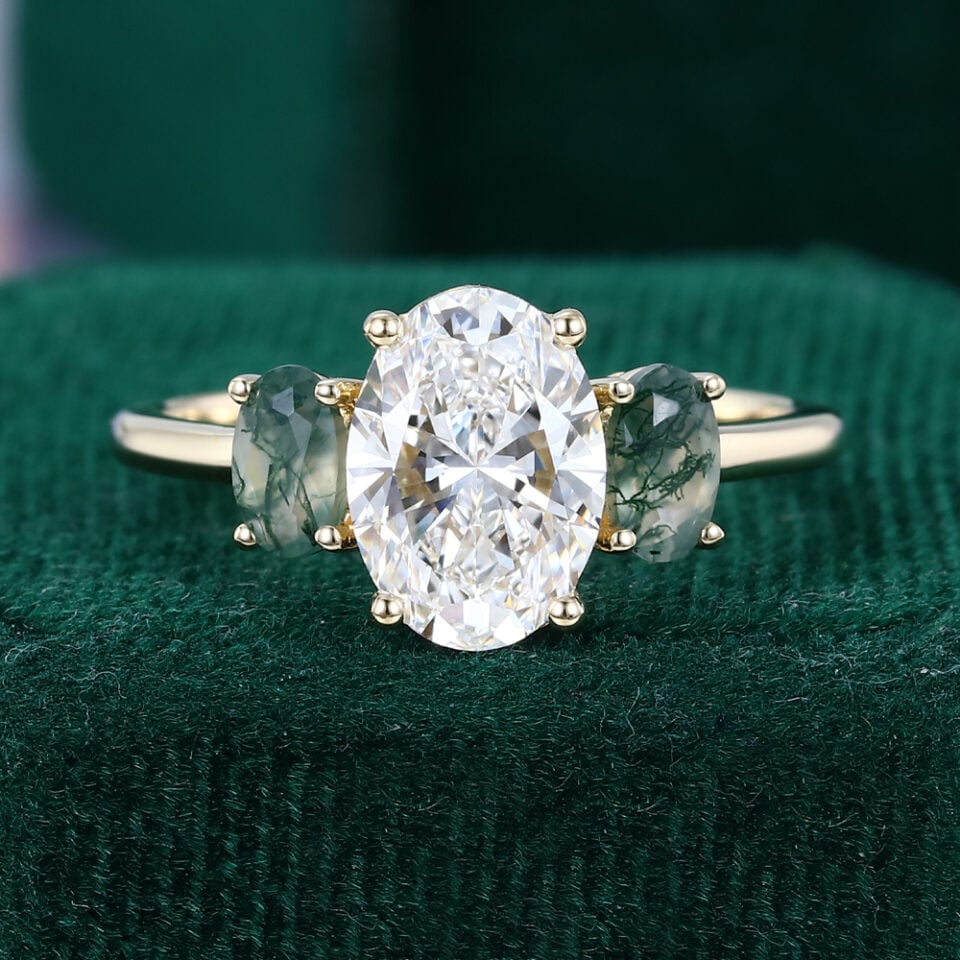
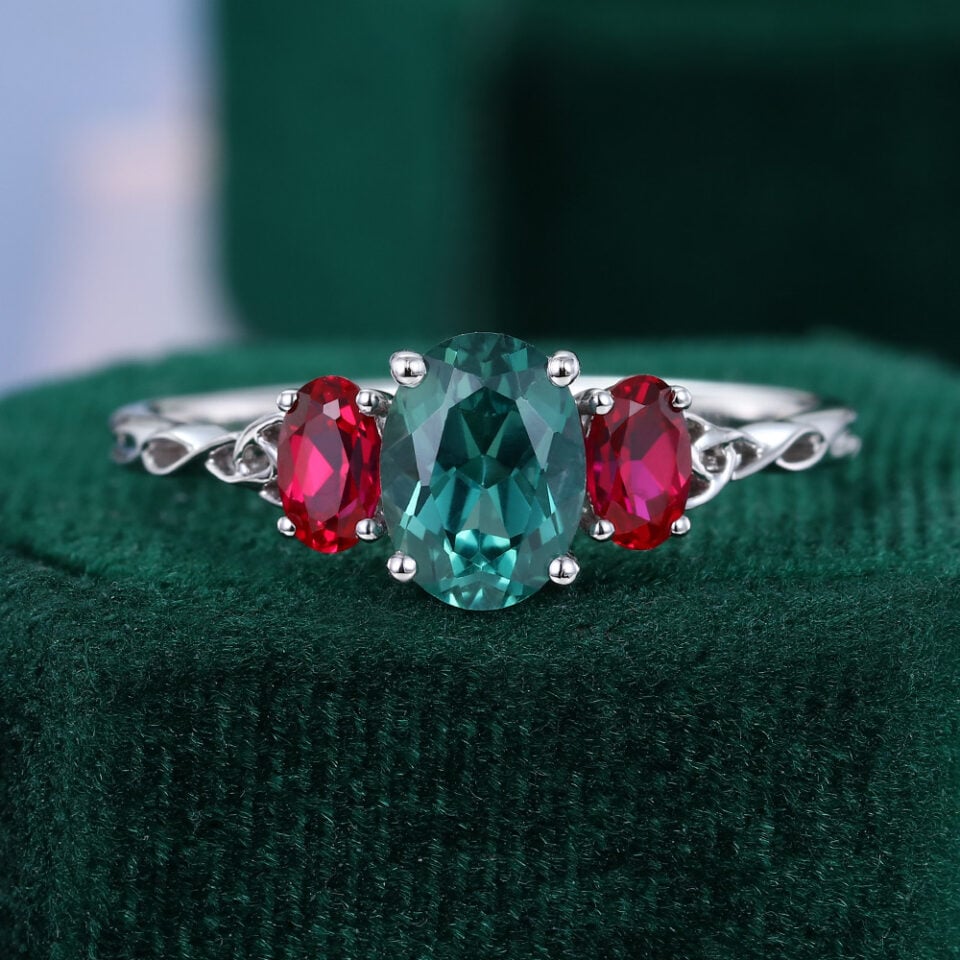
A classic three-stone ring places a larger center stone between two smaller side stones, creating a naturally balanced silhouette.
The eye usually goes to the center stone first and then moves toward the side stones. This gives the ring a clear focal point while creating more presence across the finger than a traditional solitaire.
The side stones do not have to match the center shape. For example, a round or oval center can be paired with tapered baguettes or pear-shaped side stones while maintaining symmetry.
If you’re comparing styles based on gemstone shape, our guide to popular engagement ring cuts can help explain how different shapes change the overall look.



Which Gives More Finger Coverage?
Which Gives More Finger Coverage?
Neither style automatically gives more finger coverage. The overall width of the stone arrangement matters more than the number of stones.
Two stones placed side by side or at an angle can create dramatic width without requiring one oversized center stone. A three-stone ring can create similarly strong coverage when the side stones extend outward from the center.
Instead of comparing carat weight alone, look at the total face-up width of the stones and how that width works with the proportions of the finger.
A very wide three-stone design may feel overwhelming on a narrow finger, while a two-stone arrangement can look balanced when its shapes follow the length or angle of the hand.
The goal is not maximum coverage. It is proportionate coverage that feels right on the hand.
Which Is More Affordable: Two Stone or Three Stone?
Which Is More Affordable: Two Stone or Three Stone?
Neither style is automatically more affordable. Stone type, size, quality, metal, and setting complexity usually have a greater impact on price than whether a ring has two or three stones.
A two-stone ring can become more expensive when both focal stones are substantial diamonds or gemstones. Meanwhile, a three-stone design can create plenty of visual presence with one larger center stone and smaller side stones.
With a fixed budget, the difference is mainly about where you want the value to show.
- With a two-stone ring, more of the budget may go toward two distinctive shapes, colors, or gemstone types.
- With a three-stone ring, more of the budget can be concentrated in the center stone while smaller side stones add width and balance.
Gemstone choice also changes the equation. Moissanite, lab-grown diamonds, sapphires, emeralds, and other gemstones offer different ways to balance size, appearance, and cost.
For a broader breakdown of what different spending levels can achieve, see our Engagement Ring Price Guide.
Which Should You Choose: Two-Stone or Three-Stone?
Which Should You Choose: Two-Stone or Three-Stone?
There is no universally better style. The better choice depends on what you want the ring to look like and what matters most when wearing it.
| If you want… | Consider… |
|---|---|
| Two stones to share equal attention | Two-stone |
| A more personal or unconventional design | Two-stone |
| Mixed gemstone colors or shapes | Two-stone |
| More asymmetry or visual movement | Two-stone |
| A clear center-stone focus | Three-stone |
| A balanced, symmetrical look | Three-stone |
| Past, present, and future symbolism | Three-stone |
| A classic alternative to a solitaire | Three-stone |
Which Is Better for Everyday Wear?
Which Is Better for Everyday Wear?
Neither style is automatically more comfortable for everyday wear. The setting, stone placement, ring size, and overall proportions matter more than whether the ring has two or three stones.
Two-Stone Rings
Two-Stone Rings
Two large or differently shaped stones can place more weight across the top of the finger. If the setting is high or the band is very delicate, some designs may be more likely to rotate.
That does not make two-stone rings uncomfortable by default. A well-proportioned shank, sensible stone placement, appropriate sizing, and a lower profile can make a significant difference.
Directional shapes such as pear and marquise cuts may also have exposed points that require thoughtful prong placement, especially for an active lifestyle.

Three-Stone Rings
Three-Stone Rings
Three-stone rings can distribute the visual weight more evenly, but they may also feel wider across the finger.
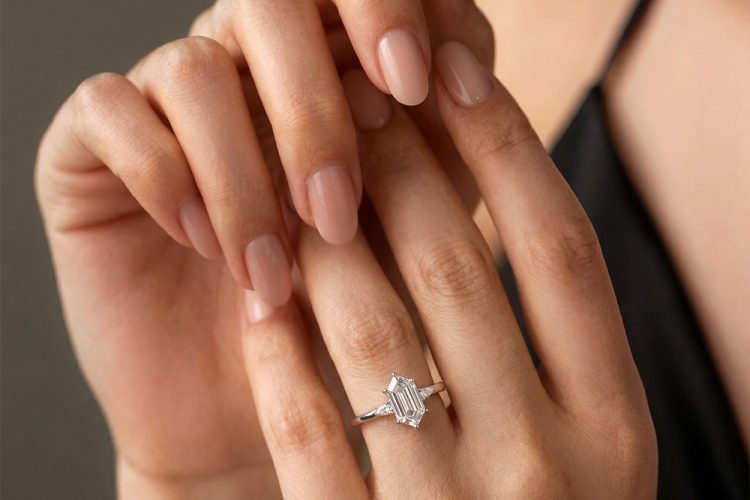
Pay attention to how far the side stones and their settings extend toward the neighboring fingers. A ring can look elegant from above but feel noticeably wider when the fingers are together.
The setting itself also matters. our guide to different types of engagement ring settings explains how setting styles affect security, profile, and appearance.
Low Profile vs. High Profile: Which Is Better?
Low Profile vs. High Profile: Which Is Better?
A lower setting can be practical for an active lifestyle because the stones sit closer to the hand and may be less likely to catch on clothing or other objects.
A higher setting, however, can provide more clearance underneath the center stone, which may make it easier for some wedding bands to sit beside the engagement ring.
Neither is automatically better. The right height depends on how the ring will be worn and whether a straight wedding band is important.
For a more detailed comparison, see our Low Setting vs. High Setting Engagement Rings Guide.
Will a Two-Stone or Three-Stone Ring Fit With a Wedding Band?
Will a Two-Stone or Three-Stone Ring Fit With a Wedding Band?
Either style can work with a wedding band, but neither guarantees a flush fit. The setting design matters more than the stone count.
A low-set Toi et Moi ring may have two baskets that extend into the space where a straight band would normally sit. A three-stone ring can have a similar issue if the side-stone settings extend too far across the finger.
If a flush bridal set is important, look at the engagement ring from the side before choosing. Pay attention to:
- The gallery
- Basket shape
- Prong placement
- Setting height
- Where the setting meets the shank
If a straight wedding band cannot pass underneath the engagement ring, a curved, contoured, open, or custom-fit band may be a better solution.
For more detail, see our guide to why an engagement ring and wedding band may not sit flush.
Final Thoughts
Final Thoughts
The choice between a two-stone and three-stone engagement ring is not really about two versus three. It is about the kind of relationship between the stones that feels right.
- A two-stone ring puts both stones in the spotlight and offers more room for contrast, asymmetry, and personal symbolism.
- A three-stone ring creates a stronger center, more symmetry, and a traditional past-present-future meaning.
When comparing actual rings, look beyond stone count. Consider the total width, proportions, setting height, comfort, budget, and wedding-band fit.
FAQs
FAQs
Is a two-stone engagement ring more expensive than a three-stone ring?
Not necessarily. Two substantial focal stones can cost more than a three-stone ring with smaller side stones. Stone size, material, quality, metal, and setting complexity usually matter more than the number of stones.
Which looks bigger, a two-stone or three-stone engagement ring?
Either style can look larger depending on the stones and their total face-up dimensions. Three-stone rings often create continuous horizontal coverage, while side-by-side or diagonal two-stone designs can create especially dramatic width.
Are two-stone engagement rings less balanced on the finger?
Not inherently. Asymmetrical designs may require more attention to stone placement, band width, and sizing, but a well-designed two-stone setting can still feel stable and comfortable.
Which style is easier to pair with a wedding band?
Neither style is automatically easier. Wedding-band compatibility depends more on setting height, basket shape, side-stone width, and gallery design than on whether the engagement ring has two or three stones.
Can a two-stone engagement ring use different gemstones?
Yes. Using different gemstones, colors, or shapes can make a two-stone design more personal and emphasize the idea of two individual stones coming together. The specific gemstone combination should still be chosen with durability, setting, and everyday wear in mind.