- by MollyJewelryUS
- September 9, 2024
- Gemstone Education
Last Updated on November 18, 2026
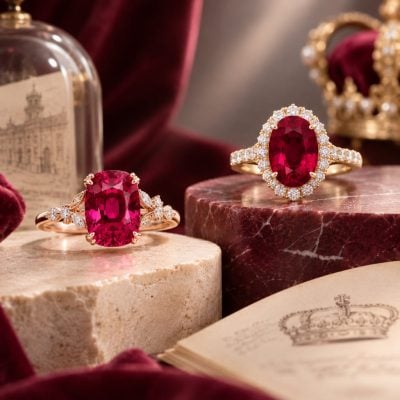
When it comes to striking gemstones, red spinel and ruby inevitably come to mind. As two gemstones long admired in fine jewelry, these two stones share a historical “connection” due to their similar appearances.
So how do they actually compare? In this spinel vs ruby guide, we’ll cover their shared history, important differences, pros and cons, and ways to identify each stone, helping you choose the right gem for your jewelry or collection.
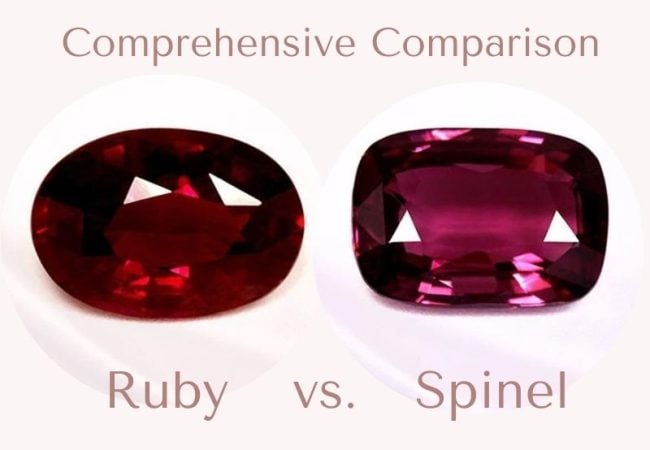
Table of Contents
| Feature | Spinel | Ruby |
|---|---|---|
| Mineral Family | Spinel | Corundum |
| Chemical Formula | MgAl₂O₄ | Al₂O₃ |
| Color | Red, pink, purple, blue, and more | Red to purplish red |
| Mohs hardness | 8 | 9 |
| Refractive Index | Approx. 1.718 | Approx. 1.762–1.770 |
| Optical behavior | Singly refractive | Doubly refractive |
| Clarity | Often eye-clean | Inclusions are common |
| Treatments | Usually untreated | Heating is common |
| Symbolism | Renewal, vitality, hope | Passion, love, power |
| Birthstone | August (modern) | July |
| Typical Price | More affordable | Generally higher |
🌟 Quick Comparison: Spinel vs Ruby Overview Table
The History and Origins of Spinel and Ruby
The History and Origins of Spinel and Ruby
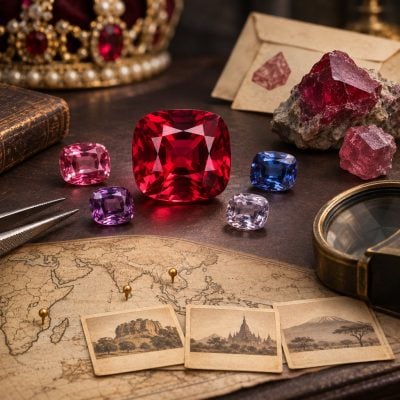
The history of ruby vs red spinel is filled with remarkable cases of mistaken identity.
What Are Spinel Gems?
What Are Spinel Gems?
Spinel is a naturally occurring gemstone that comes in many colors, but its vibrant red varieties are especially sought after. Historically, these red gemstones were confused with rubies, and one of the most famous examples is the Black Prince’s Ruby, which is actually a spinel in the British Crown Jewels.
It wasn’t until the late 18th century that spinel was clearly distinguished as a separate mineral. Today, it is sourced from countries including Sri Lanka, Myanmar, and Tanzania.
A Closer Look at Rubys
A Closer Look at Rubys
Is a spinel a ruby? It’s an understandable question, given how similar the two stones can look. However, ruby is a variety of corundum and is one of the four precious gemstones. It has been cherished for centuries, holding a prominent place in royal jewelry across global empires.
As noted in our ruby guide, this gem is found in places like Myanmar, Thailand, and Madagascar, with rubies from Myanmar being especially prized for its vivid “pigeon blood” red color.
Spinel vs. Ruby: Five Key Physical and Optical Differences
Spinel vs. Ruby: Five Key Physical and Optical Differences
When comparing spinel vs ruby, their distinct mineral structures lead to significant differences in color, optical properties, durability, and gemstone treatments.
Color and Appearance
Color and Appearance
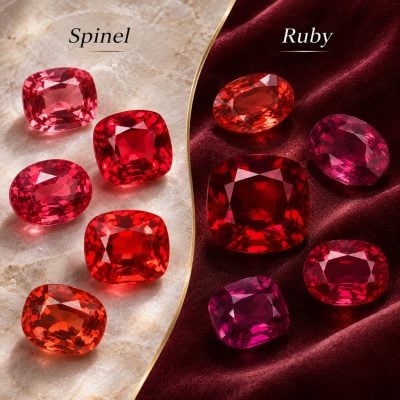
While these two gemstones are loved for their deep red color, there are subtle differences in their shades.
- Spinel: Red spinel exhibits a wide range of shades, from pale pink to deep red, and even reddish-orange. One of its significant advantages over ruby is its consistently vibrant saturation.
- Ruby: Ruby’s shade ranges from orangey-red to purplish-red, while exceptional stones may display the highly prized “pigeon’s blood” hue. It’s color comes from the presence of chromium in its structure.
Luster and Clarity
Luster and Clarity
In a ruby vs spinel comparison, both stones have a vitreous, or glass-like, luster, but their internal characteristics can affect how they appear.
- Spinel: Spinel has a vitreous (glassy) luster and excellent transparency. Unlike ruby, its color is typically more uniform, especially red spinel, which often has fewer inclusions, giving it potentially higher transparency.
- Ruby: Ruby is known for its intense luster, often displaying a subadamantine (near-diamond) luster. While most rubies contain solid inclusions, these inclusions are usually considered part of their natural beauty.
Mineral and Chemical Composition
Mineral and Chemical Composition
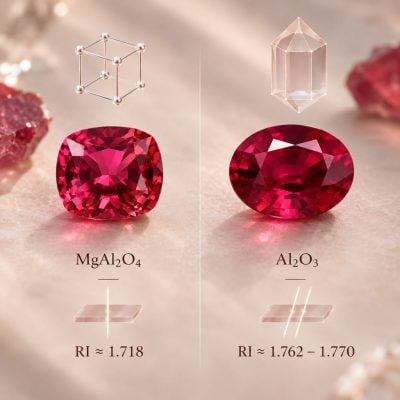
Although spinel and ruby can appear nearly identical, their mineral structures and optical properties allow gemologists to distinguish them using specialized equipment.
- Spinel: A magnesium aluminum oxide with a cubic crystal structure, spinel is singly refractive, with a typical refractive index near 1.718.
- Ruby: An aluminum oxide belonging to the corundum family, ruby has a trigonal crystal structure and is doubly refractive, with a refractive index around 1.762–1.770.
Hardness and Durability
Hardness and Durability
Durability is a crucial factor when choosing gemstones, particularly for everyday wear.
- Spinel: With a hardness of 8, spinel is a highly durable gemstone, suitable for various types of jewelry, including rings, necklaces, and earrings.
- Ruby: Ruby has a hardness of 9, making it extremely hard and resistant to scratching. This makes ruby a popular choice for gemstone rings and other pieces intended for daily wear.
💡 Important: Hardness isn’t the same as toughness. Either gem can chip if struck forcefully, particularly around exposed edges.
Treatments and Enhancements
Treatments and Enhancements
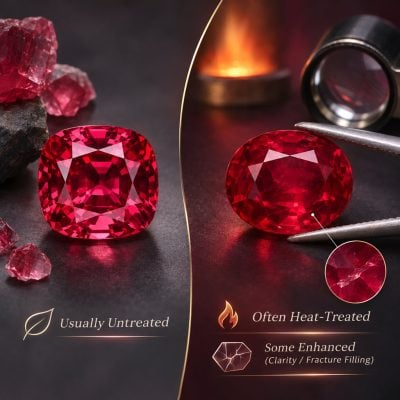
Treatment is another important consideration when comparing spinel vs ruby, influencing their appearance, value, and appeal.
- Spinel: Spinel generally does not require any treatment for its color or clarity. Many natural stones are jewelry-ready without human intervention, which makes them more appealing to some consumers who prefer gemstones in their natural form.
- Ruby: Heat treatment is common and often accepted to enhance its color and clarity. Some rubies undergo more extensive enhancements, however, including fracture filling, which can affect value and care requirements.
💡 Note: For important purchases, you should request clear treatment disclosures and an independent gemological report.
Spinel and Ruby Meaning: What Do They Symbolize?
Spinel and Ruby Meaning: What Do They Symbolize?
Beyond their physical beauty, the different meanings associated with spinel vs ruby can add another layer of personal expression to gemstone jewelry.
Birthstones and Traditional Symbolism
Birthstones and Traditional Symbolism
Interestingly, these two gemstones represent consecutive birthstone months.
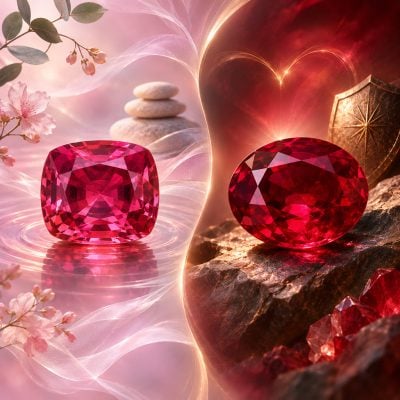
- Spinel: Added to the birthstones for August in 2016, spinel is associated with renewal, vitality, and hope. Its vibrant colors make it a lovely choice for celebrating fresh beginnings.
- Ruby: As the traditional July birthstone, ruby has long represented passion, love, courage, and prosperity. Its romantic connotations make it especially meaningful in engagement jewelry.
Spiritual and Metaphysical Properties
Spiritual and Metaphysical Properties
Many spiritual traditions attribute metaphysical properties to both gemstones, though these beliefs largely reflect cultural interpretations and personal experiences.
- Spinel: In modern crystal practices, spinel is believed to encourage emotional renewal, confidence, and inner balance.
- Ruby: Ruby is often associated with the heart, vitality, and grounding energy. In ancient cultures, it was believed to bring protection, vitality, and courage to the wearer.
Ruby vs. Spinel: Rarity, Price, and Value
Ruby vs. Spinel: Rarity, Price, and Value
When comparing spinel vs ruby price and scarcity, the two gemstones show some notable differences. Once undervalued, spinel is increasingly recognized as an affordable alternative to ruby. However, rare varieties such as cobalt blue spinel can still fetch premium prices.
By contrast, high-quality rubies, especially larger stones, command substantial prices and are rare. Fine deep red varieties from Myanmar are particularly scarce and valuable, ranking among the world’s most expensive gemstones.
What About Their Market Trends and Popularity?
What About Their Market Trends and Popularity?
Their positions in the jewelry market reveal two distinct kinds of appeal.
- Spinel: In recent years, spinel has gained increasing attention, particularly in the jewelry-collecting world. Its historical confusion with ruby adds a layer of mystique. As gemological knowledge spreads, more consumers are beginning to appreciate spinel’s unique beauty and relatively accessible price.
- Ruby: This gem remains one of the most recognized precious gemstones, supported by centuries of prestige and enduring demand. Fine untreated natural rubies retain importance in the high-end gemstone market.
Pros and Cons of Spinel vs. Ruby
Pros and Cons of Spinel vs. Ruby
Which offers the better combination of appearance, everyday wearability, and value, ruby or spinel? Let’s recap the pros and cons of each.
| Gemstone | Advantages | Considerations |
|---|---|---|
| Spinel |
|
|
| Ruby |
|
|
How to Tell Ruby from Spinel?
How to Tell Ruby from Spinel?
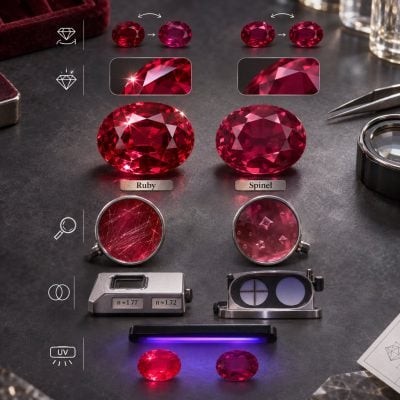
How to tell red spinel vs ruby? These five methods can help identify differences, although professional testing is recommended for reliable results.
- Look for Dichroism: Ruby can show different shades when viewed from different directions, while spinel usually displays the same color regardless of viewing angle.
- Compare Their Luster: Ruby has a stronger luster, often with a subadamantine sheen. Spinel has a glassy luster, which appears softer by comparison.
- Inspect inclusions: Under magnification, ruby may show rutile silk, while spinel may contain characteristic octahedral inclusions. Neither feature is present in every specimen.
- Test Optical Properties: You can use a refractometer or polariscope to distinguish singly refractive spinel from doubly refractive ruby.
- Try UV Light: Chromium-rich rubies fluoresce a vivid bright red, but certain red spinels may also produce a similar reaction. Treat fluorescence as a clue, not proof.
👉🏻 For additional guidance on gemstone authenticity, see how to tell if a ruby is real.
Which Should You Choose, Spinel or Ruby?
Which Should You Choose, Spinel or Ruby?
Now that we’ve compared ruby vs red spinel, it’s time to make the decision. Here are a few factors our jewelry experts suggest keeping in mind:
- Budget: If you’re searching for a more affordable option, spinel offers the beauty of red without the high price of ruby.
- Durability: Both gemstones are durable, but ruby has a higher hardness, making it ideal for engagement rings and everyday wear.
- Rarity: If you value rarity and the prestige of a historically significant gemstone, ruby may be the better choice. However, if you’re interested in a rare gemstone without the same historical weight, spinel is an excellent option.
- Aesthetics: While both gemstones are stunning, ruby’s fiery red often contains inclusions that enhance its character, whereas spinel has fewer inclusions and more even color.
💖 Conclusion: If your budget allows and you seek something classic and romantic, ruby is undoubtedly the best choice. For those who are looking for better value, spinel might be the better option.

FAQs About Spinel vs. Ruby
FAQs About Spinel vs. Ruby
Is a spinel a ruby?
No. Spinel and ruby are entirely different minerals, despite their similar red colors. Spinel belongs to the spinel mineral group, while ruby is red corundum.
Why were spinel and ruby confused historically?
Both gemstones occur in identical geological environments (such as marble deposits) and share nearly identical crystal habits and rich red coloration.
Are spinels more valuable than rubies?
Generally, fine natural rubies command higher prices than comparable spinels. However, exceptional spinels can be more valuable than lower-quality or heavily treated rubies.
Can spinel or ruby be worn every day?
Yes. Both are durable enough for everyday wear, though ruby (Mohs 9) is more scratch-resistant than spinel (Mohs 8). Still, they should both be protected from hard impacts.
Which stone of these two sparkles more?
Spinel is singly refractive, meaning light passes through it cleanly without splitting into double rays, often resulting in crisper, sharper brilliance than ruby.
Do ruby and spinel glow differently under UV light?
Both may exhibit red fluorescence under UV light, depending on their trace elements and composition. Fluorescence alone cannot reliably distinguish them.
Is spinel considered a synthetic gemstone?
No. Spinel is a completely natural mineral. While synthetic spinels have been lab-created for industrial purposes, natural gemstone-quality spinels are mined directly from the earth.
Final Thoughts
Final Thoughts
The charm of the spinel vs ruby comparison lies in how two gemstones can share such a similar appearance yet offer completely different experiences. Ruby brings centuries of heritage, romantic symbolism, and exceptional hardness. Spinel offers luminous color, impressive durability, and a quieter kind of distinction.
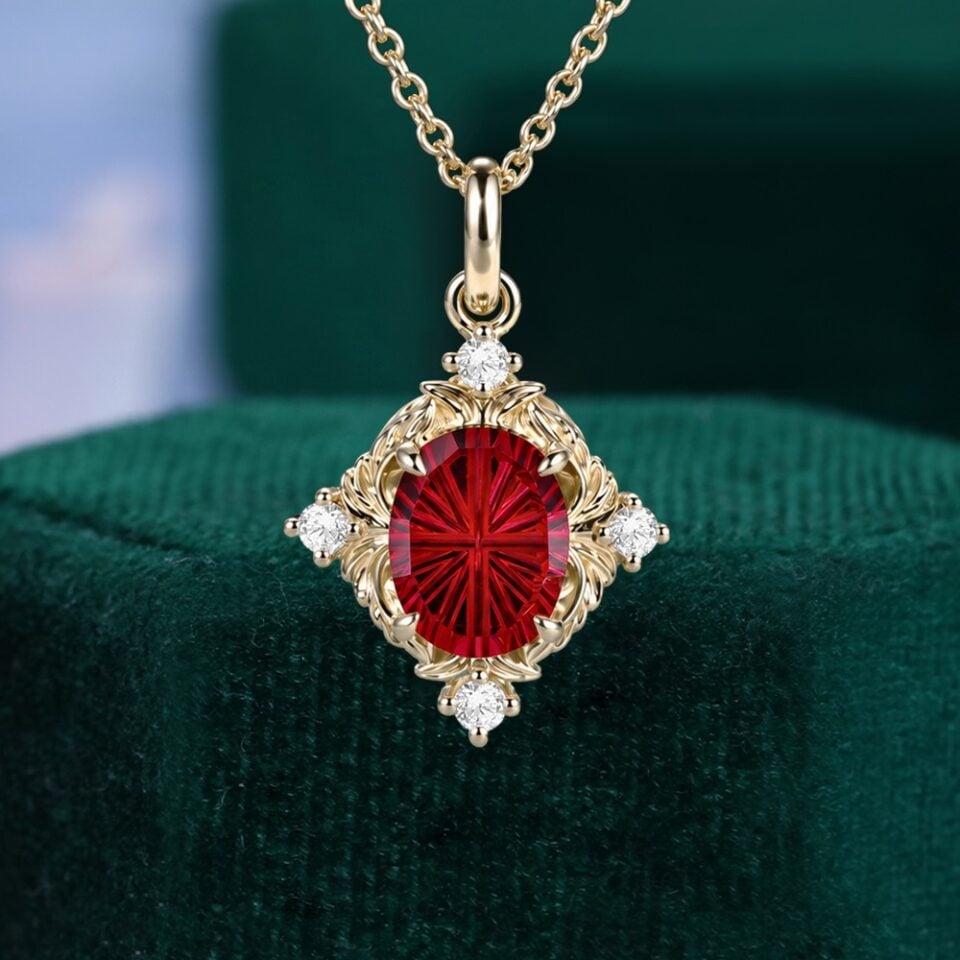
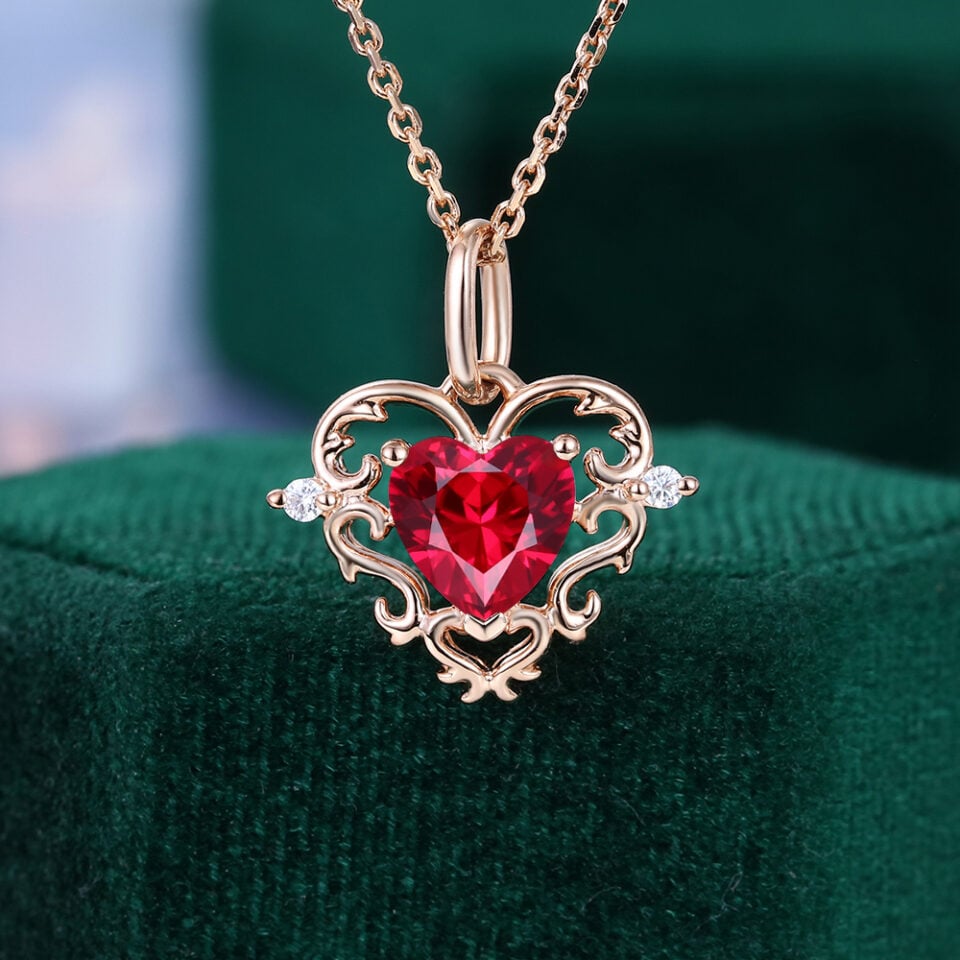
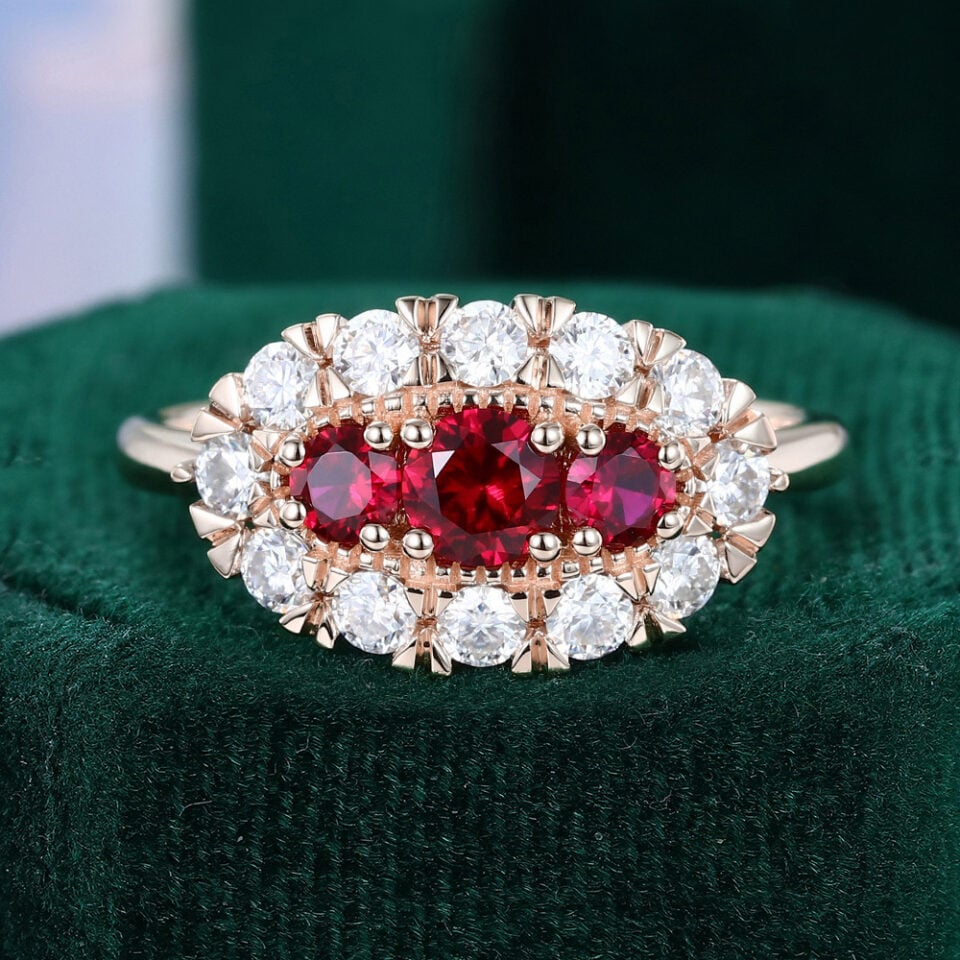
If you’re drawn to timeless character, MollyJewelryUS offers a selection of fine ruby jewelry, with designs to complement a range of personal styles.
📖 Related Reading: