Last updated on September 7 2026
Red gemstones are often associated with passion, love, and strength. Red garnet and ruby can look similar at first glance, but they are different gemstones with very different levels of hardness, price, and rarity.
Ruby is harder, more durable, and generally much more expensive, while red garnet offers rich red color at a more accessible price. The better choice depends on your budget, preferred color, and how you plan to wear the jewelry.
Red Garnet vs Ruby: Quick Comparison
| Feature | Red Garnet | Ruby |
|---|---|---|
| Color | Deep, warm red, wine red, or reddish-brown | Bright, vivid red to purplish red |
| Gemstone family | Garnet | Corundum |
| Mohs hardness | 6.5–7.5 | 9 |
| Price | Generally more affordable | Generally much more expensive |
| Everyday wear | Good with reasonable care | Excellent for frequent wear |
| Rarity | More widely available | Fine natural ruby is much rarer |
| Birthstone | January | July |
In simple terms: choose ruby for durability and vivid red color; choose red garnet for a deeper red look and a more accessible price.
Are Garnet and Ruby the Same Gemstone?
No. Garnet and ruby are completely different gemstones that only overlap in color.
Ruby is a red variety of corundum, while garnet belongs to a different group of silicate minerals. Their different structures also explain the large difference in hardness.
That distinction matters when choosing a ring. A gemstone can look similar to ruby without offering the same level of scratch resistance or price.
Red Garnet vs Ruby: Color and Appearance
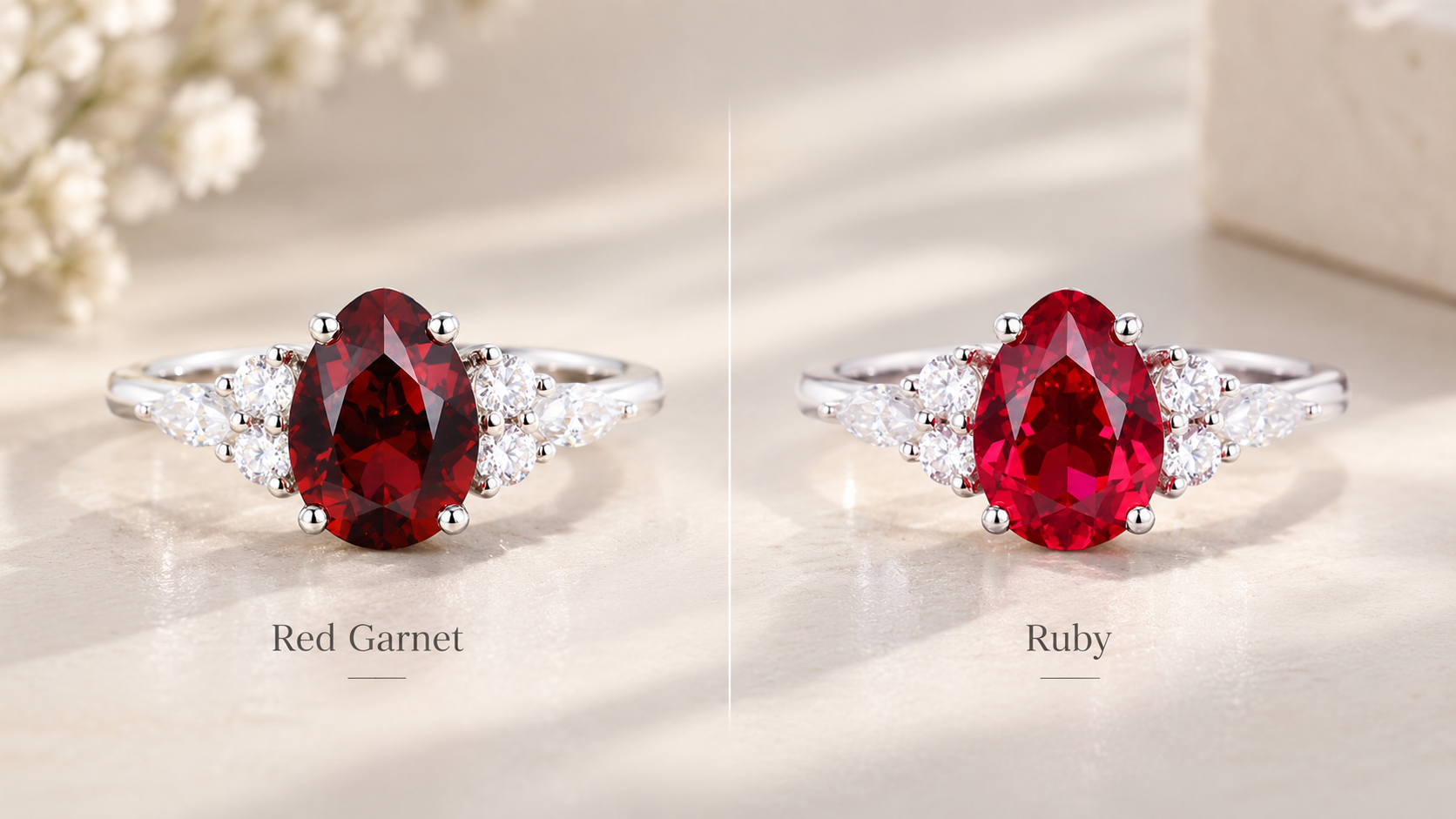
Ruby usually has a brighter, more saturated red appearance, while red garnet tends to look deeper, warmer, or more wine-like.
Ruby can range from pure red to slightly pinkish or purplish red. Fine rubies are especially valued for strong, vivid color.
Red garnet commonly shows deeper shades such as wine red, burgundy, reddish-brown, or purplish red. Different garnet varieties can also create noticeably different tones.
For jewelry, the choice is largely about the look you prefer:
- Choose ruby if you want a vivid, intense red that immediately stands out.
- Choose red garnet if you prefer a darker, warmer red with a more understated feel.
Color can also look different depending on the lighting, cut, and metal surrounding the stone, so it is better to compare the overall ring rather than judging the gemstone color alone.


Which Is Better for Everyday Wear?
Ruby is the more durable choice for everyday wear, especially for rings.
Ruby ranks 9 on the Mohs hardness scale, making it highly resistant to everyday scratching. Red garnet ranges from 6.5 to 7.5, so it can be worn regularly but benefits from more care.
For a ring that will be worn frequently:
- Ruby: A strong choice for engagement rings and everyday rings.
- Red garnet: Suitable for regular wear, but remove it during heavy work, sports, gardening, or activities where the stone could be hit.
Hardness is only part of the picture. The setting also affects how well a gemstone handles daily wear. A protective setting can help reduce exposure to impact, especially with a softer gemstone.
If you’re specifically considering ruby for an engagement ring, our ruby ring buying guide covers gemstone origin, durability, styles, and other factors to consider before choosing a design.
Ruby vs Garnet: Price and Value
Ruby is generally much more expensive than red garnet, particularly when comparing fine natural gemstones.
Natural ruby can command very high prices because fine-quality material is rare. Garnet is more widely available, making it an attractive option when rich red color matters more than gemstone rarity.
| Red Garnet | Ruby | |
|---|---|---|
| Typical value | More accessible | Higher |
| Main price factors | Color, variety, size, quality | Color, clarity, origin, size, quality |
| Best for | Rich color on a lower budget | Rarity, durability, and classic ruby appeal |
For jewelry buyers, however, natural vs. lab-created origin can make a major difference in ruby pricing. Lab-grown ruby has the same basic composition and hardness as natural ruby but is generally much more accessible.
If you’re considering a lab-grown stone, see our guide to lab grown ruby value and pricing for a closer look at how lab ruby compares with natural ruby.
At MollyJewelryUS, red garnet rings are available at a range of price points, including designs around $200–$450, while more elaborate garnet rings can cost more depending on the gemstone, metal, and setting.
Garnet vs Ruby: Meaning and Birthstones
Garnet is the January birthstone, while ruby is the July birthstone.
Garnet is traditionally associated with loyalty, commitment, and protection, while ruby is commonly linked with love, passion, strength, and courage.
This can make the birthstone connection an easy deciding factor for a gift:
- January birthday: Garnet
- July birthday: Ruby
If you’re shopping specifically for a January birthstone ring, you can also explore our garnet ring collection for different cuts, settings, and styles.
For July birthdays, our birthstone ring guide includes ruby alongside the other monthly birthstones.
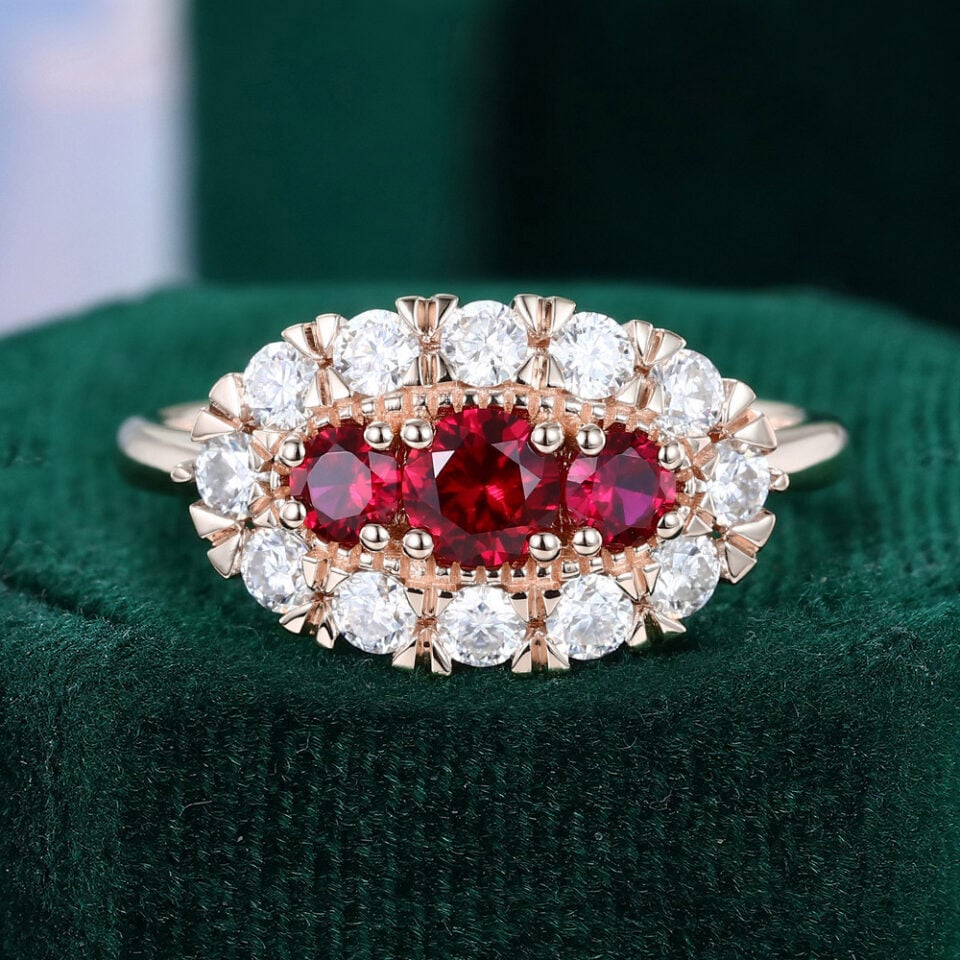
How to Tell Ruby from Red Garnet
Color can give you a clue, but appearance alone cannot reliably confirm whether a red gemstone is ruby or garnet.
A few differences can help:
Color
Ruby generally has a brighter, more saturated red appearance, while garnet often looks deeper or warmer.
Hardness
Ruby is significantly harder than garnet, but don’t use a scratch test at home. Scratching a gemstone can damage the stone or its setting.
UV Fluorescence
Many rubies show red fluorescence under UV light, while most garnets do not. However, this is not a reliable standalone identification method.
Professional Testing
If you need to confirm an unknown gemstone, professional gemological testing is the safest option. A qualified gemologist can determine whether the stone is ruby, garnet, or another red gemstone.
If you’re concerned about whether a ruby is genuine, our guide on how to tell if a ruby is real explains what to look for and why home tests have limitations.
Garnet or Ruby: Which Should You Choose?
Choose ruby if durability and vivid red color are your priorities. Choose red garnet if you prefer a deeper red and want a more budget-friendly gemstone.
| Choose Ruby If You… | Choose Red Garnet If You… |
|---|---|
| Want a vivid, intense red | Prefer deep or wine-red tones |
| Need a highly durable ring | Want a more accessible gemstone |
| Plan to wear the ring frequently | Prefer January birthstone symbolism |
| Like the rarity of natural ruby | Care more about color and style than rarity |
There is no universally better gemstone. The right choice depends on what matters most in the finished jewelry.
For example, someone looking for a daily engagement ring may prefer ruby’s higher hardness, while someone shopping for a distinctive red promise ring or fashion ring may prefer garnet’s color and price.
Conclusion: Different Reds, Equally Captivating
Ruby and Red Garnet may differ in style, but each holds its own unique allure—one burns with fiery passion, the other glows with rich warmth.
Whichever you choose, remember: the best gemstone is the one that feels right for you.
If you’re currently looking for a ruby ring or a red garnet ring, take a moment to explore our curated collection. Every gem is handpicked to capture those heart-stirring moments just for you.
Related Readings:
Frequently Asked Questions
Yes. Ruby is generally much more valuable than red garnet, especially when comparing fine natural gemstones. Ruby’s rarity, color, clarity, origin, and size can all have a major effect on its price.
Yes. Their red color can make them look similar, especially in jewelry. However, differences in color, hardness, and other gemological properties can help distinguish them.
Yes, but it needs more care than ruby. Garnet’s 6.5–7.5 Mohs hardness makes it suitable for rings, but removing it during high-impact activities can help reduce scratches or damage.
Ruby is generally the better choice for frequent everyday wear because it is harder and more resistant to scratching. Garnet can still be a meaningful alternative if color, individuality, or budget is a higher priority.
Both can look beautiful, but they create a different visual effect. Ruby tends to have a brighter, more intense appearance, while red garnet often gives a deeper, warmer look.
Yes. Lab-created ruby has the same basic composition and Mohs hardness as natural ruby but is generally much more accessible in price because it does not have the same natural rarity.