- by MollyJewelryUS
- September 19, 2026
- Buying Guides
A 1.6–1.8 mm pavé band can work well for everyday wear, especially if you prefer a delicate engagement ring. But width alone does not determine how practical or durable a pavé ring feels. Thickness, metal, center stone, setting, ring size, and lifestyle all matter.
Table of Contents
Is a 1.6 mm Pavé Band Too Thin?
Is a 1.6 mm Pavé Band Too Thin?
Not necessarily. A 1.6 mm band creates a very delicate look, while 1.8 mm gives you slightly more visual presence without making the ring feel wide.
| Band Width | Overall Look | Good For |
|---|---|---|
| 1.6 mm | Very delicate | Minimal, dainty designs |
| 1.8 mm | Slim and refined | A delicate look with slightly more presence |
| 2.0–2.5 mm | More balanced | Everyday styles with stronger visual presence |
| 2.5 mm+ | More substantial | Bold bands and larger overall designs |
These are starting points rather than strict rules. Two rings with the same width can feel very different depending on their thickness, setting, metal, and center stone.
For a quick guide: choose 1.6 mm for the most delicate look, 1.8 mm for a slim but slightly more substantial feel, or around 2.0–2.5 mm if you prefer a more balanced band.
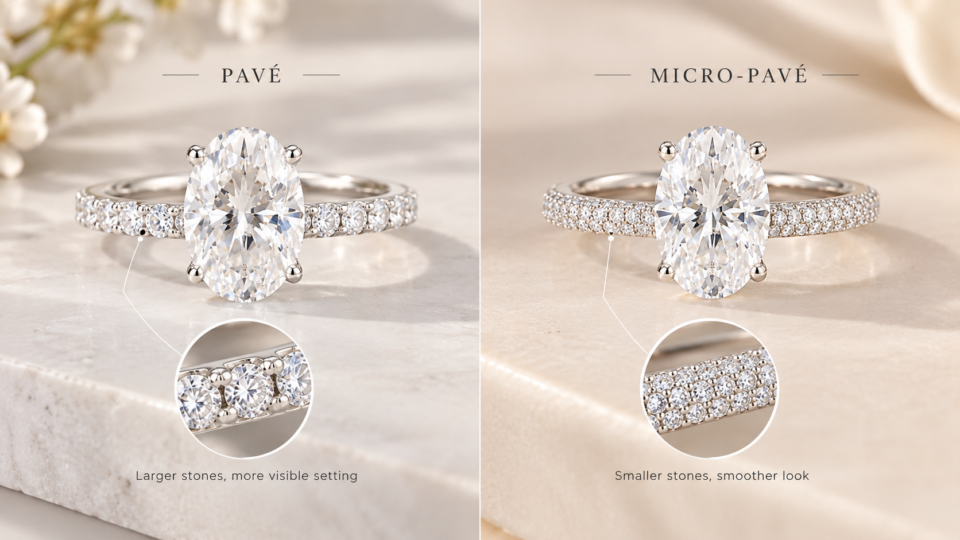
If you are specifically considering a pavé ring, it also helps to understand how the setting affects sparkle, maintenance, and everyday wear in our Pavé Engagement Ring Guide.
Width vs. Thickness: What Should You Look At?
Width vs. Thickness: What Should You Look At?
Width is how wide the band appears from above, while thickness is how deep the metal is from the side. They work together, so a narrow band is not automatically a weak band.
For example, a 1.6 mm band with enough thickness can feel very different from a very thin band with the same width. When comparing a pavé engagement ring, look at both measurements rather than judging the ring by width alone.
For a closer look at the difference, see our [Ring Band Width and Thickness Guide].
How Does the Center Stone Affect Band Width?
How Does the Center Stone Affect Band Width?
There is no fixed rule that says a certain carat weight requires a specific band width. Instead, consider the actual size and shape of the center stone, along with the setting and overall proportions of the ring.
| Center Stone | Band Width Approach |
|---|---|
| Smaller center stone | A slimmer band can keep the overall look delicate and balanced. |
| Medium-size center stone | Around 1.8–2.5 mm offers flexibility between a delicate and more substantial look. |
| Larger center stone | A slightly more substantial band can create a more balanced overall proportion. |
Carat weight is only a starting point. Different stone shapes can have different visual proportions even at the same carat weight, so look at the stone’s actual dimensions as well.
The setting matters, too. A simple solitaire creates a different balance from a halo, cluster, or three-stone ring.
For another example of how the center stone and band work together, see our Solitaire Engagement Ring Band Width Guide.
Does Ring Size Affect Band Width?
Does Ring Size Affect Band Width?
Your ring size can change how the same band width looks and feels, but there is no fixed width for each ring size.
A 1.8 mm band may look more delicate on a larger finger and more substantial on a smaller one. Band width can also affect how the ring feels when worn, with wider bands generally covering more of the finger.
Consider your ring size together with the center stone and overall ring design rather than choosing band width based on size alone.
Choose the Band Width Around Your Lifestyle
Choose the Band Width Around Your Lifestyle
Your daily routine may matter more than the number on the ruler.
- Mostly desk work: A 1.6–1.8 mm pavé band can work well if you prefer a delicate look.
- Typical daily activities: Around 1.8–2.5 mm offers a balanced starting point without necessarily looking bulky.
- Hands-on work: Consider a more substantial design and remove the ring during activities that involve pressure or impact.
- Exercise, gardening, cleaning, or similar activities: Remove the ring rather than relying on band width alone for protection.
Pavé rings use many small accent stones, so regular cleaning and occasional inspection are useful regardless of the band width.
Does Metal Change the Band Width You Should Choose?
Does Metal Change the Band Width You Should Choose?
Metal can affect how a pavé band feels and wears, but it does not create a fixed “right” width. The overall construction of the ring matters more than choosing a specific width based only on metal.
| Metal | What to Keep in Mind |
|---|---|
| 14K Gold | A practical choice for everyday jewelry and many pavé styles. |
| 18K Gold | Offers a richer gold color; consider the complete band construction when choosing a delicate design. |
| Platinum | Dense and durable, making it a common choice for long-term daily wear. |
| Sterling Silver | Softer than gold or platinum and may be better suited to lighter or occasional wear. |
If you are comparing metals as well as band width, our [Gold vs. Platinum vs. Silver Jewelry Guide] can help.
Compare Pavé Engagement Ring Styles
Compare Pavé Engagement Ring Styles
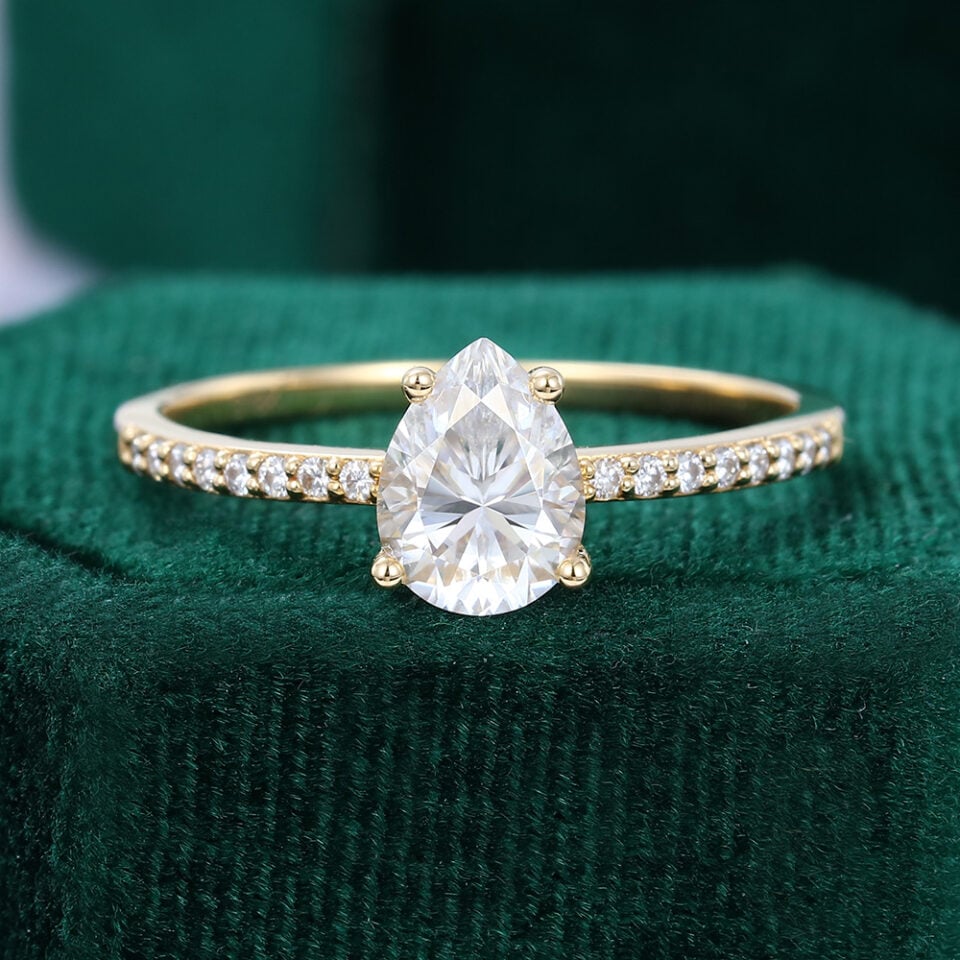
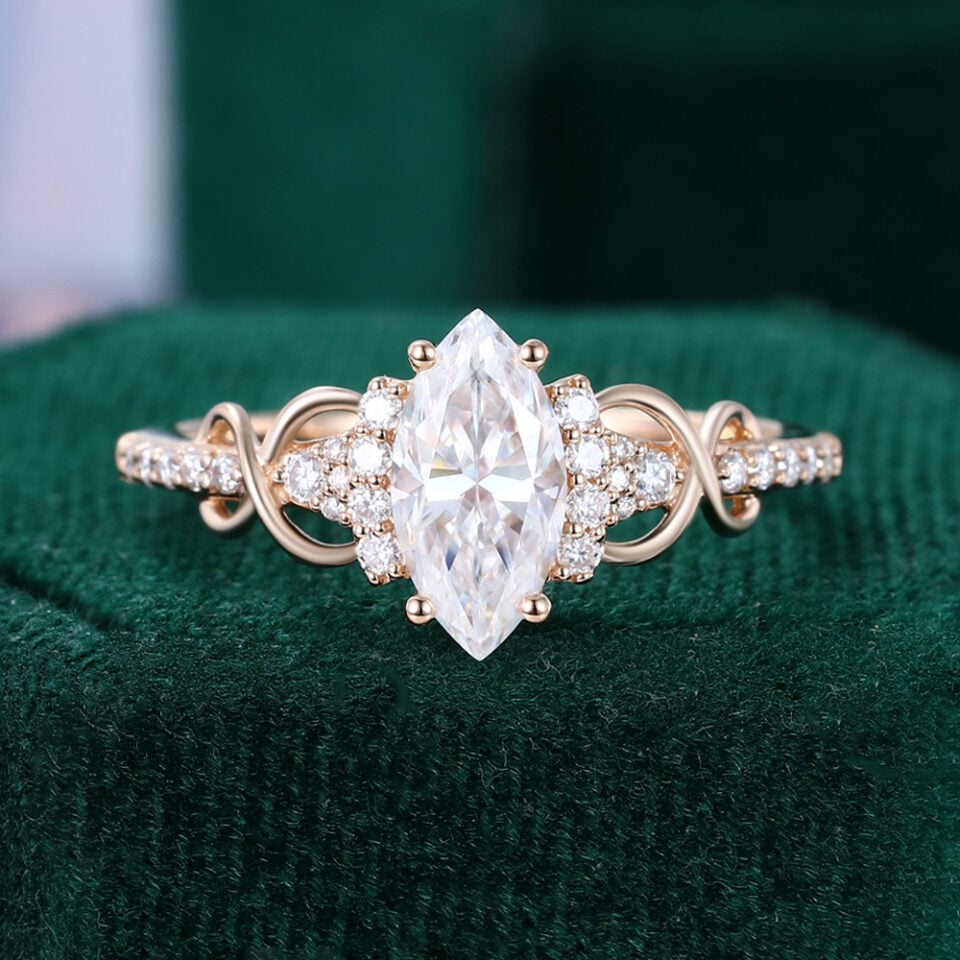
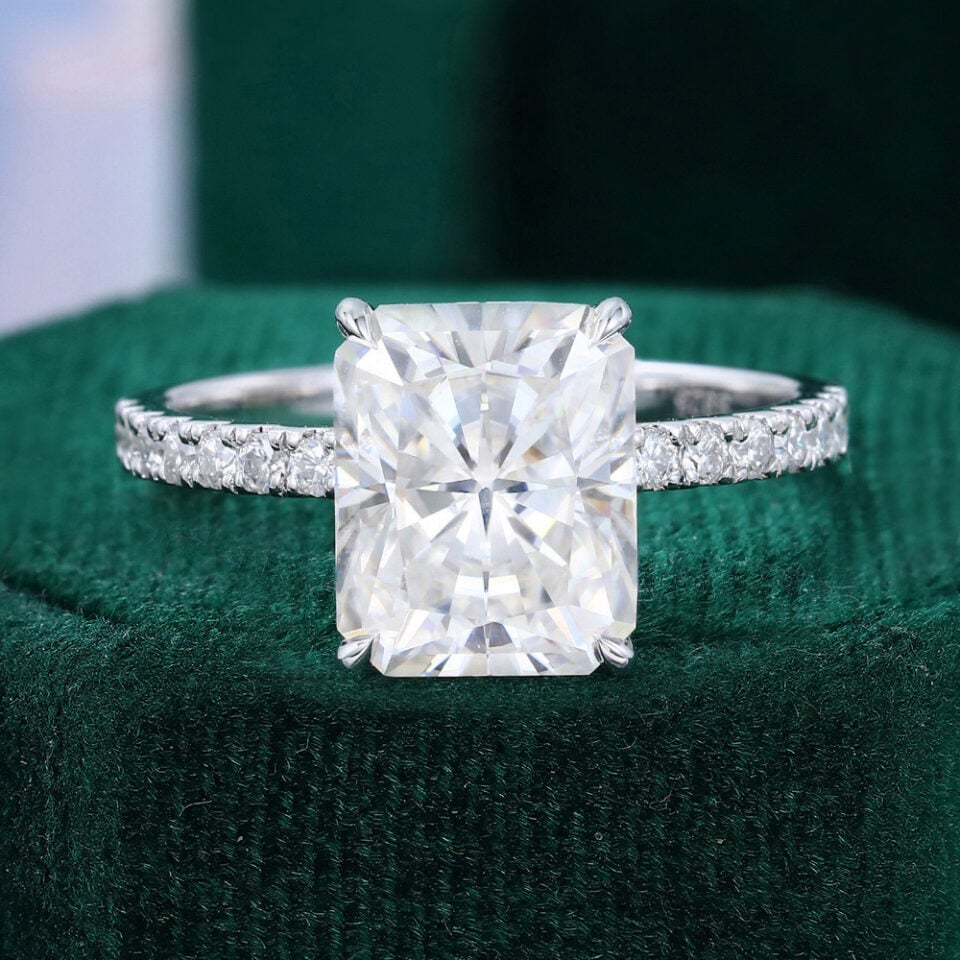
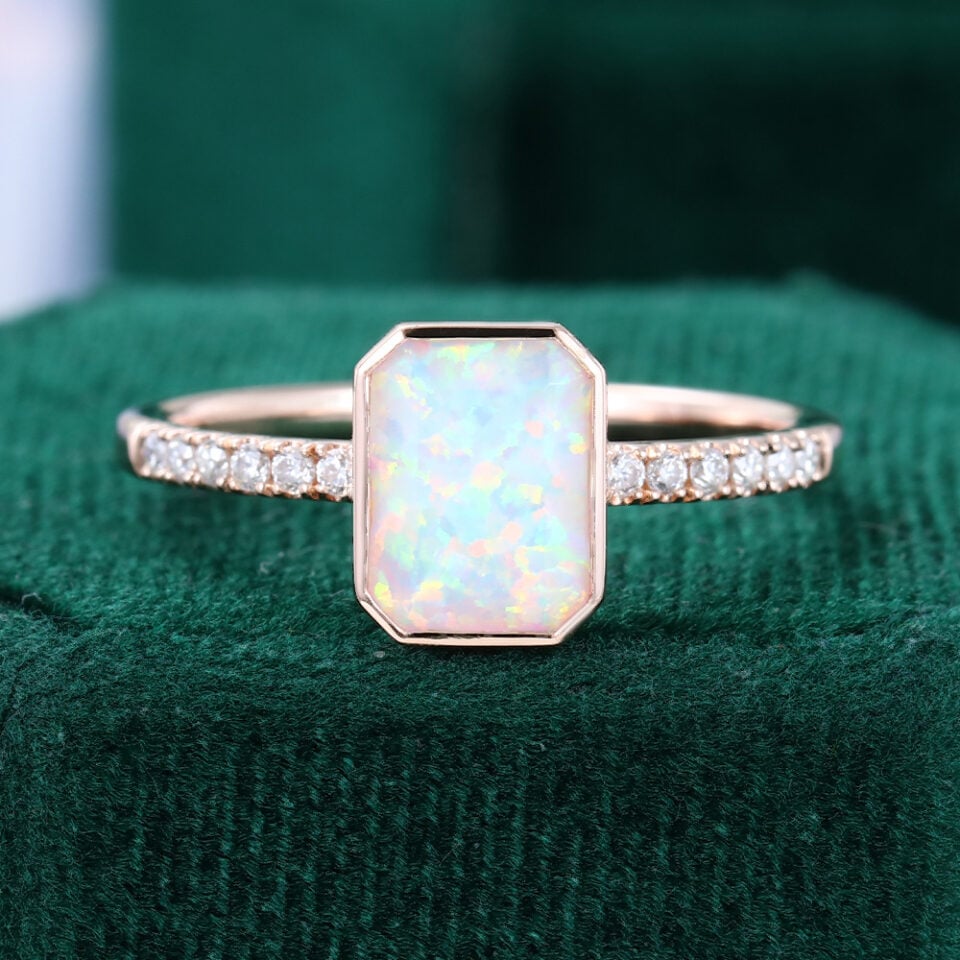
Band width is easier to judge when you see it as part of a complete ring rather than as a measurement on its own.
Explore the [Pavé Engagement Ring Collection] to compare different center stone shapes, gemstones, settings, metals, and band designs. Seeing the proportions together can make it easier to decide whether a slim or more substantial pavé band fits the look you want.



The Right Pavé Band Width Depends on the Whole Rin
The Right Pavé Band Width Depends on the Whole Rin
A 1.6–1.8 mm pavé band is not automatically too thin for everyday wear. It can work well when the band thickness, center stone, setting, metal, ring size, and lifestyle are considered together.
Instead of simply choosing the widest band, look for the combination that gives you the right balance of appearance, comfort, and everyday practicality.
FAQs
FAQs
Is 1.6 mm too thin for a pavé engagement ring?
Not necessarily. A 1.6 mm band creates a delicate look and can work for everyday wear when the overall ring design, thickness, metal, and setting are appropriate. Your daily activities should also be considered.
Is 1.8 mm a good width for everyday wear?
A 1.8 mm band can be a practical choice for someone who wants a slim, delicate engagement ring. Whether it suits everyday wear depends on the band’s thickness, construction, metal, setting, and your lifestyle.
What band width works best with a large center stone?
There is no universal width requirement based on carat weight alone. Consider the center stone’s actual dimensions, shape, setting, band thickness, and the overall proportions of the ring.
Does ring size affect engagement ring band width?
It can affect how the same band width looks and feels, but there is no fixed width for each ring size. Narrower bands may feel looser, while wider bands can feel snugger.
Is band width the same as band thickness?
No. Width is the measurement across the band when viewed from above, while thickness measures the depth of the metal from the side. Both can affect the ring’s appearance, feel, and overall structure.