- by MollyJewelryUS
- September 8, 2026
- Buying Guides
📖 Key Takeaways: What’s the Ratio for Your Emerald Cut Gem?
Finding the best ratio for emerald cut rings isn’t about following rigid rules. The right proportion should complement your hand shape while matching your personal aesthetic.
- Squarish (1.30–1.39): Broad, art-deco aesthetic offering expansive width and classic structural symmetry.
- Balanced (1.40–1.50): Offers the familiar proportions of a classic rectangle for a timeless look.
- Elongated (1.55+): Creates a slenderizing illusion that maximizes visual length per carat.
The architectural romance of the emerald cut lies partly in its careful geometry. This distinctive shape has become a favorite for engagement rings, but its appearance can change significantly with even small differences in length and width, making the emerald cut ratio an important factor to consider before choosing your ring.

Table of Contents
What is the Emerald Cut Ratio? (And How to Calculate It)
What is the Emerald Cut Ratio? (And How to Calculate It)
An emerald cut engagement ring ratio describes the proportion between a gemstone’s length and width. You can simply divide the length by the width to calculate it. For instance, an 8.4mm-long by 6.0mm-wide center stone has a ratio of approximately 1.40.
💡 Note: The same formula can be used with the measurements listed on a diamond or gemstone report, or with an emerald cut ratio calculator.
Why Ratio Matters for this Stone Shape?
Why Ratio Matters for this Stone Shape?
Because of its structured geometry, this engagement ring shape makes proportional differences particularly visible. Changing the gemstone or emerald cut diamond ratio can affect several aspects of the ring’s appearance:
- Faceting Architecture: The parallel step facets interact with the outline differently as the length-to-width ratio changes.
- Optical Perception: It influences how the gem’s carat weight is spread across its face-up dimensions and how it sits visually on the finger.
- Style Direction: Wider or more elongated ratios can create distinctly different silhouettes.
- Design Synergy: The center stone’s proportions help determine how side stone details work together.
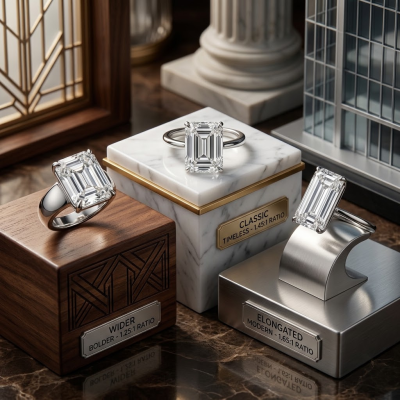
Comparing Different Emerald Cut Engagement Ring Ratios
Comparing Different Emerald Cut Engagement Ring Ratios
A clear chart can make emerald cut ratio comparison much easier, helping you visualize how different proportions look when worn. Let’s take a closer look!
| Ratio Range | Finger Coverage | Visual Impression |
|---|---|---|
| 1.30–1.39 | Fuller horizontal presence | Vintage art-deco feel |
| 1.40–1.44 | Balanced proportions | Traditional rectangle |
| 1.45–1.54 | Extends elegantly along the finger | Slenderizing profile |
| 1.55–1.65+ | A stronger visual vertical length | Long and fashion-forward |
*These ranges are useful starting points, not strict grading standards.
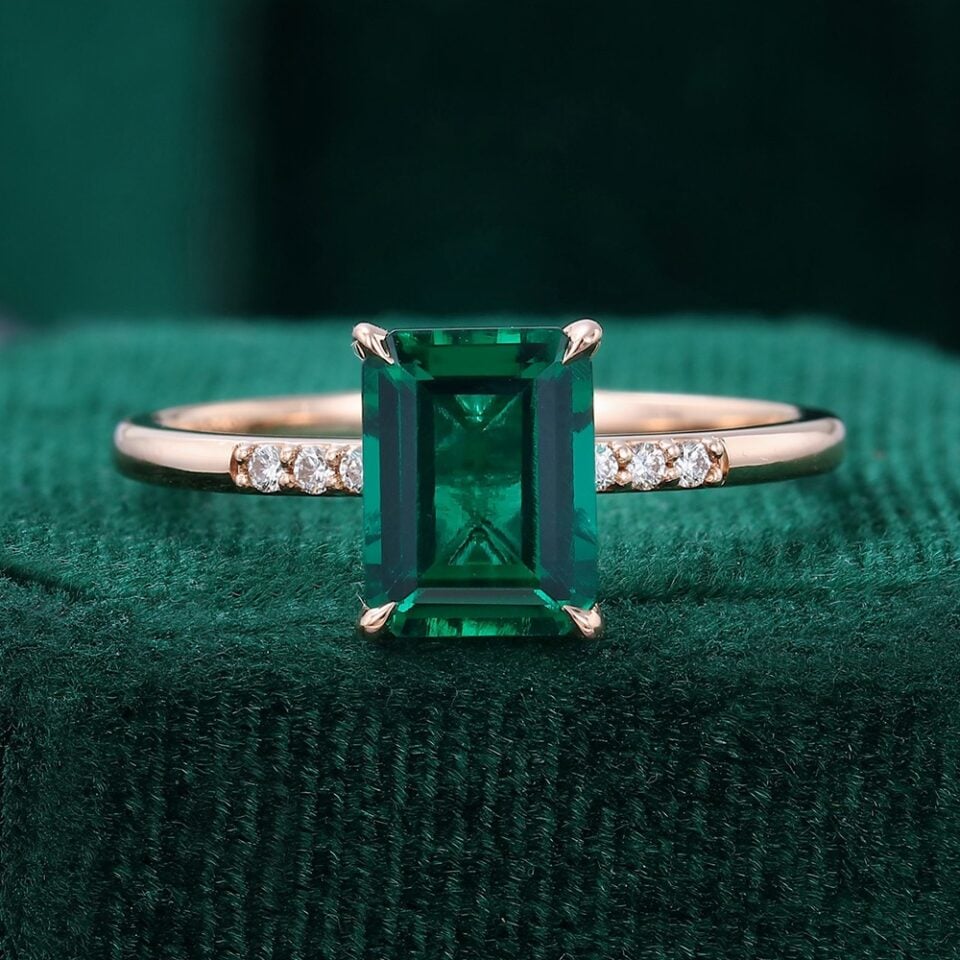

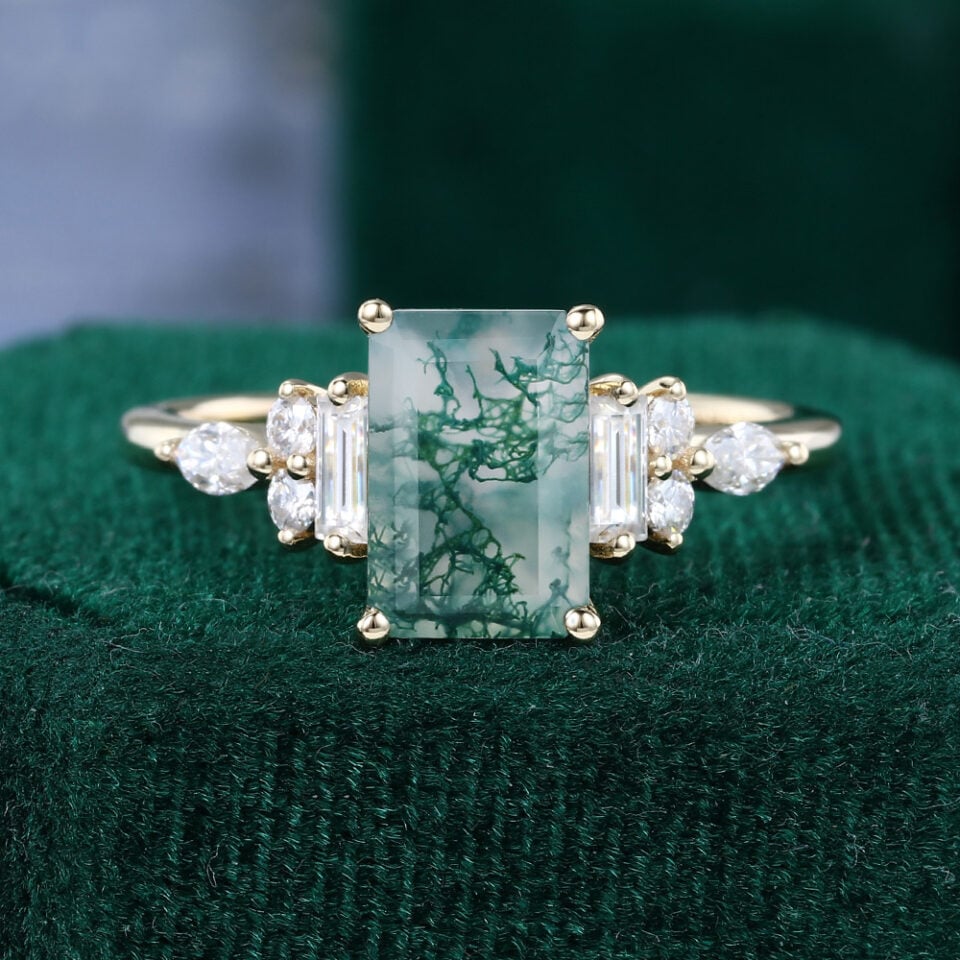
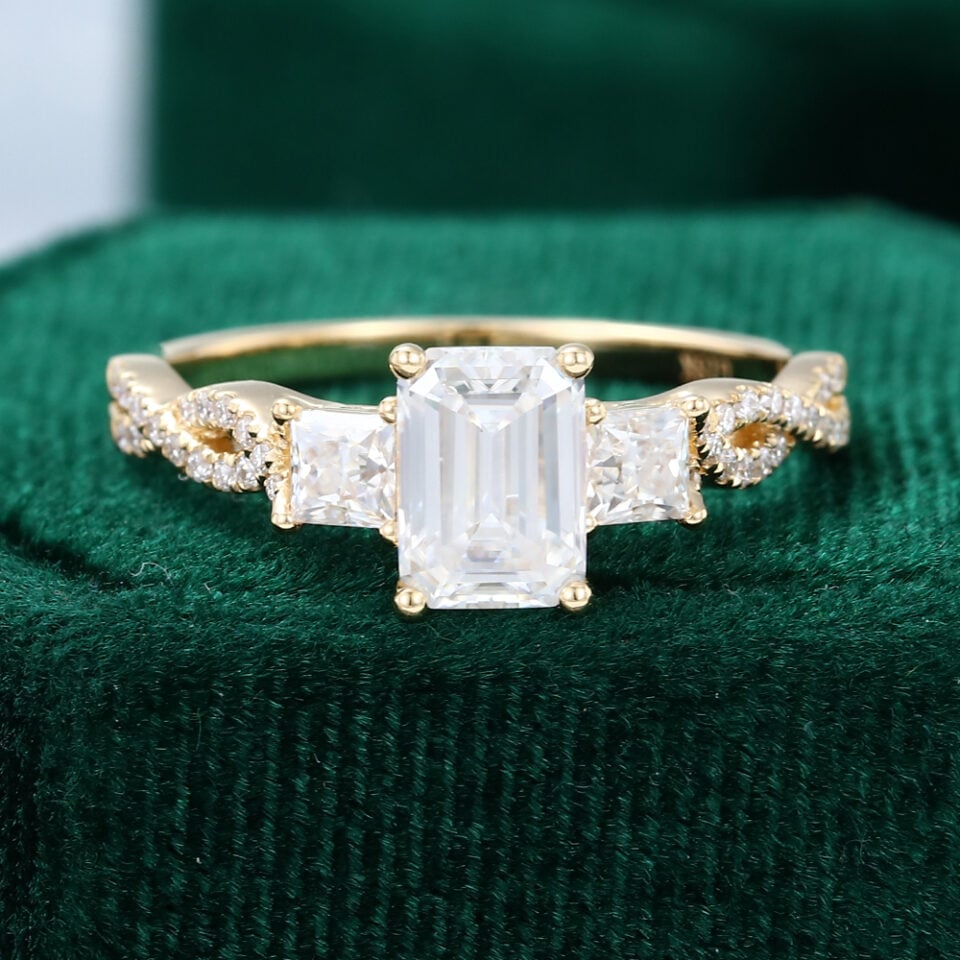

The Visual Effect of a 1.5 Ratio Emerald Cut Stone
The Visual Effect of a 1.5 Ratio Emerald Cut Stone
Spend some time browsing engagement ring discussions on Reddit, and you may notice 1.50:1 coming up often when people talk about emerald cut ring ratios. It strikes a balance between length and width, allowing the stone to retain its architectural character without looking too narrow.
The result is an elongated yet harmonious silhouette that works beautifully with a timeless engagement ring design and a refined modern aesthetic.
What Does a 1.6 Ratio Emerald Cut Look Like
What Does a 1.6 Ratio Emerald Cut Look Like
Unlike 1.50:1, a 1.60:1 emerald cut engagement ring ratio offers a more elongated and slender outline. Its proportions can create a lengthening effect on the finger while giving the gem a strong visual presence.
With a slimmer silhouette, however, the stone plays a bigger role in the overall design. Choosing a setting that complements and securely frames the center stone can help keep the finished diamond or gemstone ring balanced.
How to Choose the Ideal Emerald Cut Proportion for Your Style?
How to Choose the Ideal Emerald Cut Proportion for Your Style?
What is the best ratio for an emerald cut? There’s no one-size-fits-all answer. Instead of focusing on a single “ideal” number, start with the shape and visual effect you want.
1.30–1.35 Ratio for Broader Silhouettes
1.30–1.35 Ratio for Broader Silhouettes
- Recommended For: Admirers of vintage art-deco architecture who prefer a wider center profile.
Stones in this range bring out a shorter, wider appearance with the charm of the old era, especially when matched with a suitable emerald cut carat size.
When paired with minimalist designs, the gemstone naturally takes center stage, creating broader finger coverage and highlighting the distinctive structure of step-cut facets.

1.40 Ratio for Classic Aesthetics
1.40 Ratio for Classic Aesthetics
- Recommended For: Traditionalists who favor understated elegance and versatile styling.
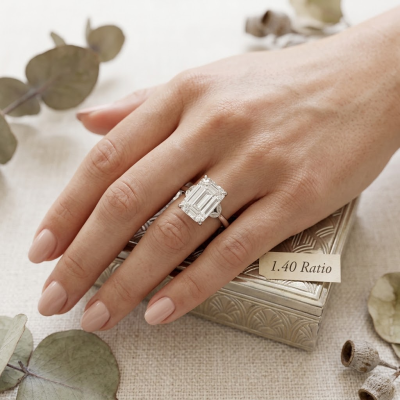
The 1.40:1 ratio, as mentioned in our emerald cut engagement ring guide, is a popular choice for those who want an elongated but well-balanced silhouette. It adds enough length without creating an extreme outline.
This versatility also makes it easy to pair with a wide range of bridal jewelry designs, from solitaire and minimalist three-stone settings to nature-inspired styles.
1.45–1.50 Ratio for Modern Rectangular Rings
1.45–1.50 Ratio for Modern Rectangular Rings
- Recommended For: Wearers wanting a subtle slenderizing effect with clean lines.
These ideal emerald cut ratios appeal to modern brides who favor a longer, slimmer silhouette. Compared with 1.40:1, the increased length delivers a more pronounced visual extension along the finger while maintaining substantial face-up presence.
The elongated profile also works well on shorter or fuller fingers, emphasizing the stone’s geometry and refined character.
1.55+ Ratio for a Dramatic Elongated Look
1.55+ Ratio for a Dramatic Elongated Look
- Recommended For: Anyone aiming for maximum finger coverage and bold visual impact.
Once the emerald cut engagement ring ratio exceeds 1.55:1, the center stone takes on a distinctly elongated and narrow silhouette, creating a sleek, contemporary, and avant-garde look.
This increased length can create a stronger visual presence from the top. However, its distinctive proportions may make wedding band pairing a little more challenging.

How Ratio for Emerald Cut Affects Side-Stone Combinations
How Ratio for Emerald Cut Affects Side-Stone Combinations
The length-to-width ratio affects more than the look and finger coverage of an emerald-shaped gemstone. It can also change how the center stone pairs with side stones, particularly in three-stone designs.
- Broader 1.30–1.35 Ratios: Wider side stones can help balance the broader center and keep the design from feeling center-heavy.
- Timeless 1.40–1.50 Ratios: Rectangular or tapered rectangular side stones echo the center gem’s clean, geometric structure.
- Longer 1.55+ Ratios: Slim, tapered side stones extend the center stone’s length without adding too much visual width.
💡 Note: Ratio is also worth considering when choosing an emerald cut setting. The setting should match the center stone’s outline while providing enough support and clearance for the overall design.
Expert Advice: Common Ratio Mistakes to Avoid When Buying
Expert Advice: Common Ratio Mistakes to Avoid When Buying
When evaluating the best ratio for an emerald cut diamond or gemstone, you should take into account its length, width, and the design you have in mind. This can help you avoid the following common engagement ring buying mistakes.
| Mistake | Why It Matters |
|---|---|
| Choosing a ratio by number alone | Two stones with the same ratio can have very different dimensions. |
| Ignoring actual millimeter measurements | Ratio describes shape, not the exact face-up size. |
| Assuming higher means better | A longer stone is not automatically more flattering or luxurious. |
| Treating one range as universally ideal | Emerald cut proportions are ultimately a matter of personal style. |
| Comparing ratio without the setting | Side stones and metal proportions can change the overall impression. |
👉🏻 Here’s one final tip from our jewelry experts:
If you’re comparing several emerald-shaped stones online, place them side by side whenever possible and check how they look in an actual ring. This gives you a better sense of their true proportions than relying on the ratio alone.
Frequently Asked Questions
Frequently Asked Questions
What is the best ratio for an emerald cut stone?
For a harmonious look, around 1.40–1.50 remains a useful starting range. A lower ratio creates a broader silhouette, while a higher ratio produces a more elongated appearance.
Does a higher emerald cut ratio make the stone look bigger?
Not necessarily. A higher ratio brings out a longer outline, but actual face-up size still depends on the stone’s length, width, and overall dimensions.
Is a 1.5 ratio good for an emerald-shaped engagement ring?
Of course. A 1.5 ratio offers a refined rectangular silhouette with noticeable elongation while retaining the iconic emerald cut character.
What is the ideal ratio for emerald cut diamond vs. moissanite?
The same proportion principles apply to both. Choose the ratio based on the shape you prefer, then compare each stone’s actual dimensions, cut quality, and optical performance.
Can I pair a straight wedding band with an elongated emerald cut?
Yes, if the engagement ring setting provides enough clearance for the band to sit flush beneath the center gem.
Get Your Dream Emerald Cut Ring at MollyJewelryUS
Get Your Dream Emerald Cut Ring at MollyJewelryUS
The emerald cut engagement ring ratio goes beyond a simple measurement. It helps define the center stone’s look, and knowing how different proportions affect its appearance can make it easier to compare and choose the right one.
Whether you prefer an existing design or need something more specific, MollyJewelryUS offers a variety of rings with customization options available for select designs. From the ratio for an emerald-shaped diamond or gemstone to the finer design details, you can shape the piece around your preferences.