- by MollyJewelryUS
- July 9, 2026
- Gemstone Education
If you’re wondering whether an amethyst is real, you’re asking the same question thousands of jewelry buyers search every month.
The good news is that most genuine amethysts can be recognized by looking at several key characteristics—not by performing complicated gem tests. Color, internal features, craftsmanship, and seller transparency often reveal far more than popular “scratch tests” or online myths.
Another important point is that “real” doesn’t always mean natural. A laboratory-created amethyst is also a genuine quartz gemstone, while imitation materials such as colored glass or plastic are not.
This guide explains the practical checks you can make at home, the mistakes many buyers make when identifying amethyst, and how to shop with confidence whether you’re choosing a natural or lab-created amethyst ring.
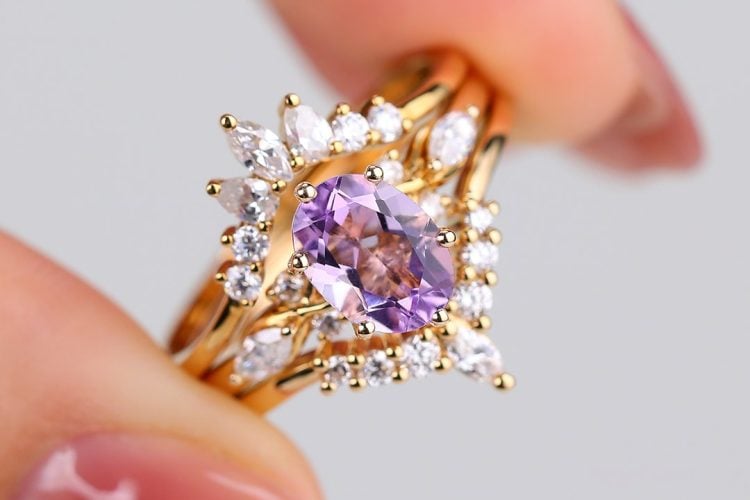
Table of Contents
What Does "Real Amethyst" Actually Mean?
What Does "Real Amethyst" Actually Mean?
A real amethyst is a genuine quartz gemstone. It can be either naturally formed inside the Earth or grown in a laboratory using the same chemical composition and crystal structure.
The term “fake amethyst” refers to materials that imitate the appearance of amethyst without actually being quartz.
This distinction is important because many buyers mistakenly believe that laboratory-created gemstones are fake—which isn’t true.
| Type | Is It Real? |
|---|---|
| Natural Amethyst | ✅ Yes |
| Lab-Created Amethyst | ✅ Yes |
| Glass or Plastic Imitation | ❌ No |
Expert Tip: If a seller clearly states that the gemstone is “lab-created amethyst,” they’re still describing a genuine amethyst—not an imitation stone.
If you’d like a more detailed comparison, read our guide on Lab Created Amethyst vs Natural Amethyst.
Why This Confuses So Many Buyers
Why This Confuses So Many Buyers
One reason the topic feels confusing is that the jewelry market uses several different terms that sound similar but mean very different things.
For example:
- Natural amethyst formed underground over millions of years.
- Lab-created amethyst is grown under controlled conditions but has the same mineral composition as natural quartz.
- Imitation amethyst is usually glass, resin, or another inexpensive material colored to resemble amethyst.
When people search “How can I tell if my amethyst is real?”, they’re usually trying to answer one of two questions:
- Is this genuine quartz or just an imitation?
- Is this natural or laboratory-created?
Those are different questions, and they require different answers.
Before You Start Looking for "Fake" Signs...
Before You Start Looking for "Fake" Signs...
Many online guides immediately suggest checking for bubbles, hardness, or scratches.
While those methods can sometimes help, they rarely tell the whole story.
Instead, experienced jewelers evaluate an amethyst by looking at multiple characteristics together, including:
- Overall color
- Internal appearance
- Surface brilliance
- Craftsmanship
- Seller transparency
Looking at only one feature can easily lead to the wrong conclusion.
Buying Tip: The easiest way to avoid fake gemstones isn’t becoming a gemologist—it’s buying from a jeweler who clearly discloses the gemstone type, metal, and product details.
How to Check Whether an Amethyst Is Real
How to Check Whether an Amethyst Is Real
The best way to identify a genuine amethyst isn’t by relying on a single “magic test.” Instead, look at several characteristics together.
Here are the eight signs that jewelers commonly consider when evaluating an amethyst.
1. Start with the Color
1. Start with the Color
Color is usually the first clue—but it shouldn’t be the only one.
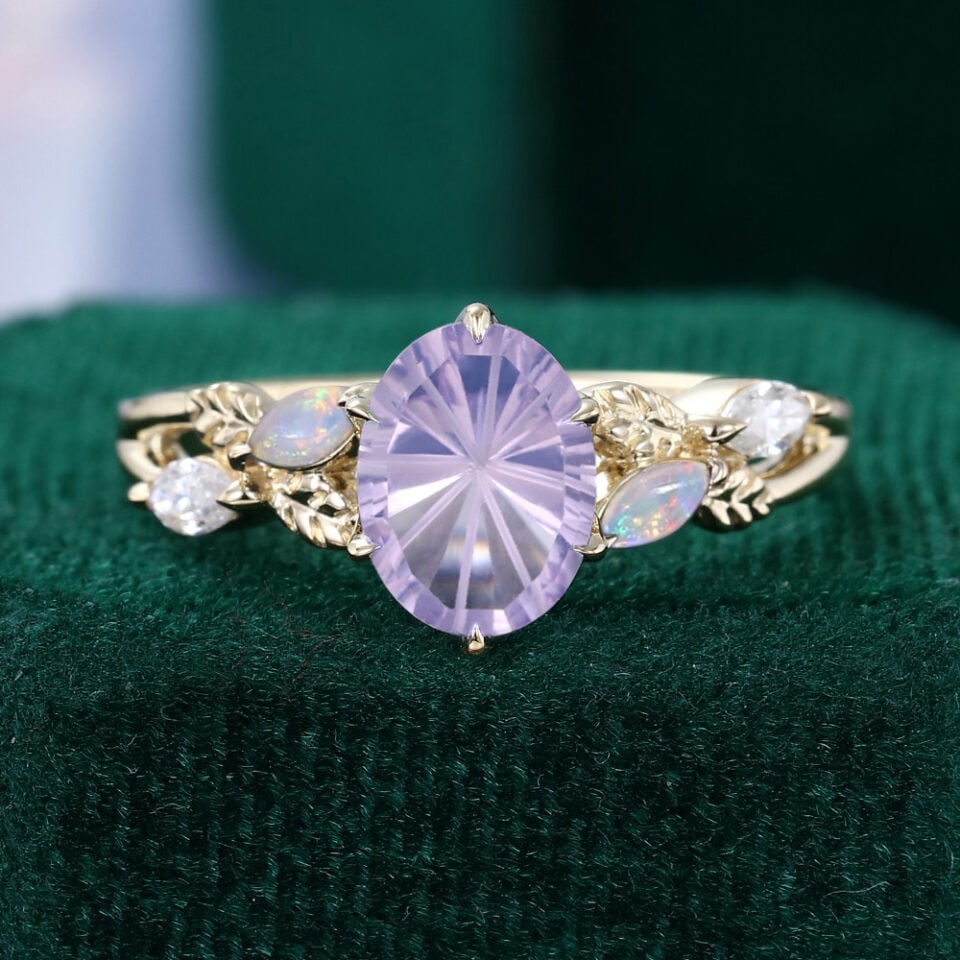
A genuine amethyst typically displays a rich purple hue with natural depth. Some stones show subtle shifts between lighter and darker purple, while others—especially lab-created amethysts—may appear more evenly colored.
Extremely bright, flat-looking purple or an unnatural neon tone deserves a closer inspection, particularly if it’s combined with unusually low pricing.
Quick Tip: Natural variation is common in genuine amethyst. Perfectly uniform color doesn’t automatically mean a stone is fake, but it should be evaluated alongside other characteristics.
2. Take a Closer Look Inside the Stone
2. Take a Closer Look Inside the Stone
The inside of an amethyst often reveals more than its surface.
Natural gemstones may contain tiny crystal inclusions or faint growth patterns formed over millions of years. Laboratory-created stones are usually cleaner, while glass imitations sometimes contain perfectly round air bubbles.
Fortunately, you don’t need professional equipment to notice obvious differences. Even under good lighting, unusual bubbles or a completely “plastic-like” appearance can be warning signs.
| What You Notice | Usually Indicates |
|---|---|
| Natural-looking inclusions | Natural amethyst |
| Very clean appearance | Often lab-created |
| Round bubbles | Possible glass imitation |
3. Examine the Ring, Not Just the Gemstone
3. Examine the Ring, Not Just the Gemstone
Many buyers focus entirely on the center stone and overlook the rest of the jewelry.
In reality, the overall craftsmanship often tells an equally important story.
A genuine amethyst is more commonly paired with quality metals such as 14K gold, 18K gold, or sterling silver, and reputable jewelers usually provide detailed information about the gemstone, metal, and ring specifications.
When both the craftsmanship and product information appear vague, it’s worth asking additional questions before purchasing.
Buying Tip: Trustworthy product information is often a stronger indicator than any single visual test.
4. Ask Whether the Price Makes Sense
4. Ask Whether the Price Makes Sense
Price alone can’t tell you whether an amethyst is genuine—but it can reveal when something deserves a second look.
Because amethyst is relatively abundant, genuine stones are often surprisingly affordable. That said, an unusually low price paired with unrealistic marketing claims should raise caution.
Instead of asking whether a ring is “cheap,” consider whether the price matches its materials, craftsmanship, and overall quality.
For a detailed breakdown, see our guide to How Much Does an Amethyst Ring Cost?
5.Why Looking at Just One Sign Can Be Misleading
5.Why Looking at Just One Sign Can Be Misleading
One of the biggest misconceptions is that a single feature can instantly confirm whether an amethyst is genuine.
In reality, every characteristic has exceptions.
A laboratory-created amethyst may have excellent color and very few inclusions. A natural amethyst might display visible color zoning, or it might appear surprisingly clean. Even price varies depending on the ring’s design, metal, and craftsmanship.
That’s why experienced jewelers never judge authenticity based on one observation alone.
Instead, they evaluate the gemstone as a whole—considering its appearance, construction, documentation, and the reputation of the seller before reaching a conclusion.
Expert Tip: The more positive indicators you see together, the more confidently you can judge whether an amethyst is genuine.
Buying from a Trusted Jeweler Is Still the Best Protection
Buying from a Trusted Jeweler Is Still the Best Protection
Even after learning how to examine an amethyst yourself, choosing a reputable jeweler remains the easiest way to buy with confidence.
Before placing an order, look for sellers who clearly disclose:
- Whether the gemstone is natural or lab-created
- Metal type and purity
- Multiple product photos
- Detailed product specifications
- Return policy or warranty information
Clear and transparent information reduces uncertainty far more effectively than relying on a single at-home test.
If you’re still comparing options, our How to Choose an Amethyst Ring guide walks through everything buyers should consider before making a purchase.
If You're Still Unsure, Here's What to Do
If You're Still Unsure, Here's What to Do
Even after checking the color, internal characteristics, craftsmanship, and pricing, there are times when it’s impossible to determine authenticity with complete confidence—especially from online photos.
Instead of relying on guesswork, use these practical steps before making a purchase.
✔ Ask About the Stone's Origin
✔ Ask About the Stone's Origin
A reputable jeweler should clearly disclose whether the gemstone is:
- Natural amethyst
- Lab-created amethyst
- An imitation material (if applicable)
Clear product information is often a better indicator of authenticity than trying to identify a gemstone from appearance alone.
✔ Review the Product Details
✔ Review the Product Details
Before buying, take a few minutes to read the specifications rather than looking only at the images.
Check whether the listing includes:
- Gemstone type
- Metal type (14K gold, 18K gold, sterling silver, etc.)
- Stone dimensions or carat weight
- Care instructions
- Return policy
Transparent product information shows that a seller is confident about what they’re offering.
✔ Buy from Jewelers That Explain Their Gemstones
✔ Buy from Jewelers That Explain Their Gemstones
A trustworthy jeweler doesn’t simply say “amethyst.”
They explain:
- Whether it’s natural or lab-created
- The materials used in the ring
- How the gemstone is sourced
- What buyers can realistically expect
That level of transparency helps reduce uncertainty before you place an order.
Buying Tip: When a seller clearly explains their gemstones, there’s far less need to rely on at-home authenticity tests.
Natural vs Lab-Created: Which One Should You Choose?
Natural vs Lab-Created: Which One Should You Choose?
One of the biggest misconceptions is that lab-created amethyst is fake.
In reality, both natural and lab-created amethyst are genuine quartz gemstones. The main difference is how they’re formed, not what they’re made of.
| If You Prefer… | Consider… |
|---|---|
| Naturally formed gemstones | Natural amethyst |
| Excellent clarity and consistent color | Lab-created amethyst |
| Better value for the price | Lab-created amethyst |
| Geological rarity | Natural amethyst |
Neither option is objectively “better.” The right choice depends on your budget, preferences, and what matters most to you.
Learn More: Our guide to Lab Created Amethyst vs Natural Amethyst explores the differences in greater detail.

Final Thoughts
Final Thoughts
Learning how to tell if an amethyst is real starts with understanding that “real” doesn’t always mean natural. Both natural and lab-created amethysts are genuine quartz gemstones, while imitation materials such as glass are not.
Rather than relying on a single test, evaluate the gemstone as a whole. Its color, internal appearance, craftsmanship, product information, and the credibility of the seller all provide valuable clues when considered together.
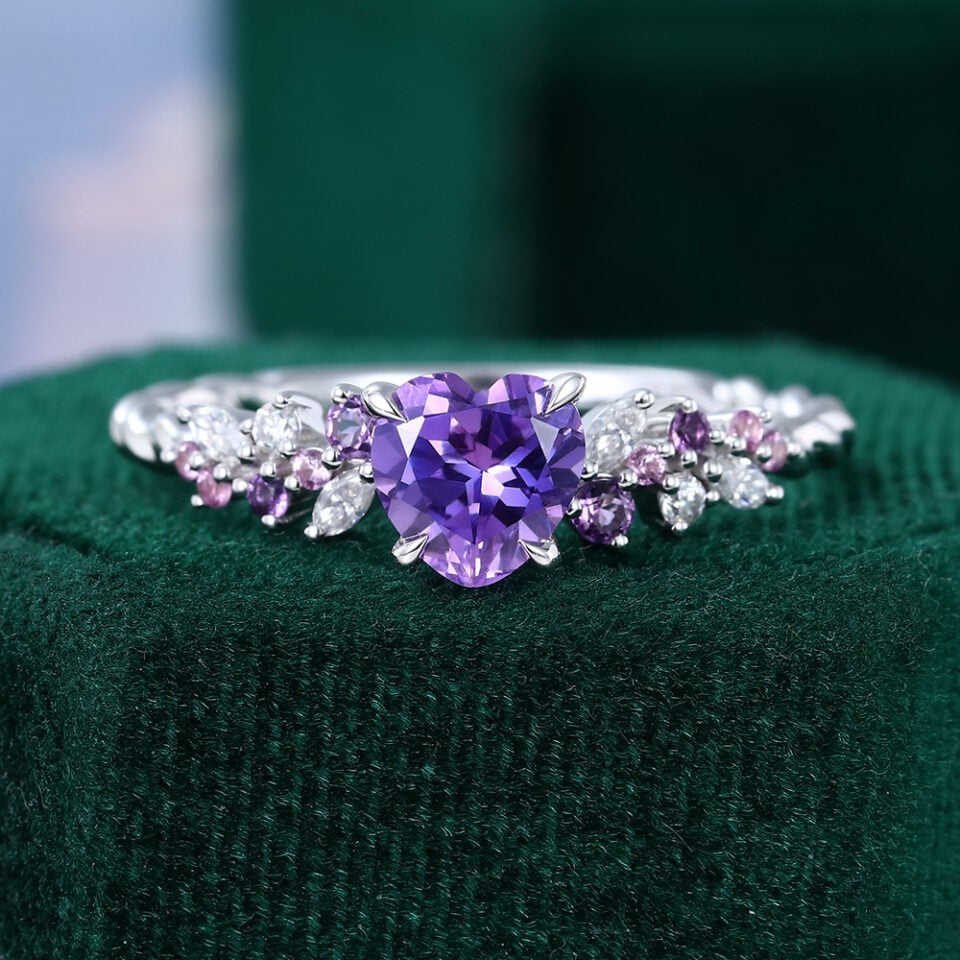
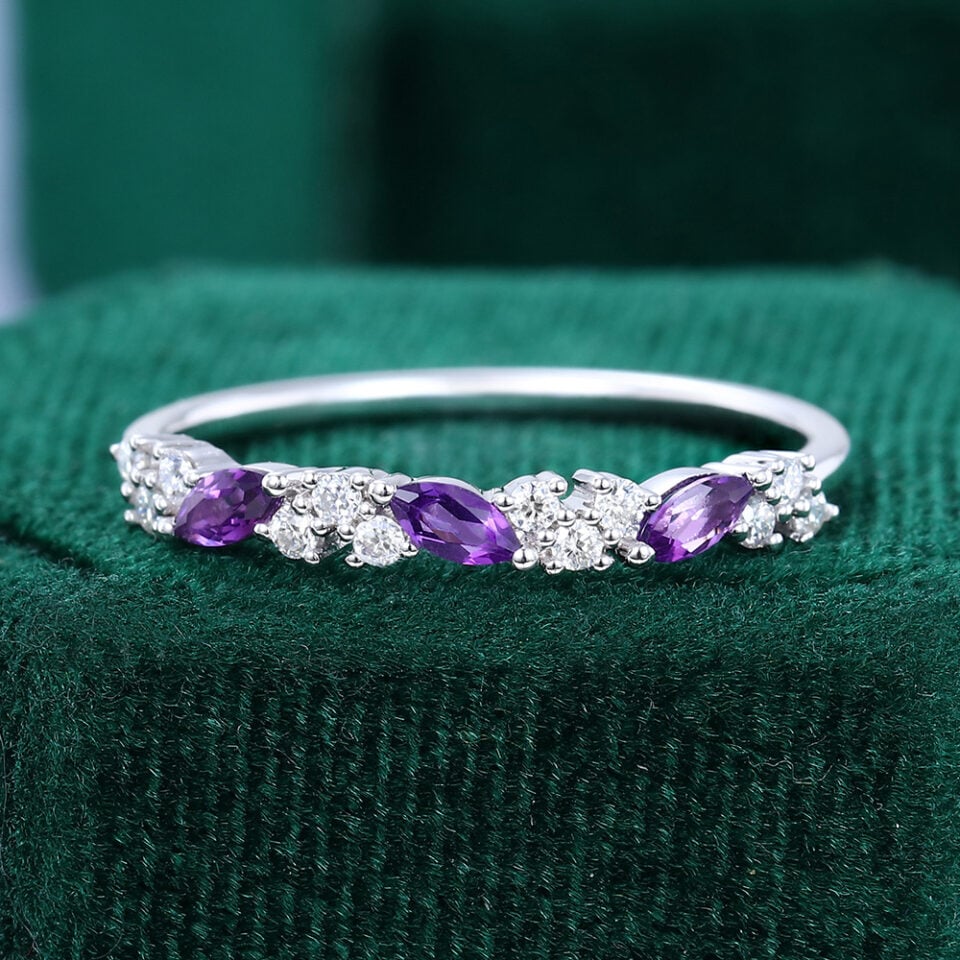
If you’re shopping for an amethyst ring, the easiest way to buy with confidence is to choose a jeweler that clearly discloses its gemstone materials and craftsmanship. That transparency matters far more than any single at-home authenticity test.
FAQs
FAQs
Can you tell if an amethyst is real without professional equipment?
Sometimes.
Characteristics such as color, internal features, craftsmanship, and product transparency can provide useful clues. However, confirming authenticity with absolute certainty may require professional gemological testing.
Does lab-created amethyst count as real?
Yes.
Lab-created amethyst has the same chemical composition and crystal structure as natural amethyst. The difference lies in where the crystal was formed, not whether it’s a genuine gemstone.
Can fake amethyst scratch glass?
Sometimes.
Some imitation materials can scratch glass, while some genuine gemstones may not, depending on the circumstances. For that reason, scratch tests aren’t considered a reliable way to identify amethyst.
Why does my amethyst look lighter than others?
Color naturally varies between gemstones.
The shade depends on factors such as crystal growth, cut, lighting conditions, and whether the stone is natural or lab-created. A lighter color doesn’t necessarily mean the gemstone is fake.
Is it worth paying more for natural amethyst?
That depends on your priorities.
If geological origin is important, natural amethyst may be worth the premium. If your focus is appearance, durability, and value, a high-quality lab-created amethyst can be an excellent choice.