- by MollyJewelryUS
- July 13, 2026
- Gemstone Education
At first glance, green amethyst and purple amethyst seem to be the same gemstone in different colors. While they both belong to the quartz family, they create surprisingly different looks once they’re set into a ring.
Purple amethyst has been admired for centuries for its rich violet color and timeless appeal, making it one of the most recognizable colored gemstones. Green amethyst—better known in gemology as prasiolite—offers a softer, lighter appearance that has become increasingly popular in modern jewelry.
Neither gemstone is objectively better. The real difference lies in how each color changes the overall personality of a ring, the styles they complement, and the impression they create when worn.
This guide compares green amethyst and purple amethyst from a jewelry buyer’s perspective, helping you understand which color best suits your style, budget, and everyday wear.
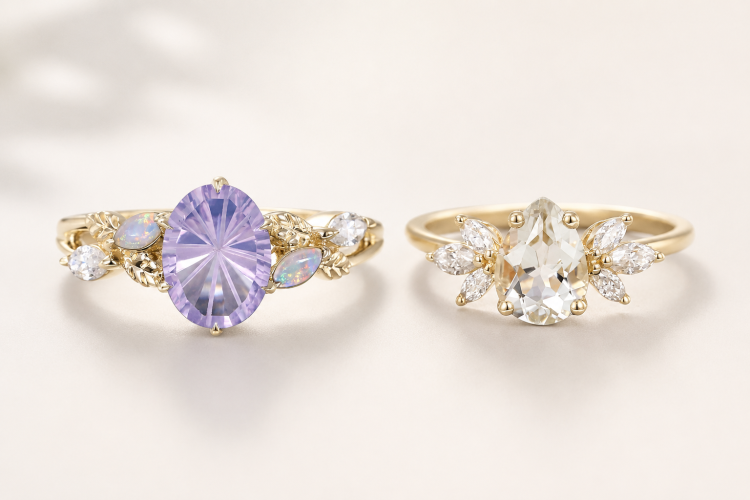
Table of Contents
Green Amethyst vs Purple Amethyst at a Glance
Green Amethyst vs Purple Amethyst at a Glance
Before comparing details, here’s a quick overview of what separates these two gemstones.
| Feature | Green Amethyst | Purple Amethyst |
|---|---|---|
| Color | Soft green | Lavender to deep purple |
| Quartz Family | ✓ | ✓ |
| Mohs Hardness | 7 | 7 |
| Overall Style | Fresh & modern | Classic & timeless |
| Best For | Contemporary designs | Traditional & vintage designs |
Quick Answer:
If you’re choosing between the two for everyday jewelry:
- Choose purple amethyst for a timeless, eye-catching look.
- Choose green amethyst for a softer, more understated style.
The difference isn’t durability or quality—it’s the impression your ring creates.
Why Do They Look So Different?
Why Do They Look So Different?
Although they share the same quartz structure, green and purple amethyst develop their colors in different ways.
Purple amethyst gets its signature violet hue through trace amounts of iron and natural geological processes during crystal formation.
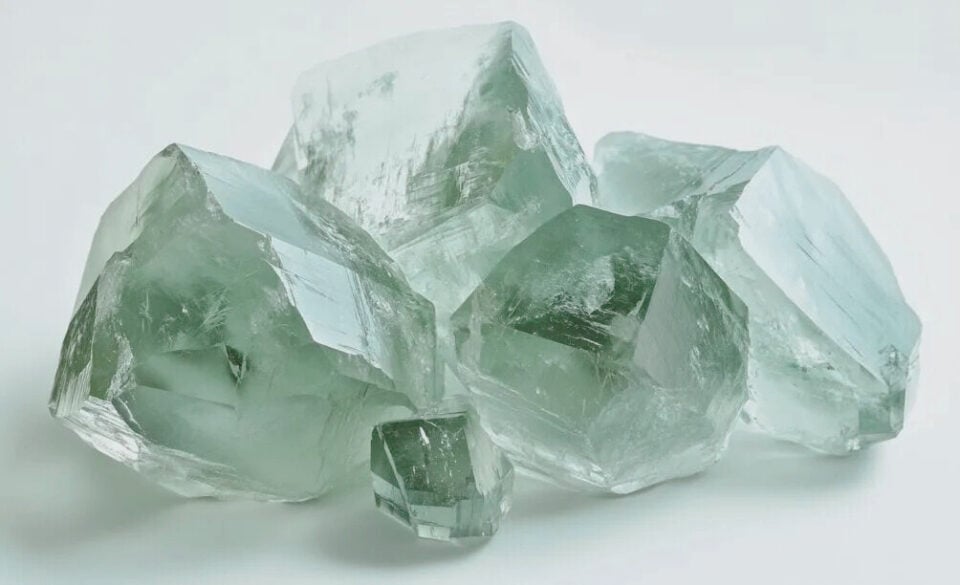
Green amethyst, commonly known as prasiolite, is much rarer in nature. Most green amethyst found in modern jewelry is produced by carefully heat-treating suitable purple amethyst, changing the color while preserving the gemstone’s durability and crystal structure.
As a result, both gemstones perform similarly in everyday wear—the most noticeable difference is simply how they look once they’re set into a ring.
Want to learn more about how prasiolite forms and why it’s called green amethyst? Our Green Amethyst (Prasiolite) Comprehensive Guide explains its origin, characteristics, and common misconceptions in more detail.
Which Ring Styles Bring Out Each Color Best?
Which Ring Styles Bring Out Each Color Best?
The same ring design can create a completely different impression depending on whether it’s set with green or purple amethyst.
Rather than asking which color is more beautiful, it’s more helpful to consider which color complements the style of ring you want to wear.
| Ring Style | Green Amethyst | Purple Amethyst |
|---|---|---|
| Solitaire | ✓ Clean & modern | ✓ Classic & elegant |
| Vintage | ○ Soft contrast | ✓ Rich detail |
| Nature-Inspired | ✓ Fresh & organic | ✓ Romantic |
| Halo | ○ Understated | ✓ Strong center focus |
| Minimalist | ✓ Excellent | ○ More dramatic |
Quick Takeaway:
- Purple amethyst naturally becomes the focal point of intricate or vintage-inspired designs.
- Green amethyst works beautifully in clean, open settings where its lighter color can stand out without competing with decorative details.
The best setting isn’t determined by the gemstone itself—it’s determined by the look you want the finished ring to achieve.
Related Reading: If you’re comparing settings, our Best Setting for Amethyst Ring guide explains which designs best protect and showcase an amethyst center stone.
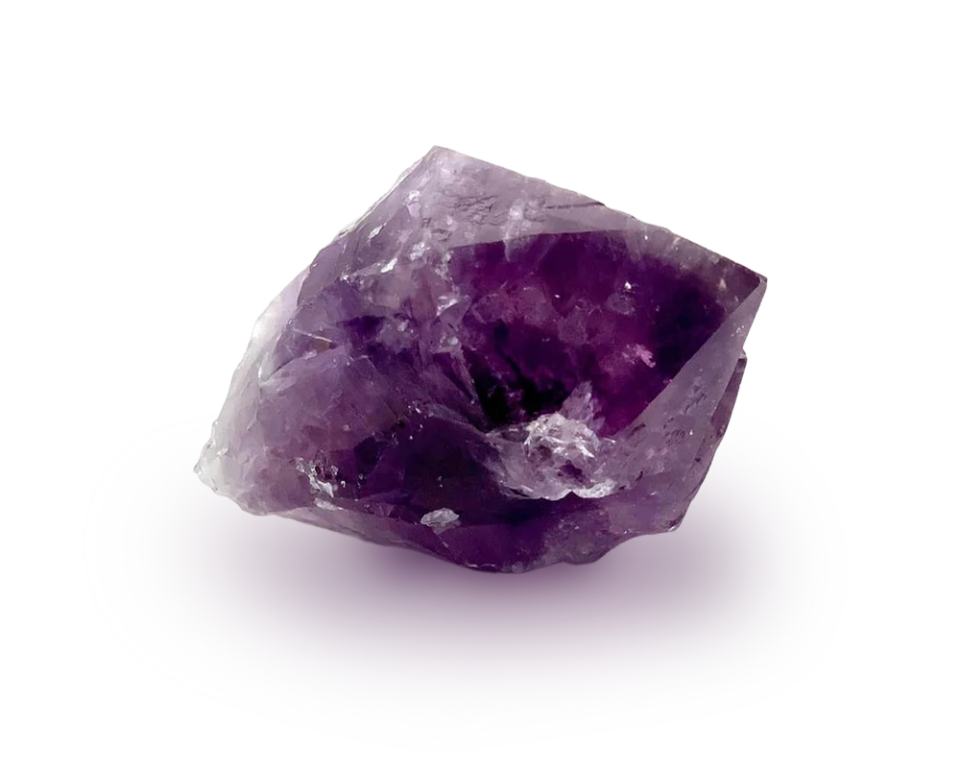
Color Changes More Than Appearance
Color Changes More Than Appearance
When choosing between green and purple amethyst, most people expect the color to change only the gemstone.
In reality, it changes the entire personality of the ring.
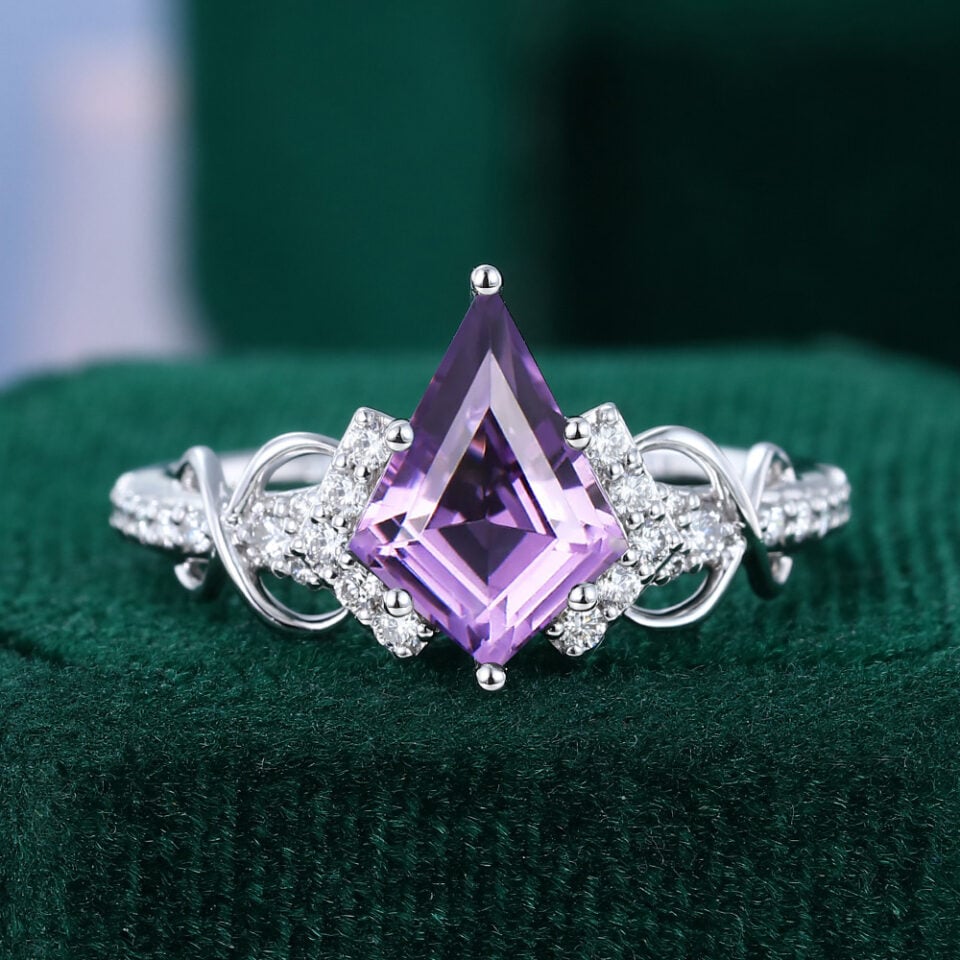
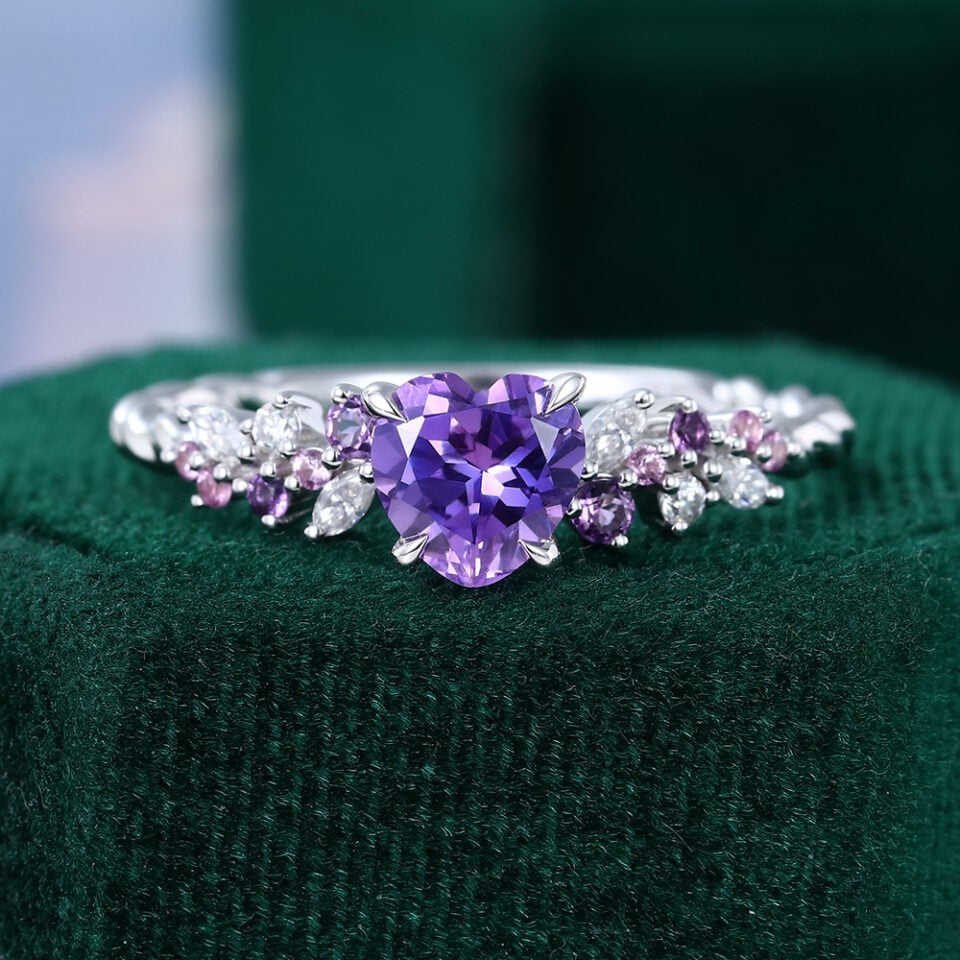
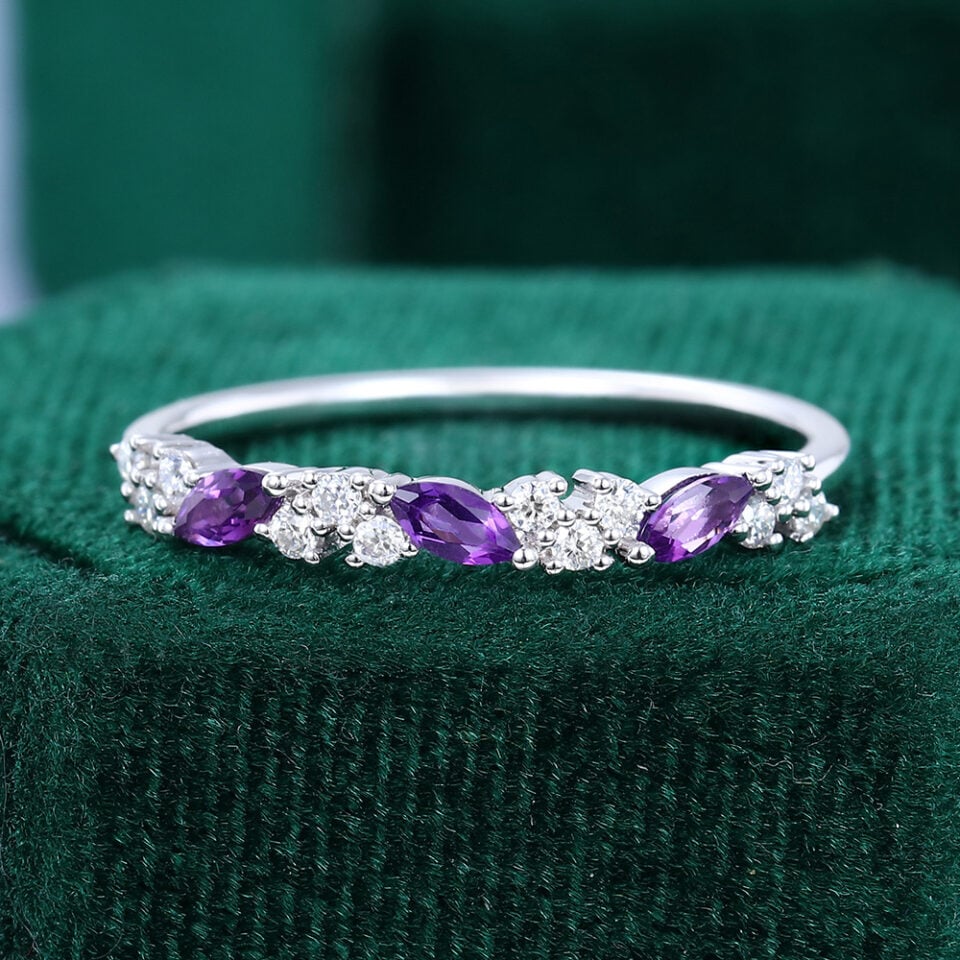
A purple amethyst immediately draws the eye, making the center stone feel more prominent. Even simple designs often appear more formal and luxurious because of the stronger color contrast.
Green amethyst creates the opposite effect. Its softer tone blends naturally into the overall design, giving the ring a lighter, calmer appearance that’s easy to wear every day.
Neither look is objectively better—they simply suit different preferences.
| If You Want Your Ring To Feel… | Better Choice |
|---|---|
| Timeless | Purple Amethyst |
| Bold | Purple Amethyst |
| Light & effortless | Green Amethyst |
| Modern | Green Amethyst |
Style Tip :
Instead of asking which color is prettier, ask which feeling you want your ring to convey every time you wear it.
Does Green Amethyst Cost More Than Purple Amethyst?
Does Green Amethyst Cost More Than Purple Amethyst?
One of the most common assumptions is that green amethyst must be more expensive because it’s seen less often.
In reality, that’s not usually the case.
Although natural prasiolite is rare, most green amethyst used in modern jewelry is created by carefully heat-treating suitable purple amethyst. As a result, the price difference between green and purple amethyst is generally small.
For most rings, the final price is influenced far more by the metal, craftsmanship, setting, and overall design than by the gemstone color itself.
| Price Factor | Bigger Impact? |
|---|---|
| Gemstone Color | Low |
| Ring Setting | High |
| Metal Type | High |
| Craftsmanship | High |
| Custom Design | High |
Bottom Line:
Choosing green amethyst doesn’t automatically mean paying more. Instead of comparing color alone, compare the complete ring and its overall craftsmanship.
Related Reading: Curious about overall pricing? Our guide on How Much Does an Amethyst Ring Cost? explains what really affects the price of an amethyst ring.
Why Most Buyers Still Choose Purple Amethyst First
Why Most Buyers Still Choose Purple Amethyst First
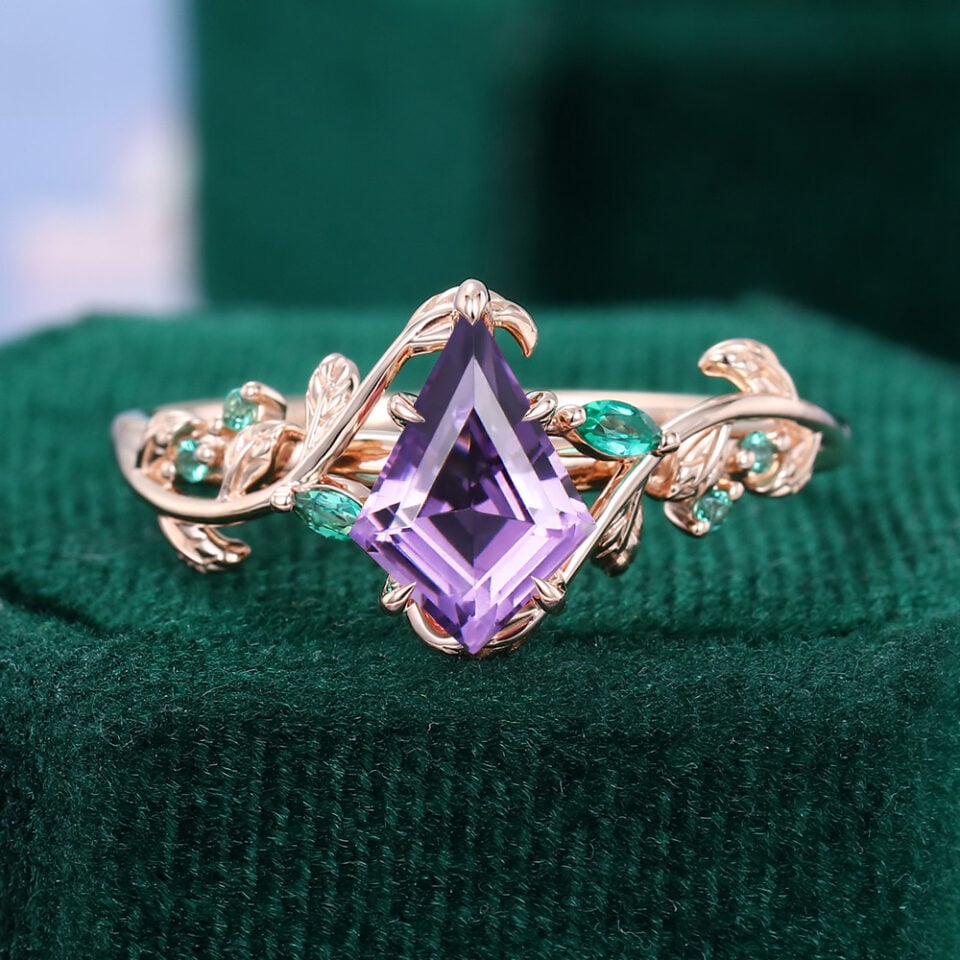
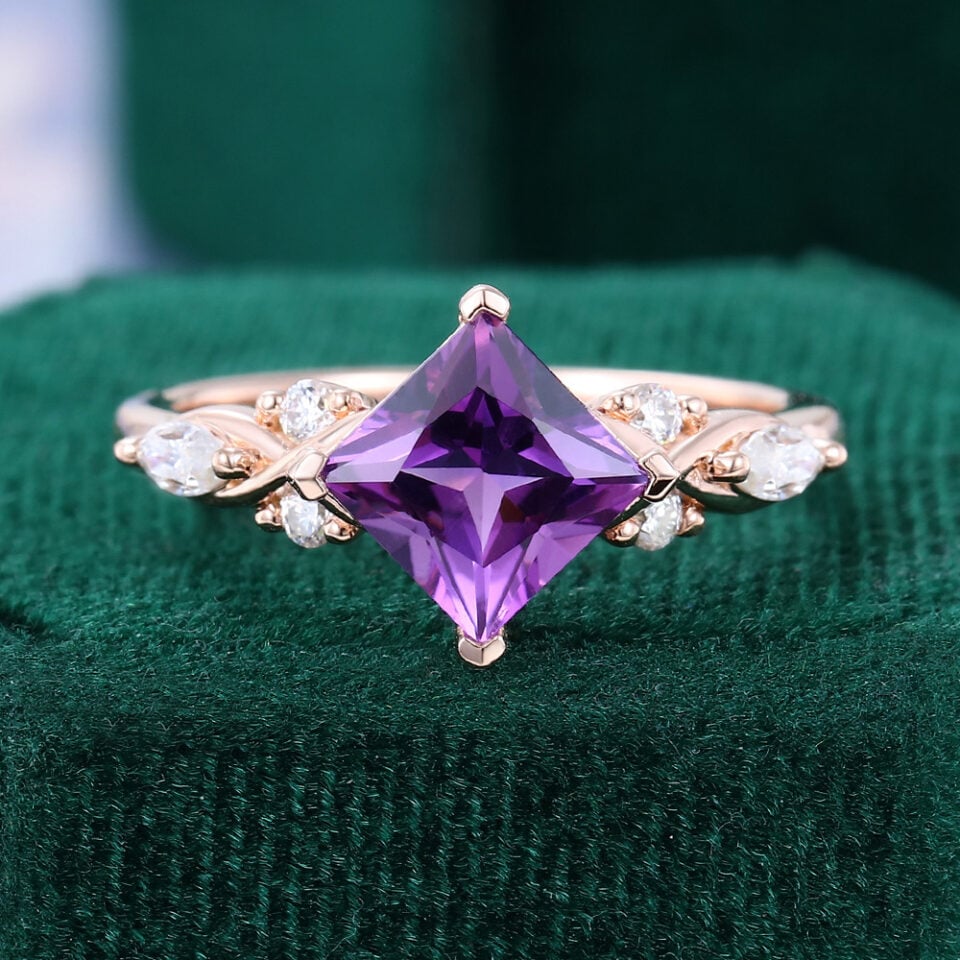
For many people, purple amethyst is the image that immediately comes to mind when they hear the word amethyst.
Its rich violet color has been associated with fine jewelry for centuries, making it the more familiar and widely recognized choice. As the traditional February birthstone, purple amethyst also carries stronger cultural recognition, which naturally increases its popularity for gifts and engagement rings.
From a design perspective, deeper purple tones create greater visual contrast, allowing the center stone to stand out more noticeably in both classic solitaire and vintage-inspired settings.
This doesn’t necessarily make purple amethyst “better”—it simply explains why it’s often the first choice for buyers shopping for an amethyst ring.
Quick Insight: Purple amethyst remains the classic choice because it combines familiarity, versatility, and timeless color in one gemstone.
Why Green Amethyst Appeals to a Different Type of Buyer
Why Green Amethyst Appeals to a Different Type of Buyer
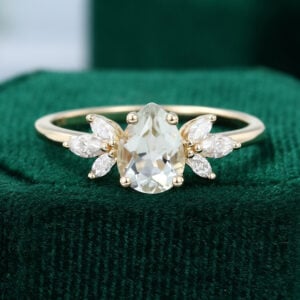
Green amethyst isn’t replacing purple amethyst—it attracts buyers looking for a completely different aesthetic.
Instead of making the center stone the main focal point, green amethyst creates a softer, lighter appearance that blends naturally into the overall ring design.
Many people are drawn to green amethyst because it feels less traditional and more contemporary. Its subtle green tone pairs beautifully with clean settings, organic details, and yellow gold, creating jewelry that feels understated rather than dramatic.
For buyers who prefer quiet elegance over bold color, green amethyst offers a refreshing alternative within the same quartz family.
Style Tip: Purple amethyst makes a statement. Green amethyst creates a softer impression. The choice often reflects personal style rather than gemstone quality.
Which Color Is Easier to Wear Every Day?
Which Color Is Easier to Wear Every Day?
This is one of the questions buyers rarely ask—but often appreciate after living with their ring.
Purple amethyst tends to become the focal point of an outfit. Its richer color naturally attracts attention and works well if you enjoy jewelry that stands out.
Green amethyst has a quieter presence. Its lighter tone is easy to pair with neutral clothing and other jewelry, making it a comfortable choice for people who prefer an effortless, everyday style.
Neither color is more versatile in every situation—they simply create different wearing experiences.
| Everyday Preference | Recommended Color |
|---|---|
| Like your ring to stand out | Purple Amethyst |
| Prefer subtle elegance | Green Amethyst |
| Wear mostly classic outfits | Purple Amethyst |
| Wear minimalist or neutral styles | Green Amethyst |
Final Thoughts
Final Thoughts
Green amethyst and purple amethyst may come from the same quartz family, but they create two very different jewelry experiences.
Purple amethyst continues to be the timeless favorite, admired for its rich color and classic appeal. Green amethyst offers a softer, more contemporary interpretation that’s ideal for buyers who appreciate subtle elegance and modern design.
Rather than asking which gemstone is better, focus on the look you want your ring to express. A color that reflects your personal style will always feel more meaningful than simply choosing the more popular option.
FAQs
FAQs
Is green amethyst the same gemstone as purple amethyst?
Both belong to the quartz family, but they differ in color. Green amethyst, commonly known as prasiolite, is extremely rare in nature, and most green amethyst used in jewelry today is produced by carefully heat-treating suitable purple amethyst.
Why do green and purple amethyst look so different?
Although they share the same crystal structure, the difference in color dramatically changes how a ring looks. Purple amethyst creates stronger contrast and a more classic appearance, while green amethyst offers a softer, lighter, and more contemporary aesthetic.
Does green amethyst have the same durability as purple amethyst?
Yes. Both gemstones have a Mohs hardness of 7 and are suitable for everyday wear when properly cared for.
👉 If you’re planning to wear your ring daily, our Amethyst Ring Care Guide explains how to keep both colors looking their best.
Which color looks better in an engagement ring?
Neither color is universally better.
Purple amethyst is often chosen for traditional and vintage-inspired engagement rings, while green amethyst appeals to couples looking for a lighter, more contemporary style.
The best choice depends on your personal taste rather than current trends.
Does green amethyst cost more than purple amethyst?
Usually not.
For most rings, differences in metal, craftsmanship, and setting have a much greater impact on price than whether the center stone is green or purple. Learn more in How Much Does an Amethyst Ring Cost?
Which amethyst color is more popular?
Purple amethyst remains the most widely recognized and commonly purchased variety because of its long history in fine jewelry and its status as the February birthstone.
Green amethyst is less common but has become increasingly popular among buyers who prefer understated, modern jewelry.
Does green amethyst fade over time?
Under normal wear, both green and purple amethyst are stable. However, prolonged exposure to intense heat or direct sunlight over many years may gradually affect color.
Read our guide Does Amethyst Fade Over Time? to learn how to protect your ring.