- by MollyJewelryUS
- August 5, 2026
- Buying Guides
Oval engagement rings are loved for their elegant shape and flattering appearance. Although carat weight affects the stone’s size, the length-to-width ratio plays an important role in determining how the gemstone appears on the finger, whether it appears fuller and softer or longer and more slender.
Learning about oval engagement ring ratios makes it easier to find a piece that suits your style, complements your hand, and delivers the look you have always imagined.
Table of Contents
What Does the Oval Ratio Mean for Engagement Rings?
What Does the Oval Ratio Mean for Engagement Rings?
In the world of fine jewelry, an oval ratio describes the proportion between a gemstone’s length and width. To calculate it, divide the stone’s length in millimeters by its width, either manually or with an oval ratio calculator. For example, a 10mm × 7mm oval stone produces a ratio of about 1.43.
The resulting number helps define the overall silhouette of your gemstone, showing whether it will appear wider and softer or longer and more slender.
Why Does it Matter?
Why Does it Matter?
As one of the most beloved engagement ring silhouettes, the oval length-to-width ratio plays a crucial role in defining the gem’s personality and visual harmony:
- Different ratios can make fingers appear longer or create a more balanced look.
- Proportions influence the stone’s visual style and how light interacts with its facets.
- A wider oval and an elongated oval can create completely different impressions, even in the same setting.
The Oval Engagement Ring Ratio Chart Explained
The Oval Engagement Ring Ratio Chart Explained
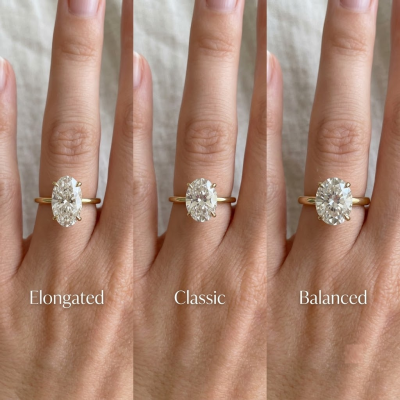
There is no official definition of one “correct” oval engagement ring ratio. In practice, many jewelers commonly refer to these ranges when comparing oval stones.
| Ratio Range | Appearance | Best Suited For |
|---|---|---|
| 1.20–1.30 | Wide, soft, and slightly rounded | Vintage-inspired and romantic ring styles |
| 1.35–1.45 | Perfectly balanced and traditional | Iconic engagement jewelry designs |
| 1.50+ | Sleek, stretched, and highly modern | Modern, elegant, finger-lengthening looks |
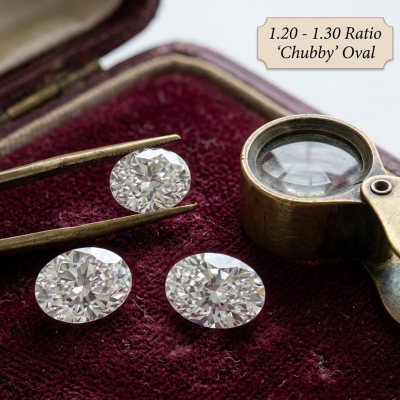
1.20–1.30 (The "Chubby" Oval)
1.20–1.30 (The "Chubby" Oval)
- Visual Effect: A wider profile that looks closer to a brilliant round diamond.
Ovals with a ratio of 1.3 or less tend to appear fuller because more of the stone’s visual mass is distributed across its width. This gives them a classic appearance and a charming vintage feel.
If you’re deciding between a round and an oval engagement ring, this proportion gives an appealing compromise, providing the gentle curves of a round stone with just a hint of elongation.
1.35–1.45 (The Classic Oval)
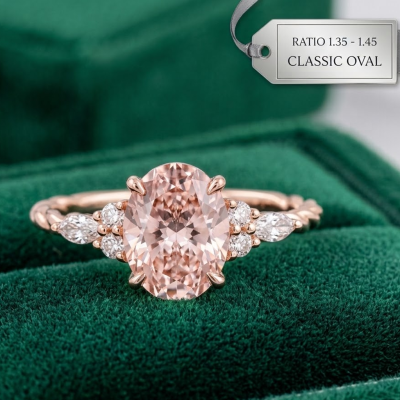
1.35–1.45 (The Classic Oval)
- Visual Effect: The quintessential oval silhouette that embodies refined elegance.
Often considered the sweet spot for oval stone ratios, this range achieves perfect visual harmony. The gemstone appears balanced and graceful, offering a shape that feels neither too round nor too narrow.
These proportions promote a silhouette that works well with a wide variety of timeless engagement ring designs.
1.50+ (The Elongated Oval)
1.50+ (The Elongated Oval)
- Visual Effect: A long, slender oval that creates maximum finger coverage.
Highly favored by lovers of modern, fashion-forward jewelry, ratios above 1.50 create a refined, elongated profile that beautifully lengthens the appearance of the fingers. Even with the same oval stone carat size, the extended proportions can make the engagement ring appear larger and more eye-catching.
Finding the Ideal Ratio for Oval Engagement Rings
Finding the Ideal Ratio for Oval Engagement Rings
After exploring the most common proportions, you may naturally wonder: what is the best oval engagement ring ratio?
While beauty is highly subjective, many jewelers and buyers consider a ratio between 1.35 and 1.45 to be an ideal choice because it delivers a balanced silhouette, flattering appearance, and versatile appeal.
That said, the perfect oval ratio is ultimately the one that complements your hand, setting choice, and individual style. You can follow the expert recommendations in the sixth section to find the proportion that feels right for you.
Which Oval Ratio Minimizes the Bow-Tie Effect?
Which Oval Ratio Minimizes the Bow-Tie Effect?
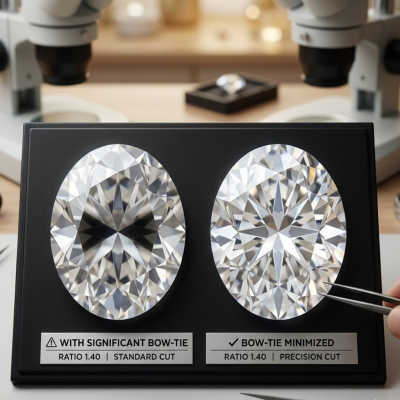
The bow-tie effect is a dark, bow-shaped shadow that sometimes appears across the center of elongated gemstones. Although many oval stones within the 1.35–1.45 range tend to display a well-balanced appearance, the strength of this effect depends much more on how well the stone has been cut.
That is why, when shopping for an oval engagement ring, you should consider both the ratio and the quality of the cut. A well-crafted stone will generally offer better visual performance than one chosen based on proportion alone.
Comparing the 1.3 vs 1.4 vs 1.5 Oval Ring Ratios
Comparing the 1.3 vs 1.4 vs 1.5 Oval Ring Ratios
For many buyers, selecting the engagement ring often comes down to comparing three oval ratios: 1.3, 1.4, and 1.5. The chart below highlights how each one differs in appearance and overall style.
| Specific Ratio | Aesthetic Profile | Finger Coverage | Bow-Tie Risk |
|---|---|---|---|
| 1.30 | Fuller, softer oval | Excellent lateral (side-to-side) coverage | Very Low |
| 1.40 | The popular and classic choice | Balanced, symmetrical proportions | Low |
| 1.50 | Longer, slimmer silhouette | Maximum vertical (top-to-bottom) coverage | Moderate |
Simply put, a 1.3 ratio appears wider and more rounded, while a 1.4 ratio offers the greatest versatility across different engagement ring styles. If you love a non-traditional bridal look, a 1.5 ratio creates a longer silhouette that naturally enhances the length of your fingers.
Do Ratio Rules Apply to Both Oval Diamonds and Gemstones?
Do Ratio Rules Apply to Both Oval Diamonds and Gemstones?
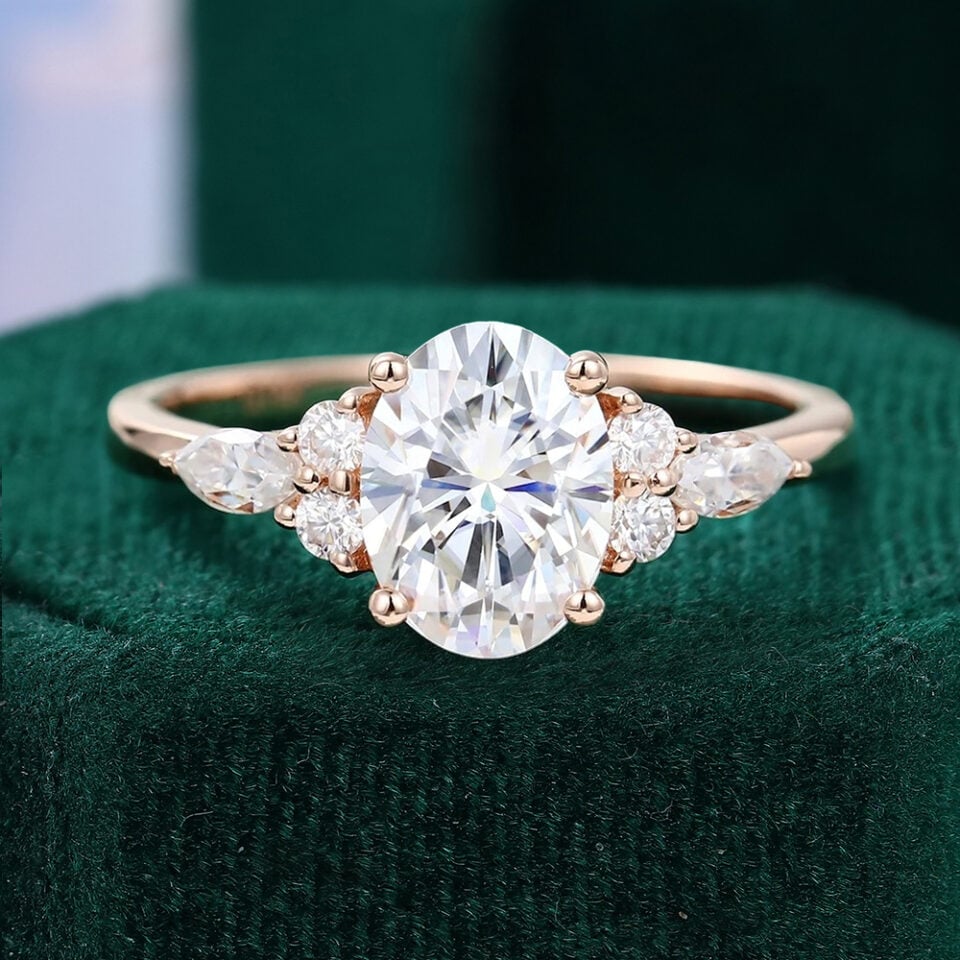
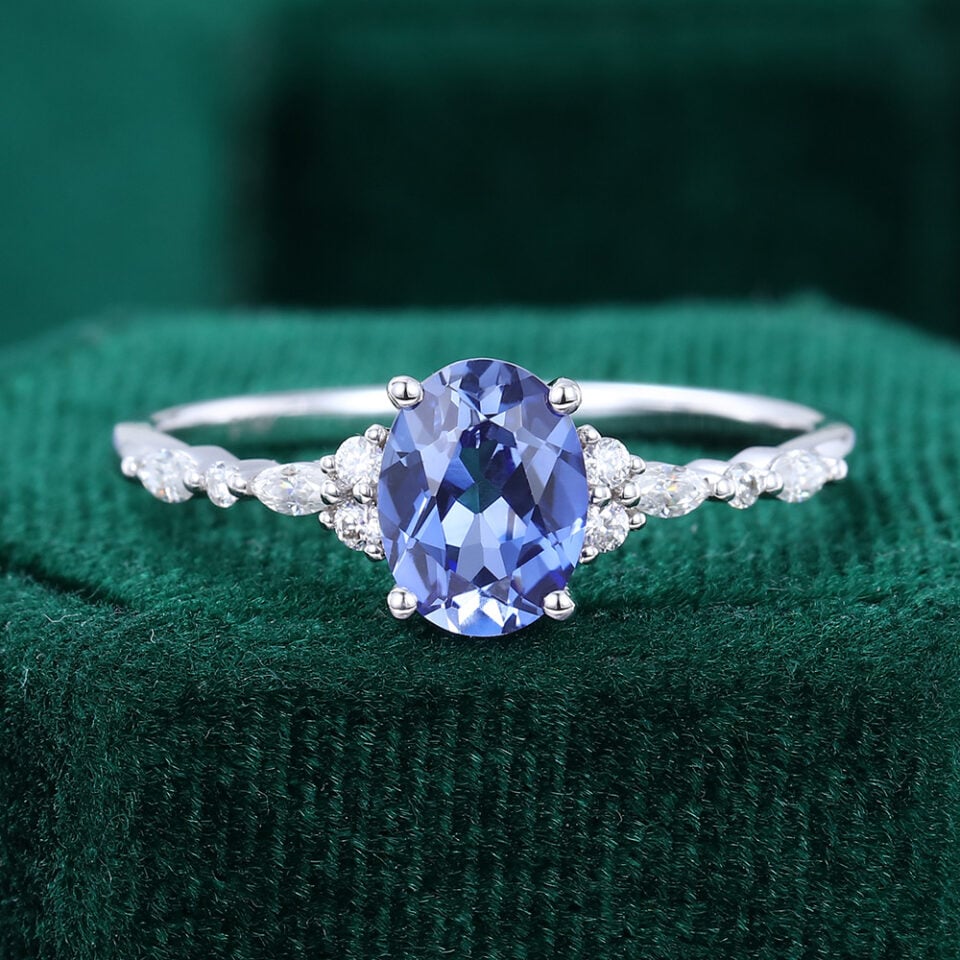
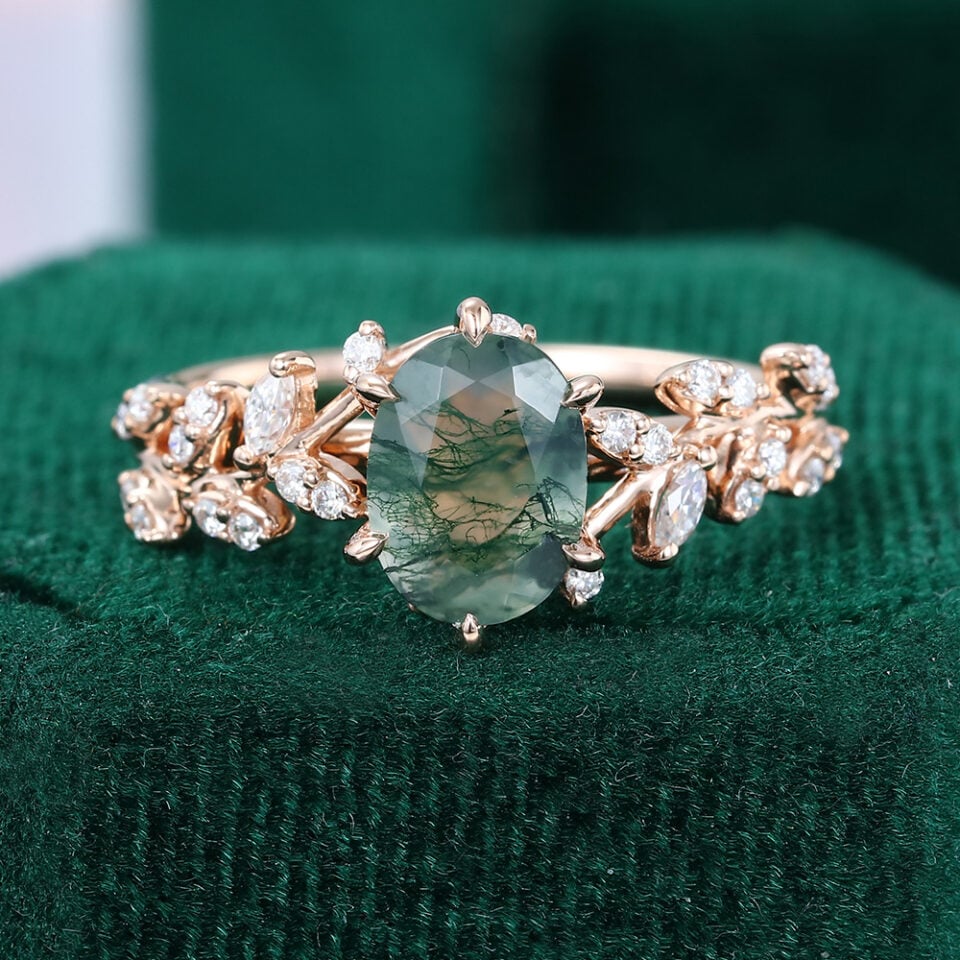
Yes. The same length-to-width principles apply whether you’re choosing a natural diamond, a lab-grown diamond, moissanite, or a colored gemstone.
An oval engagement ring ratio defines the stone’s silhouette, not its composition. While two stones with the same proportions will share a similar outline, each material interacts with light differently, creating its own unique visual character.
Interestingly, some colored gemstones, like sapphires and emeralds, may benefit from wider oval proportions because the larger face-up area can showcase their color more prominently.

How to Choose the Right Ratio for Your Engagement Ring?
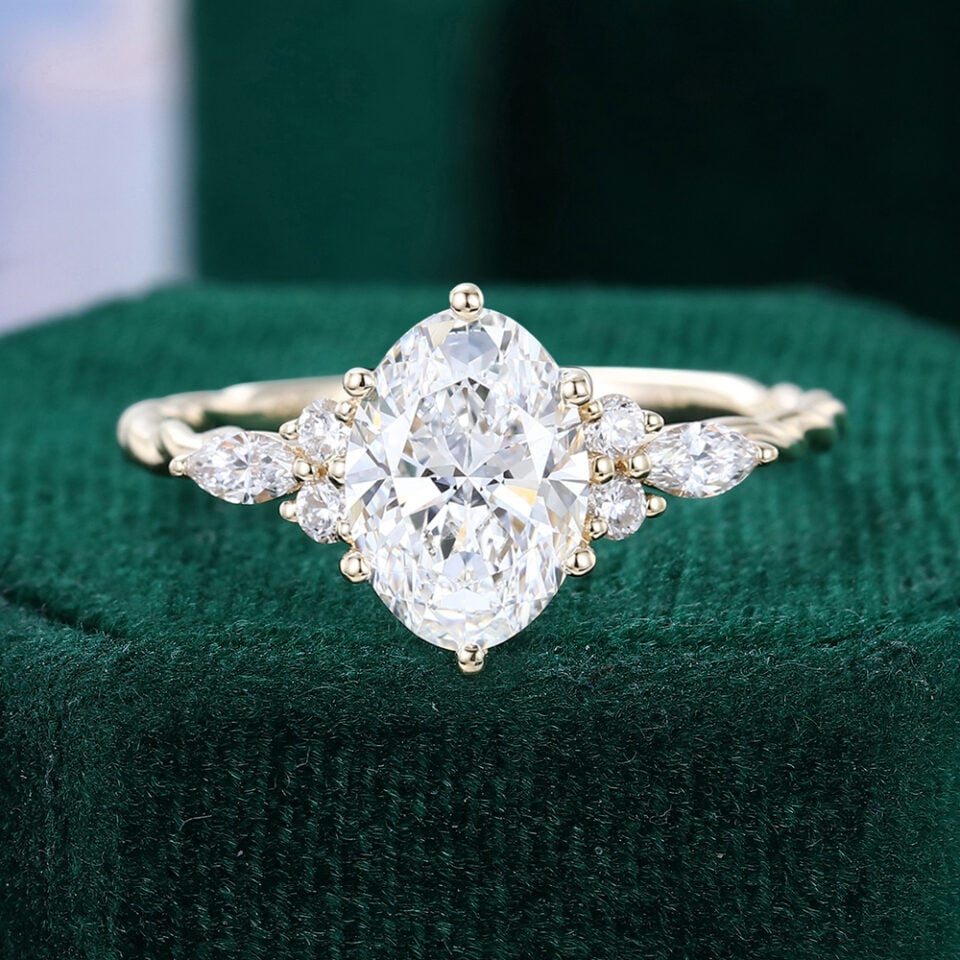
How to Choose the Right Ratio for Your Engagement Ring?
If you want to quickly find the oval stone proportion for your engagement ring that best matches your style, consider these four strategies before making the final decision.
Match the Ratio to Your Finger Shape
Match the Ratio to Your Finger Shape
Your finger proportions can influence which oval ratio looks most flattering. Rather than following a fixed rule, think about how different ratios interact with your hand shape:
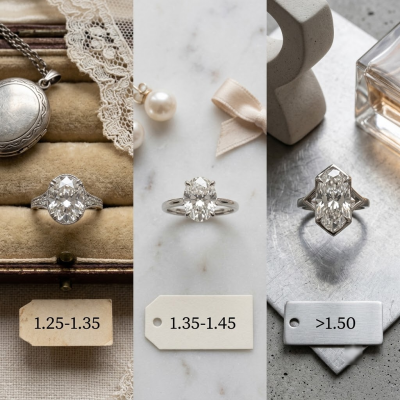
- Shorter Fingers: Ratios around 1.45 to 1.55 can create a longer, more slender appearance.
- Wider Fingers: A slightly wider oval between 1.25 and 1.35 offers a fuller presence with better horizontal coverage.
- Slender/Long Fingers: The 1.35 to 1.40 range maintains a proportional balance without overpowering the hand.
💡 Note: Remember that these are just general guidelines, personal preference should always come first.
Choose the Look You Love
Choose the Look You Love
Your personal preference also matters. Ask yourself what mood you want your jewelry to create, then choose an ideal ratio for oval engagement rings that fits your aesthetic:
- Timeless/Classic Vibe: Favor balanced proportions around 1.35–1.45.
- Vintage/Antique Vibe: Often pair well with fuller ratios around 1.25–1.35.
- Modern/Statement Vibe: Benefit from elongated ratios of 1.50 and above.
Consider Your Ring Setting
Consider Your Ring Setting
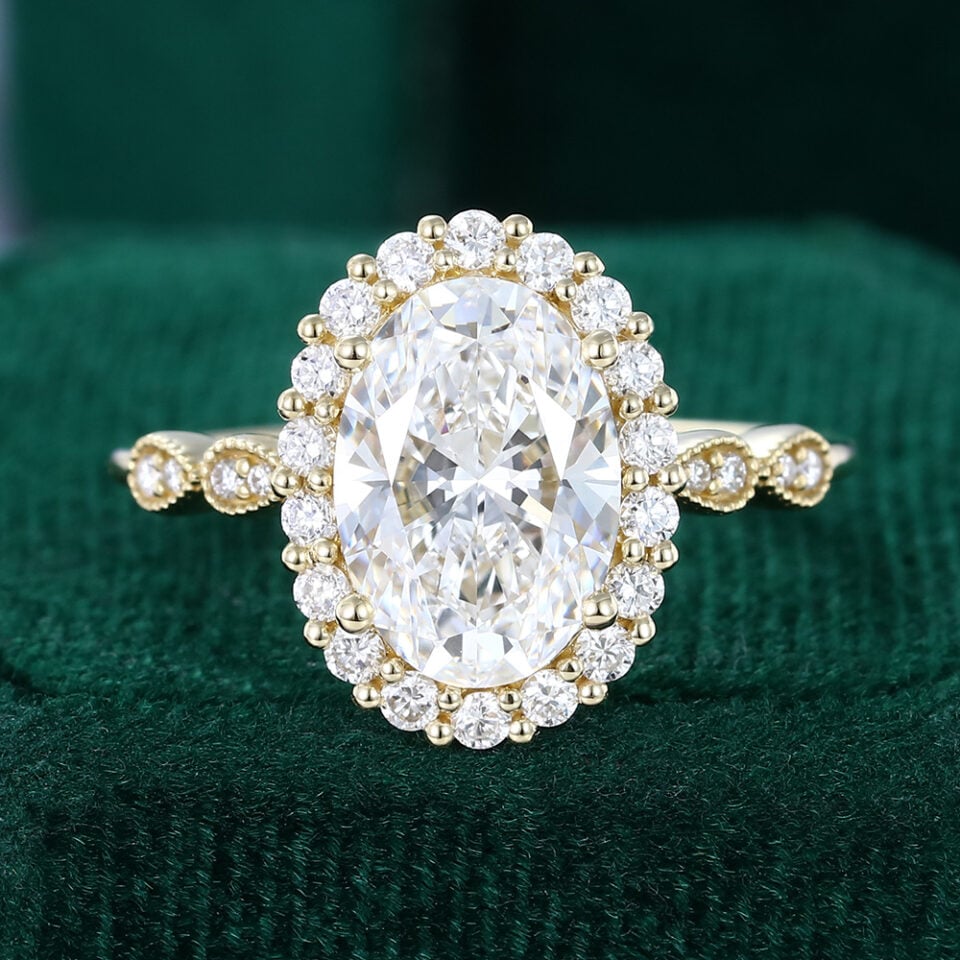
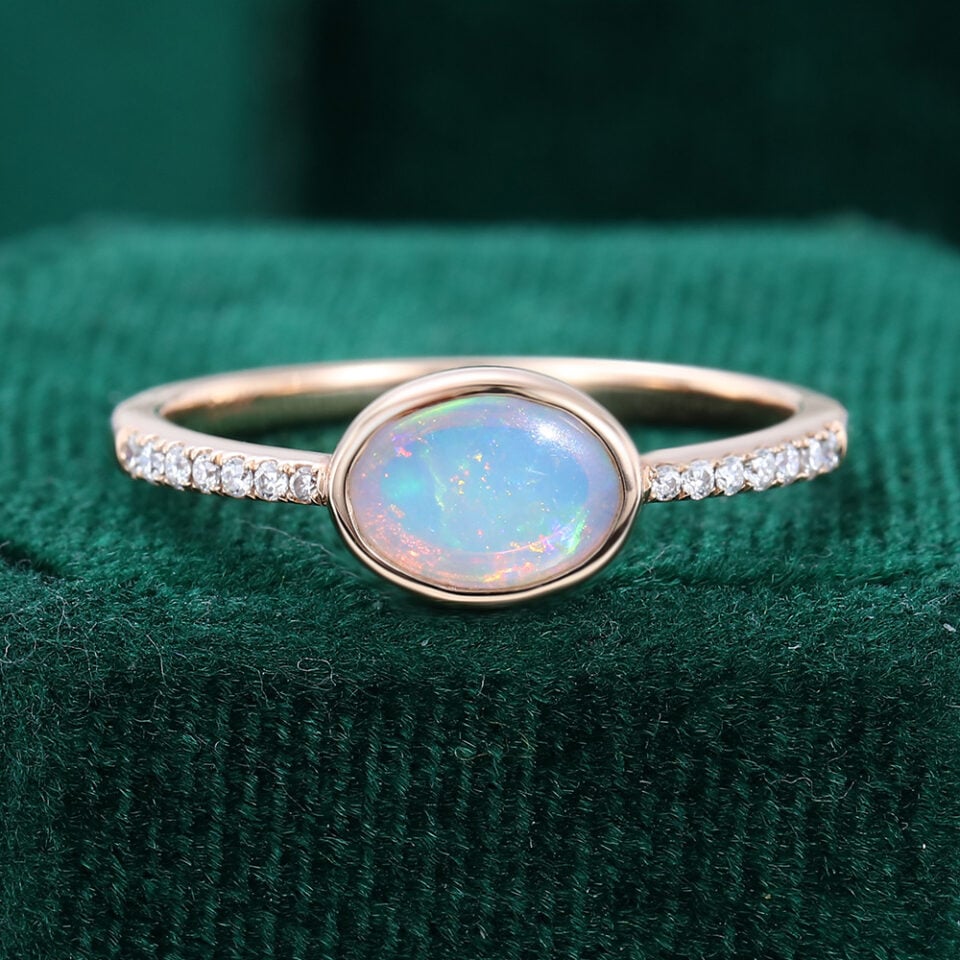
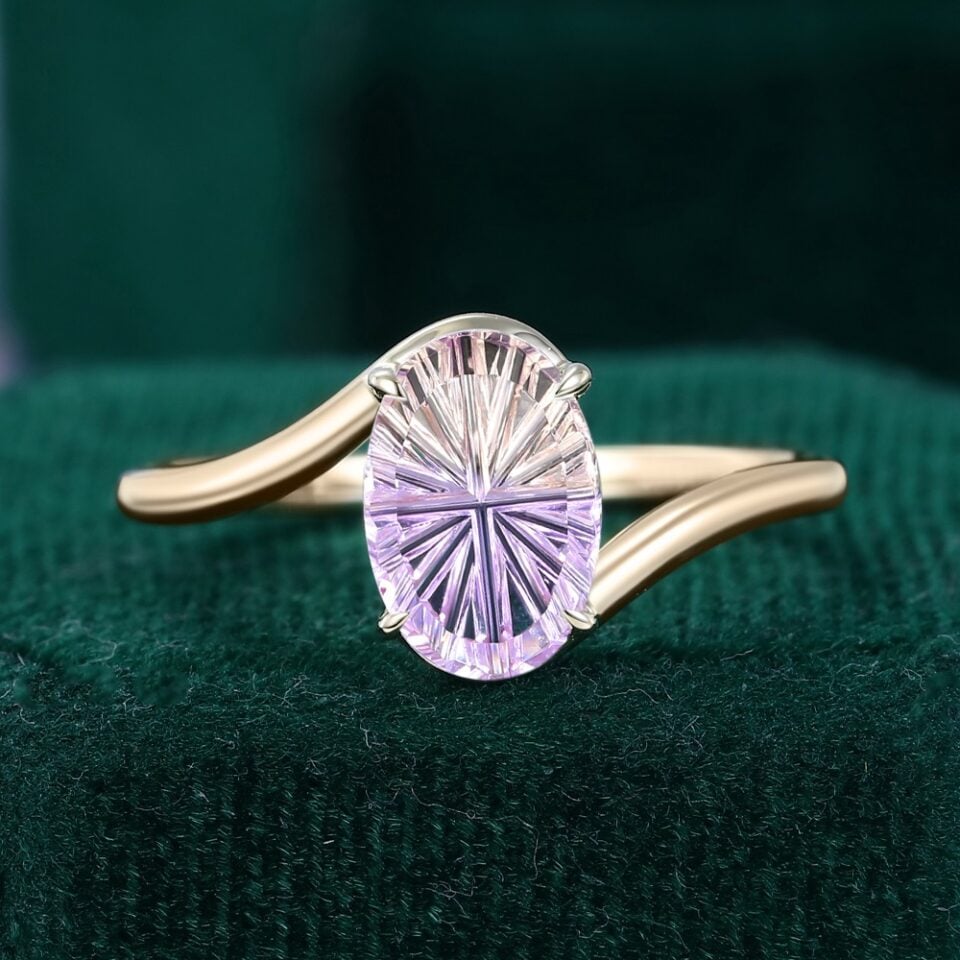
The engagement ring setting can subtly influence how the oval ratio appears. A halo setting may make an elongated oval appear softer by surrounding the center stone, while a bezel setting highlights the oval’s sleek lines and elongated character.
Among all designs, the solitaire remains the most timeless and adaptable, allowing every oval ratio to express its own natural beauty with effortless elegance.
Think About Your Wedding Band
Think About Your Wedding Band
If you plan to wear your engagement ring solo, any ratio that pleases your eye is perfect. However, if you want to create a seamless stacked look with a wedding band, extra elongated ratios of 1.50+ may sometimes sit lower on the finger or require a specially curved band for a better fit.
By comparison, a versatile ratio between 1.35 and 1.45 usually provides the easiest pairing options and brings a harmonious stacking experience.
👉🏻 You can explore this further with our complete guide to pairing oval engagement rings with wedding bands.
Frequently Asked Questions
Frequently Asked Questions
Is there a ratio calculator for oval engagement rings?
Yes, but most oval ratio calculators are simple tools that calculate a stone’s length-to-width ratio rather than recommend a “perfect” proportion.
Can I use the oval ratio formula for any gemstone?
Absolutely. Simply dividing the length by the width works for any oval-cut stone, whether it is a mined diamond, lab-grown diamond, sapphire, or moissanite.
What is the ideal ratio for oval diamond rings?
Most jewelers recommend a range between 1.35 and 1.45 for its balanced, timeless appearance. The best oval diamond ratio, however, still depends on your aesthetic preference.
Is a 1.4 oval engagement ring ratio good?
Yes, a 1.40 is widely considered an optimal and classic ratio. It offers a beautiful, undeniable oval shape while minimizing the risk of a severe bow-tie effect.
Does a higher ratio make an oval stone look bigger?
A higher ratio can create the illusion of a larger stone by extending its visual length. However, the actual face-up size still depends on the stone’s dimensions and carat weight.
Will a 1.50+ ratio make the oval engagement ring fragile?
A 1.50+ ratio does not automatically make an oval engagement ring fragile, but protective settings such as V-prongs or six-prong designs can help safeguard the pointed ends.
The Art of Proportions in Oval Cut Engagement Rings
The Art of Proportions in Oval Cut Engagement Rings
Selecting the perfect oval engagement ring ratio goes beyond numbers and calculations. The ideal proportion should harmonize with your hand, express your personal aesthetic, and become a natural extension of your style.
Once you understand the subtle differences between oval proportions, you can approach your choice with the eye of a true jewelry enthusiast and discover a piece that feels unique every time you wear it.