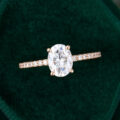
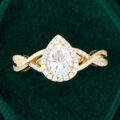
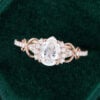
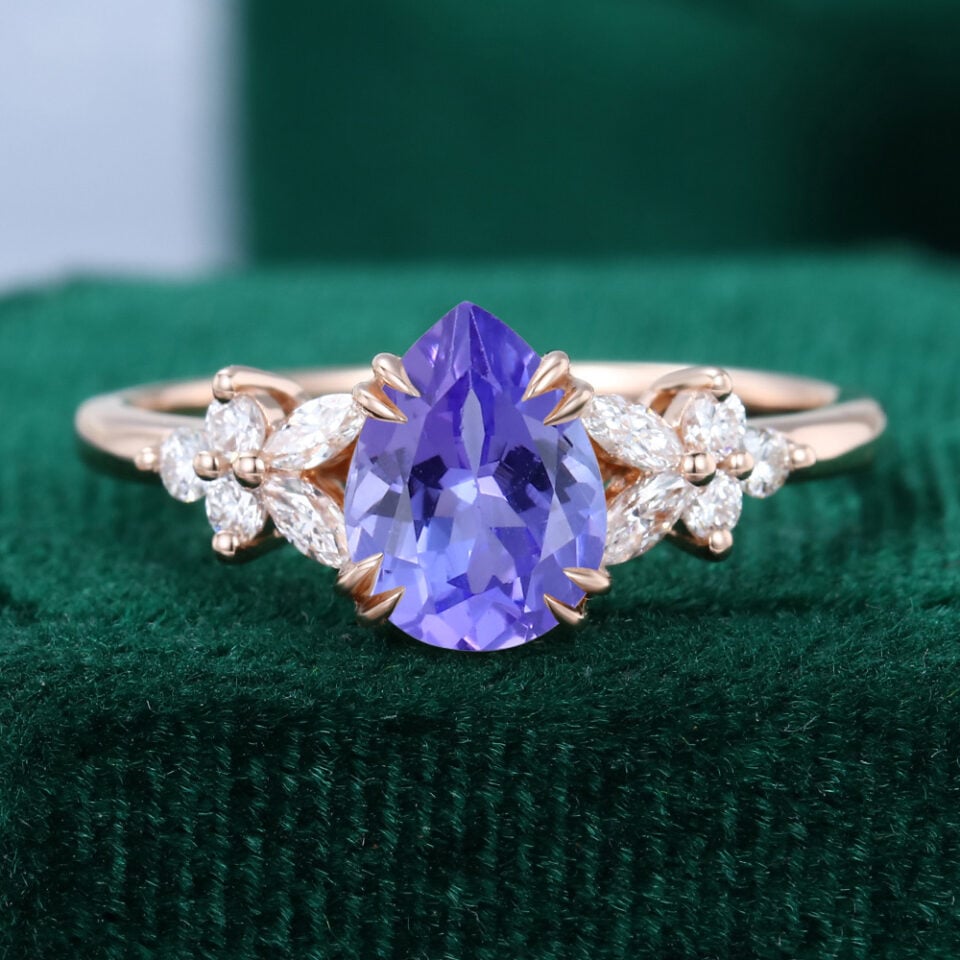
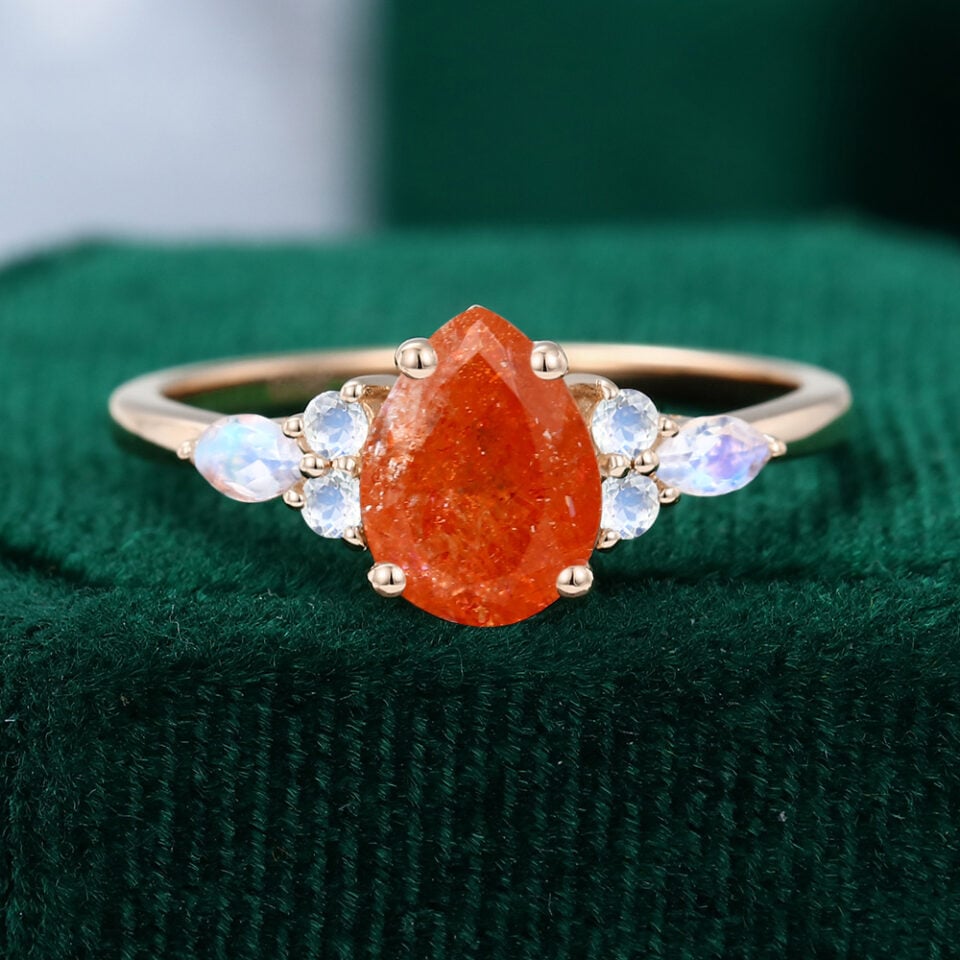
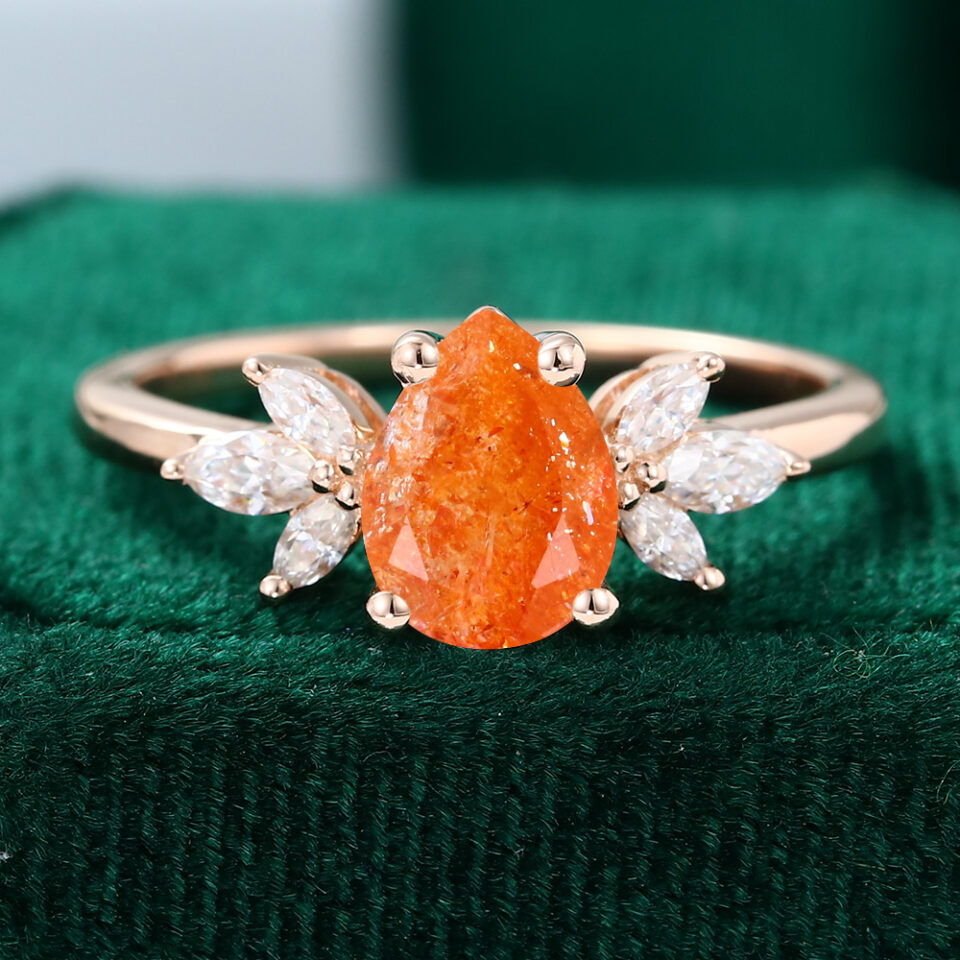
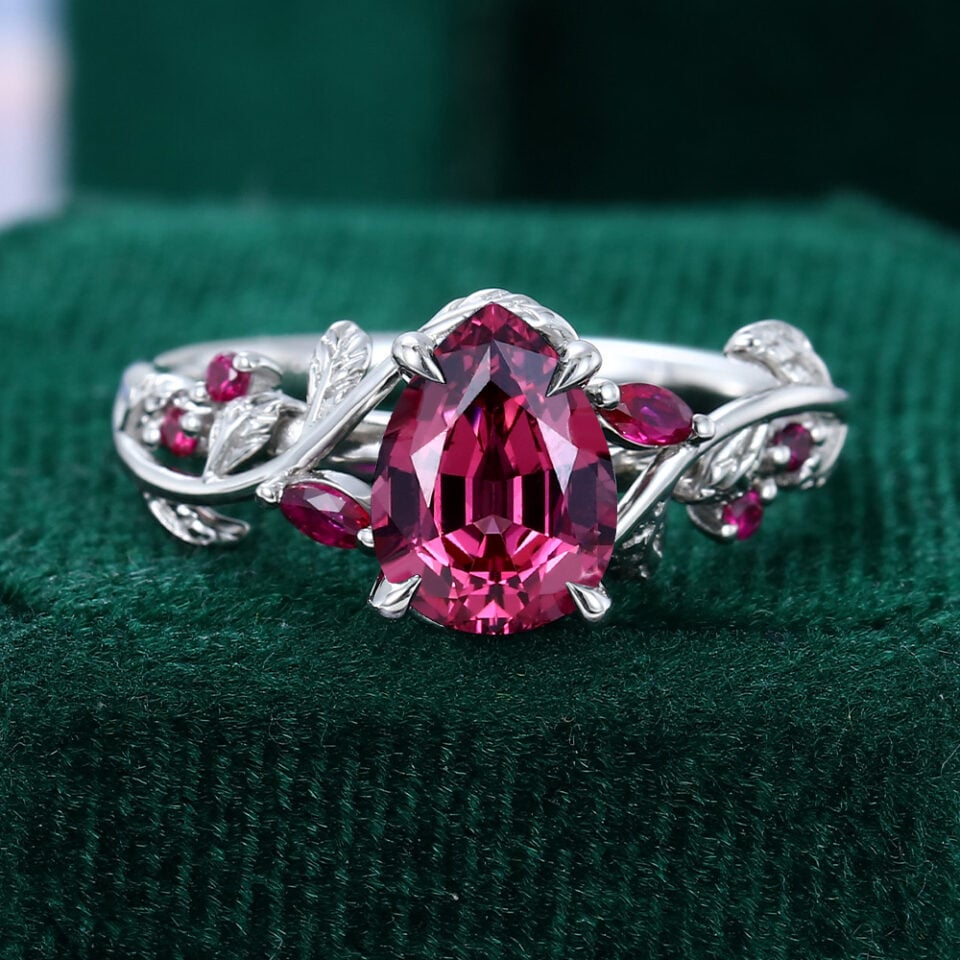
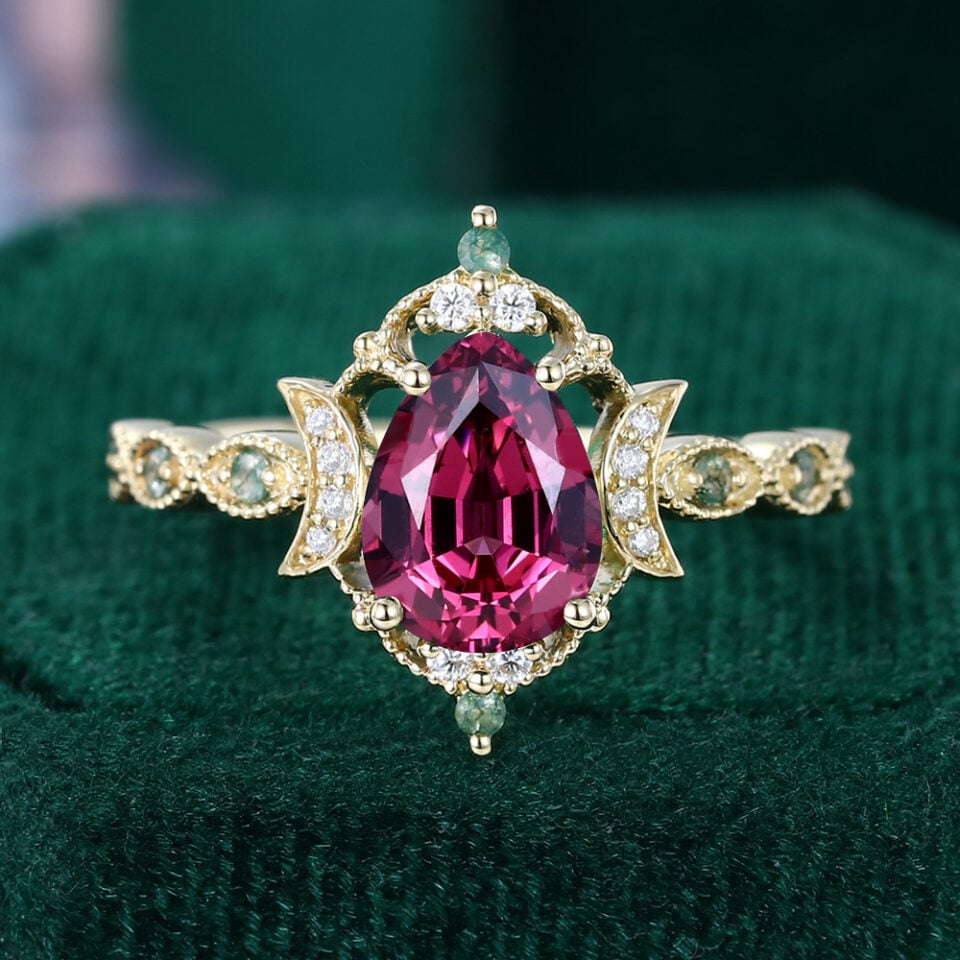
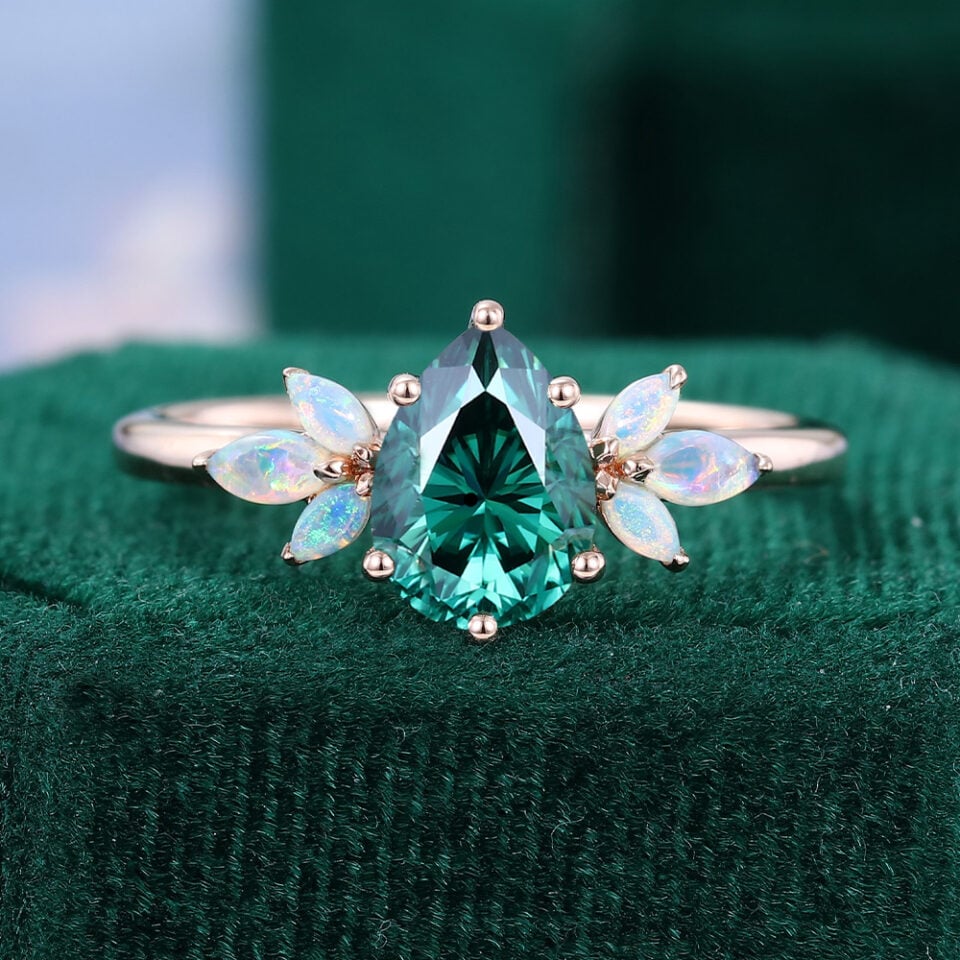
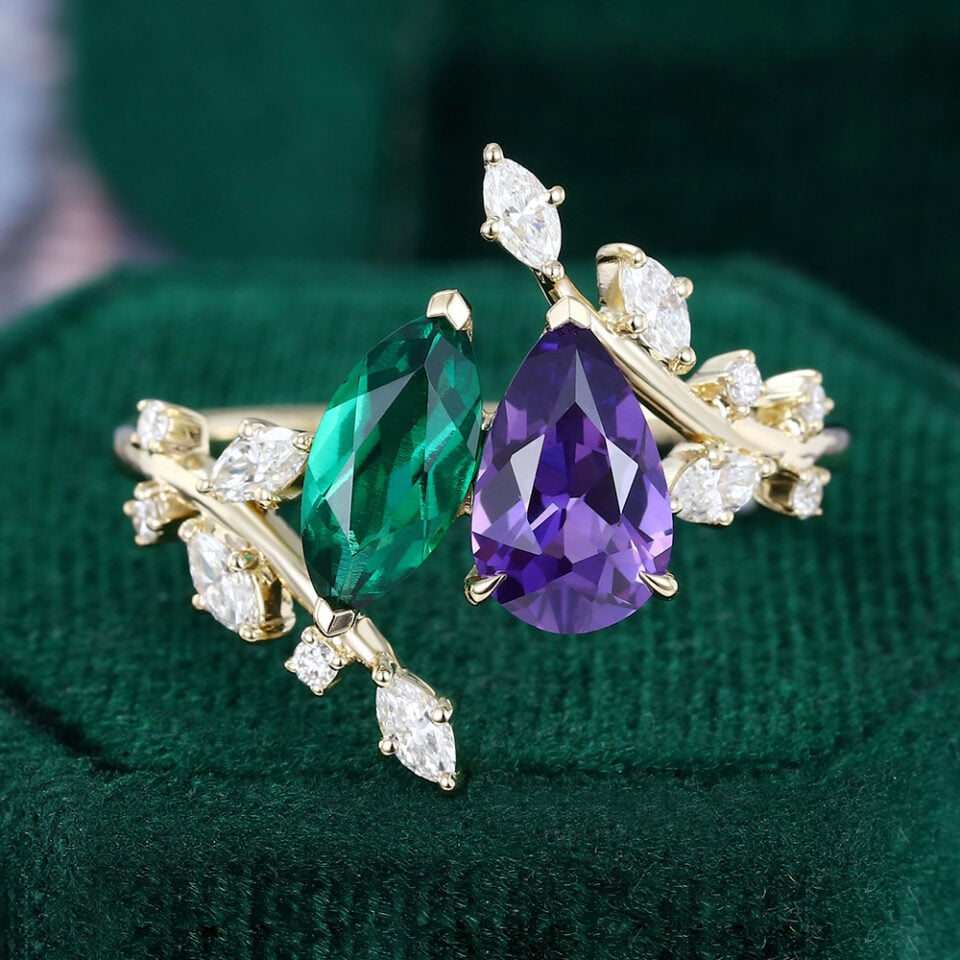
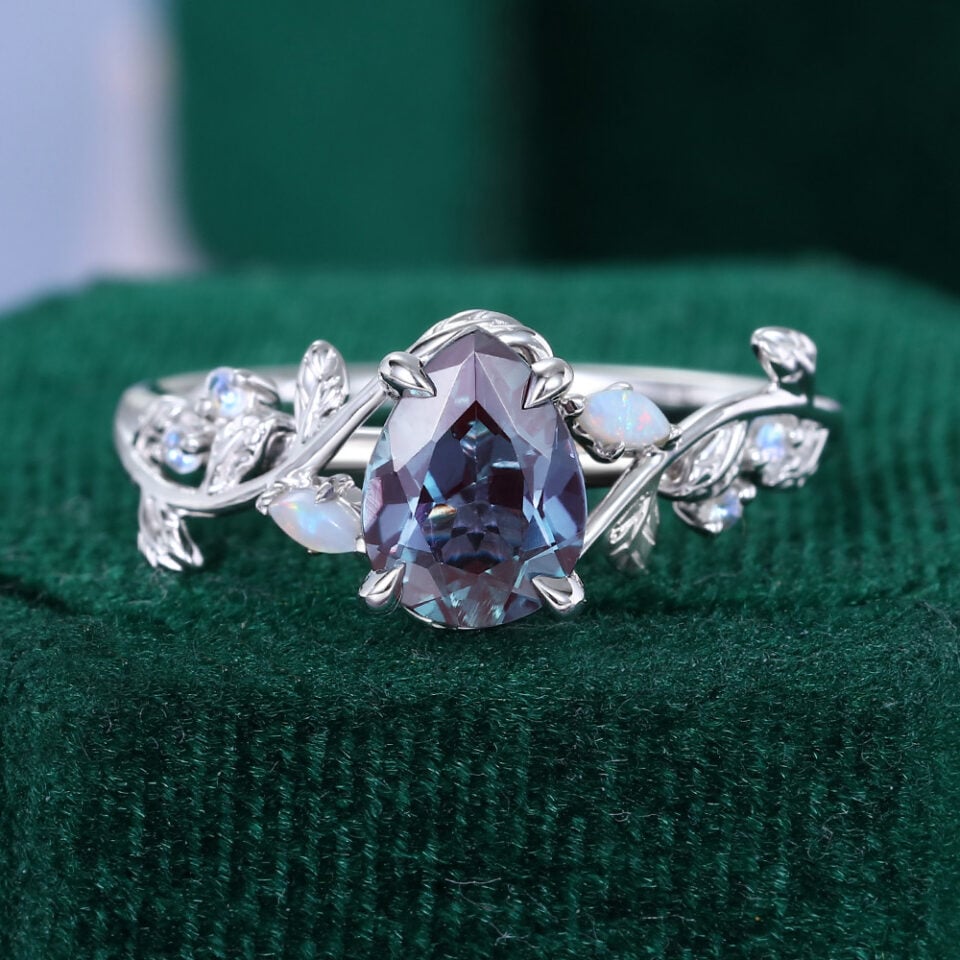
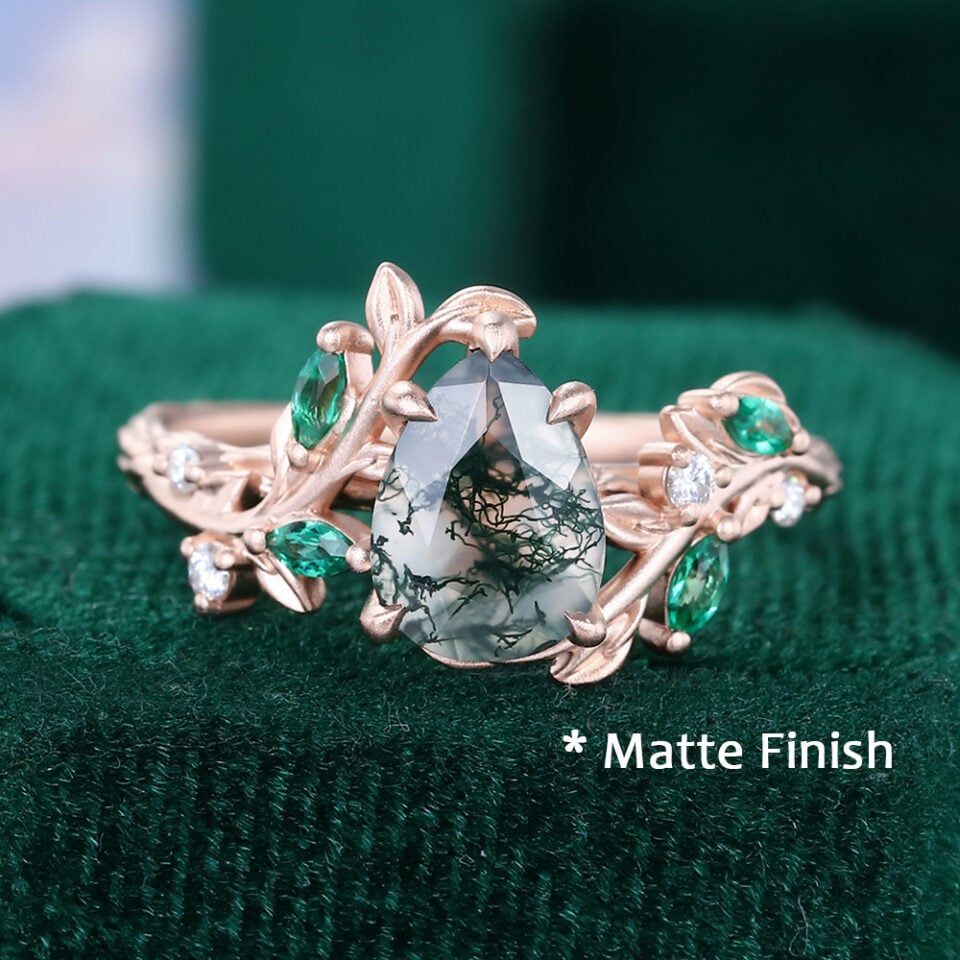
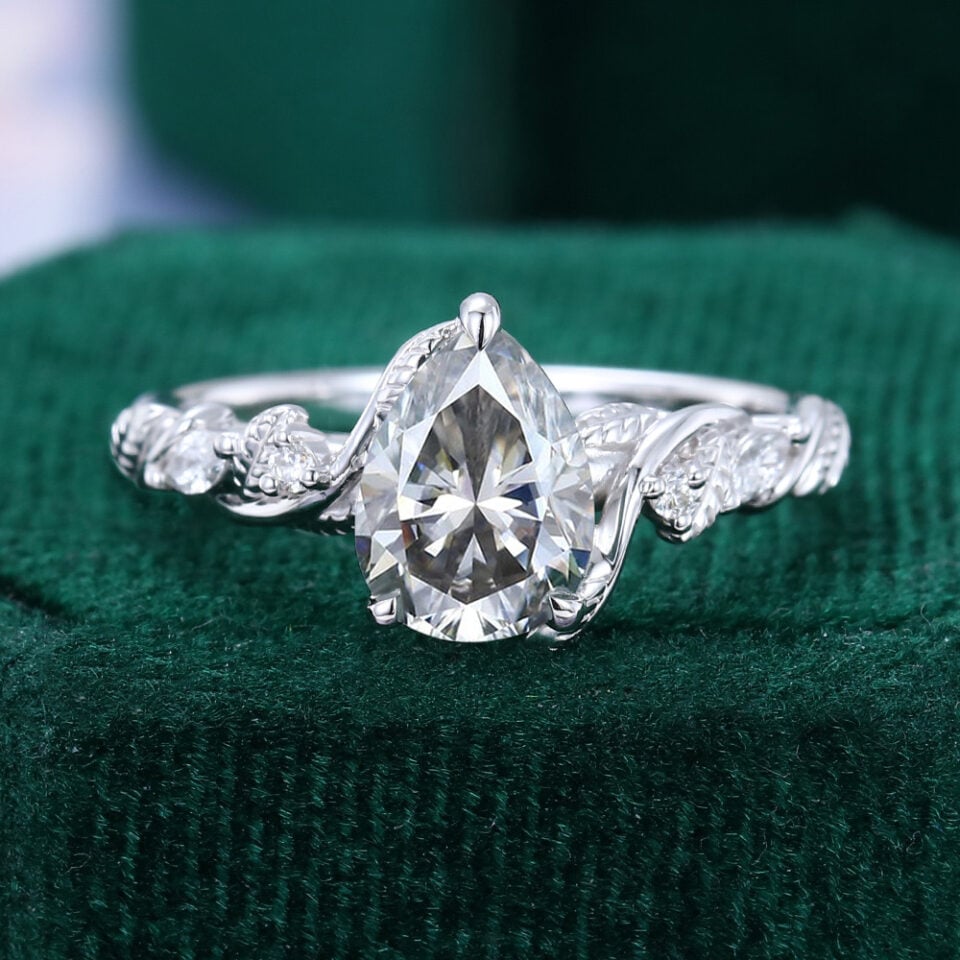
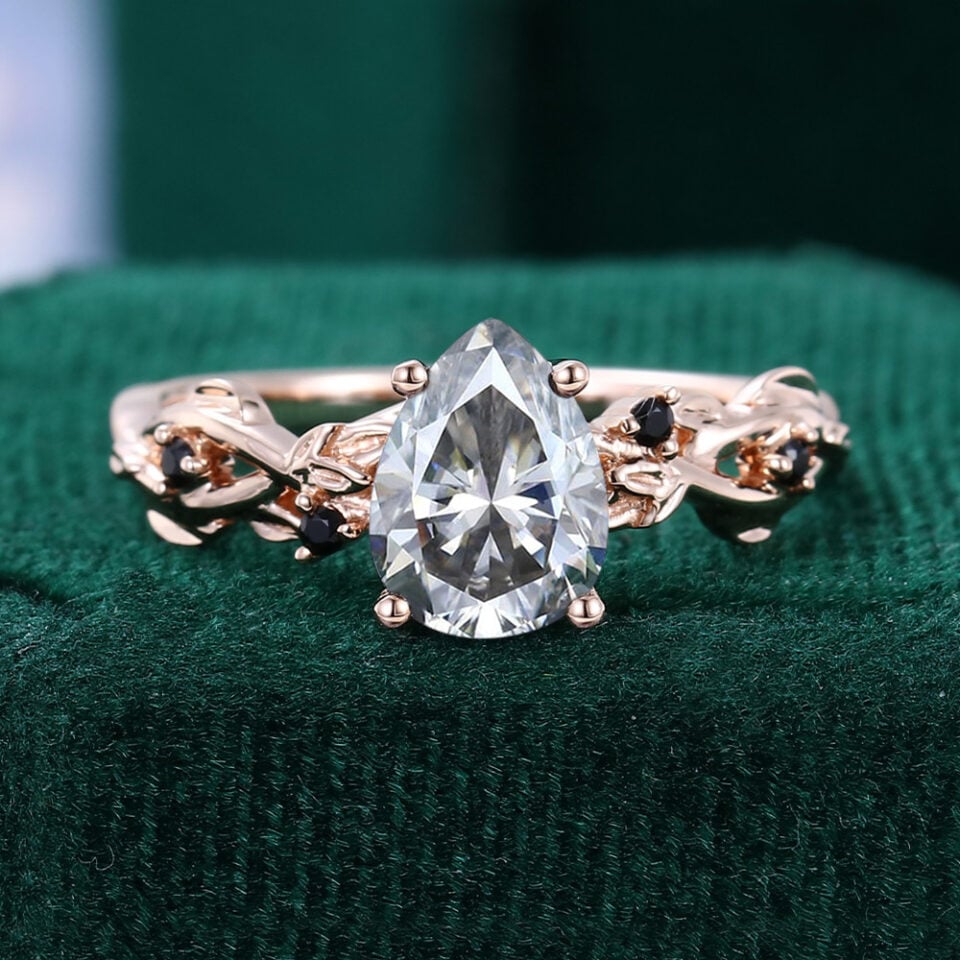
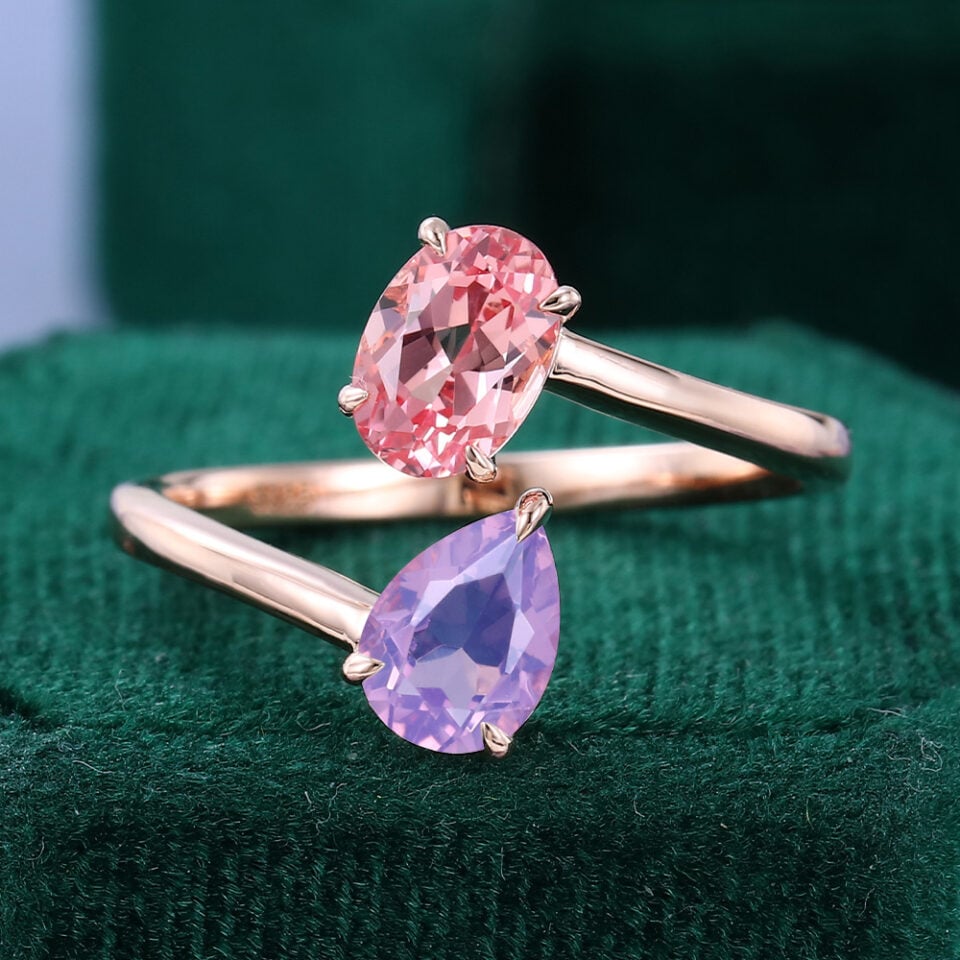
Yes. “Pear-shaped” is the technical term and “teardrop” is a casual nickname for the same silhouette. Both describe the same pear-shaped diamond profile.
The pointed end is more delicate, but a secure bezel setting protects it well and keeps the ring suitable for daily wear.
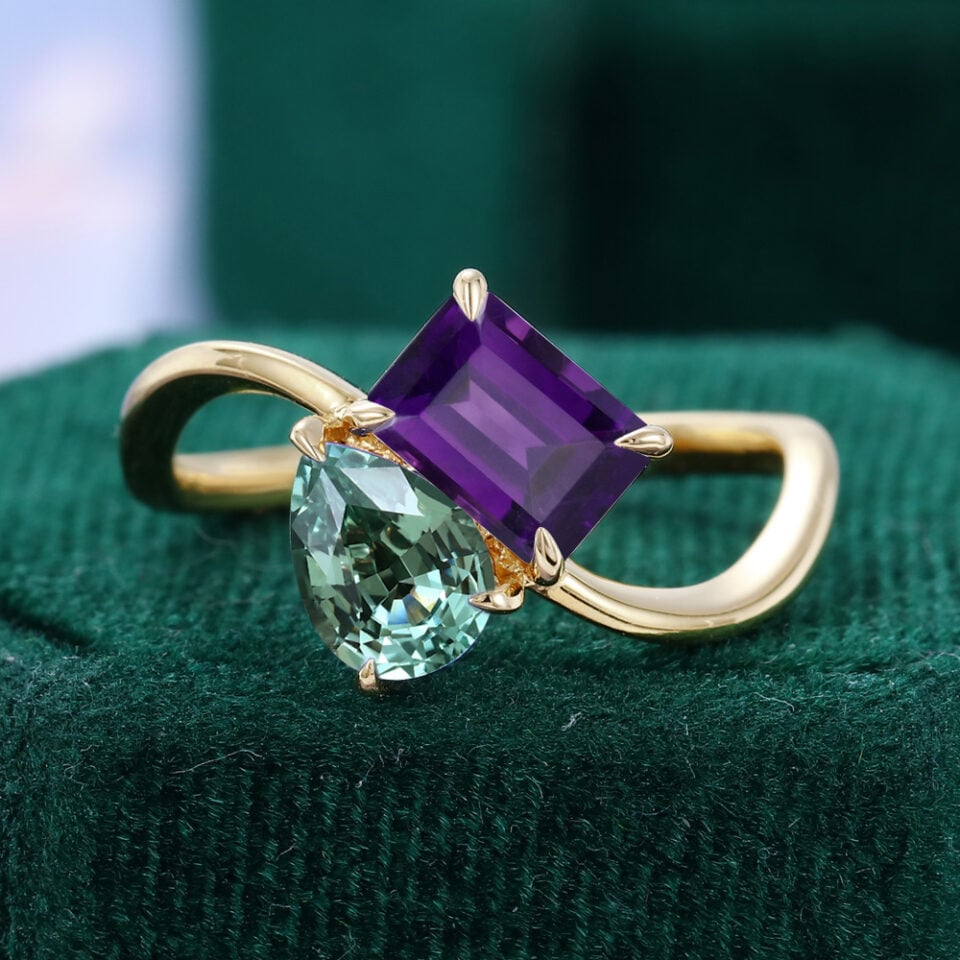
Curved bands, especially V-shaped designs, pair beautifully with pear-shaped engagement rings. You can also explore our ring enhancers designed to fit perfectly with your pear-shaped ring.
Yes. The elongated curves and tapered point create the appearance of a larger size compared to round or cushion stones of the same carat weight.
Generally, no. Pear-cut diamonds of the same carat weight and quality often cost less than round diamonds. The shape also tends to look larger, making it a smart choice for achieving a big visual impact on a budget.
That depends on personal taste. One key factor is the length-to-width ratio, which affects how the stone appears—wider and fuller or longer and more slender. A classic pear-shaped diamond typically has a ratio between 1.50 and 1.75.
It’s entirely up to you. Most people wear the pointed end facing the fingertip, which visually elongates the finger. Others prefer the opposite direction for a more unique look. Both options highlight the beauty of this elegant pear-shaped design.
Pear-shaped engagement rings are more affordable because the shape makes better use of the rough diamond, has lower demand than round cuts, and typically costs less per carat. Their elongated silhouette also creates the illusion of a larger stone, offering exceptional value. Elegant and distinctive, pear-cut rings are an ideal choice for those who appreciate timeless beauty, individuality, and refined design.