- by MollyJewelryUS
- July 20, 2026
- Buying Guides
Quick Answer:
For most trips, your best all-around choice is a colorless moissanite in a bezel or low-profile prong setting with a solid 14K gold or platinum band. You receive genuine fine-jewelry quality without taking an irreplaceable original everywhere you go.
Your engagement ring may represent a proposal, a family story, or a chapter of your relationship that no appraisal can fully measure. That meaning can make you uneasy about wearing it through airports, crowded cities, beach resorts, and outdoor destinations.
A travel engagement ring gives you a practical alternative. You can preserve the symbolism of your original while reducing the emotional and financial consequences of loss, damage, or theft. For those seeking the perfect balance of durability, brilliance, elegance, and practicality, this guide will help you discover a travel-ready piece that feels just as special.
Table of Contents
What Is a Travel Engagement Ring?
What Is a Travel Engagement Ring?
A travel engagement ring is an alternate ring worn during vacations, outdoor activities, or destination events to protect your original from loss, theft, or damage.
Rather than a cheap imitation, a well-chosen travel ring can also be a stylish, functional piece in its own right. Whether designed as a low-profile replica of your primary ring or a unique style in durable materials like solid gold, moissanite, or sapphire, it gives you peace of mind and effortless sparkle on the go—without the anxiety of carrying an irreplaceable heirloom.
What Makes an Engagement Ring Travel-Ready?
What Makes an Engagement Ring Travel-Ready?
A lower price does not automatically make a ring suitable for travel. You should evaluate the complete design, including the gemstone, setting, metal, profile, fit, and replacement cost.
| Feature | Recommended choice | Why it matters |
|---|---|---|
| Center stone | Moissanite, diamond, or sapphire | These gemstones resist ordinary scratching well |
| Setting | Bezel, low-profile prong, flush, or channel setting | A protected setting reduces exposed edges |
| Metal | Solid 14K gold, 18K gold, or platinum | Solid precious metal is suitable for repeated wear |
| Profile | Low to medium height | A lower ring is less likely to catch on clothing or luggage |
| Budget | Comfortable to replace | Your travel ring should reduce anxiety, not reproduce it |
Prioritize a Secure, Low Setting
Prioritize a Secure, Low Setting
A high-set center stone can look dramatic, but it creates more opportunities to catch on sweaters, backpack straps, towels, gloves, and luggage. Unlike high-setting, the low-setting engagement ring keeps the stone closer to your finger and usually feels more practical during a long travel day.
In addition, a full bezel is one of the most protective choices because a rim of metal surrounds the gemstone’s edge. If you prefer prongs, choose a substantial four- or six-prong setting with a lower basket. Pear, marquise, kite, princess, and other pointed shapes should have protected tips or corners.
👉🏻 This guide to moissanite engagement ring setting types can help you compare the main options.
Match the Style to Your Itinerary
Match the Style to Your Itinerary
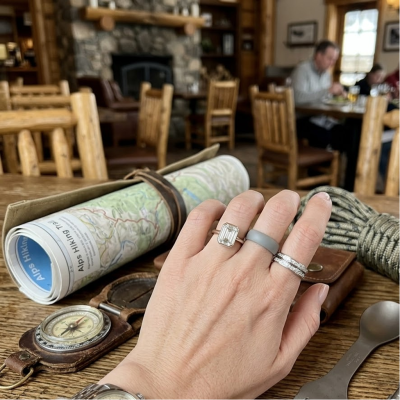
A simple solitaire engagement ring can move easily from an airport lounge to a restaurant or formal event. Look for a moderate center-stone size, smooth prongs, and a balanced band as followed:
- For hiking, cycling, skiing, camping, or frequent handling of equipment, a low-profile band may be more practical.
- A silicone band or other silicone option can be a smart way to handle active travel because it is flexible and durable.
- Flush-set, channel-set, or carefully secured moissanite wedding bands can provide sparkle without a raised center stone.
No ring is suitable for every activity. Some people use travel rings for a one-week trip or activity-heavy itinerary to reduce stress. However, you should still remove yours before swimming, climbing, lifting weights, or handling heavy equipment.
Choose Dependable Metal
Choose Dependable Metal
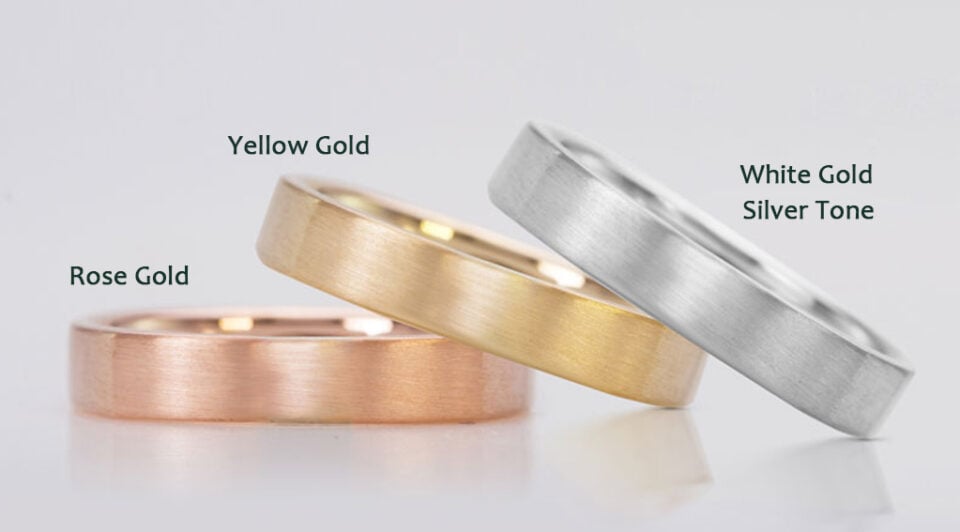
Solid 14K gold offers a practical balance of gold content and strength. Some travel rings are also made from 925 sterling silver, especially for buyers who want a lower-cost metal option. 18K gold has a richer gold color but is generally softer, while platinum is naturally white and substantial.
The Federal Trade Commission explains that pure gold is commonly alloyed to improve hardness and that plating wears over time. If you plan to use your travel ring regularly, tarnish-resistant materials and solid construction are usually better suited to everyday wear than a thin gold plated finish.
Confirm the alloy composition before ordering if you have a metal sensitivity, particularly when choosing white gold.
Why Choose a Moissanite Travel Ring?
Why Choose a Moissanite Travel Ring?
Moissanite is an ideal choice for a travel ring, balancing exceptional durability, vivid brilliance, and smart value.
Ranking 9.25 on the Mohs hardness scale, it easily resists daily scratches and wear. Its signature rainbow fire delivers remarkable sparkle under any light, while its accessible price point allows you to enjoy genuine fine-jewelry quality without the stress of carrying a high-value stone.
Here are the key differences between moissanite travel engagement ring and other gemstone pieces like diamond, sapphire, and cubic zirconia:
| Gemstone | Mohs hardness | Visual character | Best for |
|---|---|---|---|
| Moissanite | 9.25 | Strong brilliance and rainbow fire | Durability, sparkle, and value |
| Diamond | 10 | Familiar brilliance | Maximum scratch resistance |
| Sapphire | 9 | Colored or colorless with restrained sparkle | Color and a non-diamond look |
| Cubic zirconia | About 8–8.5 | Bright but more prone to visible wear | Occasional use and limited budgets |
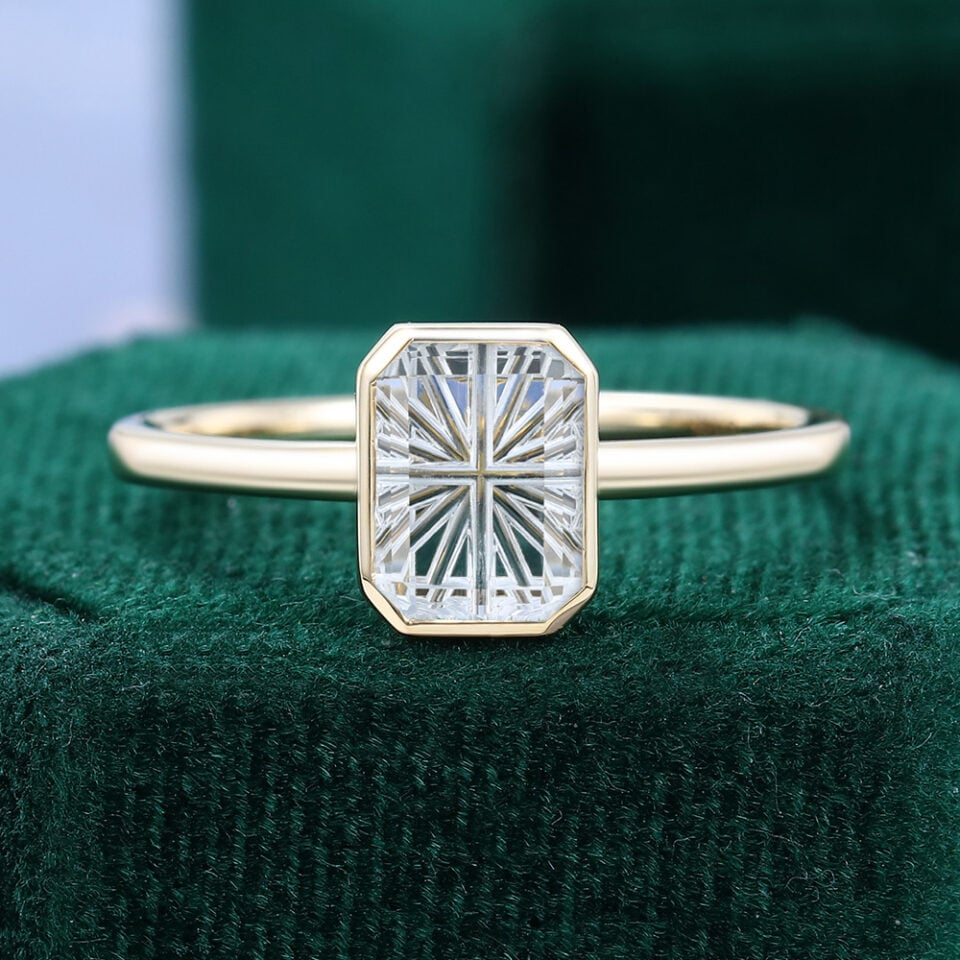
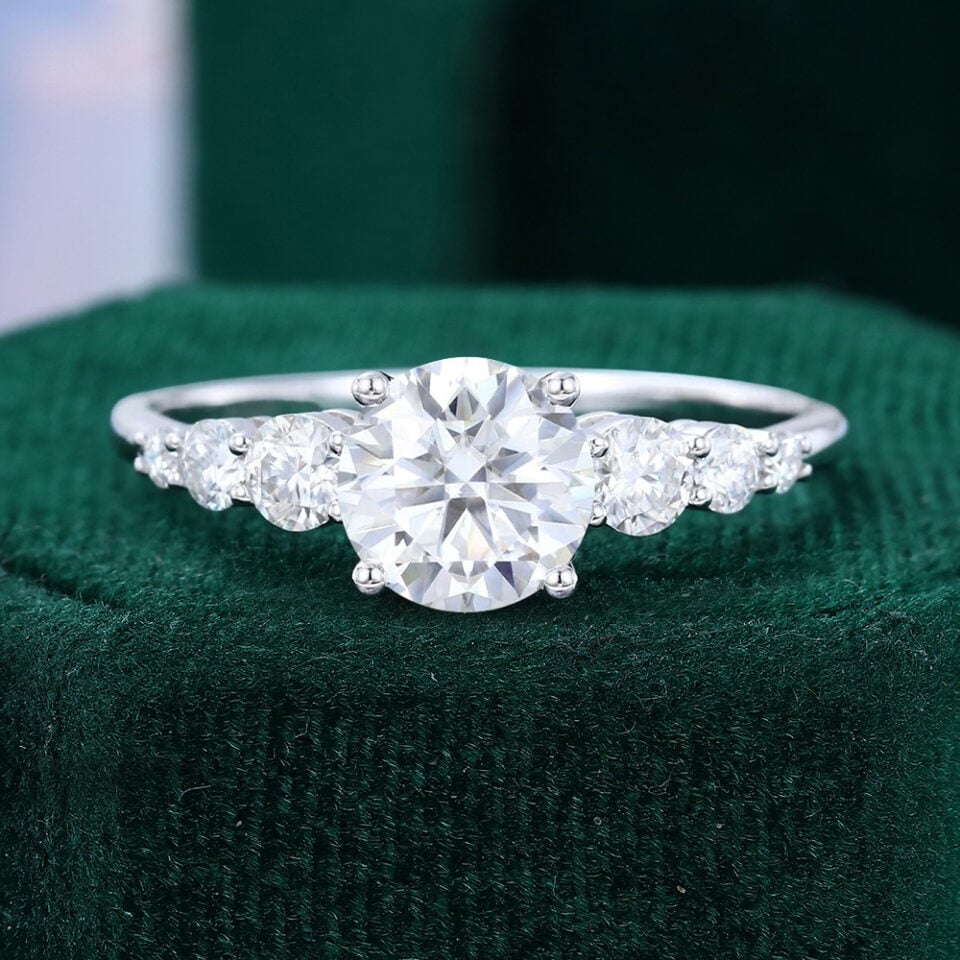
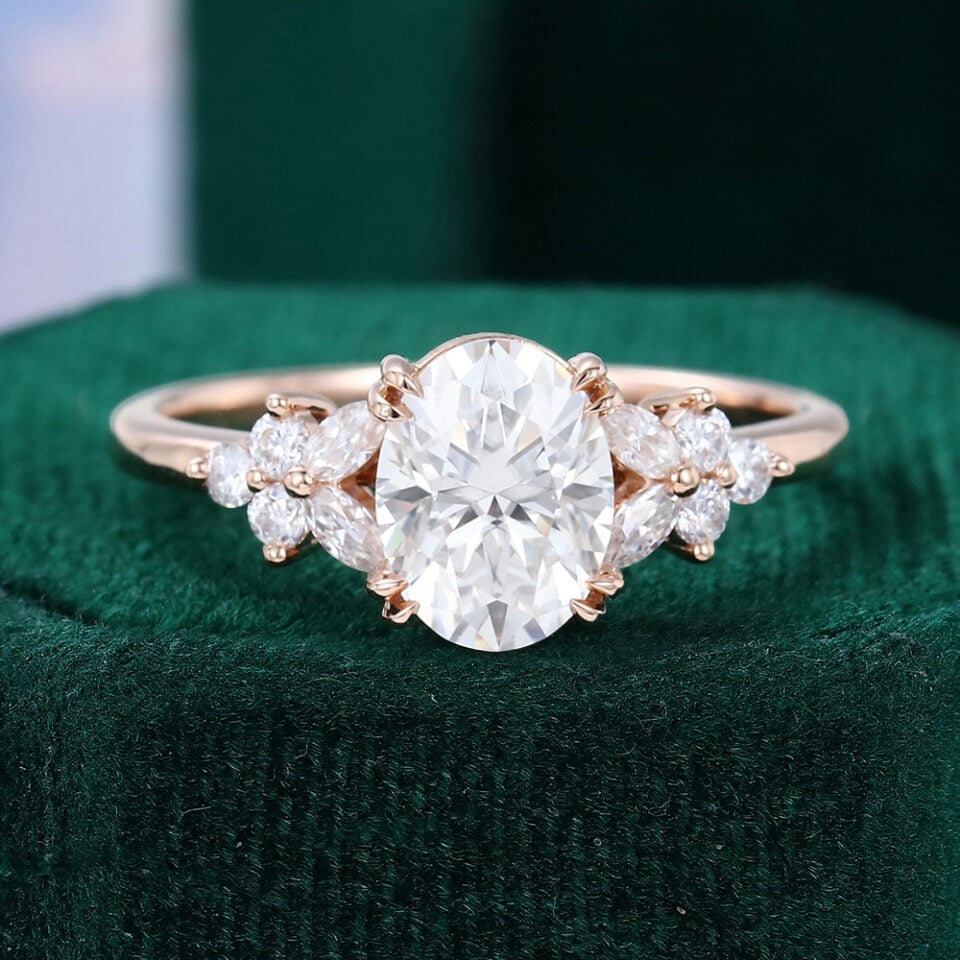
That said, hardness does not mean indestructibility. A severe impact can still damage a stone, bend a setting, or loosen a prong. Your ring’s durability depends on the gemstone, setting, metal thickness, workmanship, care, and the activities you perform while wearing it.
👉🏻 Learn more about what moissanite is or review the complete moissanite engagement ring buying guide.
How to Choose Your Perfect Travel Engagement Ring?
How to Choose Your Perfect Travel Engagement Ring?
1. Decide What Role You Want It to Serve
1. Decide What Role You Want It to Serve
You can choose a close substitute that preserves your usual look or a second design with its own identity.
- A similar design may feel familiar and continue the appearance of your original, and matching the shape or silhouette of your real ring can make the alternate feel more natural.
- A distinctive bezel ring, moissanite band, or different metal color may offer more long-term value because you can continue wearing it after your trip.
Your travel ring does not need to copy your original to carry the same emotional meaning. Choosing a different shape, such as round, oval, emerald, or halo styling, can also be fun if you want to experiment without the pressure of choosing an actual ring for life.
2. Match It to Your Plans
2. Match It to Your Plans
For city trips, business travel, restaurants, and museums, choose a ring that will suit both your itinerary and your personal style, and a low-profile solitaire or bezel setting usually works well.
For beaches and cruises, choose smooth edges and remove your ring before swimming. Cold water and slippery sunscreen can make a engagement ring easier to lose.
For outdoor or fitness-focused travel, a plain or low-set band is generally more practical than a large center stone.
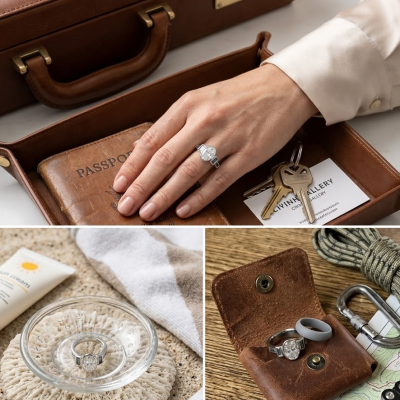
🌟 Pro Tips: In destinations where visible jewelry may attract unwanted attention, your safest option may be a simple band or no ring at all, and leaving your real engagement ring at home can offer peace of mind on certain trips.
3. Confirm the Fit Before Departure
3. Confirm the Fit Before Departure
Your ring should remain secure and comfortable, with a perfect fit even during heat, flights, or long walking days. Band width, ring weight, and setting size can all affect fit.
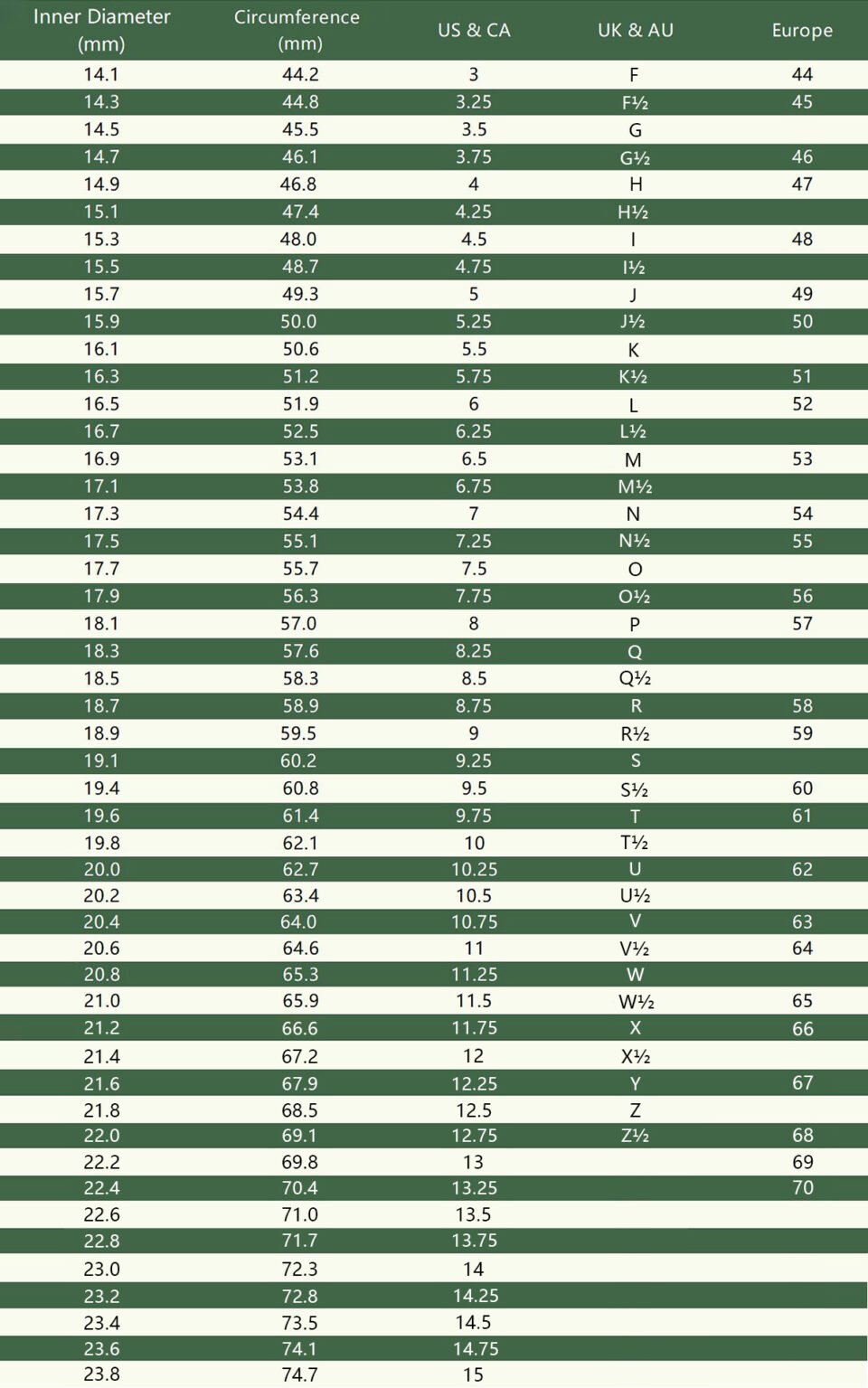
Review a professional ring size guide before ordering, and if you measure with paper or string, mark the point where it overlaps; access to half sizes can also make a noticeable difference in comfort. Measure your finger at different times rather than relying on one reading taken when your hands are unusually warm or cold.
💖 Plus Styling Tips:
- A wider wedding band may require a different fit from a thin engagement ring.
- A large or high center setting may also rotate even when the numerical size is technically correct.
4. Customize It Around the Way You Travel
4. Customize It Around the Way You Travel
A custom travel engagement ring can be crafted with a lower basket, protective bezel, covered stone tips, a smoother gallery, or interior engraving connected to a destination while still preserving beauty.
Tell your designer how you expect to use the ring so they can tailor the amount of detail or accenting to be just the right amount for your trip and preferences. A design intended for city travel may require different proportions from one created for hiking, frequent business travel, or a destination proposal.

👉🏻 Through our custom engagement ring process, you can begin with an idea, image, gemstone, or personal story. Review the customization guide before submitting your request.
5. Set a Replaceable Budget
5. Set a Replaceable Budget
Your travel ring should be well made, but it should not create the same anxiety that led you to leave your original at home.
Choose an amount you could replace without financial distress as a smart way to reduce stress and travel with more peace. Prioritize secure construction, appropriate metal, comfortable fit, and stone protection before increasing center-stone size, since if a lower-cost ring is lost or damaged, it is usually no big deal compared with replacing your original.
How to Travel Safely With Your Engagement Ring?
How to Travel Safely With Your Engagement Ring?
A travel engagement ring reduces stress while traveling by letting you leave your actual engagement ring at home, but it does not replace careful handling. The Transportation Security Administration recommends keeping valuable jewelry with you instead of placing it in checked baggage.
Before an international trip, you can review current destination guidance from the U.S. Department of State.
- Use your carry-on. Keep the ring in a discreet protective case inside your personal item.
- Document it. Retain your receipt, order details, appraisal, and clear photographs.
- Check your insurance. Confirm whether loss, theft, and international travel are covered.
- Choose one storage location. Return the ring to the same case whenever you remove it.
- Remove it for higher-risk activities. For swimming, climbing, exercising, or handling equipment, a simple wedding ring substitute may be better than wearing the actual ring.
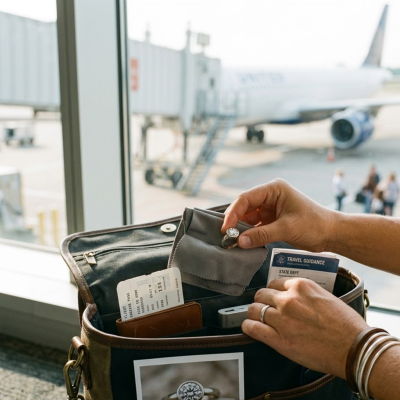
Consistency matters. Rings are often lost because they are removed casually and left somewhere unfamiliar, not because the setting fails.
What Should You Do to Care for the Travel Ring?
What Should You Do to Care for the Travel Ring?
Inspect your ring before and after a major trip. Check for movement in the center stone, uneven prongs, a bent band, or loose accent stones.
For routine cleaning, use mild dish soap, warm water, a soft-bristled brush, and a soft cloth. Avoid abrasive cleaners and harsh chemicals. Store your ring separately in a soft pouch or lined compartment.
💡 For more professional tips, our jewelry care guide provides additional instructions for different metals and gemstones.
Your Travel Ring Should Feel Like Your Piece
Your Travel Ring Should Feel Like Your Piece
Leaving your most sentimental or valuable engagement ring at home can be sensible. Your alternative does not have to feel generic or disposable.
The best travel engagement rings carry their own brilliance because you choose them for the way you live. They can join you on every journey and still feel stylish rather than disposable. Your ring may commemorate a first international trip, a destination proposal, an anniversary, or a preference for traveling with less worry.
Explore MollyJewelryUS to shop travel rings and compare engagement rings, moissanite bands, gemstone designs, and custom options that beat the usual tradeoff between practicality and style.
Frequently Asked Questions
Frequently Asked Questions
What Is the Best Engagement Ring to Wear While Traveling?
For most trips, a low-profile moissanite ring in a bezel or secure prong setting is a strong choice. A solid 14K gold or platinum band provides a dependable foundation, while the lower profile reduces exposed edges and snag points.
For more active trips, some travelers prefer travel rings in Silicone, tungsten, or a simple band instead of a stone-forward ring.
Should You Travel With Your Original Engagement Ring?
Is Moissanite Durable Enough for a Travel Engagement Ring?
Yes. Moissanite ranks 9.25 on the Mohs hardness scale and resists ordinary scratching well. It is not indestructible, so maintain the setting and remove the ring during high-impact activities.
What Is the Most Secure Setting for a Travel Ring?
A full bezel is one of the most protective choices because metal surrounds the gemstone’s edge. Partial bezels, low-profile prong settings, flush settings, and channel-set bands can also work well when properly constructed.
Are rose gold rings good for sensitive skin?
It depends. Because rose gold contains copper, those with known copper allergies should opt for hypoallergenic Platinum instead.
How Much Should You Spend on a Travel Engagement Ring?
Choose a budget that lets you buy a secure, well-made ring without creating financial distress if you need to replace it. Many affordable travel rings are purchased specifically for trips because they are easier to replace if lost or damaged. Prioritize construction, fit, and stone protection before increasing the center-stone size.