- by MollyJewelryUS
- May 6, 2026
- Buying Guides, Gemstone Education
Natural sapphire and lab sapphire may look similar at first glance, but they create very different visual experiences once set in a ring. In today’s engagement ring market, the choice is no longer just about “natural vs created” — it is about color performance, design style, overall appearance, and how the ring feels in everyday wear.
This guide focuses on the differences that actually affect buying decisions, especially for modern sapphire engagement rings.
For a broader introduction to sapphire colors and varieties, you can also explore our guide to different sapphire colors.
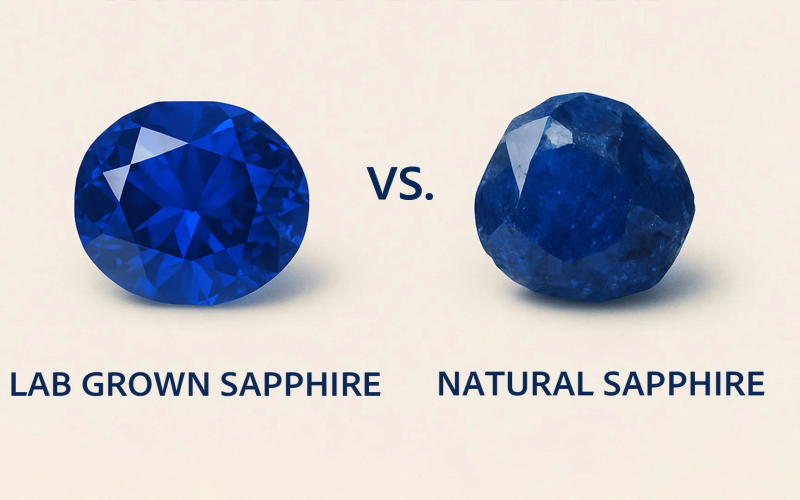
Table Of Contents:
Table Of Contents:
- Why This Comparison Matters More in 2026
- The Biggest Visual Difference Most Buyers Notice
- Why Lab Sapphire Has Become So Popular in Engagement Rings
- When Natural Sapphire Still Makes More Sense
- Which Sapphire Looks Better in Different Ring Styles
- How Sapphire Color Actually Behaves in Real Life
- What Happens After Years of Daily Wear?
- Are People Able to Tell the Difference?
- How to Choose Based on Your Priorities
- Final Thoughts
- FAQs
Why This Comparison Matters More in 2026
Why This Comparison Matters More in 2026
The sapphire market has changed significantly over the last few years.
Buyers today are no longer choosing sapphire only as a diamond alternative. Instead, many couples specifically want sapphire because of its color depth, individuality, durability, and design flexibility.
People now want:
- Larger center stones
- More unique sapphire colors
- Fancy cuts like oval, pear, kite, and emerald cuts
- Vintage-inspired settings
- Statement rings with strong color contrast
- Better value without sacrificing appearance
This shift is one reason lab sapphire engagement rings have grown rapidly in popularity.
Lab-created sapphires make it easier to achieve highly saturated color, cleaner clarity, and larger visual size without pushing the price into the luxury natural sapphire range.
But that does not automatically make natural sapphire less desirable.
The two options simply create different types of beauty.
The Biggest Visual Difference Most Buyers Notice
The Biggest Visual Difference Most Buyers Notice
At a glance, natural sapphire and lab sapphire can appear very similar. But once the stone is worn daily — especially in larger engagement ring designs — the visual differences become more noticeable.
| Visual Detail | Natural Sapphire | Lab Sapphire |
|---|---|---|
| Color Appearance | Often shows soft tonal variation and natural depth | Usually appears cleaner and more evenly saturated |
| Indoor Lighting | May look moodier or slightly darker | Typically stays brighter and more vivid |
| Clarity Look | Can include natural silk or subtle inclusions | Usually eye-clean with a more polished appearance |
| Overall Character | Organic, unique, slightly unpredictable | Precise, balanced, visually consistent |
| Best Visual Style | Vintage, heirloom, antique-inspired rings | Modern solitaires, bold statement rings, clean contemporary settings |
| Large Center Stones | Color may vary across the stone | More uniform color distribution |
| Photography & Social Media | Softer and more natural-looking | More vibrant and camera-friendly |
Neither appearance is objectively better.
Some buyers prefer the individuality and natural depth of mined sapphire, while others love the crisp color consistency and modern look of lab sapphire engagement rings.
Why Lab Sapphire Has Become So Popular in Engagement Rings
Why Lab Sapphire Has Become So Popular in Engagement Rings
Lab sapphire is no longer viewed as a “budget substitute.”
In many modern engagement ring designs, it is intentionally chosen because it performs exceptionally well visually.
Better Color Consistency
Better Color Consistency
Matching sapphire colors precisely is difficult in nature.
Lab sapphires allow designers to create:
- Cleaner matched side stones
- Symmetrical three-stone rings
- Consistent halo designs
- Coordinated bridal sets
- Rich fantasy colors like teal, lavender, peach, or vivid cornflower blue
That consistency is especially valuable in modern engagement ring aesthetics.
Larger Center Stones Without Extreme Pricing
Larger Center Stones Without Extreme Pricing
Many couples today prefer bold center stones with strong finger coverage.
Lab sapphire makes this easier.
Instead of compromising on size or shape, buyers can prioritize the visual look they actually want. This is one reason elongated sapphire cuts have become increasingly popular in modern bridal jewelry.
You can explore more shape-focused styling ideas in our sapphire cut guide.
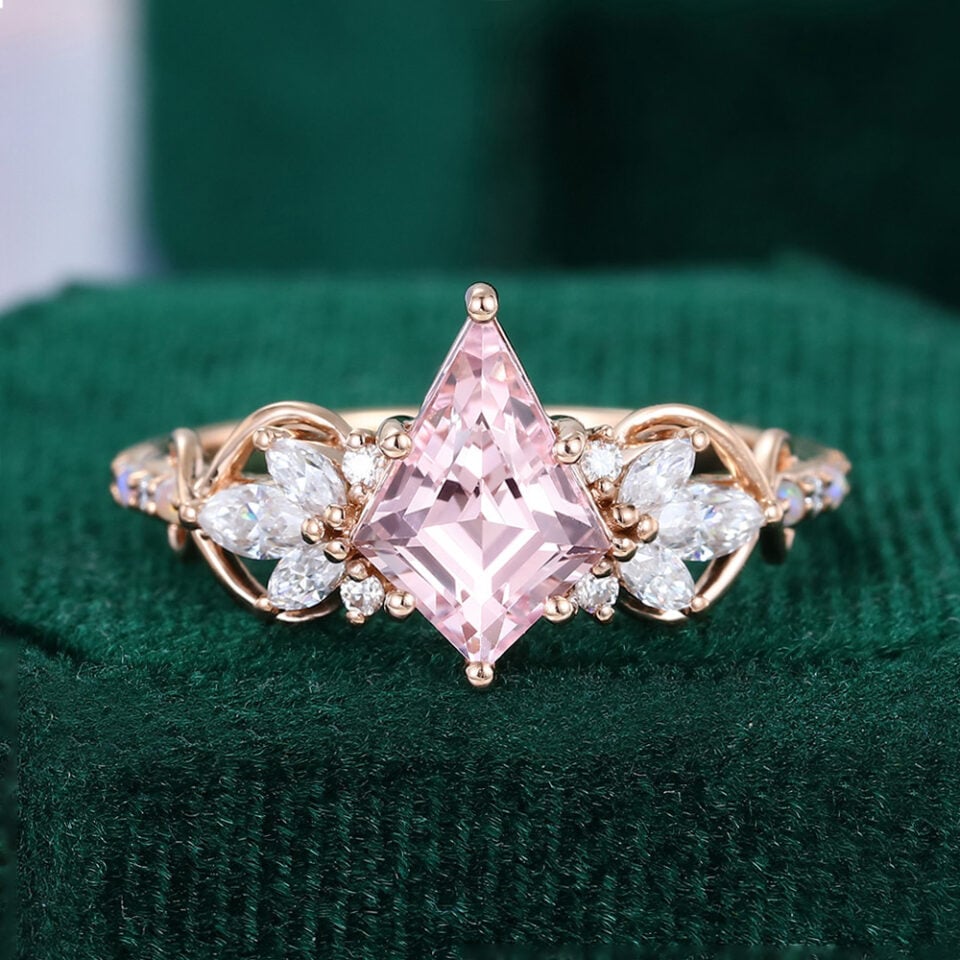
Better for Highly Detailed Settings
Better for Highly Detailed Settings
Designs featuring:
- Pavé halos
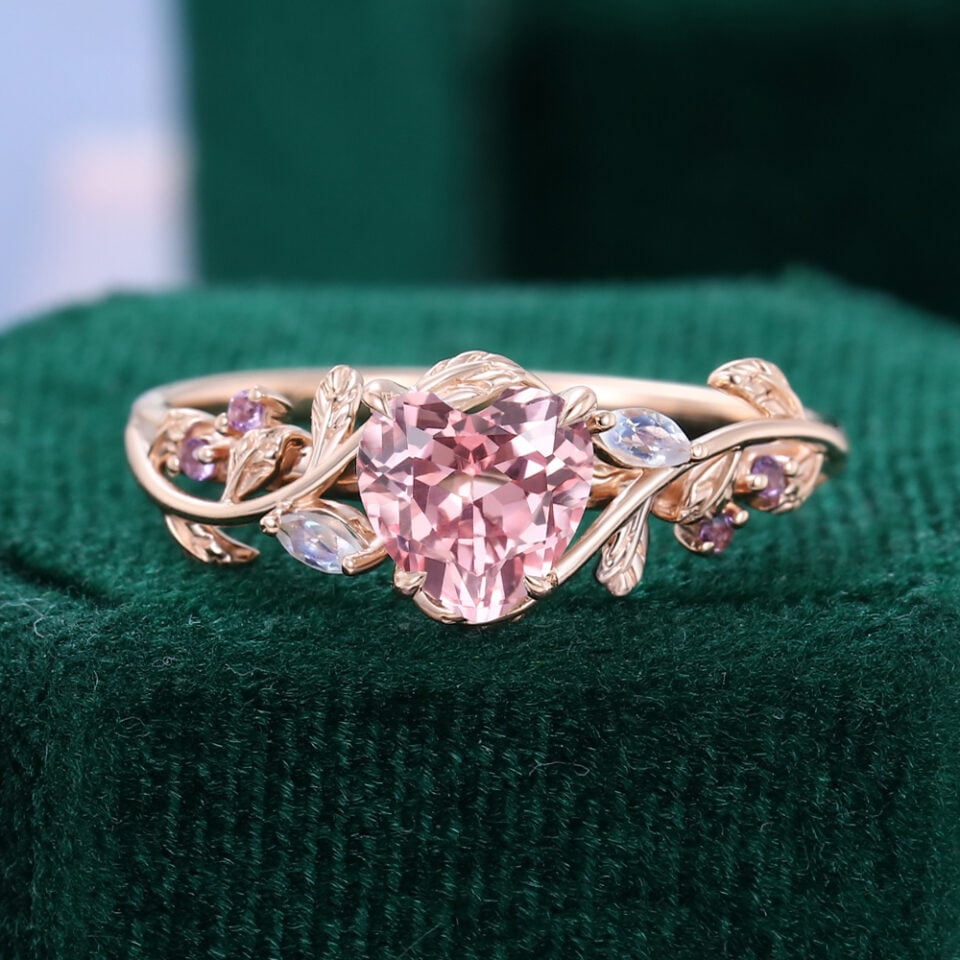
- Floral details
- Nature-inspired settings
- Multi-stone layouts
- Intricate vintage structures
usually benefit from cleaner stones with strong color consistency.
Lab sapphires often perform exceptionally well in these settings.
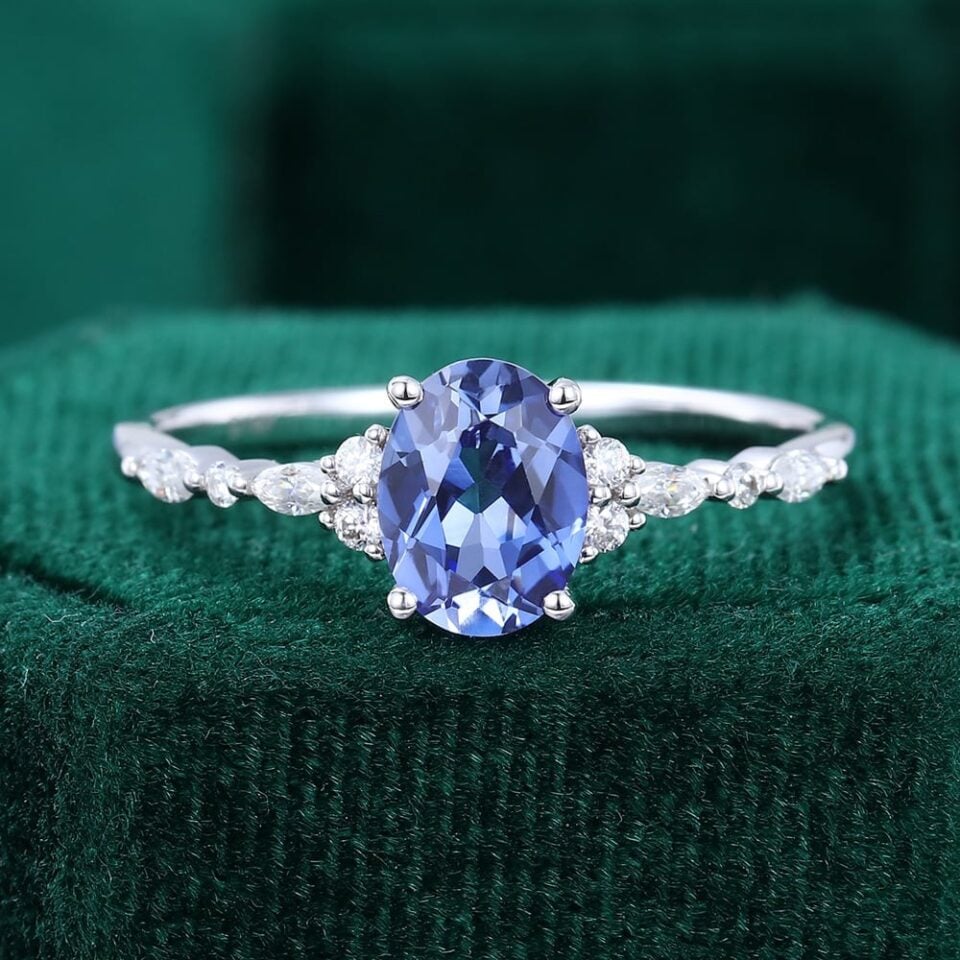
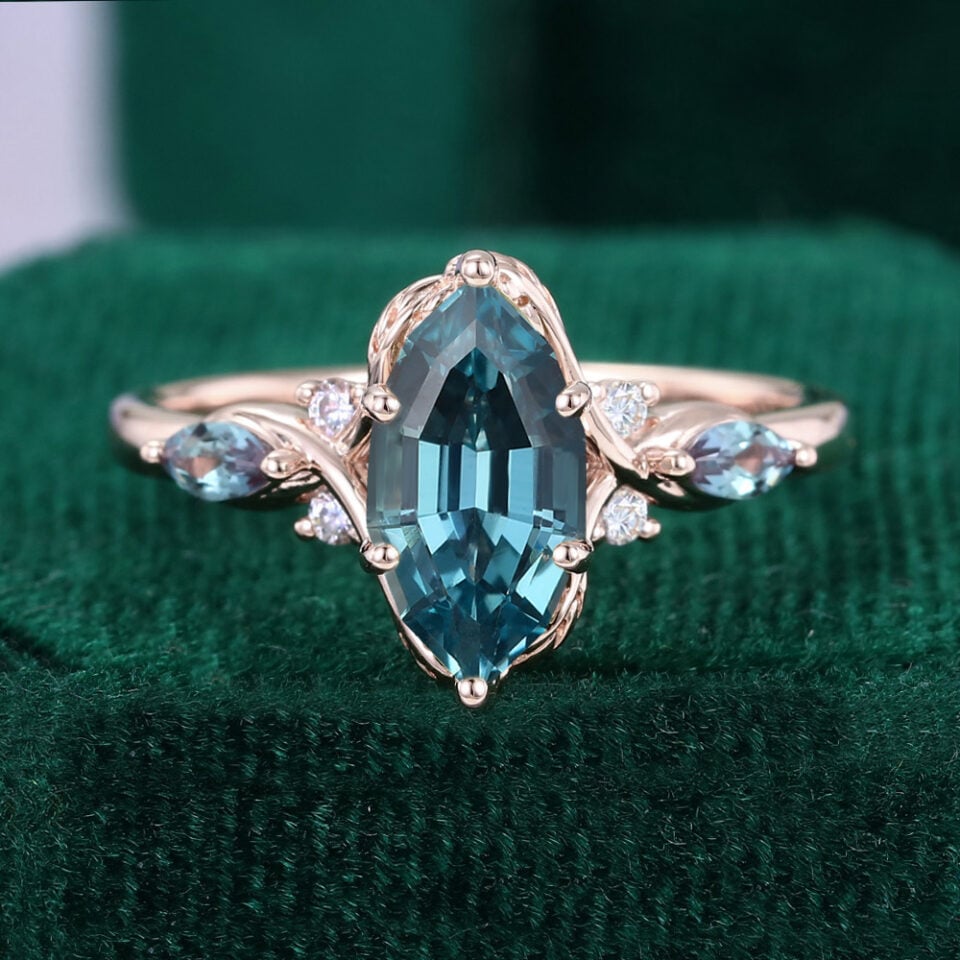
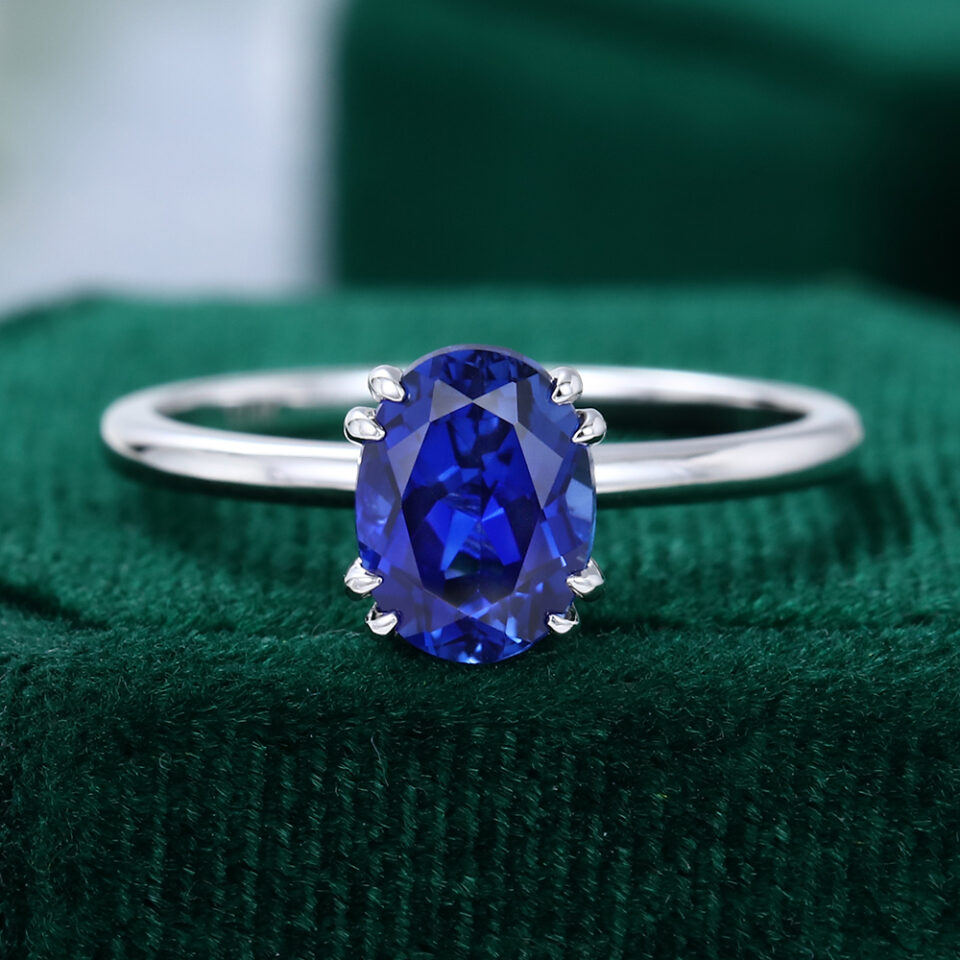
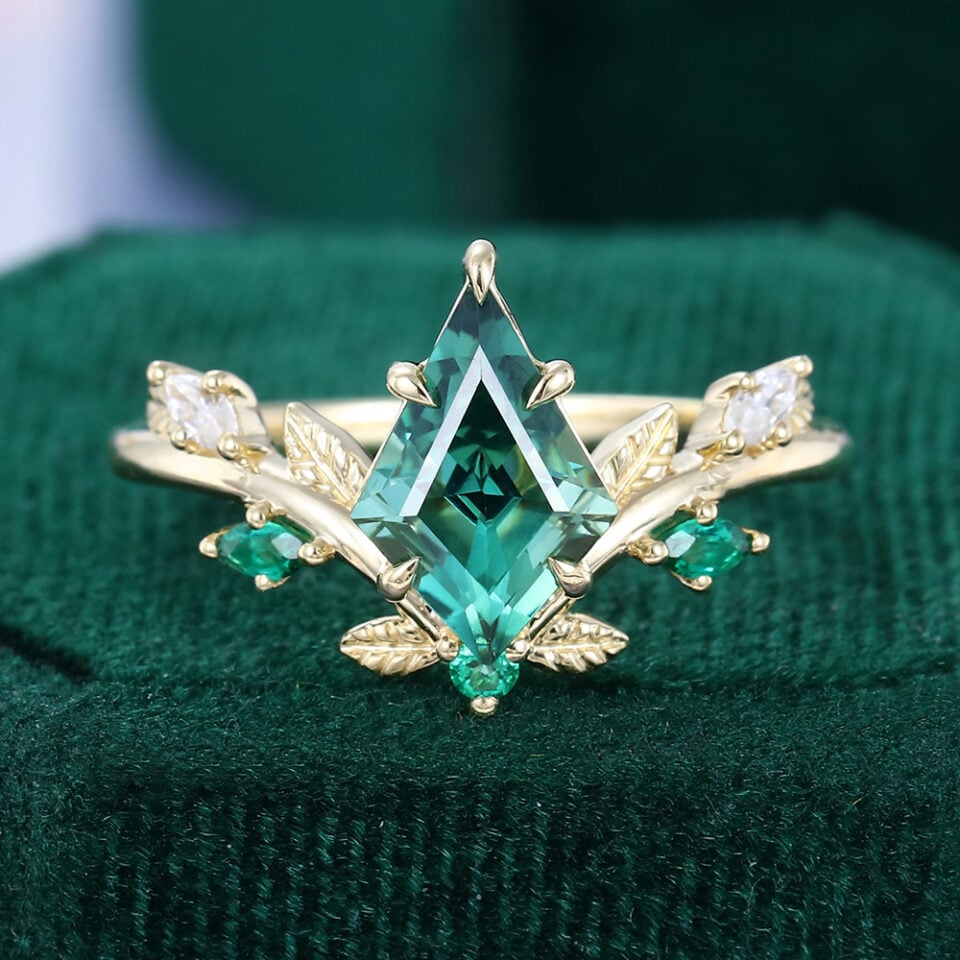
When Natural Sapphire Still Makes More Sense
When Natural Sapphire Still Makes More Sense
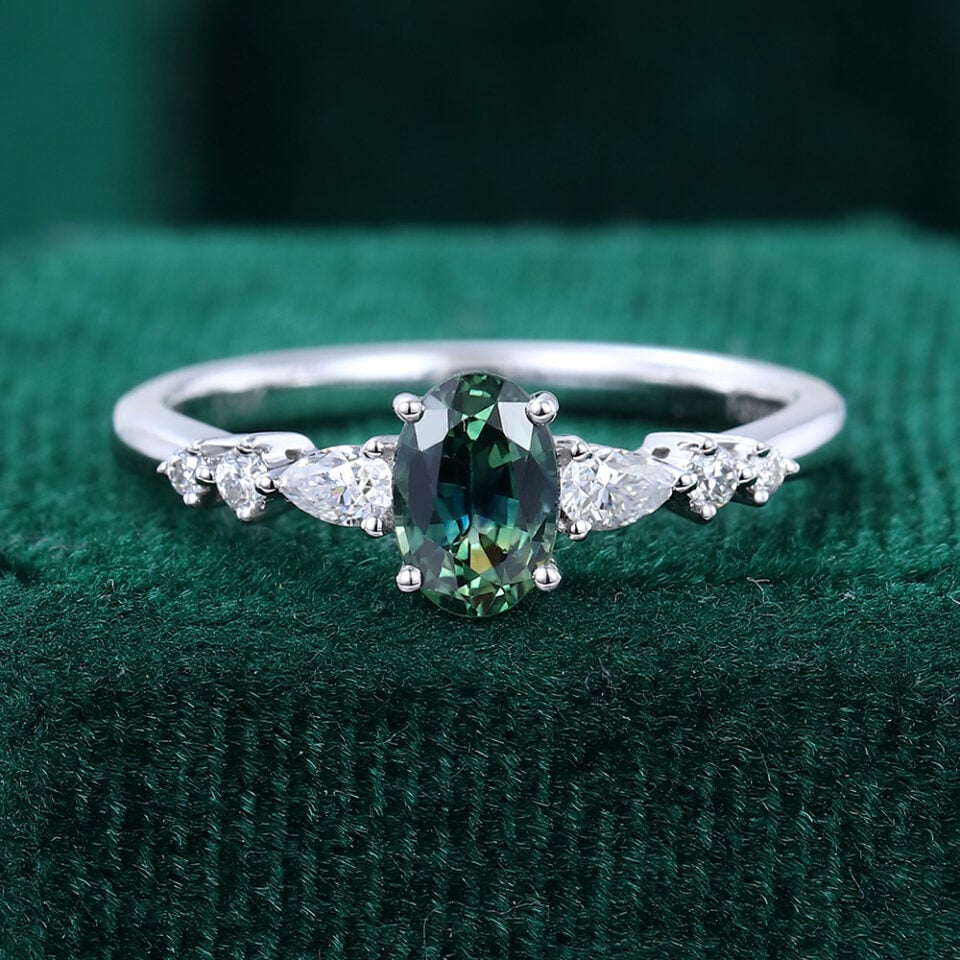
Natural sapphire still carries a visual and emotional appeal that many buyers specifically seek.
The appeal is often connected to individuality.
Natural sapphires can contain:
- Silk inclusions
- Color zoning
- Slight tonal softness
- Unique internal texture
- Organic-looking depth
Those details can create a sapphire that feels more alive and less uniform.
This is especially true in:
- Vintage-inspired rings
- Antique-style settings
- Heirloom jewelry
- One-of-a-kind custom pieces
Natural sapphire is often preferred when the goal is rarity, natural formation history, or collector-oriented beauty rather than visual perfection.
Some buyers also simply connect more emotionally with gemstones formed naturally over millions of years.

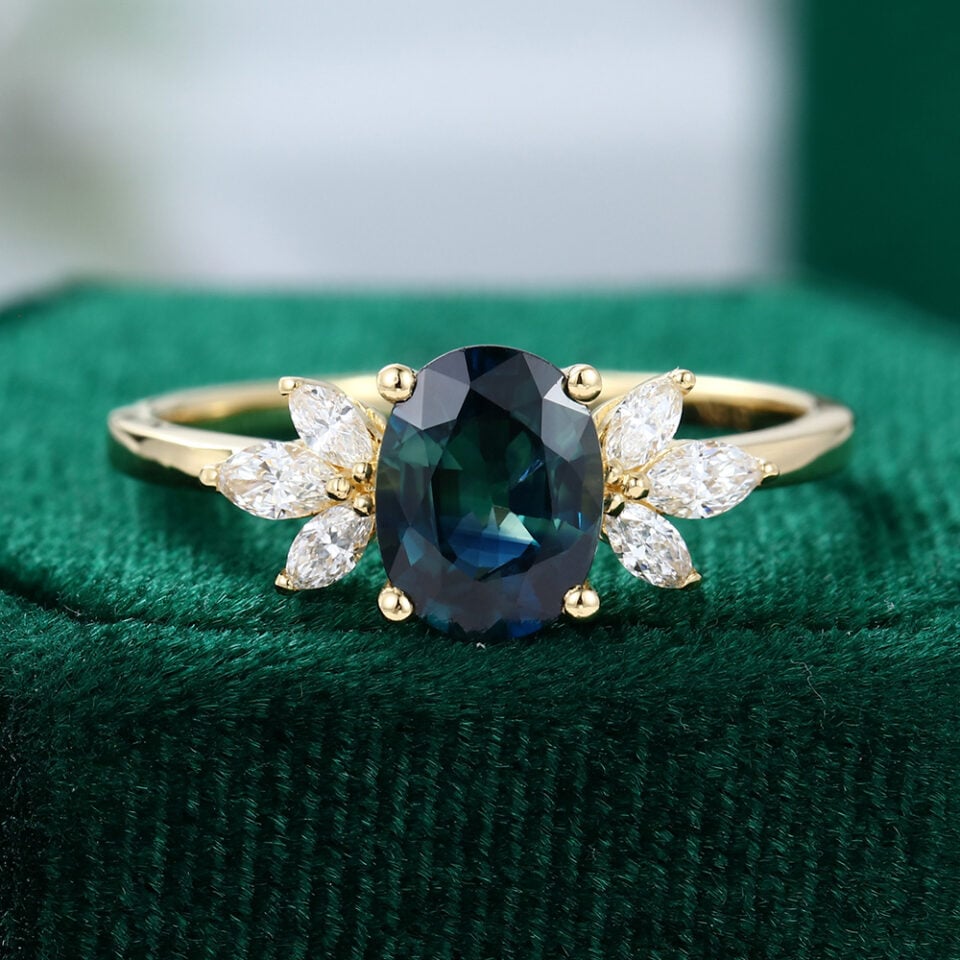
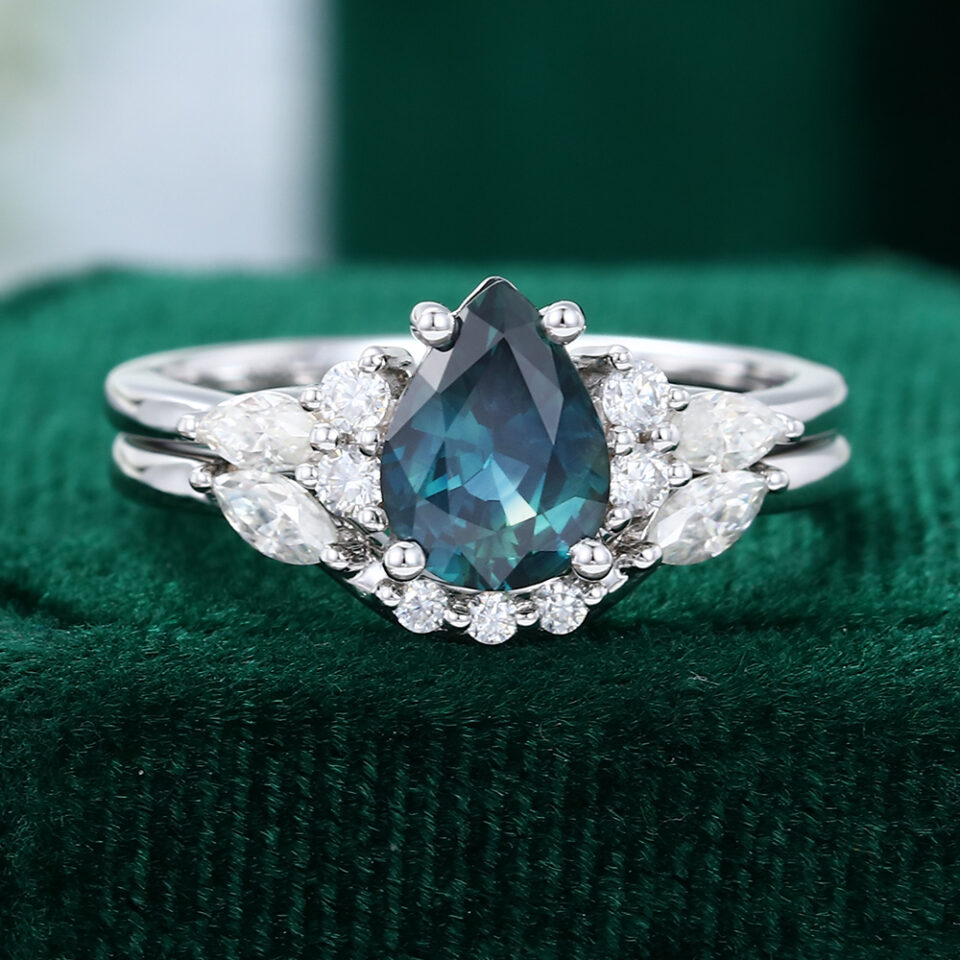
Which Sapphire Looks Better in Different Ring Styles
Which Sapphire Looks Better in Different Ring Styles
Instead of asking which sapphire is “better,” a smarter question is:
Which sapphire works better for the style you want?
Minimalist Rings
Minimalist Rings
Lab sapphire usually performs better in minimalist settings because cleaner clarity and even color become the main visual focus.
Vintage Rings
Vintage Rings
Natural sapphire often pairs beautifully with milgrain, antique cuts, filigree, and softer romantic settings because the stone itself feels more organic.
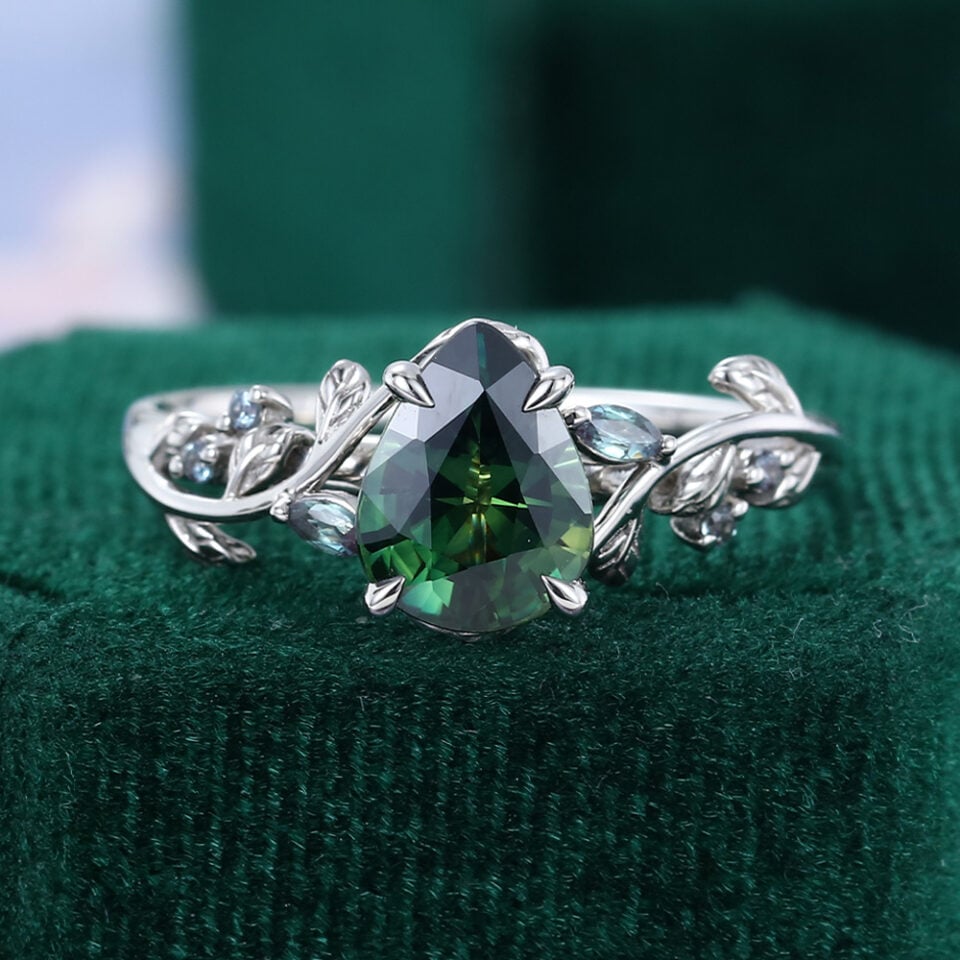
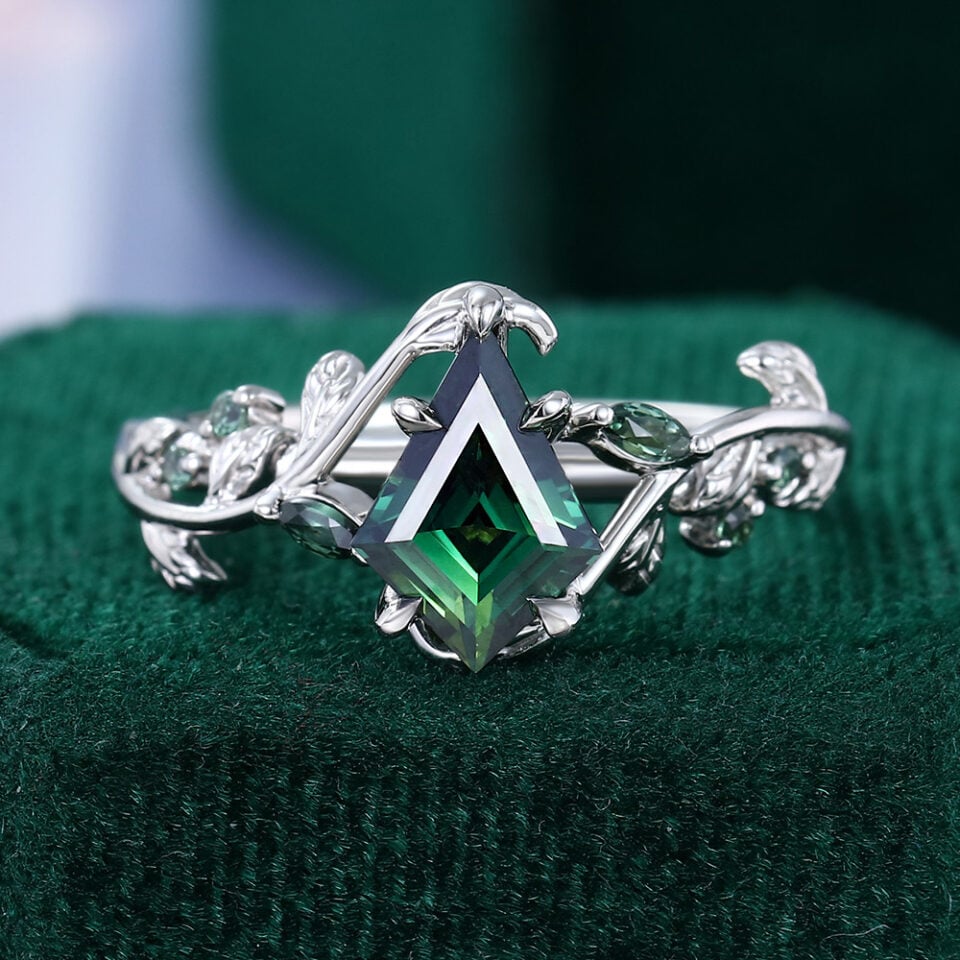
Nature-Inspired Designs
Nature-Inspired Designs
Both options work well, but lab sapphires are often chosen for stronger color contrast in floral or leaf-inspired designs.
Statement Rings
Statement Rings
Large statement rings frequently use lab sapphire because vivid color saturation becomes achievable at larger sizes.
Heirloom-Style Jewelry
Heirloom-Style Jewelry
Natural sapphire tends to feel more aligned with heirloom storytelling and traditional fine jewelry aesthetics.
How Sapphire Color Actually Behaves in Real Life
How Sapphire Color Actually Behaves in Real Life
Sapphire color does not look identical in every environment.
This is one of the biggest surprises buyers experience after receiving a ring.
Some sapphires appear:
- Brighter outdoors
- Darker in warm indoor lighting
- More gray under cloudy conditions
- More vivid under jewelry store lighting
Lab sapphires are often optimized for stronger and more stable visual saturation.
Natural sapphires may shift more depending on:
- Cut proportions
- Crystal structure
- Natural inclusions
- Tone depth
- Lighting environment
Meanwhile, a well-cut lab sapphire may retain visible blue color more consistently throughout the day. That difference strongly affects daily wear experience.
What Happens After Years of Daily Wear?
What Happens After Years of Daily Wear?
In practical terms, both natural and lab sapphires perform extremely well for everyday jewelry.
Chemically and structurally, both are sapphire.
That means both offer:
- Excellent scratch resistance
- Strong durability
- Long-term color stability
- Good performance in engagement rings
You can learn more about long-term durability in our guide to sapphire hardness and daily wear.
The more important difference is usually setting design rather than gemstone origin.
A poorly protected sapphire with exposed corners is far more vulnerable than whether the stone is natural or lab-created.
Are People Able to Tell the Difference?
Are People Able to Tell the Difference?
In most cases, no.
Without gemological equipment, most people cannot visually distinguish a natural sapphire from a lab sapphire once the stone is mounted in a ring.
Especially in:
- Smaller carat sizes
- Halo settings
- Pavé rings
- Colored sapphire engagement rings
- Everyday lighting conditions
The visual difference is often much smaller than buyers expect.
This is one reason many modern couples prioritize overall ring design, color appearance, and lifestyle compatibility instead of focusing only on origin.
How to Choose Based on Your Priorities
How to Choose Based on Your Priorities
Choose Natural Sapphire If You Want:
Choose Natural Sapphire If You Want:
- Organic gemstone character
- Natural inclusions and variation
- Collector appeal
- Traditional luxury feel
- Heirloom-oriented jewelry
- One-of-a-kind visual identity
Choose Lab Sapphire If You Want:
Choose Lab Sapphire If You Want:
- Stronger color consistency
- Larger visual appearance
- Cleaner clarity
- Modern designer aesthetics
- More flexibility with budget
- Bold colors and statement styles
The best sapphire is not necessarily the rarest.
It is the one that creates the look, feeling, and long-term wear experience you actually want.
Final Thought
Final Thought
The modern sapphire market is no longer divided into “real” versus “alternative.”
Instead, buyers are choosing between two different visual experiences.
- Natural sapphire offers rarity, individuality, and organic character.
- Lab sapphire offers precision, vivid color consistency, and greater design flexibility.
The right choice depends less on industry labels — and more on the kind of ring experience you want every day when you look down at your hand.
If you are still exploring styles, colors, or ring settings, our colored sapphire engagement ring guide is a helpful next step for comparing different sapphire aesthetics and design directions.
Related FAQs
Related FAQs
Is lab sapphire real sapphire?
Yes. Lab sapphire has the same chemical composition and hardness as natural sapphire. The primary difference is origin rather than physical structure.
Does natural sapphire sparkle more than lab sapphire?
Not necessarily. Sparkle depends more on cut quality, proportions, and lighting performance than whether the sapphire is natural or lab-created.
Why do some natural sapphires look darker indoors?
Natural sapphires with deeper tone or stronger color concentration can absorb more light indoors, especially in poorly lit environments.
Which sapphire is better for large engagement rings?
Lab sapphire is often preferred for larger center stones because it allows stronger color consistency and cleaner appearance at larger sizes.
Are lab sapphires durable enough for everyday wear?
Yes. Lab sapphires have the same hardness and durability as natural sapphires, making them suitable for daily wear engagement rings.
Can lab sapphires come in different colors?
Yes. Lab sapphires are available in blue, teal, green, pink, purple, peach, white, and many other colors.
Do natural sapphires always have inclusions?
Most natural sapphires contain some inclusions, although visibility varies. In many cases, slight inclusions actually contribute to a more natural and unique appearance.