- by MollyJewelryUS
- May 28, 2026
- Gemstone Education
A sapphire rings can have a beautiful gemstone and still feel visually “off” once worn.
Some rings instantly look refined, elegant, and expensive on the hand. Others feel bulky, awkward, or strangely flat — even with a larger sapphire.
The difference usually comes down to proportions.
Things like:
- stone shape
- center stone ratio
- band thickness
- spacing
- finger coverage
- setting balance
all affect whether a sapphire ring feels like fine jewelry or simply looks oversized.
And once you start noticing proportions, it becomes surprisingly easy to tell why certain sapphire rings look far more luxurious than others.
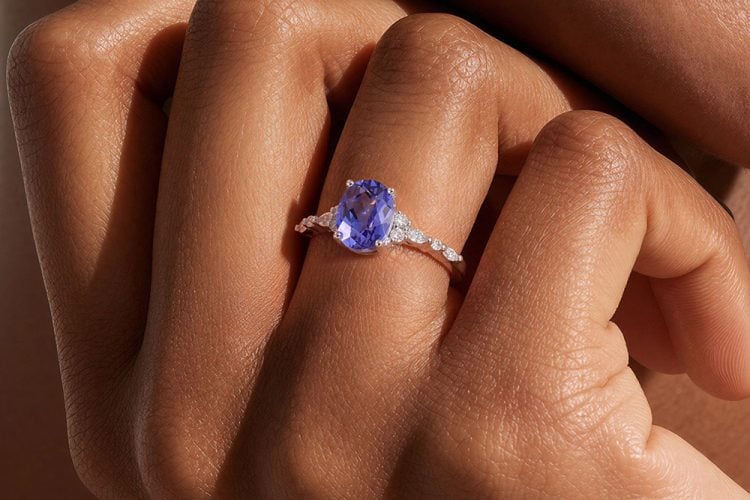
Table of Contents
What Actually Makes A Sapphire Ring Look Expensive?
What Actually Makes A Sapphire Ring Look Expensive?
Luxury-looking sapphire rings rarely rely on carat size alone.What usually creates that refined “fine jewelry” appearance is visual balance.
The sapphire feels expensive when:
- the center stone looks elongated rather than bulky
- the band supports the stone instead of overpowering it
- the proportions feel clean from every angle
- the ring covers the finger elegantly without feeling heavy
This is why some smaller sapphire rings can look dramatically more sophisticated than oversized designs with poor balance.
In fact, one of the easiest ways to spot a high-end sapphire ring is simple:
Nothing competes for attention. The eye naturally focuses on the sapphire first.
The Details That Usually Create A Luxury Appearance
The Details That Usually Create A Luxury Appearance
| Design Detail | Why It Changes The Entire Look |
|---|---|
| Elongated center stones | Creates a slimmer, more refined appearance |
| Thin balanced bands | Keeps focus on the sapphire |
| Controlled spacing | Makes the ring feel cleaner and more premium |
| Symmetrical layouts | Creates visual harmony |
| Delicate prongs | Helps the sapphire appear larger and lighter |
| Balanced side accents | Adds detail without visual heaviness |
Many modern sapphire engagement rings intentionally use elongated proportions because they create a more elegant hand appearance without needing extremely large stones.
The Sapphire Ratios That Usually Look The Most Elegant
The Sapphire Ratios That Usually Look The Most Elegant
Even small ratio changes can completely affect how luxurious a sapphire appears once worn.
Some shapes naturally create:
- longer finger lines
- better visual spread
- cleaner symmetry
- more refined proportions
while others can unintentionally make the ring feel wider, heavier, or less balanced.
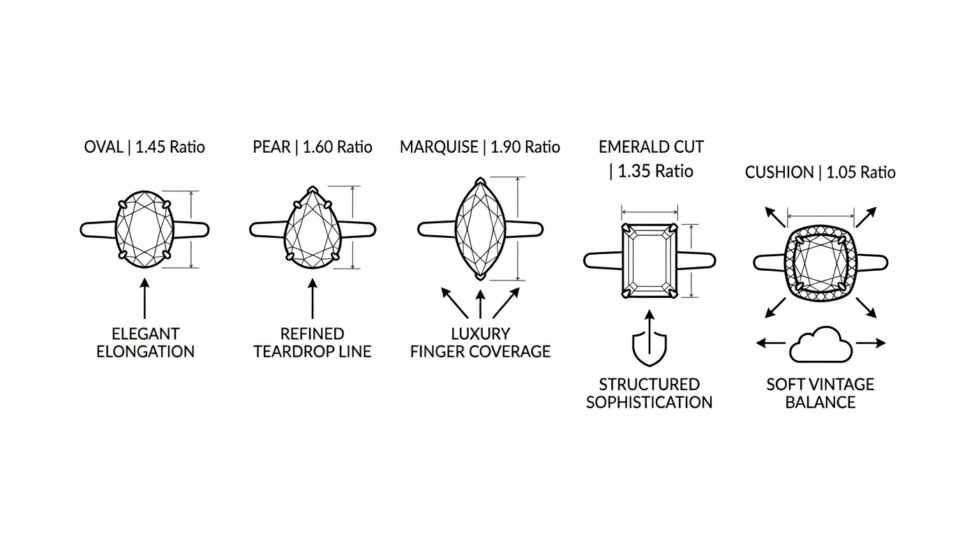
| Sapphire Shape | Ideal Ratio | Visual Effect |
|---|---|---|
| Oval Sapphire | 1.40 – 1.50 | Elegant elongated appearance |
| Pear Sapphire | 1.50 – 1.65 | Balanced without looking too narrow |
| Marquise Sapphire | 1.80 – 2.00 | Strong luxury finger coverage |
| Emerald Cut Sapphire | 1.30 – 1.45 | Structured sophistication |
| Cushion Sapphire | 1.00 – 1.15 | Softer vintage-inspired balance |
Why Some Sapphire Rings Look More Expensive Than Bigger Stones
Why Some Sapphire Rings Look More Expensive Than Bigger Stones
One of the biggest mistakes buyers make is assuming larger sapphires automatically look more luxurious.
In reality, poor proportions can make even expensive gemstones feel visually awkward.
A sapphire ring often starts looking less refined when:
- the setting becomes too bulky
- the halo overpowers the center stone
- the sapphire is cut too deep
- the stone shape feels too short or wide
- side stones create visual clutter
This happens frequently with oversized designs trying too hard to maximize carat appearance.
By contrast, luxury sapphire rings usually feel intentional. The proportions guide the eye naturally instead of overwhelming it.
That balance is what creates the polished “fine jewelry” effect many buyers want.
The Most Common Sapphire Proportion Mistakes
The Most Common Sapphire Proportion Mistakes
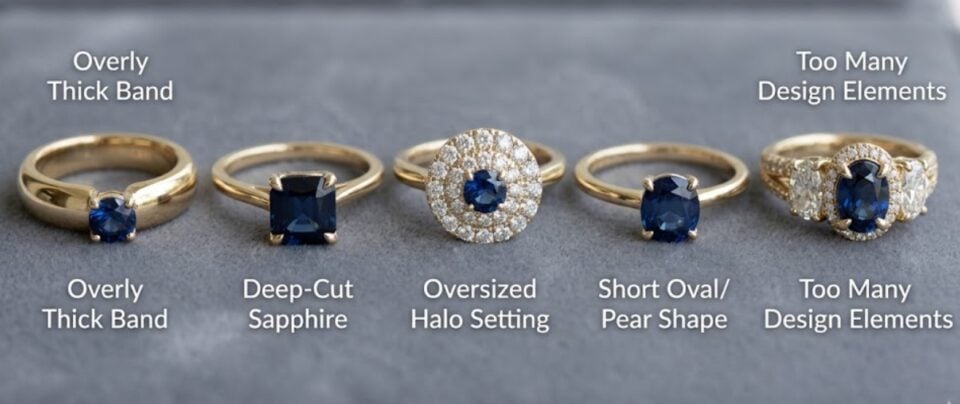
Even beautiful sapphires can lose elegance when the proportions feel visually unbalanced.
Overly Thick Bands
Overly Thick Bands
Heavy bands can make the center sapphire appear smaller and visually compressed.
Deep-Cut Sapphires
Deep-Cut Sapphires
Some sapphires carry extra carat weight underneath the stone rather than across the visible surface area.
This often makes the sapphire appear smaller than expected once worn.
Oversized Halo Settings
Oversized Halo Settings
Large halos sometimes create the opposite effect:
the center stone begins looking visually weaker instead of larger.
Short Oval Or Pear Shapes
Short Oval Or Pear Shapes
Wider elongated shapes can lose the elegant finger-lengthening appearance many buyers want from sapphire engagement rings.
Too Many Design Elements
Too Many Design Elements
Large side stones, thick prongs, excessive pavé, and bulky settings can quickly reduce the clean luxury aesthetic.
The most elegant sapphire rings usually feel visually effortless.
Which Sapphire Shapes Look Best On Different Hands?
Which Sapphire Shapes Look Best On Different Hands?
Finger shape can completely change how sapphire proportions appear once worn.
| Finger Shape | Sapphire Shapes That Usually Work Best |
|---|---|
| Short fingers | Oval, pear, marquise |
| Long fingers | Cushion, round, emerald |
| Slim fingers | Marquise, elongated oval |
| Wider fingers | Larger elongated cuts and clusters |
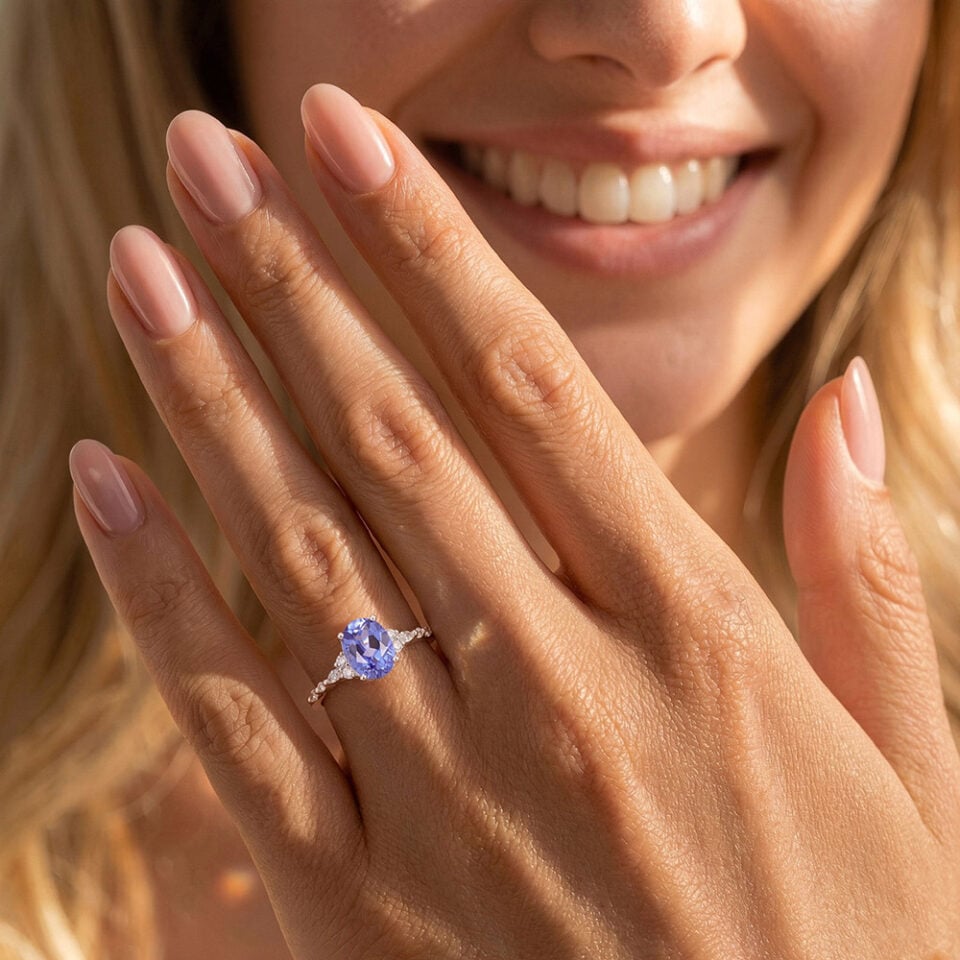
Elongated sapphire shapes are especially popular because they visually lengthen the hand and create a more refined appearance.
For a deeper breakdown, read:best sapphire ring shapes for every finger type.

The Design Details That Make Sapphire Rings Feel Like Fine Jewelry
The Design Details That Make Sapphire Rings Feel Like Fine Jewelry
Experienced jewelry designers rarely rely on carat size alone.
Instead, luxury-looking sapphire rings usually use visual balance techniques to improve overall appearance.
Common Design Techniques
Common Design Techniques
| Design Technique | Why It Works |
|---|---|
| Elongated center stones | Creates elegant visual movement |
| Thin structured bands | Keeps the sapphire visually dominant |
| Open spacing | Makes the ring feel lighter and cleaner |
| Delicate prongs | Allows more visible sapphire surface |
| Balanced side stones | Adds detail without visual heaviness |
| Symmetrical layouts | Creates a refined fine jewelry appearance |
One noticeable difference between luxury-looking sapphire rings and lower-end designs is that high-end rings rarely try to overwhelm the eye.
The proportions feel intentional instead of oversized.
Final Thoughts
Final Thoughts
The sapphire rings that feel the most elegant are rarely the ones with the largest carat size.
Instead, the rings that truly stand out usually have:
- balanced proportions
- refined symmetry
- elegant finger coverage
- thoughtful spacing
- clean visual structure
Once proportions are correct, even smaller sapphire rings can appear significantly more luxurious, refined, and engagement-worthy on the hand.
Understanding sapphire ring proportions makes it much easier to choose a ring that not only looks beautiful online — but also feels balanced and sophisticated in real life.
FAQs
FAQs
What sapphire ratio looks the biggest?
Elongated oval, pear, and marquise sapphires usually create the largest visual appearance because they cover more finger surface area.
What oval sapphire ratio looks most elegant?
Most buyers prefer oval sapphire ratios between 1.35 and 1.50 because they create a balanced elongated appearance without looking too narrow.
Do elongated sapphire shapes look more expensive?
Often yes. Elongated sapphire cuts usually create stronger finger coverage and a more refined luxury appearance.
Why do some sapphire rings look smaller than their carat weight?
Deep stone cuts, bulky settings, and poor proportions can reduce visible surface size and make sapphires appear smaller.
Which sapphire shape flatters fingers the most?
Oval, pear, and marquise sapphires are commonly considered the most finger-flattering because they elongate the hand visually.
Are sapphire proportions important for engagement rings?
Absolutely. Proportions heavily affect balance, elegance, comfort, and overall appearance — especially for rings intended for everyday wear.