- by MollyJewelryUS
- July 10, 2026
- Gemstone Education
Purple amethyst and lavender amethyst aren’t different gemstones—they’re different expressions of the same gemstone.
While both belong to the amethyst family, the shade of purple dramatically changes how a ring looks, feels, and even how it’s perceived. A deep royal purple creates a bold, classic statement, while a soft lavender hue offers a lighter, more romantic aesthetic that has become increasingly popular in modern engagement rings.
So which one should you choose?
The answer isn’t about which color is “better.” It’s about understanding how different shades influence a ring’s overall appearance, style, and personality. This guide compares purple and lavender amethyst from a buyer’s perspective, helping you choose the shade that best reflects your taste and complements your lifestyle.
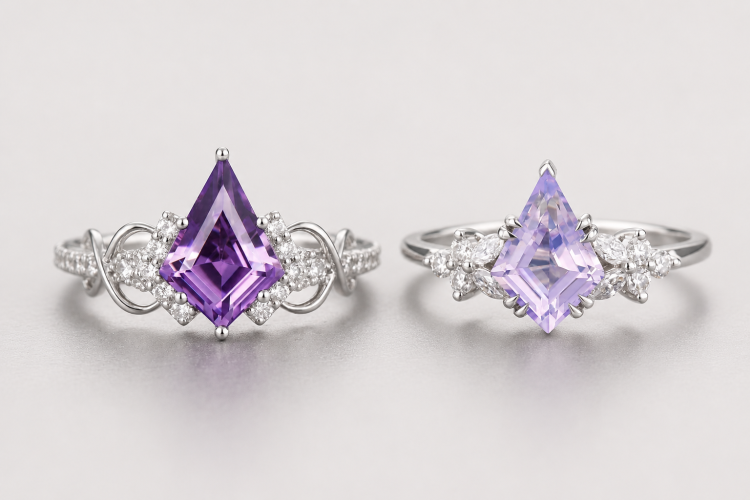
Table of Contents
Purple vs Lavender Amethyst at a Glance
Purple vs Lavender Amethyst at a Glance
If you’re comparing these two shades for the first time, here’s the simplest way to think about them.
| Purple Amethyst | Lavender Amethyst |
|---|---|
| Rich, saturated purple | Soft pastel purple |
| Bold and classic | Light and romantic |
| Creates stronger visual contrast | Feels airy and delicate |
| Traditional fine-jewelry look | Modern, feminine aesthetic |
Quick Takeaway:
Neither shade is inherently better. Deep purple amethyst tends to appeal to those who love timeless elegance and stronger color, while lavender amethyst is often chosen for its softer appearance and contemporary style.
Why Does Amethyst Come in Different Shades?
Why Does Amethyst Come in Different Shades?
One of the biggest misconceptions is that lavender amethyst is a completely different gemstone.
It isn’t.
Both purple and lavender amethyst are varieties of quartz. The only real difference is color saturation—how light or deep the purple appears.
Several factors influence that color, including the crystal’s formation, trace elements, cutting style, and lighting conditions. Natural amethyst often shows subtle variations in tone, while lab-created amethyst can achieve a more consistent appearance across different pieces.
Instead of thinking of them as two separate gemstones, it’s more accurate to see them as two ends of the same color spectrum.
Good to Know: Lavender amethyst isn’t a lower-quality version of purple amethyst. It’s simply a lighter shade that offers a different visual style.
It's Not Just the Color—It's the Feeling
It's Not Just the Color—It's the Feeling
Most buying guides compare gemstones by hardness, rarity, or price.
When choosing between purple and lavender amethyst, however, the decision is much more emotional than technical.
The color you choose shapes the personality of the entire ring.
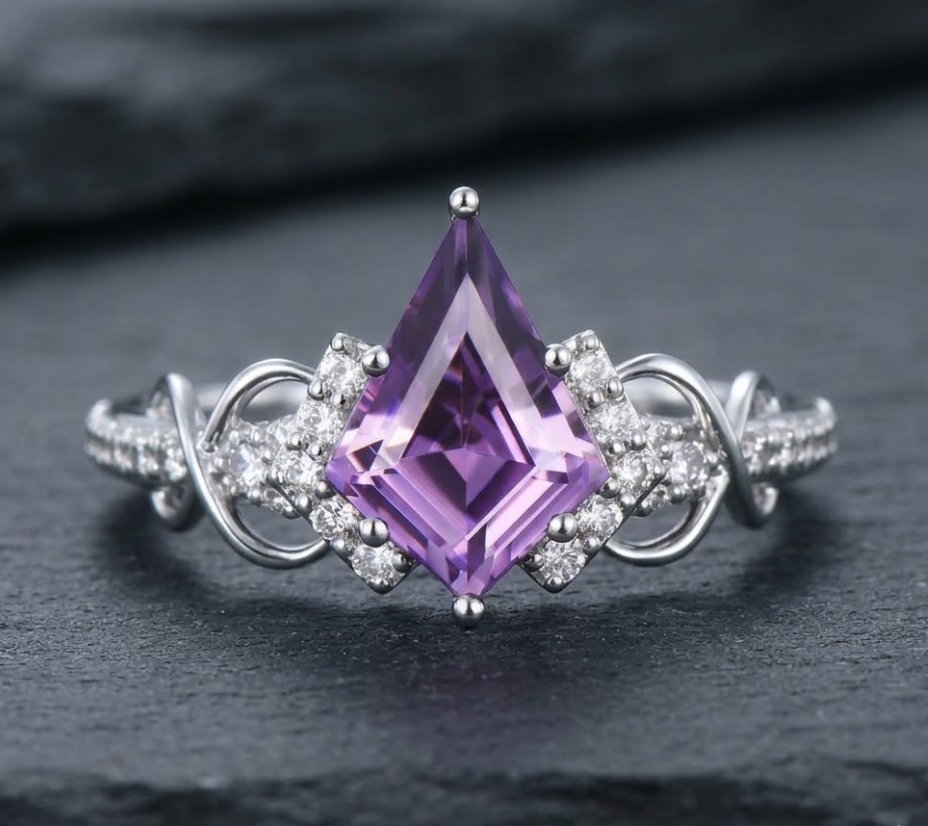
Purple Amethyst
Purple Amethyst
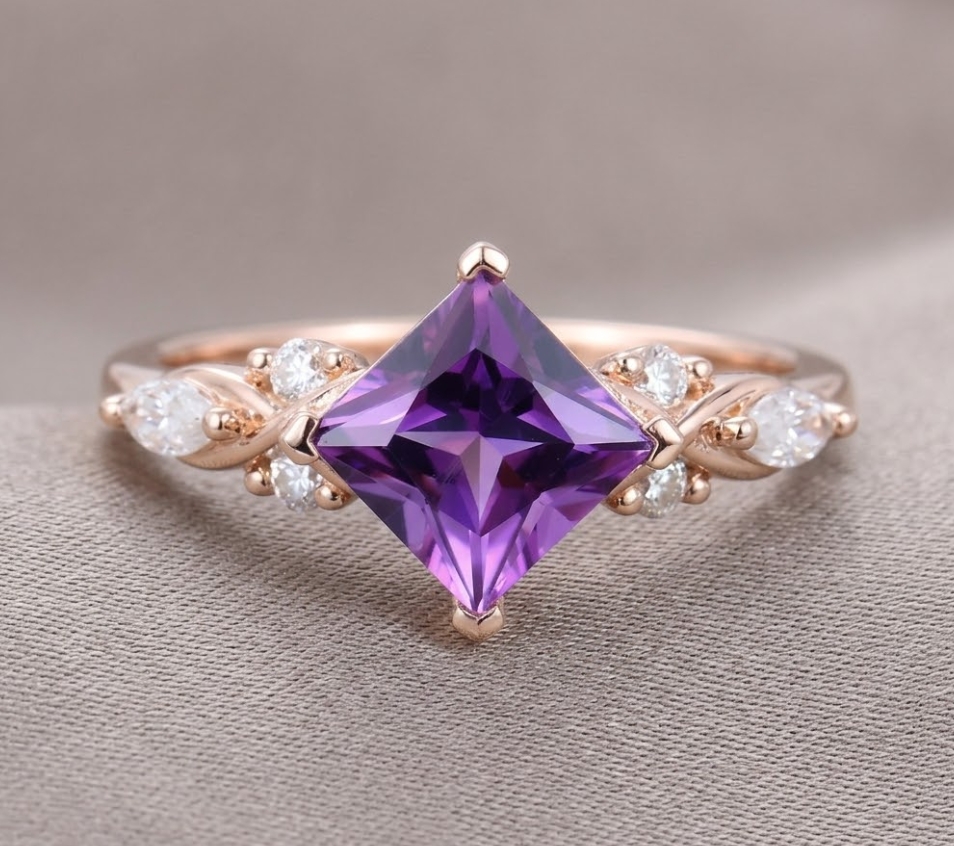
Deep purple immediately draws attention. It creates stronger contrast against precious metals and gives the ring a more refined, vintage-inspired presence.
It’s often chosen by people who prefer classic jewelry with a richer, more dramatic appearance.
Lavender Amethyst
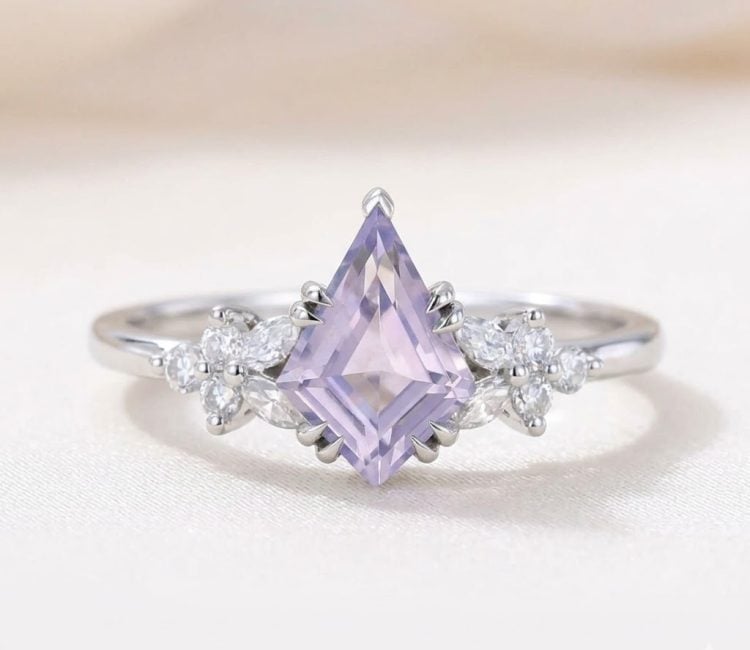
Lavender Amethyst
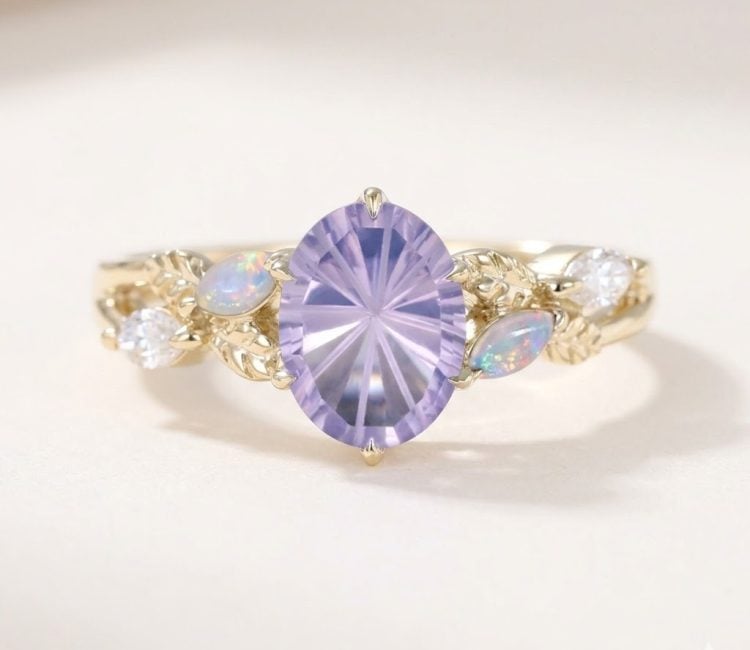
Lavender amethyst feels lighter, softer, and more effortless.
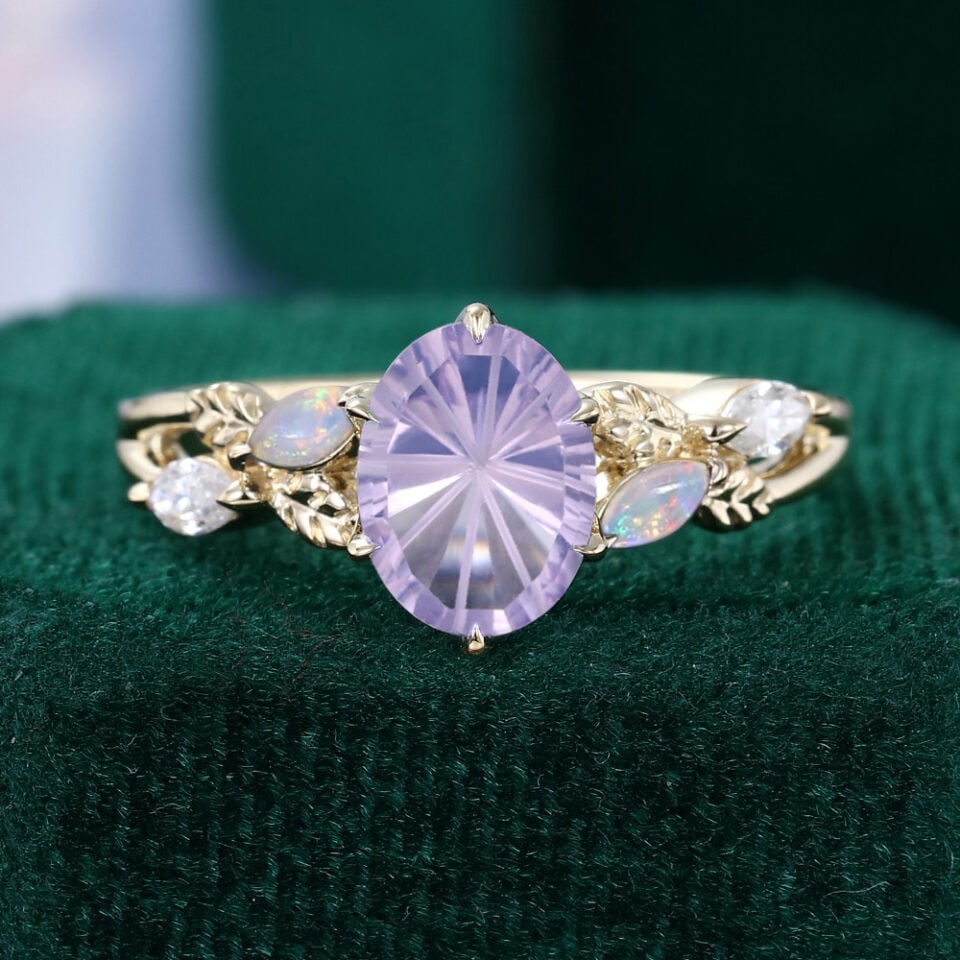
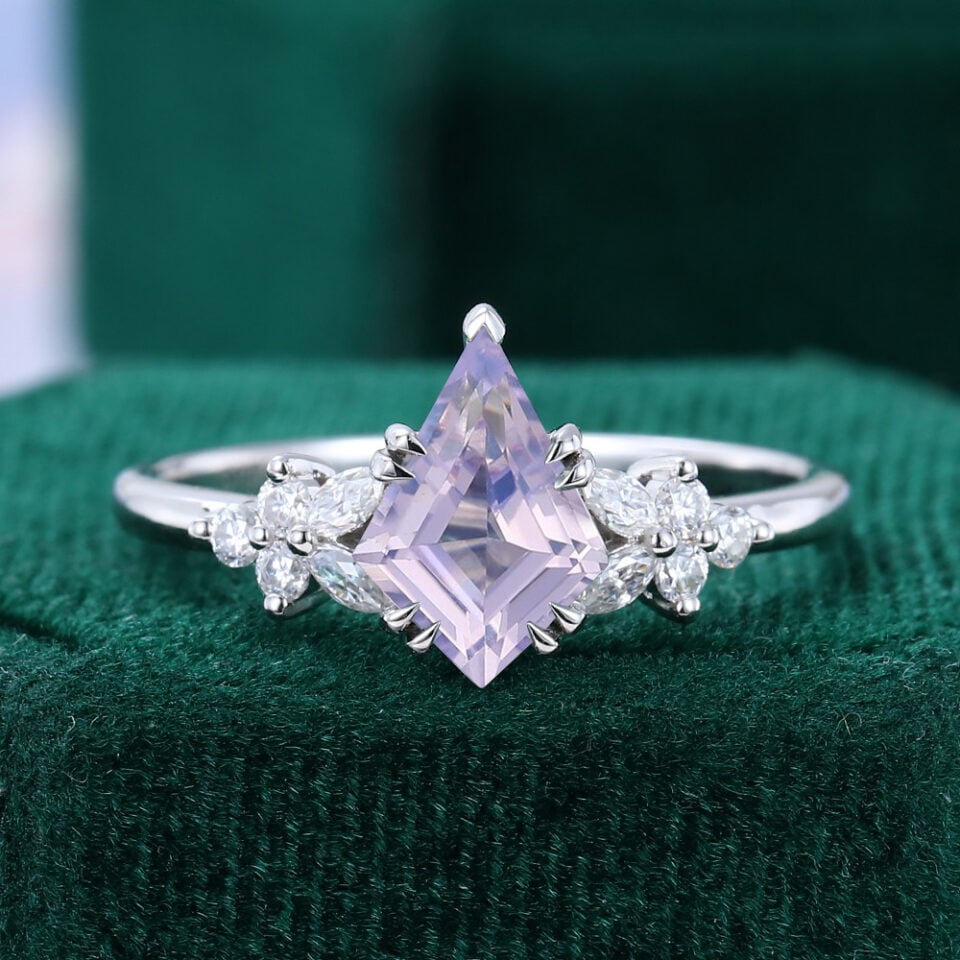
Rather than becoming the center of attention through intensity, it stands out through subtle elegance. The gentle pastel tone pairs naturally with minimalist settings, floral details, and contemporary engagement ring designs.
Style Tip:
- If you find yourself choosing soft neutrals, blush tones, or minimalist fashion, lavender amethyst often blends beautifully with your everyday style.
- If your wardrobe leans toward timeless classics or statement accessories, a deeper purple amethyst may feel like a more natural extension of your personal taste.
How Color Changes the Personality of an Amethyst Ring
How Color Changes the Personality of an Amethyst Ring
Color does more than change the appearance of an amethyst—it changes the overall character of the ring.
- A deep purple amethyst naturally creates a stronger visual presence. It feels timeless, elegant, and eye-catching, making it a popular choice for classic and vintage-inspired designs.
- A lavender amethyst, on the other hand, creates a softer impression. Its lighter tone gives the ring a fresh, delicate look that pairs beautifully with modern and minimalist styles.
Neither shade is more beautiful than the other. They simply express different aesthetics.
Quick Tip: Think of purple and lavender amethyst as two design styles rather than two different gemstones. The color you choose influences the overall mood of the ring just as much as the setting or metal.
That’s why many jewelry designers choose the gemstone’s shade before deciding on the rest of the ring design.
Which Shade Brings Out the Best in Different Ring Styles
Which Shade Brings Out the Best in Different Ring Styles
One of the easiest ways to choose between purple and lavender amethyst is to stop looking at the gemstone alone and start looking at the entire ring.
The same setting can feel completely different simply because of the gemstone’s color.
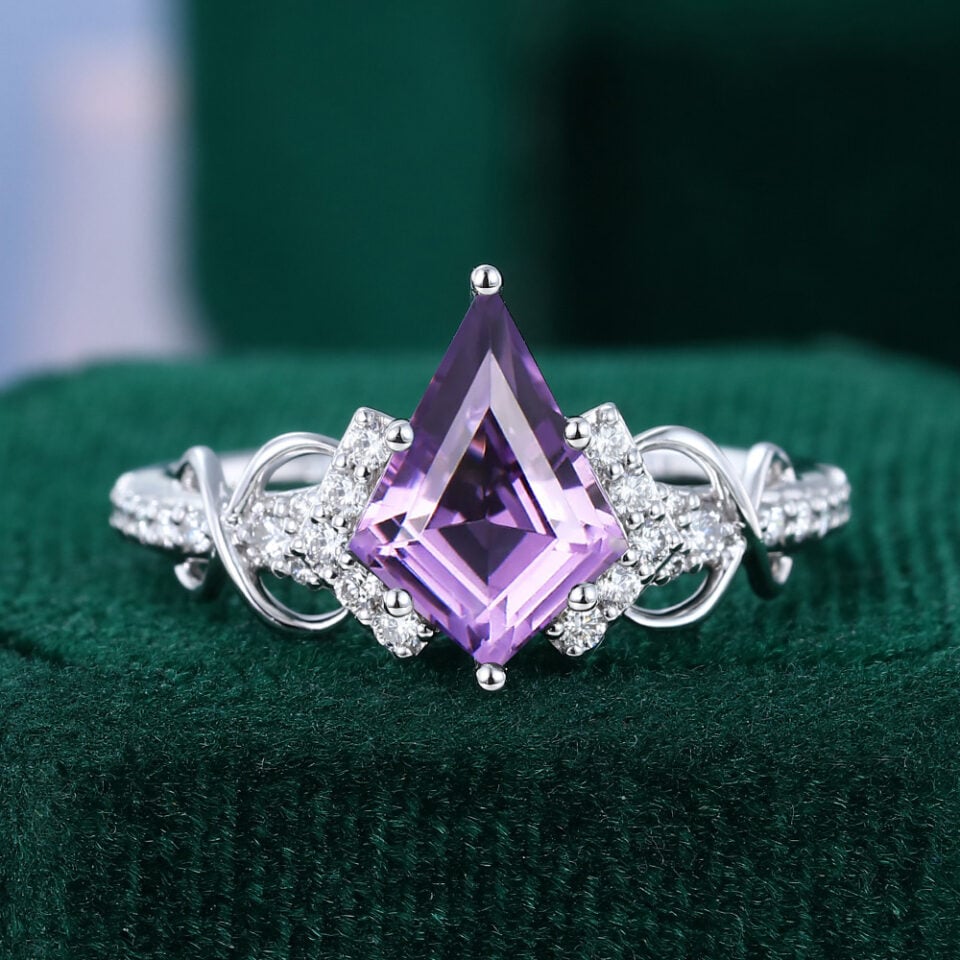
Deep Purple Creates More Contrast
Deep Purple Creates More Contrast
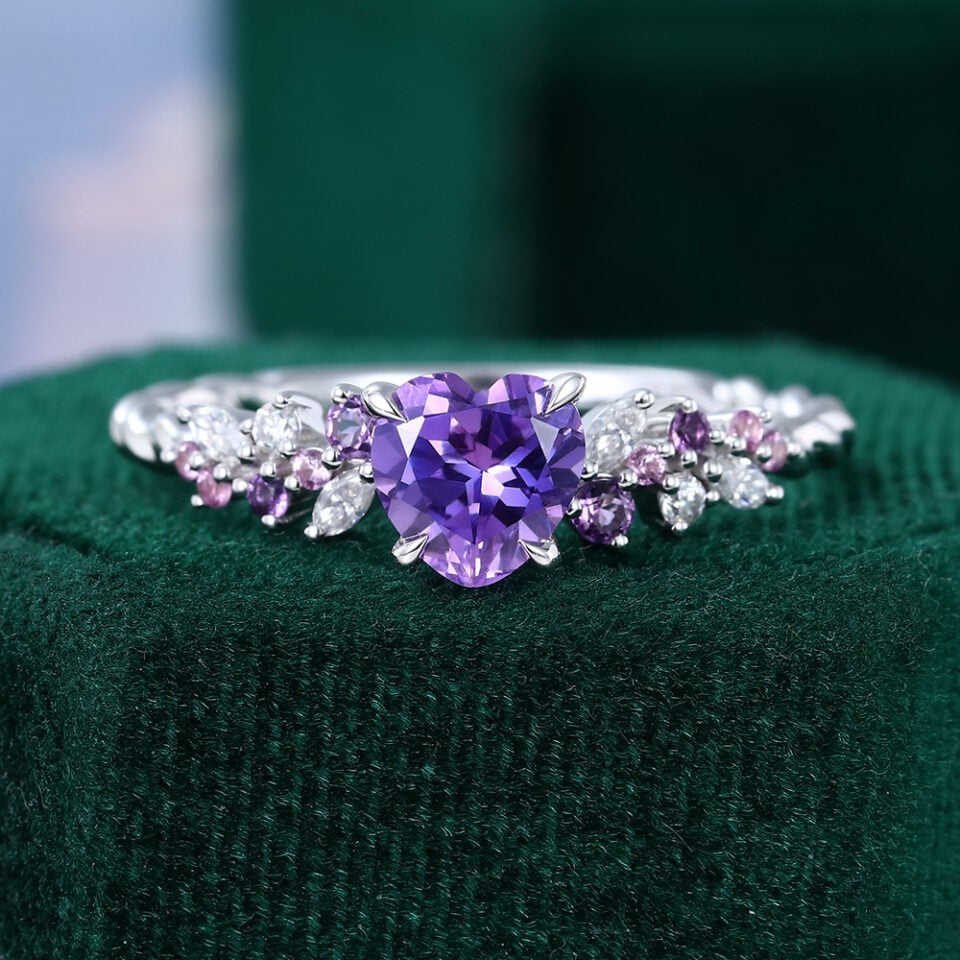
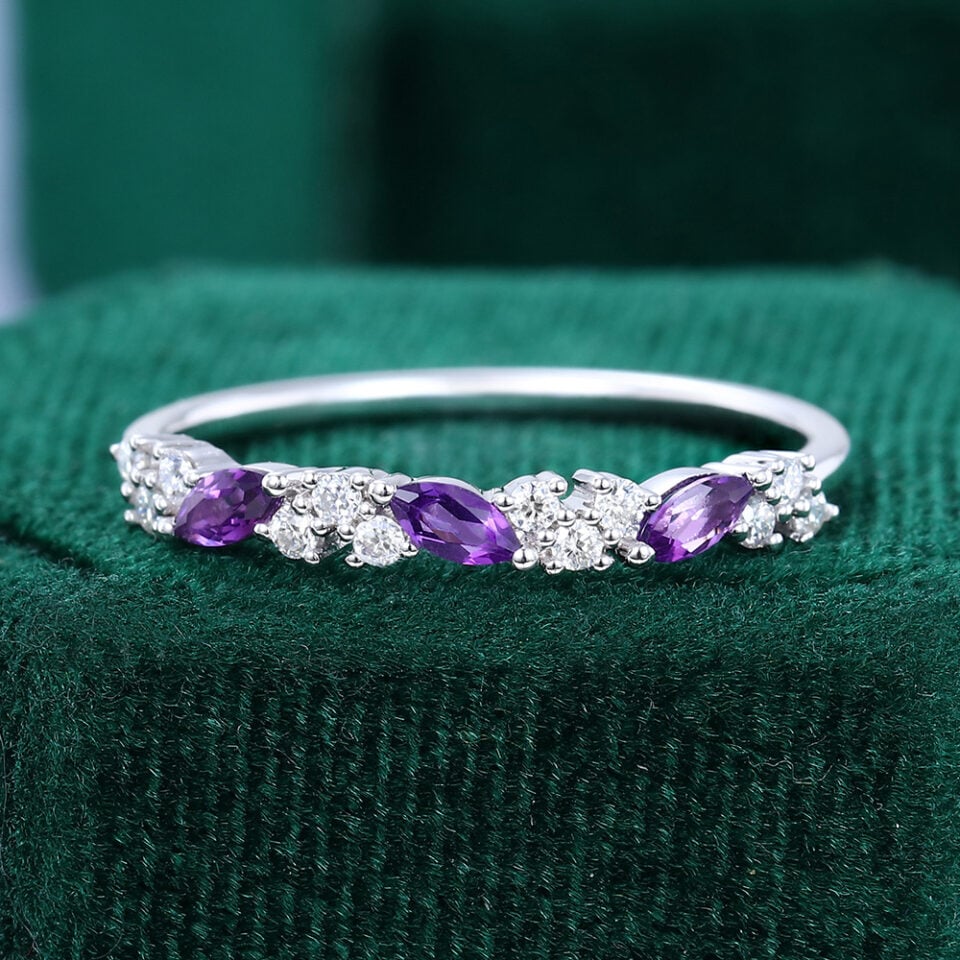
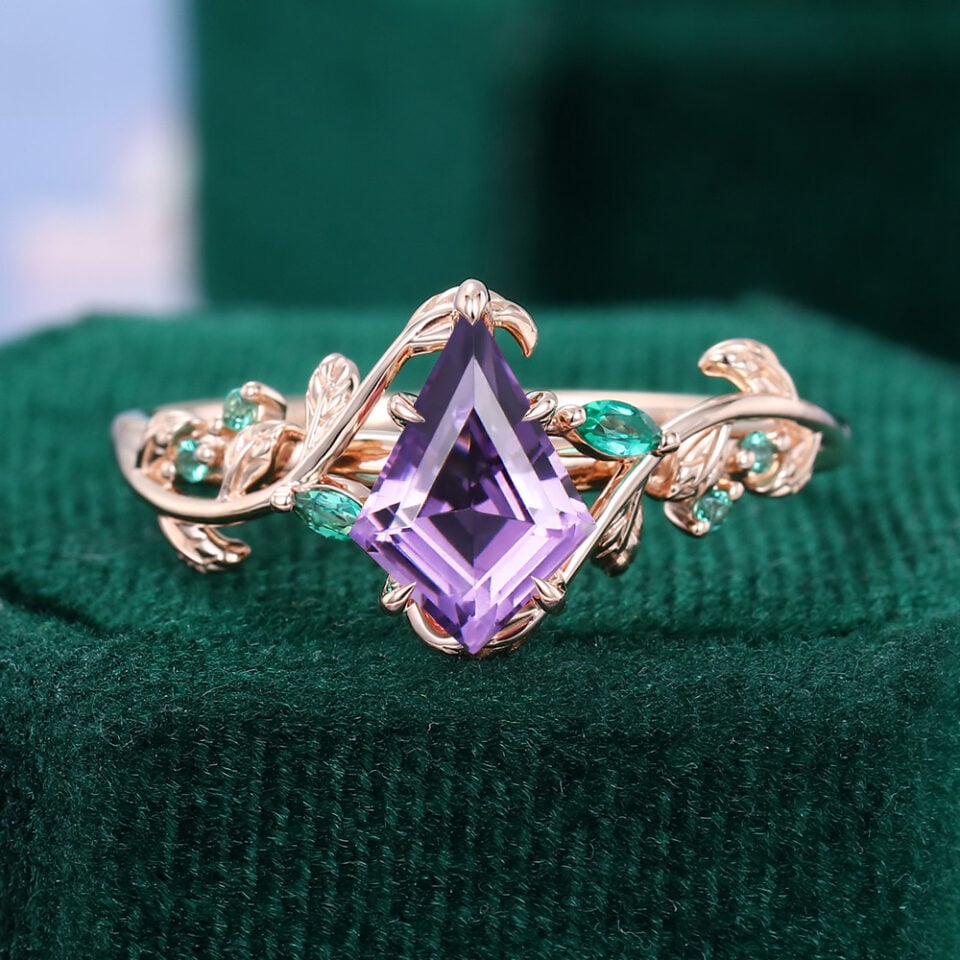
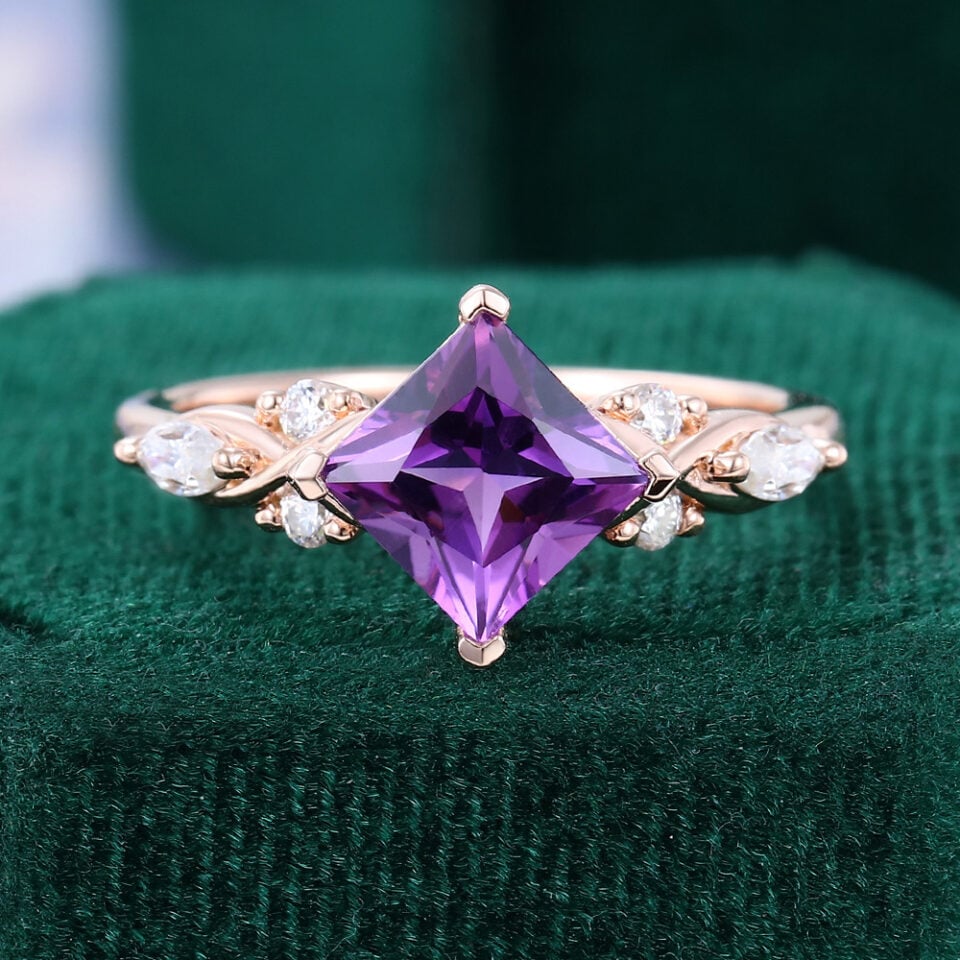
A richly saturated purple amethyst naturally becomes the focal point of a ring. Its stronger color works especially well in designs with intricate details because the gemstone remains visually dominant.
Deep purple amethyst is often a beautiful choice for:
- Vintage-inspired rings
- Halo settings
- Three-stone rings
- Art Deco designs
- Yellow gold and white gold settings
These combinations create a timeless look with a sense of depth and elegance.
Lavender Creates a Softer Overall Look
Lavender Creates a Softer Overall Look
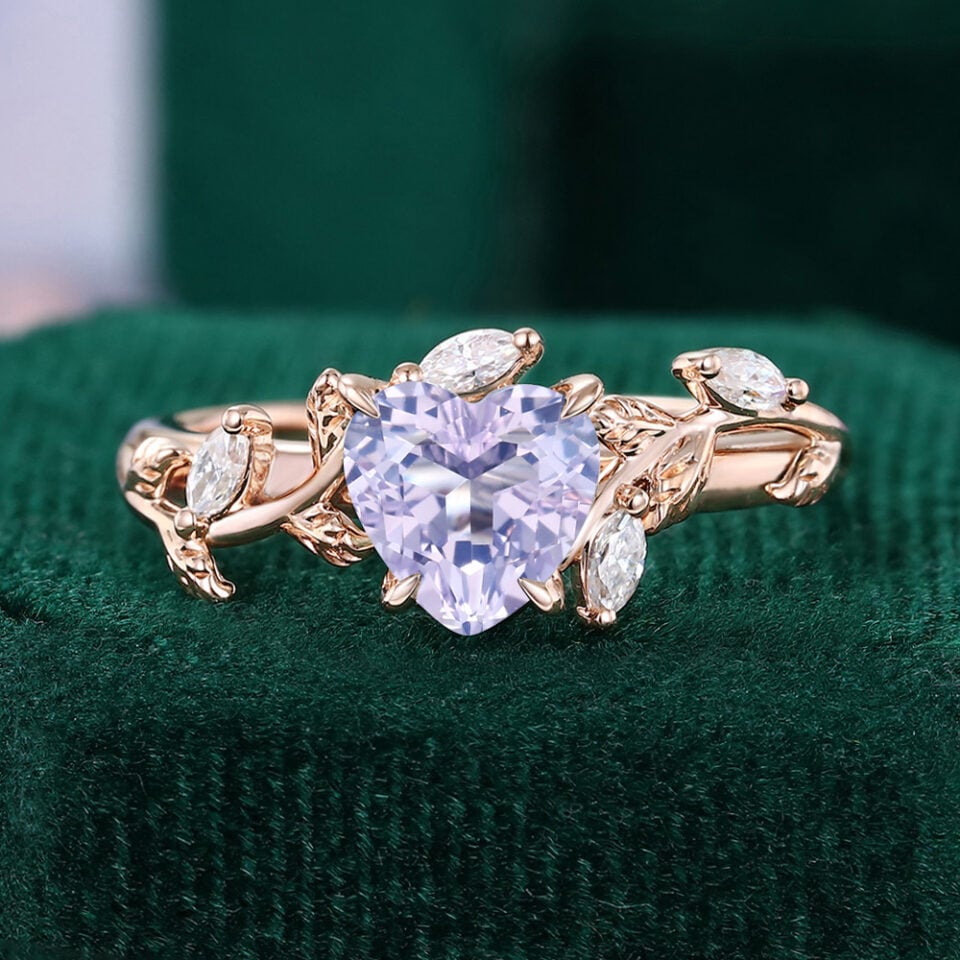
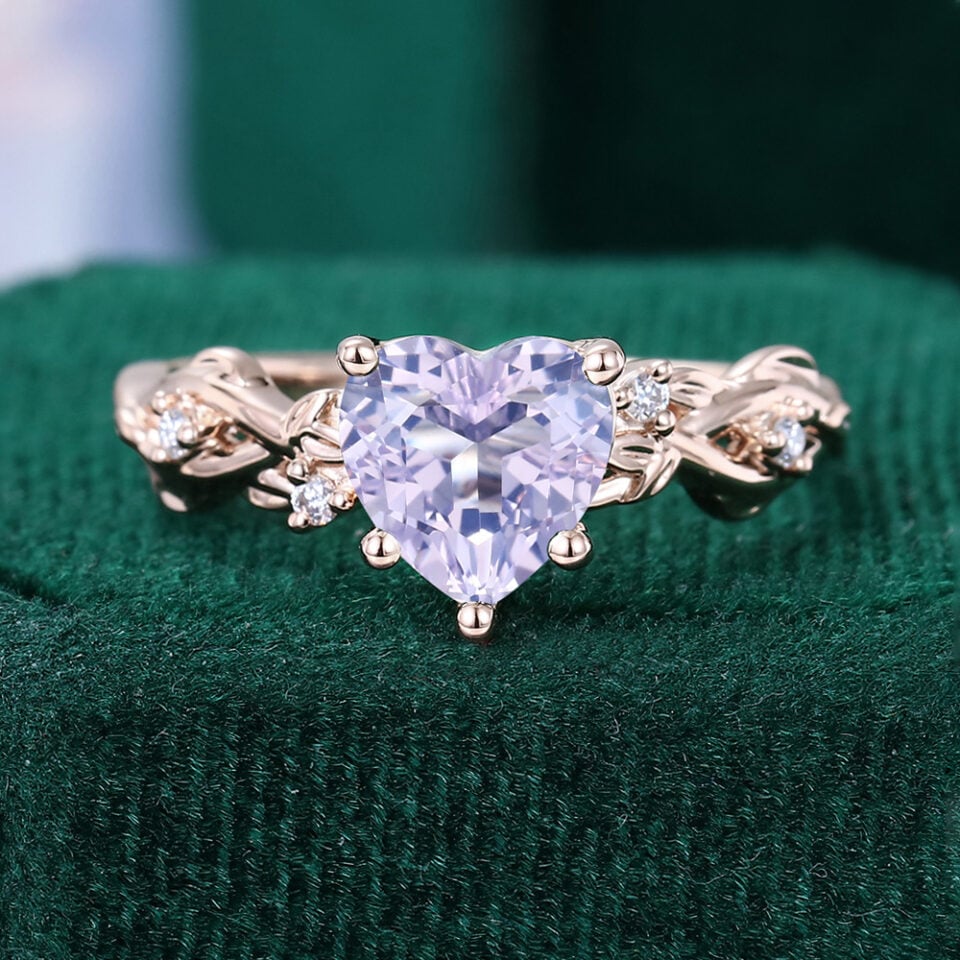
Lavender amethyst reflects light differently. Instead of creating bold contrast, it blends gently into the overall design, making the ring appear lighter and more delicate.
It pairs particularly well with:
- Solitaire rings
- Nature-inspired designs
- Floral settings
- Minimalist engagement rings
- Rose gold and white gold
Rather than commanding attention, lavender amethyst creates a softer, more contemporary aesthetic that has become increasingly popular among younger buyers.
Style Tip: If you’re browsing our Amethyst Ring Collection, notice how the same ring design can feel completely different depending on the gemstone’s color saturation rather than the setting itself.
After choosing a color, the next step is selecting a setting that complements it. Our Best Setting for Amethyst Ring guide compares popular setting styles and explains how each one changes the overall look of an amethyst ring.

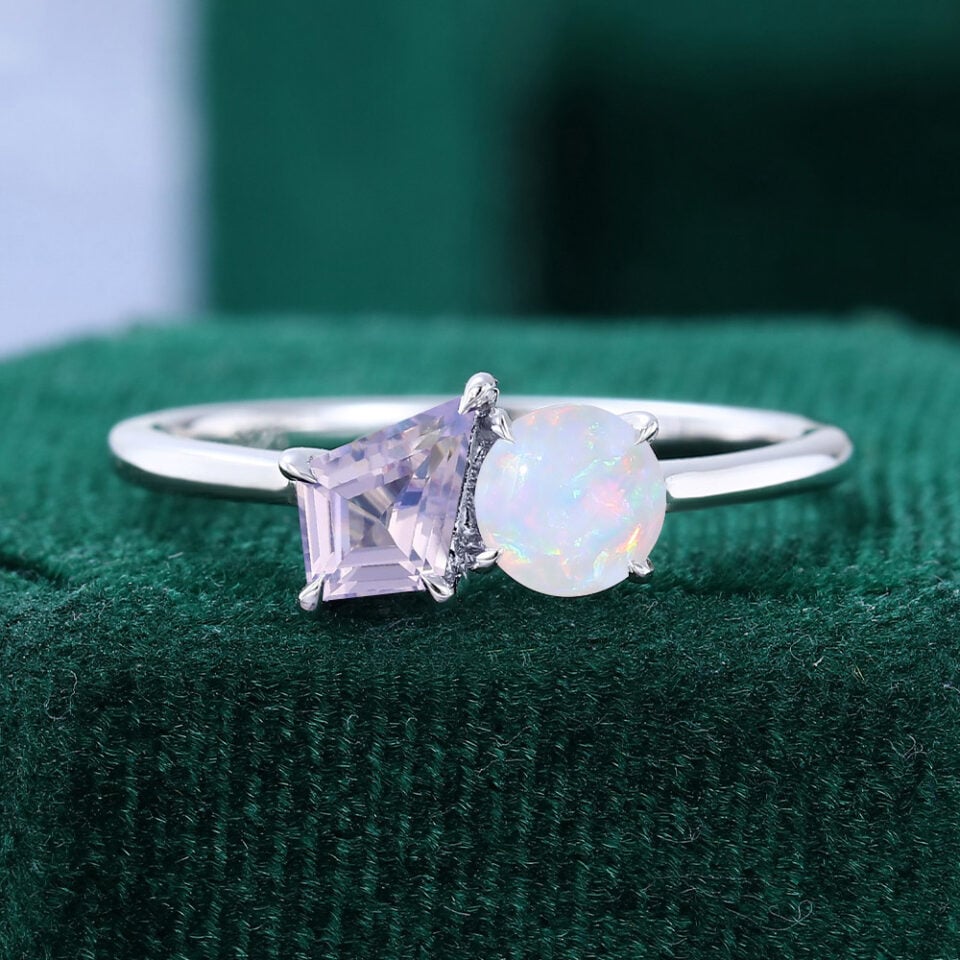
The Same Stone Can Look Different Throughout the Day
The Same Stone Can Look Different Throughout the Day
One of the most common questions buyers ask is:
“Why does the amethyst in the photo look different from the one I’m wearing?”
In most cases, the gemstone hasn’t changed—the lighting has.
Both purple and lavender amethyst are known for showing slightly different tones under different light sources.
| Lighting | Purple Amethyst | Lavender Amethyst |
|---|---|---|
| Natural daylight | Rich violet | Soft lavender |
| Warm indoor light | Warmer purple | Slight pink-lavender |
| Cool LED lighting | Deep violet | Cooler lilac tone |
This is completely normal and one of the reasons many people enjoy wearing amethyst. Its appearance feels more dynamic than gemstones with a single, fixed color.
Buying Tip: Product photos are usually taken under professional lighting. Looking at customer photos or videos often provides a better idea of how an amethyst ring will appear in everyday life.
Is Darker Amethyst Always More Valuable?
Is Darker Amethyst Always More Valuable?
Many buyers assume the deepest purple amethyst is automatically the most valuable.
The reality is more nuanced.
For natural amethyst, gemstones with rich, evenly distributed purple color have traditionally been considered the most desirable. However, extremely dark stones can sometimes appear almost black indoors, reducing their visual appeal.
Lavender amethyst isn’t considered “lower quality” simply because it’s lighter. Its value comes from a different type of beauty—clean color, brightness, and a soft, elegant appearance.
For lab-created amethyst rings, color has much less influence on price than most people expect. Since laboratory growth allows for greater color consistency, the final price is usually determined by factors such as:
- Ring design
- Metal choice
- Craftsmanship
- Accent stones
- Customization
This is why two lab-created amethyst rings with different shades can often be priced very similarly.
Worth Knowing: Choosing lavender over deep purple isn’t choosing a “less valuable” gemstone—it’s choosing a different design aesthetic.
Color Isn't Everything—Cut Still Makes the Biggest Difference
Color Isn't Everything—Cut Still Makes the Biggest Difference
When shoppers compare purple and lavender amethyst, it’s easy to focus only on color.
In reality, cut quality often has an even greater impact on how beautiful a ring looks.
A well-cut lavender amethyst can appear brighter and more lively than a poorly cut deep purple stone, while a precision-cut purple amethyst will display richer depth and stronger light return.
That’s why professional jewelers evaluate color and cut together rather than treating them as separate qualities.
If you’re still deciding between different ring designs, our guide on Best Cut for Amethyst Ring explains how popular shapes influence brilliance, color, and overall appearance.
Purple vs Lavender Amethyst: Quick Decision Guide
Purple vs Lavender Amethyst: Quick Decision Guide
Still undecided?
This quick comparison can help narrow your choice.
| If You Prefer… | Choose… |
|---|---|
| Rich, classic color | Purple Amethyst |
| Soft, romantic appearance | Lavender Amethyst |
| Vintage-inspired rings | Purple Amethyst |
| Minimalist modern designs | Lavender Amethyst |
| Strong visual contrast | Purple Amethyst |
| Light, airy elegance | Lavender Amethyst |
Our Take:
Purple amethyst remains the iconic choice that most people associate with this gemstone.
Lavender amethyst, however, has become increasingly popular because it offers something different—a softer color palette that feels fresh, feminine, and effortlessly modern.
Still deciding which ring is right for you? Our complete How to Choose an Amethyst Ring guide walks through everything from color and cut to setting, metal, and budget.
Final Thoughts
Final Thoughts
Choosing between purple and lavender amethyst isn’t about finding the “better” gemstone—it’s about discovering the shade that best matches your style.
Deep purple amethyst offers timeless elegance, rich color, and striking visual contrast, making it a favorite for classic jewelry lovers. Lavender amethyst brings a softer, more contemporary charm that pairs beautifully with minimalist and romantic ring designs.
Since both shades share the same durability, composition, and lasting beauty, your decision can be guided by personal preference rather than technical differences.
Whether you’re searching for a meaningful engagement ring, a February birthstone gift, or an everyday statement piece, selecting the color that resonates with your style will always be the most rewarding choice.
FAQs
FAQs
Is lavender amethyst a real amethyst?
Yes. Lavender amethyst is a genuine variety of amethyst. The term simply describes a lighter purple color rather than a different gemstone.
Is purple amethyst rarer than lavender amethyst?
Not necessarily. Availability depends on whether the gemstone is natural or lab-created. For jewelry buyers, both shades are widely available.
Which color is better for an engagement ring?
Neither is objectively better. Purple amethyst suits classic and vintage-inspired engagement rings, while lavender amethyst complements modern, minimalist, and nature-inspired designs.
Does lavender amethyst fade faster?
No. Both shades have the same physical properties because they are the same gemstone. Proper care and avoiding prolonged exposure to intense sunlight will help preserve either color.
Can lab-created amethyst be lavender?
Absolutely. Lab-created amethyst is available in a variety of shades, including soft lavender and deep royal purple, offering buyers more flexibility when choosing a ring.