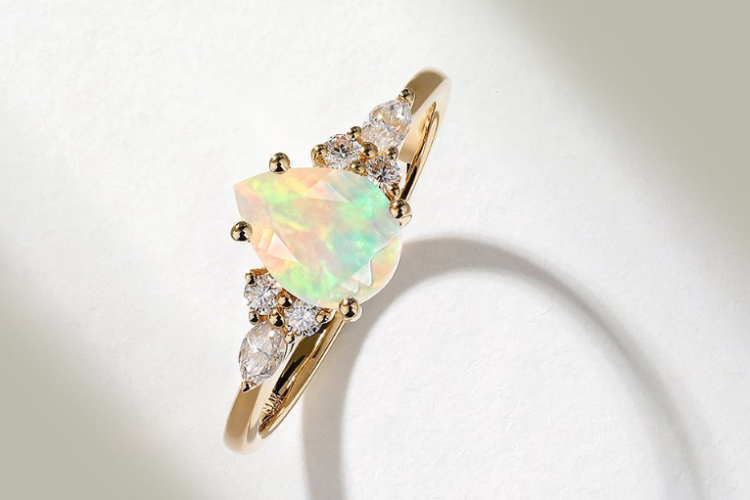
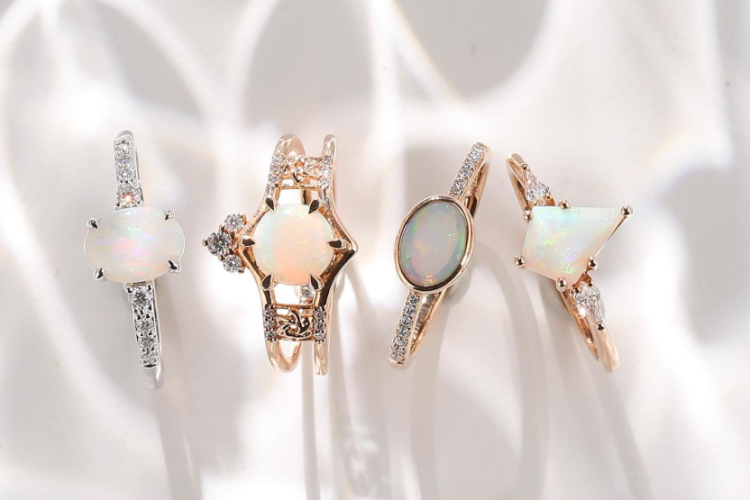
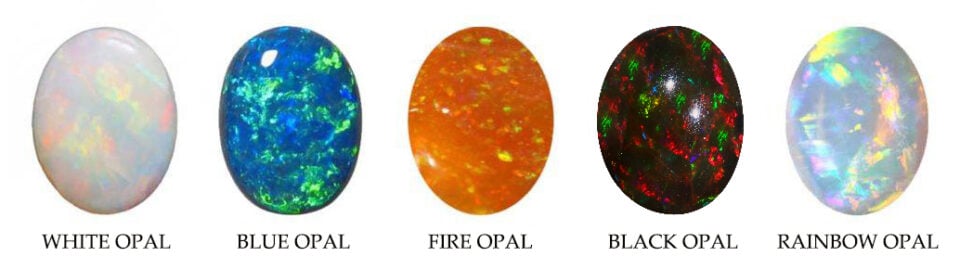
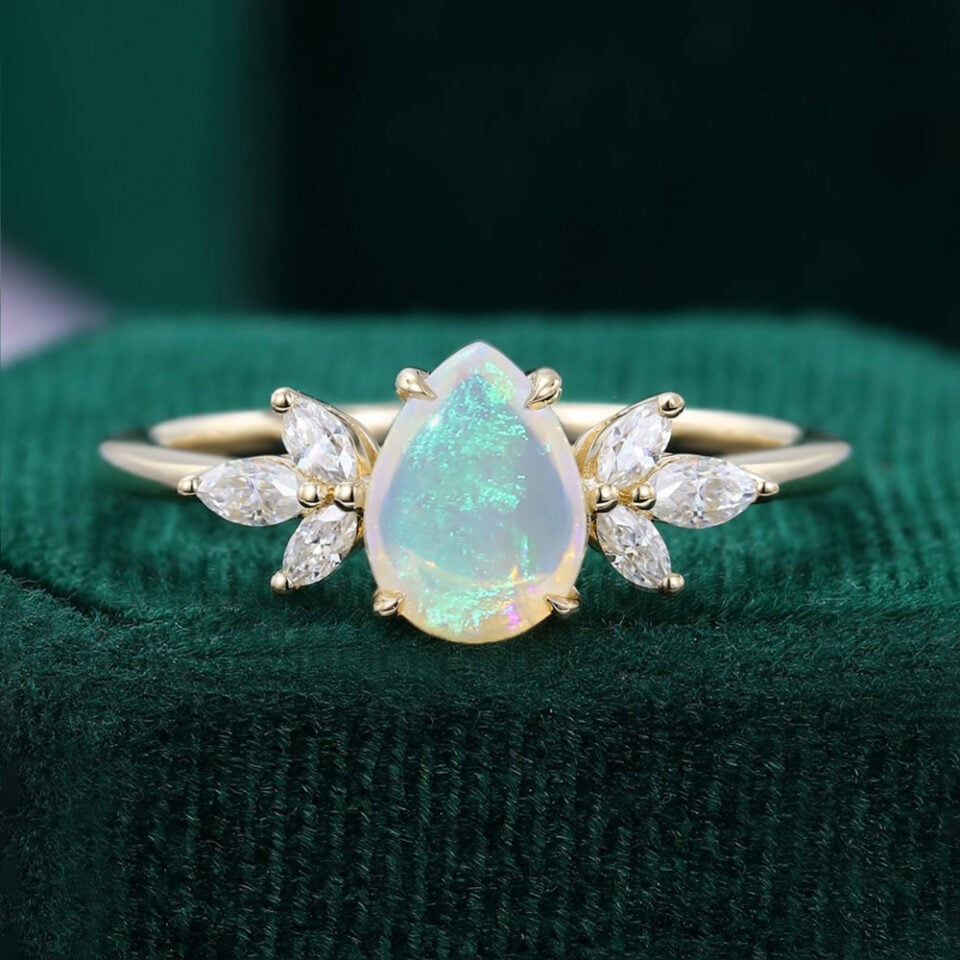
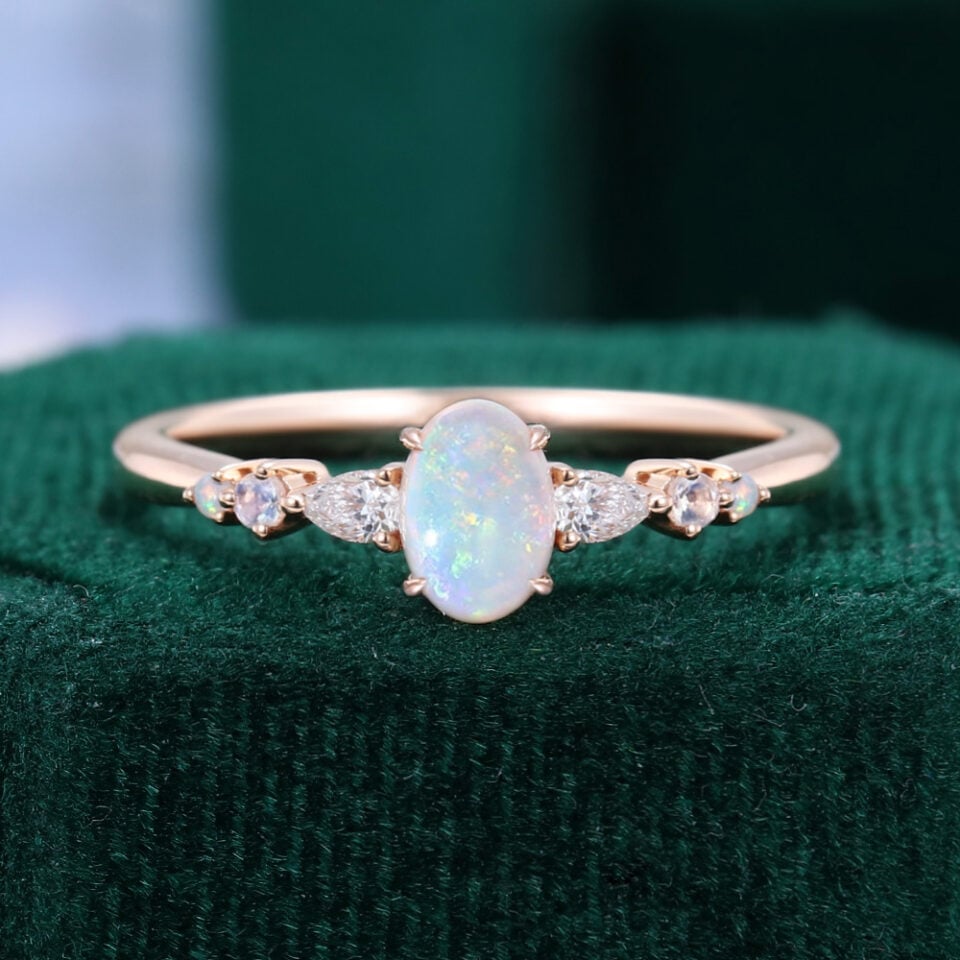
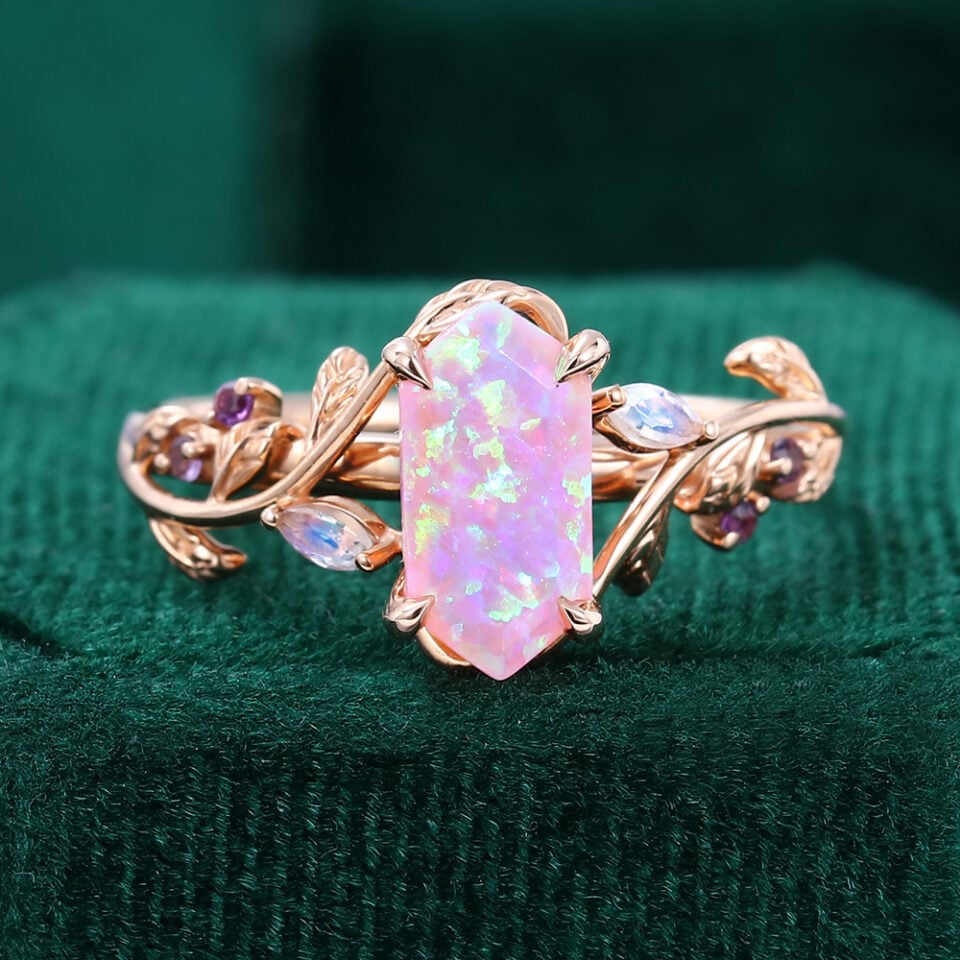
Opals don’t win people over with predictability—they win with personality.
If you’re searching for an opal guide, chances are you’re drawn to their shifting colors but unsure whether they’re practical, durable, or even right for fine jewelry. Unlike diamonds or sapphires, opals come with questions—and hesitation.
This guide is written to replace uncertainty with clarity. You’ll learn what opals really are, how their color works, what affects quality and price, and how to choose an opal that fits your lifestyle, especially if you’re considering one for a ring.
Most gemstones sparkle in a consistent, predictable way. Opals don’t.
Instead of reflecting light from fixed facets, opals interact with light internally. As you move, the colors shift—sometimes dramatically. This is why opals feel alive rather than brilliant in the traditional sense.
What truly sets opals apart:
No two opals display color in the same way
Beauty depends on movement, not just cut
Color visibility changes with lighting and angle
This uniqueness is exactly why opals attract buyers looking for something personal—but it also means quality must be judged differently than with diamonds.
Opal is a hydrated form of silica. Unlike diamonds or rubies, it does not have a crystal lattice.
Key characteristics:
Composed of silica spheres + water
Water content typically ranges between 3–21%
Classified as an amorphous gemstone
This structure explains both opal’s beauty and its sensitivity. Understanding this is essential before choosing opal for jewelry.
Play-of-Color Explained: What You’re Actually Seeing
Play-of-color is not surface sparkle—it’s internal diffraction.
Light enters the stone and bends around the silica spheres, breaking into flashes of color. The size, spacing, and regularity of these spheres determine how strong and visible the colors appear.
When evaluating play-of-color, look for:
Brightness: color visible even in low light
Color range: more hues usually indicate higher value
Consistency: color across the face, not just in spots
An opal that only shows color under direct sunlight is generally lower quality.
For buyers drawn to organic beauty and natural color variation, many prefer natural opal rings that highlight the stone’s raw character rather than perfection.
Opal Colors & Their Meanings
Because opals often display multiple colors at once, they have long been associated with creativity, emotion, and individuality.
While meanings vary culturally, common associations include:
Red: passion and energy
Green: balance and renewal
Blue: calm and intuition
Multicolor: imagination and self-expression
Soft-toned stones like pink opal are often associated with emotional healing and gentler expression, which is why pink opal rings are especially popular for promise rings and meaningful gifts.
Opal care is less about effort and more about awareness.
Recommended care:
Avoid sudden temperature changes
Remove rings during strenuous activity
Clean gently with mild soap and water
Never use ultrasonic or steam cleaners
About Opal’s Moisture Sensitivity
Opals naturally contain a small amount of water, which makes them more sensitive to extreme dryness or heat. This doesn’t mean opal rings need to be soaked in water—but it does mean they should be worn and stored thoughtfully.
Different opals behave differently:
Solid natural opals are more sensitive to environmental extremes
Doublets, triplets, and lab-created opals are generally more stable
$250–$450 This is the most popular range for opal engagement rings that balance beauty and practicality.
$450+ Often chosen for symbolic or once-in-a-lifetime pieces such as opal bridal ring sets.
Is Opal the Right Choice for You?
Opal may be right for you if you:
Value uniqueness over uniformity
Appreciate organic, ever-changing beauty
Are comfortable with mindful care rather than “set-and-forget” wear
It may not be the best fit for those seeking maximum hardness or minimal maintenance above all else.
If you’re unsure how opal fits different lifestyles, daily routines, or wear habits, this guide offers a clearer, real-world perspective: 👉 Opal Rings: Can Anyone Wear Them?
Neither choice is wrong—only different. The best gemstone is always the one that aligns with how you live and what you value.
Common Myths About Opals
“Opals are unlucky.” This belief comes from outdated superstition, not science or gemology. There is no evidence linking opals to bad luck—historically, they were actually symbols of hope, love, and creativity.
“Opals are too delicate for rings.” While opals are softer than diamonds, they can be worn safely in rings when properly set and cared for—especially in bezel or halo designs.
“All opals look the same.” In reality, no two opals are ever identical. Variations in color, pattern, and play-of-color are what make each opal unique.
“Opals crack easily no matter what.” Cracking is usually caused by extreme heat, dryness, or sudden temperature changes—not everyday wear when treated mindfully.
“Opals should never get wet.” Normal contact with water is not harmful. Problems arise only with prolonged exposure to heat, chemicals, or improper cleaning methods.
“Opals are only for vintage or bohemian styles.” Today’s opal jewelry includes modern, minimalist, and engagement-ring-ready designs that suit a wide range of aesthetics.
Final Thought
Opals are not chosen for uniform perfection. They’re chosen for character.
When you understand how opals work—and what they need—you can choose one with confidence, not hesitation.
👉 Explore thoughtfully designed opal Ring made for everyday life