- by MollyJewelryUS
- March 20, 2026
- Gemstone Education
Marquise cut lab grown diamond rings are known for their dramatic shape and strong visual impact. Among all lab diamond styles, this cut stands out for its ability to maximize surface area while creating a refined, elongated look on the hand.
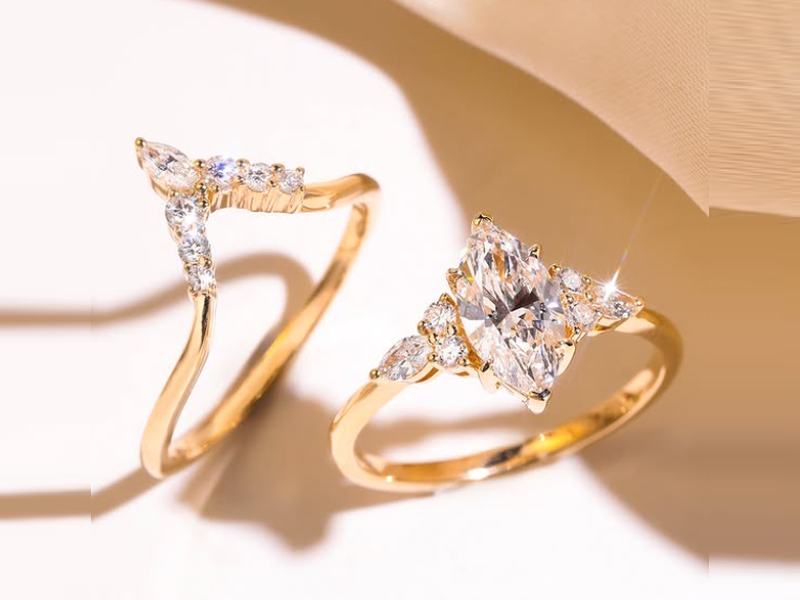
Table of Contents
Table of Contents
- What Is a Marquise Cut Lab Grown Diamond
- Do Marquise Diamonds Really Make Fingers Look Longer
- Why Marquise Diamonds Look Larger Than Their Carat Weight
- Pros of Marquise Cut Lab Grown Diamond Rings
- Things to Consider Before Choosing a Marquise Ring
- Ideal Proportions for Marquise Diamonds
- How to Choose the Right Marquise Lab Diamond
- Conclusion
- FAQs About Marquise Cut Lab Grown Diamond Rings
What Is a Marquise Cut Lab Grown Diamond
What Is a Marquise Cut Lab Grown Diamond
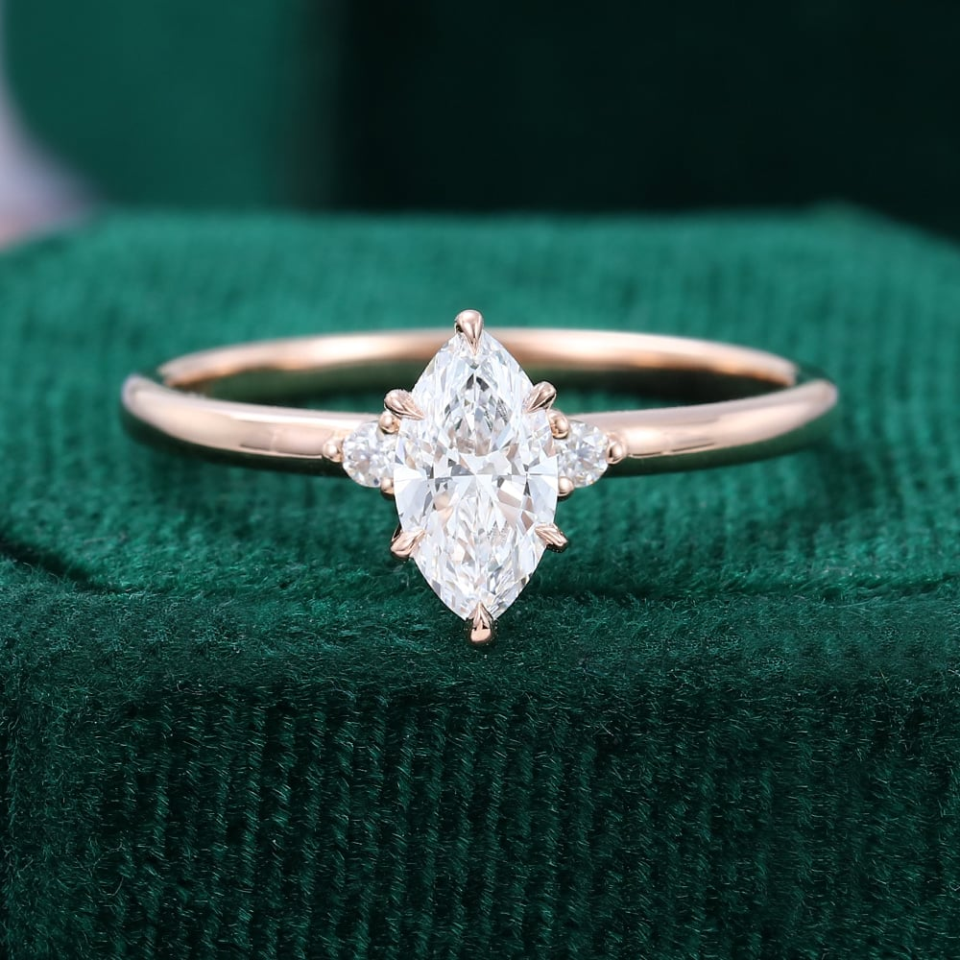
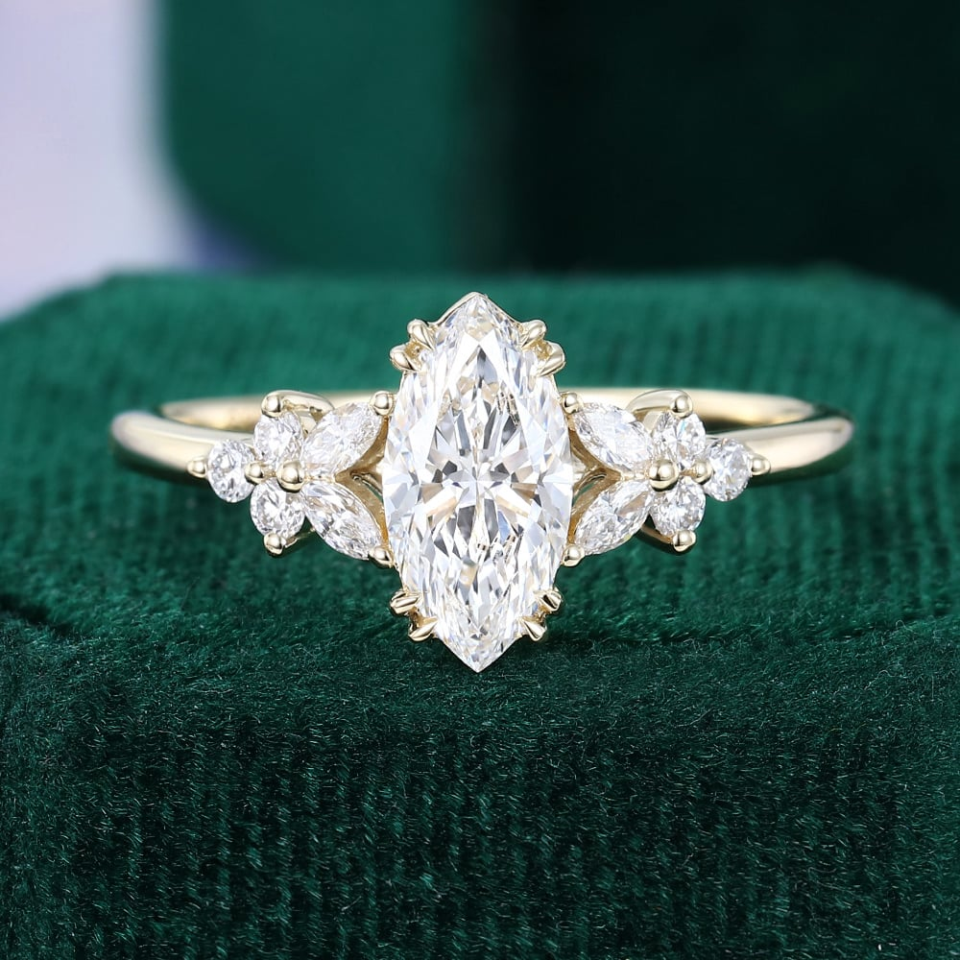
The marquise cut features an elongated body with two pointed ends, forming a symmetrical, eye-shaped silhouette. It is a modified brilliant cut, designed to enhance sparkle while stretching the diamond’s outline.
Lab-grown versions share the same optical and physical properties as mined diamonds. The main difference lies in production—controlled environments allow for more consistent quality, especially in symmetry and proportions, which are critical for marquise shapes.
Do Marquise Diamonds Really Make Fingers Look Longer
Do Marquise Diamonds Really Make Fingers Look Longer
The short answer is yes, and this effect is well documented in diamond design principles. The elongated structure draws the eye vertically along the finger, creating a lengthening illusion.
This happens for two main reasons. First, the pointed ends extend the diamond’s visual boundaries, increasing perceived length. Second, the narrow width compared to its length creates a slimming effect on the finger.
In addition, marquise diamonds tend to cover more surface area than round diamonds of the same carat weight, which enhances both size perception and finger coverage.
Why Marquise Diamonds Look Larger Than Their Carat Weight
Why Marquise Diamonds Look Larger Than Their Carat Weight
Marquise diamonds are often chosen for their “face-up” size advantage. Instead of concentrating weight in depth, the cut distributes it across length and width.
This results in a diamond that can appear up to 15%–30% larger than a round diamond of the same carat weight, depending on proportions.
For buyers working within a fixed budget, this makes the marquise cut one of the most efficient ways to maximize visual size.
Pros of Marquise Cut Lab Grown Diamond Rings
Pros of Marquise Cut Lab Grown Diamond Rings
Maximum visual size
The elongated shape creates a larger appearance compared to many traditional cuts.
Finger-lengthening effect
The vertical orientation enhances finger proportions, making them appear longer and slimmer.
Distinctive shape
Less common than round or oval cuts, offering a unique and recognizable look.
Strong brilliance
Facet structure allows for good light reflection and noticeable sparkle.
Efficient use of carat weight
More of the diamond’s mass is visible, improving overall value.


Things to Consider Before Choosing a Marquise Ring
Things to Consider Before Choosing a Marquise Ring
Bow-tie effect
A shadow across the center can appear if the cut is not well balanced.
Tip vulnerability
The pointed ends are more prone to chipping and require protective settings.
Symmetry precision
Even slight misalignment becomes visible due to the elongated shape.
Proportion sensitivity
Length-to-width ratio strongly affects appearance and style.
Size perception
Because the stone looks larger, higher carat weights may feel oversized on smaller hands.
Ideal Proportions for Marquise Diamonds
Ideal Proportions for Marquise Diamonds
Length-to-width ratio
A ratio between 1.75 and 2.20 is generally preferred. Lower ratios appear wider, while higher ratios create a slimmer look.
Depth percentage
Typically between 58% and 63% for balanced brilliance and size.
Table percentage
Around 53% to 63% helps maintain light performance.
Symmetry
Critical for marquise diamonds, as uneven curves or misaligned tips are easily noticeable.
Choosing the right proportions directly impacts both sparkle and overall visual harmony.
How to Choose the Right Marquise Lab Diamond
How to Choose the Right Marquise Lab Diamond
Check symmetry
Both halves of the diamond should mirror each other precisely.
Evaluate the outline
Look for smooth curves without flat or uneven edges.
Observe brilliance
View the diamond in motion to assess light performance.
Balance ratio and size
Choose a proportion that complements your finger shape.
Prioritize cut quality
A well-cut diamond will always outperform a larger but poorly cut stone.
Conclusion
Conclusion
Marquise cut lab grown diamond rings offer a rare combination of size, elegance, and visual impact. Their elongated silhouette not only makes the diamond appear larger but also creates a noticeable finger-lengthening effect.
With the right proportions, setting, and cut quality, this shape delivers both aesthetic appeal and practical value. For those looking to stand out while maximizing visual presence, the marquise cut remains one of the most effective choices.
FAQs About Marquise Cut Lab Grown Diamond Rings
FAQs About Marquise Cut Lab Grown Diamond Rings
Do marquise cut lab grown diamond rings really make fingers look longer?
Yes, marquise cut lab grown diamond rings create a lengthening effect due to their elongated shape and pointed ends, which visually extend the finger and make it appear slimmer.
Why do marquise diamonds look bigger than round diamonds?
Marquise diamonds spread their carat weight across a larger surface area, creating a bigger face-up appearance compared to round diamonds of the same weight.
How can I protect the pointed tips of a marquise diamond?
Choosing a V-prong or bezel setting helps protect the tips from damage and ensures better durability for daily wear.
Is a marquise lab grown diamond a good choice for engagement rings?
Yes, it is a strong choice due to its unique shape, larger visual size, and ability to create a flattering, elongated look on the hand.