Last updated on February 11, 2026
Shopping for a diamond used to be simple: natural diamonds were the only option, and all you needed to consider were the “4Cs“. Today, lab-grown diamonds are everywhere — often at a fraction of the price — and the choice isn’t as obvious as it used to be. The real question is no longer just about the 4Cs; it’s about deciding between lab-grown and natural diamonds.
If you’re wondering whether lab-grown diamonds are “real,” why they cost less, or whether anyone can tell the difference, you’re not alone. In fact, the two look identical to the naked eye — but they differ fundamentally in how they’re formed, how they’re priced, and how they hold value over time.
Before investing in an engagement ring or a fine jewelry piece, it’s essential to understand what truly sets them apart. In this guide, we’ll break down the key differences, compare the pros and cons of each, and help you decide which option is right for you.

What is a Lab-Grown Diamond?
As the name suggests, a lab-grown diamond is a diamond that has been created in a laboratory. Also known as a lab-created diamond or man-made diamond. Lab diamonds are 100% real diamonds!
Lab-grown diamonds are created by simulating the natural growth environment of diamonds in a laboratory, using the same chemical composition as natural diamonds. Their chemical, physical, and optical properties are identical to those of natural diamonds. And, their overall average quality is even better than natural diamonds!
👉 Shop Lab Grown Diamond Rings
Lab-Grown Diamonds vs. Natural Diamonds: What’s the Difference?
| Factor | Lab Grown Diamond | Natural Diamond |
|---|---|---|
| Durability | Mohs Hardness: 10 | Mohs Hardness: 10 |
| Brilliance | Identical sparkle (2.417–2.419 refractive index). | Identical sparkle (2.417–2.419 refractive index). |
| Color | Mostly colorless; offers more vivid color options. | Mostly colorless; rare colors occur naturally. |
| Grading | Evaluated by the 4Cs (Cut, Color, Clarity, Carat). | Evaluated by the 4Cs (Cut, Color, Clarity, Carat). |
| Certification | Fully Certified (IGI/GIA) | Fully Certified (IGI/GIA) |
| Origin | Grown in a lab (weeks) | Mined from Earth (billions of years) |
| Ethics | 100% Conflict-Free & Traceable | Mining history involves social & ethical risks |
| Rarity | Can be produced in increasing quantities as technology advances | Limited by geological conditions. |
| Price | More affordable due to shorter supply chain. | Higher premium due to mining and rarity. |
| Investment Value | Lower resale value due to supply | Retains more value due to scarcity |
As mentioned above, lab-grown diamonds have the same physical, chemical, and optical properties as natural diamonds. But they are also different, and what is the difference? Read on …
Difference 1: Origin and Formation
This is the main difference between lab-grown and natural diamonds.
Natural diamonds are formed naturally from carbon deep within the Earth over billions of years at high temperatures and pressures.
Lab-grown diamonds are created in a laboratory using special techniques. This is much faster than natural formation and can usually be accomplished in a matter of weeks or months. Today, there are two main methods used to create lab-grown diamonds:
- High Pressure High Temperature (HPHT): Diamond “seeds” (usually small diamond crystals) are placed with carbon (in the form of graphite) in a high-pressure, high-temperature chamber. The chamber is then subjected to pressures of approximately 1.5 million psi and temperatures of approximately 1,500°C. Under these extreme conditions, carbon atoms crystallize around the seed, eventually forming a diamond.
- Chemical Vapor Deposition (CVD): A thin diamond seed is placed in a vacuum chamber filled with carbon gases, such as methane. The chamber is heated to about 800°C and microwave energy is used to ionize the gas. This breaks down the methane, releasing carbon atoms that are deposited on the diamond seed, where they crystallize and grow layer by layer.
HPHT is particularly suitable for producing diamonds in a variety of colors. CVD allows greater control over the size, quality and characteristics of the diamond and is the preferred method for producing larger diamonds. CVD diamonds tend to have higher clarity, and it can also be used to produce diamonds of specific colors by adjusting the gas mixture.
Difference 2: Price
Price is also a very noticeable difference between lab-grown diamonds and natural diamonds.
Lab-grown diamonds are usually cheaper than natural diamonds. Because they can be produced in a controlled environment without the significant costs associated with mining, and they have a shorter formation cycle and a more abundant supply, which helps reduce costs. On average, lab-grown diamonds are 40% – 80% less expensive than natural diamonds of the same size and quality.
To show the price difference clearly, here is a comparison for Round Brilliant diamonds of high quality (F Color, VS1 Clarity, Excellent Cut) based on 2026 market data.
| Carat Weight | Lab-Grown Diamond | Natural Diamond | Price Gap |
| 1.0 ct | $750 – $950 | $4,500 – $6,500 | ~6x cheaper |
| 1.5 ct | $1,100 – $1,400 | $8,500 – $12,000 | ~8x cheaper |
| 2.0 ct | $1,600 – $2,200 | $14,000 – $22,000 | ~10x cheaper |
| 3.0 ct | $2,300 – $3,500 | $40,000 – $65,000 | ~18x cheaper |
Specs: Round Cut | F Color | VS1 Clarity | Ideal/Excellent Cut
Difference 3: Environmental Impact
Natural diamond mining can be an environmentally burdensome process, with traditional mining methods leading to deforestation, habitat destruction, and high energy consumption. In contrast, lab-grown diamonds have a smaller environmental impact. However, their production still requires energy, which may come from non-renewable sources. When renewable energy is used in production, the environmental impact of lab-grown diamonds can be greatly reduced.
Difference 4: Ethical Considerations
Natural diamond mining is associated with human rights issues, such as labor exploitation and conflict financing (so-called “blood diamonds”). Although the diamond industry has made significant progress in improving traceability through initiatives like the Kimberley Process, problems persist. In contrast, lab-grown diamonds offer an ethical alternative, as their production does not involve mining or contribute to these social issues.
Difference 5: Rarity
Natural diamonds are rare, and their scarcity is one of the reasons for their high value. Laboratories can produce lab-grown diamonds within a short production cycle, making them more readily available.

How to Differentiate Lab-Grown Diamonds from Natural Diamonds?
It is difficult to distinguish lab-grown diamonds from natural diamonds with the naked eye, but the following methods can help:
Method 1: Microscopic Observation
Under the microscope, lab-grown diamonds may show metallic inclusions (HPHT diamonds) and regular, parallel growth lines (CVD diamonds). Natural diamonds usually have irregular mineral inclusions or cracks.
Method 2: Fluorescent Reaction
Approximately 25-35% of natural diamonds fluoresce under UV light, 90% are blue, and a few show yellow, orange or green color. The distribution of fluorescence is irregular and the intensity of the color varies.
Lab-grown diamonds almost always produce fluorescence under UV light, and some may undergo post-production treatments to reduce the visibility of fluorescence.
HPHT diamonds typically show weak blue or green fluorescence under UV light, depending on the metal catalysts used during the growth process. The fluorescence tends to be concentrated near the metal catalyst.
CVD diamonds may exhibit uniform, strong orange, green, or red fluorescence. If they undergo annealing, they may not show any fluorescence.
Method 3: Spectral Analysis
This method is highly accurate and requires relevant professional knowledge and specialized equipment for detection. (Spectral analysis tools: V-VIS Spectrophotometer, Raman Spectroscopy, FTIR Spectrometer, DiamondView). Below is a list of 3 common types of spectral analysis:
- Optical Spectroscopy:
Natural diamonds often contain naturally formed impurities (such as nitrogen or boron), which produce specific absorption bands in the optical spectrum. For example, the most common type of natural diamond, Type Ia, usually displays an absorption peak at 415 nm, related to nitrogen clusters. Type IIa diamonds (with low or no nitrogen) have very weak or nearly absent optical absorption features.
Lab-grown diamonds may have non-uniform spectral characteristics related to their manufacturing conditions. HPHT diamonds may show absorption features related to nitrogen or metal catalysts (nickel, iron, cobalt). CVD diamonds typically show specific absorption peaks at 737 nm (silicon impurities) or other features related to the growth process. - Infrared Spectroscopy:
In the infrared spectrum of natural diamonds, nitrogen clusters and hydrogen bonds cause distinct absorption peaks. For example, Type Ia natural diamonds show characteristic peaks at 1110 cm-¹ and 1344 cm-¹ related to nitrogen concentration.
HPHT diamonds may show absorption features related to metal catalysts, such as absorption peaks around 1300-1400 cm-¹.
CVD diamonds may show absorption bands in the infrared spectrum associated with silicon, nitrogen, or hydrogen present during the growth process, typically in the 1500 cm-¹ to 3000 cm-¹ range. - Raman Spectroscopy:
This method detects the crystal structure, internal defects, and stress distribution of the diamond.
The Raman peak at 1332 cm-¹ is a typical feature of natural diamonds. Lab-grown diamonds may show additional peaks reflecting growth defects or catalyst traces.
Method 4: Thermal Conductivity Test
Caution! This method cannot distinguish natural diamonds from lab-grown diamonds, as they have the same physical properties. However, it can distinguish diamonds from imitations. For example, cubic zirconia and glass imitations do not have thermal conductivity.
Method 5: Laser Inscription
This is probably the most common method of identification used by most consumers.
Good news: Most lab-grown diamonds are laser-engraved with labels such as “Lab Grown” on the girdle, which can be seen under a magnifying glass or microscope, making it easy for consumers to identify.
Bad news: Not all lab-grown diamonds are engraved, so the absence of engraved does not necessarily indicate a natural diamond.
Method 6: Certification from Authoritative Institutions
This is the best and most reliable method for consumers. When purchasing, ask the jeweler for a certification from an authoritative organization (e.g., GIA, IGI), which will clearly state the origin of the diamond.


Why Are Lab Diamonds Becoming More and More Popular?
Combined with the above, the advantages of lab-grown diamonds over natural diamonds are clear. Not only are they more affordable, but they are also more environmentally friendly and 100% conflict-free. Most importantly, aside from their growing environment, they are just as durable, just as sparkly, just as beautiful!
So the question is, who can resist a more affordable option with the same quality? This is why lab-grown diamonds have become so popular.
According to incomplete statistics, by 2026, lab-grown diamonds already captured about 20% of the global diamond market, a dramatic increase from nearly zero market share in 2015. specially in the United States, approximately 46% of engagement rings are made from lab-grown diamonds.
Lab Diamond vs. Natural Diamond: Which One Should You Choose?
Choosing between lab diamonds or natural diamonds ultimately depends on your priorities.
Choose a Lab-Grown Diamond if:
- You want the best visual impact (larger stone) for your budget.
- You prioritize ethical transparency and a 100% conflict-free origin.
- You prefer a modern, sustainable approach to luxury.
Choose a Natural Diamond if:
- You value geological rarity and the “billions of years” story.
- You view your purchase as a traditional heirloom or long-term financial asset.
- You have a higher budget and prefer the classic prestige of mined stones.
MollyJewelryUS offers high-quality lab-grown diamond rings at affordable prices and provides IGI diamond certifications!
Popular Lab Diamond Rings
-

1.5CT Lab Diamond Engagement Set Oval Cut Wedding Ring Set
$1,763 -
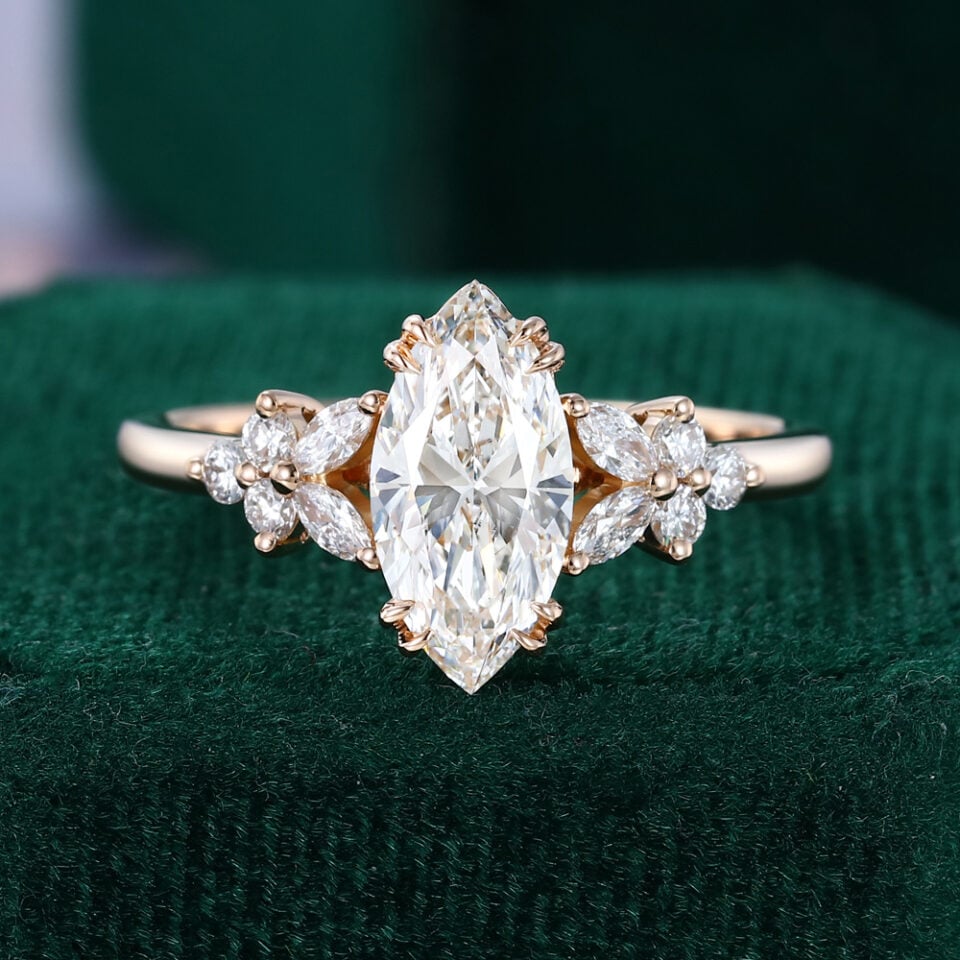
1.5CT Marquise Cut Lab Diamond Engagement Ring With Blossom Cluster Accents
$1,394 -
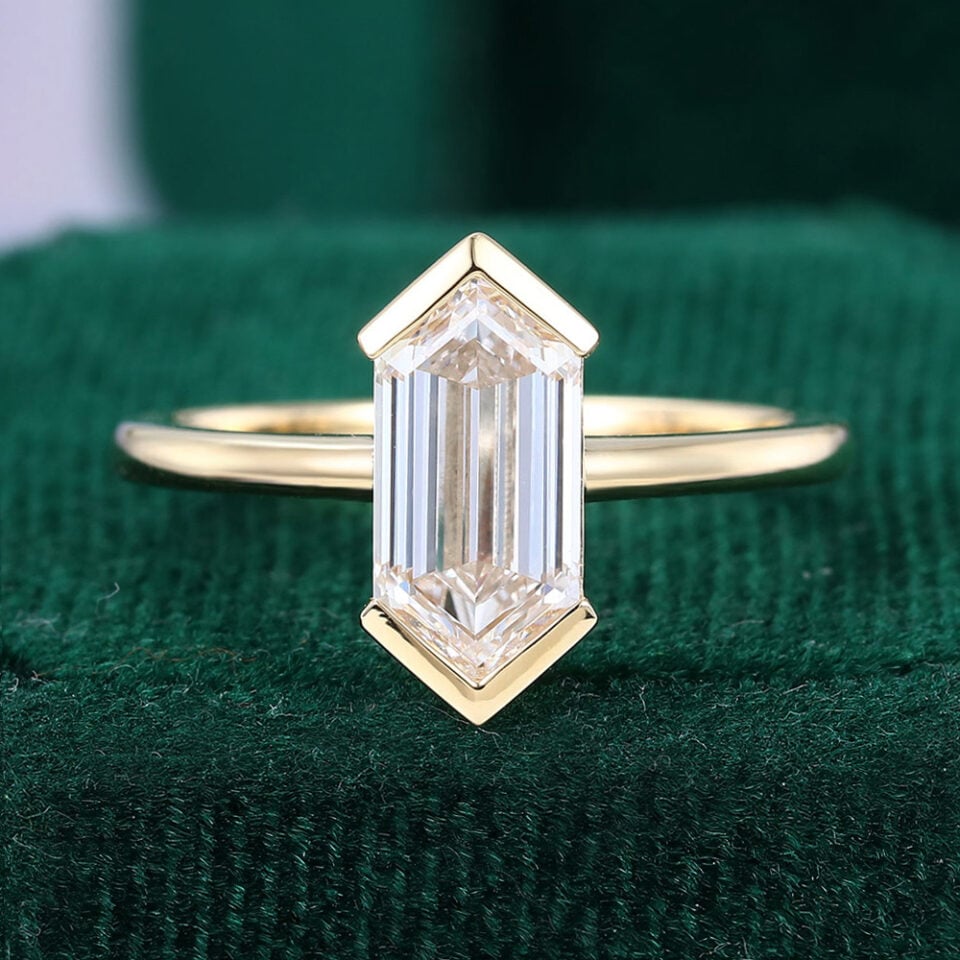
1.5CT Minimalist Long Hexagon Cut Lab Diamond Solitaire Engagement Ring
$1,757 -

1.5CT Oval Cut Lab Diamond Bridal Ring Cluster Wedding Ring Set
$1,787 -
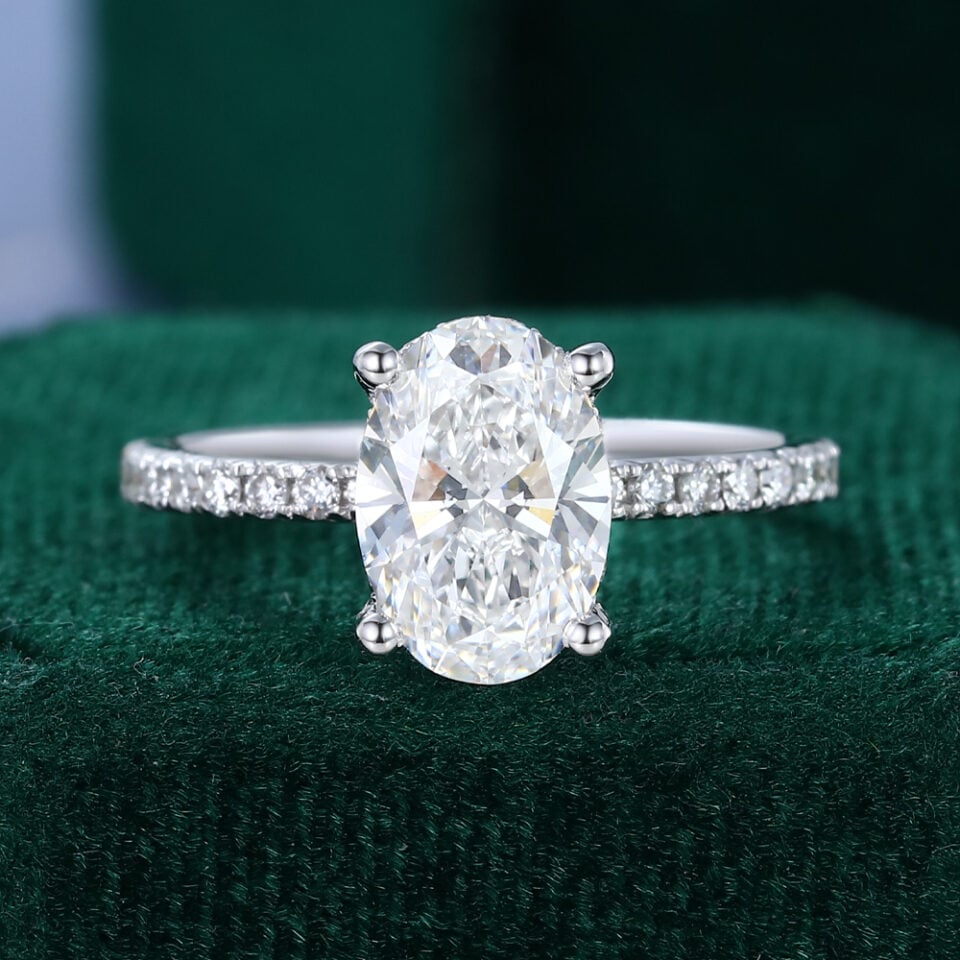
1.5CT Oval Cut Lab Diamond Engagement Ring With 3/4 Eternity Band
$1,286 -
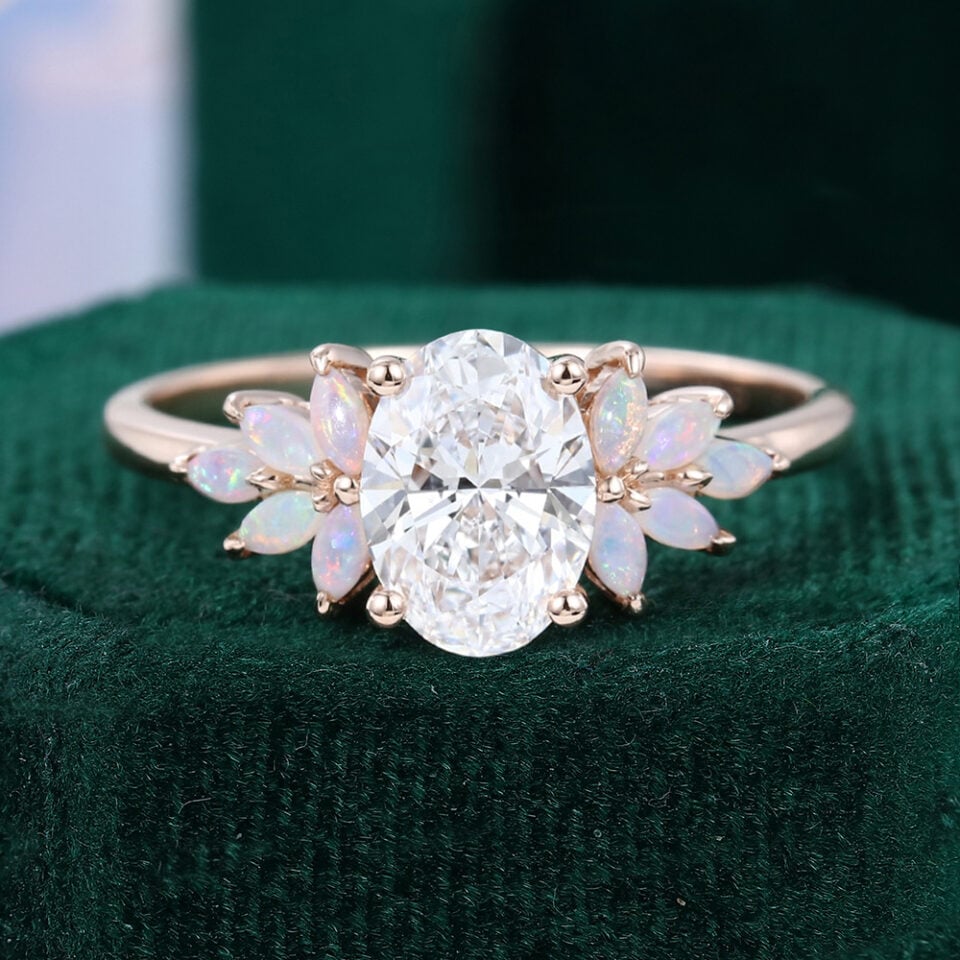
1.5CT Oval Cut Lab Diamond Engagement Ring with Opal Petal Cluster
$1,435 -

1.5CT Oval Cut Lab Diamond Leafy Non Traditional Engagement Ring
$1,487 -

1.5CT Oval Cut Lab Diamond Petal Bridal Ring Set 2PCS Enhancer Set
$2,310
Related FAQs
The biggest difference is how they’re formed. Lab-grown diamonds are created by people in a lab, while natural diamonds are formed naturally inside the Earth.
Attention! This refers to average quality! Lab-grown diamonds, produced under strict high standards, often have fewer inclusions and imperfections, meaning they typically have higher clarity. Clarity is one of the 4Cs that determines a diamond’s quality.
Check out our Diamond 4Cs Guide to help you get the best price for your diamond!
No, it’s not easy. They look almost identical. The average person will find it difficult to distinguish between lab-grown and natural diamonds, but professionals can use tools such as microscopes, ultraviolet light, and spectroscopy to detect subtle differences.
Lab-grown diamonds typically don’t retain value as well as natural diamonds. Their resale value may be much lower due to their greater availability.
Yes, they share the same physical properties as natural diamonds, meaning they are just as durable, with a hardness of 10.
No, lab-grown diamonds are real diamonds. “Fake” diamonds refer to imitations that resemble the appearance of diamonds but are not made of the same materials. Lab-grown diamonds have the same chemical composition, physical, and optical properties as natural diamonds.