- by MollyJewelryUS
- February 28, 2026
- Gemstone Education
If yo’ve ever gazed into the swirling, forest-like depths of moss agate ring, you may have wondered: Is moss agate natural? The short answer is yes. Moss agate is a naturally formed gemstone and is considered 100% natural in modern jewelry. The green, “moss-like” patterns inside the stone are not plants but natural mineral inclusions that formed as the stone grew underground. Each stone takes thousands or even millions of years to form, which is why no two moss agates look exactly alike.
At MollyJewelryUS, we specialize in these unique stones because they offer a piece of the wild, untamed earth that is as individual as a fingerprint. This guide explains exactly what moss agate is, how it forms, and whether it can be fake. It also explains whether moss agate is a good choice for everyday jewelry or engagement rings.
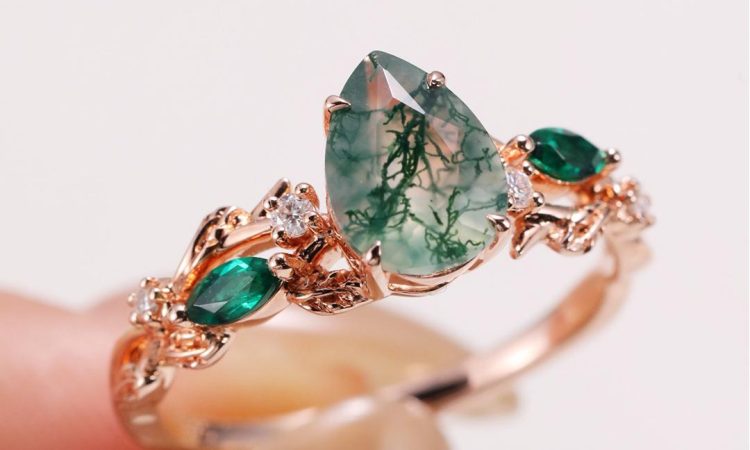
What Exactly Is Moss Agate?
What Exactly Is Moss Agate?
Moss agate is a natural variety of chalcedony quartz composed primarily of silicon dioxide. Although it lacks the banded patterns typically associated with traditional agates, it is technically classified as a type of agate.
Instead, moss agate is known for its:
- Tree-like or moss-like inclusions
- Soft green tones (sometimes brown or reddish)
- Semi-translucent appearance
- Unique, one-of-a-kind patterns
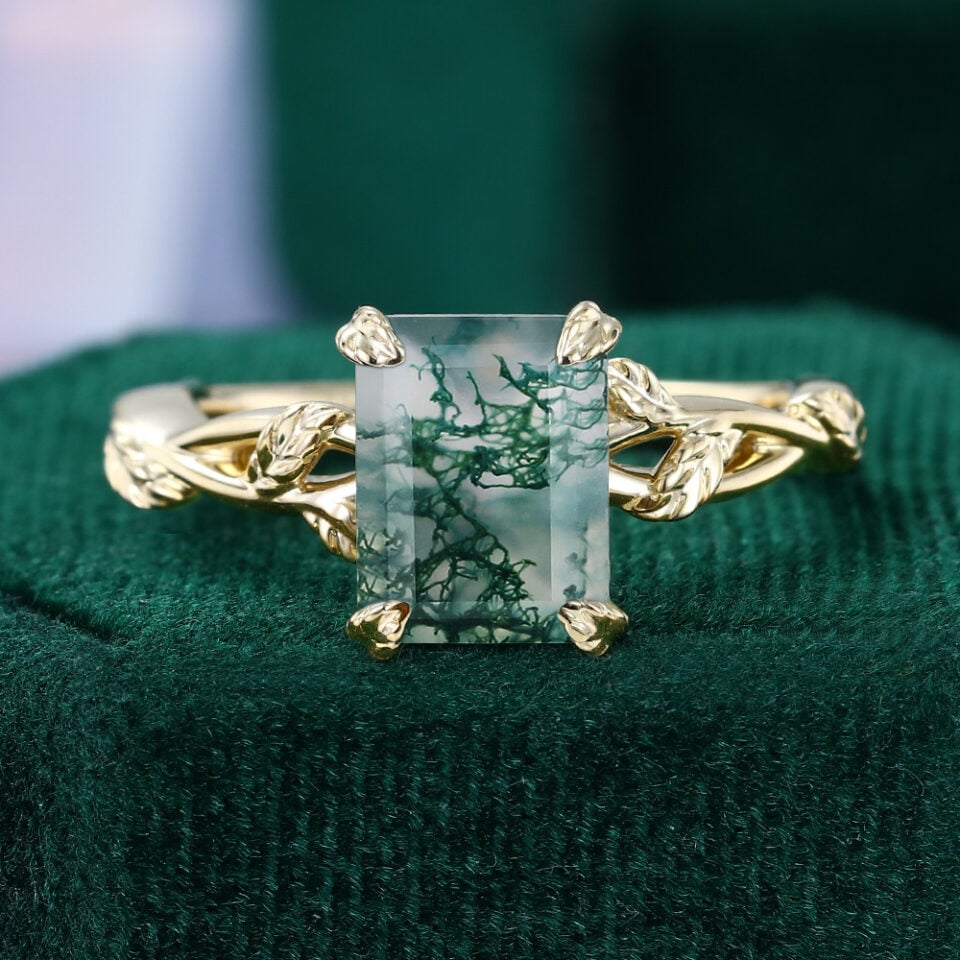
It consists of mineral inclusions, mostly manganese and iron oxides. These minerals seep into the stone as it forms, branching out in dendritic (tree-like) patterns. Depending on the mineral mix, these “plants” can appear in shades of deep forest green, earthy brown, or rusty red.
How Moss Agate Forms (Visual Explanation)
How Moss Agate Forms (Visual Explanation)
Understanding how moss agate forms makes it easier to appreciate its natural beauty.
- The Cavity: Moss agate begins in small cavities or cracks. These cavities are inside cooling volcanic rock.
- Mineral-Rich Water: Groundwater carrying silica and trace minerals slowly seeps into these spaces.
- The Growth: Over time, the silica hardens into chalcedony while minerals such as iron and manganese form branching patterns inside the stone.
- The Result: The stone eventually solidifies, preserving the moss-like inclusions that make each moss agate unique.
Because this process naturally occurs underground over long periods of time, every moss agate gemstone forms differently, without any laboratory intervention.

Why People Question if Moss Agate Is Natural
Why People Question if Moss Agate Is Natural
Many people wonder if moss agate is natural, and this confusion is understandable.
We live in an era of “lab-grown” everything and mass-produced synthetics. When a stone resembles a miniature terrarium, it’s easy to assume that it must be artificial.
The Moss-Like Appearance
The Moss-Like Appearance
The most common misconception is that moss agate contains real plant material.
It does not.
The “moss” inside the stone is actually mineral dendrites that form branching patterns resembling vegetation.
The Affordable Price
The Affordable Price
Moss agate is relatively affordable compared to emeralds or diamonds. Because of this, people often assume it’s a cheap imitation.
However, its affordability isn’t due to it being “fake”; it’s because moss agate is found in abundance in places like India, Montana, and Brazil.
The Rise of Lab-Created Stones
The Rise of Lab-Created Stones
Lab-grown gemstones are becoming more common in jewelry, and shoppers are becoming more aware of synthetic diamonds and moissanite.
This awareness naturally leads to questions about moss agate as well.
In reality, most moss agate used in jewelry is natural, though treatments and imitations do exist.
Is Moss Agate Ever Fake or Treated?
Is Moss Agate Ever Fake or Treated?
While the moss agate used by MollyJewelryUS is natural, imitations are common in the market. Understanding the difference helps ensure that you know exactly what you are buying.
Natural vs. Treated Moss Agate
Natural vs. Treated Moss Agate
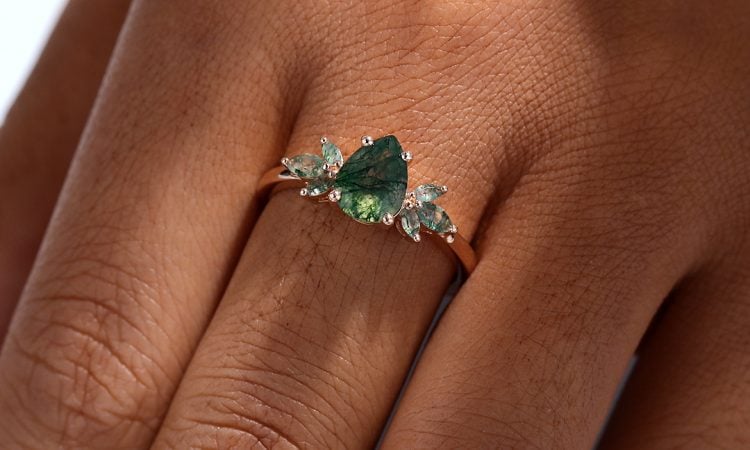
Natural moss agate forms entirely in the earth. It typically shows organic, irregular inclusions and subtle color variations. Its colors are earthy: olive greens, deep forest shades, and rusty blacks. The “moss” appears to be suspended at different levels within the stone, giving it depth.
Treated moss agate, on the other hand, may undergo processes such as dyeing or stabilization to improve color or durability. Dyed stones often appear overly dark or unnaturally uniform in color, while stabilized stones may have a slightly smoother or more consistent appearance.
In rare cases, imitation moss agate is made from glass or resin that mimics natural inclusions. These usually lack the internal complexity and depth found in genuine stones.
Because the visual differences can be subtle, it is helpful to understand the key signs of authenticity before making a purchase. For a step-by-step identification guide, see: How to Tell If Moss Agate Is Real.
Is Moss Agate Durable Enough for Daily Wear?
Is Moss Agate Durable Enough for Daily Wear?
Another common question from buyers is whether natural gemstones like moss agate can withstand everyday wear and tear.
Moss agate ranks about 6.5-7 on the Mohs hardness scale, which makes it reasonably durable for daily wear.
However, it is not as hard as diamonds or sapphires, so proper care is important. Protective settings, such as bezel or halo settings, and mindful wear can help moss agate rings last for many years.
For a detailed durability guide, see: Is Moss Agate Durable Enough for Everyday Wear? The Ultimate Guide
Should You Buy Moss Agate for an Engagement Ring?
Should You Buy Moss Agate for an Engagement Ring?
Over the past few years, moss agate engagement rings have become increasingly popular among couples looking for something unique. There are three main reasons why moss agate has exploded in popularity:
- Uniqueness: No two moss agates are identical. One might resemble a dense forest, while another might resemble a misty morning in the mountains. This individuality appeals to couples who want a ring that feels personal.
- Affordability: You can get a much larger, more visually striking center stone at a fraction of the cost of a traditional gemstone. You also have more options for custom design, higher-quality settings, and personalized details.
- Symbolism:It is often called the “Stone of New Beginnings,” making it a poetic choice for marriage.
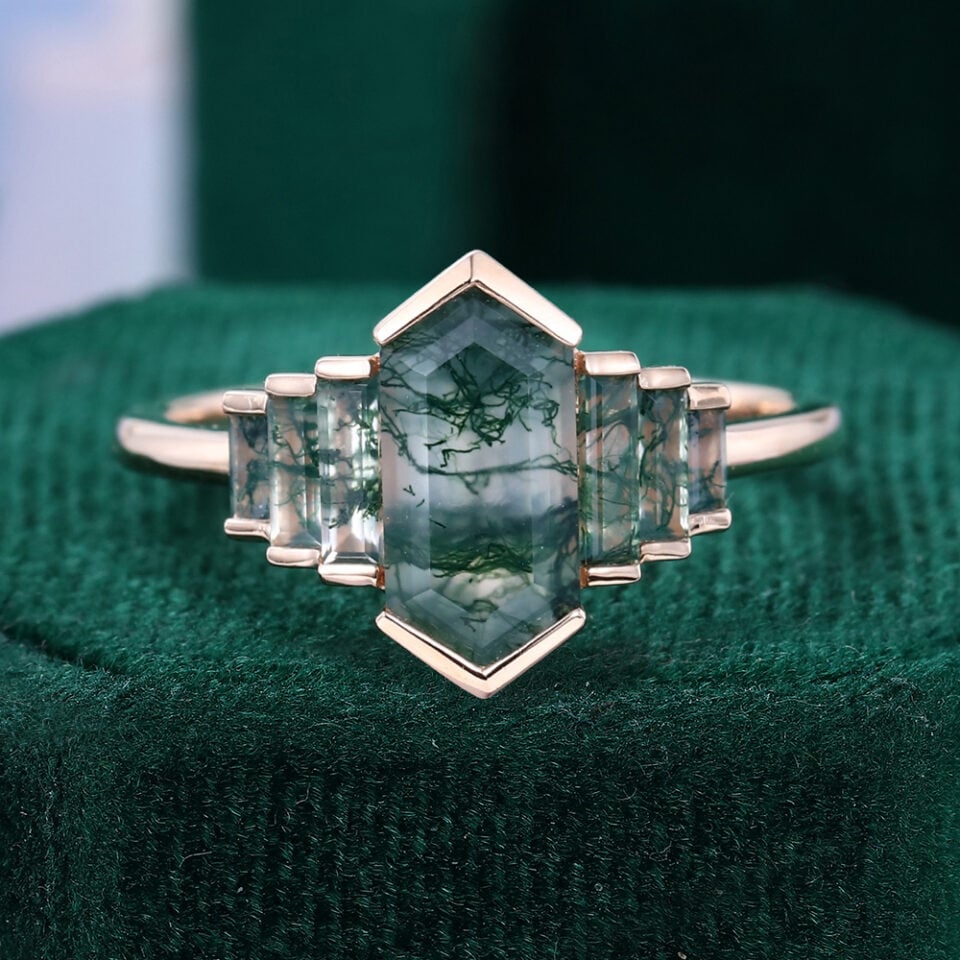
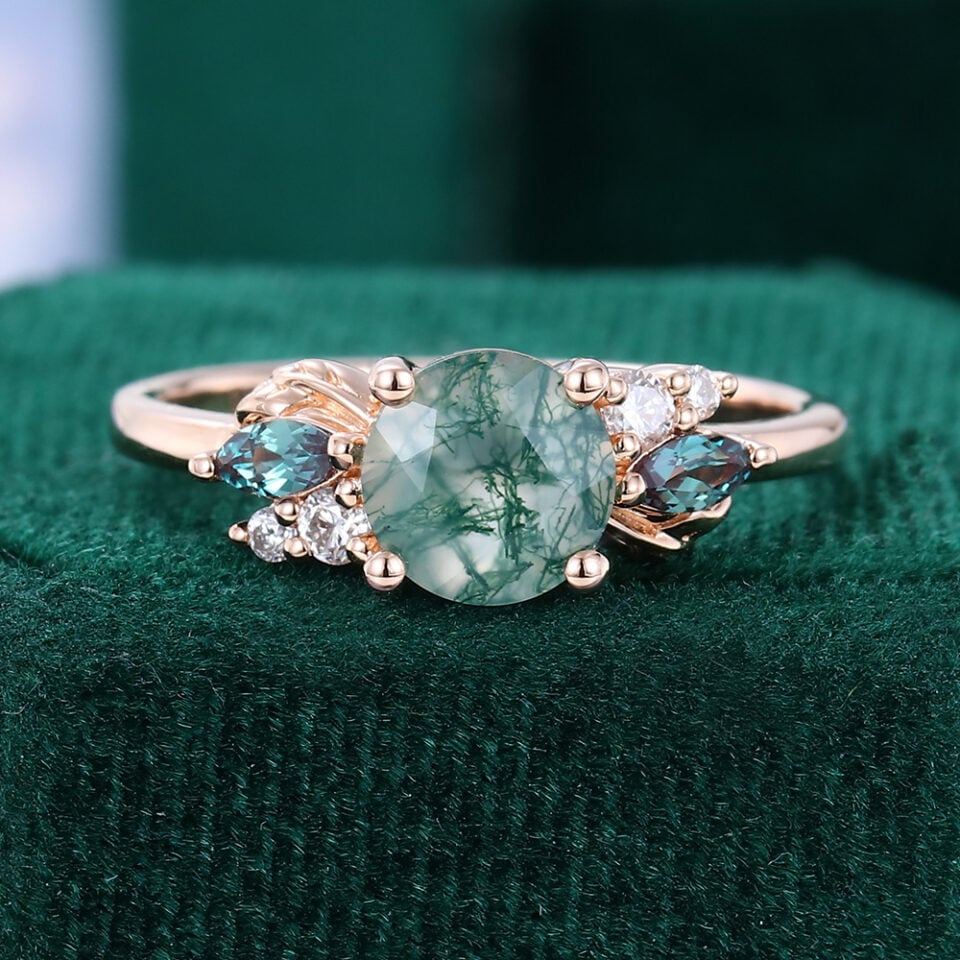
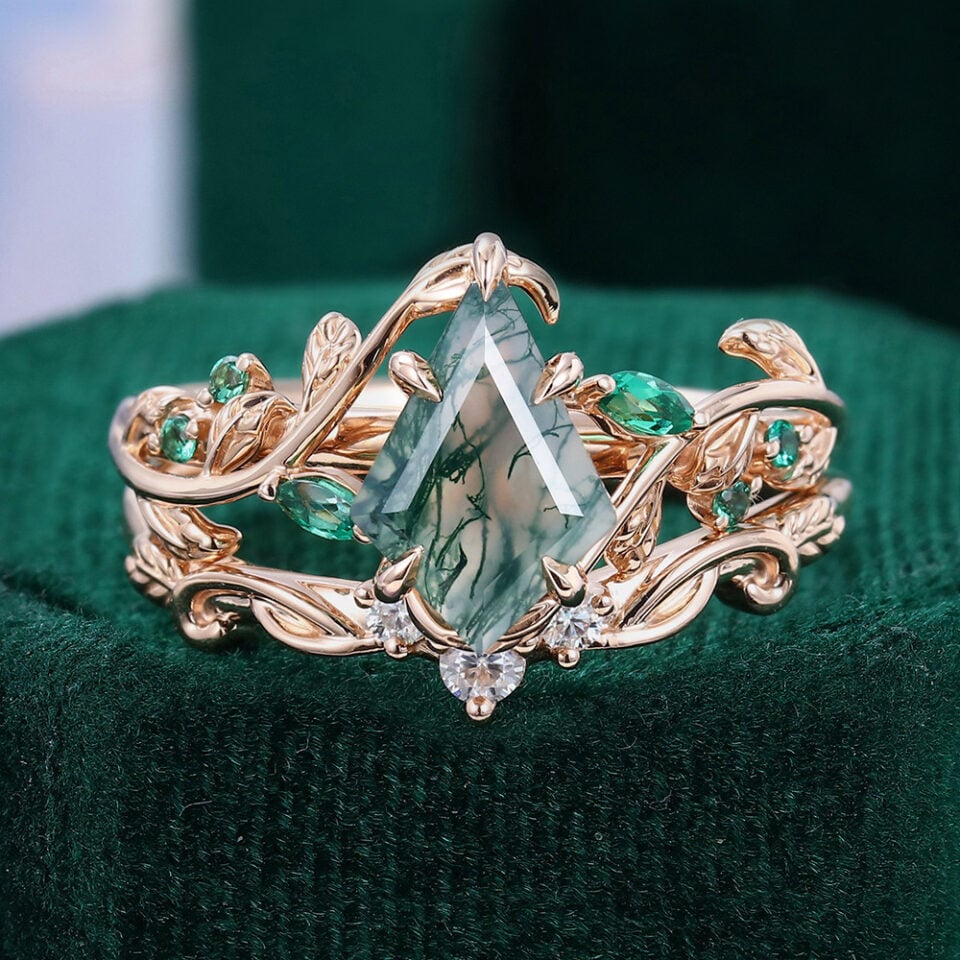
At MollyJewelryUS, we specialize in natural moss agate engagement rings, moss agate promise rings, moss agate bridal ring sets, and moss agate wedding bands designed for everyday wear and long-term durability. In our workshop, each moss agate is individually examined to ensure:
- Distinctive natural inclusions
- Stable stone structure
- Clear pattern visibility
- Balanced color tones
Rather than using mass-sourced stones, we focus on moss agate pieces that highlight the organic beauty that makes this gemstone special.
Final Thoughts
Final Thoughts
So, is moss agate natural? Yes, moss agate forms naturally through mineral crystallization processes that create its distinctive organic patterns. Its moss-like inclusions are mineral formations, not plant material, and each stone has a unique natural history.
For many buyers, this natural individuality is what makes moss agate special. Whether used in an engagement ring or as a meaningful gift, moss agate offers a balance of natural beauty, uniqueness, and affordability that few gemstones can match.
Ready to find your one-of-a-kind stone? View our collection of natural moss agate rings!
FAQs
FAQs
Is Moss Agate a "Real" Gemstone?
Yes. It is a genuine, natural gemstone belonging to the quartz family. It forms naturally in the earth and is widely recognized in the field of gemology.
Does Moss Agate Contain Real Moss?
No, moss agate does not contain plant material. Its moss-like patterns are mineral inclusions that formed during the stone’s growth.
Is Moss Agate Lab Created?
True lab-created moss agate is uncommon. Most stones sold as moss agate originate from natural deposits. However, imitation versions made from glass or dyed materials can be found on low-quality marketplaces.
Does the "Moss" Die or Change Over Time?
Since the “moss” is mineral crystals (iron and manganese), it will never change color, wilt, or die. It is essentially a prehistoric snapshot frozen in stone.
Can Moss Agate Get Wet?
Yes, natural moss agate is water-safe. However, we recommend avoiding harsh chemicals or ultrasonic cleaners, as these can seep into the stone’s microscopic fissures. All you need is warm, soapy water and a soft brush.
Why Is Every Moss Agate Different?
Natural mineral inclusions form randomly during the stone’s growth. This is what makes every moss agate gemstone unique.