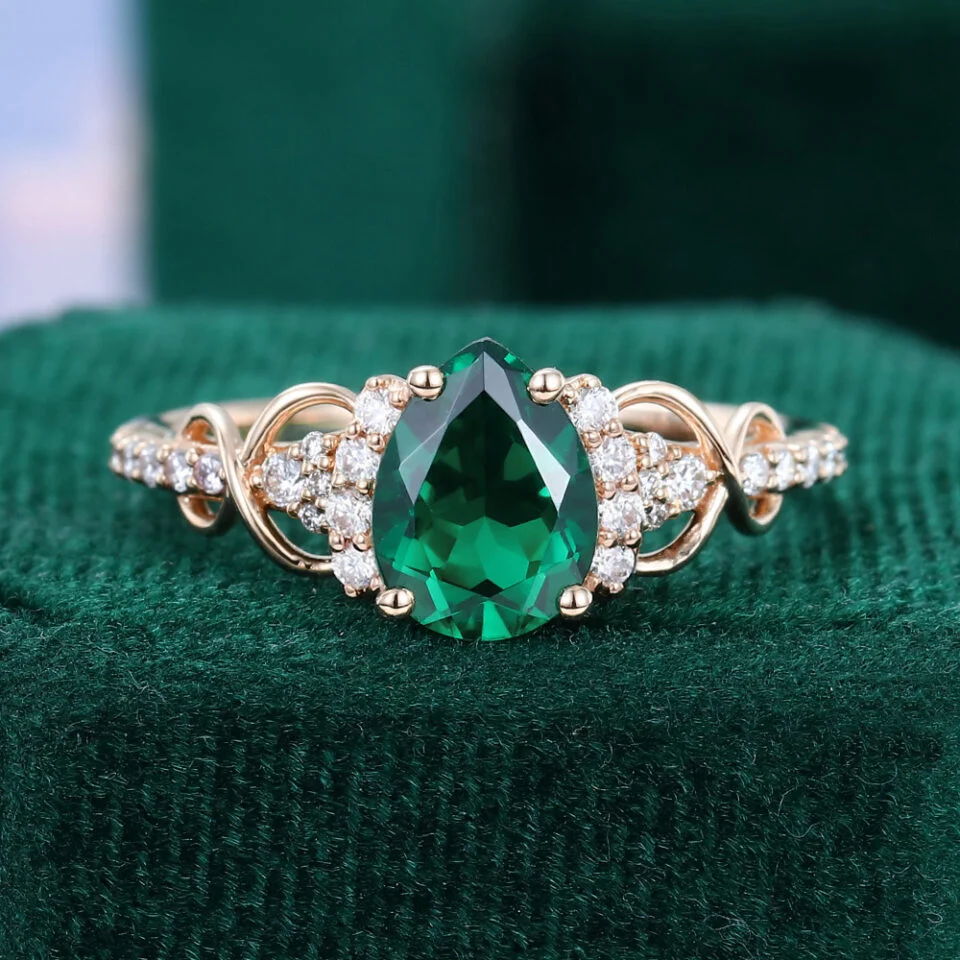
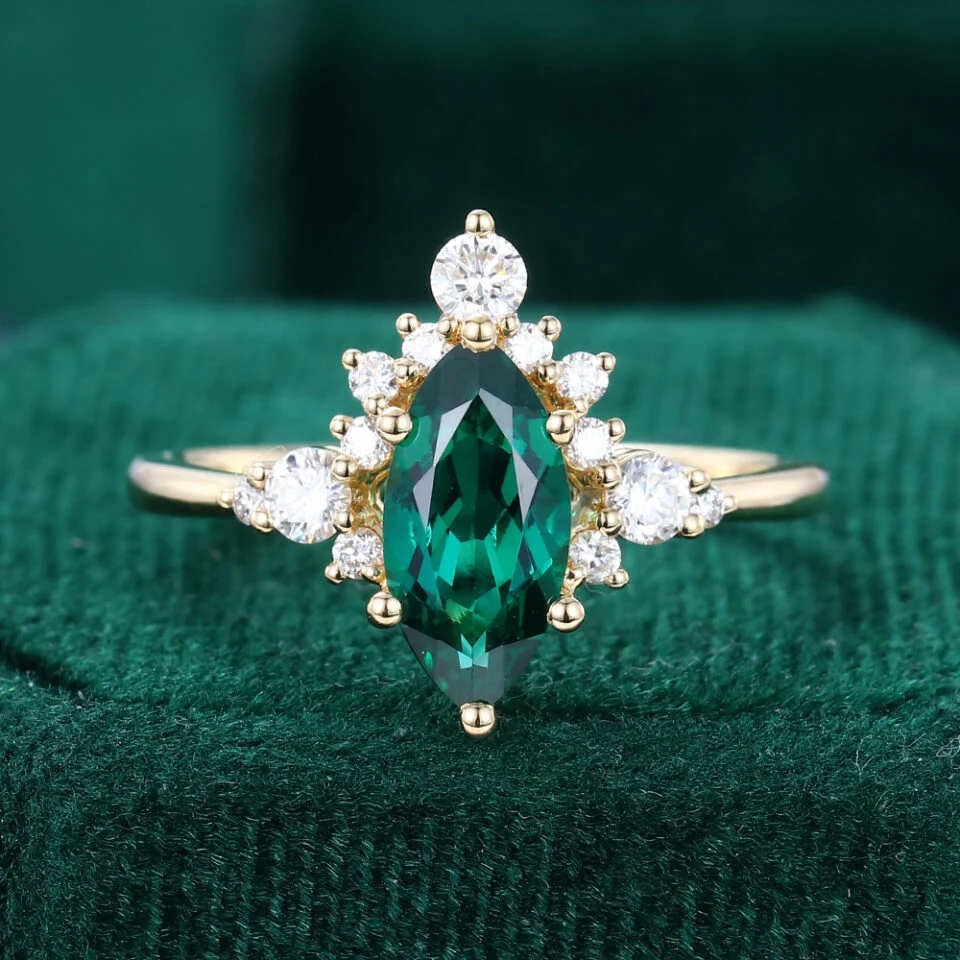
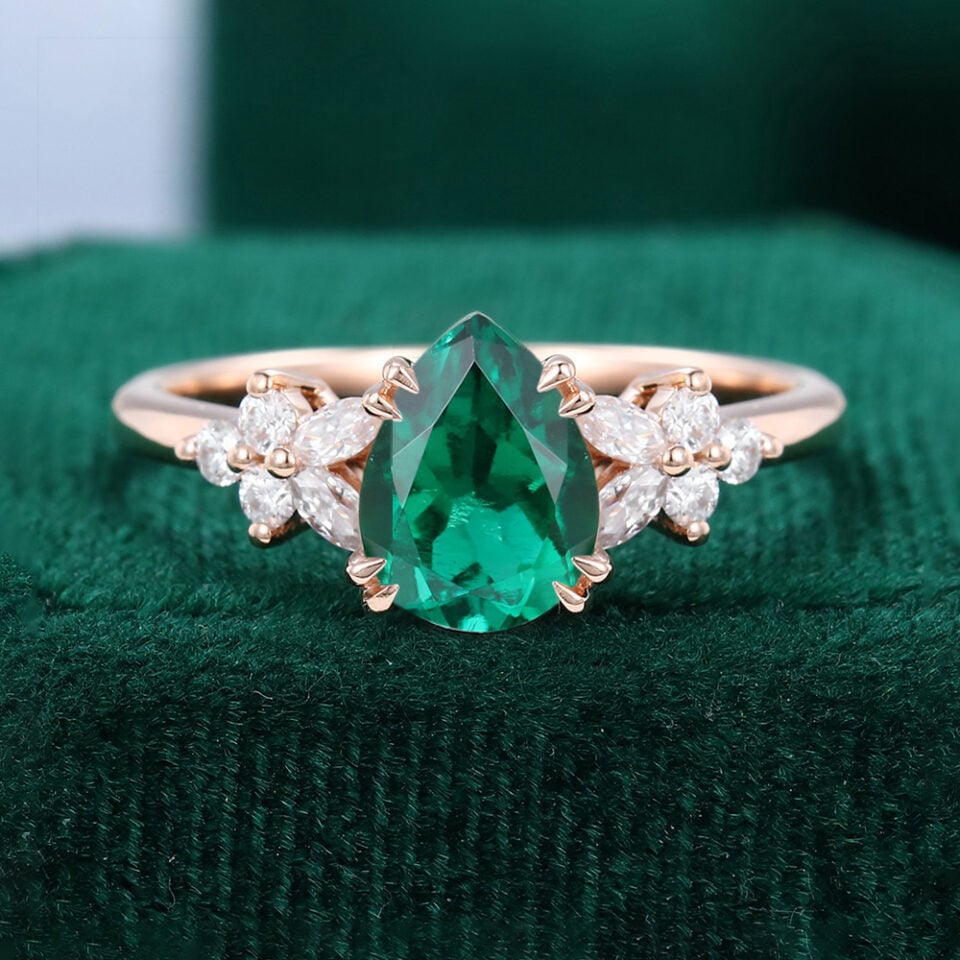
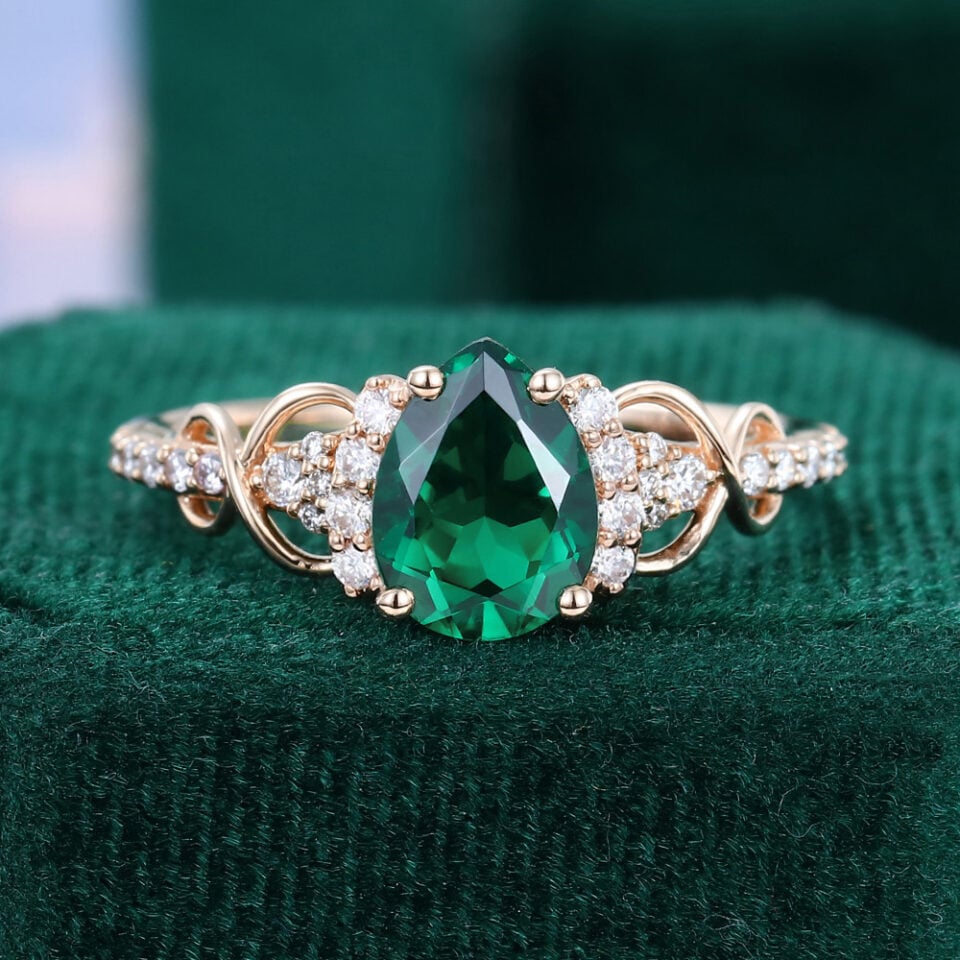
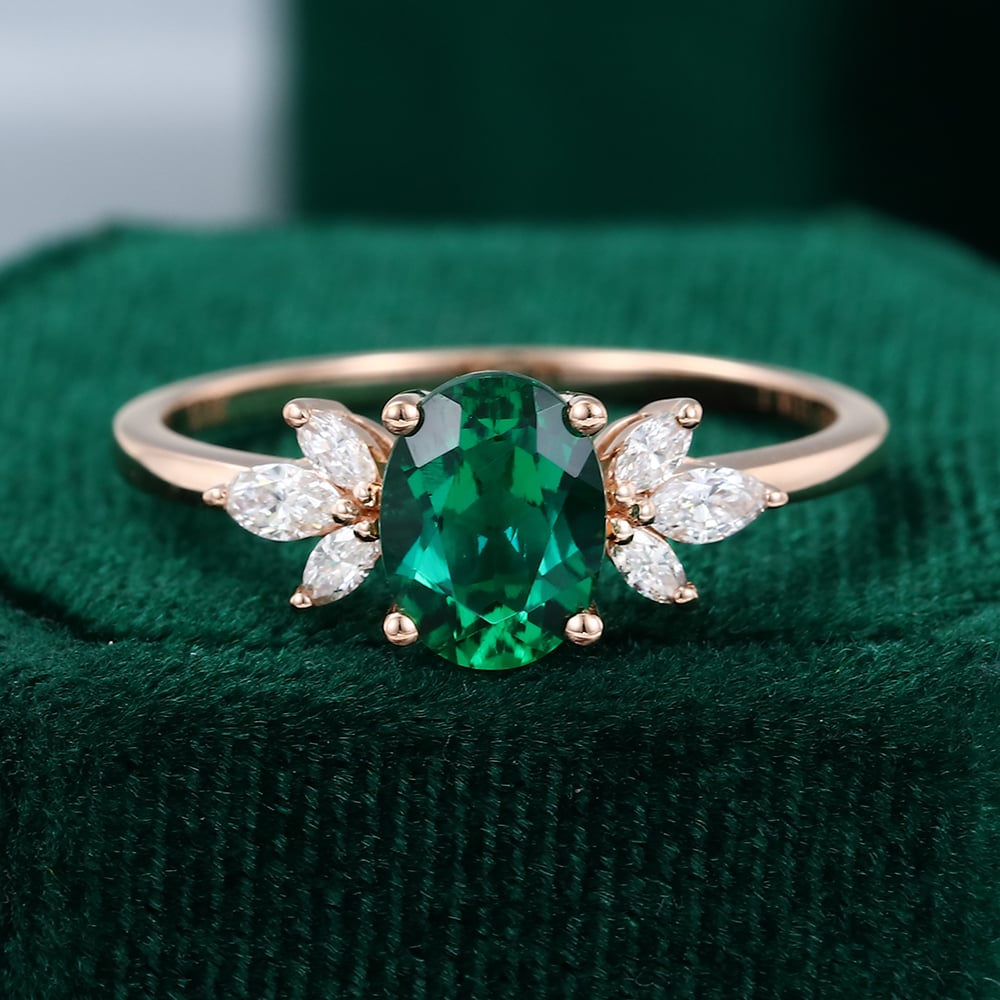
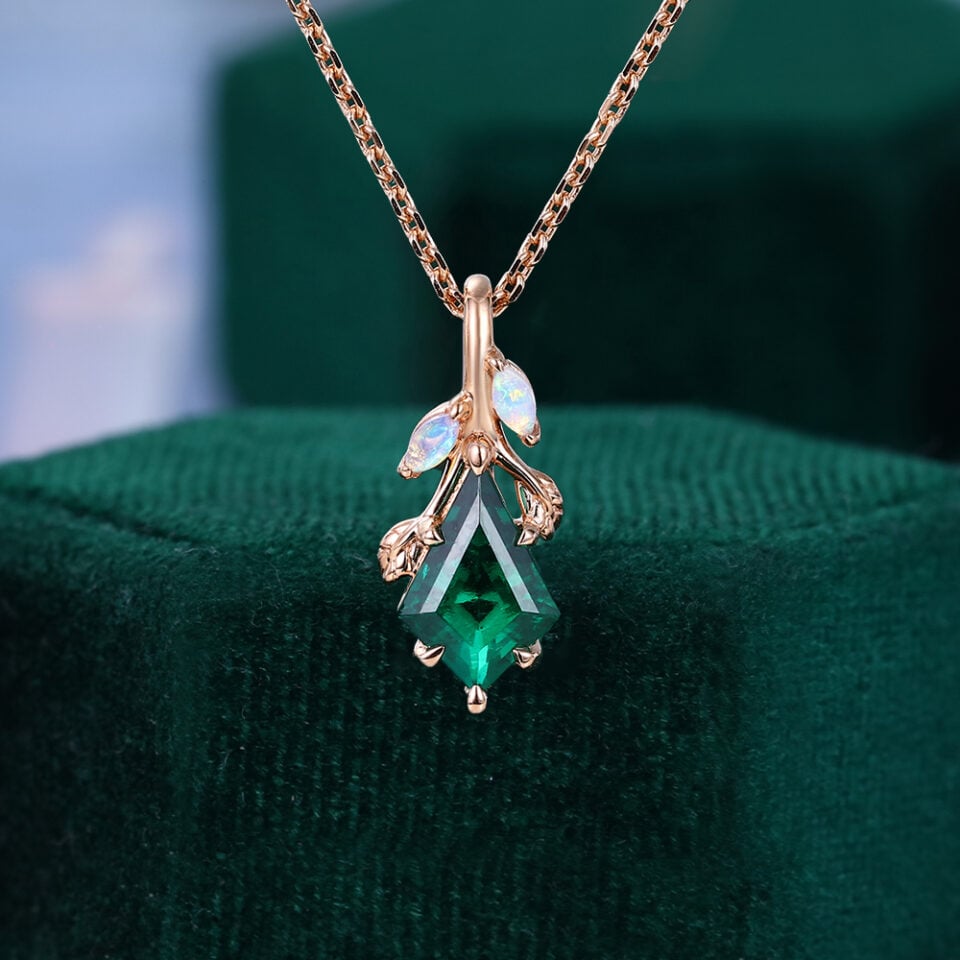
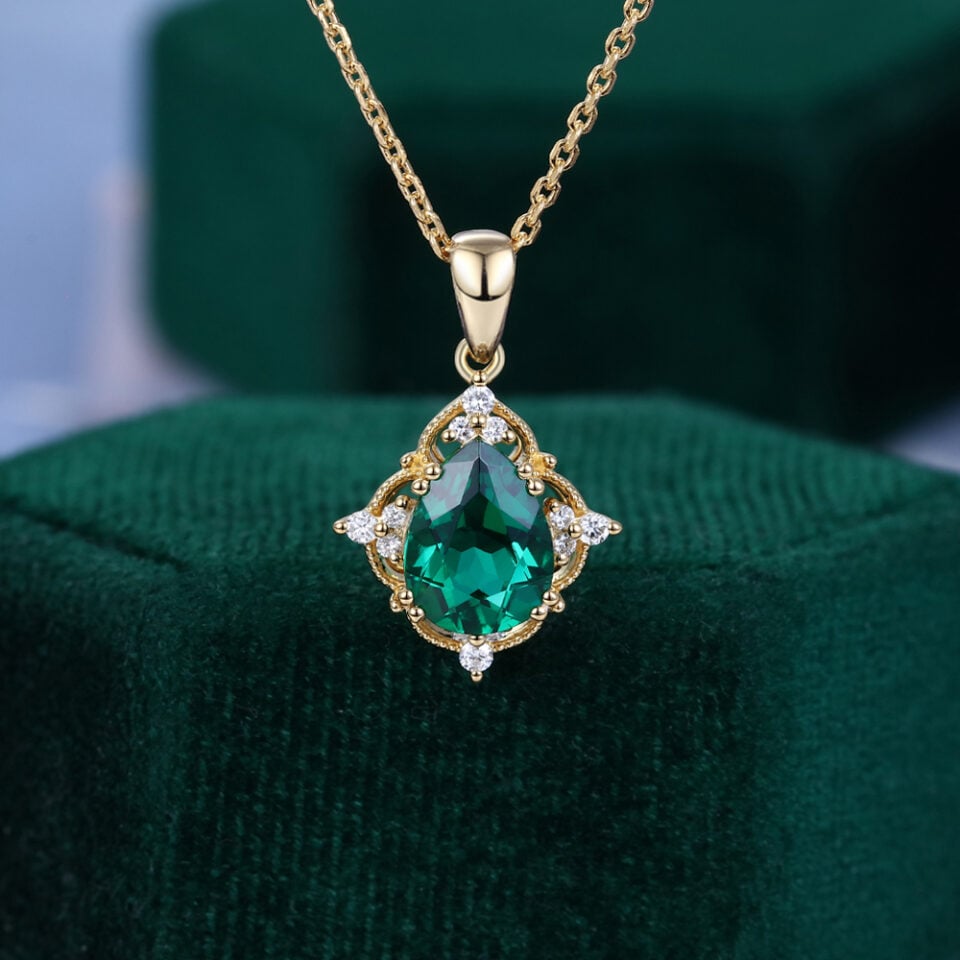
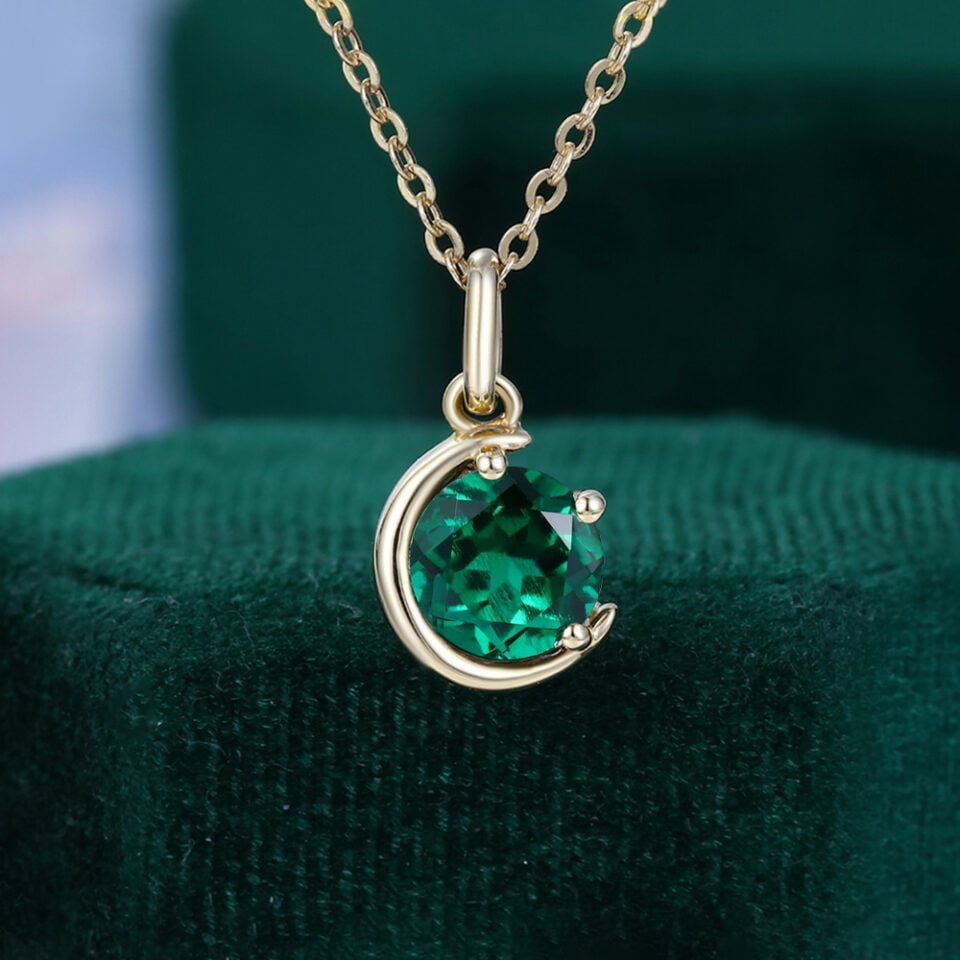
Emeralds are prized for their rich green color and timeless elegance—but they’re also one of the most commonly imitated gemstones on the market. If you’re wondering how to tell if an emerald is real, you’re not alone.
Whether you already own an emerald ring or are considering buying one, knowing the difference between natural emeralds, lab-grown emeralds, and fake stones can help you avoid costly mistakes—and choose jewelry that truly lasts. In this guide, we’ll walk you through practical ways to identify a real emerald and explain what authenticity really means in today’s fine jewelry world.
Before testing an emerald, it’s important to clarify what “real” means. Today, real emeralds fall into two legitimate categories:
Natural emeralds, formed deep within the earth over millions of years
Lab-grown emeralds, created under controlled conditions with the same chemical and physical structure
Both are genuine emeralds. What’s not real are fake or imitation stones, such as green glass or emerald-colored crystals that only mimic the look.
If you’re new to emerald jewelry, our emerald jewelry guide explains these differences in more depth and how they affect wearability and value.
7 Practical Ways to Tell If an Emerald Is Real (At Home)
While professional testing is always the most reliable, these checks can help you spot obvious fakes.
1. Examine the Color Carefully
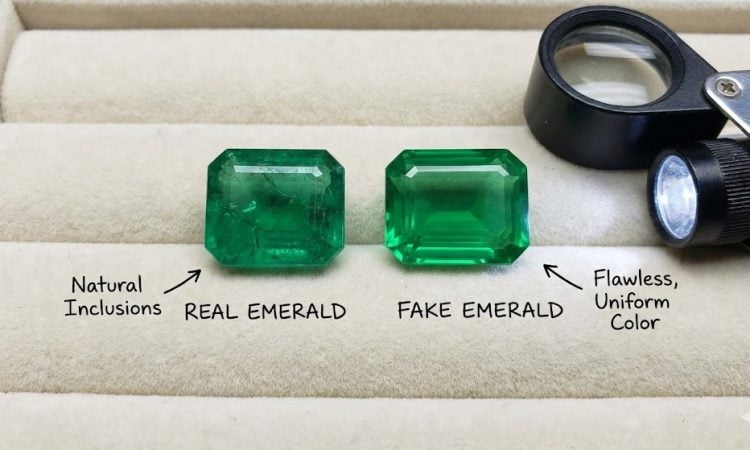
Real emeralds show depth and complexity, not flat or neon green. If the color looks overly bright, uniform, or artificial, it may be a fake.
2. Look for Natural Inclusions (Jardin)
Most real emeralds contain inclusions called jardin. These appear as fine lines or mossy patterns—not round air bubbles, which are common in glass imitations.
3. Check Transparency, Not Perfection
Emeralds are rarely flawless. A stone that looks perfectly clear may be synthetic or imitation, especially at a low price point.
4. Feel the Weight
Emeralds are relatively dense. If the stone feels unusually light for its size, it’s often a sign of glass or resin.
5. Touch Test
Real emeralds usually feel cool to the touch and warm up slowly, unlike glass which adjusts to temperature quickly.
6. Ask for Disclosure or Certificatio
A reputable seller will clearly state whether an emerald is natural or lab-grown and provide documentation when appropriate.
7. Consider the Setting
Emeralds sold in well-crafted fine jewelry settings are far less likely to be fake than loose stones with no provenance.
Real vs Lab-Grown vs Fake Emeralds (Quick Comparison)
Yes. A lab-grown emerald is a real emerald, not a simulant. It shares the same composition, hardness, and optical properties as a mined stone.
The difference lies in origin—not authenticity. Many buyers choose lab-grown emeralds for their cleaner appearance, predictable color, and modern appeal, especially for engagement rings designed for everyday wear. This shift mirrors what we see across fine jewelry, where lab-grown gemstones are becoming a trusted, intentional choice.
The Safest Way to Avoid Fake Emeralds When Buying Jewelry
The most reliable way to avoid fake emeralds is to buy from a jeweler who specializes in emerald jewelry—not just loose stones. A thoughtfully designed setting, clear gemstone disclosure, and curated collections all reduce the risk of imitation stones.
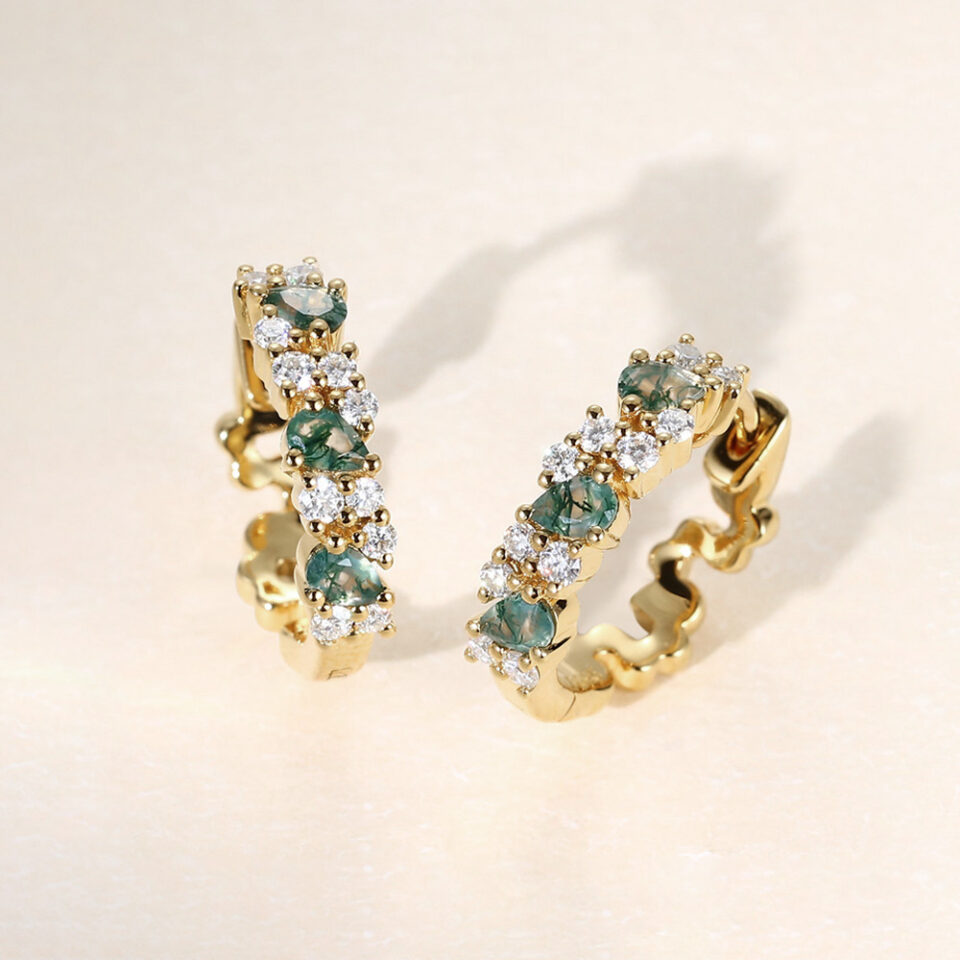
If you’re exploring real emerald jewelry, start with:
Each piece is designed with gemstone performance, beauty, and long-term wear in mind.
Final Thoughts: Choose Emerald Jewelry with Confidence
Learning how to tell if an emerald is real empowers you to make smarter, more confident decisions. Whether you’re drawn to the individuality of natural emeralds or the refined beauty of lab-grown stones, authenticity starts with understanding—and ends with choosing jewelry you’ll love for years to come.
If you’re ready to explore real emerald designs, discover our carefully curated emerald collections and find a piece that fits both your style and your life.