- by MollyJewelryUS
- July 31, 2026
- Gemstone Education
Every amethyst starts its journey deep beneath the Earth’s surface. Millions of years before it becomes part of a beautiful ring, silica-rich water slowly fills pockets inside volcanic rock, where quartz crystals begin to grow. Tiny traces of iron and natural radiation gradually transform those clear crystals into the purple gemstone we know as amethyst.
Although the science behind amethyst formation is fascinating, understanding the process also helps explain why every gemstone has its own unique color, clarity, and character. Whether you’re simply curious about geology or searching for an amethyst ring that feels meaningful, knowing where the stone comes from makes wearing it even more special.
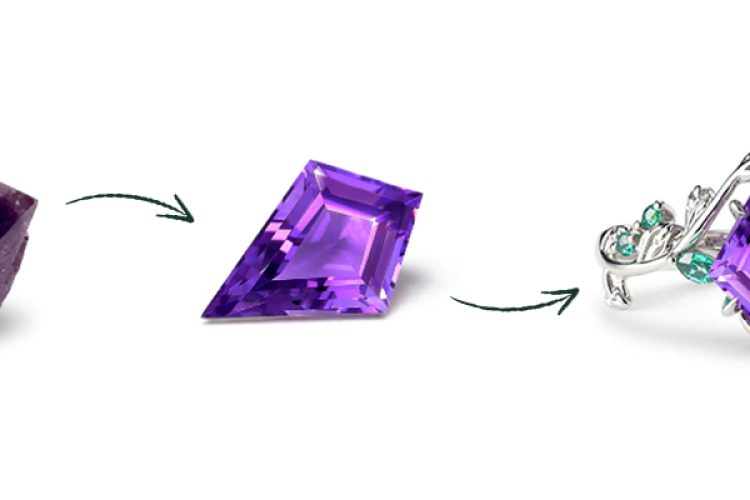
Table of Contents
How Does Amethyst Form Naturally?
How Does Amethyst Form Naturally?
Long before an amethyst becomes a piece of fine jewelry, it begins as part of an extraordinary geological process.
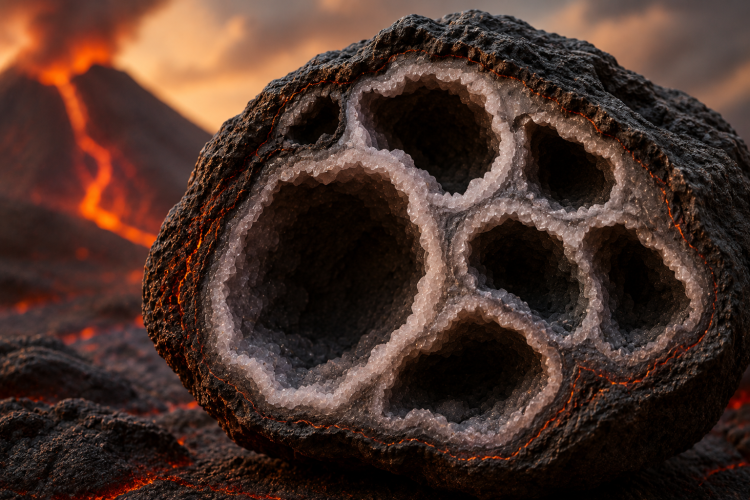
Unlike gemstones that grow under extreme pressure deep within the Earth, most amethyst forms inside hollow spaces left behind by ancient volcanic activity. Over time, mineral-rich water flows into these cavities and slowly creates the crystals that eventually become the purple quartz admired around the world.
Rather than happening overnight, this transformation takes place over an immense timescale—one crystal layer at a time.
Step 1 – Volcanic Activity Creates the Space
Step 1 – Volcanic Activity Creates the Space
When lava cools, gases trapped inside the rock leave behind hollow cavities known as geodes. These empty chambers become the perfect environment for crystal growth.
Step 2 – Silica-Rich Water Fills the Cavity
Step 2 – Silica-Rich Water Fills the Cavity
Groundwater carrying dissolved silica gradually enters the geode. As temperatures and pressure change, the silica begins forming microscopic quartz crystals on the inner walls.
At this stage, the crystals are still clear—they haven’t developed the famous purple color yet.
Step 3 – Nature Adds the Purple Color
Step 3 – Nature Adds the Purple Color
As the quartz continues growing, tiny amounts of iron become trapped inside its crystal structure. Over thousands to millions of years, natural radiation from surrounding rocks changes the iron at an atomic level, producing the purple shades that make amethyst instantly recognizable.
This is why no two natural amethysts look exactly alike. Some develop soft lavender tones, while others become a rich royal purple depending on the geological conditions in which they formed.
Quick Takeaway:Amethyst doesn’t begin as a purple gemstone. It starts as clear quartz, and only develops its signature color after iron and natural radiation work together during the crystal’s long formation process.
Why Does Amethyst Turn Purple?
Why Does Amethyst Turn Purple?
Amethyst wasn’t born purple.
As quartz crystals grow, tiny traces of iron become trapped inside the crystal. Over millions of years, natural radiation from the surrounding rocks changes those iron atoms, gradually creating the purple color that makes amethyst so distinctive.
The exact shade depends on how much iron is present and the geological conditions during formation. That’s why some amethysts appear as soft lavender, while others develop a rich royal purple.
| What Creates the Color? | Role |
|---|---|
| Iron | Provides the trace element needed for color. |
| Natural radiation | Changes the iron to produce the purple hue. |
| Geological conditions | Influence the final shade and color intensity. |
Quick Takeaway: Amethyst gets its purple color from iron and natural radiation—not from dye, heat treatment, or added pigments.
How Long Does It Take for Amethyst to Form?
How Long Does It Take for Amethyst to Form?
Natural amethyst doesn’t form in years—it forms over hundreds of thousands to millions of years.
Inside volcanic rock cavities, quartz crystals grow slowly as silica-rich water continues flowing through the space. Because every geological environment is different, no two amethyst deposits develop at exactly the same speed or produce identical crystals.
This long natural process is one reason every amethyst has its own character. Once the crystal is cut and polished, those subtle differences become part of the finished gemstone you see in jewelry.
If you’re wondering how these natural characteristics compare with modern alternatives, the next section explains the differences between natural and lab-created amethyst.
Where Is Amethyst Found?
Where Is Amethyst Found?
Amethyst is found around the world, but only a few regions are especially well known for producing gemstones used in fine jewelry.
Brazil is the largest source of amethyst, while Uruguay is famous for its deep purple crystals. Zambia also produces high-quality amethyst with rich violet tones, making these three countries the best-known sources on today’s jewelry market.
| Country | Known For |
|---|---|
| Brazil | Large deposits and a wide range of purple shades |
| Uruguay | Deep, richly saturated purple crystals |
| Zambia | Rich violet color and excellent clarity |
However, origin is only one part of the story.
Two amethysts from different countries can look almost identical once they’re expertly cut and polished. For most jewelry buyers, the gemstone’s color, cut, and overall craftsmanship have a much greater impact than where it was mined.
That’s why, at MollyJewelryUS, we focus on creating beautifully handcrafted amethyst rings that highlight the gemstone’s natural beauty—whether inspired by nature, vintage details, or modern simplicity.
Does the Formation Process Affect Amethyst Quality?
Does the Formation Process Affect Amethyst Quality?
Yes—but only to a certain extent.
The way an amethyst forms can influence its natural color, clarity, and crystal size. However, these are just the starting point. The final appearance also depends on how the gemstone is cut and polished.
For most jewelry buyers, the finished look is far more important than the geological origin.
| Formation Can Affect | What You’ll Notice |
|---|---|
| Color | Some stones are lighter, others deeper purple. |
| Clarity | Natural inclusions may be visible in some crystals. |
| Crystal Size | Larger crystals allow for larger gemstones. |
Quick Takeaway: Formation creates the crystal, while expert cutting brings out its beauty.
Natural vs. Lab-Created Amethyst
Natural vs. Lab-Created Amethyst
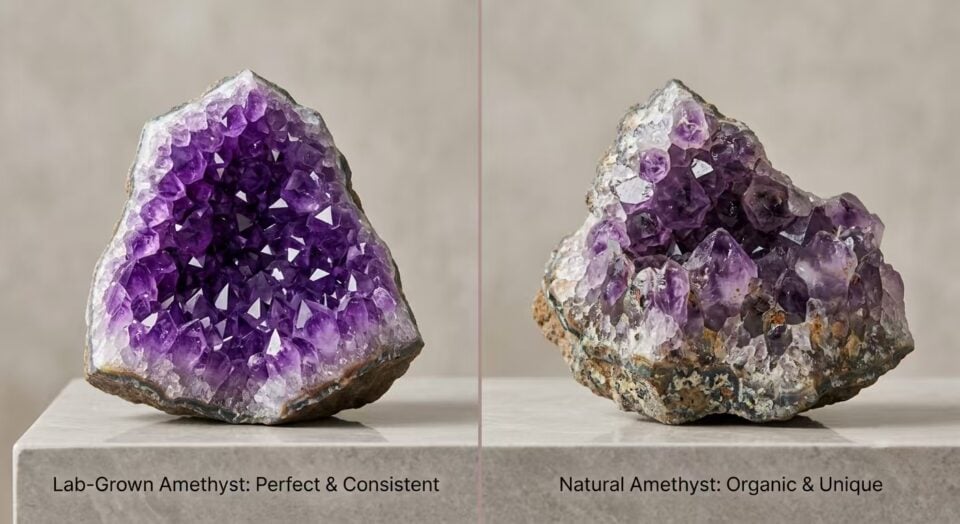
Natural and lab-created amethyst are both real amethyst. The biggest difference is simply where the crystal grows.
Natural amethyst develops underground over millions of years, while lab-created amethyst is grown in a carefully controlled environment that recreates the same crystal-growing conditions.
Because they share the same mineral composition and crystal structure, they also have the same Mohs hardness of 7 and are equally suitable for fine jewelry.
| Natural | Lab-Created |
|---|---|
| Formed in nature | Grown in a laboratory |
| Natural variations in color and clarity | More consistent color and appearance |
| Same mineral composition | Same mineral composition |
| Same durability | Same durability |
At MollyJewelryUS, many of our handcrafted amethyst rings feature high-quality lab-created amethyst, allowing us to create beautiful designs with excellent color consistency while keeping them accessible for everyday wear.
If you’re wondering how that translates to daily use, our guide Can Amethyst Be Worn Daily? explains what to expect from wearing an amethyst ring over time.
From Crystal to Jewelry
From Crystal to Jewelry
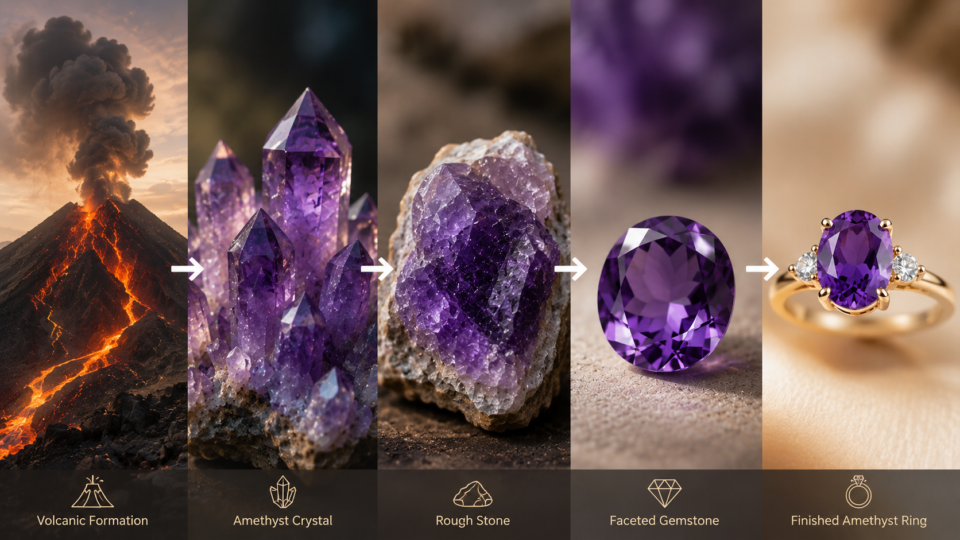
Every amethyst ring begins long before it reaches a jewelry box.
Once the crystal has formed, it goes through a few essential steps before becoming a finished piece of jewelry:
Crystal Formation → Cutting → Polishing → Quality Inspection → Jewelry Setting
Every stage influences the final appearance of the gemstone, from how much light it reflects to how vibrant the purple color appears once it’s set in a ring.
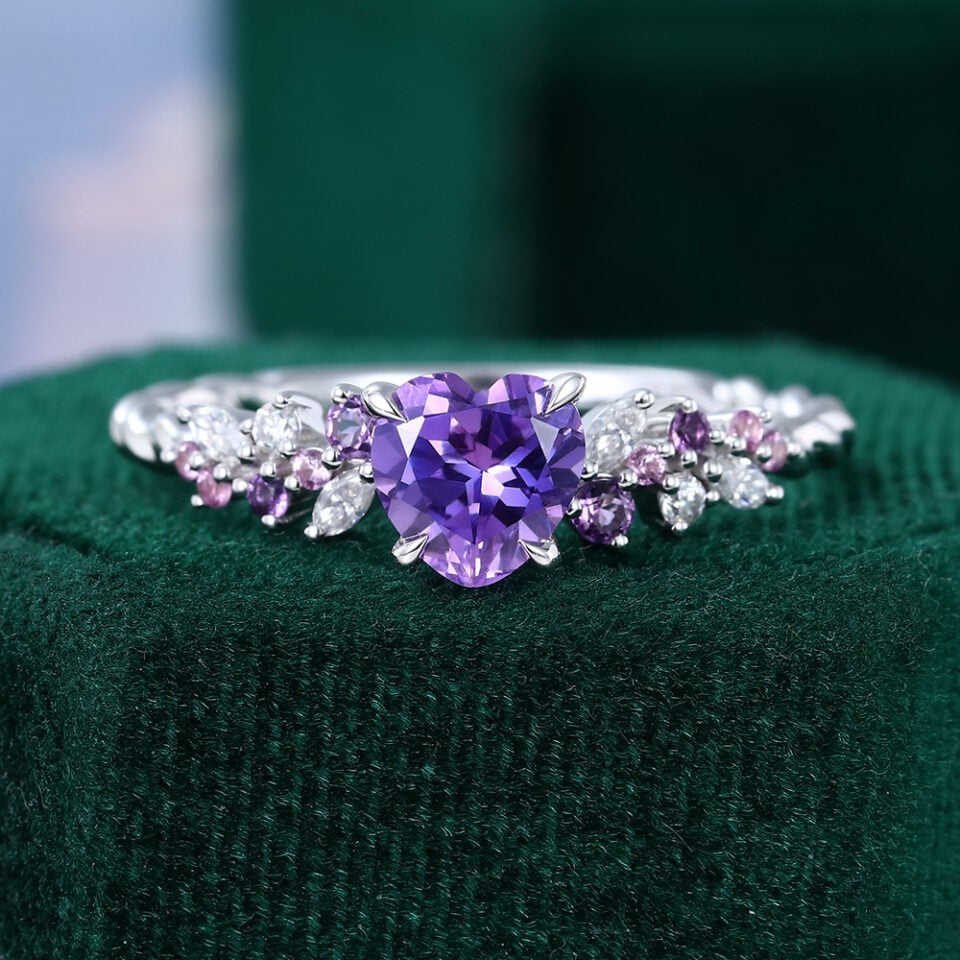
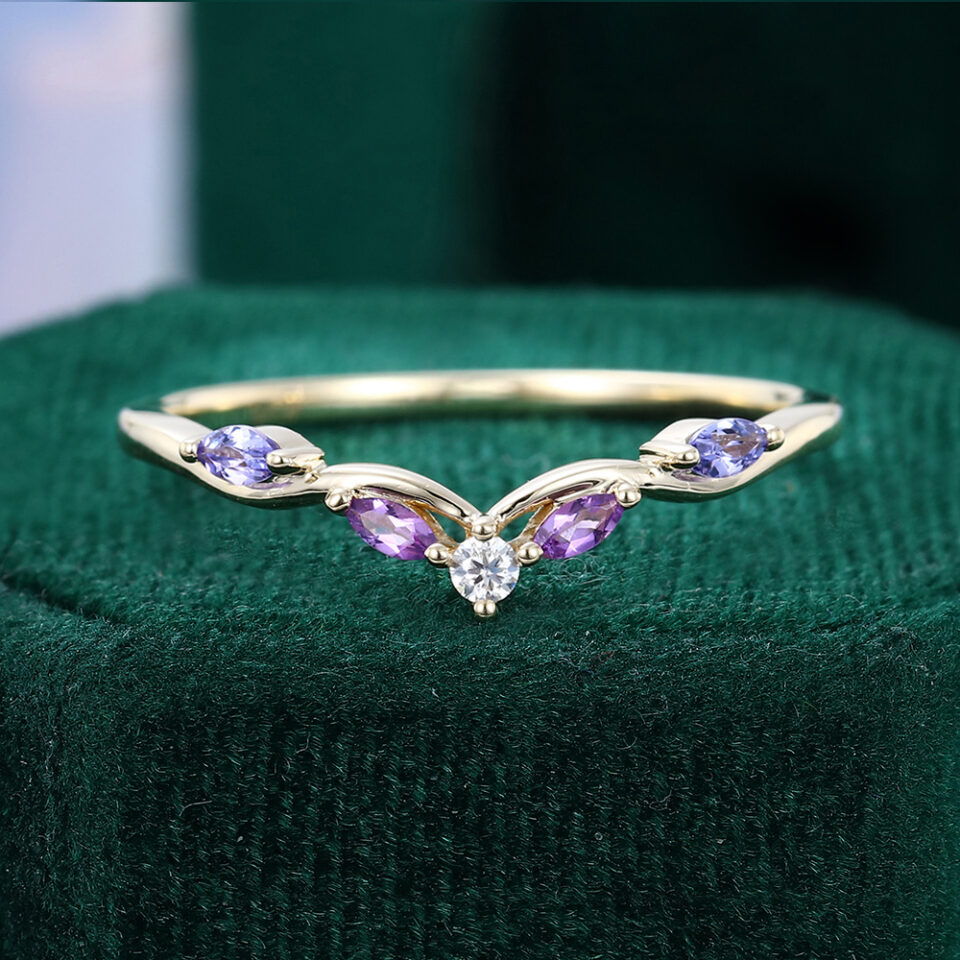
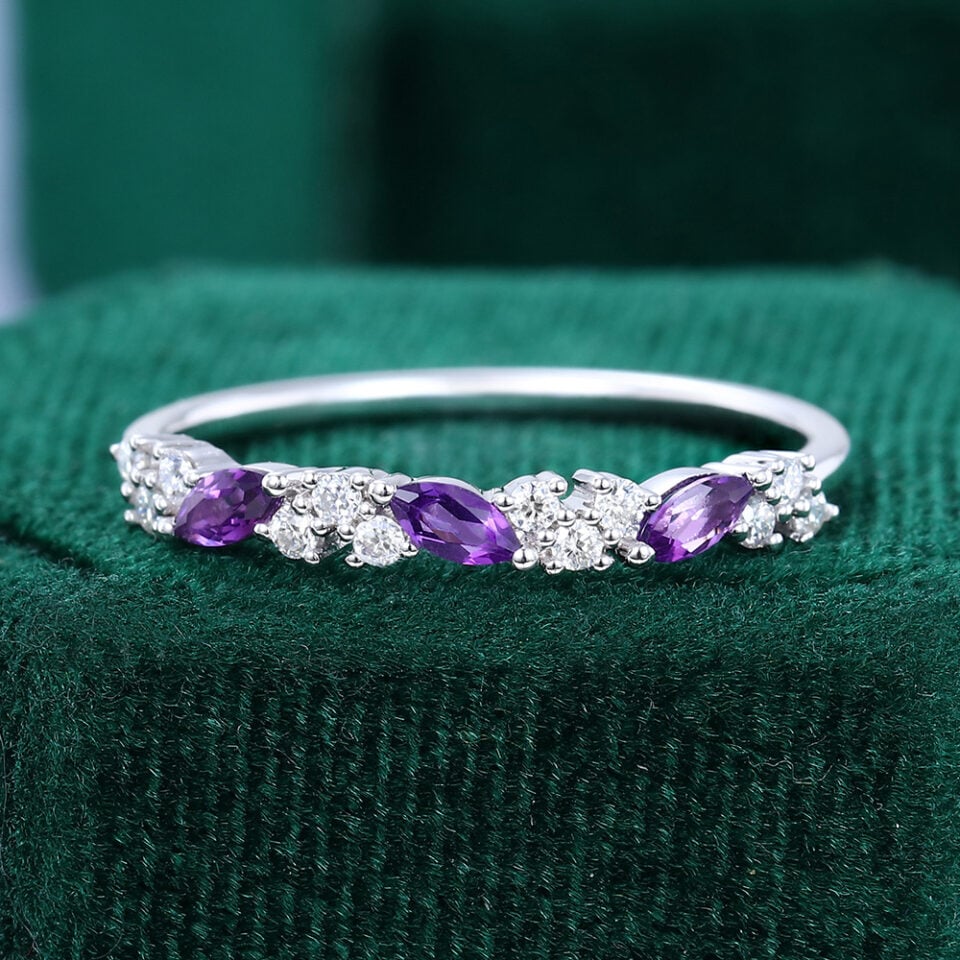
Whether natural or lab-created, the craftsmanship behind the finished piece is just as important as the gemstone itself. Explore our Amethyst Ring Collection to see how different cuts and settings bring this remarkable purple gemstone to life.
Final Thoughts: Every Amethyst Has a Story Millions of Years in the Making
Final Thoughts: Every Amethyst Has a Story Millions of Years in the Making
An amethyst may look like a simple purple gemstone, but its journey begins long before it becomes jewelry.
Over millions of years, silica-rich water, trace amounts of iron, and natural geological processes work together to create the crystal that eventually becomes an amethyst. Those natural conditions influence each stone’s color and character, making every gemstone unique.
Whether you choose a natural or lab-created amethyst, understanding how the crystal forms gives you a deeper appreciation for the craftsmanship behind every finished ring.
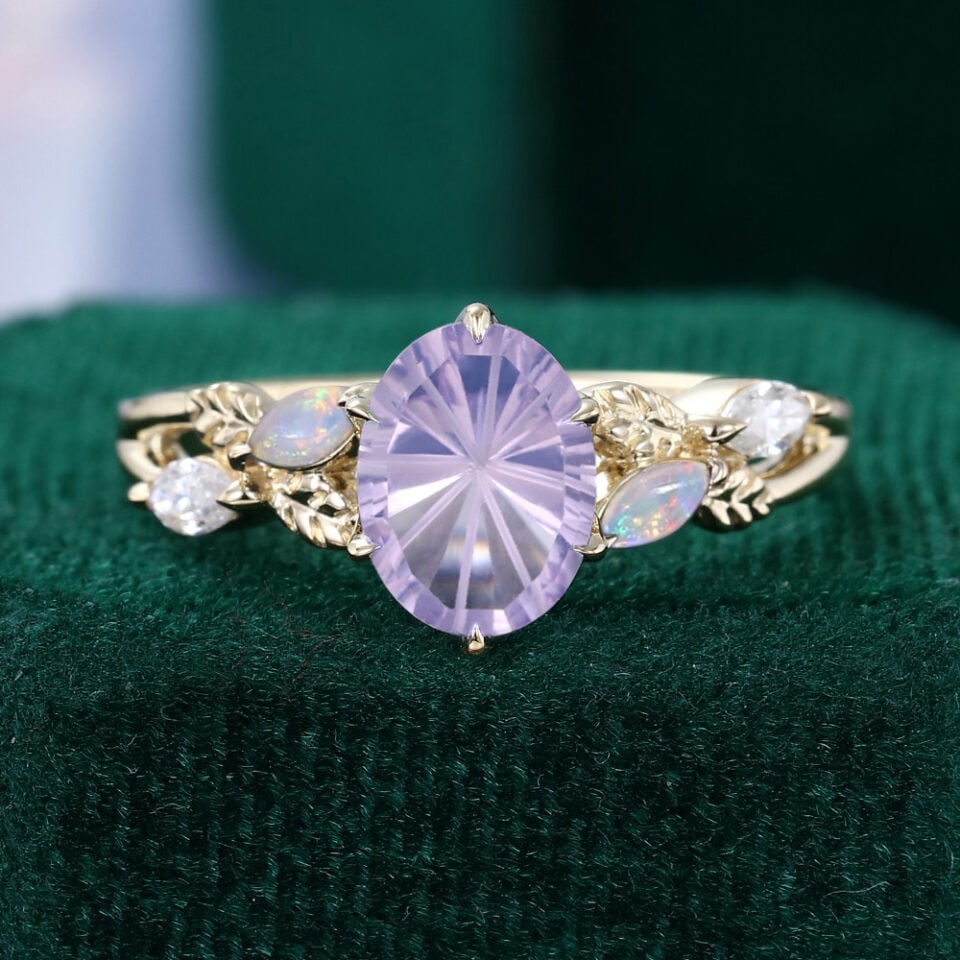
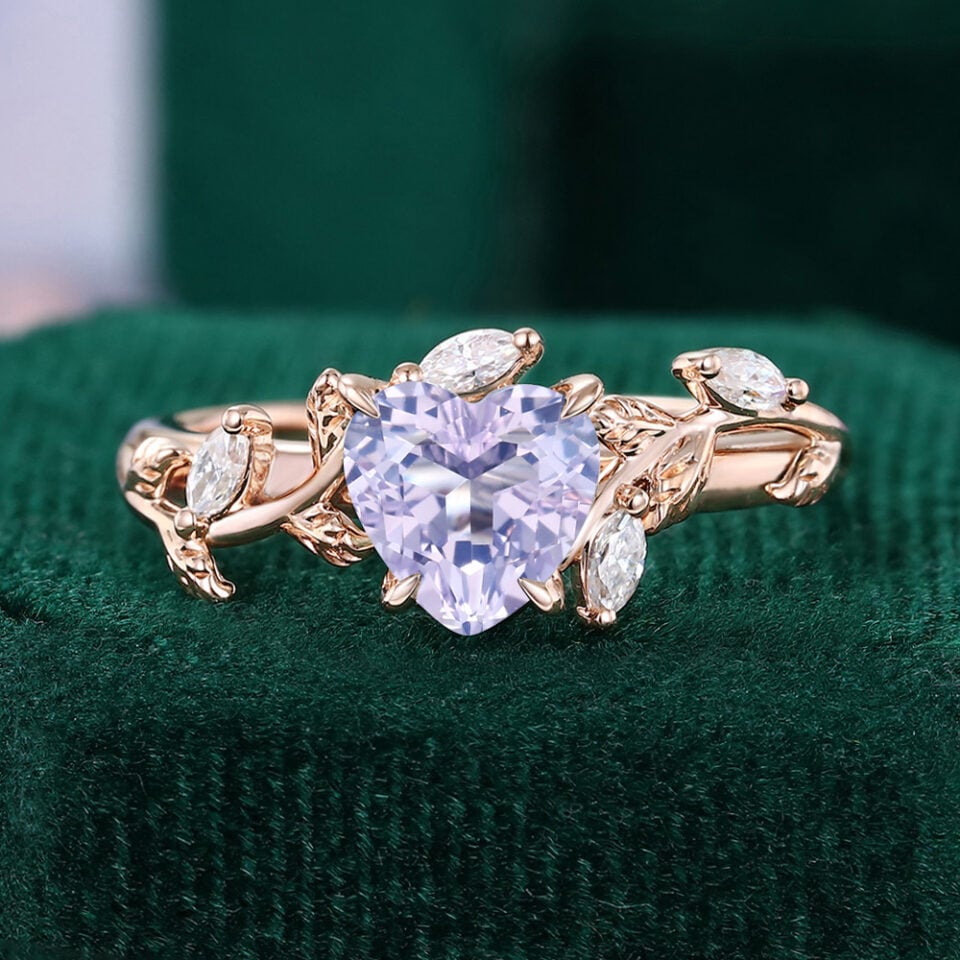
If you’re ready to see how this remarkable gemstone is transformed into wearable art, explore our handcrafted Amethyst Ring Collection and discover designs inspired by nature, vintage details, and everyday elegance.
FAQs
FAQs
How is amethyst formed naturally?
Amethyst forms when silica-rich water fills cavities inside volcanic rocks. As quartz crystals slowly grow, trace amounts of iron and natural radiation create the gemstone’s distinctive purple color over hundreds of thousands to millions of years.
Why is amethyst purple?
Amethyst gets its purple color from trace amounts of iron within the quartz crystal. Natural radiation changes the iron over time, creating the purple hue.
How long does amethyst take to form?
Natural amethyst usually forms over hundreds of thousands to millions of years, depending on geological conditions such as temperature, pressure, and mineral availability.
Is lab-created amethyst real?
Yes. Lab-created amethyst is real amethyst with the same chemical composition, crystal structure, and hardness as natural amethyst. The difference is that it is grown in a controlled laboratory environment rather than underground.
Does the way amethyst forms affect its quality?
Formation can influence a gemstone’s color, clarity, and crystal size, but the finished appearance also depends on how it’s cut and polished. For most jewelry buyers, the overall beauty of the finished gemstone matters more than where it formed.
Where is most amethyst found?
Brazil is the world’s largest producer of amethyst, followed by countries such as Uruguay, Zambia, Madagascar, and Bolivia. Each region can produce gemstones with slightly different color characteristics due to local geological conditions.