- by MollyJewelryUS
- June 9, 2026
- Buying Guides
What is the real difference between handmade and mass-produced rings? When weighing custom engagement rings vs ready-made rings, it generally comes down to craftsmanship, durability, and uniqueness. Mass-produced pieces are manufactured in bulk using heavy machinery, making them highly affordable but often thinner.
In contrast, handmade bands are carefully shaped from scratch by an artisan using solid metals. While factory options offer convenience and uniform designs, custom bench-made jewelry offers exceptional longevity and a one-of-a-kind piece tailored entirely to your personal story.
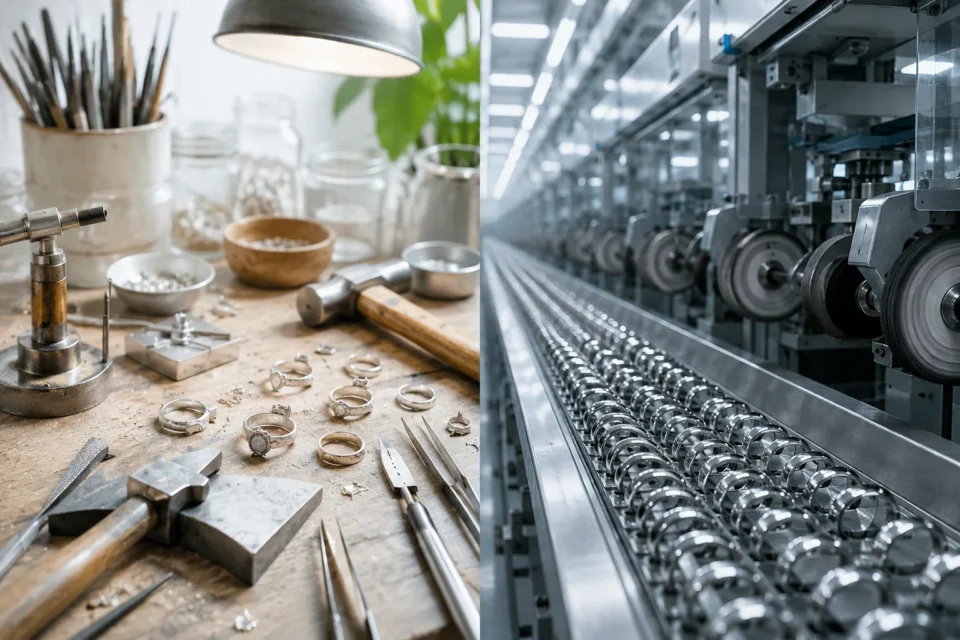
Table of Contents
Crafting Methods: Handmade vs Mass-Produced Rings
Crafting Methods: Handmade vs Mass-Produced Rings
To truly understand the debate, you first need to look at the jeweler’s workbench. The manufacturing process directly influences the ring’s structural strength.
Mass-Produced Rings
Mass-Produced Rings
These rings are created using heavy machinery, injection molding, or industrial stamping techniques. A factory can cast thousands of identical rings in a single hour. The master mold costs a few hundred dollars but is shared over tens of thousands of units, driving the production cost down significantly. Stones are often set rapidly by machines or assembly-line workers, prioritizing speed over exact precision.
Handmade Rings
Handmade Rings
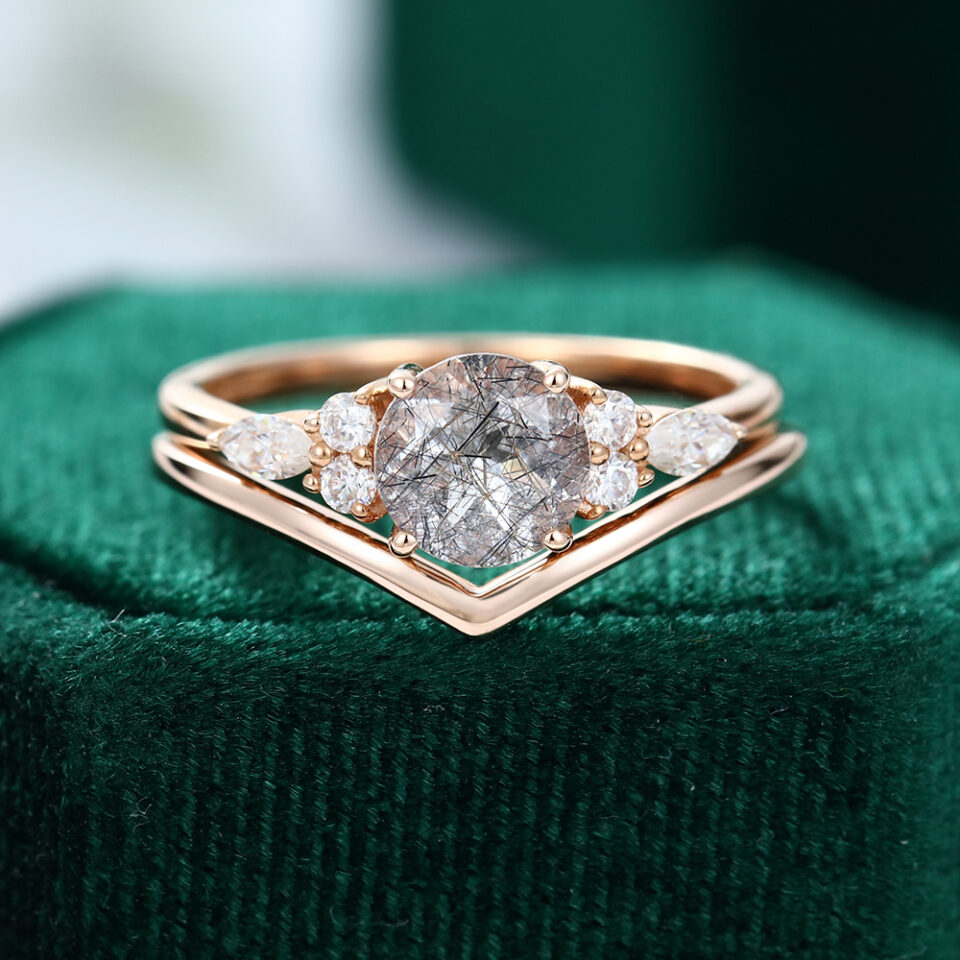
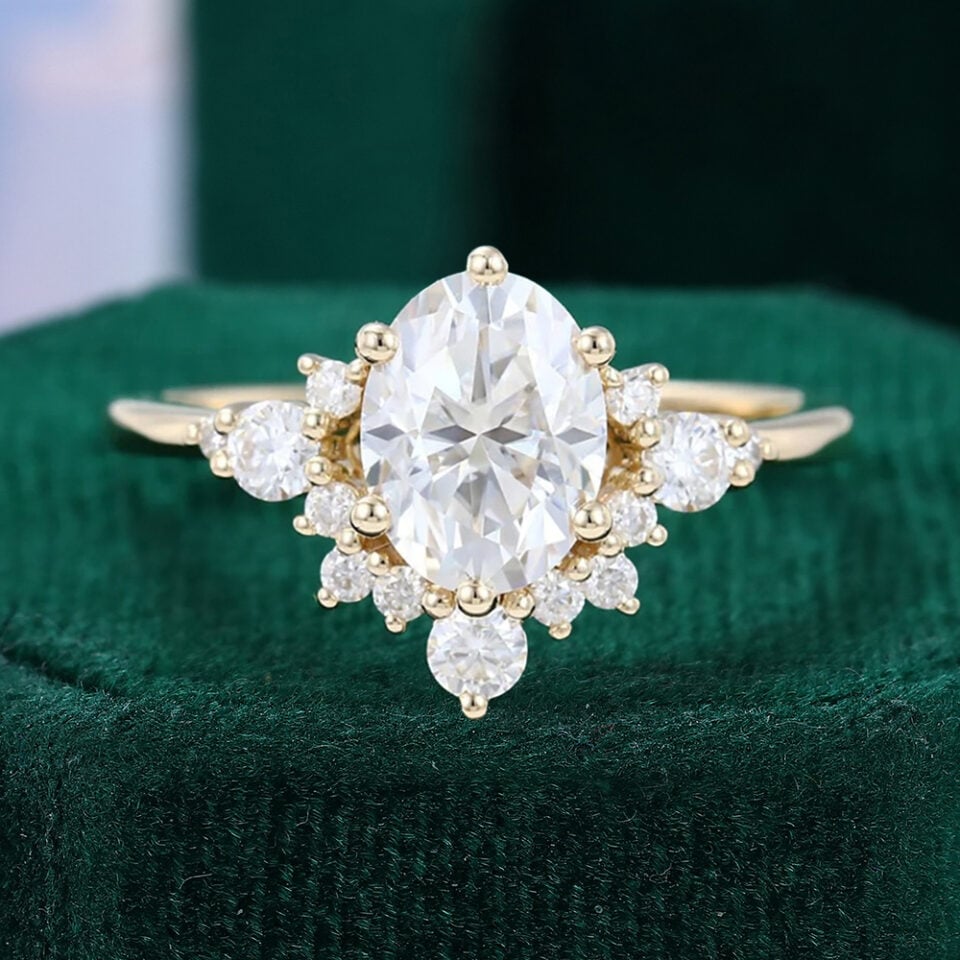
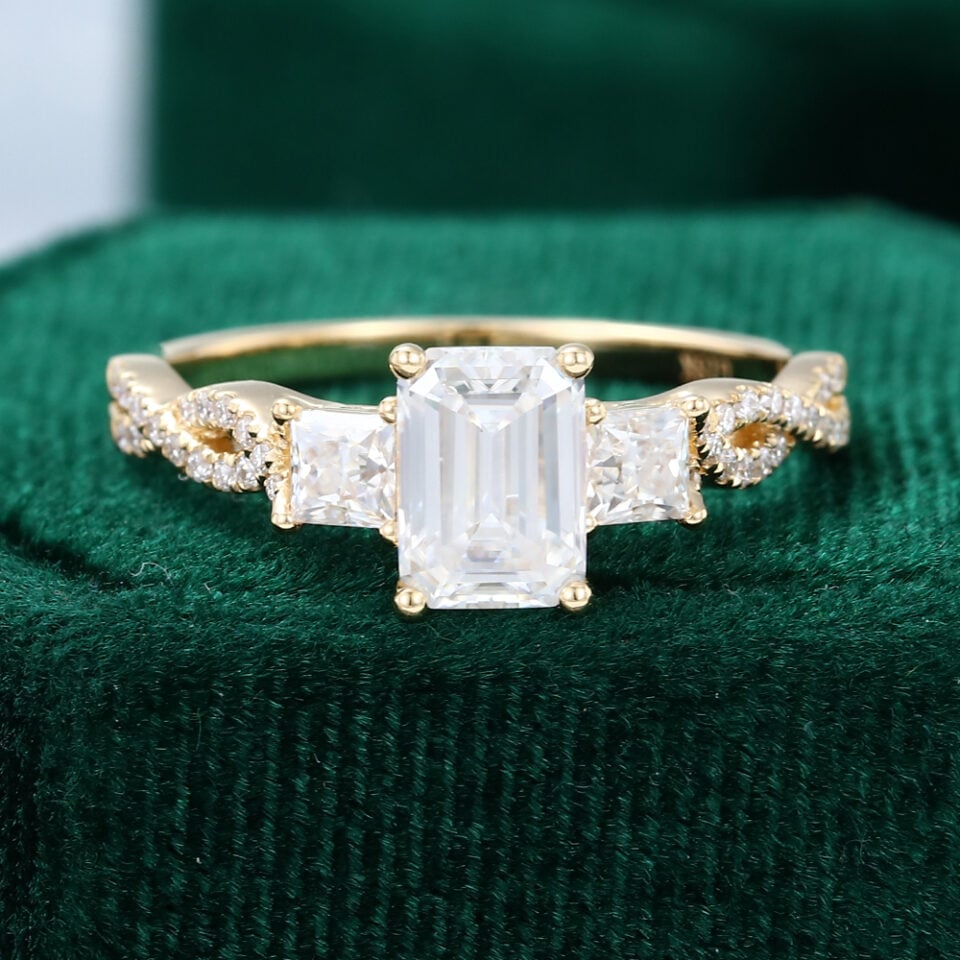
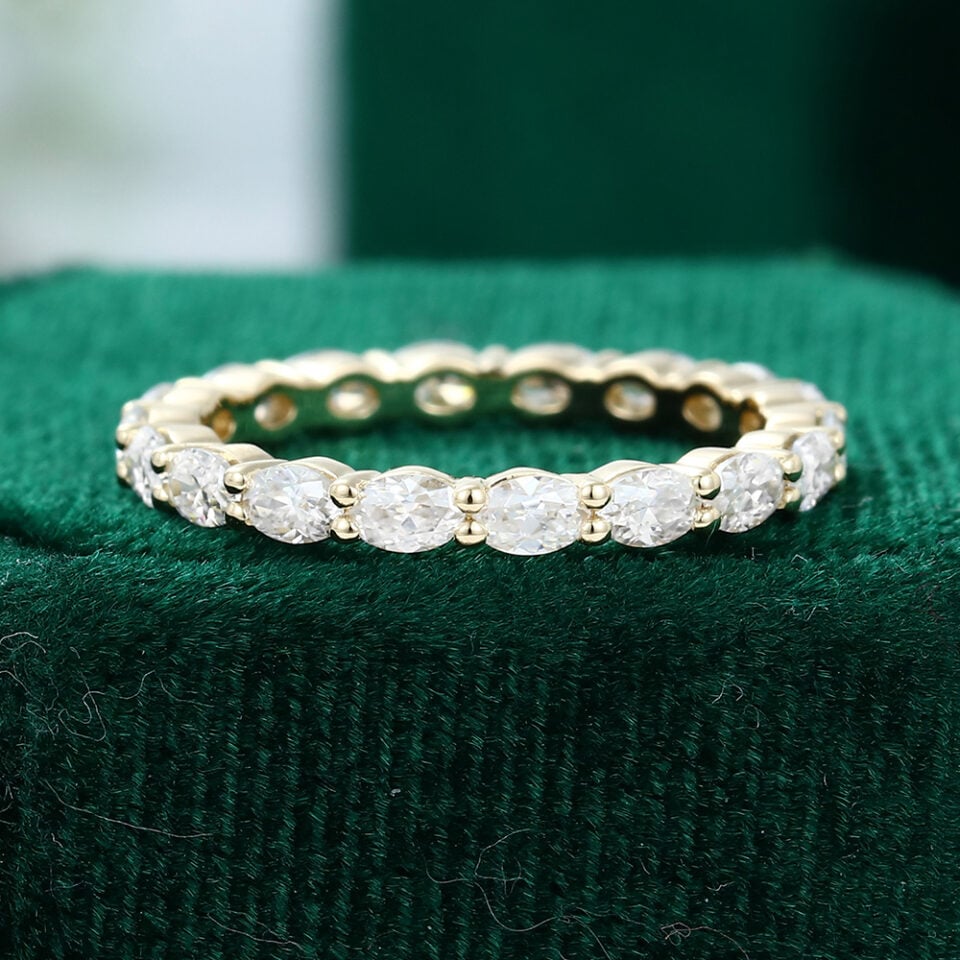
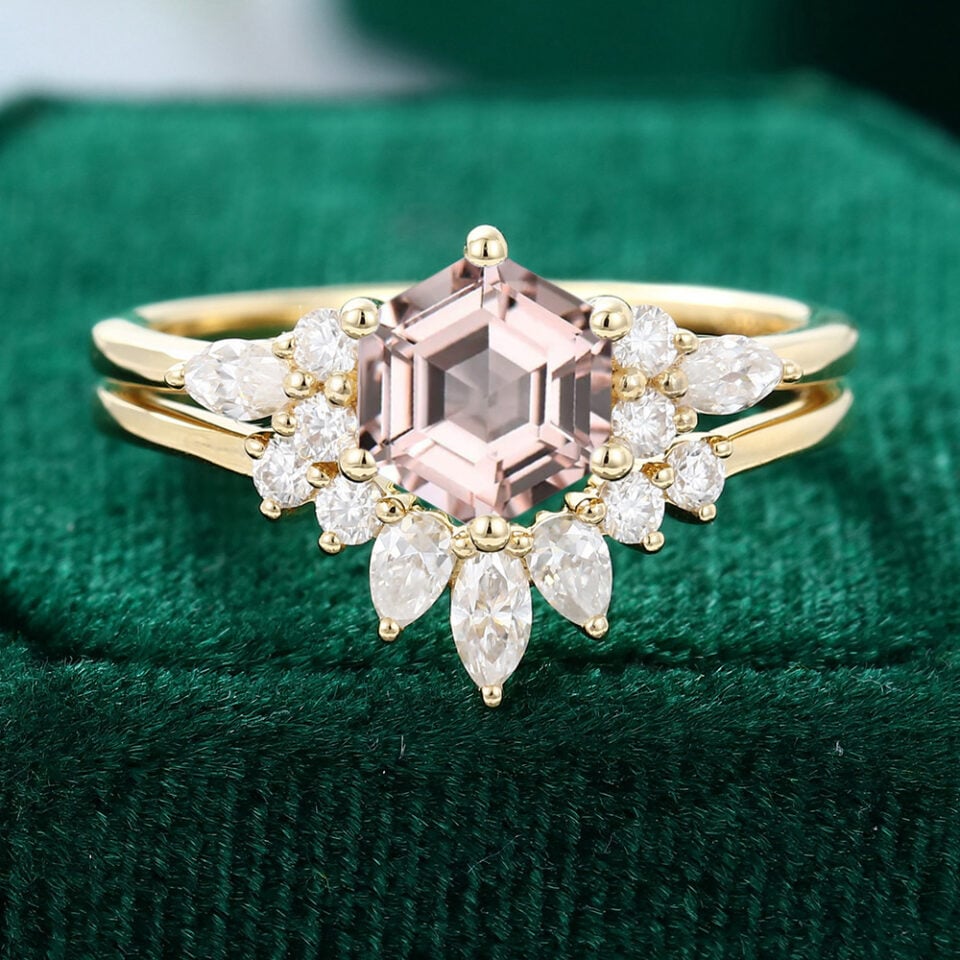
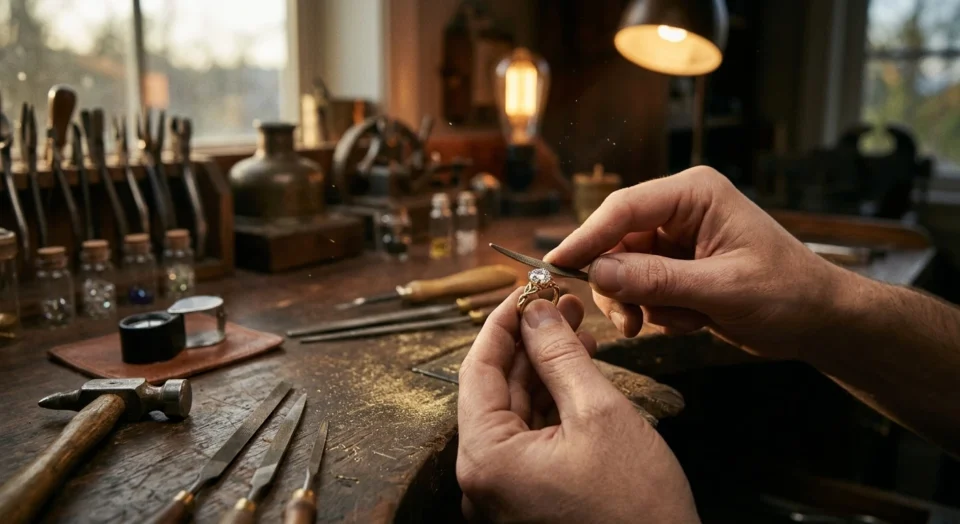
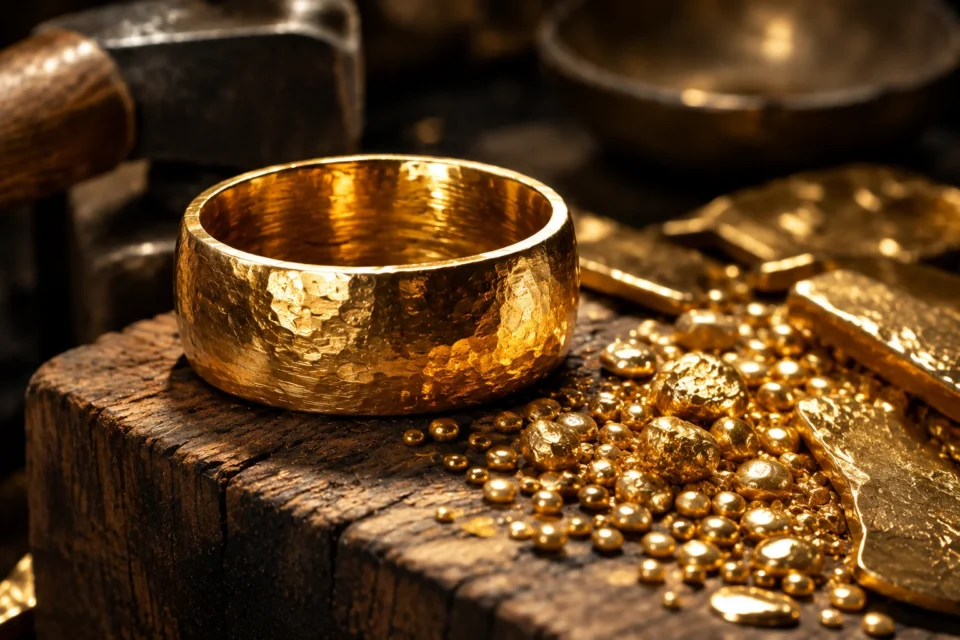
True handcrafted jewelry relies on traditional goldsmithing techniques. An artisan creates a unique wax model, encases it in plaster, and casts it using molten precious metal. If you are curious about the complete custom engagement ring process, it involves numerous meticulous steps. Hand-forged rings go a step further; a jeweler physically hammers and shapes raw metal wire into a band, creating microscopic variations that give the ring a unique character.


Quality Comparison: Handmade vs Mass-Produced Rings
Quality Comparison: Handmade vs Mass-Produced Rings
When comparing the physical traits, durability is where the differences become very clear.
Many mass-produced rings are engineered to use as little metal as possible to maximize profit margins. You will often find hollowed-out bands, thinner prongs, and lighter metal weights. Over time, these generic alloys can warp, and stones are more likely to fall out due to looser machine-pressed settings.
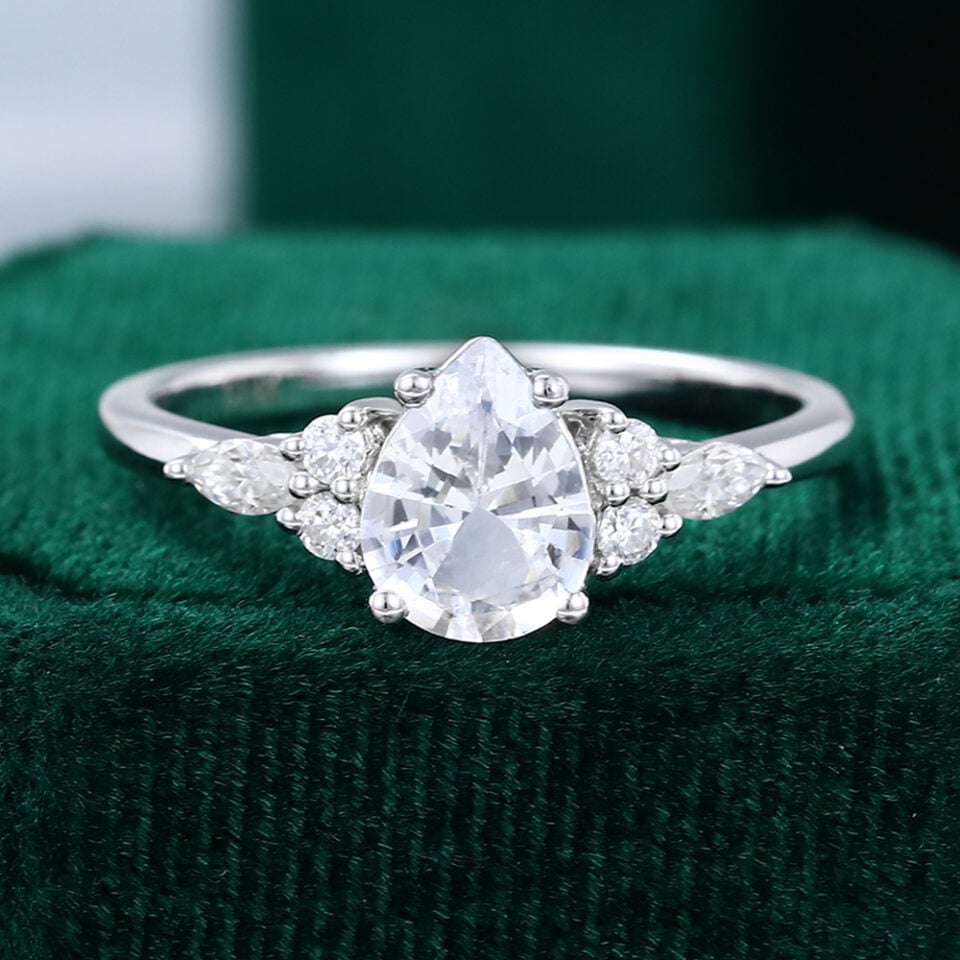
On the flip side, handmade rings are built for generational longevity. Artisans typically use solid metals and work-harden the band by hand. This manual hammering aligns the metal molecules, making the ring stronger and more resistant to scratching. Additionally, a skilled bench jeweler sets each stone carefully under a microscope, tailoring the perfect prongs for your engagement ring based on the exact shape of your diamond or gemstone.
Design Flexibility: Handmade vs Mass-Produced Rings
Design Flexibility: Handmade vs Mass-Produced Rings
Are you someone who wants a piece of jewelry that tells your personal story, or do you prefer following the latest mainstream trends?
Mass production is all about uniformity. If you buy a commercial ring from a large retail chain, there is a very high chance someone else in your social circle could buy the exact same piece. Furthermore, if you want a slight modification, factories usually cannot accommodate bespoke requests.
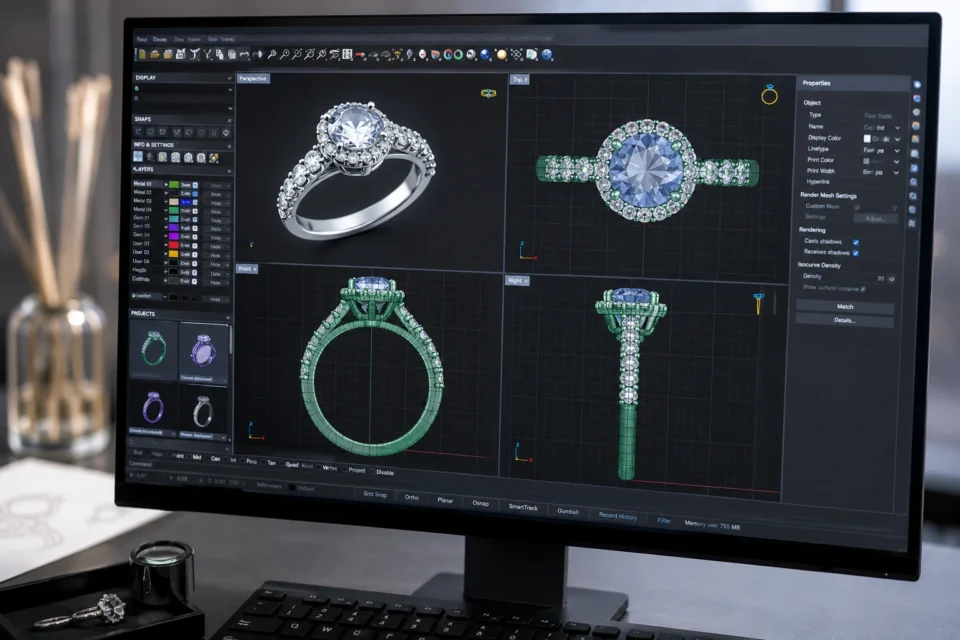
Handmade jewelry excels in customization. If you want to design a custom engagement ring flawlessly, you are not just buying a product; you are collaborating directly with a creator. You can dictate the exact thickness of the band, select a unique center stone, or even melt down heirloom jewelry from your grandmother to be incorporated into the new design.
Cost Breakdown: Why Prices Differ
Cost Breakdown: Why Prices Differ
Let’s address the biggest question: the price tag. If you consult an engagement ring price guide, custom rings are noticeably more expensive upfront, but there are solid reasons behind this.
When purchasing a factory ring, you are paying for convenience, rapid shipping, and brand marketing. The actual labor cost is incredibly low because the work is usually outsourced overseas.
When you invest in a handmade piece, you are paying for skilled artisan labor, living wages, and strict quality control. You are also getting more actual precious metal. Mass-market rings often weigh around 3 to 5 grams, whereas a custom-forged ring might weigh 8 to 15 grams because it isn’t hollowed out. While the initial cost is higher, it is actually more cost-effective in the long run. Handcrafted pieces are much easier to repair and resize, saving you expensive maintenance fees later.
Environmental Impact of Handmade and Mass-Produced Rings
Environmental Impact of Handmade and Mass-Produced Rings
Modern consumers care deeply about where their products come from, creating a surge in demand for ethical sustainable jewelry. The global jewelry industry has historically struggled with ethical sourcing, but independent creators are actively changing this.
Large-scale manufacturing often lacks supply chain transparency. When rings are stamped out by the thousands, it is difficult to trace the exact origins of the gold or diamonds. Industrial operations and global shipping networks also generate a larger carbon footprint.
Boutique artisans tend to be highly protective of their supply chains. Many ring creators exclusively use recycled precious metals and conflict-free, ethically mined gemstones. By choosing handmade, you are reducing your environmental impact and supporting a local artist rather than a large corporation.
Final Verdict: Making Your Decision
Final Verdict: Making Your Decision
Modern consumers care deeply about where their products come from, creating a surge in demand for ethical sustainable jewelry. The global jewelry industry has historically struggled with ethical sourcing, but independent creators are actively changing this.
Choose a Mass-Produced Ring if:
Choose a Mass-Produced Ring if:
- You are on a strict budget and want the lowest possible price.
- You need a ring immediately and cannot wait weeks for production.
- You prefer a perfectly uniform design without handcrafted variations.
Choose a Handmade Ring if:
Choose a Handmade Ring if:
- You are buying a sentimental piece, such as an engagement ring.
- You want exceptional durability and a piece that can be passed down.
- You value ethical sourcing, customization, and the story behind the craftsmanship.
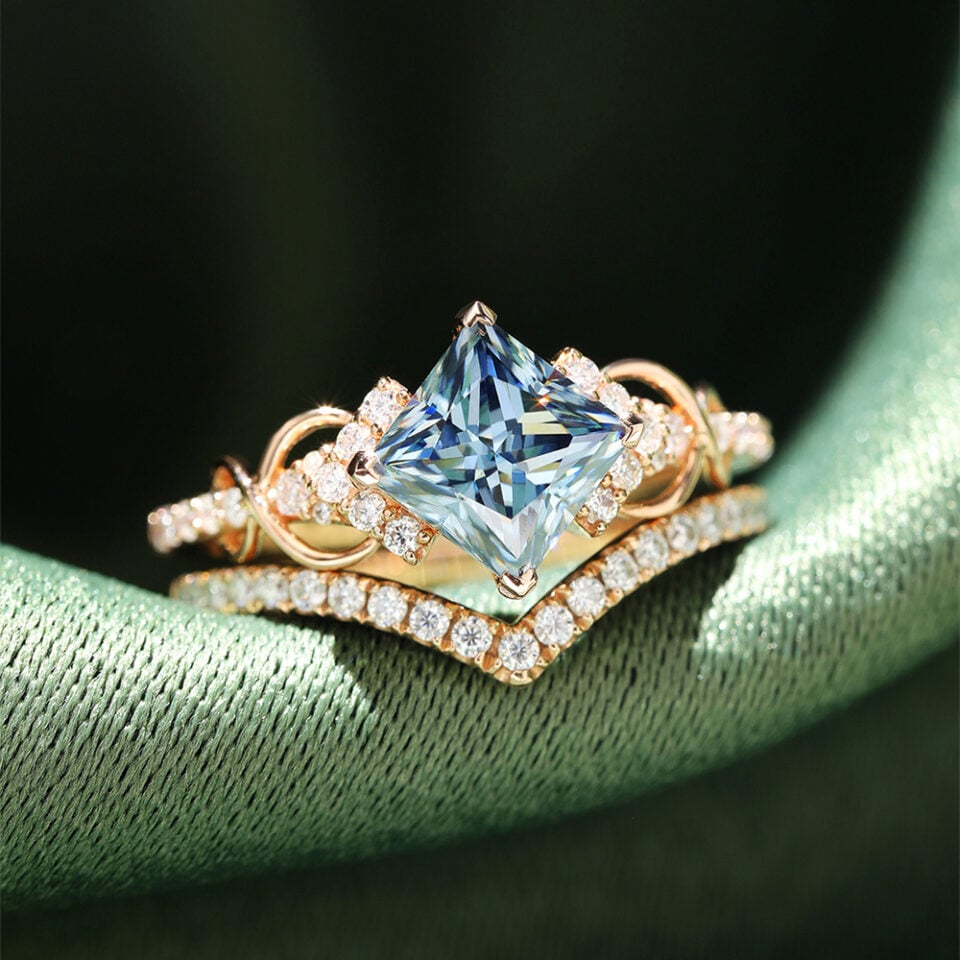
Share your ideas with our team, and we’ll help transform your vision into a custom piece designed around your style, preferences, and story.
FAQs on Handmade vs Mass-Produced Rings
FAQs on Handmade vs Mass-Produced Rings
How can you tell if a ring is handmade?
You can spot a handmade piece by looking for subtle tool marks, heavier metal weight, and unique prong shapes. Mass-produced jewelry often feels lighter and features perfectly uniform, machine-stamped details that lack organic artisan touches.
What are the disadvantages of handmade rings?
The primary drawbacks of custom pieces include higher upfront costs and significantly longer production times. Because an artisan shapes the metal manually, you might wait several weeks for completion, unlike buying an immediate, ready-made factory item.
Why are mass-produced rings so much cheaper?
Factories use automated machinery and pre-made molds to create thousands of identical items simultaneously. This high-volume approach dramatically reduces labor costs and material waste, allowing large corporate retailers to offer their jewelry at significantly lower retail prices.
Are handmade rings objectively better than mass-produced ones?
Yes, they generally offer superior long-term durability. Artisans work-harden the metals manually, creating a denser structure that resists bending. Additionally, stones are set individually rather than by assembly line machines, ensuring diamonds remain securely in place.
Why do people prefer handmade engagement rings?
Buyers often prefer handcrafted styles because they carry deeper emotional meaning and allow for complete design personalization. Couples love knowing their special piece is unique. For more tips, you can check an engagement ring buying guide.
Is it harder to repair a mass-produced ring?
Often, yes. Factory items frequently utilize hollow bands or thinner commercial alloys to save money. When a jeweler attempts to resize or apply heat to these fragile structures, the piece can easily warp or lose its integrity.