- by MollyJewelryUS
- July 9, 2026
- Buying Guides
When exploring the landscape of non diamond engagement rings, navigating the technical terminology can feel overwhelming. Words like “lab-grown,” “simulated,” and “alternative” are frequently used interchangeably, yet they represent entirely different materials, price points, and lifespans.
If you are looking for beautiful diamond ring alternatives that honor a practical budget, understanding exactly what a simulated diamond is—and how it performs over time—is the best way to ensure you make an informed choice for your everyday fine jewelry.
Table of Contents
Defining the Simulated Diamond
Defining the Simulated Diamond
A simulated diamond, often called a diamond simulant, is a stone designed to mimic the visual appearance of a traditional mined diamond without replicating its physical or chemical structure.
Unlike natural gemstones, a simulated diamond is strictly an aesthetic lookalike. It is selected to offer a similar colorless sparkle and crystal clarity at a fraction of the cost, making it highly attractive for budget-conscious couples or those looking for accessible fashion jewelry styles.
Simulated Diamonds vs. Lab-Grown Diamonds: The Critical Difference
Simulated Diamonds vs. Lab-Grown Diamonds: The Critical Difference
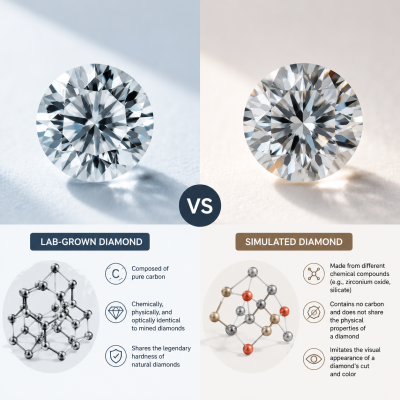
A common point of confusion for first-time jewelry buyers is separating simulants from lab-created stones. It helps to look at their atomic composition to understand why they are priced differently:
- Lab-Grown Diamonds
These are authentic diamonds. They are composed of pure carbon atoms arranged in a crystal lattice structure, grown under intense laboratory conditions that replicate the earth’s natural mantle. They are chemically, physically, and optically identical to mined diamonds, sharing their legendary hardness.
- Simulated Diamonds
These are made from completely different chemical compounds, such as zirconium oxide or silicate. They possess no actual carbon and do not share the physical properties of a diamond. They simply copy the outer visual impression of a diamond’s cut and color.
Common Types of Diamond Simulants
Common Types of Diamond Simulants
1. Cubic Zirconia (CZ)
1. Cubic Zirconia (CZ)
The most well-known simulant, cubic zirconia, is a synthetic material that is entirely colorless and highly affordable. While it sparkles beautifully out of the box, it lacks long-term structural resilience.
2. Gemstone Simulants
2. Gemstone Simulants
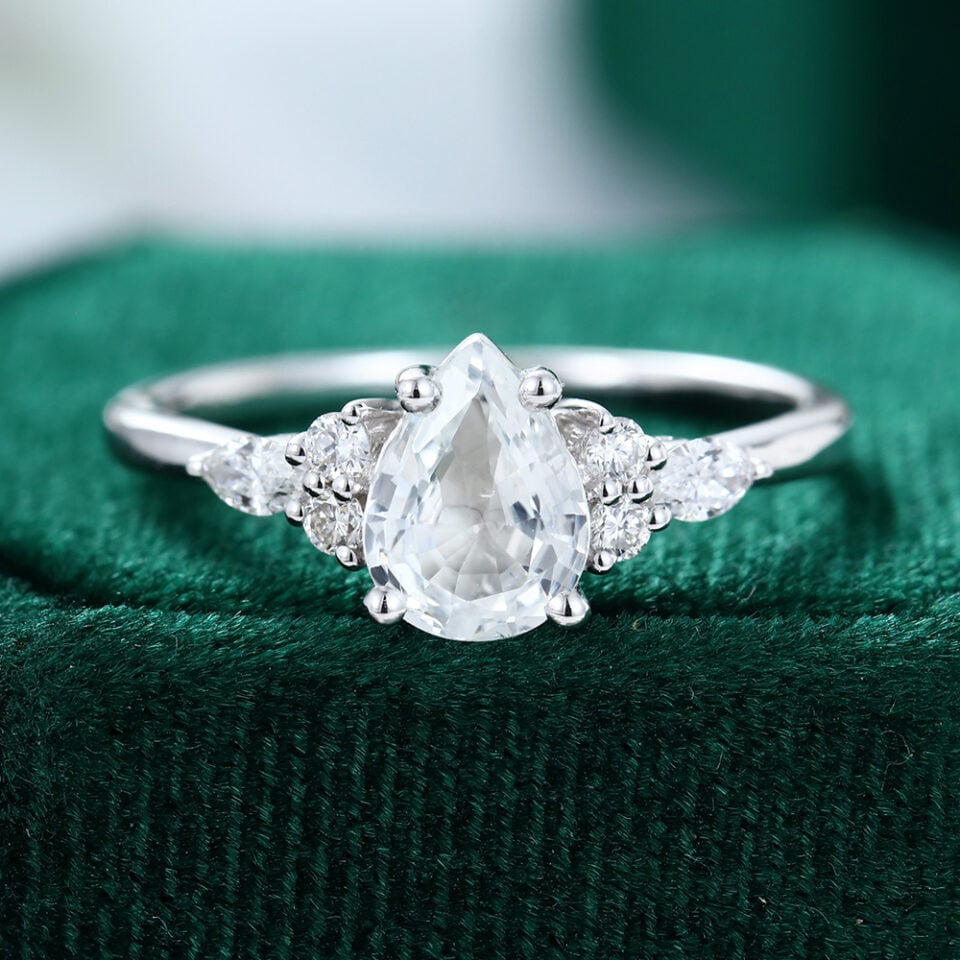
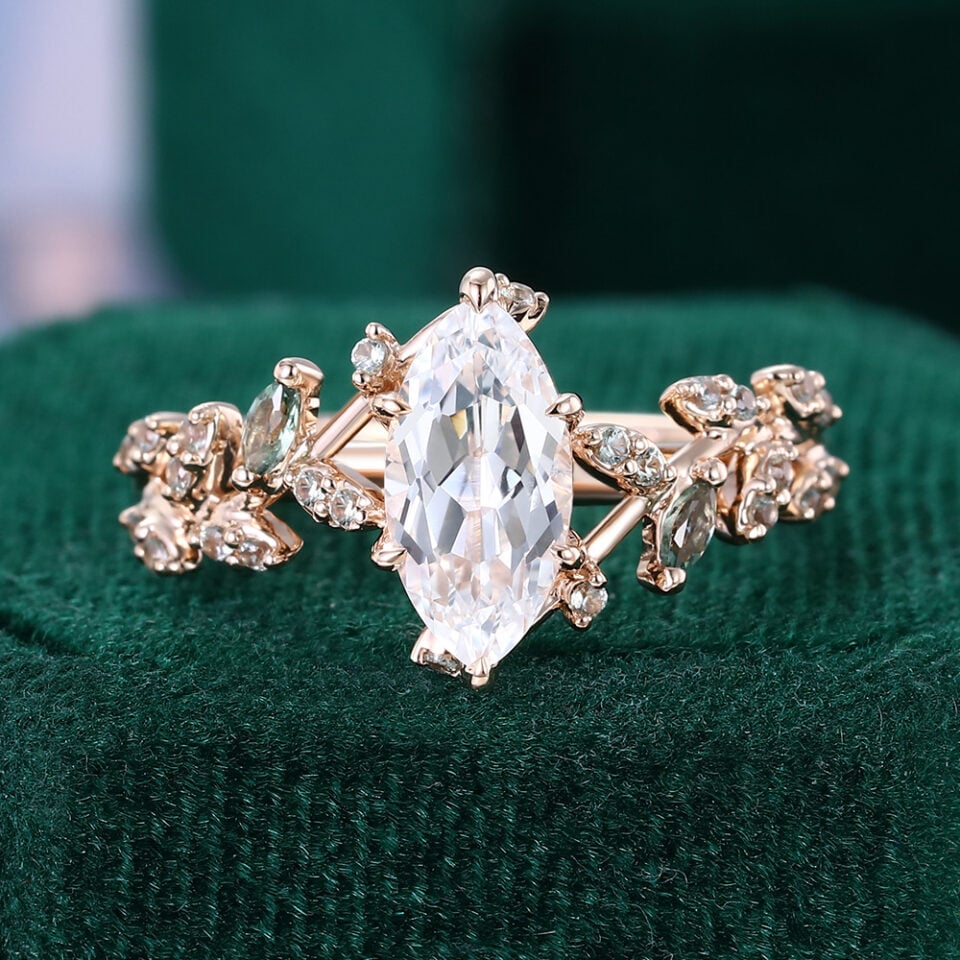
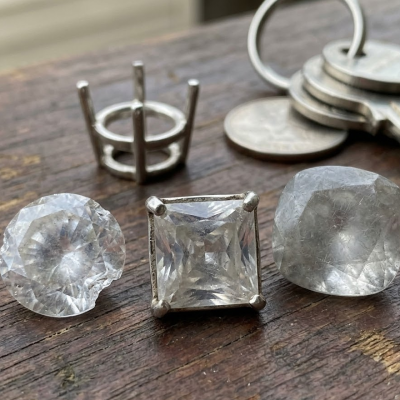
Sometimes, natural or synthetic white gemstones—like white sapphire or topaz showed below—are used as simulants. They provide a beautiful, non-traditional alternative but lack the fiery light dispersion of a classic diamond.


3. The Premium Exception: Moissanite
3. The Premium Exception: Moissanite
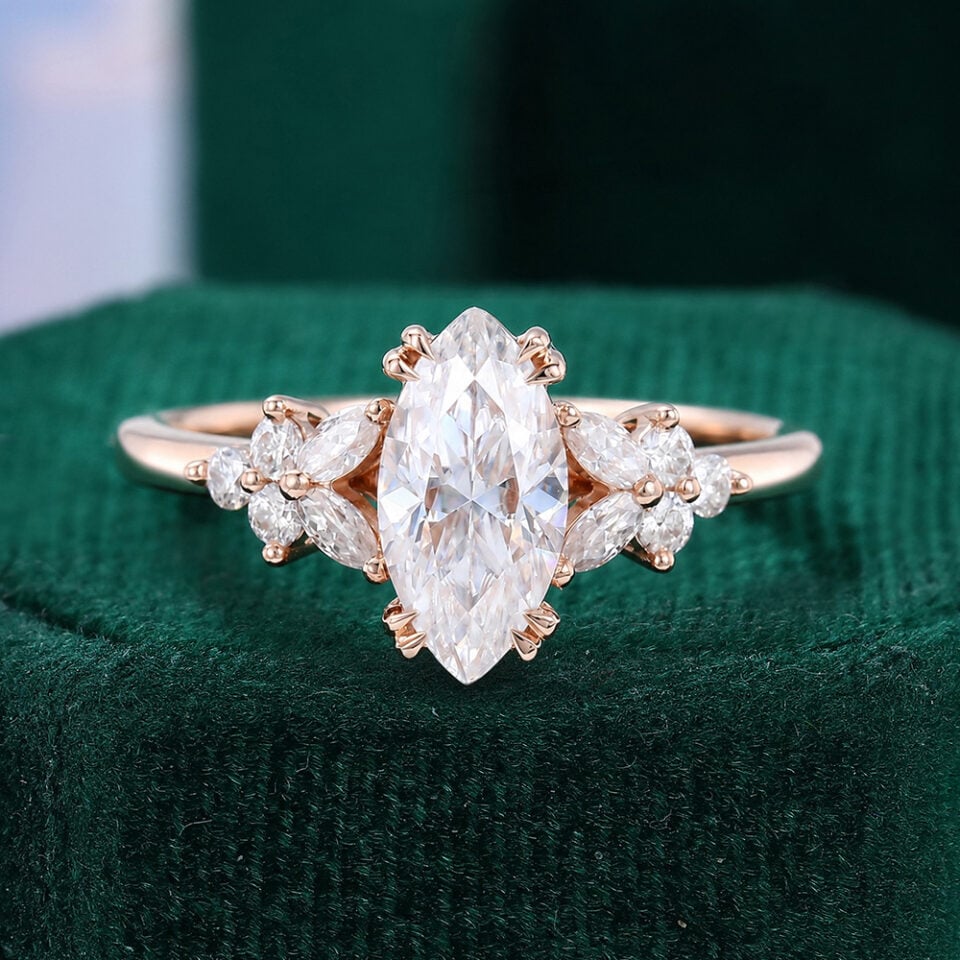
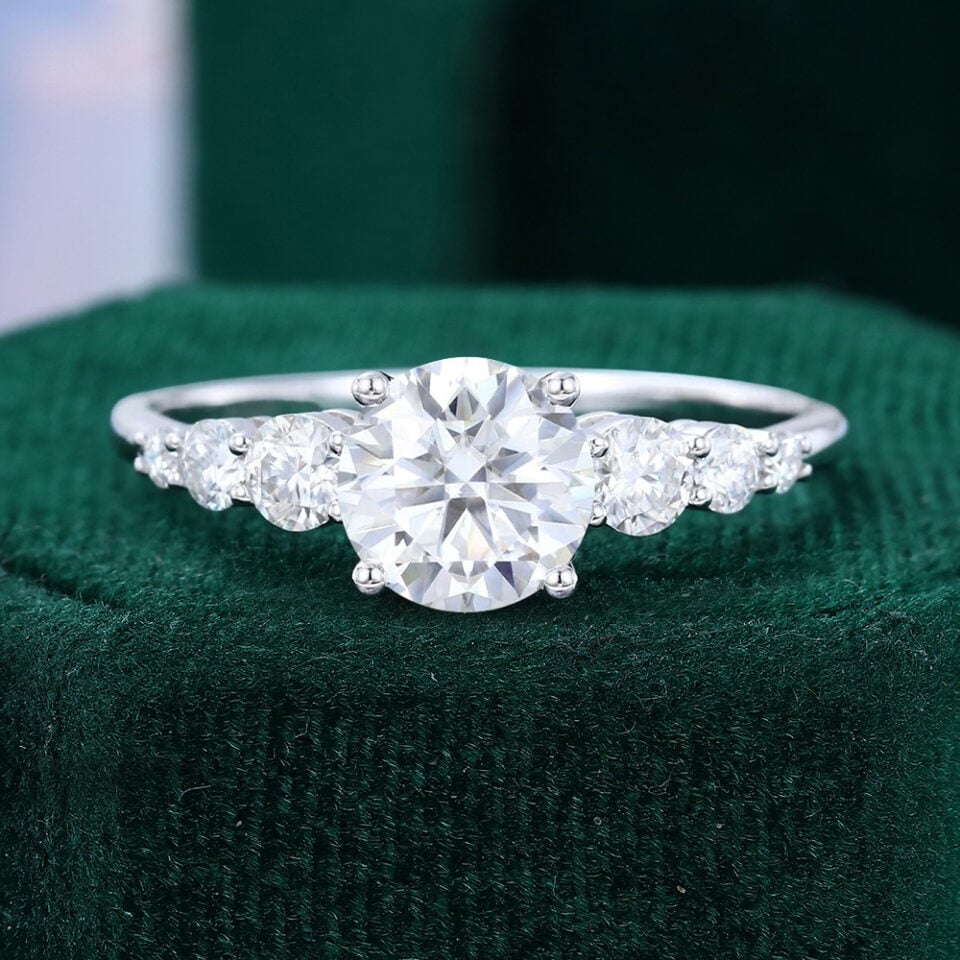
While technically categorized as a diamond alternative rather than a simple simulant, moissanite is the ultimate upgrade for those seeking a white gemstone.
It has its own unique chemical identity (silicon carbide) and possesses a higher brilliance and fire than a diamond, setting it in a premium class of its own.

The Optical Appeal: How Do They Look on the Hand?
The Optical Appeal: How Do They Look on the Hand?
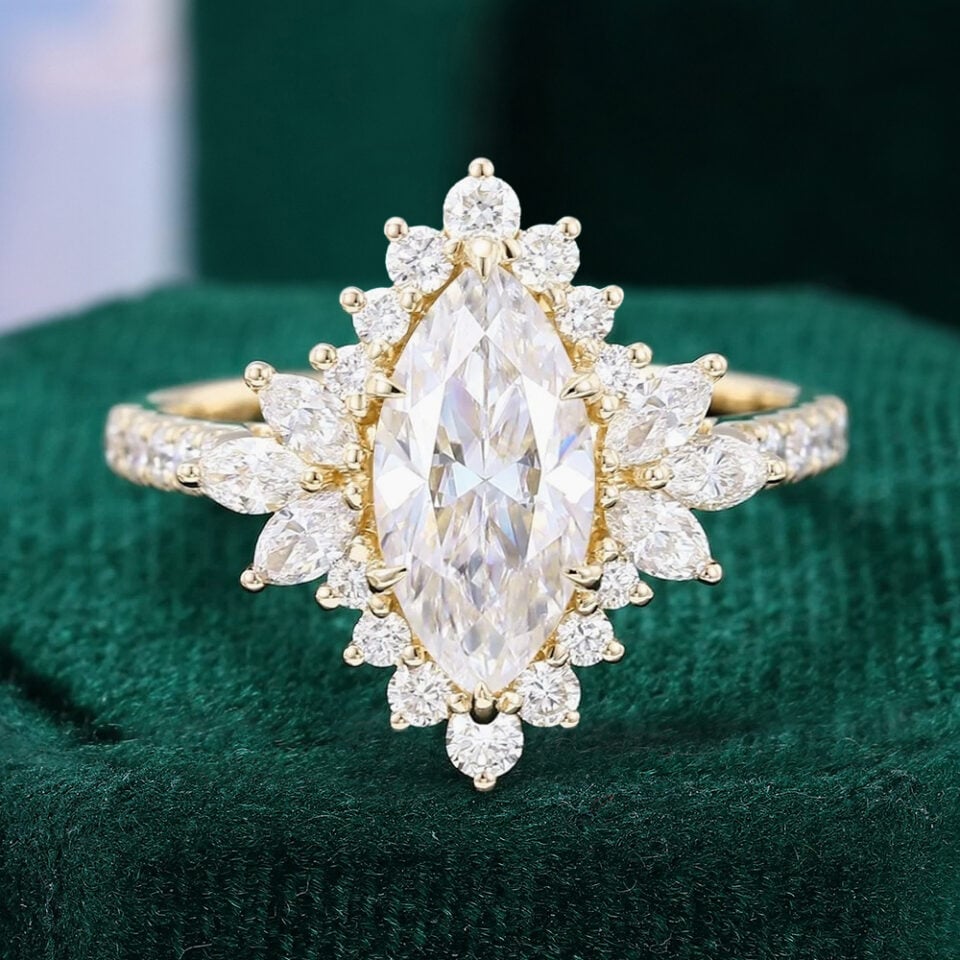
High-grade simulated diamonds can look incredibly beautiful on the hand, often passing as flawless, traditional stones to the untrained eye.
Because they are manufactured in controlled settings, they are typically free of the cloudy inclusions or natural imperfections found in lower-tier mined stones. They are cut to display bright flashes of light, offering a sophisticated, clean aesthetic that complements delicate settings beautifully.
Durability and Longevity Concerns
Durability and Longevity Concerns
While simulated stones offer immediate visual satisfaction and incredible cost savings, their material composition introduces specific wearability risks that every buyer must consider before making a purchase.
- The Softness Trap:
Traditional diamonds rate at a 10 on the Mohs hardness scale, making them completely scratch-resistant. Standard simulants like Cubic Zirconia rank significantly lower (around 8 to 8.5). Over time, simple daily contact with everyday items can introduce micro-scratches across the facets.
- The “Clouding” Effect:
Because the surface of standard simulants scratches relatively easily, the stone can gradually lose its crisp transparency, eventually taking on a cloudy, matte appearance after a few years of continuous daily wear.
- Prong Security:
Simulants are more prone to chipping along the girdle under sudden structural impact, which can sometimes weaken the grip of the metal prongs holding the stone in place.
Why Balancing Product Tiers Matters for Your Budget
Why Balancing Product Tiers Matters for Your Budget
At MollyJewelryUS, we believe in radical transparency when it comes to material education. Choosing a simulated stone or a budget-friendly pairing is a fantastic way to acquire a stunning ring without taking on financial stress—provided the setting and materials align with how you plan to wear it.
To help you get the absolute best value and lifetime out of your investment, we recommend separating your choices by your desired tier of durability:
| Material Tier | Optimal Daily Use | Best Setting Compatibility |
|---|---|---|
| Sterling Silver & Standard CZ | Occasional fashion wear, vacation backup, placeholder rings. | Low-impact settings away from harsh chemicals. |
| 10K Solid Gold & Moissanite | Excellent entry-level daily wear for active budgets. | Beautifully secure in delicate, protective designs. |
| 14K Solid Gold & Moissanite | The premier choice for long-term daily engagement wear. | Perfect for intricate, nature-inspired prongs. |
| 14K Solid Gold & Lab Diamonds | Premium heirloom performance with lifetime resilience. | Ideal for high-set standouts or fine cluster bands. |
Frequently Asked Questions (FAQ)
Frequently Asked Questions (FAQ)
Can you tell a simulated diamond from a real diamond?
Will a simulated diamond turn my finger green?
The stone itself will never discolor your skin. Skin discoloration is entirely caused by the metal band holding the stone. Choosing high-quality 10K or 14K solid gold rings eliminates this risk entirely, keeping your skin safe and your band glowing beautifully over time.
What is the best alternative if I want a white stone that lasts forever?
If you want a brilliant white gemstone with lifetime durability but want to avoid mined prices, moissanite engagement rings or certified lab-grown diamond rings are the absolute gold standard. Both choices will never scratch, cloud, or fade, offering an enduring symbol of your love.
Crafted for Your One-of-a-Kind Story
Crafted for Your One-of-a-Kind Story
At MollyJewelryUS, we reject traditional bridal markups in favor of authentic, emotional personalization. Your engagement ring shouldn’t serve a mainstream standard; it should serve your real life and your unique bond.
Whether you are looking for the incredible value of a fiery moissanite engagement ring, the premium perfection of a lab-grown diamond, or a deeply symbolic, organic moss agate engagement ring , our workshop is here to help you customize a piece that fits your life perfectly.
👉🏻 Want a diamond ring as unique as your story? You can also work with our design team to create a custom piece!