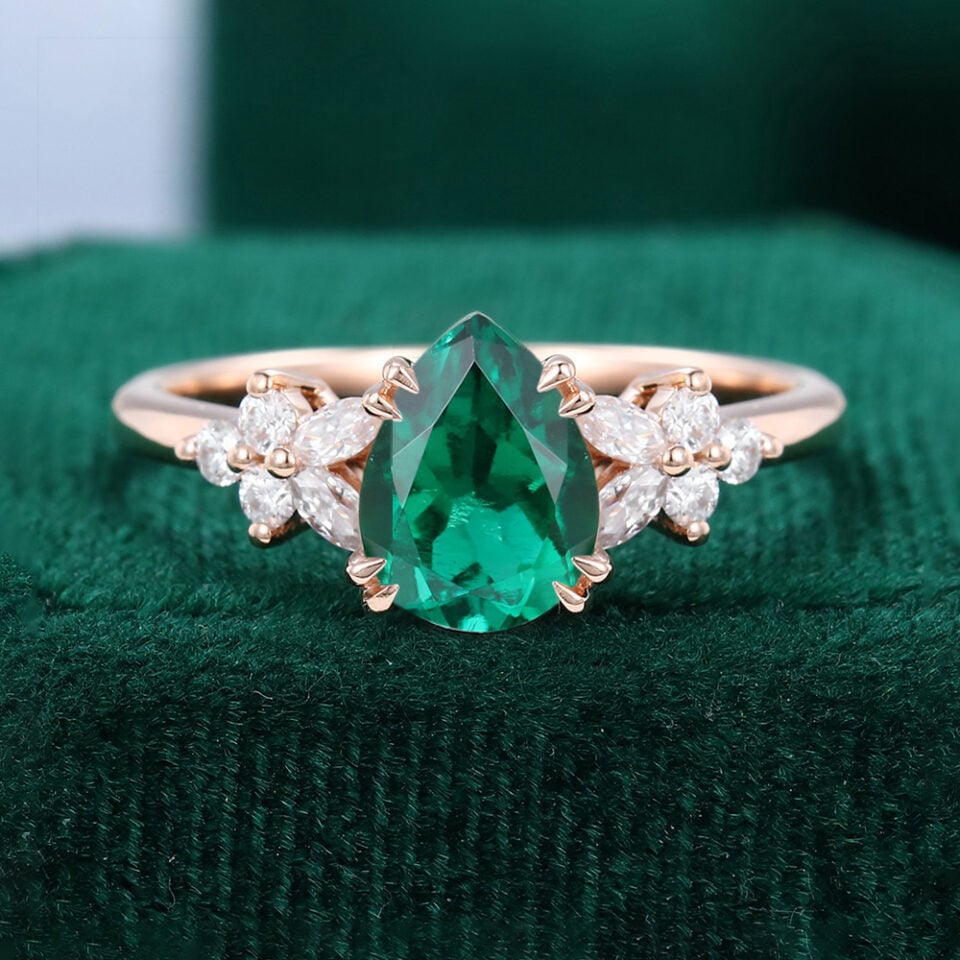
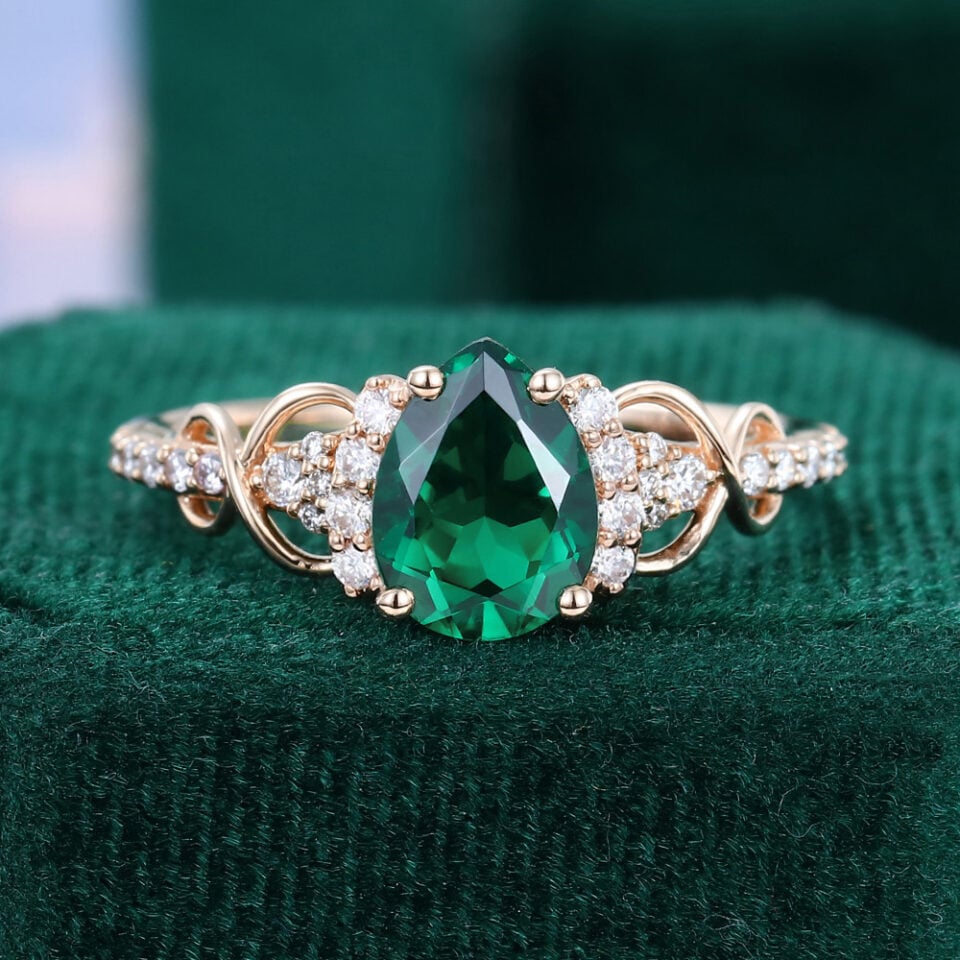
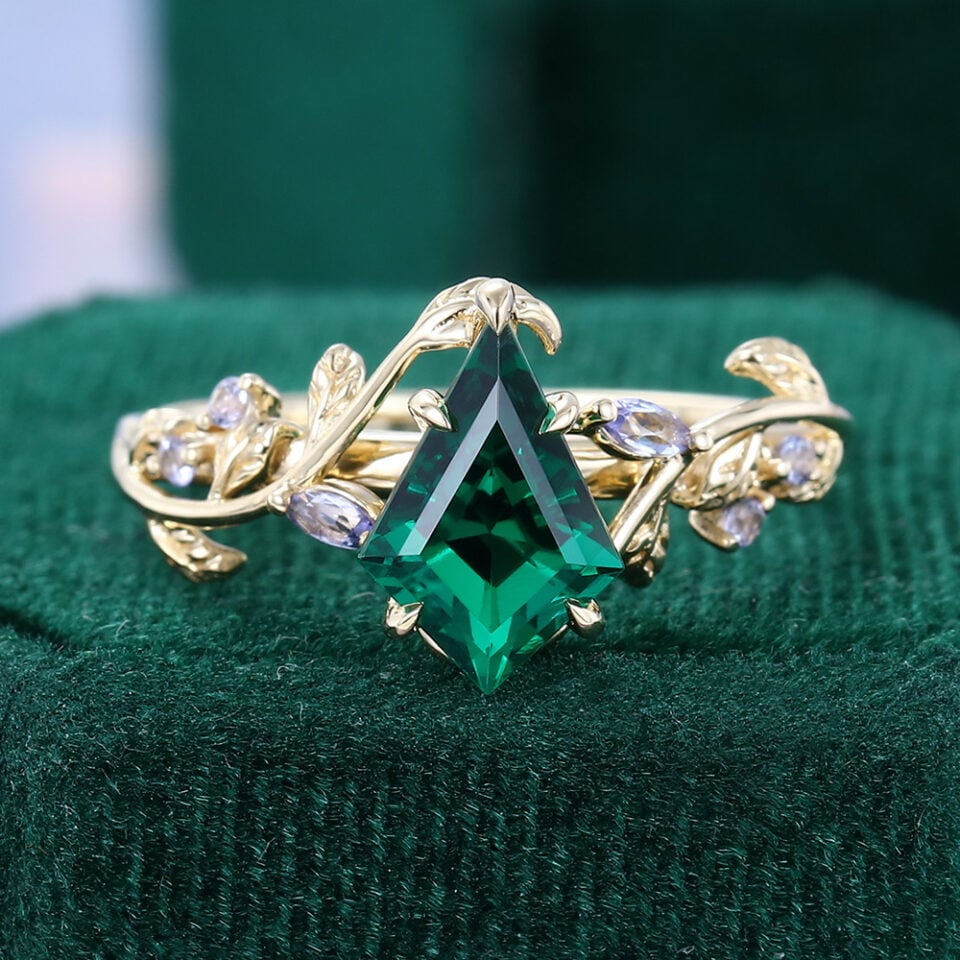
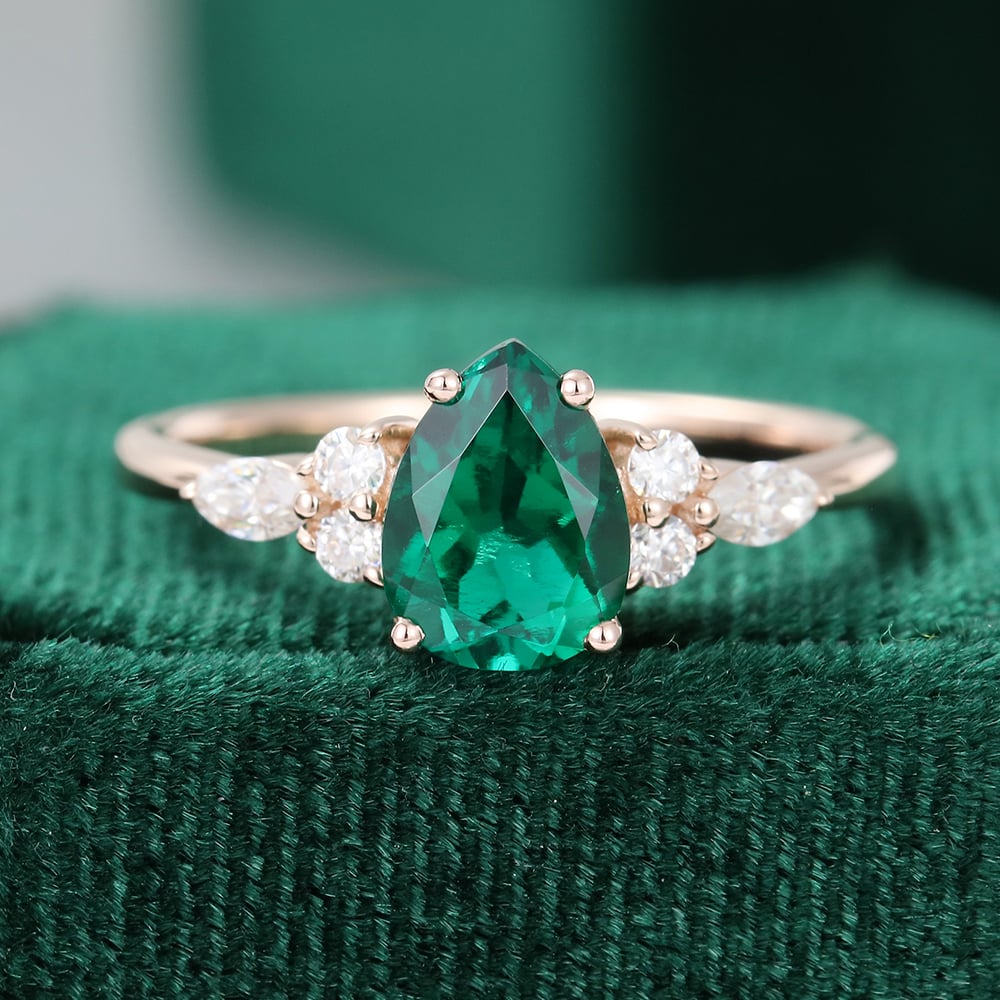
- by MollyJewelryUS
- February 20, 2026
- About Moissanite, Gemstone Education
Do I want timeless depth — or modern brilliance?
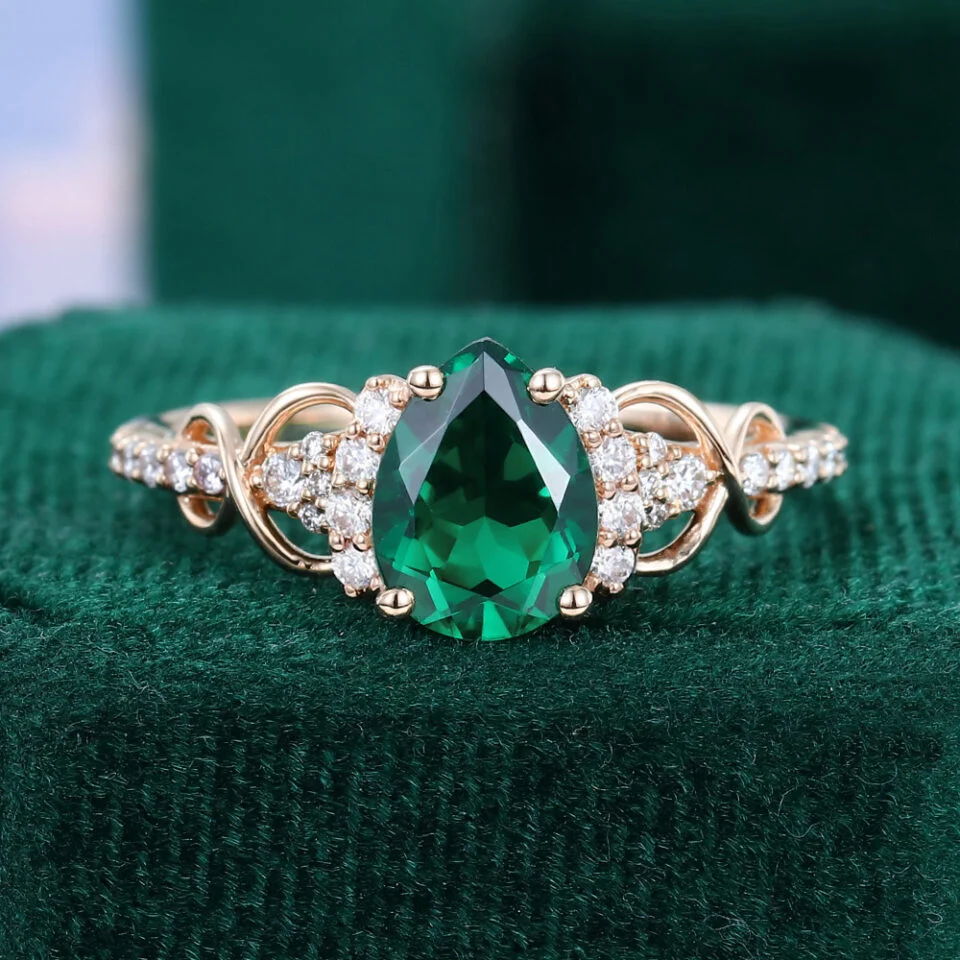
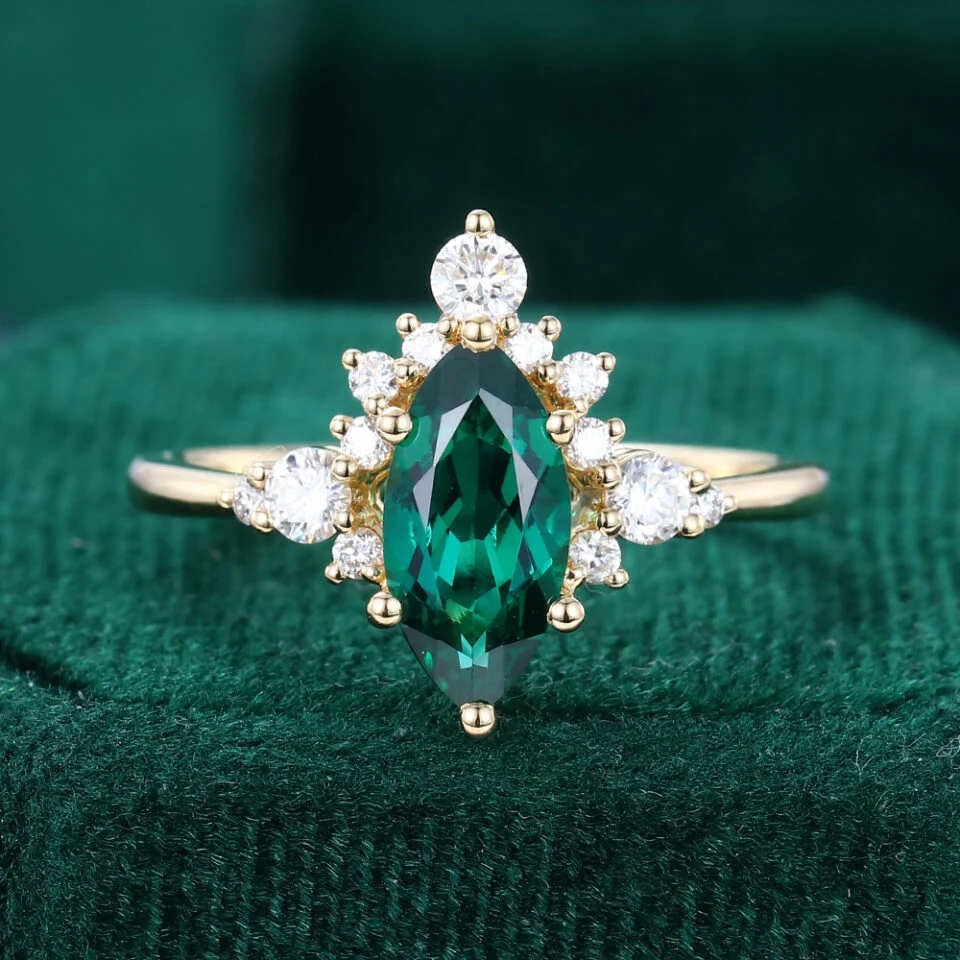
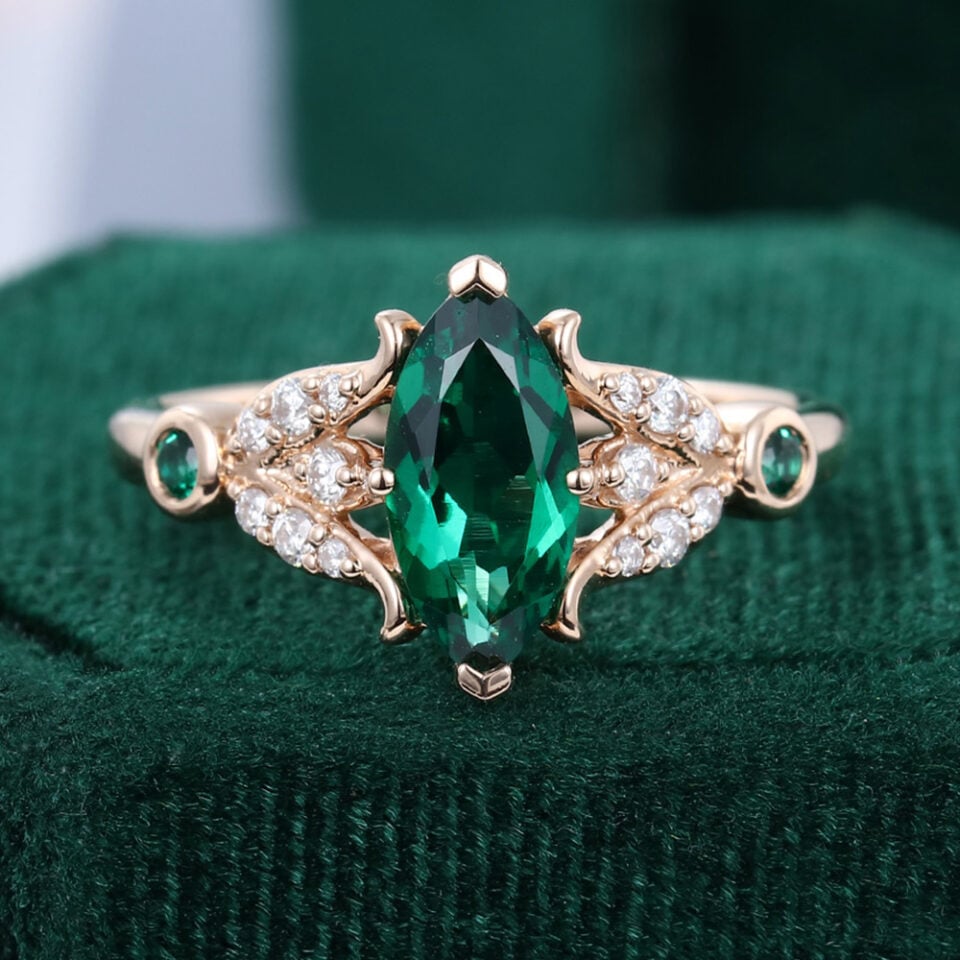
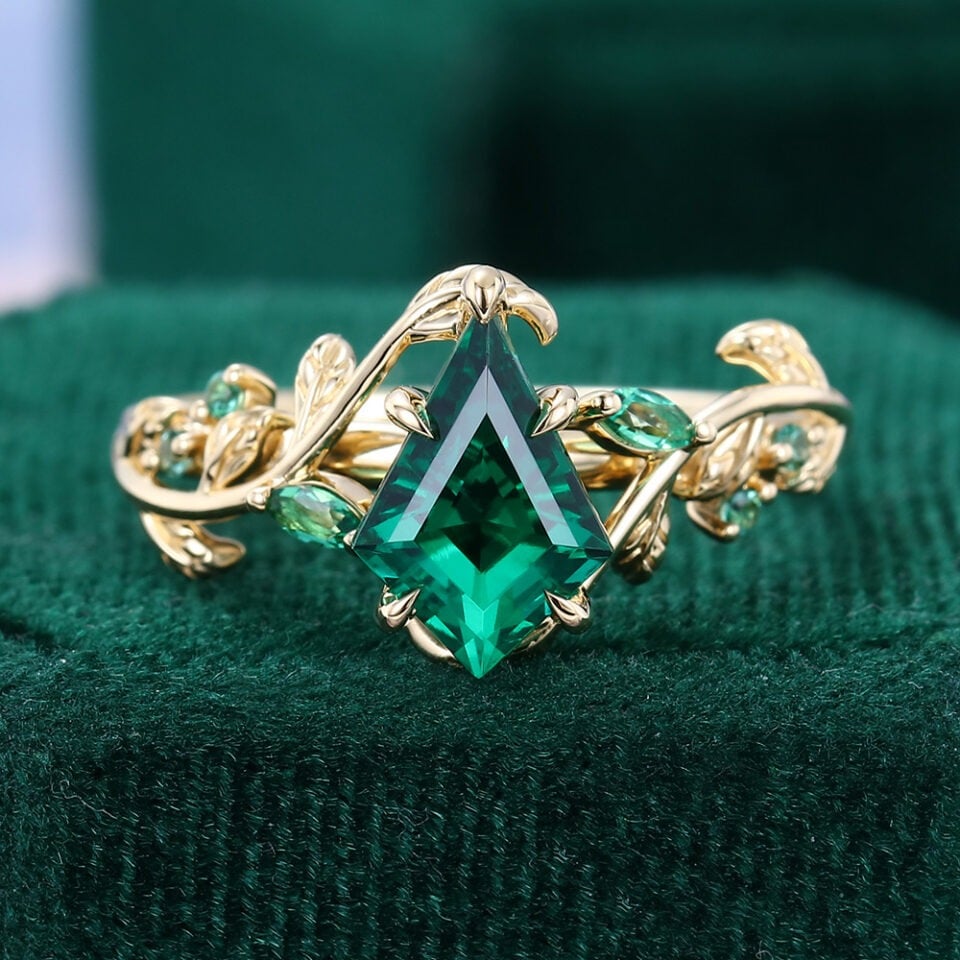
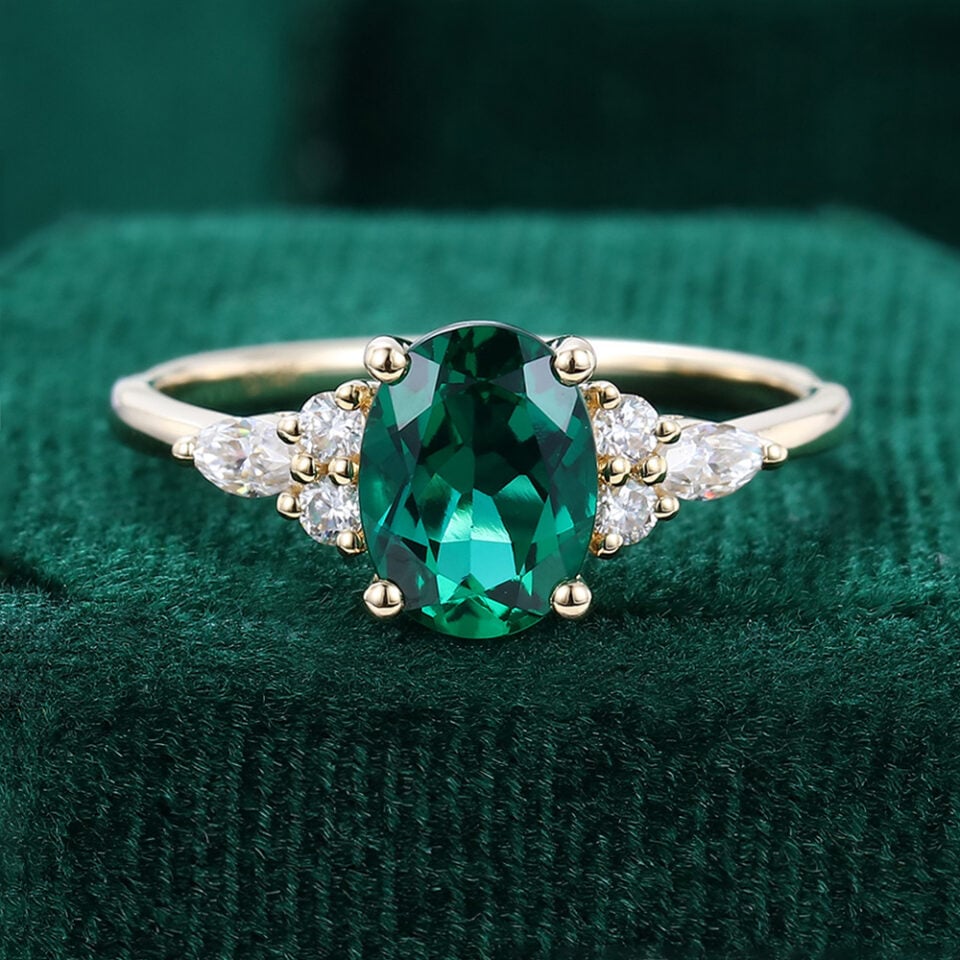
Both stones are green. Both can look stunning in an engagement ring. But they deliver very different visual impact, durability performance, and price value.
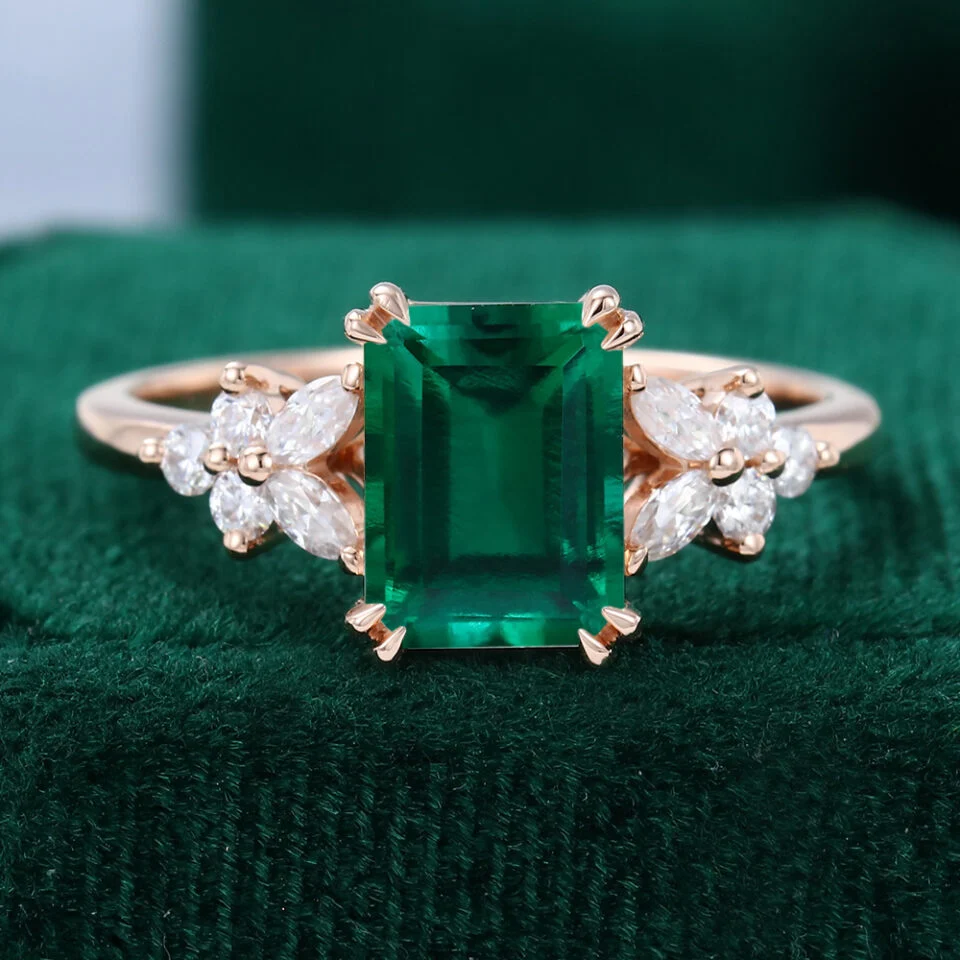
Emerald carries centuries of prestige and rich, velvety color.
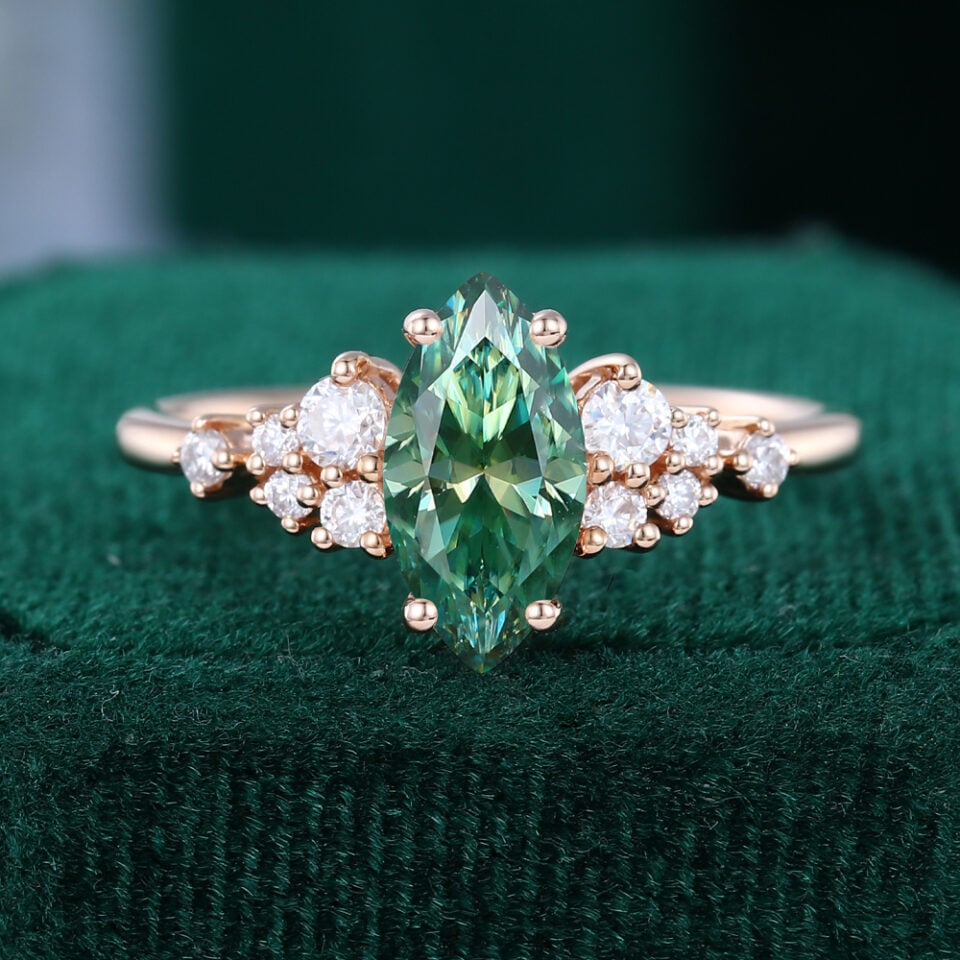
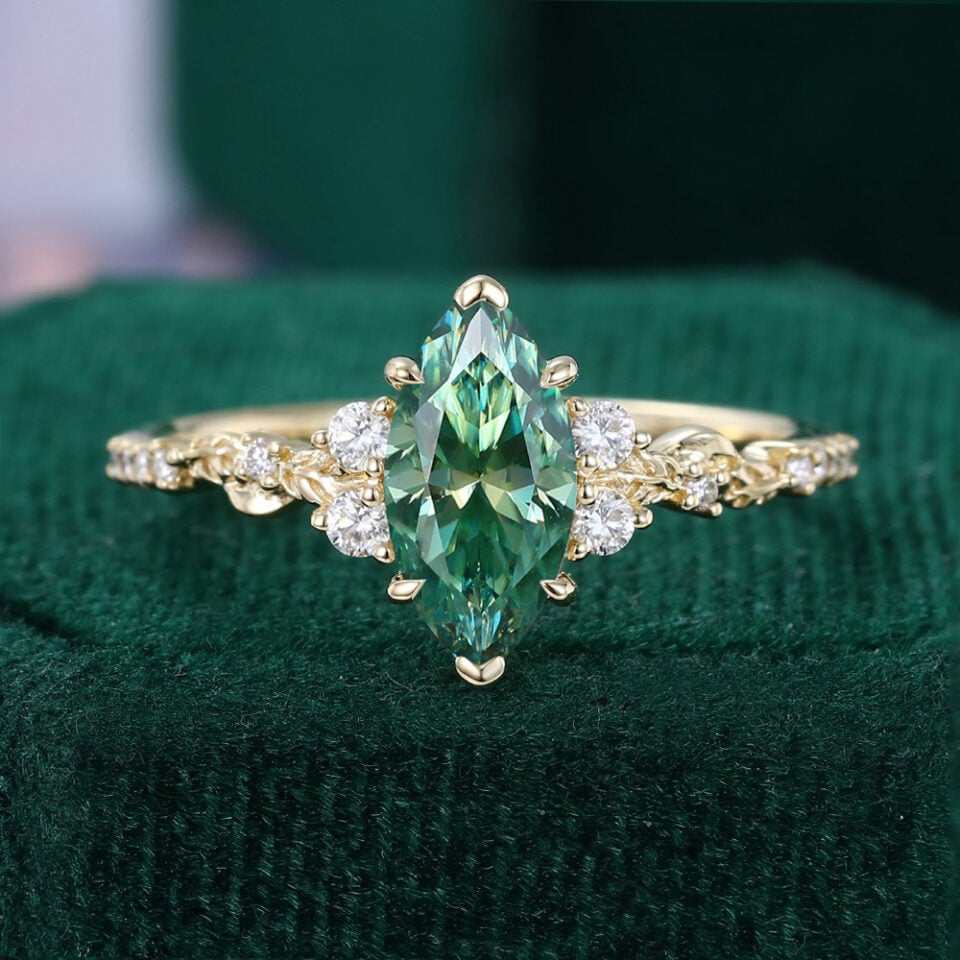
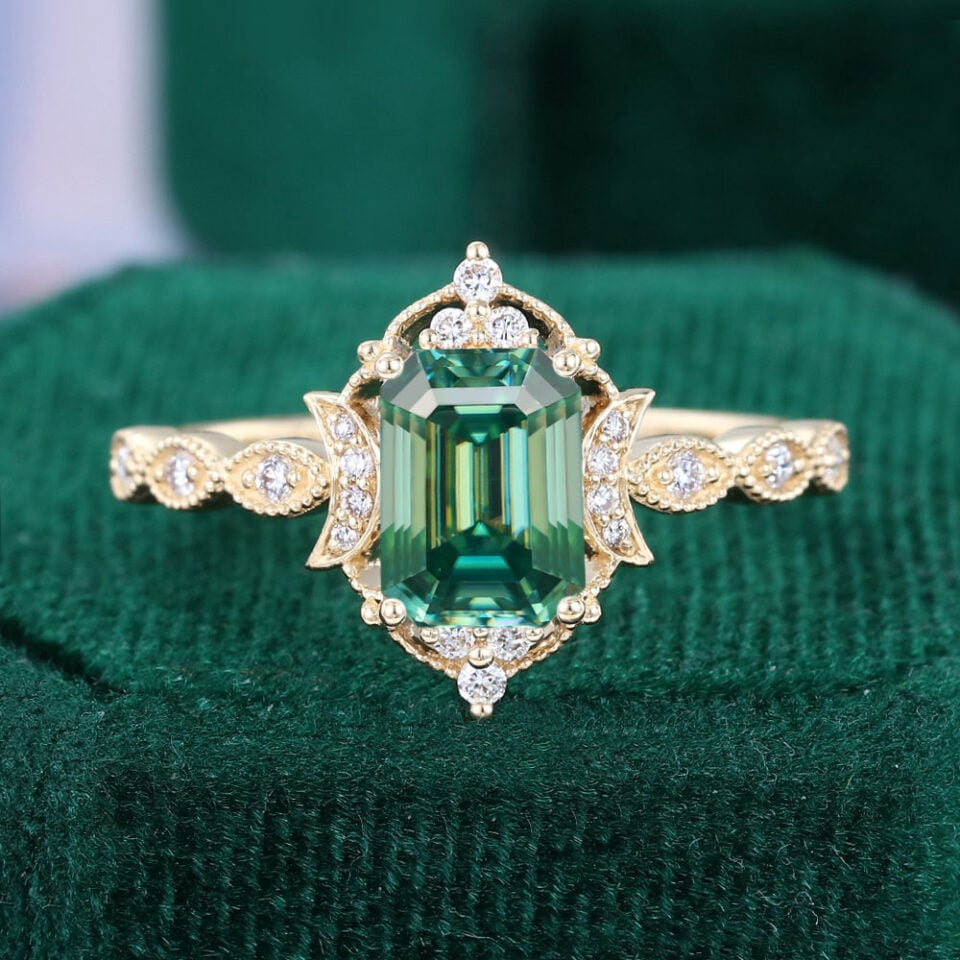
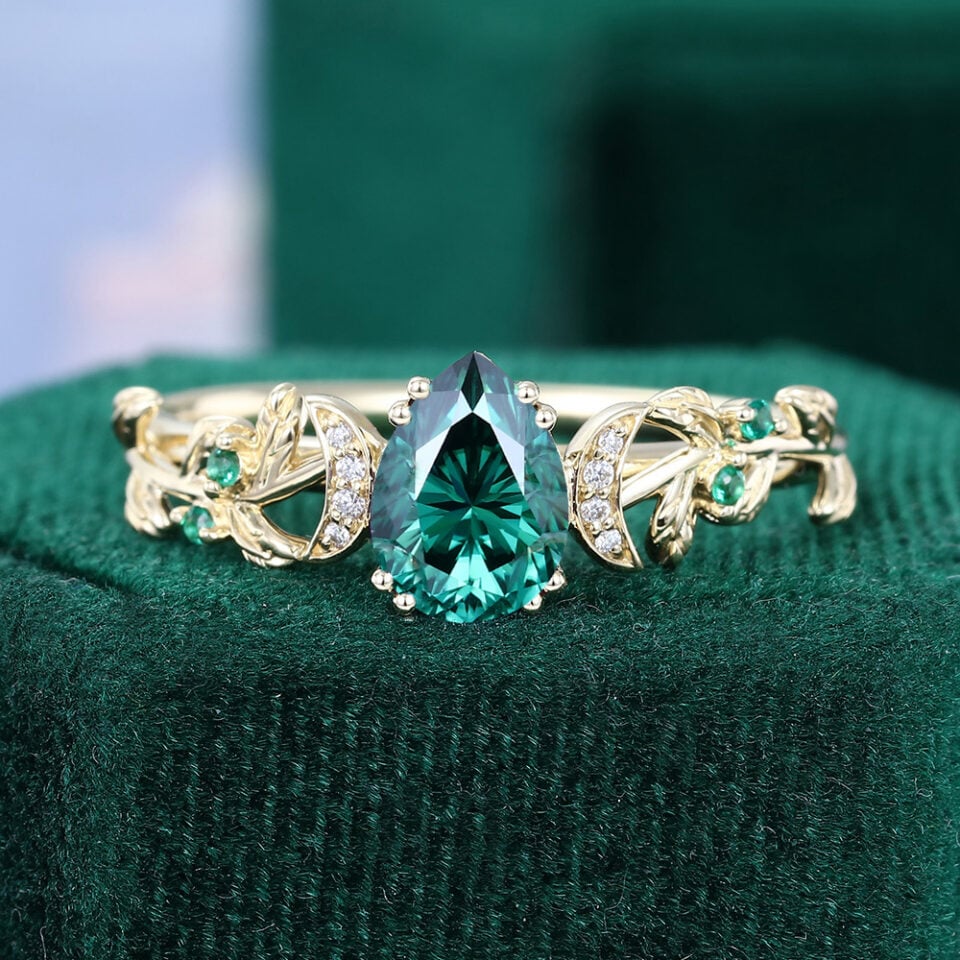
Green moissanite brings intense sparkle, lab-grown ethics, and impressive durability.
This guide breaks down the real differences — so you can choose the green gemstone that actually fits your lifestyle and aesthetic.
Table Of Contents:
- Emerald vs Green Moissanite at a Glance
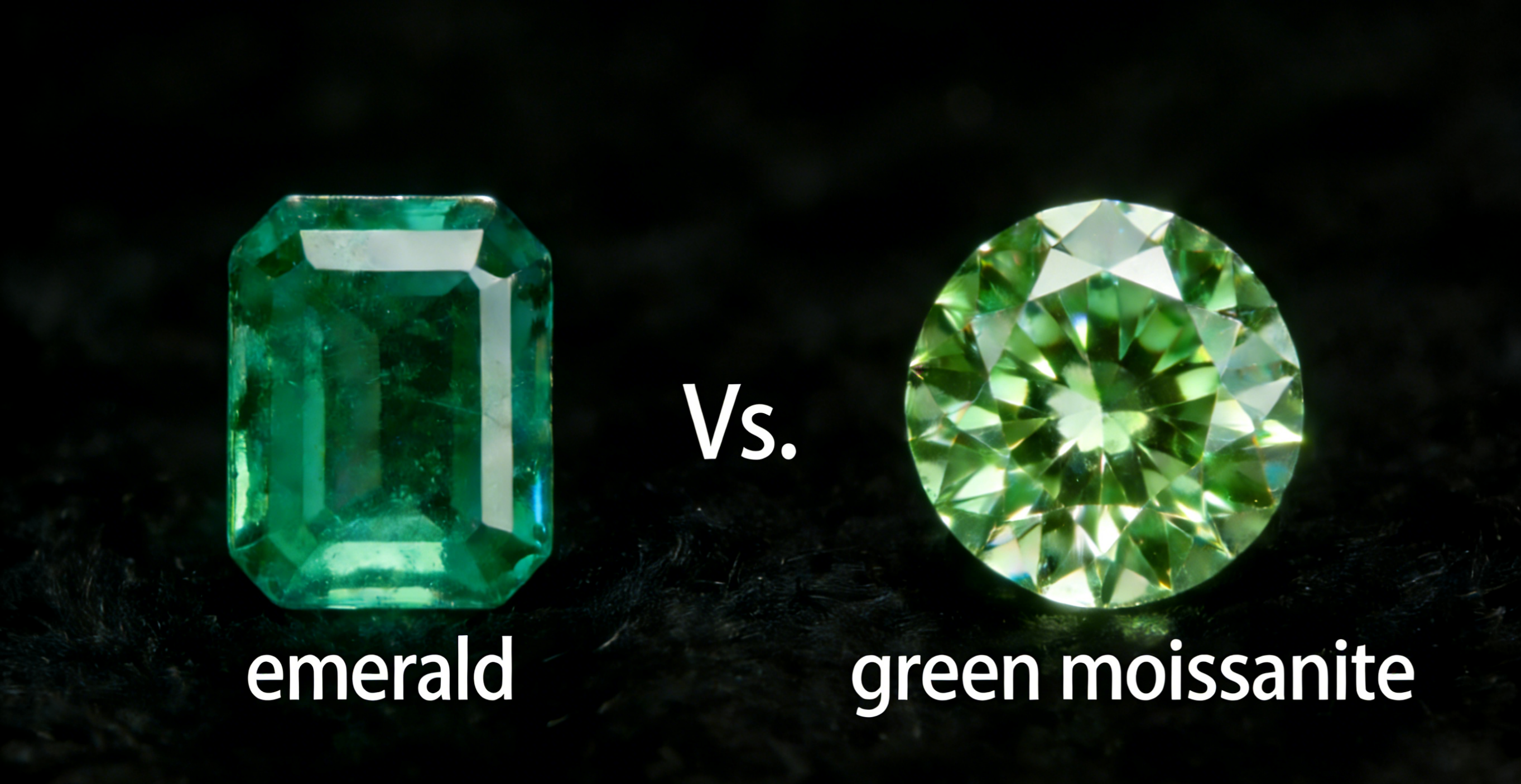
- Color & Sparkle — Depth vs Fire
- Durability & Daily Wear — Which Holds Up Better?
- Where Lab Emerald Enters the Conversation
- Price Comparison — What Are You Actually Paying For?
- Engagement Ring Identity — Which One Feels Like You?
- So… Emerald or Green Moissanite?
- Final Thoughts
- Related FAQs
Emerald vs Green Moissanite at a Glance
| Feature | Emerald | Green Moissanite |
|---|---|---|
| Origin | Natural (or lab-created emerald) | Lab-created |
| Hardness (Mohs) | 7.5–8 | 9.25 |
| Sparkle Level | Soft glow | High brilliance + fire |
| Color Tone | Deep, saturated green | Brighter, vivid green |
| Visible Inclusions | Common | Rare |
| Maintenance | Moderate care needed | Low maintenance |
| Typical Ring Price | $800 – $8,000+ | $500 – $2,000 |
At a glance, emerald wins on heritage and color depth.
Green moissanite wins on durability and sparkle intensity.
Color & Sparkle — Depth vs Fire
Color is the emotional difference. Sparkle is the visual difference.
Emerald: Rich, Velvety Green
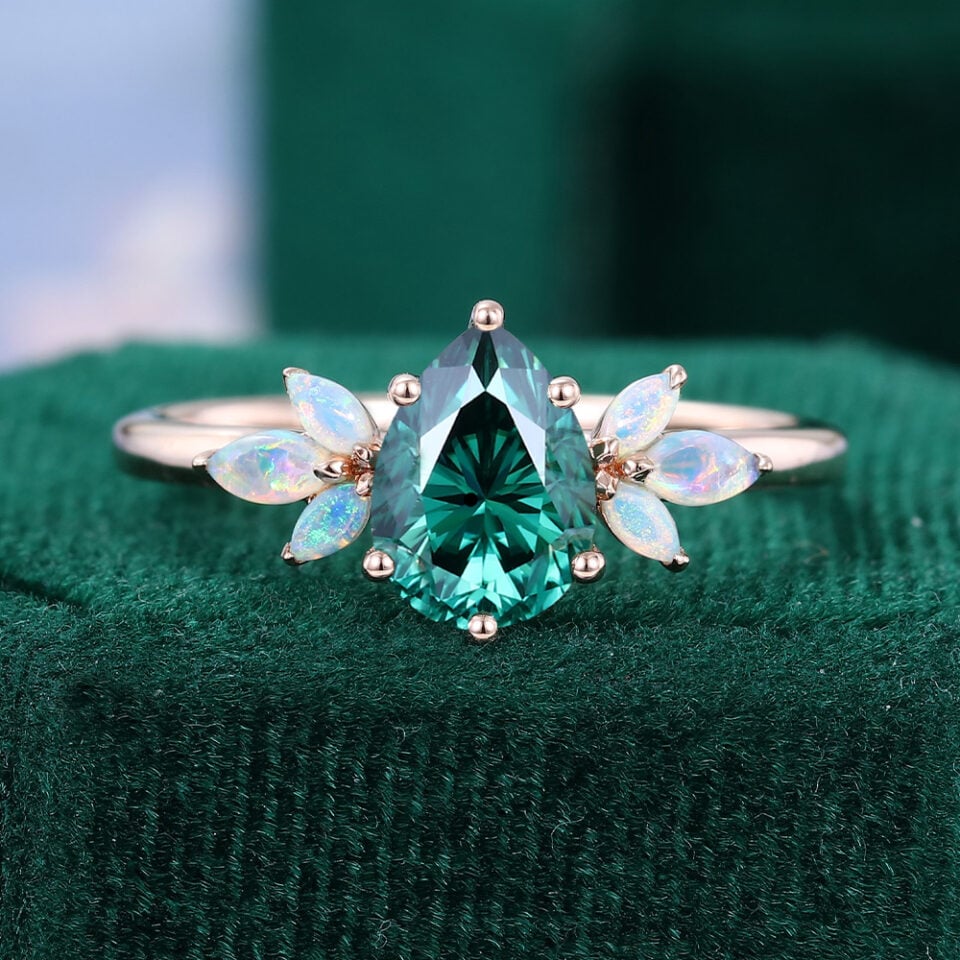
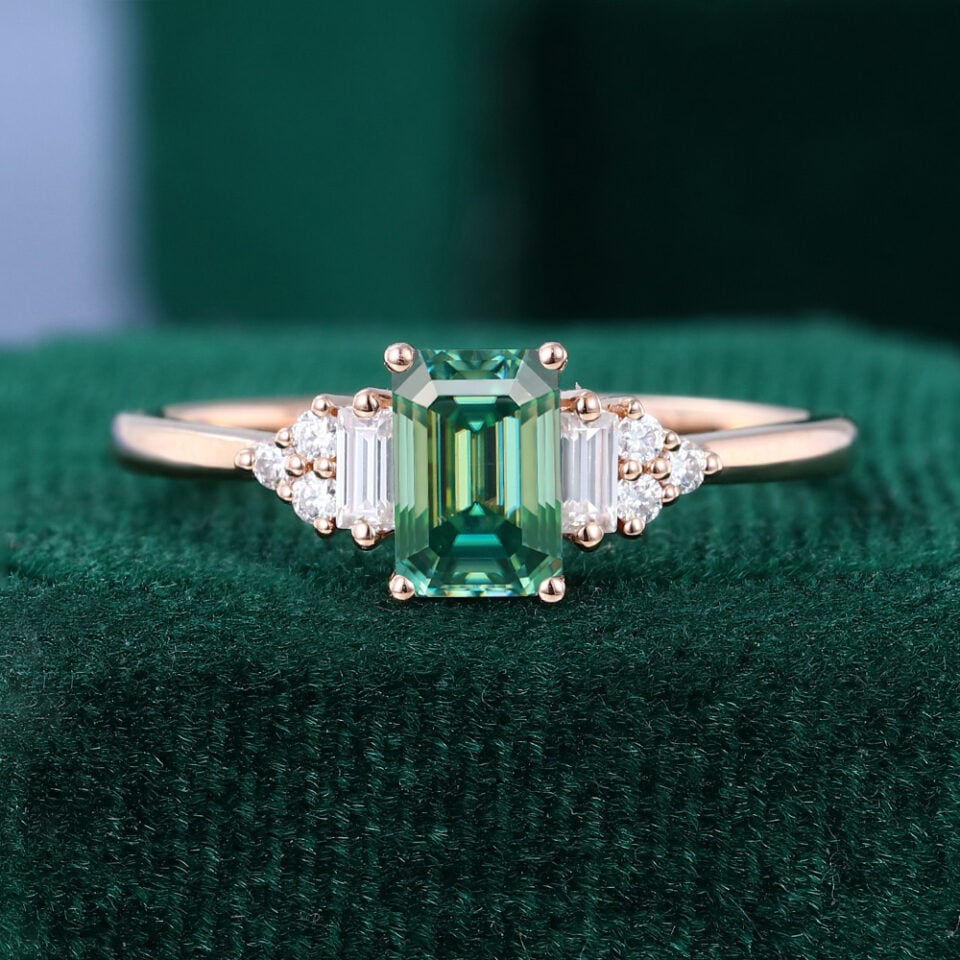
Emerald’s appeal lies in its saturated green tone — often described as forest-like or lush. It reflects light softly rather than sharply.
Why couples love emerald:
Deep symbolic meaning (renewal, growth, love)
Luxurious, vintage feel
Unique inclusions that make each stone one of a kind
Less “flashy,” more refined
If you’re unsure how to evaluate emerald tones, our detailed guide on emerald color grading explains how to choose the right shade of green based on saturation, undertone, and personal style.
Green Moissanite: Bright, Fiery, and Eye-Catching
Green moissanite reflects significantly more light. It has stronger fire (rainbow flashes) and a cleaner appearance.
Why modern couples choose green moissanite:
Higher brilliance than emerald
Consistent lab-controlled color
Ethical and sustainable appeal
Bigger look for the same budget
If sparkle matters to you, browse our geen moissanite rings collection
Green moissanite doesn’t try to copy emerald — it offers a different energy: vibrant, contemporary, confident.
Durability & Daily Wear — Which Holds Up Better?
Green Moissanite
Green Moissanite
Mohs hardness: 9.25
Excellent scratch resistance
Strong structural durability
Ideal for daily engagement ring wear
This makes green moissanite one of the most durable green gemstones available.
Emerald
Emerald
Mohs hardness: 7.5–8
Natural inclusions can weaken structure
Best in protective settings (halo or bezel)
Emerald engagement rings can absolutely be worn daily — but they benefit from thoughtful design and mindful wear.
If durability is your top priority, moissanite has the advantage.
If symbolism and depth matter more, emerald still holds strong emotional value.
Where Lab Emerald Enters the Conversation
Here’s the important shift.
Most couples love the color and symbolism of emerald —
but hesitate because of:
High natural emerald pricing
Heavy inclusions
Durability concerns
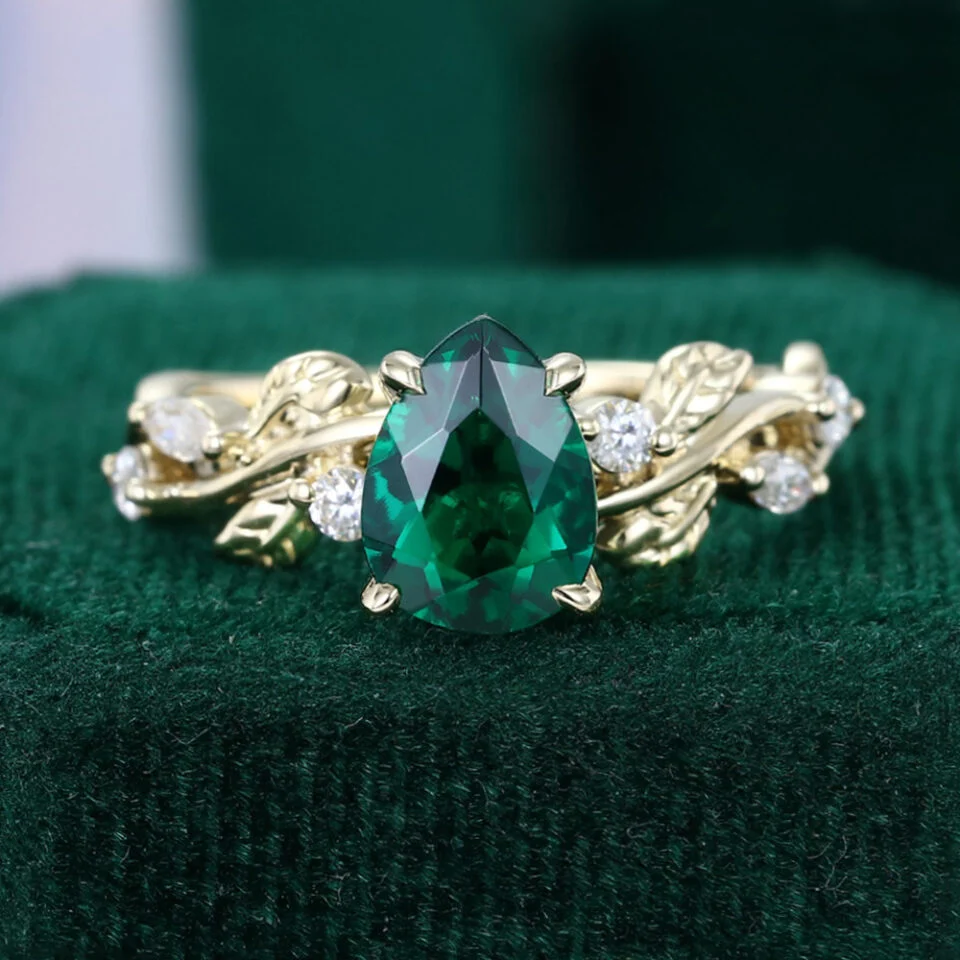
This is where lab-created emerald becomes a strategic alternative.
Lab emerald offers:
The same chemical composition as natural emerald
Comparable deep green tone
Significantly improved clarity
No oil treatments required
Much lower cost
It preserves emerald’s aesthetic identity —
without natural market volatility.
For many modern couples, this is the balance point between romance and practicality.
Price Comparison — What Are You Actually Paying For?
Emerald pricing varies drastically depending on origin, clarity and saturation.
Below is a realistic market comparison for 1–2ct center stone engagement rings.
💰 Typical Retail Price Ranges
| Stone Type | Typical Price Range | Value Position |
|---|---|---|
| Natural Emerald | $800 – $8,000+ | Rare, prestige-driven pricing |
| Lab Emerald | $400 – $1,500 | Accessible emerald luxury |
| Green Moissanite | $500 – $1,800 | Durability + brilliance value |
Final price varies based on metal type, setting complexity and accent stones.
What Influences Natural Emerald Pricing?
Origin (Colombian stones command premium)
Saturation depth
Clarity (fewer inclusions = exponential price increase)
Treatment level
Carat size
To understand why some emeralds command higher prices, see
→ What Makes an Emerald Valuable?
What Influences Lab Emerald Pricing?
Color intensity
Cut precision
Setting design
Gold karat selection
Because lab emerald supply is stable, pricing is more predictable and accessible.
What Influences Green Moissanite Pricing?
Carat weight
Cut quality (oval & brilliant cuts maximize fire)
Metal type
Side stone selection
Moissanite pricing scales more linearly than emerald.
Engagement Ring Identity — Which One Feels Like You?
Choose Emerald If:
Choose Emerald If:
You love deep, saturated green
You prefer understated glow over sparkle
You appreciate heritage and natural rarity
You want something distinct from mainstream trends
Explore more styles in our→ Emerald Ring Collection
Choose Green Moissanite If:
You want noticeable brilliance
Durability is essential
You prefer modern minimalism
Budget flexibility matters
Green moissanite aligns strongly with the growing movement toward non-diamond, lab-grown engagement rings.
So… Emerald or Green Moissanite?
This isn’t a comparison of green stones.
It’s a comparison of philosophy.
Emerald (natural or lab) represents depth, history and quiet luxury.
Green moissanite represents light, resilience and visible brilliance.
If your heart is drawn to velvet richness —emerald wins.
If your eye is drawn to fire and sparkle —moissanite dominates.
And if you want emerald’s soul with modern practicality?
Lab emerald is the bridge between romance and reality.
Green doesn’t have one definition.
It simply depends on how you want it to shine
Final Thoughts
Emerald and green moissanite represent two different philosophies of beauty.
Emerald speaks to history, depth, and symbolism.
Green moissanite speaks to brilliance, performance, and accessibility.
Whichever you choose, your engagement ring should reflect you — not just tradition.
The right green gemstone isn’t about trends.
It’s about how it feels when you wear it every day.
Related FAQs :
Is green moissanite fake emerald?
Does green moissanite look cheap?
Not at all. High-quality cuts provide strong brilliance and clean appearance.
Is lab emerald better than green moissanite?
Lab emerald maintains emerald’s color identity; moissanite prioritizes durability and sparkle.
Which gemstone sparkles more?
Green moissanite reflects significantly more light than emerald.
Which holds resale value better?
Natural emerald often carries stronger traditional resale perception.
Is emerald too fragile for engagement rings?
Emerald can be worn daily with protective settings and reasonable care.