Last updated on August 20, 2026
Emerald and green beryl are both green varieties of beryl, but they are not the same gemstone designation. The biggest difference is color: emerald has a stronger, more saturated green, while green beryl is generally lighter or less saturated.
That difference can affect how the stone looks, how it is valued, and what to expect when shopping for one.
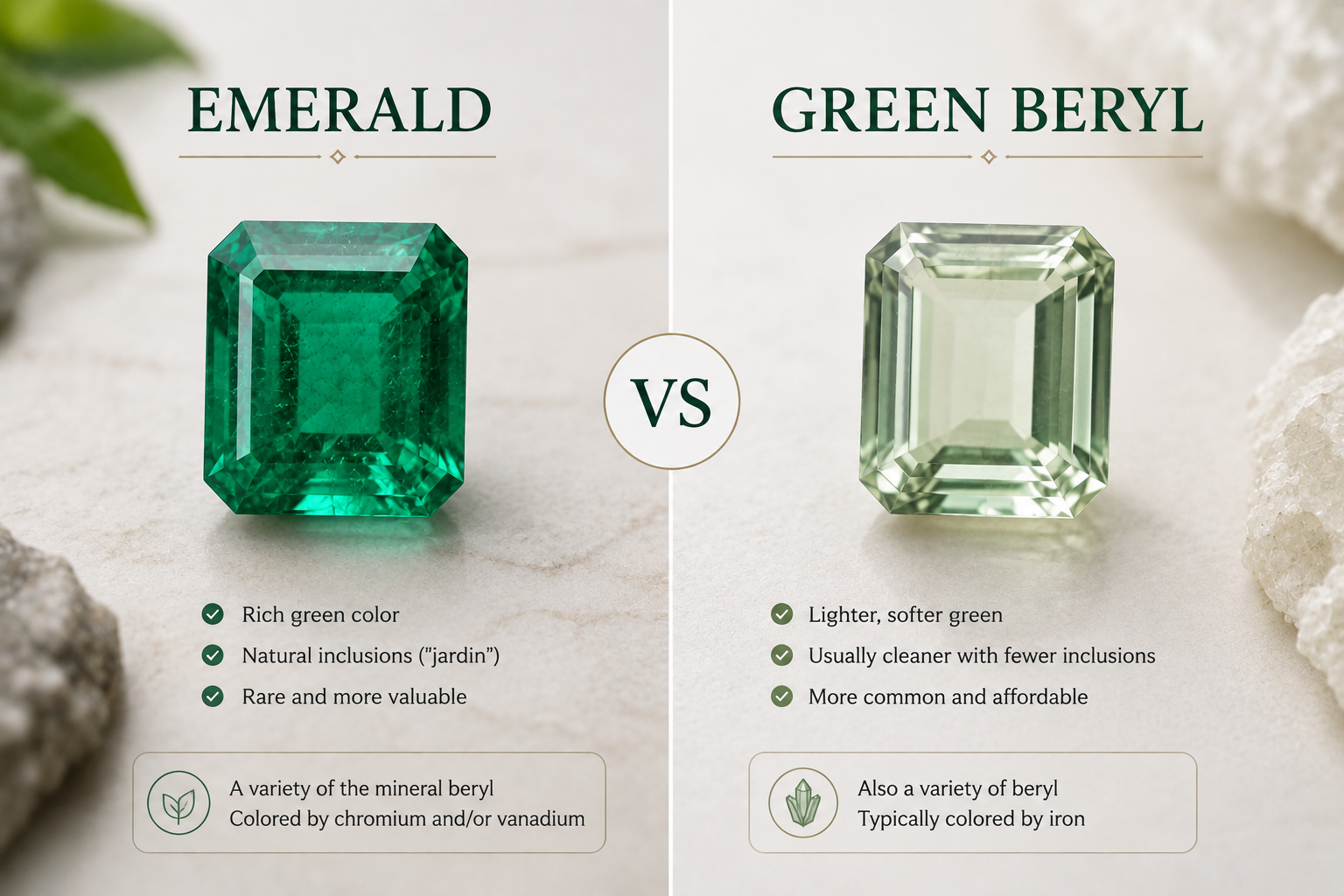
Emerald vs. Green Beryl: The Quick Difference
| Emerald | Green Beryl | |
|---|---|---|
| Color | Rich green | Lighter green |
| Value | Generally higher | Generally lower |
| Appearance | More saturated | Softer |
| Treatment | Common | Less common |
| Best for | Classic emerald look | Softer green look |
The easiest way to remember it: emerald and green beryl belong to the same mineral family, but emerald has the stronger green color needed to receive the emerald designation.
What’s the Difference Between Emerald and Green Beryl?
Color Differences
Emerald: Emeralds typically exhibit a green to bluish-green color, and are known as the king of green gemstones. The gemstone industry has specific criteria for emerald color—evaluated based on hue, saturation, and tone. The hue must be green, with a high level of saturation, and the tone must be medium to dark to qualify as emerald. Lighter-colored stones are classified as green beryl.
Green Beryl: Beryl stones generally have a lighter color or lower saturation, appearing in pale green, yellow-green, or light bluish-green, although some may resemble emerald in color.
Differences in Trace Elements
- Emerald: The vibrant green of emerald is due to trace amounts of chromium (Cr) and/or vanadium (V) in its chemical composition.
- Green Beryl: Green beryl typically gets its color from iron (Fe), resulting in a softer or more yellow/blue-green tone. This is similar to the coloration of aquamarine (another member of the beryl family), which is why sometimes green beryl stones with bluish-green hues are heated to remove the green and become aquamarine.
The presence or absence of chromium or vanadium is the key factor that distinguishes emerald from green beryl. Beryl must contain chromium or vanadium, while green beryl does not. This helps clarify how to differentiate the two when their colors are similar.
Inclusions and Clarity Differences
- Emerald: High-clarity emeralds are extremely rare. Natural emeralds typically contain a significant number of inclusions (such as liquid-gas inclusions and healed fractures), often referred to as the “garden effect.” This is a distinctive feature of emeralds and typically does not affect their value unless it severely impacts the overall appearance of the stone.
- Beryl: Green beryl is usually much cleaner, with fewer inclusions that are almost invisible to the naked eye.
Note: Although emerald and green beryl have the same Mohs hardness, the higher number of inclusions in emeralds makes them more prone to fracturing upon impact.
Treatment and Enhancement
- Emerald: Nearly all emeralds undergo oil treatment (often using colorless cedar oil) to conceal fractures and enhance transparency. This treatment is widely accepted. Un-oiled emeralds can be significantly more valuable. Some emeralds may also undergo color-enhancing treatments.
- Green Beryl: Green beryl is less commonly treated, and the market has a lower tolerance for such treatments.
Value and Rarity
- Emerald: As one of the four precious gemstones, emerald is relatively rare. A natural one-carat emerald of average quality can cost between $5,000 and $10,000, while a high-quality emerald can reach $50,000 per carat or more. Additionally, the depletion of major sources such as Colombia and Zambia further increases its value.
- Green Beryl: Green beryl is more common and priced much lower than emerald, typically costing only a few hundred dollars per carat or even less.
Origin
- Emerald: Major sources of emeralds include Colombia (the top source), Zambia, Brazil, and Afghanistan. Colombian emeralds are highly prized for their rich color and the presence of rare mineral inclusions, such as three-phase inclusions.
- Green Beryl: Green beryl is found in a wide range of locations, including Brazil, China, and the United States, but lacks any particularly renowned sources of high-quality material.
Symbolic Meaning
- Emerald: Emerald symbolizes rebirth, eternity, and hope. It is the birthstone for May and is also the 20th, 35th, and 55th wedding anniversary gemstone. Cleopatra of ancient Egypt considered it a symbol of power and beauty.
- Green Beryl: Green beryl generally does not have any specific symbolic meaning. However, like other beryl varieties (such as aquamarine and morganite), it shares some cultural associations with love, hope, protection, and essence.
Emerald vs. Green Beryl Related FAQs
No. Both are beryl, but emerald is the green to bluish-green variety with enough color and saturation to receive the emerald designation. Green beryl generally has a lighter or less saturated green.
Yes. Green beryl has value as a gemstone, although it is generally less expensive than emerald. The value of an individual stone depends on its color, clarity, size, cut, and other characteristics.
Rarity alone does not determine gemstone value. Emerald has much stronger market recognition and generally commands higher prices when comparing stones of similar quality.
Not automatically. The distinction depends heavily on the stone’s color and saturation, and experts do not use one universally fixed boundary.
Yes. Green beryl can be used in rings, earrings, necklaces, and other jewelry. Its lighter green appearance can be particularly appealing for designs where a softer gemstone color is preferred.
Final Thoughts
Emerald and green beryl are both beryl, but their color and market value can be quite different.
- Emerald is generally the better fit for a richer, more saturated green and the traditional appeal of emerald jewelry.
- Green beryl is worth considering when you prefer a lighter green look and a more understated gemstone.
So when comparing emerald vs. green beryl, don’t focus only on which one costs more. Look at the color, understand what the stone is actually called, and choose the green that works best for the jewelry you want to wear.
If you’re drawn to the timeless beauty of emeralds, feel free to explore our collection of stunning, ethically sourced emerald rings, necklaces, and earrings—designed to be both beautiful and affordable.
Featured Emerald Jewelry
-
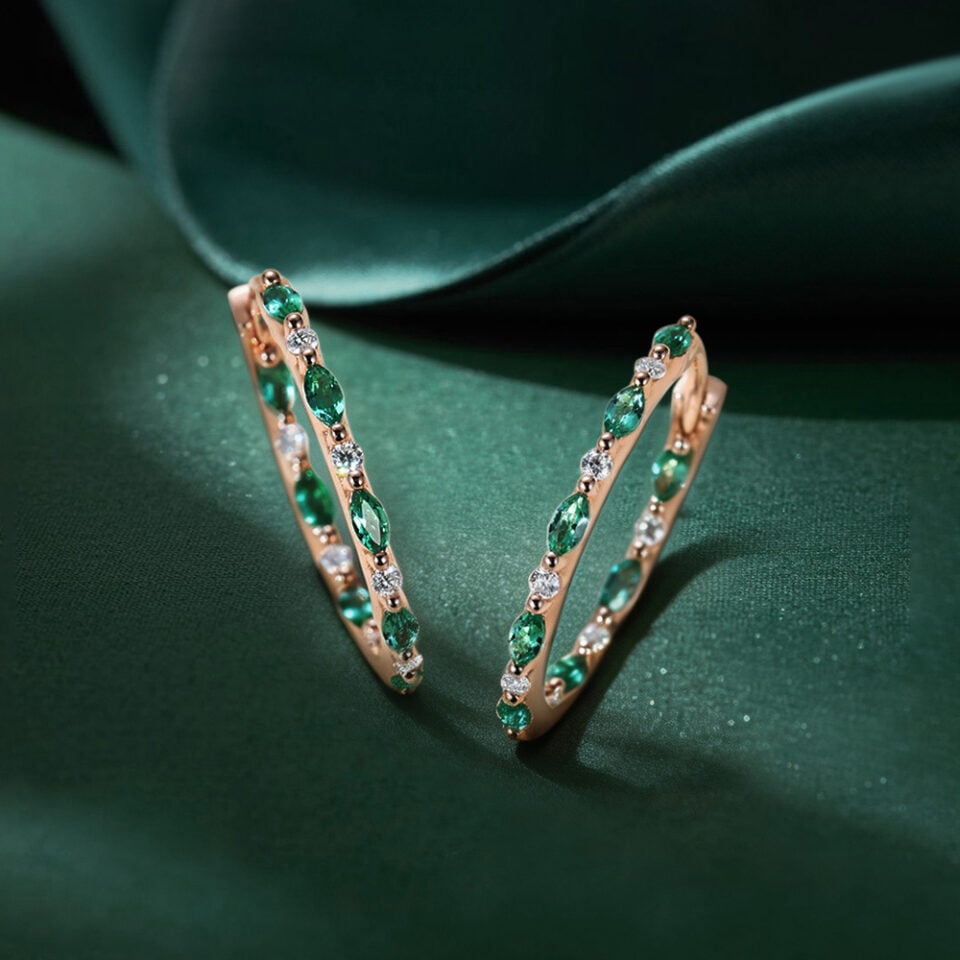
Alternating Marquise Emerald & Round Diamond Huggie Earrings
$290 -
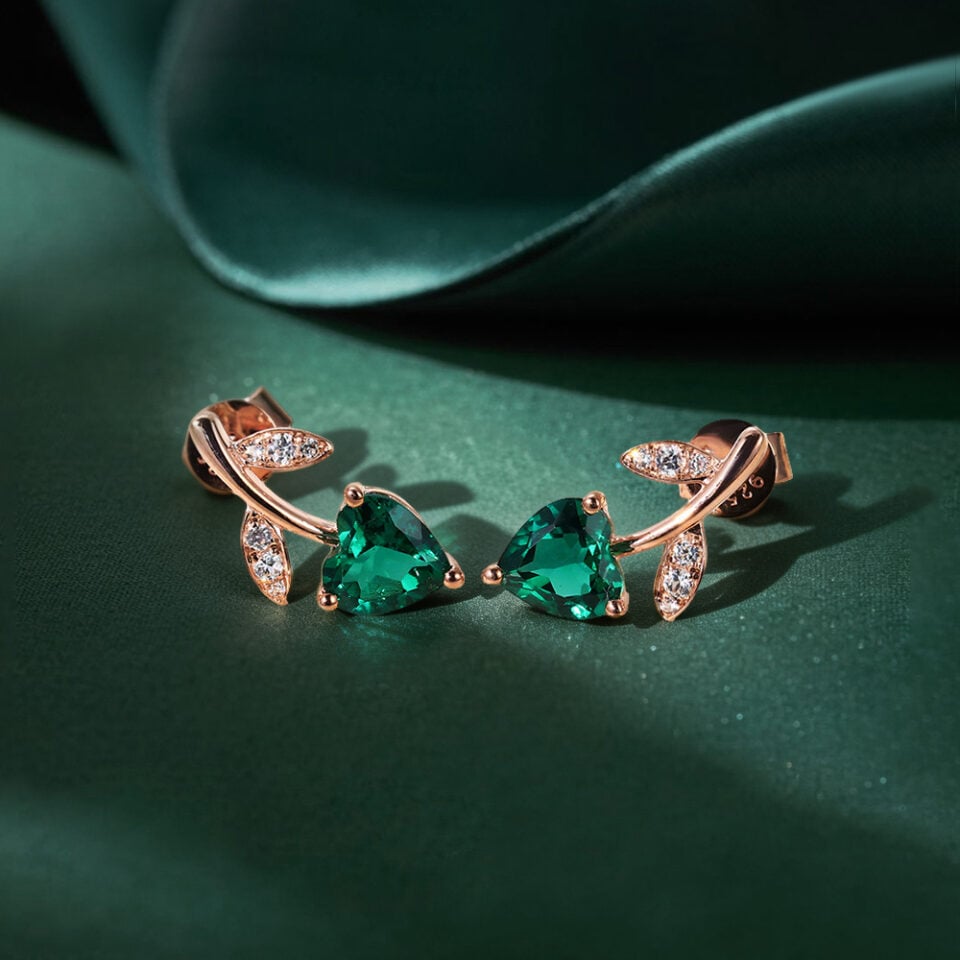
Flower Designed Heart Shaped Emerald Stud Earrings
$405 -
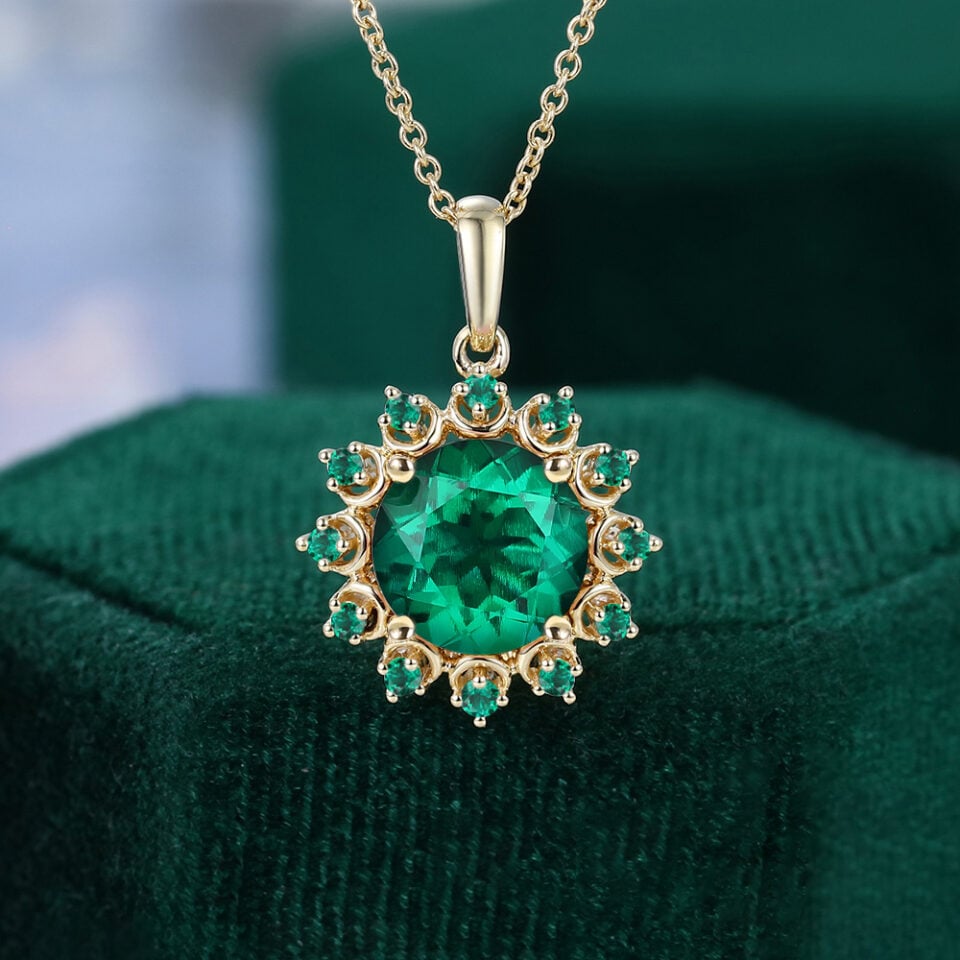
Round Cut Emerald Solar Halo Pendant Necklace For Women
$442 -

Kite Cut Solitaire Emerald Necklace Corner Prong Setting Pendant
$350 -
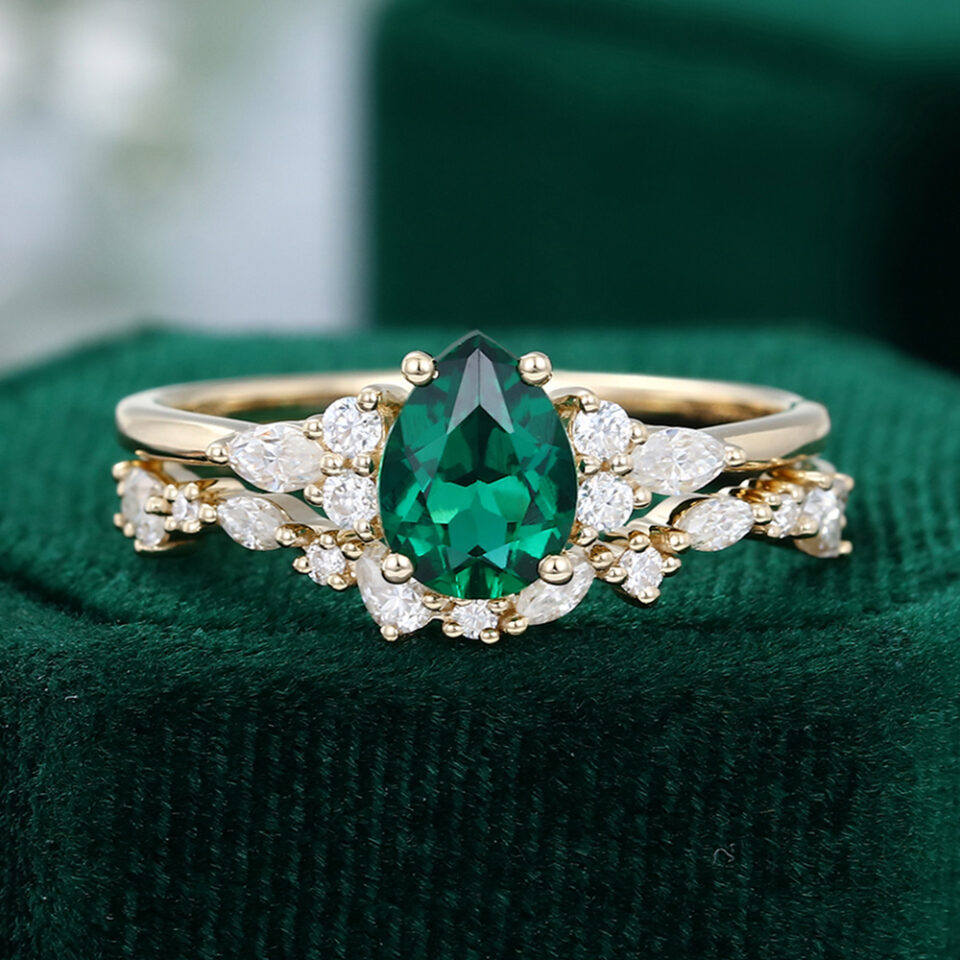
Pear Shaped Lab Emerald Engagement Ring Unique Bridal Wedding Set
$525 -

Emerald Cut Lab Emerald Engagement Ring Set Minimalist Bridal Ring Set
$497 -

Tilted Pear Emerald & Diamond Half Eternity Band Promise Ring for Her
$220 -

Emerald Wedding Ring Half Eternity Pave Stacking Band
$190