- by MollyJewelryUS
- April 24, 2026
- Buying Guides
Curved wedding bands have become a practical solution for pairing modern engagement rings. As more designs move away from simple, raised settings, many couples find that straight bands no longer sit flush. This is where curved designs come in. When chosen correctly, they create a seamless fit and enhance the overall look of your wedding rings, rather than leaving awkward gaps or forcing mismatched alignment.
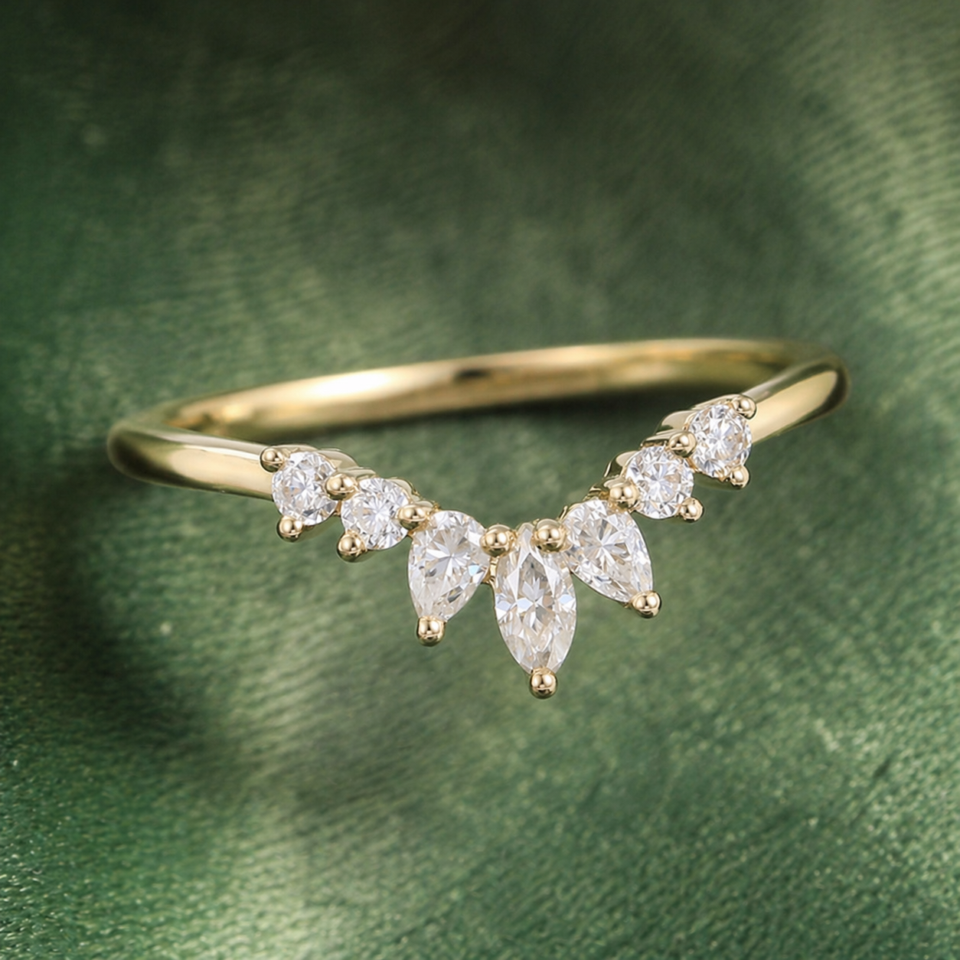
Table Of Contents:
Table Of Contents:
What Is a Curved Wedding Band?
What Is a Curved Wedding Band?
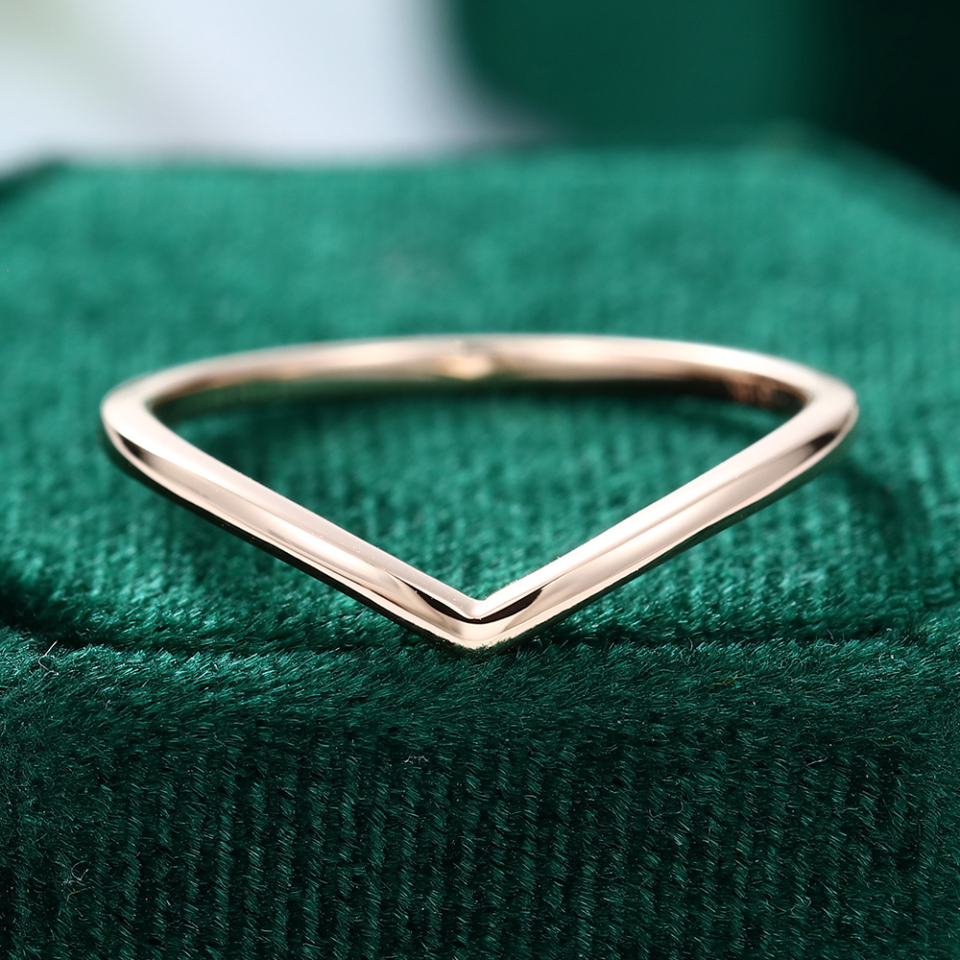
A curved wedding band is shaped to follow the contour of an engagement ring. Instead of a straight line, the band features a gentle curve, dip, or wave that allows it to sit closely against the center stone or setting.
This type of band is especially useful when the engagement ring has a low setting, a large center stone, or side details that prevent a traditional band from fitting properly. The goal is not just aesthetics, but also comfort and structural alignment.
Why Ring Setting Matters?
Why Ring Setting Matters?
The shape of your engagement ring setting determines whether you need a curved band and what type will work best. Rings with high prong settings often allow straight bands to sit flush, but many modern styles—such as halo, bezel, or cluster designs—create space that a straight band cannot fill.
Ignoring this detail can lead to visible gaps between the rings. While some people prefer that look, most want a more connected appearance. A curved band solves this by adapting to the structure of the engagement ring instead of forcing a rigid pairing.
Types of Curved Wedding Bands
Types of Curved Wedding Bands
Not all curved bands are the same. The degree and style of the curve can vary significantly, and choosing the right one depends on your engagement ring design.
Slight Curved Bands
Slight Curved Bands
Not all curved bands are the same. The degree and style of the curve can vary significantly, and choosing the right one depends on your engagement ring design.
Deep Curved Bands
Deep Curved Bands
Deep curves are designed for engagement rings with prominent center stones or low settings. The deeper contour allows the band to wrap more closely around the stone, reducing gaps.
V-Shaped Bands
V-Shaped Bands
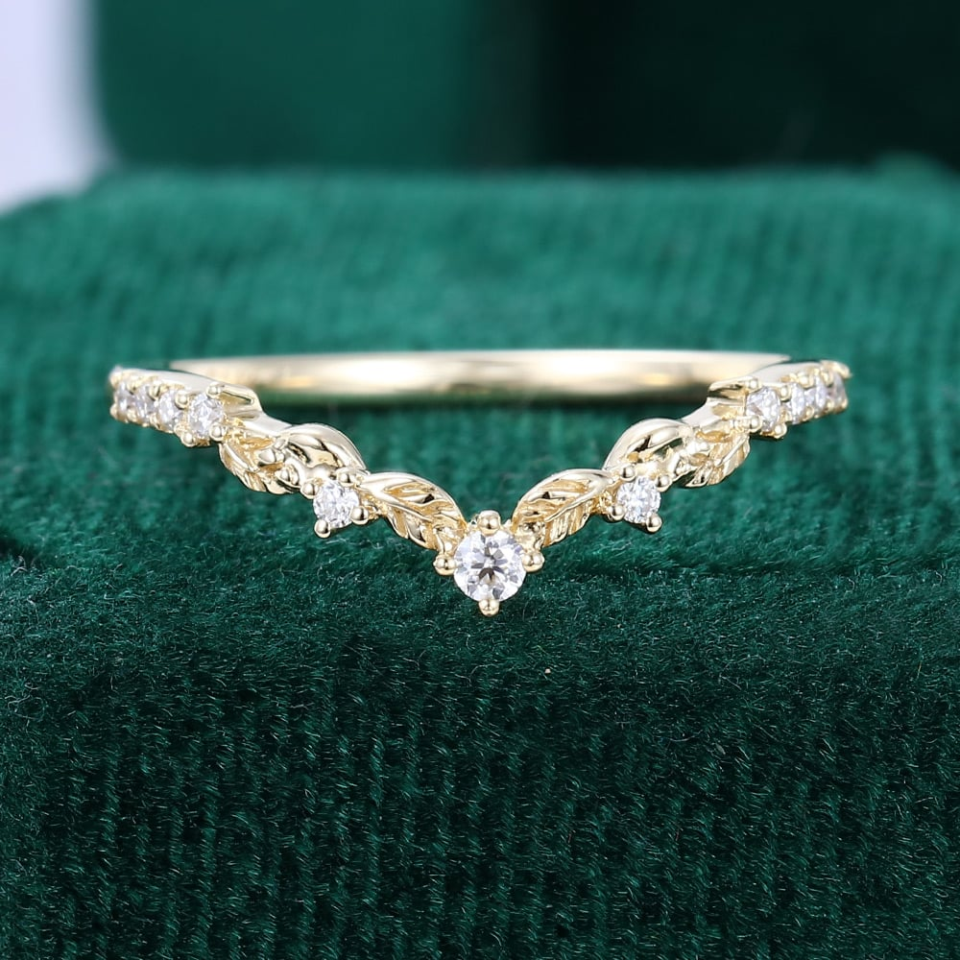
Also known as chevron bands, these form a pointed curve that frames the center stone. They work particularly well with solitaire or elongated stone shapes, adding structure and direction to the overall look.
Contoured Bands
Contoured Bands
Contoured bands are custom-shaped to match a specific engagement ring. Instead of a general curve, they mirror the exact outline of the ring, creating the most precise fit.
Matching Curved Bands with Different Ring Settings
Matching Curved Bands with Different Ring Settings
Different engagement ring styles require different curved band solutions. Understanding these pairings helps you avoid trial-and-error purchases.
Solitaire Engagement Rings
Solitaire Engagement Rings
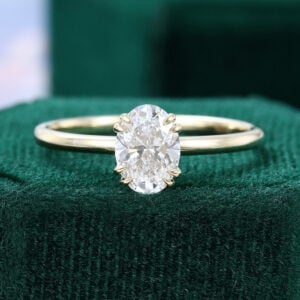
For solitaires with a low setting, a slight curve or V-shaped band works best. These options enhance the center stone without overwhelming the simplicity of the design.
Halo Engagement Rings
Halo Engagement Rings

Halo rings often need deeper curves to accommodate the wider setting. A contoured band ensures the band sits close without disrupting the halo’s symmetry.
Vintage or Intricate Rings
Vintage or Intricate Rings
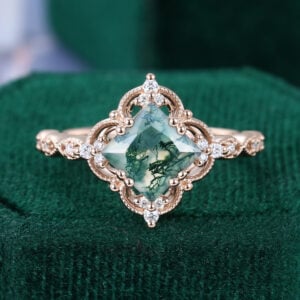
Detailed rings with milgrain or engraving benefit from contoured bands that respect the original design. A generic curve may not align properly with these complex shapes.
Cluster Engagement Rings
Cluster Engagement Rings
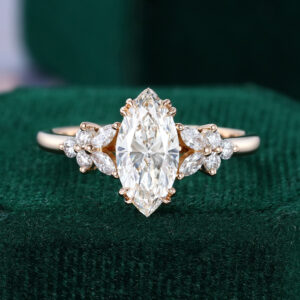
Cluster engagement rings feature multiple stones grouped together, often creating an irregular or wider surface that makes straight bands difficult to align. In this case, a deeper curved band or a fully contoured band works best, as it can follow the outer shape of the cluster without leaving visible gaps.
Comfort and Daily Wear Considerations
Comfort and Daily Wear Considerations
Curved wedding bands are not just about appearance. A well-fitted band reduces friction between rings, which can help prevent long-term wear or damage.
Comfort also depends on how the rings sit together on your finger. A poorly matched band can create pressure points or uneven stacking. Curved bands distribute contact more evenly, making them more suitable for daily wear.
Thickness is another factor. If both rings are substantial, stacking them may feel bulky. In these cases, a slimmer curved band often provides a better balance.
Metal and Design Choices
Metal and Design Choices
Curved wedding bands are available in a range of metals, including 14k gold, 18k gold, and platinum. The choice of metal affects not only appearance but also durability.
14k gold is often preferred for everyday wear because it offers a balance between strength and color richness. When paired with curved designs, it maintains structure while resisting deformation over time.
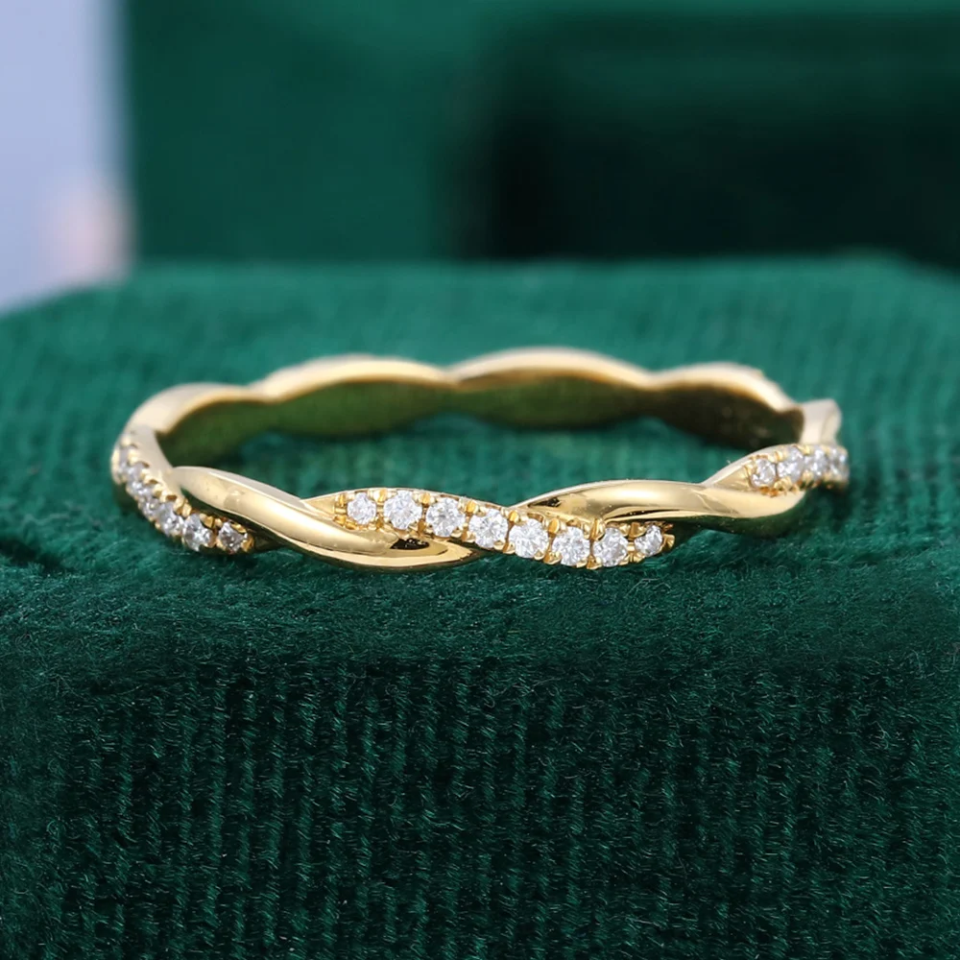
Design details such as pavé diamonds, milgrain edges, or matte finishes can be added depending on your style. However, it is important to keep the overall composition balanced, especially when stacking multiple rings.
Where to Buy Durable Curved Wedding Bands
Where to Buy Durable Curved Wedding Bands
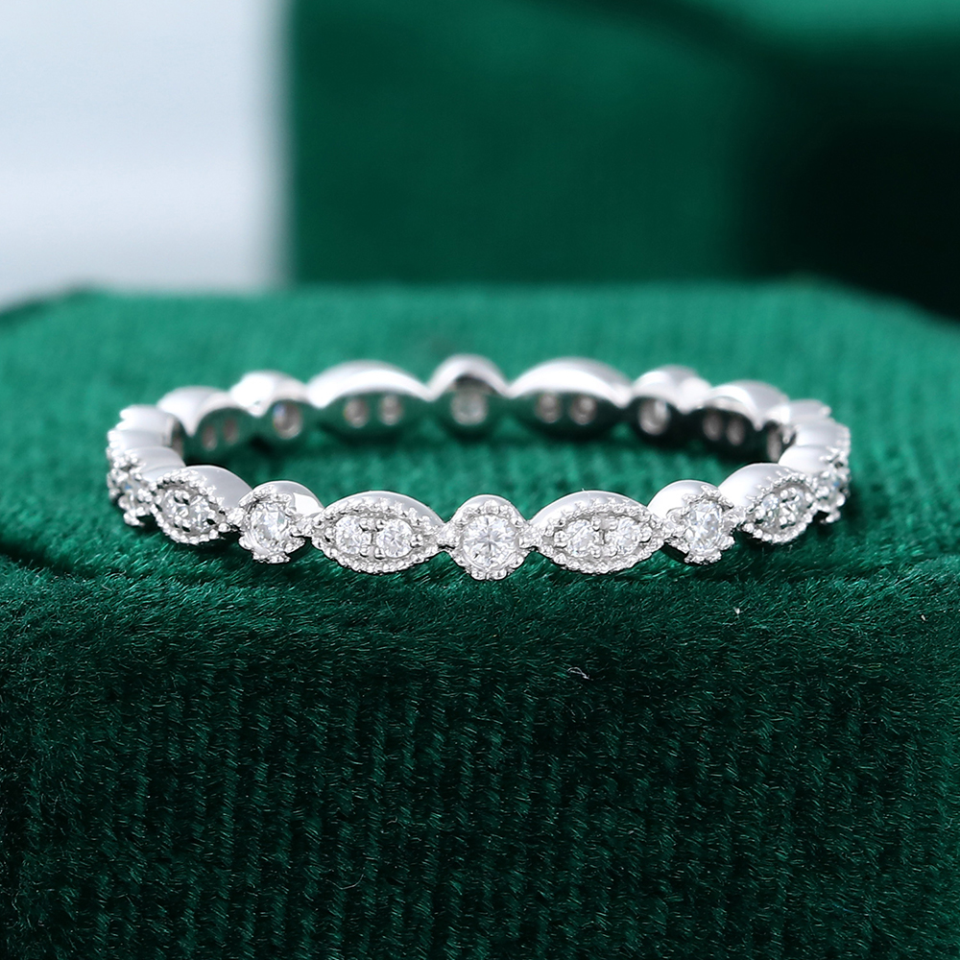
If you are looking for durable curved wedding bands that are designed to fit your engagement ring precisely, MollyJewelryUS offers a practical solution. Their collections include both gemstone and diamond wedding bands, with designs that prioritize fit, wearability, and long-term use.
One of the key advantages is customization. Instead of choosing a standard curve, you can adjust the band shape, width, and stone setting to match your specific engagement ring. This ensures that the curved wedding band works with your ring, rather than forcing a compromise.
For those building a cohesive bridal set, this level of customization makes it easier to achieve both visual alignment and daily comfort without unnecessary trial and error.
Common Mistakes to Avoid
Common Mistakes to Avoid
One of the most common mistakes is choosing a curved band based only on appearance without considering the actual fit. Even small differences in curvature can affect how the rings sit together.
Another issue is ignoring long-term wear. A band that looks good in photos may not feel comfortable after hours of wear if it does not align properly with the engagement ring.
Finally, some buyers overlook the importance of proportion. A curved band that is too thick or too thin can disrupt the balance of the overall set, especially when paired with detailed engagement rings.
Final Thoughts
Final Thoughts
Curved wedding bands offer a practical and refined solution for pairing with modern engagement ring settings. By focusing on fit, structure, and proportion, you can create a bridal set that feels intentional rather than forced.
The right curve should enhance both comfort and appearance, allowing the two rings to function as a unified piece. With careful selection and, when needed, customization, a curved wedding band can provide both visual harmony and long-term wearability.
FAQs
FAQs
What is the purpose of a curved wedding band?
A curved wedding band is designed to fit closely against an engagement ring, reducing gaps and improving both appearance and comfort.
Do I need a curved wedding band for my ring?
You may need one if your engagement ring has a low setting, large center stone, or side details that prevent a straight band from sitting flush.
Are curved wedding bands comfortable for daily wear?
Yes, when properly matched, curved wedding bands reduce friction and create a more balanced fit, making them suitable for everyday use.